
The Greatest Salesman In The World - Part 2 Order Printed Copy
- Author: Og Mandino
- Size: 997KB | 96 pages
- |
Others like the greatest salesman in the world - part 2 Features >>

The Greatest Gift

The Established Heart

The Sermon On The Mount

The Sermon On The Mount

The Finest Of The Wheat

40 Days In The Word

Having A Mary Heart In A Martha World - Finding Intimacy With God In The Busyness Of Life
Experiencing The Words Of Jesus

The Shelter Of The Most High

The Seven Words Of Our Lord On The Cross
About the Book
"The Greatest Salesman in the World - Part 2" by Og Mandino continues the story of Hafid, who is now the greatest salesman in the world. In this sequel, Hafid imparts his wisdom to a young man named Paul, teaching him the principles of success, faith, and persistence. Through a series of scrolls, Hafid guides Paul on his journey to achieve greatness in both his personal and professional life. This book serves as a powerful inspirational guide for readers seeking to unlock their full potential and achieve their goals.
Kathryn Kuhlman
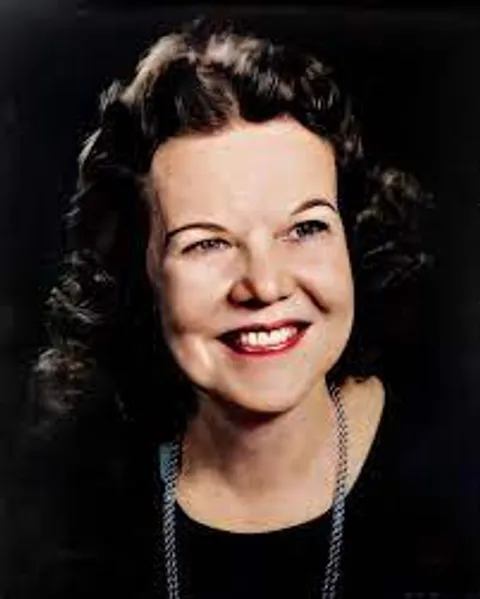 Kathryn Johanna Kuhlman was born on May 9, 1907, in Concordia, Missouri. Her parents were German and she was one of four children. Her mother was a harsh disciplinarian, who showed little love or affection. On the other hand, she had an extremely close and loving relationship with her father. She would describe, as a small child how, her father would come home from work and she would hang on his leg and cling to him. She often said that her relationship with God the Father was extremely real because of her relationship with her own father.
Kuhlman was converted, when she was 14, at an evangelistic meeting held in a small Methodist church. When she was 16 she graduated from high school, which only went to tenth grade in their town. He older sister Myrtle had married an itinerant evangelist, Everett B. Parrott. They spent their time traveling and asked that Kathryn could join them for the summer. Her parents agreed and she went to Oregon to help out. She worked with them, and often gave her testimony. When the summer was over she wanted to stay, and the couple agreed. She ended up working with them for five years.
The evangelistic team was made up of four people, Everette, Myrtle, Kathryn, and pianists named Helen Gulliford. In 1928 Everette missed a meeting in Boise, Idaho. Myrtle and Kathryn preached to cover for Everette. The pastor of the church encouraged Kathryn to step out on her own. Helen agreed to join her. Her first sermon was in a run-down pool hall in Boise, Idaho. The team covered Idaho, Utah, and Colorado for the following five years. In 1933 they moved into Pueblo, Colorado. They set up in an abandoned Montgomery Ward warehouse. They stayed there for six months.
Denver, being a much bigger city, was the next stop. They moved several times but ended up in a paper company's warehouse, which they named the Kuhlman Revival Tabernacle. Then in 1935 they moved once more to an abandoned truck garage they named the Denver Revival Tabernacle. Kathryn was seeing a lot of success in Denver. The church grew to about 2000 members. She began a radio show called "Smiling Through" and invited speakers from all over the country. One of them was Phil Kerr who taught on divine healing. In 1935 another invited evangelist was Burroughs Waltrip.
Waltrip was bad news for Kuhlman. He was a charismatic, handsome man several years older than she was. There was an immediate attraction, and one family claims to have seen the couple embracing in 1935, but he was married and had two children. Waltrip left Denver and went home to Austin, Texas, but the relationship simmered between Kuhlman and Waltrip. In 1937 he was invited back to Denver to take the pulpit for two months. Shortly after he divorced his wife and abandoned his two sons. He then spread the story that his wife had left him. He moved to Mason City, Iowa, where he told everyone he was single, and started a new ministry. Waltrip raised pledges of $70,000 to build a ministry building called Radio Chapel. It was state of the art with a disappearing pulpit and an art deco style. He appeared to be a successful and dynamic preacher.
There was an ongoing relationship between Kuhlman and Waltrip, and they married in September 1938. Kuhlman was naive about the consequences of her choices and the marriage was a disaster. She announced to her church that she and Waltrip were married and they would go between Denver and Mason City preaching at their two churches. Most of the people in her congregation left due to her relationship with Waltrip. She gave up her church in Denver, lost some of her closest associates, and moved to Mason City. Waltrip's success turned out to be a pipe dream as well. The Radio Chapel was completed in June of 1938. By October 1938 Waltrip could not meet his debts. In December Waltrip was demanding a higher salary, even with the shortfall in income. His Board of Directors quit and left him to deal with the finances. His solution was not to pay the mortgage or debts on the Chapel. Radio Chapel went into bankruptcy. Waltrip's last sermon was in May 1939. The Waltrips were on their own. Kathryn's happy vision of she and her husband flying back and forth between Denver and Mason City with a successful preaching careers was utterly demolished.
The next few years were very hard for the couple. They embarked on the road as traveling evangelists, primarily staying in the Midwest. They were not accepted in many places due to their marriage history. Initial advertisements listed Waltrip as the primary evangelist. Then occasionally Mrs. Waltrip was also mentioned. By the early 1940s Kathryn Kuhlman Waltrip was given equal billing. Finally by the mid-1940s Kathryn was using only Kathryn Kuhlman in meetings where she was the primary speaker. In 1944 Kuhlman went on an evangelistic tour on the east coast without Waltrip. It may have been a conscious decision to leave him, or she may also have taken the opportunity to reassess her life. It appears to have been more gradual as Waltrip wrote about them as a couple as late as 1946. Kuhlman never returned to Waltrip and they eventually divorced in 1947. She left her marriage behind and from then on acted as if it never existed in the first place.
In 1946 Kuhlman was asked to speak in Franklin, Pennsylvania. She was well received and decided to stay in the area. Kuhlman began preaching on radio broadcasts in Oil City, Pennsylvania. These became so popular they were picked up in Pittsburgh, and she was preaching throughout the area. She began to preach about the healing power of God. In 1947 a woman was healed of a tumor while listening to Kuhlman preach. Several Sundays later a man was also healed while she was teaching on the Holy Spirit. She was now convinced of God's healing work. One important thing to note is the context and timing of this breakout period in Kuhlman's life. 1947 was the beginning of the Healing Revival (sometimes referred to as the Latter Rain Revival) that would last for the next 10 years. What was happening in Kuhlman's meetings was breaking out across the United States. It was in this time frame that the Voice of Healing Ministry was established and men like William Branham, Oral Roberts, A.A. Allen and many others were propelled onto the public stage. Kuhlman was not associated with those groups, but stepped into the flow of what God's Spirit was doing across the nation and the world.
In 1948 Kuhlman held a series of meetings at Carnegie Hall in Pittsburgh. She eventually moved to Pittsburgh in 1950, and continued to hold meetings at Carnegie Hall until 1971. She was used by God to bring the charismatic message to many denominational churches, including the Catholic Church. (She received a lot of criticism over this and was accused of being a closet Catholic.) These were her best known years. Her style was flamboyant. She would hold her famous miracle services and the auditorium was filled to capacity every time. She was on radio and television shows. She was ordained in 1968 by the Evangelical Church Alliance. Hundreds of people were healed in her meetings, and even while listening to her on the radio or television. People she prayed for would often be hit with the power of God and be "slain in the Spirit." Kuhlman never claimed that she was the healer. She always pointed people to Jesus as their healer.
Kuhlman had been diagnosed with a heart problem in 1955. She kept a very busy schedule and overworked herself, especially in the 1970's. She traveled back and forth from Pittsburgh to Los Angeles frequently, as well as taking trips around the world. Her heart was enlarged and Kuhlman died on February 20, 1976, in Tulsa, following open-heart surgery. Videos of some of her services are still available and continue to be popular today.
Kathryn Johanna Kuhlman was born on May 9, 1907, in Concordia, Missouri. Her parents were German and she was one of four children. Her mother was a harsh disciplinarian, who showed little love or affection. On the other hand, she had an extremely close and loving relationship with her father. She would describe, as a small child how, her father would come home from work and she would hang on his leg and cling to him. She often said that her relationship with God the Father was extremely real because of her relationship with her own father.
Kuhlman was converted, when she was 14, at an evangelistic meeting held in a small Methodist church. When she was 16 she graduated from high school, which only went to tenth grade in their town. He older sister Myrtle had married an itinerant evangelist, Everett B. Parrott. They spent their time traveling and asked that Kathryn could join them for the summer. Her parents agreed and she went to Oregon to help out. She worked with them, and often gave her testimony. When the summer was over she wanted to stay, and the couple agreed. She ended up working with them for five years.
The evangelistic team was made up of four people, Everette, Myrtle, Kathryn, and pianists named Helen Gulliford. In 1928 Everette missed a meeting in Boise, Idaho. Myrtle and Kathryn preached to cover for Everette. The pastor of the church encouraged Kathryn to step out on her own. Helen agreed to join her. Her first sermon was in a run-down pool hall in Boise, Idaho. The team covered Idaho, Utah, and Colorado for the following five years. In 1933 they moved into Pueblo, Colorado. They set up in an abandoned Montgomery Ward warehouse. They stayed there for six months.
Denver, being a much bigger city, was the next stop. They moved several times but ended up in a paper company's warehouse, which they named the Kuhlman Revival Tabernacle. Then in 1935 they moved once more to an abandoned truck garage they named the Denver Revival Tabernacle. Kathryn was seeing a lot of success in Denver. The church grew to about 2000 members. She began a radio show called "Smiling Through" and invited speakers from all over the country. One of them was Phil Kerr who taught on divine healing. In 1935 another invited evangelist was Burroughs Waltrip.
Waltrip was bad news for Kuhlman. He was a charismatic, handsome man several years older than she was. There was an immediate attraction, and one family claims to have seen the couple embracing in 1935, but he was married and had two children. Waltrip left Denver and went home to Austin, Texas, but the relationship simmered between Kuhlman and Waltrip. In 1937 he was invited back to Denver to take the pulpit for two months. Shortly after he divorced his wife and abandoned his two sons. He then spread the story that his wife had left him. He moved to Mason City, Iowa, where he told everyone he was single, and started a new ministry. Waltrip raised pledges of $70,000 to build a ministry building called Radio Chapel. It was state of the art with a disappearing pulpit and an art deco style. He appeared to be a successful and dynamic preacher.
There was an ongoing relationship between Kuhlman and Waltrip, and they married in September 1938. Kuhlman was naive about the consequences of her choices and the marriage was a disaster. She announced to her church that she and Waltrip were married and they would go between Denver and Mason City preaching at their two churches. Most of the people in her congregation left due to her relationship with Waltrip. She gave up her church in Denver, lost some of her closest associates, and moved to Mason City. Waltrip's success turned out to be a pipe dream as well. The Radio Chapel was completed in June of 1938. By October 1938 Waltrip could not meet his debts. In December Waltrip was demanding a higher salary, even with the shortfall in income. His Board of Directors quit and left him to deal with the finances. His solution was not to pay the mortgage or debts on the Chapel. Radio Chapel went into bankruptcy. Waltrip's last sermon was in May 1939. The Waltrips were on their own. Kathryn's happy vision of she and her husband flying back and forth between Denver and Mason City with a successful preaching careers was utterly demolished.
The next few years were very hard for the couple. They embarked on the road as traveling evangelists, primarily staying in the Midwest. They were not accepted in many places due to their marriage history. Initial advertisements listed Waltrip as the primary evangelist. Then occasionally Mrs. Waltrip was also mentioned. By the early 1940s Kathryn Kuhlman Waltrip was given equal billing. Finally by the mid-1940s Kathryn was using only Kathryn Kuhlman in meetings where she was the primary speaker. In 1944 Kuhlman went on an evangelistic tour on the east coast without Waltrip. It may have been a conscious decision to leave him, or she may also have taken the opportunity to reassess her life. It appears to have been more gradual as Waltrip wrote about them as a couple as late as 1946. Kuhlman never returned to Waltrip and they eventually divorced in 1947. She left her marriage behind and from then on acted as if it never existed in the first place.
In 1946 Kuhlman was asked to speak in Franklin, Pennsylvania. She was well received and decided to stay in the area. Kuhlman began preaching on radio broadcasts in Oil City, Pennsylvania. These became so popular they were picked up in Pittsburgh, and she was preaching throughout the area. She began to preach about the healing power of God. In 1947 a woman was healed of a tumor while listening to Kuhlman preach. Several Sundays later a man was also healed while she was teaching on the Holy Spirit. She was now convinced of God's healing work. One important thing to note is the context and timing of this breakout period in Kuhlman's life. 1947 was the beginning of the Healing Revival (sometimes referred to as the Latter Rain Revival) that would last for the next 10 years. What was happening in Kuhlman's meetings was breaking out across the United States. It was in this time frame that the Voice of Healing Ministry was established and men like William Branham, Oral Roberts, A.A. Allen and many others were propelled onto the public stage. Kuhlman was not associated with those groups, but stepped into the flow of what God's Spirit was doing across the nation and the world.
In 1948 Kuhlman held a series of meetings at Carnegie Hall in Pittsburgh. She eventually moved to Pittsburgh in 1950, and continued to hold meetings at Carnegie Hall until 1971. She was used by God to bring the charismatic message to many denominational churches, including the Catholic Church. (She received a lot of criticism over this and was accused of being a closet Catholic.) These were her best known years. Her style was flamboyant. She would hold her famous miracle services and the auditorium was filled to capacity every time. She was on radio and television shows. She was ordained in 1968 by the Evangelical Church Alliance. Hundreds of people were healed in her meetings, and even while listening to her on the radio or television. People she prayed for would often be hit with the power of God and be "slain in the Spirit." Kuhlman never claimed that she was the healer. She always pointed people to Jesus as their healer.
Kuhlman had been diagnosed with a heart problem in 1955. She kept a very busy schedule and overworked herself, especially in the 1970's. She traveled back and forth from Pittsburgh to Los Angeles frequently, as well as taking trips around the world. Her heart was enlarged and Kuhlman died on February 20, 1976, in Tulsa, following open-heart surgery. Videos of some of her services are still available and continue to be popular today.
A Great Marriage-Wrecking Lie
I met my aunt Margaret for the first time when I was ten. She was in a wheelchair in the middle of the front room, drooling uncontrollably, unaware of my presence, incontinent, and unable to take care of herself. And yet my uncle Gale cared for her, and he did so tenderly. They were high school sweethearts, but now she was dying of brain cancer after only fifteen years together. My uncle didn’t abandon her. He didn’t get a mistress. No, he had publicly vowed, “in sickness and in health, till death do us part” — and he was faithful to his word. A few years later, she died. This is a biblical picture of marriage: joy through servanthood, faithfulness, and self-denial. But times have changed. Our societal expectations for marriage have gone through a radical transformation, and those changes have affected many in the church. Changing Expectations One commentator describes the transformation this way: “The old attitude was that one must work for the marriage. The new attitude is that the marriage had better work for me” (Jonah Goldberg, Suicide of the West, 267). My uncle worked for his marriage. He was willing to forgo short-term pleasure for the sake of his wife, his children, and the glory of God. He believed that keeping his marriage vows would enhance his joy in this life and in the world to come. But those who expect marriage to “work for me” often assume that “God just wants me to be happy” in the thin and predictable ways. Their focus is on me and my immediate needs. They will most likely bail when any significant, protracted marital trouble comes. Here is how University of Virginia sociologist W. Bradford Wilcox sums up our new marital expectations: Prior to the late 1960s, Americans were more likely to look at marriage and family through the prisms of duty, obligation, and sacrifice. . . . But the psychological revolution’s focus on individual fulfillment and personal growth changed all that. Increasingly, marriage was seen as a vehicle for a self-oriented ethic of romance, intimacy, and fulfillment. In this new psychological approach to married life, one’s primary obligation was not to one’s family but to oneself; hence, marital success was defined not by successfully meeting obligations to one’s spouse and children but by a strong sense of subjective happiness in marriage — usually to be found in and through an intense, emotional relationship with one’s spouse. The 1970s marked the period when, for many Americans, a more institutional model of marriage gave way to the “soul-mate model” of marriage. Professor Wilcox’s “soul-mate model” is a fruit of expressive individualism. The assumptions behind this model are a moral solvent, dissolving the covenant bond of marriage. At its center is a potent, marriage-wrecking lie: God just wants me to be happy — and that is “happiness” as I choose to define it. Couples have used this lie to justify abortion, divorce, adultery, abandonment, and all kinds of selfishness. “God wants couples to pursue a greater long-term marital happiness through Christlike self-denial.” The problem with this lie is that it twists an important truth. God does want us to be happy, but he defines the terms, and immediate happiness is not God’s primary goal. God wants couples to pursue a greater long-term marital happiness through Christlike self-denial. God expects us to deny self — to defer immediate marital gratification — in order to experience greater long-term happiness. There are times in marriage when such self-denial takes great faith. Beneath the Lie This lie is a deeply rooted cultural assumption, and assumptions can be difficult to address because they are often subconscious. They seep into us through television, movies, literature, media, music, and our educational system. For instance, one way they rise to the surface and become visible is through consumer advertising. Ad agencies get paid to identify the assumptions that motivate us. Here are some examples — each, if internalized a certain way, could be devastating to a marriage: Outback Steakhouse invites us to eat at their restaurants because there are “No rules. Just right.” McDonalds tells us to buy French fries because “You deserve a break today.” Reebok urges us to buy their running shoes “Because you’re worth it.” And Nike, throwing all restraint to the wind, urges us to “Just do it!” The assumptions expressed by the mind of Christ, however, are strikingly different. Do we “deserve a break today”? Are we really “worth it”? And above all, should we give into sinful passion and “just do it”? No, we live by a deeper logic that counters the selfishness and presumption of the world around us: the logic of the cross. We deserved eternal death, but Christ humbled himself and died so that we might experience the full and abundant life. “Jesus found joy through self-denial, and so will husbands and wives.” The deepest marital happiness comes through self-denial, humility, unselfishness, patience, kindness, and the crucifixion of our me mentality. Ultimately, the wise Christian couple pursuing a happy, God-glorifying union will model their marriage on Christ and him crucified. Jesus found joy through self-denial (Hebrews 12:2), and so will husbands and wives. Deny Yourself for Her Again and again, Scripture gives us glimpses into the mind of Christ. After predicting his death and resurrection, Jesus turns to his disciples and says, If anyone would come after me, let him deny himself and take up his cross and follow me. For whoever would save his life will lose it, but whoever loses his life for my sake will find it. (Matthew 16:24–25) “Take up a cross? Are you kidding?” The cross was an instrument of torture, death, suffering, and shame. But Jesus urges us to save our lives by doing just that — taking up our cross. We save our marriages through denying ourselves — making our spouse’s happiness as important as our own. We apply the principle of the cross. We do this with the conviction that happiness deferred in patient obedience to God is much greater than happiness immediately gratified. Whoever would be great among you must be your servant, and whoever would be first among you must be your slave, even as the Son of Man came not to be served but to serve, and to give his life as a ransom for many. (Matthew 20:26–28) Happy, fruitful marriages do not think mainly in terms of rights. They think from the mind of Christ. Jesus died to his rights to give us ours before God. Husbands and wives who follow him do the same. Do nothing from selfishness or vain conceit, but in humility consider others more significant [or important] than yourself. (Philippians 2:3) The closest “other” in your life is your spouse — the person that sleeps with you, eats with you, worships with you, and raises your children with you. Applying this principle gets really practical. The Lie’s Fruit As the lie proliferates in North America and beyond, the fruits are painfully obvious. Self-denial is an indispensable part of the glue that makes the marital covenant work. Without a willingness to deny self, people are less willing to marry, or they don’t stay married. In 1970, about 70 percent of Americans over age 18 were married. Today, for the first time in U.S. history, that number is 50 percent and falling. “Marriage isn’t changing,” notes sociologist Mark Regnerus. “It’s receding. In an era of increasing options, technology, gender equality, ‘cheap’ sex, and secularization, fewer people — including fewer practicing Christians — actually want what marriage is. That’s the bottom line.” Collapsing marriage also means collapsing fertility. We are not producing enough children to replace ourselves. Were it not for immigration, the population in North America would be shrinking. Thankfully, fertility rates in the evangelical church are better than the national average. Rejecting the Lie What can we do to reject the lie? We can start with the assumption that we don’t deserve to be happy. As we have already noted, the cross shows each of us what we deserve — death, and that is the bottom line. Therefore, no matter how bad our marital circumstances, we are always getting better than we deserve. Those who believe this can continually thank God for his kindness, in spite of their marital problems. We can also reject the lie by believing that holy people are happy people, and marriage is one of God’s primary tools to produce personal holiness. “To be holy as he is holy,” notes Bruce Milne, “is the prescription for true and endless happiness. To be holy is to be happy . . . there is no joy like that of holiness” (The Message of Heaven and Hell, 52). I have found it helpful to think of marriage as a spiritual gymnasium in which I strengthen personal holiness. Marriage toughens the muscle of forgiveness. It strengthens the willingness to love an enemy. It enhances the ability to humble myself and receive criticism. Marriage also teaches the crucial words, “I’m sorry. Would you please forgive me?” In the marital gym, I also strengthen the crucial muscle of perseverance. Most marriages face a moment when the couple would like to call it quits but, if they persevere, almost always later admit that would have been a mistake. Focus on the Family once did a study of couples who persevered through the desire to divorce, only to find that five years later, most of those who persevered now described themselves as happy in their marriage. Persevering when the going gets tough requires self-denial, but it often solves many lesser problems. Two Slaves Become One Ambrose Bierce, a nineteenth-century short-story writer, not known for being a Christian, nevertheless summed up marriage with these insightful words: “Marriage is a community consisting of a master, a mistress, and two slaves, making in all, one person.” My insightful wife sums up the mind of Christ in marriage this way: “Every fruitful, happy marriage begins with two funerals.” This is how the mind of Christ thinks. It thinks like my uncle Gale. Reject the lie that immediate happiness is the goal. Yes, God does want us to be happy, but the deepest, most lasting happiness comes only to those who deny themselves and take up their cross daily. They serve unselfishly, consider their spouse more significant than themselves, persevere through marital troubles, practice forgiveness, and grow in humility. These are the marriages that maximize long-term happiness, and in such a way that God gets the glory. Article by William Farley