



-160.webp)


About the Book
"The Greatest Gift" by Max Lucado explores the true meaning of Christmas through the heartwarming story of a young girl named Anabel who discovers the joy of giving and the power of love. Through Anabel's journey, readers are reminded of the greatest gift of all - the gift of Jesus Christ and the love He brings to our lives. The book emphasizes the importance of kindness, compassion, and generosity during the holiday season and beyond.
Joseph Ayodele Babalola
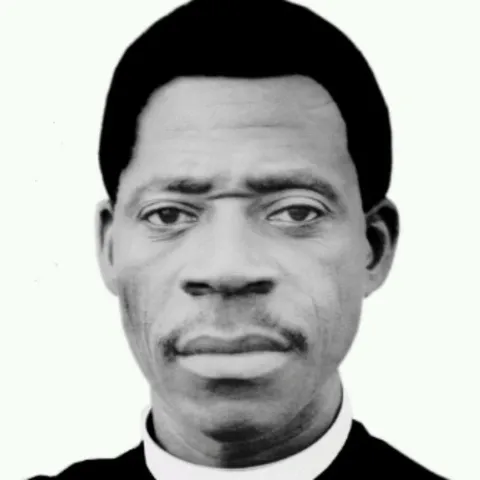 His Background
Joseph Ayodele Babalola was born on April 25, 1904 to David Rotimi and Madam Marta Talabi who belonged to the Anglican Church. The family lived at Odo-Owa in Ilofa, a small town about ninety kilometres from Ilorin in Kwara State, Nigeria. His father was the Baba Ijo (“church father”) of the C.M.S. Church at Odo-Owa. Pastor Medayese wrote in his book Itan Igbe dide Woli Ayo Babalola that mysterious circumstances surrounded the birth of Babalola. On that day, it was believed that a strange and mighty object exploded and shook the clouds.
On January 18, 1914, young Babalola was taken by his brother M. 0. Rotimi, a Sunday school teacher in the C.M.S. Church at Ilofa, to Osogbo. Babalola started school at Ilofa and got as far as standard five at All Saints’ School, Osogbo. However, he quit school when he decided to learn a trade and became a motor mechanic apprentice. Again, he did not continue long in this vocation before joining the Public Works Department (PWD). He was among the road workers who constructed the road from Igbara-Oke to Ilesa, working as a steam roller driver.
Babalola’s Call to the Prophetic Ministry
Just like the Old Testament prophets, Babalola was called by God into the prophetic office to stand before men. His was a specific and personal call.
Babalola’s strange experience started on the night of September 25th, 1928 when he suddenly became restless and could not sleep. This went on for a week and he had no inkling of the causes of such a strange experience. The climax came one day when he was, as usual, working on the Ilesa-Igbara-Oke road. Suddenly the steam roller’s engin stopped to his utter amazement. There was no visible mechanical problem, and Joseph became confused and perplexed. He was in this state of confusion when a great voice “like the sound of many waters” called him three times. The voice was loud and clear and it told him that he would die if he refused to heed the divine call to go into the world and preach. Babalola did not want to listen to this voice and he responded like many of the Biblical prophets, who, when they were called out by Yahweh as prophets, did not normally yield to the first call. Men like Moses and Jeremiah submitted to God only when it became inevitable. So, Babalola gave in only after he had received the assurance of divine guidance.
To go on the mission, he had to resign his appointment with the Public Works Department. Mr. Fergusson, the head of his unit, tried to dissuade him from resigning but the young man was bent on going on the Lord’s mission.
The same voice came to Joseph a second time asking him to fast for seven days. He obeyed and at the end of the period he saw a great figure of a man who, according to Pastor Alokan, resembled Jesus. The man in a dazzling robe spoke at length about the mission he was to embark upon. The man also told him of the persecutions he would face and at the same time assured him of God’s protection and victory. A hand prayer bell was given to Babalola as a symbol. He was told that the sound of the bell would always drive away evil spirits. He was also given a bottle of “life-giving water” to heal all manners of sickness. Consequently, wherever and whenever he prayed into water for therapeutic purposes, effective healing was procured for those who drank the water. Thus, Babalola became a prophet and a man with extraordinary powers. Enabled by the power of the Holy Spirit he could spend several weeks in prayer. Elder Abraham Owoyemi of Odo-Owa, said that the prophet regularly saw angels who delivered divine messages to him. An angel appeared in one of his prayers and forbade him to wear caps.
The Itinerary of Prophet Babalola
During one of his prayer sessions an angel appeared to him and gave him a big yam which he ordered him to eat. The angel told him that the yam was the tuber with which God fed the whole world. He further revealed that God had granted unto him the power to deliver those who were possessed of evil spirits in the world. He was directed to go first to Odo-Owa and start preaching. He was to arrive in the town on a market day, cover his body with palm fronds and disfigure himself with charcoal paints.
In October 1928, he entered the town in the manner described and was taken for a mad man. Babalola immediately started preaching and prophesying. He told the inhabitants of Odo-Owa about an impending danger if they did not repent. He was arrested and taken to the district officer at Ilorin for allegedly disturbing the peace. The district officer later released him when the allegations could not be proven. However, it was said that a few days later, there was an outbreak of smallpox in the town. The man whose prophecies and messages were once rejected was quickly sought for. He went around praying for the victims and they were all healed.
Pa David Rotimi, Babalola’s father, had been instrumental in the establishment of a C.M.S. Church in Odo-Owa. Babalola organized regular prayer meetings in this church which many people attended because of the miracles God performed through him. Among the regulars was Isaiah 01uyemi who later saw the wrath of Bishop Smith of Ilorin diocese. Information had reached the bishop that almost all members of the C.M.S. Church in Ilofa were seeing visions, speaking in tongues and praying vigorously. Babalola and the visionaries were allegedly ordered by Bishop Smith to leave the church. But Babalola did not leave the town until June 1930.
On an invitation from Daniel Ajibola, Babalola went to Lagos. Elder Daniel Ajibola at that time was working in Ibadan where he was a member of the Faith Tabernacle Congregation. He introduced Prophet Babalola to Pastor D. 0. Odubanjo, one of the leaders of the Faith Tabemacle in Lagos. Senior Pastor Esinsinade who was then the president of the Faith Tabernacle was invited to see Babalola. After listening to the details of his call and his ministry, the Faith Tabernacle leaders warmly received the young prophet into their midst.
Babalola had not yet been baptized by immersion and Senior Pastor Esinsinade emphasized that he needed to go through that rite. Pastor Esinsinade then baptized him in the lagoon at the back of the Faith Tabernacle Church building at 51, Moloney Bridge Street, Lagos. Babalola returned to Odo-Owa a few days after that and Elder (later Pastor) J. A. Medayese, paid him a visit.
The news of the conversion of the new prophet reached Pastor K. P. Titus at Araromi in Yagba, present Kwara State. Pastor Titus was a teacher and preacher at the Sudan Interior Mission which was then thriving at Yagba. He invited Prophet Babalola for a revival service. Joseph Ayodele Babalola while in Yagba, performed mighty works of healing. Many Muslims and Christians from other denominations and some traditional religionists were converted to the new faith during the revival.
The fact that Babalola did not use the opportunity to establish a separate Christian organization despite his marvelous evangelical success, must be puzzling to historians, but his intention was not to start a new church. He declared to his followers that he had registered his membership with the Faith Tabernacle, the society which had him baptized in Lagos. He thus persuaded them to become members of the Faith Tabernacle. To facilitate this, he went to Lagos to confer with the leaders, especially as he was not yet well acquainted with the doctrines, tenets, and administration of the church.
Oke-Oye Mighty Revival
There was a controversy among the leaders of the Faith Tabernacle in Nigeria over some doctrines. In the midst of it were, in particular, the Ilesa and Oyan branches of the tabernacle. The Oyan branch was under the supervision of Pastor J. A. Babatope, a notable Anglican teacher, before his conversion and later, one of the outstanding leaders of the Faith Tabernacle in Nigeria. Issues like the use of western and traditional drugs versus divine healing, polygamy and whether polygamous husbands should be allowed to partake of the Lord’s Supper, were among those doctrines that needed to be agreed on. These issues had caused dissension at the IIesa Tabernacle and in order to avoid a split, a delegation of peacemakers made up of all leading Faith Tabernacle pastors, was sent to Ilesa. It was headed by Pastor J. B. Esinsinade of Ijebu-Ode, president of the General Headquarters of the movement and D. O. Odubanjo of the Lagos Missionary Headquarters. The Ilesa meeting was scheduled for the 9th and lOth of July, 1930. The Apostolic Council of Jerusalem in A.D. 48, and other important church councils, are precedents in seeking ecclesiastical direction on matters affecting the life and peace of the church.
Before the delegation left Lagos for Ilesa, Babalola had been invited to meet the leaders at Pastor I. B. Akinyele’s residence at Ibadan. From there I. B. Akinyele and Babalola joined the delegation to Ilesa. At Ilesa, he was introduced to the whole conference and was lodged in a separate room because of his prophetic mission. The representatives began their meeting and on the agenda were twenty-four items. The first was the validity of baptism administered to a man with many wives. The second was the issue of divine healing because some of the members believed in the use of drugs like quinine to cure malaria fever. They were only able to discuss the first item when there was a sudden interruption which Pastor Adegboyega described thus: “The concilatory talks at Ilesa were going on, when suddenly a mighty sweeping revival broke out at Faith Tabernacle Congregation Church at Oke-Oye, Ilesa”. The revival began with the raising by Babalola of a dead child. The mother of the dead child who was restored to life went about spreading the news around the town of Ilesa proclaiming that a miracle working prophet had come to the town of Oke-Oye. This attracted a large number of people to Oke-Oye to see the prophet. According to Pastor Medayese, many of those afflicted with various diseases who came to Oke-Oye were healed. Many mighty works were performed through the use of the prayer bell and the drinking of consecrated water from a stream called Omi Ayo (“Stream of Joy”).
The result was that thousands of people including traditional religionists, Muslims and Christians from various other denominations were converted to the Faith Tabernacle. As there was no space in the church hall, revival meetings were shifted to an open field where men and women from all walks of life, from every part of the country and from neighbouring countries assembled daily for healing, deliverances and blessings. Odubanjo testified that within three weeks Babalola had cured about one hundred lepers, sixty blind people and fifty lame persons.
He further claimed that both the Anglican and Wesleyan Churches in Ilesa were left desolate because their members transferred their allegiance to the revivalist and that all the patients in Wesley Hospital, Ilesa, abandoned their beds to seek healing from Babalola.
The assistant district officer in Ilesa in 1930 wrote that he visited the scene of the revival incognito and found a crowd of hundreds of people including a large contingent of the lame and blind and concluded that the whole affair was orderly. Members of the church made fantastic claims such as: “Hopeless barren women were made fruitful; women who had been carrying their pregnancies for long years were wonderfully delivered. The dumb spoke and lunatics were cured. In fact, it was another day of Pentecost. Witches confessed and some demon possessed people were exorcized.
But the general superintendent of the Wesleyan Methodist Missionary Society of Nigeria at the time has described the reports as “grotesquely inaccurate accounts of the operations of Babalola.” This of course could be the biased view of a man whose church was said to be the greatest victim of the Ilesa revival.
A revelation was later given to Ayo Babalola to burn down a big tree in front of the Owa’s Palace. The big tree was traditionally believed to be the rendez-vous of witches and wizards. The juju tree was therefore greatly feared and sacrifices were usually made to the spirits believed to reside in it. There was apprehension that this bold act would result in the instantaneous death of Babalola since it was expected to arouse the anger of the gods. But to the great amazement of the people, the prophet did not die but rather continued to wax stronger in the Lord’s work. That single event was said to have made even the Owa of Ilesa and important people in the town to fear and respect the prophet.
The tidal wave of Babalola’s revival spread from Ilesa to Ibadan, Ijebu, Lagos, Efon-Alaaye, Aramoko Ekiti and Abeokuta. No greater revival preceded that of Babalola. It was popularly held in Christ Apostolic Church (C.A.C.) circles that at one revival meeting, attendance rose to about forty thousand. Among the men of faith who came as disciples to Babalola were Daniel Orekoya, Peter Olatunji who came from Okeho, and Omotunde, popularly known as Aladura Omotunde, from Aramoko Ekiti. These men drew great inspiration from Babalola. Orekoya went on to reside in Ibadan where a great revival also broke out at Oke-Bola through him. It was during his Oke-Bola revival that Orekoya reportedly raised a dead pregnant woman.
Babalola’s Other Missionary Journeys
After the great revival of Oke-Oye, the prophet was directed by the Holy Spirit to go out on further missionary journeys, but even before this, people from other parts of the country had been spreading the glad tidings of Oke-Oye, Ilesa’s great revival, to other parts of the country. Accompanied by some followers, Joseph Babalola went to Offa, in present Kwara State. Characteristically, people turned out to hear his preaching and see miracles. The Muslims in Offa became jealous and for that reason incited the members of the community against him. To avoid bloodshed he was compelled to leave.
He next stopped in Usi in Ekitiland for his evangelical mission and he performed many works of healing. From Usi he and his men moved to Efon-Alaaye, also in Ekitiland, where they received a warm reception from the Oba Alaaye of Efon. An entire building was provided for their comfort. Babalola requested an open space for prayer from the Oba who willingly and cheerfully gave him the privilege to choose a site. Consequently, the prophet and his men chose a large area at the outskirts of town. Traditionally the place was a forbidden forest because of the evil spirits that were believed to inhabit it. The Oba tried to dissuade Babalola and his men from entering the forbidden forest, but Babalola insisted on establishing his prayer ground there. The missionaries entered the bush, cleared it and consecrated it as a prayer ground. When no harm came upon them, the inhabitants of Efon were inspired to accept the new faith in large numbers.
Babalola’s evangelistic success in Efon-Alaaye was a remarkable one. Archdeacon H. Dallimore from Ado-Ekiti and some white pastors from Ogbomoso Baptist Seminary were believed to have come to see for themselves the “wonder-working prophet” at Efon. Both Dallimure and the Baptist pastors reportedly asked some men from St. Andrew’s College, Oyo and Baptist Seminary, Ogbomoso to assist in the work.
The success of the revival was accelerated by the conversion of both the Oba of Efon and the Oba of Aramoko. They were both baptized with the names, Solomon Aladejare Agunsoye and Hezekiah Adeoye respectively. After this event, news of the revival at Efon spread to other parts of Ekitiland.
The missionaries also visited other towns in the present Ondo State. Among them were Owo, Ikare and Oka. Babalola retreated to his home town in Odo-Owa to fortify himself spiritually. While he was at Odo-Owa, a warrant for his arrest was issued from Ilorin. He was arrested for preaching against witches, a practice which had caused some trouble in Otuo in present Bendel State. He was sentenced to jail for six months in Benin City in March 1932. After serving the jail term, he went back to Efon Alaaye.
One Mr. Cyprian E. Ufon came from Creek Town in Calabar to entreat Babalola to “come over to Macedonia and help.” Ufon had heard about Babalola and his works and wanted him to preach in Creek Town. After seeking God’s direction, the prophet followed Ufon to Creek Town. His campaign there was very successful. From Creek Town, Babalola visited Duke town and a plantation where a national church existed at the time. Certain members of this church received the gift of the Holy Spirit as Babalola was preaching to them and were baptized. When the prophet returned from the Calabar area, he settled down for a while. In 1935 he married Dorcas.
The following year Babalola, accompanied by Evangelist Timothy Bababusuyi, went to the Gold Coast. On arrival at Accra, he was recognized by some people who had seen him at the Great Revival in Ilesa. After a successful campaign in the Gold Coast he returned to Nigeria.
The Birth of the C.A.C. in Nigeria
The spectacular evangelism by Prophet Joseph Ayo Babalola brought with it a wave of persecution to all who rushed into the new faith. The mission churches allegedly became jealous and hostile especially as their members constituted the main converts of the Faith Tabernacle. It was widely rumoured that the revival movement was a lawless and unruly organization. The Nigerian government was put on the alert about the activities of the movement. At this time, the leading members of the movement were advised to invite the American Faith Tabernacle leaders to come to their rescue. The leaders from America, however, refused to come as such a venture was said to be against their principles. As a matter of fact, the association between the Philadelphia group and the Faith Tabernacle of Nigeria was terminated following the marital problems of the leader of the American group, Pastor Clark. The Nigerian group then went into fellowship with the Faith and Truth Temple of Toronto which sent a party of seven missionaries to West Africa. Again, the fellowship was stopped when Mr. C. R. Myers, the only surviving missionary, sent his wife to the hospital where she died in childbirth.
Despite these disappointing relationships with foreign groups, the Nigerian Faith Tabernacle still considered it prestigious to seek affiliation with a foreign body. The rationale for this can be found in D. 0. Odubanjo’s letter to Pastor D. P. Williams of the Apostolic Church of Great Britain of March 1931. In the letter Odubanjo claimed: “The officers of the government here fear the European missionaries, and dare not trouble their native converts, but often, we brethren here have been ill-treated by government officers”.
This was followed by a formal request for missionaries to be sent to strengthen the position of the Nigerian Faith Tabernacle. Missionaries did come and, on their advice, the Nigerian Faith Tabernacle was ceded to the British Apostolic Church. Consequently, the name changed from Faith Tabernacle to the Apostolic Church.
Doctrinal differences between the two groups soon began to appear in forms similar to the ones that caused the termination of the association with the American groups. The subject of divine healing, was one of the most important issues. Some of the invited white missionaries from Britain were found using quinine and other tablets and this caused a serious controversy among the leading members. It was unfortunate that the controversy could not be resolved and the movement subsequently split. One faction of the church made Oke-Oye its base and retained the name the Apostolic Church. The other larger faction and in which Prophet Joseph Babalola was a leader eventually became the Christ Apostolic Church. This church had to go through many names before May 1943 when its title was finally registered with number 147 under the Nigerian Company Law of 1924. Today, the church controls over five thousand assemblies, and reputedly is one of the most popular Christian organisations in Nigeria and the only indigenous organization with strong faith in divine healing.
Professor John Peel recorded that the membership of the C.A.C. in 1968 was well over one hundred thousand. That figure must have doubled by now. The church opened up several primary and grammar schools, a teachers’ training college, a seminary, maternity homes and a training school for prophets. The years between 1970 and 1980 saw further expansion of the church to England, Ivory Coast, Sierra Leone and Liberia. At present the church has its Missionary and General Headquarters in Lagos and Ibadan respectively.
Babalola was a spiritually gifted individual who was genuinely dissatisfied with the increasing materialistic and sinful existence into which he believed, the Yoruba in particular and Nigeria in general were being plunged as western civilization influence on society grew.
The C.A.C. believes that the spiritual power bestowed on Babalola placed him on an equal level with Biblical apostles like Peter, Paul and others who were sent out with the authority and in the name of Jesus.
Joseph Ayo Babalola slept in the Lord in 1959.
David O. Olayiwola
His Background
Joseph Ayodele Babalola was born on April 25, 1904 to David Rotimi and Madam Marta Talabi who belonged to the Anglican Church. The family lived at Odo-Owa in Ilofa, a small town about ninety kilometres from Ilorin in Kwara State, Nigeria. His father was the Baba Ijo (“church father”) of the C.M.S. Church at Odo-Owa. Pastor Medayese wrote in his book Itan Igbe dide Woli Ayo Babalola that mysterious circumstances surrounded the birth of Babalola. On that day, it was believed that a strange and mighty object exploded and shook the clouds.
On January 18, 1914, young Babalola was taken by his brother M. 0. Rotimi, a Sunday school teacher in the C.M.S. Church at Ilofa, to Osogbo. Babalola started school at Ilofa and got as far as standard five at All Saints’ School, Osogbo. However, he quit school when he decided to learn a trade and became a motor mechanic apprentice. Again, he did not continue long in this vocation before joining the Public Works Department (PWD). He was among the road workers who constructed the road from Igbara-Oke to Ilesa, working as a steam roller driver.
Babalola’s Call to the Prophetic Ministry
Just like the Old Testament prophets, Babalola was called by God into the prophetic office to stand before men. His was a specific and personal call.
Babalola’s strange experience started on the night of September 25th, 1928 when he suddenly became restless and could not sleep. This went on for a week and he had no inkling of the causes of such a strange experience. The climax came one day when he was, as usual, working on the Ilesa-Igbara-Oke road. Suddenly the steam roller’s engin stopped to his utter amazement. There was no visible mechanical problem, and Joseph became confused and perplexed. He was in this state of confusion when a great voice “like the sound of many waters” called him three times. The voice was loud and clear and it told him that he would die if he refused to heed the divine call to go into the world and preach. Babalola did not want to listen to this voice and he responded like many of the Biblical prophets, who, when they were called out by Yahweh as prophets, did not normally yield to the first call. Men like Moses and Jeremiah submitted to God only when it became inevitable. So, Babalola gave in only after he had received the assurance of divine guidance.
To go on the mission, he had to resign his appointment with the Public Works Department. Mr. Fergusson, the head of his unit, tried to dissuade him from resigning but the young man was bent on going on the Lord’s mission.
The same voice came to Joseph a second time asking him to fast for seven days. He obeyed and at the end of the period he saw a great figure of a man who, according to Pastor Alokan, resembled Jesus. The man in a dazzling robe spoke at length about the mission he was to embark upon. The man also told him of the persecutions he would face and at the same time assured him of God’s protection and victory. A hand prayer bell was given to Babalola as a symbol. He was told that the sound of the bell would always drive away evil spirits. He was also given a bottle of “life-giving water” to heal all manners of sickness. Consequently, wherever and whenever he prayed into water for therapeutic purposes, effective healing was procured for those who drank the water. Thus, Babalola became a prophet and a man with extraordinary powers. Enabled by the power of the Holy Spirit he could spend several weeks in prayer. Elder Abraham Owoyemi of Odo-Owa, said that the prophet regularly saw angels who delivered divine messages to him. An angel appeared in one of his prayers and forbade him to wear caps.
The Itinerary of Prophet Babalola
During one of his prayer sessions an angel appeared to him and gave him a big yam which he ordered him to eat. The angel told him that the yam was the tuber with which God fed the whole world. He further revealed that God had granted unto him the power to deliver those who were possessed of evil spirits in the world. He was directed to go first to Odo-Owa and start preaching. He was to arrive in the town on a market day, cover his body with palm fronds and disfigure himself with charcoal paints.
In October 1928, he entered the town in the manner described and was taken for a mad man. Babalola immediately started preaching and prophesying. He told the inhabitants of Odo-Owa about an impending danger if they did not repent. He was arrested and taken to the district officer at Ilorin for allegedly disturbing the peace. The district officer later released him when the allegations could not be proven. However, it was said that a few days later, there was an outbreak of smallpox in the town. The man whose prophecies and messages were once rejected was quickly sought for. He went around praying for the victims and they were all healed.
Pa David Rotimi, Babalola’s father, had been instrumental in the establishment of a C.M.S. Church in Odo-Owa. Babalola organized regular prayer meetings in this church which many people attended because of the miracles God performed through him. Among the regulars was Isaiah 01uyemi who later saw the wrath of Bishop Smith of Ilorin diocese. Information had reached the bishop that almost all members of the C.M.S. Church in Ilofa were seeing visions, speaking in tongues and praying vigorously. Babalola and the visionaries were allegedly ordered by Bishop Smith to leave the church. But Babalola did not leave the town until June 1930.
On an invitation from Daniel Ajibola, Babalola went to Lagos. Elder Daniel Ajibola at that time was working in Ibadan where he was a member of the Faith Tabernacle Congregation. He introduced Prophet Babalola to Pastor D. 0. Odubanjo, one of the leaders of the Faith Tabemacle in Lagos. Senior Pastor Esinsinade who was then the president of the Faith Tabernacle was invited to see Babalola. After listening to the details of his call and his ministry, the Faith Tabernacle leaders warmly received the young prophet into their midst.
Babalola had not yet been baptized by immersion and Senior Pastor Esinsinade emphasized that he needed to go through that rite. Pastor Esinsinade then baptized him in the lagoon at the back of the Faith Tabernacle Church building at 51, Moloney Bridge Street, Lagos. Babalola returned to Odo-Owa a few days after that and Elder (later Pastor) J. A. Medayese, paid him a visit.
The news of the conversion of the new prophet reached Pastor K. P. Titus at Araromi in Yagba, present Kwara State. Pastor Titus was a teacher and preacher at the Sudan Interior Mission which was then thriving at Yagba. He invited Prophet Babalola for a revival service. Joseph Ayodele Babalola while in Yagba, performed mighty works of healing. Many Muslims and Christians from other denominations and some traditional religionists were converted to the new faith during the revival.
The fact that Babalola did not use the opportunity to establish a separate Christian organization despite his marvelous evangelical success, must be puzzling to historians, but his intention was not to start a new church. He declared to his followers that he had registered his membership with the Faith Tabernacle, the society which had him baptized in Lagos. He thus persuaded them to become members of the Faith Tabernacle. To facilitate this, he went to Lagos to confer with the leaders, especially as he was not yet well acquainted with the doctrines, tenets, and administration of the church.
Oke-Oye Mighty Revival
There was a controversy among the leaders of the Faith Tabernacle in Nigeria over some doctrines. In the midst of it were, in particular, the Ilesa and Oyan branches of the tabernacle. The Oyan branch was under the supervision of Pastor J. A. Babatope, a notable Anglican teacher, before his conversion and later, one of the outstanding leaders of the Faith Tabernacle in Nigeria. Issues like the use of western and traditional drugs versus divine healing, polygamy and whether polygamous husbands should be allowed to partake of the Lord’s Supper, were among those doctrines that needed to be agreed on. These issues had caused dissension at the IIesa Tabernacle and in order to avoid a split, a delegation of peacemakers made up of all leading Faith Tabernacle pastors, was sent to Ilesa. It was headed by Pastor J. B. Esinsinade of Ijebu-Ode, president of the General Headquarters of the movement and D. O. Odubanjo of the Lagos Missionary Headquarters. The Ilesa meeting was scheduled for the 9th and lOth of July, 1930. The Apostolic Council of Jerusalem in A.D. 48, and other important church councils, are precedents in seeking ecclesiastical direction on matters affecting the life and peace of the church.
Before the delegation left Lagos for Ilesa, Babalola had been invited to meet the leaders at Pastor I. B. Akinyele’s residence at Ibadan. From there I. B. Akinyele and Babalola joined the delegation to Ilesa. At Ilesa, he was introduced to the whole conference and was lodged in a separate room because of his prophetic mission. The representatives began their meeting and on the agenda were twenty-four items. The first was the validity of baptism administered to a man with many wives. The second was the issue of divine healing because some of the members believed in the use of drugs like quinine to cure malaria fever. They were only able to discuss the first item when there was a sudden interruption which Pastor Adegboyega described thus: “The concilatory talks at Ilesa were going on, when suddenly a mighty sweeping revival broke out at Faith Tabernacle Congregation Church at Oke-Oye, Ilesa”. The revival began with the raising by Babalola of a dead child. The mother of the dead child who was restored to life went about spreading the news around the town of Ilesa proclaiming that a miracle working prophet had come to the town of Oke-Oye. This attracted a large number of people to Oke-Oye to see the prophet. According to Pastor Medayese, many of those afflicted with various diseases who came to Oke-Oye were healed. Many mighty works were performed through the use of the prayer bell and the drinking of consecrated water from a stream called Omi Ayo (“Stream of Joy”).
The result was that thousands of people including traditional religionists, Muslims and Christians from various other denominations were converted to the Faith Tabernacle. As there was no space in the church hall, revival meetings were shifted to an open field where men and women from all walks of life, from every part of the country and from neighbouring countries assembled daily for healing, deliverances and blessings. Odubanjo testified that within three weeks Babalola had cured about one hundred lepers, sixty blind people and fifty lame persons.
He further claimed that both the Anglican and Wesleyan Churches in Ilesa were left desolate because their members transferred their allegiance to the revivalist and that all the patients in Wesley Hospital, Ilesa, abandoned their beds to seek healing from Babalola.
The assistant district officer in Ilesa in 1930 wrote that he visited the scene of the revival incognito and found a crowd of hundreds of people including a large contingent of the lame and blind and concluded that the whole affair was orderly. Members of the church made fantastic claims such as: “Hopeless barren women were made fruitful; women who had been carrying their pregnancies for long years were wonderfully delivered. The dumb spoke and lunatics were cured. In fact, it was another day of Pentecost. Witches confessed and some demon possessed people were exorcized.
But the general superintendent of the Wesleyan Methodist Missionary Society of Nigeria at the time has described the reports as “grotesquely inaccurate accounts of the operations of Babalola.” This of course could be the biased view of a man whose church was said to be the greatest victim of the Ilesa revival.
A revelation was later given to Ayo Babalola to burn down a big tree in front of the Owa’s Palace. The big tree was traditionally believed to be the rendez-vous of witches and wizards. The juju tree was therefore greatly feared and sacrifices were usually made to the spirits believed to reside in it. There was apprehension that this bold act would result in the instantaneous death of Babalola since it was expected to arouse the anger of the gods. But to the great amazement of the people, the prophet did not die but rather continued to wax stronger in the Lord’s work. That single event was said to have made even the Owa of Ilesa and important people in the town to fear and respect the prophet.
The tidal wave of Babalola’s revival spread from Ilesa to Ibadan, Ijebu, Lagos, Efon-Alaaye, Aramoko Ekiti and Abeokuta. No greater revival preceded that of Babalola. It was popularly held in Christ Apostolic Church (C.A.C.) circles that at one revival meeting, attendance rose to about forty thousand. Among the men of faith who came as disciples to Babalola were Daniel Orekoya, Peter Olatunji who came from Okeho, and Omotunde, popularly known as Aladura Omotunde, from Aramoko Ekiti. These men drew great inspiration from Babalola. Orekoya went on to reside in Ibadan where a great revival also broke out at Oke-Bola through him. It was during his Oke-Bola revival that Orekoya reportedly raised a dead pregnant woman.
Babalola’s Other Missionary Journeys
After the great revival of Oke-Oye, the prophet was directed by the Holy Spirit to go out on further missionary journeys, but even before this, people from other parts of the country had been spreading the glad tidings of Oke-Oye, Ilesa’s great revival, to other parts of the country. Accompanied by some followers, Joseph Babalola went to Offa, in present Kwara State. Characteristically, people turned out to hear his preaching and see miracles. The Muslims in Offa became jealous and for that reason incited the members of the community against him. To avoid bloodshed he was compelled to leave.
He next stopped in Usi in Ekitiland for his evangelical mission and he performed many works of healing. From Usi he and his men moved to Efon-Alaaye, also in Ekitiland, where they received a warm reception from the Oba Alaaye of Efon. An entire building was provided for their comfort. Babalola requested an open space for prayer from the Oba who willingly and cheerfully gave him the privilege to choose a site. Consequently, the prophet and his men chose a large area at the outskirts of town. Traditionally the place was a forbidden forest because of the evil spirits that were believed to inhabit it. The Oba tried to dissuade Babalola and his men from entering the forbidden forest, but Babalola insisted on establishing his prayer ground there. The missionaries entered the bush, cleared it and consecrated it as a prayer ground. When no harm came upon them, the inhabitants of Efon were inspired to accept the new faith in large numbers.
Babalola’s evangelistic success in Efon-Alaaye was a remarkable one. Archdeacon H. Dallimore from Ado-Ekiti and some white pastors from Ogbomoso Baptist Seminary were believed to have come to see for themselves the “wonder-working prophet” at Efon. Both Dallimure and the Baptist pastors reportedly asked some men from St. Andrew’s College, Oyo and Baptist Seminary, Ogbomoso to assist in the work.
The success of the revival was accelerated by the conversion of both the Oba of Efon and the Oba of Aramoko. They were both baptized with the names, Solomon Aladejare Agunsoye and Hezekiah Adeoye respectively. After this event, news of the revival at Efon spread to other parts of Ekitiland.
The missionaries also visited other towns in the present Ondo State. Among them were Owo, Ikare and Oka. Babalola retreated to his home town in Odo-Owa to fortify himself spiritually. While he was at Odo-Owa, a warrant for his arrest was issued from Ilorin. He was arrested for preaching against witches, a practice which had caused some trouble in Otuo in present Bendel State. He was sentenced to jail for six months in Benin City in March 1932. After serving the jail term, he went back to Efon Alaaye.
One Mr. Cyprian E. Ufon came from Creek Town in Calabar to entreat Babalola to “come over to Macedonia and help.” Ufon had heard about Babalola and his works and wanted him to preach in Creek Town. After seeking God’s direction, the prophet followed Ufon to Creek Town. His campaign there was very successful. From Creek Town, Babalola visited Duke town and a plantation where a national church existed at the time. Certain members of this church received the gift of the Holy Spirit as Babalola was preaching to them and were baptized. When the prophet returned from the Calabar area, he settled down for a while. In 1935 he married Dorcas.
The following year Babalola, accompanied by Evangelist Timothy Bababusuyi, went to the Gold Coast. On arrival at Accra, he was recognized by some people who had seen him at the Great Revival in Ilesa. After a successful campaign in the Gold Coast he returned to Nigeria.
The Birth of the C.A.C. in Nigeria
The spectacular evangelism by Prophet Joseph Ayo Babalola brought with it a wave of persecution to all who rushed into the new faith. The mission churches allegedly became jealous and hostile especially as their members constituted the main converts of the Faith Tabernacle. It was widely rumoured that the revival movement was a lawless and unruly organization. The Nigerian government was put on the alert about the activities of the movement. At this time, the leading members of the movement were advised to invite the American Faith Tabernacle leaders to come to their rescue. The leaders from America, however, refused to come as such a venture was said to be against their principles. As a matter of fact, the association between the Philadelphia group and the Faith Tabernacle of Nigeria was terminated following the marital problems of the leader of the American group, Pastor Clark. The Nigerian group then went into fellowship with the Faith and Truth Temple of Toronto which sent a party of seven missionaries to West Africa. Again, the fellowship was stopped when Mr. C. R. Myers, the only surviving missionary, sent his wife to the hospital where she died in childbirth.
Despite these disappointing relationships with foreign groups, the Nigerian Faith Tabernacle still considered it prestigious to seek affiliation with a foreign body. The rationale for this can be found in D. 0. Odubanjo’s letter to Pastor D. P. Williams of the Apostolic Church of Great Britain of March 1931. In the letter Odubanjo claimed: “The officers of the government here fear the European missionaries, and dare not trouble their native converts, but often, we brethren here have been ill-treated by government officers”.
This was followed by a formal request for missionaries to be sent to strengthen the position of the Nigerian Faith Tabernacle. Missionaries did come and, on their advice, the Nigerian Faith Tabernacle was ceded to the British Apostolic Church. Consequently, the name changed from Faith Tabernacle to the Apostolic Church.
Doctrinal differences between the two groups soon began to appear in forms similar to the ones that caused the termination of the association with the American groups. The subject of divine healing, was one of the most important issues. Some of the invited white missionaries from Britain were found using quinine and other tablets and this caused a serious controversy among the leading members. It was unfortunate that the controversy could not be resolved and the movement subsequently split. One faction of the church made Oke-Oye its base and retained the name the Apostolic Church. The other larger faction and in which Prophet Joseph Babalola was a leader eventually became the Christ Apostolic Church. This church had to go through many names before May 1943 when its title was finally registered with number 147 under the Nigerian Company Law of 1924. Today, the church controls over five thousand assemblies, and reputedly is one of the most popular Christian organisations in Nigeria and the only indigenous organization with strong faith in divine healing.
Professor John Peel recorded that the membership of the C.A.C. in 1968 was well over one hundred thousand. That figure must have doubled by now. The church opened up several primary and grammar schools, a teachers’ training college, a seminary, maternity homes and a training school for prophets. The years between 1970 and 1980 saw further expansion of the church to England, Ivory Coast, Sierra Leone and Liberia. At present the church has its Missionary and General Headquarters in Lagos and Ibadan respectively.
Babalola was a spiritually gifted individual who was genuinely dissatisfied with the increasing materialistic and sinful existence into which he believed, the Yoruba in particular and Nigeria in general were being plunged as western civilization influence on society grew.
The C.A.C. believes that the spiritual power bestowed on Babalola placed him on an equal level with Biblical apostles like Peter, Paul and others who were sent out with the authority and in the name of Jesus.
Joseph Ayo Babalola slept in the Lord in 1959.
David O. Olayiwola
His Delight Is Not in Your Strength
We discover where we really find our strength not when we feel strong, but when we feel weak. Exhaustion and frustration have a way of blowing away the fog, revealing what’s really happening inside of us: Have we been leaning on God for all that we need, or have we made his help, his strength, his guidance a kind of last resort? Many of us are more self-reliant than we would admit, and self-reliance is far more dangerous than it sounds. The widespread delusion, especially among more secular people, is that I can do anything, if I am willing to work hard. I am stronger than I think, strong enough to do anything I want to do in the world. The reality, however, is that the vast majority of us are weaker than we realize — and yet love to think ourselves strong. And that false sense of strength not only intensifies our arrogance and our ineffectiveness, but it also offends our God. His delight is not in the strength of the horse, nor his pleasure in the legs of a man, but the Lord takes pleasure in those who fear him, in those who hope in his steadfast love. (Psalm 147:10–11) Our delight is often in the strength of our legs — our work ethic, our perseverance, our cleverness, our strategies. And that temptation touches every part of life — at work, in ministry, at home — because every part of life in a fallen world requires strength. But God is not pleased by all that we can do — unless we do all that we do in his strength, and not our own. Rejoice in All He Can Do One way to combat a sinful sense of self-sufficiency is to meditate on all that only God can do — all that he can do, that we cannot. Psalm 147 models how to expose and unravel the lies of pride with the strength and authority of God. The psalm says that God alone places each cloud in the sky (Psalm 147:8). He chooses when, where, and how much rain will fall, and he tends every millimeter of every blade of grass. God alone crafts every snowflake that falls, fashions every inch of frost, and decides just how cold it will be (Psalm 147:16–17). Every aspect of our winters is scripted and conducted by him, including precisely when they end (Psalm 147:18). God alone feeds the elephants, the sharks, the squirrels, and even the ants (Psalm 147:9). When newborn birds whimper in hunger, he hears each faint cry. God alone can count every star in the universe (Psalm 147:4) — and not only count them, but decide their number and give them each a name. God alone heals the wounds of the brokenhearted (Psalm 147:3). Very few are ever tempted to think we ourselves could bring rain, make snow, or count the stars, but we might be tempted to think we could heal a broken heart. We might imagine we could compensate for someone’s loss, or talk someone out of despair, or save someone’s marriage. But Psalm 147 says that God is the healing one. God alone makes peace (Psalm 147:14). We cannot achieve real peace — in families or friendships, in a church or a nation — unless God quiets the conflict and awakens harmony. If we think we can achieve peace without God, we have not understood peace, or God. “Great is our Lord, and abundant in power; his understanding is beyond measure” (Psalm 147:5). Our power is small and often failing, but his power is abundant and never exhausted. Our understanding is extremely limited and often flawed, but his understanding is universal and inscrutable. Why would we ever rely on ourselves? Embrace How Little You Can Do Yet we do rely on ourselves. We slip into habits of living, and working, and serving that don’t require him, and sometimes that barely even acknowledge him. Jeremiah’s warning is as sobering in our day as it was in his: “Thus says the Lord: ‘Cursed is the man who trusts in man and makes flesh his strength, whose heart turns away from the Lord’” (Jeremiah 17:5). The man who deep down trusts in himself cannot help but slowly walk away from God. We fight sinful self-sufficiency by glorying in all that God can do, and we fight by learning to embrace just how little we can do apart from him. Jesus says to his disciples, “I am the vine; you are the branches. Whoever abides in me and I in him, he it is that bears much fruit, for apart from me you can do nothing” (John 15:5). Many of us can recite the phrase, and still quietly suspect that he’s really exaggerating. We know we can do something on our own. And if we won’t admit it, our prayer lives betray us. The humble are strong precisely because they know how weak they truly are — and how strong God will be for them. They sing, “My flesh and my heart may fail, but God is the strength of my heart and my portion forever” (Psalm 73:26). They exhort one another, “Finally, be strong in the Lord and in the strength of his might” (Ephesians 6:10). They serve “by the strength that God supplies — in order that in everything God may be glorified through Jesus Christ” (1 Peter 4:11). The humble have experienced what Isaiah promised: “He gives power to the faint, and to him who has no might he increases strength. . . . They who wait for the Lord shall renew their strength; they shall mount up with wings like eagles; they shall run and not be weary; they shall walk and not faint” (Isaiah 40:29–31). By embracing their weakness, they found vast reservoirs of strength, strength enough to run and even fly. Weakness Welcomes Strength The apostle Paul knew how weak he was and where to find true strength. When he pleaded with God to remove the thorn that plagued him, God said, “My grace is sufficient for you, for my power is made perfect in weakness” (2 Corinthians 12:9). Why would God, in infinite, fatherly love for Paul, not spare him the pain and inconvenience of this weakness? Because our weakness welcomes the gracious strength and intervention of God. Weakness welcomes grace. When we feel strong, we are not prone to rely on the grace and strength of God. We often begin to experience, and even enjoy, the delusion that we are strong. We forget God, and our need for him. But when we feel our weakness, we more fully experience reality — and we remember our tremendous, continual need for him. The intensity of our thorns unearths the depths of his grace and mercy. Without them, we would only play in the wading pools of grace, instead of exploring the endless storehouses God fills and keeps for us. As Paul says earlier in the same letter, “We have this treasure in jars of clay, to show that the surpassing power belongs to God and not to us” (2 Corinthians 4:7). If you look strong in your own strength, very few will wonder how you are so strong. But if people watch you walk through intense or persistent weakness and adversity, with strength and faith and even joy, then God will look unmistakably strong in you. So, to the extent that you are weak, to that extent will you magnify the awesome height of his power and love. We Have Done Nothing We often learn to rely on our own strength because we want the recognition and respect of others. We want to be known as strong, not utterly weak; as independent, not deeply dependent; as self-sufficient, not uncomfortably needy. We want to be the achievers and creators, the healers and the heroes. But as J.I. Packer says, If we think of ourselves or others as achievers, creators, reformers, innovators, movers and shakers, healers, educators, benefactors of society in any way at all, we are at the deepest level kidding ourselves. We have nothing and have never had anything that we have not received, nor have we done anything good apart from God who did it through us. (Praying, 147) The happiest, strongest, most meaningfully productive people have embraced, and even rejoiced, in that reality: We have done nothing good apart from God who did it through us. “Blessed are those whose strength is in you, in whose heart are the highways to Zion” (Psalm 84:5). They have been liberated from self-sufficiency, and now run, work, create, and serve in the happy fields of their utter dependence on God. Article by Marshall Segal