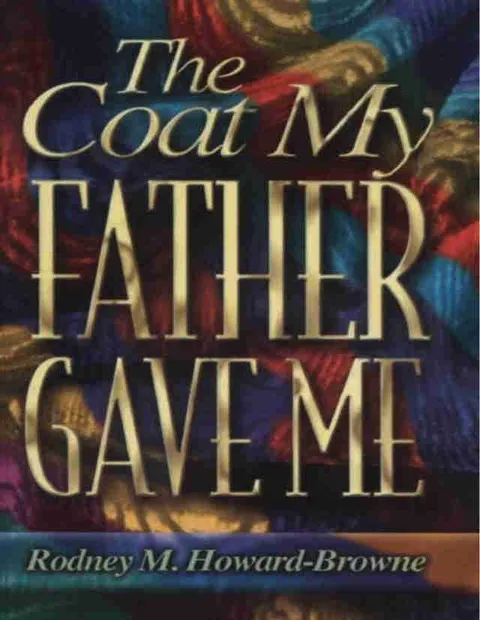

Others like the coat my father gave me Features >>

The Lady, Her Lover, Her Lord

The Temperament God Gave Your Spouse

The Intimate Marriage - A Practical Guide To Building A Great Marriage

Love Like You've Never Been Hurt
How To Relate To Children

Oh This My Husband
%20Karen%20Kingsbury-160.webp)
Family (Firstborn Series 04)

A Ceremony Of Marriage

And The Shofar Blew

Her Mother's Hope
About the Book
"The Coat My Father Gave Me" by Rodney Howard-Browne is a memoir about the author's life growing up in South Africa and his journey to become a successful preacher. The book explores themes of family, faith, and perseverance, and highlights the importance of finding inspiration and guidance in difficult times. Howard-Browne shares personal anecdotes and powerful lessons he learned along the way, making this a heartfelt and inspiring read for those seeking hope and spiritual fulfillment.
Reinhard Bonnke
 Reinhard Bonnke (19 April 1940 - 7 December 2019) was a German-American Pentecostal evangelist, principally known for his gospel missions throughout Africa. Bonnke had been an evangelist and missionary in Africa since 1967. In Nigeria’s city, Lagos, in 2000, a single service is believed to have been attended by 1.6 million people. Christ for all Nations (CFAN), an organisation founded by Bonnke, claims he preached Christ to more than 79 million non believers.
Early life
Reinhard Bonnke was born on 19 April 1940, in the city of Königsberg, East Prussia, Germany, the fifth son of Hermann Bonnke, an army logistics officer in the Reichswehr who fought on the Eastern Front; his paternal grandfather was August Bonnke, the owner of a windmill in Trunz, East Prussia (now Milejewo, Poland), who was healed of an unknown ailment by the evangelist Luis Graf in 1922, but died during the evacuation of East Prussia in 1945. His mother was Metaa Bonnke (née Scheffler). Bonnke had six siblings: Martin, Gerhard, Jurgen, Peter and Felicitas, his only younger sibling and his only sister.
With his mother and siblings, he was taken to Denmark during the evacuation of East Prussia and spent some years in a displaced persons centre before settling in Gluckstadt, West Germany. After his own war service, his father became a pastor in the village of Krempe. He became a born-again Christian at the age of nine after his mother spoke with him about a sin that he had committed. He sensed a call from God to serve as a missionary in Africa from the age of 10 and said that he had the experience of baptism in the Holy Spirit.
Bonnke studied at the Bible College of Wales in Swansea, Wales, UK, where he was inspired by the director, Samuel Rees Howells. In one meeting Howells spoke of answered prayer; after this meeting, Bonnke prayed, "Lord, I also want to be a man of faith. I want to see your way of providing for needs." Passing through London, he had a chance meeting with the preacher George Jeffreys. As he walked, he came across a house with a nameplate on the front that said “George Jeffreys”. He wondered if it could be the great George Jeffreys who had founded the Elim Pentecostal churches in Ireland and England. He prayed for the young student and imparted grace to him.
After graduation, he pastored in Germany for seven years, including establishing a congregation in Flensburg which met in a former rum factory.
African mission
His work in Africa began in 1967. He arrived in South Africa and almost immediately encountered the apartheid system, which he developed an antipathy towards, which in turn caused friction between him and the minister who oversaw him in South Africa. Bonnke subsequently accepted a position to oversee three churches in Lesotho, but began again from scratch after he discovered that unbiblical practices had emerged in the congregations he was to oversee.
In the first few years of his work, Bonnke encountered poor results from his evangelistic efforts and felt frustrated at the pace of his ministry. Then he had a recurring dream featuring a picture of the map of Africa being splattered with blood and heard the voice of God crying "Africa Shall Be Saved". This ultimately led him to adopt large-scale evangelism, rather than the traditional small-scale missionary approach. He rented a stadium in Gaborone, Botswana, and preached with little cooperation from local churches. The first meetings saw about 100 people attending, but this number grew swiftly.
In 1974, Bonnke founded the mission organisation Christ for all Nations (CfaN). Originally based in Johannesburg, South Africa, the headquarters were relocated to Frankfurt, Germany, in 1986. This was done primarily to distance the organisation from South Africa's apartheid policy at the time.[9] Today CfaN has 9 offices across 5 continents.
Bonnke began his ministry holding tent meetings that accommodated large crowds. According to an account published by the Christian Broadcasting Network, in 1984 he commissioned the construction of what was claimed to be the world's largest mobile structure - a tent capable of seating 34,000; this was destroyed in a wind storm just before a major meeting and therefore the team decided to hold the event in the open air instead. According to this account, the event was subsequently attended by over 100,000 people which is far greater than the 34,000 seating capacity the tents could have contained. For various reasons, usually due to insufficient capacity, the 34,000-seat tent was only used once, in Harare, Zimbabwe, in 1986.
In addition to South Africa, Bonnke would also hold many campaigns in other African countries including Nigeria and Kenya and became known as "the Billy Graham of Africa." In the 5 February 2001 edition of Graham's Christianity Today, journalist Corrie Cutrer stated that Bonnke had set "record-breaking attendances" at recent events he held in Nigeria. Bonnke announced his "farewell gospel crusade" to be held in Lagos, Nigeria, in November 2017. Lagos is also the location of a gospel crusade held in 2000 which, according to CfaN, is the organization's largest to date, drawing an attendance of six million people in a 5-night crusade, and as much as 1.6 million attendance in one day. In 2009 Bonnke appointed his successor, Daniel Kolenda who continues to lead the ministry. In 2020, following Bonnke's death, Christ for all Nations launched the CfaN Evangelism Bootcamp. In 2022 Schools of Evangelism were started in South Africa, and Europe and Fire Camps were launched in dozens of nations on six continents. Today, more than 4,000 evangelists have been trained by Christ for all Nations and more than 91-million decisions for Christ have been counted. In 2024, in the 50th year of the ministry, CfaN is conducting 50 gospel crusades throughout the African continent.
Persecution
Kano riots, subsequent expulsion from Nigeria, and return to the country
In 1991, during Bonnke's visit to Kano in Nigeria, there were riots in the city as Muslims protested over remarks he had reportedly made about Islam in the city of Kaduna on his way to Kano. A rumour was spread that Bonnke was planning to "lead an invasion" into Kano. Muslim youths gathered at the Kofar Mata Eide-ground where they were addressed by several clerics who claimed that Bonnke was going to blaspheme Islam. About 8,000 youths gathered at the Emir's palace and after noon prayers the riots ensued, during which many Christians sustained various injuries and several churches were burned. Official reports state that at least eight people were killed, although other research and reports place the number as being as much as 500 as many of the Christians who were killed were thrown into wells and the attacks were spread between multiple locations.
Despite the state governor absolving Bonnke of any blame for the incident, Bonnke's subsequent attempts to return to Nigeria were denied, as the Nigerian Embassy refused his visa applications. In 2000, a new civilian government in Nigeria was elected to power, and President Olusegun Obasanjo, a Christian, invited Reinhard Bonnke to return to the country. Bonnke returned to Nigeria and held a crusades in Benin City in the south. He would deny reports that the Northern Region of Nigeria's Council of Ulamas banned him from entering northern Nigeria.
Bonnke held many crusades in Nigeria after 2000, and conversion rates were significantly higher than in many other African nations, with one campaign achieving a conversion of 1.1 million people. Nigeria would be where his final international crusade would be held, in Lagos in 2017.
Personal life
After graduating from the Bible College of Wales and returning to Germany, Bonnke led a series of meetings in Rendsburg. He began receiving speaking invitations from all around Germany and the rest of the world. Bonnke met Anni Suelze at a gospel music festival and admired the grace which she showed when a mistake led to her losing a music competition. He offered to preach at the church she attended and over time they fell in love. They married in 1964 and had three children: Kai-Uwe Friedrich, known as "Freddy", Gabrielle and Suzanne.
Death
Bonnke died on 7 December 2019. The month before, he had announced on his official Facebook page that he had undergone femur surgery and needed time to "learn how to walk again". Nigerian President Muhammadu Buhari, who is Muslim, praised Bonnke for his frequent visits to Nigeria and described his death as a "great loss to Nigeria".
His appointed successor is the evangelist Daniel Kolenda.
He would be buried in Gotha, Florida's Woodlawn Memorial Park, with his memorial stone being shaped to resemble Africa.
Reinhard Bonnke (19 April 1940 - 7 December 2019) was a German-American Pentecostal evangelist, principally known for his gospel missions throughout Africa. Bonnke had been an evangelist and missionary in Africa since 1967. In Nigeria’s city, Lagos, in 2000, a single service is believed to have been attended by 1.6 million people. Christ for all Nations (CFAN), an organisation founded by Bonnke, claims he preached Christ to more than 79 million non believers.
Early life
Reinhard Bonnke was born on 19 April 1940, in the city of Königsberg, East Prussia, Germany, the fifth son of Hermann Bonnke, an army logistics officer in the Reichswehr who fought on the Eastern Front; his paternal grandfather was August Bonnke, the owner of a windmill in Trunz, East Prussia (now Milejewo, Poland), who was healed of an unknown ailment by the evangelist Luis Graf in 1922, but died during the evacuation of East Prussia in 1945. His mother was Metaa Bonnke (née Scheffler). Bonnke had six siblings: Martin, Gerhard, Jurgen, Peter and Felicitas, his only younger sibling and his only sister.
With his mother and siblings, he was taken to Denmark during the evacuation of East Prussia and spent some years in a displaced persons centre before settling in Gluckstadt, West Germany. After his own war service, his father became a pastor in the village of Krempe. He became a born-again Christian at the age of nine after his mother spoke with him about a sin that he had committed. He sensed a call from God to serve as a missionary in Africa from the age of 10 and said that he had the experience of baptism in the Holy Spirit.
Bonnke studied at the Bible College of Wales in Swansea, Wales, UK, where he was inspired by the director, Samuel Rees Howells. In one meeting Howells spoke of answered prayer; after this meeting, Bonnke prayed, "Lord, I also want to be a man of faith. I want to see your way of providing for needs." Passing through London, he had a chance meeting with the preacher George Jeffreys. As he walked, he came across a house with a nameplate on the front that said “George Jeffreys”. He wondered if it could be the great George Jeffreys who had founded the Elim Pentecostal churches in Ireland and England. He prayed for the young student and imparted grace to him.
After graduation, he pastored in Germany for seven years, including establishing a congregation in Flensburg which met in a former rum factory.
African mission
His work in Africa began in 1967. He arrived in South Africa and almost immediately encountered the apartheid system, which he developed an antipathy towards, which in turn caused friction between him and the minister who oversaw him in South Africa. Bonnke subsequently accepted a position to oversee three churches in Lesotho, but began again from scratch after he discovered that unbiblical practices had emerged in the congregations he was to oversee.
In the first few years of his work, Bonnke encountered poor results from his evangelistic efforts and felt frustrated at the pace of his ministry. Then he had a recurring dream featuring a picture of the map of Africa being splattered with blood and heard the voice of God crying "Africa Shall Be Saved". This ultimately led him to adopt large-scale evangelism, rather than the traditional small-scale missionary approach. He rented a stadium in Gaborone, Botswana, and preached with little cooperation from local churches. The first meetings saw about 100 people attending, but this number grew swiftly.
In 1974, Bonnke founded the mission organisation Christ for all Nations (CfaN). Originally based in Johannesburg, South Africa, the headquarters were relocated to Frankfurt, Germany, in 1986. This was done primarily to distance the organisation from South Africa's apartheid policy at the time.[9] Today CfaN has 9 offices across 5 continents.
Bonnke began his ministry holding tent meetings that accommodated large crowds. According to an account published by the Christian Broadcasting Network, in 1984 he commissioned the construction of what was claimed to be the world's largest mobile structure - a tent capable of seating 34,000; this was destroyed in a wind storm just before a major meeting and therefore the team decided to hold the event in the open air instead. According to this account, the event was subsequently attended by over 100,000 people which is far greater than the 34,000 seating capacity the tents could have contained. For various reasons, usually due to insufficient capacity, the 34,000-seat tent was only used once, in Harare, Zimbabwe, in 1986.
In addition to South Africa, Bonnke would also hold many campaigns in other African countries including Nigeria and Kenya and became known as "the Billy Graham of Africa." In the 5 February 2001 edition of Graham's Christianity Today, journalist Corrie Cutrer stated that Bonnke had set "record-breaking attendances" at recent events he held in Nigeria. Bonnke announced his "farewell gospel crusade" to be held in Lagos, Nigeria, in November 2017. Lagos is also the location of a gospel crusade held in 2000 which, according to CfaN, is the organization's largest to date, drawing an attendance of six million people in a 5-night crusade, and as much as 1.6 million attendance in one day. In 2009 Bonnke appointed his successor, Daniel Kolenda who continues to lead the ministry. In 2020, following Bonnke's death, Christ for all Nations launched the CfaN Evangelism Bootcamp. In 2022 Schools of Evangelism were started in South Africa, and Europe and Fire Camps were launched in dozens of nations on six continents. Today, more than 4,000 evangelists have been trained by Christ for all Nations and more than 91-million decisions for Christ have been counted. In 2024, in the 50th year of the ministry, CfaN is conducting 50 gospel crusades throughout the African continent.
Persecution
Kano riots, subsequent expulsion from Nigeria, and return to the country
In 1991, during Bonnke's visit to Kano in Nigeria, there were riots in the city as Muslims protested over remarks he had reportedly made about Islam in the city of Kaduna on his way to Kano. A rumour was spread that Bonnke was planning to "lead an invasion" into Kano. Muslim youths gathered at the Kofar Mata Eide-ground where they were addressed by several clerics who claimed that Bonnke was going to blaspheme Islam. About 8,000 youths gathered at the Emir's palace and after noon prayers the riots ensued, during which many Christians sustained various injuries and several churches were burned. Official reports state that at least eight people were killed, although other research and reports place the number as being as much as 500 as many of the Christians who were killed were thrown into wells and the attacks were spread between multiple locations.
Despite the state governor absolving Bonnke of any blame for the incident, Bonnke's subsequent attempts to return to Nigeria were denied, as the Nigerian Embassy refused his visa applications. In 2000, a new civilian government in Nigeria was elected to power, and President Olusegun Obasanjo, a Christian, invited Reinhard Bonnke to return to the country. Bonnke returned to Nigeria and held a crusades in Benin City in the south. He would deny reports that the Northern Region of Nigeria's Council of Ulamas banned him from entering northern Nigeria.
Bonnke held many crusades in Nigeria after 2000, and conversion rates were significantly higher than in many other African nations, with one campaign achieving a conversion of 1.1 million people. Nigeria would be where his final international crusade would be held, in Lagos in 2017.
Personal life
After graduating from the Bible College of Wales and returning to Germany, Bonnke led a series of meetings in Rendsburg. He began receiving speaking invitations from all around Germany and the rest of the world. Bonnke met Anni Suelze at a gospel music festival and admired the grace which she showed when a mistake led to her losing a music competition. He offered to preach at the church she attended and over time they fell in love. They married in 1964 and had three children: Kai-Uwe Friedrich, known as "Freddy", Gabrielle and Suzanne.
Death
Bonnke died on 7 December 2019. The month before, he had announced on his official Facebook page that he had undergone femur surgery and needed time to "learn how to walk again". Nigerian President Muhammadu Buhari, who is Muslim, praised Bonnke for his frequent visits to Nigeria and described his death as a "great loss to Nigeria".
His appointed successor is the evangelist Daniel Kolenda.
He would be buried in Gotha, Florida's Woodlawn Memorial Park, with his memorial stone being shaped to resemble Africa.
‘curse god and die’ - satan’s favorite response to suffering
My Dear Globdrop, Regretfully, I have received your last letter. Centuries serving his Lowliness — lifetimes damning souls and training young devils — and yet you still find ways to surprise me. Are you or are you not but one soul away from active duty, from wearing our legion’s darkest colors on the frontlines? If so, what should I expect to find you consumed with? Trapping? Spoiling? Sabotaging? Or, should I — with so much at stake — expect to find you playing with your food like a human child, giggling girlishly about? You have not tasted any meat pierced with your own spear, yet you trifle with the chase. Whatsoever do you mean? I can hear your simple mind ask. Your man, you report, went in for a routine shoulder surgery where, inexplicably , they pierced his lung. This alone causes you great joy, does it? You take great pride that “the fork pierced the prey.” You leave him unattended to tell me all about the victory. Yes, the doctor’s blade took an unexpected (and delicious) detour, but tell me, has the blade yet punctured his soul? Has the wound brought forth an infection of spirit ? Are you so lazy as to hope that the doctor has done your work for you? You have failed miserably to realize that it is not the surgeon’s miscalculations but your patient’s response that gets at the vital thing, the eternal thing. Pierced spirits, seared consciences, scarred hearts, burnt beliefs — these we bend our dark labors toward. Tantalizing trials and savory sufferings serve as an opportunity for this, the real work. Collapsed lungs — or more commonly: sick children, diseased spouses, faltering friendships, ruined romances, cursed careers, even the occasional dead pet — are mere playthings compared to what they can produce: a collapsed faith. This is to strike at the jugular, to slice the major artery. We love the vermin’s squeals and agonies, but never at the expense of our filled bellies. Unpredictable Flame At the expense? you wonder. Suffering, you should know by now, is most unpredictable. Most assuredly it can harden the heart — pushing out the very possibility of a kind, powerful, all-knowing God. Or (as you better hope is not your case) it can be the very thing used by the Enemy to rob our knives and forks of their roast. Have you not glanced over the apostle’s shoulder lately? Not all suffering ends up advancing our cause. We rejoice in our sufferings, knowing that suffering produces endurance, and endurance produces character, and character produces hope, and hope does not put us to shame, because God’s love has been poured into our hearts through the Holy Spirit who has been given to us. (Romans 5:3–5) Who means for suffering to encourage such a horrid thing as endurance, nephew? Do we mean for suffering to produce in them — and I struggle to even write the word — hope ? The punctured lungs, the groans and pains, at every turn, threaten to terribly backfire. The Enemy knows this well enough, and for all his talk, he is as underhanded as any devil. Often, we think we have set the perfect trap, until we discover (too late) that he had tampered with our afflictions and temptations to fit his designs. Making them squeal is pleasurable, watching them squirm under torments make us howl and snort, but it amounts to a mere play if they escape to the Enemy and further enact his dreadful purposes. This, you must ensure, does not happen with your man. Adding Iniquity to Injury Have done, at once, with your prepubescent squeaks and premature gloating. The game is afoot, and the Enemy means to have him as surely as we do. First, make his suffering personal. The question of “How could a good God allow bad things to happen?” is not nearly as useful a question as “How could God allow this bad thing to happen to me ?” This, of course, is the precise question to ask. The Enemy parades himself as the “personal God” at every turn; well, then, let him give his personal defense to the charges. Where was this personal God during his surgery? Give no cover to the Enemy on this point. Press your man, as we have pressed for centuries: Of all people to face this loss, this pain, this nightmare — why me ? Casually point out to your man that his “loving God,” his “refuge,” plays terrible favorites. None of the Christians he knows is facing such “lifelong complications” from such an improbable miscue. Perish any consideration that the Enemy is attempting, at any rate, to twist our bed of thorns into an eternal crown of glory. Hide the Enemy’s lies that such afflictions are precisely measured for their eternal good or in any way purposeful . Second, attend every stab. Never overlook the power of the small inconveniences and stings of discomfort. You must be always on standby for your patient — ready to nurse every flicker of pain toward self-pity, anger, or delectable despair. When he goes to reply to that email one-handed, or has to ask his wife for help to put on his socks, or feels the residual irritations and distresses that will accompany him to the grave — be ready to sow bitterness and pour salt on the wound. No crack, never forget, is too small to exploit. As you attend to his every moan, understand you will not be alone. The Enemy stands by them, always at their beck and call, like a drooling terrier, ready to remind them of his lies and calm them with his presence. In his embarrassing commitment to his fictions, his Spirit stands by to whisper to them. We can’t overhear most of it, but undoubtedly it has to do with Scripture telling them something like he “lovingly” designs their aches, pains, diseases, and deformities in this world, and to persuade them that he is their true comfort, and that this is not their true home. Fight whisper with whisper to keep the dogs from returning to their vomit. Third, hide Tomorrow from him. Finally, conceal any fictions about a Tomorrow that will make all sufferings “untrue.” Of such a Day that beaten, bruised, and bloodied apostle made consistent (and irritating) appeals to, calling the summation of his manifold (and mouthwatering) sufferings as nothing — nothing! — not even worth comparing to that Day of an “eternal weight of glory” which lies ahead (2 Corinthians 4:17) — a “glory” our Father Below weighed and found greatly wanting. Curse God and Die Affliction, nephew, is an uncertain flame, certainly not one to be trifled with. Job and his most useful wife prove a great illustration. Crushed with the fatal blows to property and household, this “upright” man tried to make our Father the fool, shaming us all by responding to murder, devastation, and destruction in such a servile and groveling way: “Job arose and tore his robe and shaved his head and fell on the ground and worshiped ” (Job 1:20). But not all responded in kind. Job’s wife, whom our Master most mercifully and wisely preserved, responded most excellently: “Do you still hold fast your integrity? Curse God and die” (Job 2:9). Curse God and die — I couldn’t have said it any better. Here lies the battlefield, nephew. Not the inflicting of affliction, but the infecting of the soul. We want each man, woman, and child to renounce such a Poser, to spit upon their former loyalties, and curse him before heaven’s eyes. This, nephew, this , is where your man must be led: To much more than a punctured lung But to a depleted faith and denouncing tongue. To teeth tightly clenched and fists held high In flames to curse his god and die. Damnation, Globdrop, damnation. Nothing less. Your most expectant Uncle, Grimgod