

Others like and the shofar blew Features >>









-160.webp)
About the Book
"And the Shofar Blew" by Francine Rivers tells the story of a pastor who becomes consumed by ambition and fame, leading him to neglect his family and his faith. As he spirals into moral and spiritual decline, his wife must confront the consequences of his choices and find a way to rebuild their shattered lives. Through this powerful and emotional story, Rivers explores themes of redemption, forgiveness, and the destructive nature of unchecked ambition.
Amy Carmichael
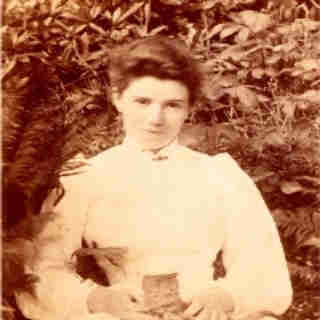 Born in Belfast Ireland, to a devout family of Scottish ancestry, Carmichael was educated at home and in England, where she lived with the familt of Robert Wilson after her father’s death. While never officially adopted, she used the hyphenated name Wilson-Carmichael as late as 1912. Her missionary call came through contacts with the Keswick movement. In 1892 she volunteered to the China Inland Mission but was refused on health grounds. However, in 1893 she sailed for Japan as the first Keswick missionary to join the Church Missionary Society (CMS) work led by Barclay Buxton. After less than two years in Japan and Ceylon, she was back in England before the end of 1894. The next year she volunteered to the Church of England Zenana Missionary Society, and in November 1895 she arrived in South India, never to leave. While still learning the difficult Tamil language, she commenced itinerant evangelism with a band of Indian Christian women, guided by the CMS missionary Thomas Walker. She soon found herself responsible for Indian women converts, and in 1901, she, the Walkers, and their Indian colleagues settled in Dohnavur. During her village itinerations, she had become increasingly aware of the fact that many Indian children were dedicated to the gods by their parents or guardians, became temple children, and lived in moral and spiritual danger. It became her mission to rescue and raise these children, and so the Dohnavur Fellowship came into being (registered 1927). Known at Dohnavur as Amma (Mother), Carmichael was the leader, and the work became well known through her writing. Workers volunteered and financial support was received, though money was never solicited. In 1931 she had a serious fall, and this, with arthritis, kept her an invalid for the rest of her life. She continued to write, and identified leaders, missionary and Indian, to take her place. The Dohnavur Fellowship still continues today.
Jocelyn Murray, “Carmichael, Amy Beatrice,” in Biographical Dictionary of Christian Missions, ed. Gerald H. Anderson (New York: Macmillan Reference USA, 1998), 116.
This article is reprinted from Biographical Dictionary of Christian Missions, Macmillan Reference USA, copyright © 1998 Gerald H. Anderson, by permission of Macmillan Reference USA, New York, NY. All rights reserved.
“Ammai” of orphans and holiness author
Amy Carmichael was born in Ireland in 1867, the oldest of seven children. As a teen, she attended a Wesleyan Methodist girls boarding school, until her father died when she was 18. Carmichael twice attended Keswick Conventions and experienced a holiness conversion which led her to work among the poor in Belfast. Through the Keswick Conventions, Carmichael met Robert Wilson. He developed a close relationship with the young woman, and invited her to live with his family. Carmichael soon felt a call to mission work and applied to the China Inland Mission as Amy Carmichael-Wilson. Although she did not go to China due to health reasons, Carmichael did go to Japan for a brief period of time. There she dressed in kimonos and began to learn Japanese. Her letters home from Japan became the basis for her first book, From Sunrise Land. Carmichael left Japan due to health reasons, eventually returning to England. She soon accepted a position with the Church of England’s Zenana Missionary Society, serving in India. From 1895 to 1925, her work with orphans in Tinnevelly (now Tirunelveli) was supported by the Church of England. After that time, Carmichael continued her work in the faith mission style, establishing an orphanage in Dohnavur. The orphanage first cared for girls who had been temple girls, who would eventually become temple prostitutes. Later the orphanage accepted boys as well.
Carmichael never returned to England after arriving in India. She wrote prolifically, publishing nearly 40 books. In her personal devotions, she relied on scripture and poetry. She wrote many of her own poems and songs. Carmichael had a bad fall in 1931, which restricted her movement. She stayed in her room, writing and studying. She often quoted Julian of Norwich when she wrote of suffering and patience. Many of Carmichael’s books have stories of Dohnavur children, interspersed with scripture, verses, and photographs of the children or nature. Carmichael never directly asked for funding, but the mission continued to be supported through donations. In 1951 Carmichael died at Dohnavur. Her headstone is inscribed “Ammai”, revered mother, which the children of Dohnavur called Carmichael.
Carmichael’s lengthy ministry at Dohnavur was sustained through her strong reliance upon scripture and prayer. Her early dedication to holiness practices and her roots in the Keswick tradition helped to guide her strong will and determination in her mission to the children of southern India.
by Rev. Lisa Beth White
Born in Belfast Ireland, to a devout family of Scottish ancestry, Carmichael was educated at home and in England, where she lived with the familt of Robert Wilson after her father’s death. While never officially adopted, she used the hyphenated name Wilson-Carmichael as late as 1912. Her missionary call came through contacts with the Keswick movement. In 1892 she volunteered to the China Inland Mission but was refused on health grounds. However, in 1893 she sailed for Japan as the first Keswick missionary to join the Church Missionary Society (CMS) work led by Barclay Buxton. After less than two years in Japan and Ceylon, she was back in England before the end of 1894. The next year she volunteered to the Church of England Zenana Missionary Society, and in November 1895 she arrived in South India, never to leave. While still learning the difficult Tamil language, she commenced itinerant evangelism with a band of Indian Christian women, guided by the CMS missionary Thomas Walker. She soon found herself responsible for Indian women converts, and in 1901, she, the Walkers, and their Indian colleagues settled in Dohnavur. During her village itinerations, she had become increasingly aware of the fact that many Indian children were dedicated to the gods by their parents or guardians, became temple children, and lived in moral and spiritual danger. It became her mission to rescue and raise these children, and so the Dohnavur Fellowship came into being (registered 1927). Known at Dohnavur as Amma (Mother), Carmichael was the leader, and the work became well known through her writing. Workers volunteered and financial support was received, though money was never solicited. In 1931 she had a serious fall, and this, with arthritis, kept her an invalid for the rest of her life. She continued to write, and identified leaders, missionary and Indian, to take her place. The Dohnavur Fellowship still continues today.
Jocelyn Murray, “Carmichael, Amy Beatrice,” in Biographical Dictionary of Christian Missions, ed. Gerald H. Anderson (New York: Macmillan Reference USA, 1998), 116.
This article is reprinted from Biographical Dictionary of Christian Missions, Macmillan Reference USA, copyright © 1998 Gerald H. Anderson, by permission of Macmillan Reference USA, New York, NY. All rights reserved.
“Ammai” of orphans and holiness author
Amy Carmichael was born in Ireland in 1867, the oldest of seven children. As a teen, she attended a Wesleyan Methodist girls boarding school, until her father died when she was 18. Carmichael twice attended Keswick Conventions and experienced a holiness conversion which led her to work among the poor in Belfast. Through the Keswick Conventions, Carmichael met Robert Wilson. He developed a close relationship with the young woman, and invited her to live with his family. Carmichael soon felt a call to mission work and applied to the China Inland Mission as Amy Carmichael-Wilson. Although she did not go to China due to health reasons, Carmichael did go to Japan for a brief period of time. There she dressed in kimonos and began to learn Japanese. Her letters home from Japan became the basis for her first book, From Sunrise Land. Carmichael left Japan due to health reasons, eventually returning to England. She soon accepted a position with the Church of England’s Zenana Missionary Society, serving in India. From 1895 to 1925, her work with orphans in Tinnevelly (now Tirunelveli) was supported by the Church of England. After that time, Carmichael continued her work in the faith mission style, establishing an orphanage in Dohnavur. The orphanage first cared for girls who had been temple girls, who would eventually become temple prostitutes. Later the orphanage accepted boys as well.
Carmichael never returned to England after arriving in India. She wrote prolifically, publishing nearly 40 books. In her personal devotions, she relied on scripture and poetry. She wrote many of her own poems and songs. Carmichael had a bad fall in 1931, which restricted her movement. She stayed in her room, writing and studying. She often quoted Julian of Norwich when she wrote of suffering and patience. Many of Carmichael’s books have stories of Dohnavur children, interspersed with scripture, verses, and photographs of the children or nature. Carmichael never directly asked for funding, but the mission continued to be supported through donations. In 1951 Carmichael died at Dohnavur. Her headstone is inscribed “Ammai”, revered mother, which the children of Dohnavur called Carmichael.
Carmichael’s lengthy ministry at Dohnavur was sustained through her strong reliance upon scripture and prayer. Her early dedication to holiness practices and her roots in the Keswick tradition helped to guide her strong will and determination in her mission to the children of southern India.
by Rev. Lisa Beth White
when they hurt you with words
The spirit of the old adage “words will never harm me” is not the sentiment of the Scriptures. Words can hurt, even when directed from an unknown profile online. God made a world in which words are powerful. “Death and life are in the power of the tongue” (Proverbs 18:21). And as public discourse falls to new lows in the digital age, God has not left us without a guide for how to respond to the pain when we are persecuted with words. Leaf through the New Testament, and you’ll find verbal attacks on Jesus, his apostles, and his church on nearly every page. At times, these attacks escalate to physical persecution — the stoning of Stephen, the martyrdom of James, the imprisonments of Peter and Paul, the crucifixion of Christ — but what remains constant, and significant, is a torrent of verbal persecution against Jesus and his people. And verbal persecution is not less than persecution because it’s verbal. Have You Been Reviled? Slander and revile are two of the main words for verbal attack in the English New Testament, and both occur frequently. Early Christians were so accustomed to being spoken against that they developed a rich vocabulary (if you call it that) of being slandered, reviled, insulted, maligned, mocked, and spoken evil against (at least six different Greek verbs, along with several related nouns and adjectives). Of the English terms, revile may be the least common in normal usage today. One dictionary defines it as “to criticize in an abusive or angrily insulting manner.” To take our cues from specific biblical texts, revile can mean “to speak evil against” (Matthew 5:11; Mark 9:39; Acts 19:9; 23:4); it is the opposite of verbally honoring someone (Mark 7:10). Reviling is an attempt to injure with words (1 Peter 3:16). We see it at Jesus’s crucifixion, where “those who passed by derided him” with their words, and the chief priests, scribes, and elders “mocked him,” and “the robbers who were crucified with him also reviled him in the same way” (Matthew 27:39–44). But Jesus not only endured it; he prepared us for it as well. He and his apostles, and the early church, model for us how to receive and respond to slander and reviling. 1. Expect the world to say the worst. Amid this rich vocabulary of verbal attack, the New Testament sends no mixed signals as to whether Christians will be maligned. We will. Jews and Gentiles together bombarded Jesus and his disciples with verbal attacks. Physical persecution came and went, but reviling remained constant. When Paul arrived in Rome, the Jews reported to him, about Christianity, “With regard to this sect we know that everywhere it is spoken against” (Acts 28:22). For Christians, being reviled is not a matter of if but when : “when they speak against you” (1 Peter 2:12). Unbelievers “are surprised when you do not join them in the same flood of debauchery” — so what do they do? “They malign you” (1 Peter 4:4). After all, should we not expect the world, under the power of the devil (1 John 5:19; Ephesians 2:2), to lie about us? The Greek for devil ( diabolos ) actually means slanderer (1 Timothy 3:11; Titus 2:3). As Jesus said to his revilers in John 8:44, “You are of your father the devil, and your will is to do your father’s desires. . . . When he lies, he speaks out of his own character, for he is a liar and the father of lies.” 2. Consider the cause. We should not assume that all verbal opposition we receive is good. Being reviled for Jesus’s sake and for his gospel is one thing; being reviled for our own folly and sin is another (1 Peter 3:17; 4:15–16). As far as it depends on us, we want to “give the adversary no occasion for slander” (1 Timothy 5:14). Slander itself is no win for the church. We want to do what we can, within reason and without compromise, to keep God’s name and word and teaching from reviling (1 Timothy 6:1; Titus 2:5). “Do not let what you regard as good be spoken of as evil” (Romans 14:16). But when the world speaks evil against us because of Jesus, we embrace it. “If you are insulted for the name of Christ , you are blessed, because the Spirit of glory and of God rests upon you” (1 Peter 4:14). 3. Do not revile in return. Christ’s calling to his church is crystal clear: Do not respond in kind. Do not stoop to the level of your revilers. “Keep your conduct honorable” (1 Peter 2:12). “Speak evil of no one” (Titus 3:2), including those who have spoken evil of you. Do not become a verbal vigilante, but “entrust yourself to him who judges justly” (1 Peter 2:23). And as his redeemed, taste the joy of walking in his steps: “When he was reviled, he did not revile in return” (1 Peter 2:23). Paul took up the same mantle: “When reviled, we bless; when persecuted, we endure; when slandered, we entreat” (1 Corinthians 4:12–13). So also Peter charges us to respond “with gentleness and respect, having a good conscience, so that, when you are slandered, those who revile your good behavior in Christ may be put to shame” (1 Peter 3:15–16). When we do not “revile in return,” we put our revilers to shame. Christians do not respond in kind. We lose the battle, and undermine our commission, when we let revilers make us into revilers. And it’s not just a matter of strategy, but of spiritual life and death. “Revilers,” 1 Corinthians 6:10 warns, “will not inherit the kingdom of God,” and Christians are instructed “not to associate with anyone who bears the name of brother if he is . . . a reviler” (1 Corinthians 5:11). Christ expects, even demands, that our speech be different from the world’s, even when we respond to the world’s mean words. 4. Leap for joy. Leap for joy? That might seem way over the top. Can’t we just take our cues from the apostles in Acts 5:41? “They left the presence of the council, rejoicing that they were counted worthy to suffer dishonor for the name.” Amen, rejoice. Yes. Jesus’s own words in the Sermon on the Mount guide us: “Blessed are you when others revile you and persecute you and utter all kinds of evil against you falsely on my account. Rejoice and be glad , for your reward is great in heaven, for so they persecuted the prophets who were before you.” (Matthew 5:11–12). But Luke 6:22–23 doesn’t leave it at simply rejoicing: “Blessed are you when people hate you and when they exclude you and revile you and spurn your name as evil, on account of the Son of Man! Rejoice in that day, and leap for joy , for behold, your reward is great in heaven; for so their fathers did to the prophets.” Whether you’re just rejoicing in God deep down, or finding the emotional wherewithal, in the Spirit, to “leap for joy,” the point is clear: When others dishonor you, and exclude you, and utter all manner of evil against you, and even spurn your name as evil — and that on Jesus’s account , not on the account of your own folly — this is not new, and you are not alone (“so their fathers did to the prophets”). You have a great cause for joy. Their reviling you for his sake means you are with him! And you will know him more as you share in the verbal persecution he endured (Philippians 3:10). 5. On the contrary, bless. There is one more shocking possibility for Christians, even more astounding than leaping for joy: “Do not repay evil for evil or reviling for reviling, but on the contrary, bless , for to this you were called, that you may obtain a blessing” (1 Peter 3:9). This indeed is the spirit of Christ, and gives the most striking testimony of the Spirit of Christ at work in us. The grace and power of God not only enable us to expect and evaluate reviling, and not respond in kind but even rejoice, but also repay reviling with blessing . This is Christlikeness. This is Christian maturity (Matthew 5:48). This reflects the magnanimous heart of our Father in heaven (Matthew 5:45). This is the enemy-love to which Jesus not only calls us but works in us by his Spirit. “Love your enemies and pray for those who persecute you” (Matthew 5:44). In Christ, we have found ourselves blessed when we deserved to be cursed. We have come to know a Father who does not revile those who humbly seek him (James 1:5). When reviled, we now have the opportunity to bless undeserving revilers, just as we have been blessed from above — and will be further blessed for doing so (“that you may obtain a blessing,” 1 Peter 3:9). The swelling ocean of reviling in our day is not just an obstacle to be endured. It is an opportunity for gospel advance — and for deeper joy.