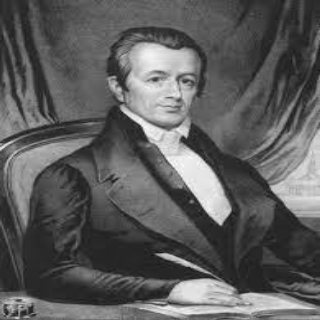

The Assignment Vol 4: The Pain And The Passion Order Printed Copy
- Author: Mike Murdock
- Size: 2.43MB | 172 pages
- |
Others like the assignment vol 4: the pain and the passion Features >>

The Person And Work Of The Holy Spirit

The Release Of The Spirit

The Seven Longings Of The Human Heart
The Code Of The Holy Spirit

The Assignment Vol 2: The Anointing And The Adversity

The Spirit Within & The Spirit Upon

The Assignment Vol 3: The Trials And The Triumphs

The Assignment Vol I: The Dream And The Destimy

When The Righteous Are In Authority

The Skills Of A Shepherd
About the Book
In "The Assignment Vol 4: The Pain and the Passion" by Mike Murdock, readers are taken on a journey to explore the challenges and rewards of fulfilling one's purpose in life. The author delves into the struggles and sacrifices that come with living out one's assignment, while also highlighting the deep fulfillment and passion that arise from following one's calling. Through personal anecdotes and insights, Murdock inspires readers to embrace their assignment, even in the face of pain, in order to experience the ultimate joy and fulfillment that comes from living a purpose-driven life.
William and Catherine Booth
William Booth
The Salvation Army founder, William Booth was born in Nottingham, England, on 10 April 1829.
Salvation Army founder General William BoothFrom his earliest years, William was no stranger to poverty. He was just 14 when his father died and was already working as a pawnbroker’s apprentice to supplement the family’s income.
As a pawnbroker, William saw poverty and suffering on a daily basis. By the time he finished his six-year apprenticeship, he had developed a deep hatred of it.
William, a fiery and impulsive teenager, became a Christian at 15 and began attending the local Wesleyan Chapel. There, he developed the passion that would be the driving force in his life; to reach the down and out of Britain's cities through the Gospel of Christ.
William, a talented preacher from a young age, went on to work as a travelling evangelist with the Methodist church. But it was through preaching in the streets of London's slums that he discovered his life's purpose and The Salvation Army was born.
Catherine Booth
The Salvation Army "mother", Catherine Mumford was born in Ashbourne, Derbyshire, on 17 January 1829.
The Salvation Army founder and Army mother Catherine BoothFrom an early age, she was a serious and sensitive girl with a strong Christian upbringing. By the age of 12, it's said that she had read the Bible through eight times.
At 14, Catherine became ill and spent a great deal of time in bed. She kept herself busy, especially concerned about the problems of alcohol. She wrote articles for a magazine, encouraging people not to drink.
But at 16, she came wholly into her faith. Reading the words, 'My God I am Thine, what a comfort Divine' in her hymn book, she realised the truth of them for herself.
A gentle woman with powerful appeal, Catherine would go on to co-found The Salvation Army and prove an inspiration to women in a harsh time.
Life together
Catherine and William met when he came to preach at her church. They soon fell in love and became engaged. During their three-year engagement, William continued his work as a travelling evangelist. Catherine was a constant support to William, writing him letters of encouragement on his travels.
They married on 16 June 1855.
Together, William and Catherine embarked on a lifelong journey to answer the call of God to bring the Gospel to the people. While William was a natural speaker, Catherine was a quiet woman and not at all accustomed to speaking at gatherings. It took time for her to find her voice, but she was driven by a conviction that woman had the same rights as men to speak. She grew into a courageous speaker, known for her gentle manner but powerful appeal, counselling alcoholics in their homes and holding cottage meetings for new faithfuls.
They were also parents to a growing family of eight children, who were brought up with a firm Christian education and a great love for their God’s mission. Two of their children, Bramwell and Evangeline would go on to be Generals of The Salvation Army.
In 1865, William, by now an independent evangelist, along with Catherine founded The Christian Mission. William preached to the poor while Catherine spoke to the wealthy to gain support for their financially demanding work. In time, she began to hold her own fundraising campaigns.
It was not until 1878 that The Christian Mission became known as The Salvation Army. Modelled after the military with William and his fellow ministers a part of God’s Army, seeking salvation for the masses. William was appointed the first General and his ministers became “officers”.
Catherine became known as “The Army Mother” and remained a strong voice on The Salvation Army’s ideas on social issues and matters of belief.
With its strong focus on the downtrodden and dispossessed, The Salvation Army began to grow beyond Britain’s borders. In William’s lifetime, the Army would be established in 58 countries and colonies. Its mission was and is still guided by William’s book “In Darkest England and the Way Out”, which maps out a revoluntionary approach to social engagement never before undertaken by a church.
Both Catherine and William worked tirelessly to bring the Gospel to all, establishing a movement in the form of The Salvation Army. But, on 4th October 1890, Catherine lost her ongoing battle with ill health. Her son, Bramwell, described her passing as “a warrior laid down her sword to receive her crown”.
William continued on for many years, traveling all over the world to oversee his growing Army. On 20th August 1912, William Booth was, in Salvation Army terms, promoted to glory.
Though passed, both William and Catherine continue to be guiding influences in The Salvation Army and stand as the mightiest examples of how God uses the ordinary to create the extraordinary.
Everyone You Meet Will Live Forever
In a post-Christian, post-modern, post-everything society, God’s people are called to operate from courage, not fear. And when we live courageously, putting our hope in the reality of who God is and what God has already accomplished, it changes everything. We’re freed up to be the people of God living out the mission of God despite what new challenges come our way. But given our increasingly hostile cultural landscape, what does making new disciples, in terms of evangelism, look like? And how do we go about it? I think you’ll be surprised by where we end up, though you probably shouldn’t be. Evangelism in an Age of Unbelief When we talk about what it means to be courageous and faithful in the age of unbelief, we have to talk about the Great Commission. That’s our mission. And though it’s always been true, I think it’s truer than ever to say that evangelism will include hospitality. Hospitality is not the sum total of courage or evangelism, but living courageously will involve living hospitably. The idea of hospitality has been hijacked by popular culture. When the Bible speaks of hospitality, it almost always ties it to aliens and strangers — people who are not like us. Hospitality means welcoming those outside your normal circle of friends — the kind of people it takes a new heart to invite in. It’s opening our lives, and our homes, to those who believe differently than we do. “Hospitality means opening your life and your house to those who believe differently than you do.” Hospitality is all over the Bible. In fact, it’s so important to God that when Paul lists out the traits necessary for a man to be qualified for the office of elder in a local congregation, we find that he must be “above reproach, the husband of one wife, sober-minded, self-controlled, respectable, hospitable, able to teach . . .” (1 Timothy 3:2). To be an elder, a man has to be able to open his life and show kindness to those who believe differently than he does. He has to open up his world to those who are outside of what he believes. Now, why would God be so serious about hospitality? Well, because he has been so hospitable to us. Even when we were living as his enemies, he came and saved us. He opened the door and invited us into his presence. We demonstrate that we truly appreciate the divine hospitality we have received as we extend our own hospitality to those around us. I’m not suggesting that biblical hospitality is the silver bullet for making evangelism work in the twenty-first century (news flash: there’s no silver bullet). But might it not be — in our cynical, polarizing, critical, dumpster-fire culture — that a warm dose of welcoming hospitality will take some folks by surprise and open up the door for opportunities to make disciples of Jesus Christ? Four Ways to Show Hospitality The God of the universe is serious about hospitality. Hospitality can create an entry point for living out the Great Commission and evangelizing our neighbors — especially in the age of unbelief when most think the church is about something completely different. Yet we still have to ask, How do we show hospitality today? It’s not complicated — though that doesn’t mean it’s easy. 1. Welcome Everyone You Meet I think the best first step is to greet everyone you see. That’s easy to do if you are wired like me — I’m a total extrovert. That’s hard if you’re an introvert, and maybe you’re thinking, “Can we just skip to number two, please?” But often the best actions to take are the hardest to do. Pray for grace, ask for strength, take a risk, and greet people. 2. Engage People Remember that every person you encounter is eternal. You have never met a mere mortal, as C.S. Lewis famously observed, and you have never met a human not created to image your God. How can we not seek to care about and take an interest in those we run across? I don’t think this is overly difficult. It simply requires us to be asking open-ended questions, letting our inner curiosity out. We may think this is all obvious — but often we hold back from doing it. We need to get to know people, take an interest in them, and listen to them, rather than just trying to think about how we can say something memorable or hilarious. 3. Make Dinner a Priority Over and over again, God’s word testifies to the holiness of eating together. Long dinners with good food, good drink, good company, and good conversations that center around our beliefs, our hopes, our fears — that’s a good dinner. And I don’t mean just dinner with friends. Yes, eat with your church small group, invite over your good friends, but remember that hospitality means to give loving welcome to those outside your normal circle of friends. It is opening your life, and your house, to those who believe differently than you do. 4. Love the Outsider In every work environment, every neighborhood, we know people who, for whatever reason, are outliers. These men and women are all around us — perhaps more so than ever, in our globalized world. Because of the way sin affects us, we tend to run away from differences and from being around people who think differently and look different than we do. But I want to lay this before you: Jesus Christ would have moved towards the outsiders. God extends radical hospitality to me and to you. That’s why we learn to love, and pursue, the outsider — because we were the outsider. It All Starts with Courage As dark and dire as the landscape may appear right now, as vast and venomous as it may be, we know that the battle has already been won — and that means we don’t fight on the world’s terms. This age of unbelief may feel big and intimidating for the church, but it’s simply a small subplot in a bigger, better story — the greatest story ever told. And in a truly spectacular paradox, there’s a yawning chasm between God’s story and our stories. While we know there are spiritually significant realities at work, we are called to simple, everyday faithfulness that works itself out in lives marked by hospitality. In some ways, it’s the big, flashy acts — the kind of stuff we photograph, slap a filter on, and show all our “friends” online — that go most noticed yet require the least of us. True Christian courage probably looks more like inviting a group of strangers into your home for dinner than the attractive, successful ideas we have dreamed up in our minds. “Remember that everyone you meet is eternal. You have never met a mere mortal.” Taking a risk to be genuinely hospitable actually requires courage because it forces us to rely on our Lord and his strength, not our own. When we open up our homes and build friendships with those who don’t look like us, believe like us, or act like us, we open up our lives and make ourselves vulnerable. We risk getting hurt and making enemies with those who don’t think the way we think or act the way we act. Yet we can do it because of the hope, strength, and courage that we have in the Lord. So, greet the people you see today. Learn to ask good questions. Open up your home to them, especially if they’re lonely or isolated. And above all, trust in God to use your weak hospitality to show his power. Article by Matt Chandler