
Suffering And The Sovereignty Of God Order Printed Copy
- Author: John Piper, Justin Taylor
- Size: 950KB | 256 pages
- |
Others like suffering and the sovereignty of god Features >>

Following The Faith Of Abraham

Holding To The Word Of The Lord
Rise And Progress Of Religion In The Soul

Slaying The Giants In Your Life
Overcoming The Storms Of Life

Stand: A Call For The Endurance Of The Saints
Surviving The Anointing
Holiness, Truth And The Presence Of God
-160.webp)
Uprooting The Spirit Of Fear

Supernatural Power Of God
About the Book
"Suffering and the Sovereignty of God" is a collection of essays that explore the interconnected topics of suffering and God's sovereignty. The authors discuss how these two concepts intersect in the Christian faith, offering guidance and encouragement for those facing difficulties and hardships. Through various perspectives and insights, the book ultimately emphasizes the importance of trusting in God's ultimate plan and sovereignty, even in the midst of suffering.
John and Betty Stam
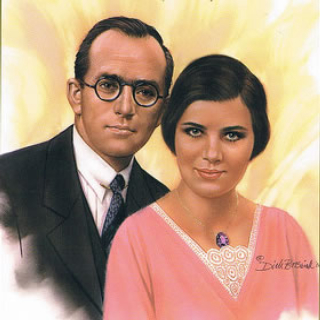 The year 1934. Americans John and Betty Stam were serving as missionaries in China. One morning Betty was bathing her three-month-old daughter Helen Priscilla Stam when Tsingteh's city magistrate appeared. Communist forces were near, he warned, and urged the Stams to flee.
So John Stam went out to investigate the situation for himself. He received conflicting reports. Taking no chances, he arranged for Betty and the baby to be escorted away to safety if need be. But before the Stams could make their break, the Communists were inside the city. By little-known paths, they had streamed over the mountains behind government troops. Now gun shots sounded in the streets as looting began. The enemy beat on the Stams' own gate.
A faithful cook and maid at the mission station had stayed behind. The Stams knelt with them in prayer. But the invaders were pounding at the door. John opened it and spoke courteously to the four leaders who entered, asking them if they were hungry. Betty brought them tea and cakes. The courtesy meant nothing. They demanded all the money the Stams had, and John handed it over. As the men bound him, he pleaded for the safety of his wife and child. The Communists left Betty and Helen behind as they led John off to their headquarters.
Before long, they reappeared, demanding mother and child. The maid and cook pleaded to be allowed to accompany Betty.
"No," barked the captors, and threatened to shoot.
"It is better for you to stay here," Betty whispered. "If anything happens to us, look after the baby."
[When we consecrate ourselves to God, we think we are making a great sacrifice, and doing lots for Him, when really we are only letting go some little, bitsie trinkets we have been grabbing, and when our hands are empty, He fills them full of His treasures. --Betty Stam]
Betty was led to her husband's side. Little Helen needed some things and John was allowed to return home under guard to fetch them. But everything had been stolen. That night John was allowed to write a letter to mission authorities. "My wife, baby and myself are today in the hands of the Communists in the city of Tsingteh. Their demand is twenty thousand dollars for our release. . . . We were too late. The Lord bless and guide you. As for us, may God be glorified, whether by life or by death."
Prisoners in the local jail were released to make room for the Stams. Frightened by rifle fire, the baby cried out. One of the Reds said, "Let's kill the baby. It is in our way." A bystander asked, "Why kill her? What harm has she done?"
"Are you a Christian?" shouted one of the guards.
The man said he was not; he was one of the prisoners just released.
"Will you die for this foreign baby?" they asked. As Betty hugged Helen to her chest, the man was hacked to pieces before her eyes.
Terror in the Streets
The next morning their captors led the Stams toward Miaosheo, twelve miles distant. John carried little Helen, but Betty, who was not physically strong, owing to a youthful bout with inflammatory rheumatitis was allowed to ride a horse part of the way. Terror reigned in the streets of Miaosheo. Under guard, the foreign family was hustled into the postmaster's shop.
"Where are you going?" asked the postmaster, who recognized them from their previous visits to his town. "We do not know where they are going, but we are going to heaven," answered John. He left a letter with the postmaster. "I tried to persuade them to let my wife and baby go back from Tsingteh with a letter to you, but they would not let her. . . ."
That night the three were held in the house of a wealthy man who had fled. They were guarded by soldiers. John was tied to a post all that cold night, but Betty was allowed enough freedom to tend the baby. As it turned out, she did more than that.
Execution
The next morning the young couple were led through town without the baby. Their hands were tightly bound, and they were stripped of their outer garments as if they were common criminals. John walked barefoot. He had given his socks to Betty. The soldiers jeered and called the town’s folk to come see the execution. The terrified people obeyed.
On the way to the execution, a medicine-seller, considered a lukewarm Christian at best, stepped from the crowd and pleaded for the lives of the two foreigners. The Reds angrily ordered him back. The man would not be stilled. His house was searched, a Bible and hymnbook found, and he, too was dragged away to die as a hated Christian.
John pleaded for the man’s life. The Red leader sharply ordered him to kneel. As John was speaking softly, the Red leader swung his sword through the missionary’s throat so that his head was severed from his body. Betty did not scream. She quivered and fell bound beside her husband’s body. As she knelt there, the same sword ended her life with a single blow.
Betty
Betty Scott was born in the United States but reared in China as the daughter of missionaries. She came to the United States and attended Wilson College in Pennsylvania. Betty prepared to follow in her parents’ footsteps and work in China or wherever else the Lord directed her.
But China it proved to be. At a prayer meeting for China, she met John Stam and a friendship developed that ripened into love. Painfully they recognized that marriage was not yet possible. “The China Inland Mission has appealed for men, single men, to work in sections where it would be impossible to take a woman until more settled work has commenced,” wrote John. He committed the matter to the Lord, whose work, he felt, must come before any human affection. At any rate, Betty would be leaving for China before him, to work in an entirely different region, and so they must be separated anyhow. As a matter of fact, John had not yet even been accepted by the China Inland Mission whereas Betty had. They parted after a long tender day, sharing their faith, picnicking, talking, and praying.
Betty sailed while John continued his studies. On July 1, 1932, John, too, was accepted for service in China. Now at least he could head toward the same continent as Betty. He sailed for Shanghai.
Meanwhile, Betty found her plans thwarted. A senior missionary had been captured by the Communists in the region where she was to have worked. The mission directors decided to keep her in a temporary station, and later ill-health brought her to Shanghai. Thus without any choice on her part, she was in Shanghai when John landed in China. Immediately they became engaged and a year later were married, long before they expected it. In October, 1934 Helen Priscilla was born to them. What would become of her now that her parents John and Betty were dead?
In the Hills
For two days, local Christians huddled in hiding in the hills around Miaosheo. Among them was a Chinese evangelist named Mr. Lo. Through informants, he learned that the Communists had captured two foreigners. At first he did not realize that these were John and Betty Stam, with whom he had worked, but as he received more details, he put two and two together. As soon as government troops entered the valley and it was safe to venture forth, Mr. Lo hurried to town. His questions met with silence. Everyone was fearful that spies might report anyone who said too much.
An old woman whispered to Pastor Lo that there was a baby left behind. She nodded in the direction of the house where John and Betty had been chained their last night on earth. Pastor Lo hurried to the site and found room after room trashed by the bandits. Then he heard a muffled cry. Tucked by her mother in a little sleeping bag, Helen was warm and alive, although hungry after her two day fast.
The kindly pastor took the child in his arms and carried her to his wife. With the help of a local Christian family, he wrapped the bodies that still lay upon the hillside and placed them into coffins. To the crowd that gathered he explained that the missionaries had only come to tell them how they might find forgiveness of sin in Christ. Leaving others to bury the dead, he hurried home. Somehow Helen had to be gotten to safety.
Pastor Lo's own son, a boy of four, was desperately ill -- semi-conscious after days of exposure. Pastor Lo had to find a way to carry the children a hundred miles through mountains infested by bandits and Communists. Brave men were found willing to help bear the children to safety, but there was no money to pay them for their efforts. Lo had been robbed of everything he had.
From Beyond the Grave
But from beyond the grave, Betty provided. Tucked in Helen's sleeping bag were a change of clothes and some diapers. Pinned between these articles of clothing were two five dollar bills. It made the difference.
Placing the children in rice baskets slung from the two ends of a bamboo pole, the group departed quietly, taking turns carrying the precious cargo over their shoulders. Mrs. Lo was able to find Chinese mothers along the way to nurse Helen. On foot, they came safely through their perils. Lo's own boy recovered consciousness suddenly and sat up, singing a hymn.
Eight days after the Stams fell into Communist hands, another missionary in a nearby city heard a rap at his door. He opened it and a Chinese woman, stained with travel, entered the house, bearing a bundle in her arms. "This is all we have left," she said brokenly.
The missionary took the bundle and turned back the blanket to uncover the sleeping face of Helen Priscilla Stam. Many kind hands had labored to preserve the infant girl, but none kinder than Betty who had spared no effort for her baby even as she herself faced degradation and death.
Kathleen White has written an excellent and very readable biography John and Betty Stam, available from Bethany House Publishers (1988). She reports that Betty's alma mater, Wilson College in Pennsylvania, took over baby Helen's support and covered the costs of her college education. She added: "Helen is living in this country (USA) with her husband and family but does not wish her identity and whereabouts to be made known."
Resources:
Huizenga, Lee S. John and Betty Stam; Martyrs. Zondervan, 1935.
Pollock, John. Victims of the Long March and Other Stories. Waco, Texas.: Word Publishing, 1970.
Taylor, Mrs. Howard. The Triumph of John and Betty Stam. China Inland Mission, 1935.
The year 1934. Americans John and Betty Stam were serving as missionaries in China. One morning Betty was bathing her three-month-old daughter Helen Priscilla Stam when Tsingteh's city magistrate appeared. Communist forces were near, he warned, and urged the Stams to flee.
So John Stam went out to investigate the situation for himself. He received conflicting reports. Taking no chances, he arranged for Betty and the baby to be escorted away to safety if need be. But before the Stams could make their break, the Communists were inside the city. By little-known paths, they had streamed over the mountains behind government troops. Now gun shots sounded in the streets as looting began. The enemy beat on the Stams' own gate.
A faithful cook and maid at the mission station had stayed behind. The Stams knelt with them in prayer. But the invaders were pounding at the door. John opened it and spoke courteously to the four leaders who entered, asking them if they were hungry. Betty brought them tea and cakes. The courtesy meant nothing. They demanded all the money the Stams had, and John handed it over. As the men bound him, he pleaded for the safety of his wife and child. The Communists left Betty and Helen behind as they led John off to their headquarters.
Before long, they reappeared, demanding mother and child. The maid and cook pleaded to be allowed to accompany Betty.
"No," barked the captors, and threatened to shoot.
"It is better for you to stay here," Betty whispered. "If anything happens to us, look after the baby."
[When we consecrate ourselves to God, we think we are making a great sacrifice, and doing lots for Him, when really we are only letting go some little, bitsie trinkets we have been grabbing, and when our hands are empty, He fills them full of His treasures. --Betty Stam]
Betty was led to her husband's side. Little Helen needed some things and John was allowed to return home under guard to fetch them. But everything had been stolen. That night John was allowed to write a letter to mission authorities. "My wife, baby and myself are today in the hands of the Communists in the city of Tsingteh. Their demand is twenty thousand dollars for our release. . . . We were too late. The Lord bless and guide you. As for us, may God be glorified, whether by life or by death."
Prisoners in the local jail were released to make room for the Stams. Frightened by rifle fire, the baby cried out. One of the Reds said, "Let's kill the baby. It is in our way." A bystander asked, "Why kill her? What harm has she done?"
"Are you a Christian?" shouted one of the guards.
The man said he was not; he was one of the prisoners just released.
"Will you die for this foreign baby?" they asked. As Betty hugged Helen to her chest, the man was hacked to pieces before her eyes.
Terror in the Streets
The next morning their captors led the Stams toward Miaosheo, twelve miles distant. John carried little Helen, but Betty, who was not physically strong, owing to a youthful bout with inflammatory rheumatitis was allowed to ride a horse part of the way. Terror reigned in the streets of Miaosheo. Under guard, the foreign family was hustled into the postmaster's shop.
"Where are you going?" asked the postmaster, who recognized them from their previous visits to his town. "We do not know where they are going, but we are going to heaven," answered John. He left a letter with the postmaster. "I tried to persuade them to let my wife and baby go back from Tsingteh with a letter to you, but they would not let her. . . ."
That night the three were held in the house of a wealthy man who had fled. They were guarded by soldiers. John was tied to a post all that cold night, but Betty was allowed enough freedom to tend the baby. As it turned out, she did more than that.
Execution
The next morning the young couple were led through town without the baby. Their hands were tightly bound, and they were stripped of their outer garments as if they were common criminals. John walked barefoot. He had given his socks to Betty. The soldiers jeered and called the town’s folk to come see the execution. The terrified people obeyed.
On the way to the execution, a medicine-seller, considered a lukewarm Christian at best, stepped from the crowd and pleaded for the lives of the two foreigners. The Reds angrily ordered him back. The man would not be stilled. His house was searched, a Bible and hymnbook found, and he, too was dragged away to die as a hated Christian.
John pleaded for the man’s life. The Red leader sharply ordered him to kneel. As John was speaking softly, the Red leader swung his sword through the missionary’s throat so that his head was severed from his body. Betty did not scream. She quivered and fell bound beside her husband’s body. As she knelt there, the same sword ended her life with a single blow.
Betty
Betty Scott was born in the United States but reared in China as the daughter of missionaries. She came to the United States and attended Wilson College in Pennsylvania. Betty prepared to follow in her parents’ footsteps and work in China or wherever else the Lord directed her.
But China it proved to be. At a prayer meeting for China, she met John Stam and a friendship developed that ripened into love. Painfully they recognized that marriage was not yet possible. “The China Inland Mission has appealed for men, single men, to work in sections where it would be impossible to take a woman until more settled work has commenced,” wrote John. He committed the matter to the Lord, whose work, he felt, must come before any human affection. At any rate, Betty would be leaving for China before him, to work in an entirely different region, and so they must be separated anyhow. As a matter of fact, John had not yet even been accepted by the China Inland Mission whereas Betty had. They parted after a long tender day, sharing their faith, picnicking, talking, and praying.
Betty sailed while John continued his studies. On July 1, 1932, John, too, was accepted for service in China. Now at least he could head toward the same continent as Betty. He sailed for Shanghai.
Meanwhile, Betty found her plans thwarted. A senior missionary had been captured by the Communists in the region where she was to have worked. The mission directors decided to keep her in a temporary station, and later ill-health brought her to Shanghai. Thus without any choice on her part, she was in Shanghai when John landed in China. Immediately they became engaged and a year later were married, long before they expected it. In October, 1934 Helen Priscilla was born to them. What would become of her now that her parents John and Betty were dead?
In the Hills
For two days, local Christians huddled in hiding in the hills around Miaosheo. Among them was a Chinese evangelist named Mr. Lo. Through informants, he learned that the Communists had captured two foreigners. At first he did not realize that these were John and Betty Stam, with whom he had worked, but as he received more details, he put two and two together. As soon as government troops entered the valley and it was safe to venture forth, Mr. Lo hurried to town. His questions met with silence. Everyone was fearful that spies might report anyone who said too much.
An old woman whispered to Pastor Lo that there was a baby left behind. She nodded in the direction of the house where John and Betty had been chained their last night on earth. Pastor Lo hurried to the site and found room after room trashed by the bandits. Then he heard a muffled cry. Tucked by her mother in a little sleeping bag, Helen was warm and alive, although hungry after her two day fast.
The kindly pastor took the child in his arms and carried her to his wife. With the help of a local Christian family, he wrapped the bodies that still lay upon the hillside and placed them into coffins. To the crowd that gathered he explained that the missionaries had only come to tell them how they might find forgiveness of sin in Christ. Leaving others to bury the dead, he hurried home. Somehow Helen had to be gotten to safety.
Pastor Lo's own son, a boy of four, was desperately ill -- semi-conscious after days of exposure. Pastor Lo had to find a way to carry the children a hundred miles through mountains infested by bandits and Communists. Brave men were found willing to help bear the children to safety, but there was no money to pay them for their efforts. Lo had been robbed of everything he had.
From Beyond the Grave
But from beyond the grave, Betty provided. Tucked in Helen's sleeping bag were a change of clothes and some diapers. Pinned between these articles of clothing were two five dollar bills. It made the difference.
Placing the children in rice baskets slung from the two ends of a bamboo pole, the group departed quietly, taking turns carrying the precious cargo over their shoulders. Mrs. Lo was able to find Chinese mothers along the way to nurse Helen. On foot, they came safely through their perils. Lo's own boy recovered consciousness suddenly and sat up, singing a hymn.
Eight days after the Stams fell into Communist hands, another missionary in a nearby city heard a rap at his door. He opened it and a Chinese woman, stained with travel, entered the house, bearing a bundle in her arms. "This is all we have left," she said brokenly.
The missionary took the bundle and turned back the blanket to uncover the sleeping face of Helen Priscilla Stam. Many kind hands had labored to preserve the infant girl, but none kinder than Betty who had spared no effort for her baby even as she herself faced degradation and death.
Kathleen White has written an excellent and very readable biography John and Betty Stam, available from Bethany House Publishers (1988). She reports that Betty's alma mater, Wilson College in Pennsylvania, took over baby Helen's support and covered the costs of her college education. She added: "Helen is living in this country (USA) with her husband and family but does not wish her identity and whereabouts to be made known."
Resources:
Huizenga, Lee S. John and Betty Stam; Martyrs. Zondervan, 1935.
Pollock, John. Victims of the Long March and Other Stories. Waco, Texas.: Word Publishing, 1970.
Taylor, Mrs. Howard. The Triumph of John and Betty Stam. China Inland Mission, 1935.
A Great Marriage-Wrecking Lie
I met my aunt Margaret for the first time when I was ten. She was in a wheelchair in the middle of the front room, drooling uncontrollably, unaware of my presence, incontinent, and unable to take care of herself. And yet my uncle Gale cared for her, and he did so tenderly. They were high school sweethearts, but now she was dying of brain cancer after only fifteen years together. My uncle didn’t abandon her. He didn’t get a mistress. No, he had publicly vowed, “in sickness and in health, till death do us part” — and he was faithful to his word. A few years later, she died. This is a biblical picture of marriage: joy through servanthood, faithfulness, and self-denial. But times have changed. Our societal expectations for marriage have gone through a radical transformation, and those changes have affected many in the church. Changing Expectations One commentator describes the transformation this way: “The old attitude was that one must work for the marriage. The new attitude is that the marriage had better work for me” (Jonah Goldberg, Suicide of the West, 267). My uncle worked for his marriage. He was willing to forgo short-term pleasure for the sake of his wife, his children, and the glory of God. He believed that keeping his marriage vows would enhance his joy in this life and in the world to come. But those who expect marriage to “work for me” often assume that “God just wants me to be happy” in the thin and predictable ways. Their focus is on me and my immediate needs. They will most likely bail when any significant, protracted marital trouble comes. Here is how University of Virginia sociologist W. Bradford Wilcox sums up our new marital expectations: Prior to the late 1960s, Americans were more likely to look at marriage and family through the prisms of duty, obligation, and sacrifice. . . . But the psychological revolution’s focus on individual fulfillment and personal growth changed all that. Increasingly, marriage was seen as a vehicle for a self-oriented ethic of romance, intimacy, and fulfillment. In this new psychological approach to married life, one’s primary obligation was not to one’s family but to oneself; hence, marital success was defined not by successfully meeting obligations to one’s spouse and children but by a strong sense of subjective happiness in marriage — usually to be found in and through an intense, emotional relationship with one’s spouse. The 1970s marked the period when, for many Americans, a more institutional model of marriage gave way to the “soul-mate model” of marriage. Professor Wilcox’s “soul-mate model” is a fruit of expressive individualism. The assumptions behind this model are a moral solvent, dissolving the covenant bond of marriage. At its center is a potent, marriage-wrecking lie: God just wants me to be happy — and that is “happiness” as I choose to define it. Couples have used this lie to justify abortion, divorce, adultery, abandonment, and all kinds of selfishness. “God wants couples to pursue a greater long-term marital happiness through Christlike self-denial.” The problem with this lie is that it twists an important truth. God does want us to be happy, but he defines the terms, and immediate happiness is not God’s primary goal. God wants couples to pursue a greater long-term marital happiness through Christlike self-denial. God expects us to deny self — to defer immediate marital gratification — in order to experience greater long-term happiness. There are times in marriage when such self-denial takes great faith. Beneath the Lie This lie is a deeply rooted cultural assumption, and assumptions can be difficult to address because they are often subconscious. They seep into us through television, movies, literature, media, music, and our educational system. For instance, one way they rise to the surface and become visible is through consumer advertising. Ad agencies get paid to identify the assumptions that motivate us. Here are some examples — each, if internalized a certain way, could be devastating to a marriage: Outback Steakhouse invites us to eat at their restaurants because there are “No rules. Just right.” McDonalds tells us to buy French fries because “You deserve a break today.” Reebok urges us to buy their running shoes “Because you’re worth it.” And Nike, throwing all restraint to the wind, urges us to “Just do it!” The assumptions expressed by the mind of Christ, however, are strikingly different. Do we “deserve a break today”? Are we really “worth it”? And above all, should we give into sinful passion and “just do it”? No, we live by a deeper logic that counters the selfishness and presumption of the world around us: the logic of the cross. We deserved eternal death, but Christ humbled himself and died so that we might experience the full and abundant life. “Jesus found joy through self-denial, and so will husbands and wives.” The deepest marital happiness comes through self-denial, humility, unselfishness, patience, kindness, and the crucifixion of our me mentality. Ultimately, the wise Christian couple pursuing a happy, God-glorifying union will model their marriage on Christ and him crucified. Jesus found joy through self-denial (Hebrews 12:2), and so will husbands and wives. Deny Yourself for Her Again and again, Scripture gives us glimpses into the mind of Christ. After predicting his death and resurrection, Jesus turns to his disciples and says, If anyone would come after me, let him deny himself and take up his cross and follow me. For whoever would save his life will lose it, but whoever loses his life for my sake will find it. (Matthew 16:24–25) “Take up a cross? Are you kidding?” The cross was an instrument of torture, death, suffering, and shame. But Jesus urges us to save our lives by doing just that — taking up our cross. We save our marriages through denying ourselves — making our spouse’s happiness as important as our own. We apply the principle of the cross. We do this with the conviction that happiness deferred in patient obedience to God is much greater than happiness immediately gratified. Whoever would be great among you must be your servant, and whoever would be first among you must be your slave, even as the Son of Man came not to be served but to serve, and to give his life as a ransom for many. (Matthew 20:26–28) Happy, fruitful marriages do not think mainly in terms of rights. They think from the mind of Christ. Jesus died to his rights to give us ours before God. Husbands and wives who follow him do the same. Do nothing from selfishness or vain conceit, but in humility consider others more significant [or important] than yourself. (Philippians 2:3) The closest “other” in your life is your spouse — the person that sleeps with you, eats with you, worships with you, and raises your children with you. Applying this principle gets really practical. The Lie’s Fruit As the lie proliferates in North America and beyond, the fruits are painfully obvious. Self-denial is an indispensable part of the glue that makes the marital covenant work. Without a willingness to deny self, people are less willing to marry, or they don’t stay married. In 1970, about 70 percent of Americans over age 18 were married. Today, for the first time in U.S. history, that number is 50 percent and falling. “Marriage isn’t changing,” notes sociologist Mark Regnerus. “It’s receding. In an era of increasing options, technology, gender equality, ‘cheap’ sex, and secularization, fewer people — including fewer practicing Christians — actually want what marriage is. That’s the bottom line.” Collapsing marriage also means collapsing fertility. We are not producing enough children to replace ourselves. Were it not for immigration, the population in North America would be shrinking. Thankfully, fertility rates in the evangelical church are better than the national average. Rejecting the Lie What can we do to reject the lie? We can start with the assumption that we don’t deserve to be happy. As we have already noted, the cross shows each of us what we deserve — death, and that is the bottom line. Therefore, no matter how bad our marital circumstances, we are always getting better than we deserve. Those who believe this can continually thank God for his kindness, in spite of their marital problems. We can also reject the lie by believing that holy people are happy people, and marriage is one of God’s primary tools to produce personal holiness. “To be holy as he is holy,” notes Bruce Milne, “is the prescription for true and endless happiness. To be holy is to be happy . . . there is no joy like that of holiness” (The Message of Heaven and Hell, 52). I have found it helpful to think of marriage as a spiritual gymnasium in which I strengthen personal holiness. Marriage toughens the muscle of forgiveness. It strengthens the willingness to love an enemy. It enhances the ability to humble myself and receive criticism. Marriage also teaches the crucial words, “I’m sorry. Would you please forgive me?” In the marital gym, I also strengthen the crucial muscle of perseverance. Most marriages face a moment when the couple would like to call it quits but, if they persevere, almost always later admit that would have been a mistake. Focus on the Family once did a study of couples who persevered through the desire to divorce, only to find that five years later, most of those who persevered now described themselves as happy in their marriage. Persevering when the going gets tough requires self-denial, but it often solves many lesser problems. Two Slaves Become One Ambrose Bierce, a nineteenth-century short-story writer, not known for being a Christian, nevertheless summed up marriage with these insightful words: “Marriage is a community consisting of a master, a mistress, and two slaves, making in all, one person.” My insightful wife sums up the mind of Christ in marriage this way: “Every fruitful, happy marriage begins with two funerals.” This is how the mind of Christ thinks. It thinks like my uncle Gale. Reject the lie that immediate happiness is the goal. Yes, God does want us to be happy, but the deepest, most lasting happiness comes only to those who deny themselves and take up their cross daily. They serve unselfishly, consider their spouse more significant than themselves, persevere through marital troubles, practice forgiveness, and grow in humility. These are the marriages that maximize long-term happiness, and in such a way that God gets the glory. Article by William Farley