
GIP Library icon

LOG IN TO REVIEW
Charles Finney

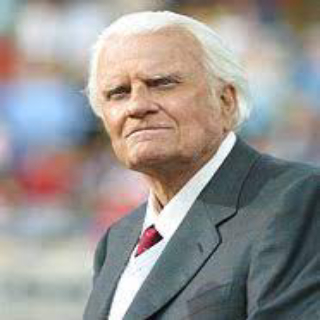
Charles Finney Childhood and Teen years Charles Grandison Finney was born the year after Wesley died on 29th August, 1792 in Warren, Connecticut. In 1794 his family moved to New York state, eventually settling at Henderson, near Lake Ontario. Although he received only a brief formal education he decided to study law and joined the practice of a local lawyer, Benjamin Wright. He was also very musical, played the cello and directed the choir at the local Presbyterian Church pastured by Rev. George Gale. His conversion His conversion on October 10th 1821 reads like something out of the book of Acts. Smitten with conviction from Bible reading he decided to ‘settle the question of my soul’s salvation at once, that if it were possible, I would make my peace with God.’ (Autobiography) This conviction increased to an unbearable level over the next couple of days and came to an head when he was suddenly confronted with an ‘inward voice.’ He was inwardly questioned about his spiritual condition and finally received revelation about the finished work of Christ and his own need to give up his sins and submit to Christ’s righteousness. As he sought God in a nearby wood he was overwhelmed with an acute sense of his own wickedness and pride but finally submitted his life to Christ. Back at work that afternoon he was filled with a profound sense of tenderness, sweetness and peace. When work was over and he bade his employer goodnight, he then experienced a mighty baptism in the Holy Spirit, which was recorded as vividly as the day he experienced it, though it was penned some fifty years later. The next morning Finney announced to a customer that he was leaving his law studies to become a preacher of the Gospel. Charles Finney licensed to preach He was licensed to preach in 1823 and ordained as an evangelist in 1824. His penetrating preaching was quite different from many local ministers and included an obvious attempt to break away from the traditional and, as he saw it, dead, orthodox Calvinism. He married to Lydia Andrews in October 1824 and was also joined by Daniel Nash (1774-1831), known popularly as ‘Father Nash.’ Undoubtedly Nash’s special ministry of prayer played a great part in Finney’s growing success as an evangelist. Things really took off when he preached in his old church, where Rev. Gale still ministered. Numerous converts and critics followed! Similar results were experienced in nearby towns of Rome and Utica. Soon newspapers were reporting his campaigns and he began drawing large crowds with dramatic responses. Soon he was preaching in the largest cities of the north with phenomenal results. Campaign after campaign secured thousands of converts. The high point of Finney’s revival career was reached at Rochester, New York, during his 1830-1 meetings. Shopkeepers closed their businesses and the whole city seemed to centre on the revivalist. Responding to his irresistible logic and passionate arguments many of his converts were lawyers, merchants and those from a higher income and professional status. His Preaching Finney openly preached a modified Calvinism, influenced with his own theology of conversion and used what were perceived to be ‘revivalistic techniques.’ These ‘means’ included the use of the anxious bench (a special place for those under conviction), protracted meetings, women allowed to pray in mixed meetings, publicly naming those present resisting God in meetings and the hurried admission of new converts into church membership. Opponents viewed his preaching of the law as ‘scare tactics’ and his persuasive appeals for sinners to come to Christ for salvation were seen as over-emphasising the responsibility of men and ignoring the sovereignty of God. His theology and practise soon became known as the ‘New Measures’ and attracted many opponents from the Old School Presbyterians led by Asahel Nettleton (himself no stranger to true revival and , the revivalistic Congregationalists headed by Lyman Beecher. Pastor at Chatham Street Chapel Finney accepted an appointment as pastor of Chatham Street Chapel in New York City in 1832 where he remained until 1837. It was during this time that he delivered a series of sermons published in 1835 as ‘Lectures on Revivals of Religion.’ Here he clearly stated his views regarding revivals being products of the correct use of human means. Such was the controversy that he left the Presbyterian denomination and joined the Congregationalists in 1836. Oberlin College The next year he became professor of theology at Oberlin College (Ohio) where he taught until his death. He was President here from 1851 until 1866, but still continued regular revival meetings in urban settings (twice in England, 1848, 1851) until 1860. During his stay at Oberlin he produced his, Lectures to Professing Christians (1836), Sermons on Important Subjects (1839) and his famous Memoirs. The Father of Modern Revivalism There is no doubt that Charles Grandison Finney well-deserves the title ‘The Father of Modern Revivalism.’ He was an evangelistic pioneer whose model was followed by a long line of revivalists from D. L. Moody to Billy Graham. His writing have made a massive impact on the entire evangelical world and particularly the ‘Lectures on Revivals’ which has, arguably, ignited more fires of revival than any other single piece literature in evangelical history. This ‘Prince of Revivalists’ passed away peacefully at Oberlin on Sunday, 16th August, 1875 aged almost 83 years. Bibliography: I Will Pour Out My Spirit, R. E. Davies, 1997; Ed: A. Scott Moreau, Baker Evangelical Dictionary of World Missions, 2000; Dictionary of Evangelical Biography 1730-1860, Vol. 1, 1995. Tony Cauchi

enjoy your possessions before they possess you

Take an inventory of your life. What do you own right now? Whatever possessions you have are no accident, and not a product of mere happenstance. At the micro level, Jesus promises to care for even the minutest everyday details, like pocket money and food and clothes. As we see in Scripture, in these small possessions, God calls us to live with moral standards because we are susceptible to sinning our way into big problems (like unreasonable consumer debt). God calls us to be wise with money and to work and live economically fruitful lives, and to be careful with our possessions. At the macro level, all wealth distribution and re-distribution is the work of our sovereign God (Ecclesiastes 5:18–6:2). All of our possessions are his, and he gives (and takes away) as he sees fit. God makes the poor and he makes the rich (1 Samuel 2:7). So how does God decide to distribute wealth in the lives of his creatures? This plays out in many different ways. God may give you many possessions, but not give you the power to enjoy those gifts — a great tragedy (Ecclesiastes 6:1–2). God may give you accumulated wealth, and give you the power to enjoy those gifts — a great blessing (Ecclesiastes 5:19, Proverbs 10:22). God may give you possessions, but through future persecution, he may take all those possessions away from you in the end (Hebrews 10:34). God may call you to a life of unalleviated poverty (2 Corinthians 6:10; 8:9). God may give you a life of wealth (2 Chronicles 32:29). God may give you a life in the middle — neither poverty nor wealth (Proverbs 30:8). God may bless you with great wealth, then take it all away and reduce your portfolio to ash, and then restore you with doubled wealth (Job). God may make you wealthy and then call you to voluntary poverty in order to show the world that he is your greatest treasure (Matthew 19:21; Mark 10:21; Luke 18:22). None of these situations is normative, if God sovereignly dispenses possessions to us as he sees fit (which he does). When it comes to possessions, our experiences will vary greatly. But no matter how much (or how little) we possess, there are four things that will help us rightly enjoy the gifts God has given us. 1. Money is temporary. Money existed before us, and it will exist after us, too. The streams of commerce have been flowing for millennia, and one day we will be gone and the currents of economic stimulus will flow to the next generation. We exist in time with money and possessions, but everything of value we own will be passed on to others. Which means in a very real sense, money is temporary. It carries the face of a Caesar or a president to remind us its value is as temporary as world rulers and the rise and fall of nations. So give back to Caesar what is Caesar’s. In other words, the Christian is called to possess all things as though we don’t possess anything (1 Corinthians 7:30). Hold the money, use the money, save the money, steward the money. But also recognize the cash in our wallets is the Monopoly money of this present age. The cash itself has no eternal face value. We entered this life with empty hands, we leave it with empty hands, and to live in the middle with a lust for cash is like holding a sharp dagger backwards and gutting our own souls (1 Timothy 6:6–10). This is true of cars and houses, too. C.S. Lewis said the secret to genuinely delighting in one’s own house is through sacrifice, through a certain crucifixion of the self’s relationship to it. We sacrifice our house, we release our grip on it, and then it becomes an object of joy. When it comes to possessions, true delight is found on the other side of disinterest (Letters 2.788). The takeaway: We don’t boast in our possessions; we boast that God possesses us (Jeremiah 9:23–24). Here our stewardship comes into focus. Material blessing is our temporary stewardship, but delighting in God and his gifts is our true and eternal vocation. 2. Enjoy your possessions now. As we have seen, we don’t always know what God is doing in our lives when it comes to our material possessions. He has different plans for us all. But he intends all of his children to enjoy the gifts he has given us. If you have pants, a shirt, and a sandwich you can be content in life, and if you can be content with a little, you can enjoy God’s goodness to you in every one of the millions of simple gifts he gives to you every day (1 Timothy 6:8). In fact, few things in this life are better than to enjoy your life and the good gifts from God in a spirit of fear and obedience and faith toward God (Ecclesiastes 8:15; 9:7–10; 10:19; 12:13). If you are prone to grumble more than express gratitude, pray and ask that God would give you the power to enjoy his gifts rightly — a gift in itself. As the book of Ecclesiastes makes clear: One of the rarest and most precious gifts is the gift of enjoying our daily gifts. 3. Enjoy your possessions by sharing them. The man who cannot enjoy God’s good gifts every day is often the man who wrongly thinks he must own gifts before enjoying them. We don’t have to own something to find joy in it. Beautiful art is intended to be shared in museums and galleries, not to be locked in the secluded basement of a billionaire. The delight of exclusivity is a delusion — a false delight. Christians get this. The delight of sharing is what drove the early church to share everything they owned (Acts 2:45; 4:32; 1 John 3:17). They gave money. They cared for the poor. They helped the missionaries. A group of wealthy women funded gospel work (Luke 8:2–3). There is a special delight in our possessions when we don’t think of them as “mine” but make use of them to increase the delight of others. 4. Enjoy what you do not own. Finally — and perhaps the whole reason why I wrote this article in the first place — God calls us to enjoy what we can never possess. I cannot  own  many of the greatest gifts God has given me. I do not own my wife; I do not own my kids; I don’t own my time, or the oceans, or the rain, or the sunshine, or the majestic mountain ranges — certainly not in any sense in which I  own  my minivan (my name is on the title). The man who loves the ocean so much that he sells all that he has and buys a beachfront property with his own private sand and closes it off from others so that he can exclusively use it is the man whose joy will die by exclusivity. He cannot enjoy possessions because the possessions possess him. On the other hand, the man who buys beachfront property in order to freely share that property with his friends and family will find his joy doubled. By his seaside generosity, this man will bless many others in great ways. But perhaps the most blessed of all is the man who doesn’t need to own beachfront property at all. He has learned to enjoy every beach in the world for its sheer beauty. He is freed from the desire to enjoy only what he possesses. This seems to be the way Romans 1 pushes us to contemplate. To be truly human is to express a Godward gratitude in the delights of creation. And if that is true, then we discover that what it means to delight in this world is a category that explodes all the categories of what the world promises us in possession. Old Tom Bombadil The beautiful literary example of a man who delights in what he doesn’t possess is found in the character Tom Bombadil, tucked into the early storyline of Tolkien’s The Lord of the Rings. In the epic unfolding storyline, Tom Bombadil is a mysterious figure who is quick to laughter and who seems to live in a blessed state of joy. But his life also bears no impact on the central drama that is unfolding around him. (Thus, Tom Bombadil never appears in the movies.) Tom’s role in the overall story is subtle and easy to miss. Early in the journey, Frodo and company wander into his lands, into a respite of joy in stark contrast to the darkness they would soon face. “Who is Tom Bombadil?” a curious Frodo later asks Tom’s wife, Goldberry. “He is the Master of wood, water, and hill.” “Then all this strange land belongs to him?” “No, indeed!” No, indeed! The woods, the water, and the hills that fill Tom Bombadil with delight are not his to possess — they are his to tend and to enjoy. To be sure, Tom is not an allegory against owning property, nor is he an allegory for passivism. As Tolkien also makes clear, it will take warfare against Sauron to stop the encroaching evil in order to preserve the lifestyle that Tom and Goldberry enjoy. As if we need the confirmation, Tolkien makes it clear in his letters that Tom is an intentional enigma. Tom incarnates a contrast. Tom represents a soul that has been freed from the greed of possession in order to delight in created beauty. He has renounced control and therefore finds the means of power to be valueless, too. As a result, Tom Bombadil can hold Frodo’s great ring of power with no danger to himself or anyone else. The ring wields no power over Tom because Tom has no interest in possessing the power of the ring. When the lust for possession is broken, when gratitude takes its place, and when one can simply delight in the glories of creation, then some of evil’s darkest schemes in the human heart are broken. Tom Bombadil is a model of delighting in what we do not possess, and then of sharing what we do possess — like dinner fellowship around the yellow cream, honeycomb, white bread and butter at his table. May we shine like such glad-hearted, grateful enigmas in our own world.

Feedback
Suggestionsuggestion box
x