
GIP Library icon

Life Of Faith Life Of Faith

Life Of Faith Order Printed Copy

  • Author: Shenouda III
  • Size: 1MB | 151 pages
  • |
Continue with
Google Twitter
LOG IN TO REVIEW
About the Book


"Life of Faith" by Pope Shenouda III is a spiritual guide that explores the concept of faith and how it impacts every aspect of a Christian's life. The book delves into the importance of faith in overcoming challenges, building a closer relationship with God, and living a fulfilling and purposeful life. Through insightful reflections and practical advice, Pope Shenouda III inspires readers to deepen their faith and trust in God's plan for their lives.

John Newton
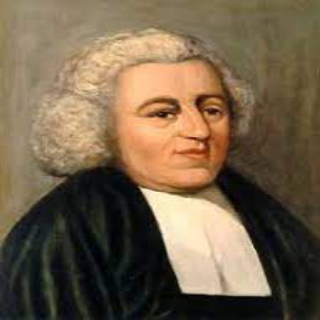
John Newton “Amazing Grace” is one of the most beloved hymns of the last two centuries. The soaring spiritual describing profound religious elation is estimated to be performed 10 million times annually and has appeared on over 11,000 albums. It was referenced in Harriet Beecher Stowe’s anti-slavery novel Uncle Tom’s Cabin and had a surge of popularity during two of nation’s greatest crises: the Civil War and the Vietnam War. Between 1970 and 1972, Judy Collins’ recording spent 67 weeks on the chart and peaked at number 5. Aretha Franklin, Ray Charles, Johnny Cash, Willie Nelson and Elvis are among the many artists to record the song. Recently, President Obama burst into the familiar tune during the memorial service for Reverend Clementa Pinckney, a victim of a heinous church shooting in Charleston, South Carolina. The song was written by a former enslaver Ironically, this stirring song, closely associated with the African American community, was written by a former enslaver, John Newton. This unlikely authorship forms the basis of Amazing Grace, a Broadway musical (written by Broadway first-timer Christopher Smith, a former Philadelphia policeman, and playwright Arthur Giron) which tells Newton’s life story from his early days as a licentious libertine in the British navy to his religious conversion and taking up the abolitionist cause. But the real story behind the somewhat sentimental musical told in Newton’s autobiography reveals a more complex and ambiguous history. Newton was born in 1725 in London to a Puritan mother who died two weeks before his seventh birthday, and a stern sea-captain father who took him to sea at age 11. After many voyages and a reckless youth of drinking, Newton was impressed into the British navy. After attempting to desert, he received eight dozen lashes and was reduced to the rank of common seaman. While later serving on the Pegasus, an enslaved person ship, Newton did not get along with the crew who left him in West Africa with Amos Clowe, an enslaver. Clowe gave Newton to his wife Princess Peye, an African royal who treated him vilely as she did her other enslaved people. On stage, Newton’s African adventures and enslavement are a bit more flashy with the ship going down, a thrilling underwater rescue of Newton by his loyal retainer Thomas, and an implied love affair between Newton and the Princess. Newton converted to Christianity after a miracle at sea The stage version has John’s father leading a rescue party to save his son from the calculating Princess, but in actuality, the enterprise was undertaken by a sea captain asked by the senior Newton to look for the missing John. (In the show, the elder Newton is wounded during the battle for his son’s freedom and later has a tearful deathbed scene with John on board ship.) During the voyage home, the ship was caught in a horrendous storm off the coast of Ireland and almost sank. Newton prayed to God and the cargo miraculously shifted to fill a hole in the ship’s hull and the vessel drifted to safety. Newton took this as a sign from the Almighty and marked it as his conversion to Christianity. He did not radically change his ways at once, his total reformation was more gradual. "I cannot consider myself to have been a believer in the full sense of the word, until a considerable time afterward,” he later wrote. He did begin reading the Bible at this point and began to view his captives with a more sympathetic view. In the musical, John abjures slavery immediately after his shipboard epiphany and sails to Barbados to search for and buy the freedom of Thomas. After returning to England, Newton and his sweetheart Mary Catlett dramatically confront the Prince of Wales and urge him to abolish the cruel practice. In real life, Newton continued to sell his fellow human beings, making three voyages as the captain of two different vessels, The Duke of Argyle and the African. He suffered a stroke in 1754 and retired, but continued to invest in the business. In 1764, he was ordained as an Anglican priest and wrote 280 hymns to accompany his services. He wrote the words for “Amazing Grace” in 1772 (In 1835, William Walker put the words to the popular tune “New Britain”) It was not until 1788, 34 years after leaving it that he renounced his former slaving profession by publishing a blazing pamphlet called “Thoughts Upon the Slave Trade.” The tract described the horrific conditions on the ships and Newton apologized for making a public statement so many years after participating in the trade: “It will always be a subject of humiliating reflection to me, that I was once an active instrument in a business at which my heart now shudders.” The pamphlet was so popular it was reprinted several times and sent to every member of Parliament. Under the leadership of MP William Wilberforce, the English civil government outlawed slavery in Great Britain in 1807 and Newton lived to see it, dying in December of that year. The passage of the Slave Trade Act is depicted in the 2006 film, also called Amazing Grace, starring Albert Finney as Newton and Ioan Gruffud as Wilberforce.

He Called Death Sweet Names

To me Erwin Rudolph will always be Dr. Rudolph. He was my professor and, when I was in college, I revered professors. But with all the reverence, he was a gentle rock of stability for this nervous, insecure sophomore, who that year — 1965 — declared an English major at Wheaton College. One of the reasons I was nervous and insecure was that I read so slowly. I knew I could not read a lot of long books in one semester, so I never took a lit class on “The Novel.” Instead I took poetry classes. That meant three classes with Dr. Rudolph: Pre-Renaissance, English Renaissance, and Eighteenth Century. In these classes, I did not have to read huge books. Instead I had to read poems really carefully — even memorize some. Dr. Rudolph required that we memorize and recite 42 lines of Chaucer in the original Middle English. This was terrifying to me. I was too nervous to speak in front of a whole class. Mercifully and patiently, Dr. Rudolph took the time to let me recite the lines to him alone in his office. He became my faculty adviser in the fall of 1965 and shepherded me through to graduation in the spring of 1968. I loved his classes. One reason is that he cared about substance, not just form. He cared about meaning and truth, great truth. To this day, the poets I love most (George Herbert, John Donne, Alexander Pope) are the ones who care about beauty and truth. Form and substance. Craft and content. I met these masters first in Dr. Rudolph’s classes. He awakened me to a world of truth and beauty in poetry which I did not know existed. I sought his counsel even after I left Wheaton. Although I sensed a vocational call to Scripture and went on to seminary after college, I was not sure if I could be a preacher, and I pondered for a year or two the serious possibility of following in Dr. Rudolph’s steps by getting a Ph.D. in English, and becoming a theologically serious English teacher. That didn’t happen. I think Dr. Rudolph was okay with that choice. His counsel was always balanced. He probably saw that my slow reading ability did not suit me well for an academic career in literature! My dominant memory of Dr. Rudolph is the one most relevant to his own death. Zeke, Dr. Rudolph’s son, was in my wife’s class at Wheaton, a year behind me. Zeke died of Multiple Sclerosis in August of 1969, three months after his graduation. I remember the very room I was in at my parents’ house when I read Dr. Rudolph’s tribute to Zeke. There was one immortal line that I have returned to again and again — as I return to it again now at Dr. Rudolph’s own death: “Near the end Zeke called death sweet names.” It has been almost 50 years, and I have not forgotten these words, nor the man who spoke them. I didn’t know Zeke. But I knew his father. And what an impact his farewell to his son had on me. It was full of sober sorrow in the face of the horrors of death, but also full of confidence that Zeke had not lived in vain, or died without hope. The same is true now for my professor, Dr. Rudolph. He did not live in vain. And he did not die without hope. Perhaps I should let him have the last word of triumph. In his book,  Good-by, My Son , he wrote, We do not pretend to understand why God’s time-table differs so markedly from our own. But it was ours which was out of adjustment, not his. . . . I strongly affirm that belief in Divine Providence affords the Christian an undergirding he can ill afford to lose. I also discover that God may personally allow suffering to come upon us for reasons which please him. When he does, we ought not to demur, for God knows what is best for us. With deep love and appreciation, I say, Amen.
Feedback
Suggestionsuggestion box
x