
Others like true community Features >>

The Practice Of Godliness
The Pursuit Of Holiness

Who Am I: Identity In Christ

Community — Experience Jesus Alive In His People

Created For Community - Connecting Christian Belief With Christian Living
School Of The Spirit

God's Secrets
Following The Faith Of Abraham
Overcoming Witchcraft

Has Christianity Failed You
About the Book
"True Community" by Jerry Bridges explores the importance of genuine, biblical community within the Church. Bridges emphasizes the need for believers to live in harmony and unity, bearing one another's burdens and demonstrating selfless love. He offers practical guidance on how to cultivate authentic relationships within a Christian community, rooted in mutual accountability, encouragement, and support. Through personal anecdotes and scriptural insights, Bridges encourages readers to prioritize community as an essential aspect of their Christian walk.
Amy Carmichael
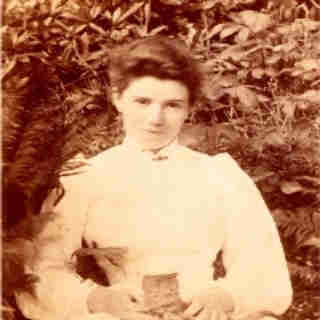 Born in Belfast Ireland, to a devout family of Scottish ancestry, Carmichael was educated at home and in England, where she lived with the familt of Robert Wilson after her father’s death. While never officially adopted, she used the hyphenated name Wilson-Carmichael as late as 1912. Her missionary call came through contacts with the Keswick movement. In 1892 she volunteered to the China Inland Mission but was refused on health grounds. However, in 1893 she sailed for Japan as the first Keswick missionary to join the Church Missionary Society (CMS) work led by Barclay Buxton. After less than two years in Japan and Ceylon, she was back in England before the end of 1894. The next year she volunteered to the Church of England Zenana Missionary Society, and in November 1895 she arrived in South India, never to leave. While still learning the difficult Tamil language, she commenced itinerant evangelism with a band of Indian Christian women, guided by the CMS missionary Thomas Walker. She soon found herself responsible for Indian women converts, and in 1901, she, the Walkers, and their Indian colleagues settled in Dohnavur. During her village itinerations, she had become increasingly aware of the fact that many Indian children were dedicated to the gods by their parents or guardians, became temple children, and lived in moral and spiritual danger. It became her mission to rescue and raise these children, and so the Dohnavur Fellowship came into being (registered 1927). Known at Dohnavur as Amma (Mother), Carmichael was the leader, and the work became well known through her writing. Workers volunteered and financial support was received, though money was never solicited. In 1931 she had a serious fall, and this, with arthritis, kept her an invalid for the rest of her life. She continued to write, and identified leaders, missionary and Indian, to take her place. The Dohnavur Fellowship still continues today.
Jocelyn Murray, “Carmichael, Amy Beatrice,” in Biographical Dictionary of Christian Missions, ed. Gerald H. Anderson (New York: Macmillan Reference USA, 1998), 116.
This article is reprinted from Biographical Dictionary of Christian Missions, Macmillan Reference USA, copyright © 1998 Gerald H. Anderson, by permission of Macmillan Reference USA, New York, NY. All rights reserved.
“Ammai” of orphans and holiness author
Amy Carmichael was born in Ireland in 1867, the oldest of seven children. As a teen, she attended a Wesleyan Methodist girls boarding school, until her father died when she was 18. Carmichael twice attended Keswick Conventions and experienced a holiness conversion which led her to work among the poor in Belfast. Through the Keswick Conventions, Carmichael met Robert Wilson. He developed a close relationship with the young woman, and invited her to live with his family. Carmichael soon felt a call to mission work and applied to the China Inland Mission as Amy Carmichael-Wilson. Although she did not go to China due to health reasons, Carmichael did go to Japan for a brief period of time. There she dressed in kimonos and began to learn Japanese. Her letters home from Japan became the basis for her first book, From Sunrise Land. Carmichael left Japan due to health reasons, eventually returning to England. She soon accepted a position with the Church of England’s Zenana Missionary Society, serving in India. From 1895 to 1925, her work with orphans in Tinnevelly (now Tirunelveli) was supported by the Church of England. After that time, Carmichael continued her work in the faith mission style, establishing an orphanage in Dohnavur. The orphanage first cared for girls who had been temple girls, who would eventually become temple prostitutes. Later the orphanage accepted boys as well.
Carmichael never returned to England after arriving in India. She wrote prolifically, publishing nearly 40 books. In her personal devotions, she relied on scripture and poetry. She wrote many of her own poems and songs. Carmichael had a bad fall in 1931, which restricted her movement. She stayed in her room, writing and studying. She often quoted Julian of Norwich when she wrote of suffering and patience. Many of Carmichael’s books have stories of Dohnavur children, interspersed with scripture, verses, and photographs of the children or nature. Carmichael never directly asked for funding, but the mission continued to be supported through donations. In 1951 Carmichael died at Dohnavur. Her headstone is inscribed “Ammai”, revered mother, which the children of Dohnavur called Carmichael.
Carmichael’s lengthy ministry at Dohnavur was sustained through her strong reliance upon scripture and prayer. Her early dedication to holiness practices and her roots in the Keswick tradition helped to guide her strong will and determination in her mission to the children of southern India.
by Rev. Lisa Beth White
Born in Belfast Ireland, to a devout family of Scottish ancestry, Carmichael was educated at home and in England, where she lived with the familt of Robert Wilson after her father’s death. While never officially adopted, she used the hyphenated name Wilson-Carmichael as late as 1912. Her missionary call came through contacts with the Keswick movement. In 1892 she volunteered to the China Inland Mission but was refused on health grounds. However, in 1893 she sailed for Japan as the first Keswick missionary to join the Church Missionary Society (CMS) work led by Barclay Buxton. After less than two years in Japan and Ceylon, she was back in England before the end of 1894. The next year she volunteered to the Church of England Zenana Missionary Society, and in November 1895 she arrived in South India, never to leave. While still learning the difficult Tamil language, she commenced itinerant evangelism with a band of Indian Christian women, guided by the CMS missionary Thomas Walker. She soon found herself responsible for Indian women converts, and in 1901, she, the Walkers, and their Indian colleagues settled in Dohnavur. During her village itinerations, she had become increasingly aware of the fact that many Indian children were dedicated to the gods by their parents or guardians, became temple children, and lived in moral and spiritual danger. It became her mission to rescue and raise these children, and so the Dohnavur Fellowship came into being (registered 1927). Known at Dohnavur as Amma (Mother), Carmichael was the leader, and the work became well known through her writing. Workers volunteered and financial support was received, though money was never solicited. In 1931 she had a serious fall, and this, with arthritis, kept her an invalid for the rest of her life. She continued to write, and identified leaders, missionary and Indian, to take her place. The Dohnavur Fellowship still continues today.
Jocelyn Murray, “Carmichael, Amy Beatrice,” in Biographical Dictionary of Christian Missions, ed. Gerald H. Anderson (New York: Macmillan Reference USA, 1998), 116.
This article is reprinted from Biographical Dictionary of Christian Missions, Macmillan Reference USA, copyright © 1998 Gerald H. Anderson, by permission of Macmillan Reference USA, New York, NY. All rights reserved.
“Ammai” of orphans and holiness author
Amy Carmichael was born in Ireland in 1867, the oldest of seven children. As a teen, she attended a Wesleyan Methodist girls boarding school, until her father died when she was 18. Carmichael twice attended Keswick Conventions and experienced a holiness conversion which led her to work among the poor in Belfast. Through the Keswick Conventions, Carmichael met Robert Wilson. He developed a close relationship with the young woman, and invited her to live with his family. Carmichael soon felt a call to mission work and applied to the China Inland Mission as Amy Carmichael-Wilson. Although she did not go to China due to health reasons, Carmichael did go to Japan for a brief period of time. There she dressed in kimonos and began to learn Japanese. Her letters home from Japan became the basis for her first book, From Sunrise Land. Carmichael left Japan due to health reasons, eventually returning to England. She soon accepted a position with the Church of England’s Zenana Missionary Society, serving in India. From 1895 to 1925, her work with orphans in Tinnevelly (now Tirunelveli) was supported by the Church of England. After that time, Carmichael continued her work in the faith mission style, establishing an orphanage in Dohnavur. The orphanage first cared for girls who had been temple girls, who would eventually become temple prostitutes. Later the orphanage accepted boys as well.
Carmichael never returned to England after arriving in India. She wrote prolifically, publishing nearly 40 books. In her personal devotions, she relied on scripture and poetry. She wrote many of her own poems and songs. Carmichael had a bad fall in 1931, which restricted her movement. She stayed in her room, writing and studying. She often quoted Julian of Norwich when she wrote of suffering and patience. Many of Carmichael’s books have stories of Dohnavur children, interspersed with scripture, verses, and photographs of the children or nature. Carmichael never directly asked for funding, but the mission continued to be supported through donations. In 1951 Carmichael died at Dohnavur. Her headstone is inscribed “Ammai”, revered mother, which the children of Dohnavur called Carmichael.
Carmichael’s lengthy ministry at Dohnavur was sustained through her strong reliance upon scripture and prayer. Her early dedication to holiness practices and her roots in the Keswick tradition helped to guide her strong will and determination in her mission to the children of southern India.
by Rev. Lisa Beth White
Faithfulness in Forgotten Places
When the Holy Spirit cultivates his fruit in our lives, he often works in ways we would never pray for (Galatians 5:22–23). To grow the fruit of love in us, he may give us an enemy; to grow the fruit of peace, he may allow conflict to come near. And to grow the fruit of faithfulness, he may send us to forgotten places. Forgotten places are those corners of the world where no one seems to be watching, where our efforts go unseen, unthanked. Perhaps we labor among diapers and dishes, cubicles and emails. Or maybe, more painfully, among unfruitful mission fields, rebellious children, or spouses whose love has cooled. All of us live in forgotten places sometimes; some live there all the time. Drudgery as a Disciple We should beware of underestimating the spiritual strain of such monotonous and seemingly unrewarded toil. The daily duties in forgotten places may be small, but pile them up over months, years, or decades, and you may start to sympathize with Oswald Chambers when he writes, We do not need the grace of God to stand crises, human nature and pride are sufficient, we can face the strain magnificently; but it does require the supernatural grace of God to live twenty-four hours in every day as a saint, to go through drudgery as a disciple, to live an ordinary, unobserved, ignored existence as a disciple of Jesus. “To grow the fruit of faithfulness, God may send us to forgotten places.” Chambers may overstate his case — but not by much. In truth, the forgotten places can feel like a wilderness, and many days come when we find ourselves searching for something to keep us going, some water from the rock to sustain us in this desert (Psalm 105:41). We will find it, not in the forgotten places themselves, but in the God who sent us here, who is with us here, and who promises to reward us here. God’s Providence At times, we may stare at the responsibilities in front of us and wonder how we landed here. How did we wander into this wilderness of drab days and hidden obedience? We have become familiar with the backward glance, wondering if we missed a turn somewhere. How clarifying, then, to remember that our life situation is not ultimately a matter of chance, nor of any mistakes we have made, nor even of the string of events leading up to the present, but of God’s providence. The tasks in front of us are, at least for today, God’s assignment to us. To be sure, God’s providence does not nullify the decisions — and perhaps the mistakes or sins — that led us to this station in life, nor does it discourage us from striving after better circumstances: we are more than twigs in the stream of God’s purposes. But God’s providence does teach us to see, as the Heidelberg Catechism puts it, that “leaf and blade, rain and drought, fruitful and barren years, food and drink, health and sickness, riches and poverty, indeed, all things, come to us not by chance but by his fatherly hand.” No matter how we got here, the forgotten places are ultimately from our Father’s hand. Over and again, God describes our own plans and efforts as significant, but his as decisive — even over the most personal matters of life. He determines when and where we live (Acts 17:26). He assigns to us a measure of faith (Romans 12:3). He apportions spiritual gifts as he wills (1 Corinthians 12:11). He entrusts to us a number of talents — whether five, two, or just one (Matthew 25:15). He gives us a specific ministry (Colossians 4:17). He even calls us to a particular life (1 Corinthians 7:17). In time, this forgotten place may give way to somewhere different — and depending on the circumstances, we may be wise to seek that change. But for now, we can look at the responsibilities in front of us and say with relief, “My Father’s hand has led me here.” God’s Pleasure God not only sends us to the forgotten places, however; he also meets us there. When we labor in obscurity, he is near (Psalm 139:5). When our work escapes the notice of every human eye, it does not escape his (Luke 12:7). He catches every whispered prayer, every Godward groan. He stands ready at every moment to mark the smallest tasks we perform in faith. The wise man tells us why: “Lying lips are an abomination to the Lord, but those who act faithfully are his delight” (Proverbs 12:22). God delights not mainly in the greatness of the work, but in the faithfulness of the worker. What else could explain the New Testament’s insistence that even the lowest, most invisible members of society are “serving the Lord Christ” when they walk faithfully in their callings (Colossians 3:24)? The smallest duties done in faith become duties done for Christ. “God delights not mainly in the greatness of the work, but in the faithfulness of the worker.” The missionary Hudson Taylor was fond of saying, “A little thing is a little thing, but faithfulness in little things is a great thing.” Cooking a meal, filling a spreadsheet, buying groceries, wiping a child’s nose — these are little things. But if done faithfully for Christ’s sake, they become greater than all the triumphs and trophies of an unbelieving world. They become the delight of our watching Lord. God’s Promise Once we have traced God’s providence in the past and felt his pleasure in the present, he would have us consider the future, when all our obedience will be rewarded. When many Christians imagine judgment day, we assume the spotlight will fall on the grand acts of sin and righteousness. And surely it will — but not only. Remarkably, when Jesus and the apostles speak of that day, they often focus on life’s ordinary moments. “On the day of judgment people will give account for every careless word they speak,” Jesus tells us (Matthew 12:36). On the other hand, God will reward his people for the smallest good works they do by his grace: for giving to the needy (Matthew 6:4), for praying in the closet (Matthew 6:6), for fasting in secret (Matthew 6:18), even for giving a cup of cold water to one of Christ’s disciples (Matthew 10:42). The apostle Paul similarly writes that “we must all appear before the judgment seat of Christ, so that each one may receive what is due for what he has done in the body, whether good or evil” (2 Corinthians 5:10). But then in Ephesians he clarifies the kind of good he has in mind: not just extravagant good, impressive good, or above-average good, but “whatever good” (Ephesians 6:8). Come judgment day, every scrap of unseen obedience will find its fitting reward. Living and dying in forgotten places, then, is no infallible index of our labor in God’s eyes. Many saints, in fact, will not know the true worth of what they’ve done for Christ until Christ himself tells them (Matthew 25:37–40). Exceptional in the Ordinary Chambers, after remarking on the grace required to endure drudgery as a disciple, goes on to write, “It is inbred in us that we have to do exceptional things for God; but we have not. We have to be exceptional in the ordinary things, to be holy in mean streets, among mean people, and this is not learned in five minutes.” Again, Chambers may slightly overstate his case. God sometimes does call us to do exceptional things for him: to adopt children, to launch ministries, to plant churches, to move overseas. But the point still holds, because none of us will do anything exceptional unless we have first learned, through ten thousand steps of faithfulness, to be exceptional in the ordinary. We are not on our own here. Faithfulness, remember, is a fruit of the Spirit. And to bear that fruit in us, he would have us treasure up the providence, the pleasure, and the promises of God that hem us in behind and before, and follow us into every forgotten place. Article by Scott Hubbard