
Kingdom Living Order Printed Copy
- Author: Harvestime International Institute
- Size: 1.08MB | 136 pages
- |
Others like kingdom living Features >>
Angelic Visitations And Supernatural Encounters
%20by%20Myles%20Munroe-160.webp)
Kingdom Principles Preparing For Kingdom Experience And Expansion
Kingdom Revolution - Bringing Change To Your Life And Beyond
How To Pass God's Test
The Surpassing Greatness Of His Power

Escape Routes
Saints At War: Spiritual Warfare
The Lamb In The Midst Of The Throne
Disgracing Water Spirits
The Winning Wisdom
About the Book
"KINGDOM LIVING" by Harvestime International Institute is a practical guide for Christians on how to live out their faith in everyday life. The book emphasizes the importance of following God's principles and commands, and provides practical tips on how to apply biblical teachings to relationships, finances, and personal growth. It challenges readers to live a life that reflects the values of the Kingdom of God and to be a light in a dark world.
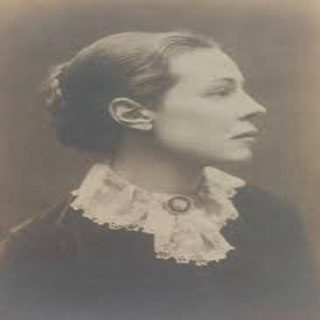
Lilias Trotter
ten tips for daily bible reading
One of the most important habits to develop in the Christian life is that of daily Bible reading. It is the Word of God that has the power to sanctify the believer and build him up in Christ. It imparts conviction, enlightenment, spiritual strength, faith, wisdom, repentance. Consider the following Scriptures: "This book of the law shall not depart out of thy mouth; but thou shalt meditate therein day and night, that thou mayest observe to do according to all that is written therein: for then thou shalt make thy way prosperous, and then thou shalt have good success" (Joshua 1:8). "Blessed is the man that walketh not in the counsel of the ungodly, nor standeth in the way of sinners, nor sitteth in the seat of the scornful. But his delight is in the law of the LORD; and in his law doth he meditate day and night. And he shall be like a tree planted by the rivers of water, that bringeth forth his fruit in his season; his leaf also shall not wither; and whatsoever he doeth shall prosper" (Psalms 1:1-3). "Wherewithal shall a young man cleanse his way? by taking heed thereto according to thy word" (Psalms 119:9). "Thy word is a lamp unto my feet, and a light unto my path" (Psalms 119:105). "And now, brethren, I commend you to God, and to the word of his grace, which is able to build you up, and to give you an inheritance among all them which are sanctified" (Acts 20:32). "So then faith cometh by hearing, and hearing by the word of God" (Romans 10:17). "And that from a child thou hast known the holy scriptures, which are able to make thee wise unto salvation through faith which is in Christ Jesus. All scripture is given by inspiration of God, and is profitable for doctrine, for reproof, for correction, for instruction in righteousness: That the man of God may be perfect, throughly furnished unto all good works" (2 Timothy 3:15-17). "For the word of God is quick, and powerful, and sharper than any twoedged sword, piercing even to the dividing asunder of soul and spirit, and of the joints and marrow, and is a discerner of the thoughts and intents of the heart" (Hebrews 4:12) "As newborn babes, desire the sincere milk of the word, that ye may grow thereby" (1 Peter 2:2). "We have also a more sure word of prophecy; whereunto ye do well that ye take heed, as unto a light that shineth in a dark place, until the day dawn, and the day star arise in your hearts" (2 Peter 1:19) To grow in Christ and find His perfect will, the believer must be transformed by the renewing of the mind (Romans 12:1-2). The mind is transformed by the Word of God through the power of the indwelling Holy Spirit. Following are ten tips for daily Bible reading. 1. Establish a Time. If you do not develop a habit of daily Bible reading at a certain time each day, you will probably only read it hit and miss. Decide what time would be best for your situation. At different periods in my life I have had different times for my devotions, depending on the situation. Usually first thing in the morning is best, before your mind becomes filled with the business of the day. But other times of the day might work better for you. It is something to pray about. 2. Establish a Place. A quiet, private place is essential, if at all possible. I have seen Christians trying to study the Bible in a room where other people are talking and a radio is playing, etc. That is not wise and it is not honoring to the Lord who deserves our undivided attention. The Bible is the very Word of God. Would it be proper to invite God over for a visit and then have many other things going on at the same time as He was talking to us? 3. Have Some Basic Study Tools. We recommend the following: A Study Bible At the very least, it is extremely helpful to have a study Bible that has cross references and a concordance. Three helpful study Bibles are the Old Scofield Reference Bible, the Thompson Chain Reference Bible, and the Ryrie Study Bible. (For more information see "Reference Bibles" at the Way of Life web site.) A Concordance In my estimation, the Strong's Exhaustive Concordance is the most important Bible study tool ever published. Not only is it exhaustive in its treatment of the words of the English Bible, but it also links the English words to an exceptional dictionary of the Hebrew and Greek terms underlying the English. Treasury of Scripture Knowledge The Treasury of Scripture Knowledge was first published circa 1836. The original Treasury had roughly 4,000 cross-references; the newer editions have about 570,000 references. The best commentary on the Bible is the Bible itself, and herein is the value of the Treasury of Scripture Knowledge. The Way of Life Encyclopedia of the Bible and Christianity Thirty years of research have gone into this one-of-a-kind reference tool. It is the only Bible dictionary/encyclopedia that is written by a fundamental Baptist and based strictly upon the King James Bible. It does not correct the Authorized Version of the Bible, nor does it undermine the fundamental Baptist's doctrines and practices as many study tools do. Containing over 6,000 entries and 7,000 cross-references, it is a complete dictionary of biblical terminology and also features many other areas of research not often covered in Bible reference volumes. Subjects include Bible versions, Denominations, Cults, Christian Movements, Typology, the Church, Social Issues and Practical Christian Living, Bible Prophecy, and Old English Terminology. The Way of Life Encyclopedia is exceedingly practical, and the Christian will be helped and fortified in his faith. Many preachers have told us that it is their favorite Bible study tool. Missionary author Jack Moorman says: "The encyclopedia is excellent; the entries show a 'distilled spirituality.'" In the Sunday School course "Fundamentals of How to Study the Bible," available from Way of Life Literature, we explain how to use these tools effectively. 4. Have a Notebook and Pen. It is important to write things down that the Lord teaches you. In the first year that I was saved, I filled up several notebooks. For example, I designed one notebook for studying the topics of the Bible. I divided the notebook into several categories, such as salvation, sin, comfort, Christ's deity, Satan, hell, angels, and various other subjects that interested me at the time, and as I found verses dealing with those subjects I entered them under the proper category. I was reading the Bible through a couple of times a year so I was able to gather together everything the Bible said on various topics and do my own doctrinal studies. 5. Have a Pencil for Marking Your Bible. I recommend a pencil because you can erase it if you make a mistake and the pencil doesn't bleed through to the other side of the page. A mechanical pencil is ideal, because it doesn't have to be sharpened. Use the margins of your Bible to add cross-references, word definitions, outlines, and brief commentaries. By adding such things you are making own study Bible. This is why a wide margin Bible is so useful. Following are some suggestions for marking your Bible: a. Underline judiciously. It is your Bible and you can do as you please, but let me recommend that you not just underline anything and everything indiscriminately. If you do that, your Bible will soon be a bewildering and almost indecipherable hodgepodge of underlines and marks. It is better to use some careful thought in underlining. Let me make some suggestions from Genesis 1: Underline things that will help you see at a glance the divisions of a passage. In Genesis 1, I have underlined "the evening and the morning" because this phrase marks the days of creation. (In Revelation 2-3 I have marked the names of the seven churches, thus I can see at a glance the division of that section.) Underline the most important things. In Genesis 1, I underlined verse 27. Underline repeated thoughts. In Genesis 1, I marked things such as "God said" and "after his kind." (In Ecclesiastes, I underlined every mention of "under the sun," and in Ezekiel, I underlined "they shall know that I am the Lord.") b. Write notes in your Bible with caution. As with underlining, if you write down anything and everything in your Bible, you will soon find that the notes are almost useless. When writing things down that a preacher or teacher states, consider the source. Is that person a diligent student whose sayings are probably going to be accurate? If not, be very cautious about writing it in your Bible. I have heard preachers and teachers say many things that were not accurate. Save the margins of your Bible for things that are special and that are doubtless true and accurate. Other things can be written down in a notebook. Things to Write in the Margin of Your Bible Definitions of Words and Names. As you learn the definitions of difficult words and doctrinal terms and the names of people and places, jot them down in the margin of your Bible so you won't forget them. I have written hundreds of definitions in my Bible. The following are some examples: Romans 2:23—sacrilege=profane Romans 3:20—justified=declared righteous Romans 3:24—redeem=bought with a price Romans 3:25—propitiation=satisfaction of a debt Cross References. No single cross-reference system is exhaustive. Not even the Treasury of Scripture Knowledge has every possible cross-reference. You will find many new cross-references to add to your Bible if you are diligent in study. For example, Matthew 6:23 should be cross-referenced to Proverbs 28:22, but it is not in any cross-reference system I have seen. And Ephesians 1:3 "spiritual blessings in heavenly places" should be cross-referenced with Colossians 3:1-3 and 1 Peter 1:4, but none of these are in the Treasury of Scripture Knowledge. Doctrinal and Teaching Outlines. I can preach many sermons right from the margins of my Bible. For example, in Genesis 13, I have the four steps of "Lot's Downward Slide"; in Proverbs 23, an outline on drunkenness; in Luke 16, an outline on Hell; in Acts 2, an outline on baptism; in Romans 1, an outline on homosexuality; in Romans 3, an outline on man's nature. Annotations Such As Weights and Measures. For example, in Exodus 25-27, I have noted the modern dimensions and weights of the various articles in the tabernacle. Brief Commentary on the Text. When you learn something that is helpful about a passage, note it briefly in the margin. Every time you read that passage, the note will be there as a reminder. For example, in Luke 16:8, I have jotted down a couple of thoughts about how the children of this generation are wiser than the children of light. "How wiser? 1. In preparing for the future. 2. In the use of money. Christ is using the temporal to illustrate the eternal." In Romans 3:31, I wrote, "Paul established the law for the purpose for which it was given. Compare vv. 19-22." Explanations of Terms Pertaining to Bible Times and Culture. For example, at Isaiah 28:22, I have written, "consumption is trans. 'riddance' in Zeph. 1:18 and 'consume' in Ezek. 13:13." Things to Help You Teach Others. I recall an occasion when I was a young Christian and I unknowingly visited the home of a Jehovah's Witness woman who was zealous for her religion. I was invited into the house and I found myself in the midst of a group of people who were there for a JW Bible study. She took control of the situation and asked me if I believed Christians go to Heaven when they die, and I replied in the affirmative. She then asked me to show her and her friends where the Bible specifically says that the believer goes to Heaven or that he has a home in Heaven. I searched for a few minutes and couldn't find a passage that said exactly that and thus I was put to shame before this false teacher. After that, I redoubled my effort to be ready at all times to give an answer to the many heretics that are out there. One way I have done this is to write relevant things in the margin of my Bible so that I can find them quickly when the occasion presents itself. Thus, in many disputed verses I have noted the arguments against false teaching. At Acts 2:38, for instance, I have annotated the reasons why we know this does not refer to baptismal regeneration: "The word 'for' can mean 'because of' or 'in order to' depending on the context (Luke 5:13-14); Paul said baptism is not the gospel (1 Cor. 1:17; 15:1-4); Peter himself later said baptism is a figure (1 Pet. 3:21); the Holy Spirit is received by trusting Christ not by baptism (Eph. 1:12-13)." In Exodus 20, I have noted the reasons why we know that the sabbath is not binding on New Testament Christians. At Matthew 16:18, I have noted why the rock refers to Christ and not Peter. At Mark 1:23, I have jotted down some of the key errors in the modern versions. At Mark 9, I have listed briefly the various Bible descriptions of Hell and the passages in which Christ preached on Hell. At John 3:5, I have written down the reasons why "born of water" does not refer to baptism. At John 13, I have noted why I believe footwashing is not a church ordinance. These are a few examples. I used to preach in a county jail, and I used these notes almost every week when the prisoners would ask questions. If they asked a question that I did not know the answer to, I would get the answer and put it in my Bible, so I would have it the next time it came up. Divisions of a Passage. Some study Bibles do some of this for you, but I have enjoyed doing it myself. For example, in Exodus 7-11, I have marked the 10 judgments on Egypt. In Exodus 20, I marked each of the 10 commandments. In Leviticus 1-7, I marked the various offerings. Leading Thoughts and Important Repetitions For example, in Paul's Epistles I have bracketed all of his prayers, beginning at Romans 1:8-10, and I have annotated the prayer that precedes and follows. In the margin of Romans 1:8-10, I put Romans 15:5-6, for that is Paul's next prayer. In the margin of Romans 15:5-6, I put Romans 1:8-10, for that is the preceding prayer, and Romans 15:3, for that is the next prayer. In Genesis I bracketed every occasion in which God repeated his covenant to Abraham, beginning in Genesis 12. I also added an asterisk so I can find each reference more easily c. Use color markings. Colored pencils, pens, or highlighters are an excellent way to mark your Bible. Some try to use one marking system throughout their Bibles; but I have found that it is easier and more effective to use different color markings for different parts of the Bible. Following are some of the systems I have used in my own Bible: In the Psalms I have used red to mark verses that mention everlasting and eternal, dark blue for the second coming, orange for trusting God, green for blessings, purple for trouble, yellow for praise, pink for prayer, and brown for the Word of God. I have circled the verse numbers of the Messianic prophecies with blue. I have also bracketed unfulfilled prophecy or future events in red. In the prophetic portions of the Old Testament, I have used brown for verses pertaining to the Day of the Lord, light blue for the Messianic passages, green for passages referring to the remnant, orange for the New Covenant, dark blue for the regathering of Israel, yellow for passages describing the millennial kingdom, and red for the second coming. I have also bracketed unfulfilled prophecy or future events in red In Proverbs, I have used red to mark verses dealing with counsel and learning, yellow for references to the tongue and speaking, green for correction, purple for anger and strife, orange for immorality, brown for friendship, blue for child training. I have used a blue circle around the verse number for verses about the home or family, a penciled circle for those about the sluggard, a green circle for those about the government, a brown circle for those dealing with the poor and poverty, and a purple circle for pride. In the Gospel of John, I have used red for the key word "believe," green for the promises of "eternal life," and yellow for the "I ams" spoken by Christ. In the book of Acts, I have used red for the verses which teach salvation by faith, blue for the verses about baptism, green for the verses about repentance, yellow for the names of the places visited by Paul, and orange for the verses that speak of Christ's resurrection. In addition, I have marked the travels of Paul with brackets at the beginning and end of each journey. In Revelation, I have marked the names of the seven churches in blue, the seals in purple, the trumpets in orange, the mentions of God's wrath in red, and the vials in brown. 6. Have a Reading Plan. a. It is important both to read the Bible (Deut. 17:18-19; Rev. 1:3) and to study the Bible (2 Tim. 2:15). Reading and studying are two different things. It is important, first, simply to READ the Bible. There is probably no other one thing that can help a believer better understand the Bible than simply reading it and reading it and reading it. My mother started reading the Bible through twice a year when she was about 77 years old, and every time I have seen her since then she has told me how that she has grown in her understanding. It is necessary, also, to STUDY the Bible. This involves slowing down the pace, doing word studies, analyzing individual passages, doing topical studies, outlining books, using commentaries, etc. This is the point where we begin to use Bible study tools. Some Tips on Reading the Bible: a. Read it systematically. That means read it all of the way through. Why should the Bible be read systematically? The Bible is not merely a series of writings; it is one Book; and to be understood it needs to be read and studied as one Book. Each individual book of the Bible complements the other books, and as the Bible is read systematically the pieces gradually fit together. I supposed I knew my Bible, Reading piecemeal, hit or miss, Now a bit of John or Matthew, Now a snatch of Genesis, Certain chapters of Isaiah, Certain Psalms (the twenty-third) Twelfth of Romans, First of Proverbs— Yes, I thought I knew the Word! But I found that thorough reading Was a different thing to do, And the way was unfamiliar When I read the Bible through. You who like to play at Bible, Dip and dabble, here and there. Just before you kneel a-weary, And yawn through a hurried prayer; You who treat the Crown of Writings As you treat no other book— Just a paragraph disjointed, Just a crude impatient look— Try a worthier procedure Try a broad and steady view; You will kneel in very rapture When you read the Bible through! —Amos R. Wells b. I recommend reading from the Old Testament and the New Testament. You can do this by reading from a portion of the Old and New Testaments each day, or by alternating between the Old and the New on a regular basis, such as by reading an entire book or section of books from the Old Testament (such as Genesis or the entire Pentateuch) followed by reading a book or section from the New (such as Matthew or the entire Four Gospels). The following two plans follow this system (reading a portion from the Old and the New Testaments each day) and take the student through the Bible in a year. [https://www.wholesomewords.org/family/bibleread/truth.pdf] http://www.backtothebible.org/one-year-reading-plans The 52-Week Bible Reading Plan is also a good one. By this method you will read the Old Testament once and the New Testament twice in a year. It requires reading about 4 chapters per day. Week Passage 1 Genesis 1-26 2 Genesis 27-50 3 Matthew 4 Mark 5 Exodus 1-21 6 Exodus 22-40 7 Luke 8 John 9 Leviticus 10 Acts 11 Numbers 1-18 12 Numbers 19-36 13 Romans, Galatians 14 1 and 2 Corinthians 15 Deuteronomy 1-17 16 Deuteronomy 17-34 17 Ephesians to Philemon 18 Hebrews to 2 Peter 19 Joshua 20 1 John to Revelation 21 Judges, Ruth 22 Job 1-31 23 Job 32-42, Ecclesiastes, Song of Solomon 24 1 Samuel 25 2 Samuel 26 Psalms 1-50 27 1 Kings 28 2 Kings 29 Psalms 51-100 30 1 Chronicles 31 2 Chronicles 32 Psalms 101-150 33 Ezra, Nehemiah, Esther 34 Proverbs 35 Matthew 36 Isaiah 1-35 37 Isaiah 36-66 38 Mark 39 Luke 40 Jeremiah 1-29 41 Jeremiah 30-52, Lamentations 42 John 43 Acts 44 Ezekiel 1-24 45 Ezekiel 25-48 46 Romans, Galatians 47 1 and 2 Corinthians 48 Daniel, Hosea, Joel, Amos 49 Ephesians to Philemon 50 Obadiah to Malachi 51 Hebrews to 2 Peter 52 1 John to Revelation c. Bible reading can be divided into two parts, such as morning and evening (Psalm 119:147-148), or morning and mid-day. Following are some suggestions: (1) Read a portion of the Old Testament in the morning and a portion of the New Testament in the evening. (2) Read the Scriptures systematically in the morning, three or four chapters a day, and then read more devotionally in the evening, allowing the Holy Spirit to lead to various passages. (3) Read systematically in the morning and then read in the Psalms and Proverbs at evening d. You can divide Bible devotional time into two parts: the first part for reading and the next part for studying. It doesn't take very long to read the three or four chapters a day required to read the Bible through in a year. This can be followed by a time of study. We have listed many suggested studies in the Sunday School course "Fundamentals of How to Study the Bible." [https://www.wayoflife.org/publications/abss/how_to_study_the_bible.php]. See also The Effectual Bible Student video series https://www.wayoflife.org/s3/effectual_bible_student.php Following are some suggestions of how to divide your time in this way: (1) You can do your reading and studying at one sitting, dedicating an hour or so to this important endeavor. (2) You can divide reading and studying into two separate times during the day. (3) You can focus on reading during the first part of the year, while focusing on study the rest of the year. For example, during the first part of the year you could read six chapters and read the Bible through in six and a half months (the Bible contains 1,189 chapters). That would leave about half of the year for the study of the Bible e. If you are starting out your Bible reading career, I suggest that you set out to read the Bible through in one year and that you read it in conjunction with a simple Bible survey. As the student progresses in his learning, I suggest that he use more thorough Bible surveys, such as Explore the Bible by J. Sidlow Baxter. 7. Start With Prayer. Ask God to open the eyes of your understanding. Don't be presumptuous, assuming that you can understand the Bible on your own. We must follow the example of the Psalmist who cried, "Open thou mine eyes, that I may behold wondrous things out of thy law" (Psalms 119:18). Proverbs says that we will find wisdom only when we cry out for understanding (Proverbs 2:1-5). 8. Keep Your Mind on Your Reading. If you can't concentrate upon the Bible, your study time will not be very profitable. It is so easy for the mind to wander as you read the Bible, and we must do whatever is necessary to keep our thoughts on the Scriptures, to hold the words of God in our hearts so that they bring forth good fruit. Not only do we live in a weak, fleshly body (called the "body of this death" in Romans 7:24) that gets tired and sick, and not only do we dwell in a world full of cares and troubles, but we have an aggressive spiritual enemy that seeks to hinder our progress. His name is Satan, meaning the adversary, the one who stands before us to resist us. Bible study is spiritual warfare, and we must do everything necessary to win this war. The Parable of the Sower teaches us that a man must make the effort to understand and apply the Scriptures, or the truth will be stolen away from his heart by the Devil (Matthew 13:19). We must capture the truth by meditating on it and finding out its meaning. Following are some tips for concentrating on Bible reading. a. Pray about it. If you find your mind frequently wandering during Bible study, lay the matter before the Lord. Tell Him that you desire to grow in knowledge of Him and His Word, explain your problem to Him, and beseech Him to help you concentrate. b. If you are particularly worried about some matter, cast it upon the Lord (1 Pet. 5:7) and trust Him to take care of it for you; then turn your full attention to His Word. c. Remove things from your Bible study area that are distracting. I know a pastor who removed all of the bright colored covers from the books in his office, because they distracted him when he was trying to study the Bible. d. Be careful about using a computer during Bible reading time. I use my computer to study the Bible, because it is so efficient, but I do not use my computer when I have my daily devotional time in the Scriptures. It is too easy to get distracted with other things on the computer. e. Be careful about extraneous thoughts. When you are studying the Bible, it will often happen that thoughts about other things will rush in and you will be tempted to leave the study of the Bible and to rush off to take care of those things. For this reason, it is a good idea to have pen and paper handy and to jot down such thoughts so that you can take care of them later. This way, you can put them out of your mind for the time being and proceed with your study. If you get in the habit of allowing yourself to rush off and take care of other things, you will be crippled in your ability to study the Bible fruitfully. f. Go back and read the passage again. When you find that your mind has wandered during the reading of the Scripture, it is important to go back and read that passage again until you understand what you are reading, even if it takes several readings. It is better to read one verse with clear understanding than to read an entire chapter with the mind drifting to other things. g. Try not to read the Bible when you are tired. Sometimes this cannot be avoided, and it is better to read the Bible when you are tired than not at all. But the wise Bible student will arrange his schedule in such a way that he can study the Scriptures when his mind is fresh. h. If you find your mind wandering, it might help to put the Bible reading first before you do anything else in the day. I have found that if I start reading and studying other things first, it is much more difficult to concentrate on the Bible later. i. Sometimes it is helpful to read the Bible aloud if you find your mind wandering. This can help you maintain your concentration. j. A large print Bible can also help with concentration because it is easier to read and the pages of the Bible are not as cluttered. k. Be persistent. Don't let the Devil defeat you in your Bible reading. If you find yourself unable to concentrate for a period, don't quit. There are ups and downs in Bible study as there are in other parts of life. The best tip for effective Bible study is to keep on keeping on! 9. Try to Get Something Practical Each Day From Your Bible Reading. Don't just read for head knowledge; read with the purpose of growing in your knowledge of Christ and in your daily walk with Him. It is good to keep a Bible reading diary. Write down the date, list the passage that you read, and then jot down the practical thoughts that you got from that reading. Ask yourself, "What is God saying to me from this passage today?" 10. Maintain a Prayer Diary. Many believers combine their daily Bible reading with a time of intercessory prayer. This is when you pray for others. It is described in 1 Timothy 2:1-2, "I exhort therefore, that, first of all, supplications, prayers, intercessions, and giving of thanks, be made for all men; for kings, and for all that are in authority; that we may lead a quiet and peaceable life in all godliness and honesty." It is helpful to keep a prayer diary, listing the various things and people you pray for on a daily basis. Some suggestions are husbands, wives, children, mothers, fathers, pastors, missionaries, unsaved relatives and acquaintances, the sick, persecuted believers, and the government. Pray for specific things and use the prayer diary to list God's answers to your prayers. Published December 15, 2009, by David Cloud, Fundamental Baptist Information Service, P.O. Box 610368, Port Huron, MI 48061. 866-295-4143, fbns@wayoflife.org Used with permission.