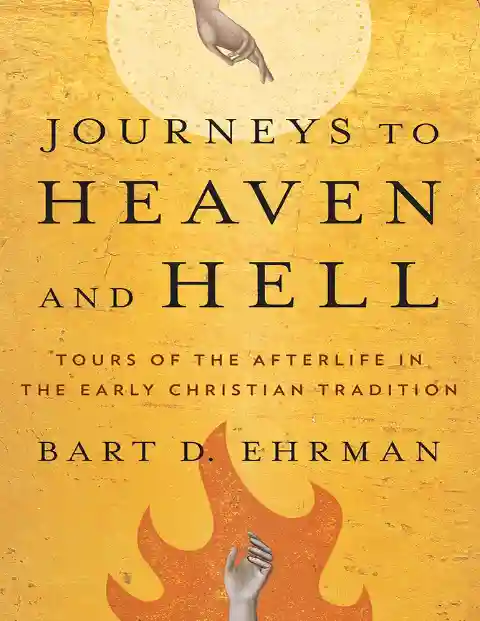

Others like journeys to heaven and hell Features >>
Between Heaven And Hell
-160.webp)
A New Heaven And A New Earth: Reclaiming Biblical Eschatology

A Journey To Hell, Heaven, And Back
-160.webp)
Proof Of Heaven: A Neurosurgeon's Journey Into The Afterlife
-160.webp)
The Genesis 6 Conspiracy (How Secret Societies And The Descendants Of Giants Plan To Enslave Humankind)

40 Days Through Revelation - Uncovering The Mystery Of The End Times
The Prophetic Future Concealed In Israel’s Festivals

Angels - Gods Supernatural Agents
Guardian Angels
If A Man Dies Will He Live Again
About the Book
"Journeys to Heaven and Hell" by Bart D. Ehrman explores the historical and cultural significance of concepts of the afterlife in various religions and belief systems. Ehrman delves into the origins of these notions and how they have evolved over time, providing insight into how beliefs about heaven and hell have shaped human thought and behavior. Through a scholarly examination of ancient texts and cultural practices, Ehrman offers a thought-provoking exploration of the human fascination with the metaphysical realm.
Brother Yun
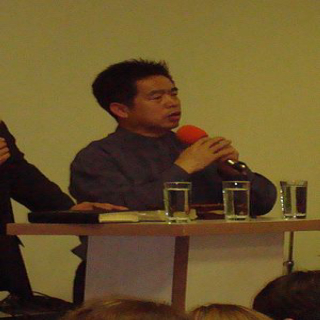 Brother Yun was born in February 1958 in the province of Henan. His original name was Liu Zhenying (刘振营).
Brother Yun became a believer at the age of 16. Soon after he became a Christian, God called him to be His witness in the west and south. As he was obedient to the calling, he eventually became a witness of Christ not just in the western and southern parts of China, but throughout China and in the nations beyond China as well.
Brother Yun was born into a poor family. His family’s financial situation took a turn for the worst when his father became ill with an asthmatic condition that led to lung cancer eventually. His life got worse when he became a Christian as he suffered severe trials and persecutions. In the midst of suffering for the Lord, however, he experienced miracle after miracle, which helped to strengthen his faith.
HOW BROTHER YUN BECAME A BELIEVER
In 1974, Brother Yun’s father became ill with lung cancer. His mother, who had been a Christian for many years but had become spiritually cold after the expulsion of Western missionaries during the Cultural Revolution, felt a deep sense of desperation because if her husband had died then, it would leave the family in dire straits. She thought of committing suicide. One evening, as she was lying in bed, she heard a voice saying to her that Jesus loved her. In tears and in repentance, she rededicated her life to God and gathered her family to pray for her husband. The next morning, her husband got better and as a result, everyone in the family, including Brother Yun, put their faith in God.
HIS HUNGER FOR THE WORD OF GOD
Brother Yun was 16 when he became a Christian. Soon after, he started hungering for the Word of God. However, his family did not have a Bible. He began asking his mother who Jesus was. In response, his mother would tell him that Jesus was the Son of God and that He had recorded all His teachings in the Bible.
Brother Yun wanted a Bible and his mother recalled that there was a man in another village who had one. So she brought him to see the man. The man was too afraid to show Brother Yun his Bible. So he suggested to the latter that he could pray and ask God for one.
Brother Yun decided to fast and pray for a Bible. For the next 100 days, he ate only one bowl of steamed rice everyday. One day at 4am, after fasting for 100 days, he saw a vision. In the vision, he was walking up a steep hill and trying to push a heavy cart at the same time. He was heading towards a village where he intended to beg for food for his family. He struggled greatly as he continued his climb uphill. The cart was about to roll back and fall on him when he saw three men walking down the hill in the opposite direction. One of them was a kind old man and he was pulling a large cart of fresh bread. When the old man saw Brother Yun, he asked him if he was hungry. He said ‘yes’ and started crying. The old man then took a red bag of bread from his cart and asked his two servants to give it to Brother Yun. As he put the bread into his mouth, it immediately turned into a Bible.
Upon waking up, Brother Yun began to search for the Bible. His search, however, was in vain. All of a sudden, he heard a faint knock on the door and someone was calling out his name. Immediately, he recognised the voice – it was the same voice he had heard in the vision. He quickly opened the door and standing before him were the two servants he had seen in the vision. One of them held a red bag in his hand. In this red bag was a Bible.
It was later that Brother Yun found out the names of the two men. One was Brother Wang while the other was Brother Sung. They were sent by an evangelist to give Brother Yun the Bible. The evangelist, who had suffered terribly during the Cultural Revolution and had nearly died while being tortured, had received a vision from God. In the vision, God showed him Brother Yun’s house and the location of his village. He was asked to give his Bible to Brother Yun. However, he did not obey God until three months later.
Brother Yun began to devour the Word of God. Even though he could hardly read, this did not deter him at all. When he had finished reading the entire Bible, he started to memorise one chapter per day. In 28 days, he had memorised the Gospel of Matthew. Then he went on to memorise the Book of Acts and so forth.
OBEDIENT TO THE CALL OF GOD
One morning at 4am, Brother Yun had a dream. In the dream, God asked him to be His witness in the west and south. In the same dream, he saw a young man from the south coming to his house. And so at daybreak, he told his mother to expect the young man’s visit and to ask him to wait for him. Then he sat off to a village he had never heard of in the west. The people in this village had been praying for him to visit as they had heard about how he had prayed for a Bible and got it.
When the meeting at the village concluded and Brother Yun got ready to leave, the villagers refused to let him go. So he stayed on and recited to them the first twelve chapters from the Book of Acts. After that, the villagers finally let him go. From the village to his house, it could take up to 2 hours to walk. Because he did not want to make the young man from the south wait too long, he decided to run home. All of a sudden, he found himself entering his village without any apparent time lapse. What should have taken him a few hours took him just a few moments. It was as if God had supernaturally transported him back to his village.
PERSECUTIONS AND MIRACLES IN HIS LIFE
Brother Yun was arrested by security police numerous times and was thrown into prison three times for sharing the gospel in communist China.
When Brother Yun was arrested the first time, he was only 17 years old. At that time, he was ministering at a meeting far away from home. After he was caught, he was thrown into a freezing cold prison cell. There was no heat in the cell and his winter coat had been thrown into the snow by the security police who had caught him. He began to sing Psalm 150 aloud. The more he sang, the more he was filled with joy. Gradually, his frozen hands and feet regained feeling and he no longer felt cold.
During his first imprisonment in Nanyang, Brother Yun felt that God wanted him to fast without food and water until he could see his family again. This fast lasted 74 days, which was humanly impossible but yet was made possible because he chose to obey God.
During those times when Brother Yun was in the hands of government officials, he was repeatedly beaten and tortured with electric batons. He was also kicked and trampled upon. Furthermore, he had needles being jabbed underneath his fingernails.
Once, Brother Yun was paraded through the streets with a red cross tied behind him for half a day. When night fell, he was locked and left alone inside a large interrogation room. The wooden cross was taken off his back but his hands were still tied up. All of a sudden, the rope that was used to tie his hands snapped by itself. He immediately walked out of the interrogation room and walked through the courtyard in the midst of onlookers. Nobody stopped him or said anything to him. It was as if God had blinded their eyes and they did not even recognise who he was.
Because the front gate was locked, the only way Brother Yun could get out was to climb over an eight-foot high cement wall. He climbed up as much as he could manage. Then he looked over the wall and saw that there was a ten-foot wide open tank directly below. Suddenly, he felt as if someone had lifted him up and thrown him over. He was thrown so far that he did not land in the tank.
Brother Yun’s 3rd imprisonment was a very dark period in his life as the prison guards in the maximum security prison were determined to prevent his escape. So they beat his legs to cripple him permanently. They had him beaten up everyday, even in his crippled state. One day, God instructed him to escape from the prison. This was confirmed by a brother-in-Christ. Thus, on May 5, 1997, he miraculously walked past dozens of prison guards and out of the maximum security prison. It was as if he had become invisible to the guards. He did not realise that his legs had been miraculously healed until later.
Throughout all the horrendous and painful experiences that Brother Yun went through, the word of the Lord kept coming to him, encouraging him and strengthening his faith.
BROTHER YUN’S MINISTRY
Brother Yun eventually escaped China and sought asylum in Germany in 2001. Since then, he has been continuing his ministry from there and has spoken to congregations internationally. He has founded “Back to Jerusalem” Movement and has been sending missionaries out from China to share the gospel in the least-reached nations.
Brother Yun’s life and ministry have impacted many lives. Thousands of people have become Christians through his ministry. It is thus inevitable that fellow Christians have allowed themselves to be used as instruments of wickedness to attack his reputation. The co-author of The Heavenly Man, Paul Hattaway has aptly put it this way, “Many of the great Christian leaders throughout history have been the subject of brutal attacks from other Christians.”
AFTERTHOUGHT
Brother Yun’s childlike faith and his prompt obedience to God’s call are exemplary. It is incredible that he has remained faithful to God despite the tremendous suffering and persecutions he has gone through.
Brother Yun was born in February 1958 in the province of Henan. His original name was Liu Zhenying (刘振营).
Brother Yun became a believer at the age of 16. Soon after he became a Christian, God called him to be His witness in the west and south. As he was obedient to the calling, he eventually became a witness of Christ not just in the western and southern parts of China, but throughout China and in the nations beyond China as well.
Brother Yun was born into a poor family. His family’s financial situation took a turn for the worst when his father became ill with an asthmatic condition that led to lung cancer eventually. His life got worse when he became a Christian as he suffered severe trials and persecutions. In the midst of suffering for the Lord, however, he experienced miracle after miracle, which helped to strengthen his faith.
HOW BROTHER YUN BECAME A BELIEVER
In 1974, Brother Yun’s father became ill with lung cancer. His mother, who had been a Christian for many years but had become spiritually cold after the expulsion of Western missionaries during the Cultural Revolution, felt a deep sense of desperation because if her husband had died then, it would leave the family in dire straits. She thought of committing suicide. One evening, as she was lying in bed, she heard a voice saying to her that Jesus loved her. In tears and in repentance, she rededicated her life to God and gathered her family to pray for her husband. The next morning, her husband got better and as a result, everyone in the family, including Brother Yun, put their faith in God.
HIS HUNGER FOR THE WORD OF GOD
Brother Yun was 16 when he became a Christian. Soon after, he started hungering for the Word of God. However, his family did not have a Bible. He began asking his mother who Jesus was. In response, his mother would tell him that Jesus was the Son of God and that He had recorded all His teachings in the Bible.
Brother Yun wanted a Bible and his mother recalled that there was a man in another village who had one. So she brought him to see the man. The man was too afraid to show Brother Yun his Bible. So he suggested to the latter that he could pray and ask God for one.
Brother Yun decided to fast and pray for a Bible. For the next 100 days, he ate only one bowl of steamed rice everyday. One day at 4am, after fasting for 100 days, he saw a vision. In the vision, he was walking up a steep hill and trying to push a heavy cart at the same time. He was heading towards a village where he intended to beg for food for his family. He struggled greatly as he continued his climb uphill. The cart was about to roll back and fall on him when he saw three men walking down the hill in the opposite direction. One of them was a kind old man and he was pulling a large cart of fresh bread. When the old man saw Brother Yun, he asked him if he was hungry. He said ‘yes’ and started crying. The old man then took a red bag of bread from his cart and asked his two servants to give it to Brother Yun. As he put the bread into his mouth, it immediately turned into a Bible.
Upon waking up, Brother Yun began to search for the Bible. His search, however, was in vain. All of a sudden, he heard a faint knock on the door and someone was calling out his name. Immediately, he recognised the voice – it was the same voice he had heard in the vision. He quickly opened the door and standing before him were the two servants he had seen in the vision. One of them held a red bag in his hand. In this red bag was a Bible.
It was later that Brother Yun found out the names of the two men. One was Brother Wang while the other was Brother Sung. They were sent by an evangelist to give Brother Yun the Bible. The evangelist, who had suffered terribly during the Cultural Revolution and had nearly died while being tortured, had received a vision from God. In the vision, God showed him Brother Yun’s house and the location of his village. He was asked to give his Bible to Brother Yun. However, he did not obey God until three months later.
Brother Yun began to devour the Word of God. Even though he could hardly read, this did not deter him at all. When he had finished reading the entire Bible, he started to memorise one chapter per day. In 28 days, he had memorised the Gospel of Matthew. Then he went on to memorise the Book of Acts and so forth.
OBEDIENT TO THE CALL OF GOD
One morning at 4am, Brother Yun had a dream. In the dream, God asked him to be His witness in the west and south. In the same dream, he saw a young man from the south coming to his house. And so at daybreak, he told his mother to expect the young man’s visit and to ask him to wait for him. Then he sat off to a village he had never heard of in the west. The people in this village had been praying for him to visit as they had heard about how he had prayed for a Bible and got it.
When the meeting at the village concluded and Brother Yun got ready to leave, the villagers refused to let him go. So he stayed on and recited to them the first twelve chapters from the Book of Acts. After that, the villagers finally let him go. From the village to his house, it could take up to 2 hours to walk. Because he did not want to make the young man from the south wait too long, he decided to run home. All of a sudden, he found himself entering his village without any apparent time lapse. What should have taken him a few hours took him just a few moments. It was as if God had supernaturally transported him back to his village.
PERSECUTIONS AND MIRACLES IN HIS LIFE
Brother Yun was arrested by security police numerous times and was thrown into prison three times for sharing the gospel in communist China.
When Brother Yun was arrested the first time, he was only 17 years old. At that time, he was ministering at a meeting far away from home. After he was caught, he was thrown into a freezing cold prison cell. There was no heat in the cell and his winter coat had been thrown into the snow by the security police who had caught him. He began to sing Psalm 150 aloud. The more he sang, the more he was filled with joy. Gradually, his frozen hands and feet regained feeling and he no longer felt cold.
During his first imprisonment in Nanyang, Brother Yun felt that God wanted him to fast without food and water until he could see his family again. This fast lasted 74 days, which was humanly impossible but yet was made possible because he chose to obey God.
During those times when Brother Yun was in the hands of government officials, he was repeatedly beaten and tortured with electric batons. He was also kicked and trampled upon. Furthermore, he had needles being jabbed underneath his fingernails.
Once, Brother Yun was paraded through the streets with a red cross tied behind him for half a day. When night fell, he was locked and left alone inside a large interrogation room. The wooden cross was taken off his back but his hands were still tied up. All of a sudden, the rope that was used to tie his hands snapped by itself. He immediately walked out of the interrogation room and walked through the courtyard in the midst of onlookers. Nobody stopped him or said anything to him. It was as if God had blinded their eyes and they did not even recognise who he was.
Because the front gate was locked, the only way Brother Yun could get out was to climb over an eight-foot high cement wall. He climbed up as much as he could manage. Then he looked over the wall and saw that there was a ten-foot wide open tank directly below. Suddenly, he felt as if someone had lifted him up and thrown him over. He was thrown so far that he did not land in the tank.
Brother Yun’s 3rd imprisonment was a very dark period in his life as the prison guards in the maximum security prison were determined to prevent his escape. So they beat his legs to cripple him permanently. They had him beaten up everyday, even in his crippled state. One day, God instructed him to escape from the prison. This was confirmed by a brother-in-Christ. Thus, on May 5, 1997, he miraculously walked past dozens of prison guards and out of the maximum security prison. It was as if he had become invisible to the guards. He did not realise that his legs had been miraculously healed until later.
Throughout all the horrendous and painful experiences that Brother Yun went through, the word of the Lord kept coming to him, encouraging him and strengthening his faith.
BROTHER YUN’S MINISTRY
Brother Yun eventually escaped China and sought asylum in Germany in 2001. Since then, he has been continuing his ministry from there and has spoken to congregations internationally. He has founded “Back to Jerusalem” Movement and has been sending missionaries out from China to share the gospel in the least-reached nations.
Brother Yun’s life and ministry have impacted many lives. Thousands of people have become Christians through his ministry. It is thus inevitable that fellow Christians have allowed themselves to be used as instruments of wickedness to attack his reputation. The co-author of The Heavenly Man, Paul Hattaway has aptly put it this way, “Many of the great Christian leaders throughout history have been the subject of brutal attacks from other Christians.”
AFTERTHOUGHT
Brother Yun’s childlike faith and his prompt obedience to God’s call are exemplary. It is incredible that he has remained faithful to God despite the tremendous suffering and persecutions he has gone through.
Will You Lose Your Faith in College
Will you keep your faith in college? Odds are you won’t, at least according to Barna Research. Barna estimates that roughly 70% of high school students who enter college as professing Christians will leave with little to no faith. These students usually don’t return to their faith even after graduation, as Barna projects that 80% of those reared in the church will be “disengaged” by the time they are 29. Will you be one of the 80%? Will you abandon your faith when surrounded by peers who don’t know God? Most people assume their early faith will carry them through their lives. King Joash probably did. He began to reign at age 7 (2 Chronicles 24:1), and he “did what was right in the eyes of the Lord all the days of Jehoiada the priest” (2 Chronicles 24:2), King Joash’s mentor and most trusted advisor. When Jehoiada was alive, Joash faithfully followed God’s laws and made sure others did as well. He even inspired others to give joyfully to God: “All the princes and all the people rejoiced and brought their tax and dropped it into the chest until they had finished” (2 Chronicles 24:10). Joash’s faith certainly seemed genuine. Far Too Easily Swayed But when Jehoiada died, Joash turned to his peers. When the princes of Judah came to visit Joash soon after Jehoiada’s death, the king listened to them. After the princes “paid homage to the king” (2 Chronicles 24:17), which probably meant they flattered him, Joash abandoned the house of the Lord and turned to serve idols. These “friends” may have convinced him that they were open-minded and in touch with popular culture, and that Jehoiada had been too strict and old-fashioned. Joash listened to them and reversed all the good things he had done earlier, even murdering Jehoiada’s son Zechariah when he was questioned. This behavior seems like a shocking turnaround, but it shows that King Joash had likely been trusting in Jehoiada and not God. His faith was not his own. Since he lacked personal conviction, he was easily swayed by faithless people around him. God judged him for his wickedness and he was soon murdered by his own servants. Joash shows us that it doesn’t matter how well we start in the Christian life; it matters how we finish. For Freshmen and Seniors Many of us started strong. We assumed that if we were raised with the right values and involved in church, we would always stay faithful. I believed that. I had a passion for the Lord in high school and college, but as I immersed myself in my career, my church attendance became sporadic and my time with God infrequent and rushed. I found that the less time I spent with the Lord, the less I wanted to know him. My unbelieving coworkers were my closest friends. Originally, I hoped to share my faith with them, but instead they passed on their spiritual indifference to me. They had a subtle but profound influence on my priorities. As my faith was getting watered down, reading the Bible and going to church felt more legalistic than life-giving. It was only when I faced real suffering that my faith became important again. Whether you are a freshman or a senior, if you are heading off to college, you’re in a vulnerable place. It’s easy to assume you’ll develop better spiritual disciplines and get involved in Christian community later on. But as you juggle life’s challenges, it’s tempting to put off pursuing God until you feel more settled, unintentionally falling into the habits of lost people around you. The shift is gradual and often unnoticeable. Three Ways Not to Wander So, what can you do, with God’s help, to be one of the 20% raised in the church who remain faithful through college and into their twenties? First, don’t assume that you won’t drift away — or that if you do drift away, you will eventually come back. We are all vulnerable. Ask God daily for an enduring passion for him. Ask him to give you joy in him alone. Ask him right now to keep your heart from wandering. Second, stay closely connected to God. It may sound trite, or even legalistic, but reading the Bible and praying really are the simple keys to the Christian life. As you read, focus and pay attention rather than mindlessly skimming words to “check off the box.” I love using a Bible reading plan because it takes the guesswork out of what to read each morning. I recommend the Discipleship Journal plan. If you’re reading the Bible regularly for the first time, begin by just reading the New Testament sections each day. Try reading with a pen and paper, jotting down insights, questions, and observations, asking God to open your eyes to see truth and to breathe life into his words (Psalm 119:18). Third, find real Christian fellowship. Plug into a church and a small group or on-campus ministry. Intentionally make Christian friends and spend time with them. Having good Christian friends in college reduces the pressure to conform. The people around us influence us far more than we realize. King Joash is a vivid example of how easy it is to abandon your faith when surrounded by the wrong people. Makeshift Saints Charles Spurgeon, a London preacher in the 1800s, once said, Oh, what a sifter the city of London has been to many like Joash! Many do I remember whose story was like this: they had been to the house of God always . . . and everybody reckoned them to be Christians — and then they came to London. At first, they went . . . to some humble place where the gospel was preached. But after time they thought . . . they worked so hard all the week that they must go out a little into the fresh air on Sunday; and by degrees they found companions who led them, little by little, from the path of integrity and chastity, until the “good young man” was as vile as any on the streets of London; and he who seemed to be a saint, became not only a sinner, but the maker of sinners. None of us is immune from slowly drifting from God. As we see from King Joash’s life, even when we’ve lived an outwardly Christian life, it’s easy to start living like those around us. Yet those who truly know Christ cannot fall away. As 1 John 2:19 says, “If they had been of us, they would have continued with us.” Those who leave the faith never truly possessed it but, as John Calvin said, merely “had only a light and a transient taste of it.” Will You Fall Away? Will you fall away in college? You can fight the current, and hold fast to God. First, “Examine yourselves, to see whether you are in the faith. Test yourselves. Or do you not realize this about yourselves, that Jesus Christ is in you? — unless indeed you fail to meet the test!” (2 Corinthians 13:5). Ask yourself if Jesus is your treasure or if you are only borrowing the faith of those around you. If you have any doubt, commit yourself now to pursue Christ as hard as you pursue anything. But if you genuinely know the Lord, and see evidences of transforming grace in your life, don’t be afraid that you’ll fall away. He will hold you fast. He will strengthen you and help you. He will uphold you with his righteous right hand (Isaiah 41:10). If you are his, then you can be sure “that he who began a good work in you will bring it to completion at the day of Jesus Christ” (Philippians 1:6). Article by Vaneetha Rendall Risner