
Others like journeys to heaven and hell Features >>
Between Heaven And Hell
-160.webp)
A New Heaven And A New Earth: Reclaiming Biblical Eschatology
A Journey To Hell, Heaven, And Back
-160.webp)
Proof Of Heaven: A Neurosurgeon's Journey Into The Afterlife
-160.webp)
The Genesis 6 Conspiracy (How Secret Societies And The Descendants Of Giants Plan To Enslave Humankind)
40 Days Through Revelation - Uncovering The Mystery Of The End Times
The Prophetic Future Concealed In Israel’s Festivals
Angels - Gods Supernatural Agents
Guardian Angels
If A Man Dies Will He Live Again
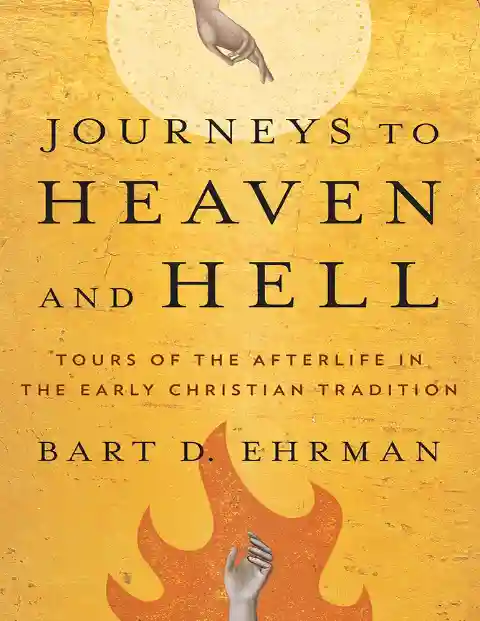
About the Book
"Journeys to Heaven and Hell" by Bart D. Ehrman explores the historical and cultural significance of concepts of the afterlife in various religions and belief systems. Ehrman delves into the origins of these notions and how they have evolved over time, providing insight into how beliefs about heaven and hell have shaped human thought and behavior. Through a scholarly examination of ancient texts and cultural practices, Ehrman offers a thought-provoking exploration of the human fascination with the metaphysical realm.
Calvin Miller
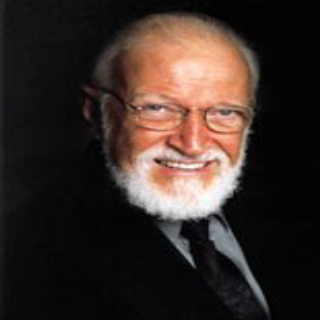 Calvin Miller was a pastor, professor and storyteller, best known for The Singer Trilogy, a mythic retelling of the New Testament story in the spirit of C. S. Lewis and J. R. R. Tolkien. Miller passed away on the afternoon of August 19, 2012, due to complications after heart surgery. He was 75.
A prolific artist and a writer's writer, Miller garnered respect and praise throughout his career from peers like Luci Shaw, Max Lucado and Philip Yancey. He was the author of more than forty books of popular theology and Christian inspiration including such recent books as Letters to Heaven, The Path of Celtic Prayer, Letters to a Young Pastor and his memoir Life Is Mostly Edges.
In addition to his twenty years of pastoral service at Westside Church in Omaha, Nebraska, Miller was also a great mentor to many students and leaders through his preaching and pastoral ministry classes at Beeson Divinity School. Calvin Miller, never one to multiply words, used just four to describe his rule of life: "Time is a gift."
RESCUE FROM THE SLUSH PILE
In October 1973 one important book was rescued from the slush pile (the stack of unsolicited manuscripts every publisher receives) by assistant editor Don Smith. He read a manuscript by a little-known Baptist pastor in Nebraska that was a poetic retelling of the life of Jesus—portraying him as a Troubadour. Both he and Linda Doll excitedly encouraged Jim Sire to take this imaginative manuscript seriously. In February 1974 Sire wrote the author, Calvin Miller, that IVP wanted to publish his book The Singer.
Months before, Miller had been waking up nights, stirred to write this tale, perhaps unconsciously inspired by the recent Broadway hits Jesus Christ Superstar and Godspell. Later Miller wrote:
When the manuscript was done, I sent it to Jim Sire at InterVarsity Press. “It’s good,” he said, “but we want to think about it a couple of weeks before we give you an answer.” So I waited until finally the letter came. They were going to do it. Jim Sire had done his Ph.D. on John Milton, and the fact that he liked it was joy immeasurable to me. “But,” he cautioned, “we’re going to print five thousand of these. They may not do well—in fact we may end up with four thousand of them on skids in our basement for the next ten years. Still, it’s a good book and deserves to be in print.”
Far more than a thousand copies sold. Actually, over three hundred times that amount sold in its first decade. It became “the most successful evangelical publication in this genre.” The Singer was followed in two years by The Song (paralleling the story of the early church in Acts) and two years after that by The Finale (inspired by the book of Revelation). Publication of The Singer changed Miller’s life. Even though he stayed in the pastorate for many years, it set him on a course of writing and speaking that he could not have imagined.
Calvin Miller was a pastor, professor and storyteller, best known for The Singer Trilogy, a mythic retelling of the New Testament story in the spirit of C. S. Lewis and J. R. R. Tolkien. Miller passed away on the afternoon of August 19, 2012, due to complications after heart surgery. He was 75.
A prolific artist and a writer's writer, Miller garnered respect and praise throughout his career from peers like Luci Shaw, Max Lucado and Philip Yancey. He was the author of more than forty books of popular theology and Christian inspiration including such recent books as Letters to Heaven, The Path of Celtic Prayer, Letters to a Young Pastor and his memoir Life Is Mostly Edges.
In addition to his twenty years of pastoral service at Westside Church in Omaha, Nebraska, Miller was also a great mentor to many students and leaders through his preaching and pastoral ministry classes at Beeson Divinity School. Calvin Miller, never one to multiply words, used just four to describe his rule of life: "Time is a gift."
RESCUE FROM THE SLUSH PILE
In October 1973 one important book was rescued from the slush pile (the stack of unsolicited manuscripts every publisher receives) by assistant editor Don Smith. He read a manuscript by a little-known Baptist pastor in Nebraska that was a poetic retelling of the life of Jesus—portraying him as a Troubadour. Both he and Linda Doll excitedly encouraged Jim Sire to take this imaginative manuscript seriously. In February 1974 Sire wrote the author, Calvin Miller, that IVP wanted to publish his book The Singer.
Months before, Miller had been waking up nights, stirred to write this tale, perhaps unconsciously inspired by the recent Broadway hits Jesus Christ Superstar and Godspell. Later Miller wrote:
When the manuscript was done, I sent it to Jim Sire at InterVarsity Press. “It’s good,” he said, “but we want to think about it a couple of weeks before we give you an answer.” So I waited until finally the letter came. They were going to do it. Jim Sire had done his Ph.D. on John Milton, and the fact that he liked it was joy immeasurable to me. “But,” he cautioned, “we’re going to print five thousand of these. They may not do well—in fact we may end up with four thousand of them on skids in our basement for the next ten years. Still, it’s a good book and deserves to be in print.”
Far more than a thousand copies sold. Actually, over three hundred times that amount sold in its first decade. It became “the most successful evangelical publication in this genre.” The Singer was followed in two years by The Song (paralleling the story of the early church in Acts) and two years after that by The Finale (inspired by the book of Revelation). Publication of The Singer changed Miller’s life. Even though he stayed in the pastorate for many years, it set him on a course of writing and speaking that he could not have imagined.
What Does It Mean to Be Real
Nobody likes a fake. Even in our airbrush culture, we despise counterfeits and crave authenticity. Everyone wants to be real. But what does it mean to be real? No one really knows. Or so it seems. Try an experiment. Listen to people talk about what it means to be a Christian. Do you know what you will hear? Lots of competing answers and plenty of confusion. Perhaps you recall when 2012 presidential hopeful, Senator Rick Santorum, claimed that President Barack Obama’s policies were based on “a different theology.” Reporters, of course, pounced on this juicy piece of journalist red meat. “Did Senator Santorum,” they asked, “have the audacity, not of hope, but political incorrectness, to call into question the president’s claim to be a Christian?” When Senator Santorum was pressed, he gave a politically savvy response: “If the president says he’s a Christian, he’s a Christian.” End of story. Next question, please. His answer satisfied reporters, and thousands of others following the story. It was as if he said, “To profess faith is to possess faith.” And what could be less objectionable, or more American, than that? But one wonders what Jesus thinks of what Santorum said. More Than Mere Talk Is it enough simply to say we’re real, or should we be able to see we’re real? And if so, what should we see? Are there marks of authentic faith we should see in our lives, or in the lives of others? And what about the watching world? What should they see in the lives of real Christians? Now, more than a decade into the twenty-first century, the evangelical church faces huge challenges to its ministry and mission — radical pluralism, aggressive secularism, political polarization, skepticism about religion, revisionist sexual ethics, postmodern conceptions of truth. But perhaps the greatest threat to the church’s witness is one of our own making — an image problem. Many outside the church view Christians as unchristian in their attitudes and actions — bigoted, homophobic, hypocritical, materialistic, judgmental, self-serving, overly political. Several years ago, David Kinnaman and Gabe Lyons showed this in their book Unchristian , which landed like a bombshell on a happy-go-lucky evangelicalism, causing many of us to do some serious soul-searching. The evangelical church’s image problem doesn’t bode well for its future. In fact, the data suggests that evangelical Christianity is declining in North America. Despite the church’s best efforts to appeal to the disillusioned, we continue to see alarming trends. Droves of people, especially from younger generations, are leaving the church and don’t plan to return. This has driven some to even predict the end of evangelicalism (See David Fitch, The End of Evangelicalism? ). One True Soil The reasons for this discouraging state of affairs are complex, not cookie-cutter. But we know one thing is certain: When Christians are confused about what it means to be real, the spiritual decline of the church will follow. In our increasingly post-Christian culture, where confusion about what it means to be real abounds, and where distrust of organized religion has reached an all-time high, the church needs to get real . We must clarify for ourselves, and for a watching world, what it means to live a life of authentic faith. While Christians are confused about what it means to be real, Jesus is not. “Thus you will recognize them by their fruits,” he says (Matthew 7:20). You know you’re real if you bear fruit, he tells us. Fruit is the telltale sign of authentic faith because fruit doesn’t lie. “For no good tree bears bad fruit, nor again does a bad tree bear good fruit, for each tree is known by its own fruit. For figs are not gathered from thornbushes, nor are grapes picked from a bramble bush” (Luke 6:43–44). Jesus underscores this point in his famous parable about the sower (Matthew 13:1–23). The parable itself is straightforward. A farmer sows seed in a field, and the seed represents the good news of the kingdom. It is sown on four different kinds of soil, each representing a different response to the message of the kingdom. Simple enough, right? But here’s the punch line: Only one type of soil bears fruit. Counterfeits Exposed The seed sown on the first soil hardly gets started. Satan comes and snatches it away. But what’s even more troubling is the outcome of the seed sown on the second and third soils. Why? Because both respond positively to the message, at least initially. These seeds appear to take root and begin growing into something real. Yet as the story continues, we learn that neither seed bears fruit. Neither lasts to the end, and thus neither seed is real. Some of the seeds fail to develop roots, and they don’t persevere when life gets hard and their faith is tested. All we see from this seed is a burst of enthusiasm, but no staying power. Perhaps this is someone who got excited about fellowship or forgiveness, but lacked love for Christ. They only have the appearance of being real. Over time, their faith proved counterfeit. We assume the third seed had a similarly joyful response to the message. Yet this soon dissipates because of revived interest in the things of the world — a career promotion, a new vacation home, saving toward their 401(k) plan. These concerns choke any fledgling faith, and the person falls away. New People with New Lives Why does Jesus tell his disciples this sobering parable? Why such a blunt story about the distinction between authentic and inauthentic responses to his message? Evidently, Jesus doesn’t equate professing faith with possessing faith, as we so often do. Instead, he warns his disciples that only one things matters — bearing fruit Although provocative, I think Jesus’s point is simple. Real is something you can see. There is a visible difference between real and not-real Christians. It’s not enough to say you’re real; you should be able to see you’re real. Real faith is something you can see. Being real is more than regularly attending church, feeling good about God, or “accepting” Jesus as your Savior; it goes beyond being baptized, receiving Communion, reciting the creed, or joining in church membership. As important as these things are, being real runs deeper than these things. Real Christians are new creatures. Physically, they won’t look different than others, at least not in the way they dress or keep their hair. Yet real Christians are radically changed — they’ve experienced a new birth, received a new heart, and enjoy new desires. Which makes them altogether new people who live new lives. And it shows. If you’re real, it will reveal itself in your life. Real Christians bear the marks of authentic faith in ways that can be seen, heard, and felt. When you know what you’re looking for, you can see the marks of real in their lives — and in your own.