

Others like jesus a pilgrimage Features >>

Twelve Tribes Of Israel

A Summary Of Christian History
-160.webp)
God's Generals (Evan Roberts)
-160.webp)
God's Generals (Charles F. Parham)

Fire In The Bones - William Tyndale
-160.webp)
The Myth Of The Twelve Tribes Of Israel (New Identities Across Time And Space)
-160.webp)
God's Generals (Smith Wigglesworth)
Autobiography Of Rev. William Burke

The Act Of The Apostle
-160.webp)
God's Generals (Jack Coe)
About the Book
"Jesus: A Pilgrimage" by James Martin is a personal journey of faith and discovery as the author travels to the Holy Land to explore the life of Jesus. Through vivid descriptions and reflections on biblical passages, Martin offers a fresh perspective on the teachings and actions of Jesus, revealing the complexities and humanity of the historical figure. The book invites readers to deepen their understanding of Jesus and their own spirituality through an engaging blend of scholarship, insights, and personal anecdotes.
Nik Ripken
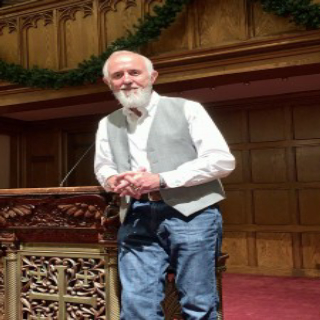 Nik and Ruth, with 3 children, served for over 32 years obeying Christ’s command to share Jesus across the globe. After 7 years in Malawi & South Africa, they moved to Nairobi, Kenya to begin work among the Somali people (1991-1997). Since that time (1998-2013) they have journeyed globally among people whom, when they gave their lives to Jesus, faced increasing persecution for their faith.
The Ripkens and their teams served throughout the Horn of Africa within famine and war zones; resettling refugees, providing famine relief, and operating mobile medical clinics. Formerly Muslims, many Somali believers, suffered for their faith. Most were martyred. Near the end of the Ripken’s tenure among the Somalis, their 16-year-old son died of an asthma attack on Easter Sunday morning. He’s buried at the school from which the other Ripken children graduated.
One year later, the Holy Spirit led the Ripkens to begin a global pilgrimage to learn from believers in persecution how to recapture a biblical missiology of witness and house-church planting in the midst of persecution and martyrdom. Most of all, believers in persecution modeled for the Ripkens how to trust Jesus completely. Many of these lessons have been lost or forgotten by the church in the West.
Currently the Ripkens have interviewed over 600 believers in persecution, exceeding 72 countries. Sitting at their feet, the Ripkens learned from the suffering church how to thrive amidst suffering, not merely survive. The Ripkens, using everything they’ve learned from believers in persecution are creating resources as gifts from the church to the church. To date they have created articles, books, a music CD, a documentary, workshops, and other tools that allow the church in persecution to teach the church in the West about its biblical heritage of both crucifixion and resurrection. A teaching DVD is included in future plans. All these tools are designed to challenge believers to boldly follow Jesus, sharing their faith with others-no matter the cost.
Nik and Ruth, with 3 children, served for over 32 years obeying Christ’s command to share Jesus across the globe. After 7 years in Malawi & South Africa, they moved to Nairobi, Kenya to begin work among the Somali people (1991-1997). Since that time (1998-2013) they have journeyed globally among people whom, when they gave their lives to Jesus, faced increasing persecution for their faith.
The Ripkens and their teams served throughout the Horn of Africa within famine and war zones; resettling refugees, providing famine relief, and operating mobile medical clinics. Formerly Muslims, many Somali believers, suffered for their faith. Most were martyred. Near the end of the Ripken’s tenure among the Somalis, their 16-year-old son died of an asthma attack on Easter Sunday morning. He’s buried at the school from which the other Ripken children graduated.
One year later, the Holy Spirit led the Ripkens to begin a global pilgrimage to learn from believers in persecution how to recapture a biblical missiology of witness and house-church planting in the midst of persecution and martyrdom. Most of all, believers in persecution modeled for the Ripkens how to trust Jesus completely. Many of these lessons have been lost or forgotten by the church in the West.
Currently the Ripkens have interviewed over 600 believers in persecution, exceeding 72 countries. Sitting at their feet, the Ripkens learned from the suffering church how to thrive amidst suffering, not merely survive. The Ripkens, using everything they’ve learned from believers in persecution are creating resources as gifts from the church to the church. To date they have created articles, books, a music CD, a documentary, workshops, and other tools that allow the church in persecution to teach the church in the West about its biblical heritage of both crucifixion and resurrection. A teaching DVD is included in future plans. All these tools are designed to challenge believers to boldly follow Jesus, sharing their faith with others-no matter the cost.
How I Approach God When Feeling Rotten
A vague bad feeling that you are a crummy person is not the same as conviction for sin. Feeling rotten is not the same as repentance. This morning I began to pray, and felt unworthy to be talking to the Creator of the universe. It was a vague sense of unworthiness. So I told him so. Now what? Nothing changed until I began to get specific about my sins. Crummy feelings can be useful if they lead to conviction for sins. Vague feelings of being a bad person are not very helpful. The fog of unworthiness needs to take shape into clear dark pillars of disobedience. Then you can point to them and repent and ask for forgiveness and take aim to blow them up. So I began to call to mind the commands I frequently break. These are the ones that came to mind. Love God with all our heart, soul, mind and strength. Not 95%, 100%. (Matthew 22:37) Love your neighbor as you love yourself. Be as eager for things to go well for him as you are for things to go well for you. (Matthew 22:39) Do all things without grumbling. No grumbling—inside or outside. (Philippians 2:14) Cast all your anxieties on him—so you are not being weighed down by it anymore. (1 Peter 5:7) Only say things that give grace to others—especially those closest to you. (Ephesians 4:29) Redeem the time. Don’t fritter or dawdle. (Ephesians 5:16) Set your mind on things that are above. Connect all your thoughts to Christ. (Colossians 3:2) Do not return evil for evil—like when your wife or daughter says something you don’t like. (1 Thessalonians 5:15) Rejoice always, and again I say rejoice. Always. If sorrowful, keep rejoicing. (Philippians 4:4; 2 Corinthians 6:10) Give thanks in all circumstances. All. All. All. (1 Thessalonians 5:18) So much for any pretensions to great holiness! I’m undone. But now it is specific. I look it in the eye. I’m not whining about feeling crummy. I’m apologizing to Christ for not keeping all that he commanded. I’m broken and I’m angry at my sin. I want to kill it, not me. I’m not suicidal. I’m a sin hater and a sin murderer (“Put to death what is earthly in you” Colossians 3:5. “Put to death the deeds of the body” Romans 8:13.) In this conflict, I hear the promise, “If we confess our sins, he is faithful and just to forgive us our sins and to cleanse us from all unrighteousness” (1John 1:9). Peace rises. Prayer feels possible and right and powerful again. Article by John Piper Founder & Teacher, desiringGod.org