

Others like iniquity: the major hindrance Features >>


-160.webp)
-160.webp)
About the Book
"Iniquity: the Major Hindrance" by Ana Mendez explores the concept of iniquity as a spiritual force that can hinder individuals from fulfilling their purpose and receiving blessings from God. Mendez provides insights on how to identify and overcome iniquity in order to experience spiritual breakthrough and restoration. Ultimately, the book offers a guide for readers to overcome barriers and live in alignment with God's will.
Emerson Andrews
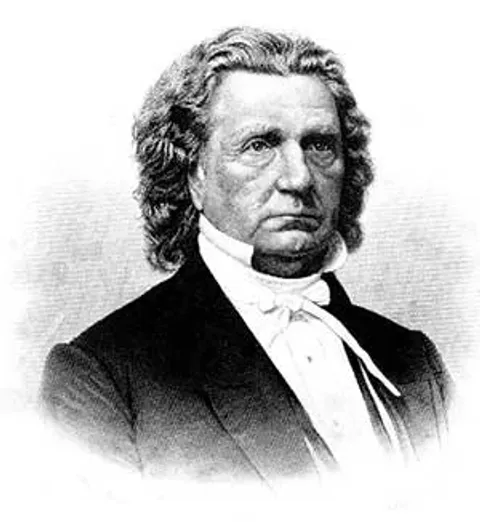 His Early life
Emerson Andrews was born in Mansfield, Bristol County, Massachusetts in 1806 to godly parents, James and Mercy Andrews. They were from English stock and were strict Puritans in faith and lifestyle. Although young Emerson was raised in the Congregational Church he was far from God in his teens and twenties.
Nevertheless, periodically, he experienced intense conviction, usually through his parents’ counsels and prayers but particularly through two unforgettable sermons delivered by the eccentric revivalist, Lorenzo Dow. Soon after this he was converted under the ministry of another revival preacher, Asahel Nettleton.
He was a very educated man formerly studying at Chesterfield Academy and, at the time of his conversion, at Plainfield Kimball Union Academy, in New Hampshire. In the spring of 1832 whilst studying further at Union College in Schenectady, New York, he was baptised by immersion in the Mohawk River. It was his convictions about the Bible’s teaching on water baptism that caused him to join the Baptist’s instead of the Congregationalists or Presbyterians.
A Lover of Revival
He wrote “Many revivals and protracted meetings of one, two, or more days, and some for weeks and months, have been held, in New England and elsewhere, within, my personal remembrance. These have sent out their hallowed influences, as the light of the world and salt of the earth. Just before and at the time of my second birth, many sweeping and glorious revivals, under the celebrated Dr. Netteton, John Leland, Jedediah Burchard, C. G. Finney, were hailed, enjoyed, and sounded all around and over the country.
As soon as I was converted I cherished the good news of revivals; and I sought a place and portion with live Christians, that I might speak for Christ and win souls to salvation. I asked God for direction and help, and was answered.
His first visit to a Revival
He describes his first visit to a Revival “The first meeting that I attended after my regeneration was held in the town of Windsor, Vt. It was called a “four days’ meeting.” But many such were held in different places about that time. This came off in the summer of l830. I was much delighted, fed, and strengthened by such a sight, experience, exercise, and spiritual supper. It was a precious banquet, adapted to develop and enlarge the young convert’s soul.
The four pastors of the town, with their respective churches and congregations, and some from neighboring towns, met with the Baptist church, of which Elder Leland Howard was the long-honored pastor. Some twenty other pastors also came in from adjacent towns, and a few Lawyers and teachers, who took leading parts in the services. Large congregations were constantly in attendance, and all the various exercises and meetings were interesting and profitable.
Some of the sermons and prayers were most powerful, melting, and effective. Sinners often arose, requesting prayers, or sent up short petitions to be read. A lawyer by the name of Shepherd, from New York, was found to be very able, pointed, and specific in prayer, and so effective and precise in noting each different request more perfectly than the ministers, that he was often invited to lead in prayer — especially when there were some ten or twenty different, or some difficult requests presented.
He seemed to be full of the Spirit, and was especially gifted and successful. Ministers learned something valuable from his wisdom and tact. I confess that his pointedness made a powerful and lasting impression on my mind and practice.
The professors and ministers were much blessed, and many sinners were converted in the meetings. The gospel was preached and the Spirit poured out, prayer and sacrifices made. Novelty and wonder attracted many. Here God crowned the effort.”
Mentored by Jacob Knapp
He writes. ” ROCHESTER, N.Y. 1839. Here I assisted in a powerful meeting, under the preaching of the celebrated Elder Jacob Knapp, for three weeks. Marvellous things were done. The wicked raged, the Spirit worked, grace prevailed, and hundreds were converted — a glorious triumph over rum, gambling, and infidelity. Jesus reigned.” This exposure to revival power whetted his appetite for an evangelistic ministry.
His first revival efforts
“WHITE DEER, PENN. 1839. In this rich farming district I had a revival meeting of five weeks, with a feeble Baptist church. We began at the close of the Association; but, with all the eloquent pastoral preaching in it, the brethren were not aroused, nor sinners much convicted.
Here my first sermon was from the text, “O Lord, revive thy work!” And he did so immediately. Some half a dozen persons were convicted and converted, and the church was revived by the power of God on that evening’s effort. The whole region, then, for seven miles around, was awakened, and some forty converts were immersed by Elder Spratt, D.D.
Here, too, we experienced severe opposition and much persecution from outside professors and sinners, but God strengthened our hands for a triumphant work. This was a blessed era with the church, and it is fragrant still.
“CLINTON, PENN. I had a revival meeting in this township. It was very great and powerful. Satan and sinners raged, at times, terribly, but the cross was triumphant. Many were immersed by the beloved pastor, Elder Spratt, D.D.
Hugh Donelly, the postmaster, rum-selling merchant, and an avowed infidel, who had slandered me and ridiculed the meeting, crept in away back, then into the middle seats; then, after a few nights, fell on his knees groaning and crying for mercy. I soon aided him in coming forward.
Then out came his wife and sister. We all prayed, and soon the three rejoiced in hope, and spoke boldly for Jesus. Brother Donelly has made a noble record in Pennsylvania and Indiana for Jesus and his cause…..
PARMA, N.Y. In this western village, in mid-winter, I preached night and day, for three weeks, to overflowing houses and attentive hearers. Christians renewed their “first love and vows,” and many sinners were converted and baptized.
An infidel, hearing a few sermons, was struck under conviction, and fled away thirty miles for comfort; but, feeling worse and worse, returned like the prodigal, feeling wretched and lost. He came forward, prayer was offered, and he soon yielded and believed, giving glory to God. Then he told his experience, and exhorted his old Universalist and infidel friends to repent and be saved from hell.
Emerson Andrews Preaching
His preaching zeal and effectiveness were quickly recognised and he was soon licensed to preach and for a four year period served brief pastorates in New York State – Waterford, West Troy, Lansingburg and Rome (1834-1838)
In 1838 began an itinerant evangelist for thirty-five years, mainly in America, but also in Europe, Africa, Asia and Canada. His estimates were that 40,000 were converted through his ministry.
His Early life
Emerson Andrews was born in Mansfield, Bristol County, Massachusetts in 1806 to godly parents, James and Mercy Andrews. They were from English stock and were strict Puritans in faith and lifestyle. Although young Emerson was raised in the Congregational Church he was far from God in his teens and twenties.
Nevertheless, periodically, he experienced intense conviction, usually through his parents’ counsels and prayers but particularly through two unforgettable sermons delivered by the eccentric revivalist, Lorenzo Dow. Soon after this he was converted under the ministry of another revival preacher, Asahel Nettleton.
He was a very educated man formerly studying at Chesterfield Academy and, at the time of his conversion, at Plainfield Kimball Union Academy, in New Hampshire. In the spring of 1832 whilst studying further at Union College in Schenectady, New York, he was baptised by immersion in the Mohawk River. It was his convictions about the Bible’s teaching on water baptism that caused him to join the Baptist’s instead of the Congregationalists or Presbyterians.
A Lover of Revival
He wrote “Many revivals and protracted meetings of one, two, or more days, and some for weeks and months, have been held, in New England and elsewhere, within, my personal remembrance. These have sent out their hallowed influences, as the light of the world and salt of the earth. Just before and at the time of my second birth, many sweeping and glorious revivals, under the celebrated Dr. Netteton, John Leland, Jedediah Burchard, C. G. Finney, were hailed, enjoyed, and sounded all around and over the country.
As soon as I was converted I cherished the good news of revivals; and I sought a place and portion with live Christians, that I might speak for Christ and win souls to salvation. I asked God for direction and help, and was answered.
His first visit to a Revival
He describes his first visit to a Revival “The first meeting that I attended after my regeneration was held in the town of Windsor, Vt. It was called a “four days’ meeting.” But many such were held in different places about that time. This came off in the summer of l830. I was much delighted, fed, and strengthened by such a sight, experience, exercise, and spiritual supper. It was a precious banquet, adapted to develop and enlarge the young convert’s soul.
The four pastors of the town, with their respective churches and congregations, and some from neighboring towns, met with the Baptist church, of which Elder Leland Howard was the long-honored pastor. Some twenty other pastors also came in from adjacent towns, and a few Lawyers and teachers, who took leading parts in the services. Large congregations were constantly in attendance, and all the various exercises and meetings were interesting and profitable.
Some of the sermons and prayers were most powerful, melting, and effective. Sinners often arose, requesting prayers, or sent up short petitions to be read. A lawyer by the name of Shepherd, from New York, was found to be very able, pointed, and specific in prayer, and so effective and precise in noting each different request more perfectly than the ministers, that he was often invited to lead in prayer — especially when there were some ten or twenty different, or some difficult requests presented.
He seemed to be full of the Spirit, and was especially gifted and successful. Ministers learned something valuable from his wisdom and tact. I confess that his pointedness made a powerful and lasting impression on my mind and practice.
The professors and ministers were much blessed, and many sinners were converted in the meetings. The gospel was preached and the Spirit poured out, prayer and sacrifices made. Novelty and wonder attracted many. Here God crowned the effort.”
Mentored by Jacob Knapp
He writes. ” ROCHESTER, N.Y. 1839. Here I assisted in a powerful meeting, under the preaching of the celebrated Elder Jacob Knapp, for three weeks. Marvellous things were done. The wicked raged, the Spirit worked, grace prevailed, and hundreds were converted — a glorious triumph over rum, gambling, and infidelity. Jesus reigned.” This exposure to revival power whetted his appetite for an evangelistic ministry.
His first revival efforts
“WHITE DEER, PENN. 1839. In this rich farming district I had a revival meeting of five weeks, with a feeble Baptist church. We began at the close of the Association; but, with all the eloquent pastoral preaching in it, the brethren were not aroused, nor sinners much convicted.
Here my first sermon was from the text, “O Lord, revive thy work!” And he did so immediately. Some half a dozen persons were convicted and converted, and the church was revived by the power of God on that evening’s effort. The whole region, then, for seven miles around, was awakened, and some forty converts were immersed by Elder Spratt, D.D.
Here, too, we experienced severe opposition and much persecution from outside professors and sinners, but God strengthened our hands for a triumphant work. This was a blessed era with the church, and it is fragrant still.
“CLINTON, PENN. I had a revival meeting in this township. It was very great and powerful. Satan and sinners raged, at times, terribly, but the cross was triumphant. Many were immersed by the beloved pastor, Elder Spratt, D.D.
Hugh Donelly, the postmaster, rum-selling merchant, and an avowed infidel, who had slandered me and ridiculed the meeting, crept in away back, then into the middle seats; then, after a few nights, fell on his knees groaning and crying for mercy. I soon aided him in coming forward.
Then out came his wife and sister. We all prayed, and soon the three rejoiced in hope, and spoke boldly for Jesus. Brother Donelly has made a noble record in Pennsylvania and Indiana for Jesus and his cause…..
PARMA, N.Y. In this western village, in mid-winter, I preached night and day, for three weeks, to overflowing houses and attentive hearers. Christians renewed their “first love and vows,” and many sinners were converted and baptized.
An infidel, hearing a few sermons, was struck under conviction, and fled away thirty miles for comfort; but, feeling worse and worse, returned like the prodigal, feeling wretched and lost. He came forward, prayer was offered, and he soon yielded and believed, giving glory to God. Then he told his experience, and exhorted his old Universalist and infidel friends to repent and be saved from hell.
Emerson Andrews Preaching
His preaching zeal and effectiveness were quickly recognised and he was soon licensed to preach and for a four year period served brief pastorates in New York State – Waterford, West Troy, Lansingburg and Rome (1834-1838)
In 1838 began an itinerant evangelist for thirty-five years, mainly in America, but also in Europe, Africa, Asia and Canada. His estimates were that 40,000 were converted through his ministry.
a marriage of tragedy and triumph: hudson and maria taylor
As the sun rose that morning on Chinkiang, the indomitable light in Maria’s eyes began to dim. On several long nights over their harrowing years in China, Hudson Taylor had feared he might lose his wife as he watched her fight severe illness, but he could see that this day — July 23, 1870 — would be their last, at least for now. That her God had come to bring his daughter home. The heartbroken husband watched as her renowned strength and vitality retreated from her still young body. She was just 33. “My darling, are you conscious that you are dying?” “Dying? Do you think so?” . . . “Yes, you are going home. You will soon be with Jesus.” “I am so sorry.” “You are not sorry to go to be with Jesus?” “Oh no! It’s not that. You know, darling, that for ten years past there has not been a cloud between me and my Savior. I cannot be sorry to go to him. . . . But it does grieve me to leave you alone at such a time. Yet. . . he will be with you and meet all your need.” ( Hudson Taylor & Maria , 229) “There has not been a cloud.” Even when hospitals back in England might have healed her. Even after she had buried her newborn boy, Noel, just three days before, after another grueling pregnancy under oppressive summer heat. Even after she had already buried another son, 5-year-old Sammy, that same year. The Taylors had known one devastating storm after another in 1870, and many more before that, and yet Maria could say with her last breaths, “Not one cloud.” While death stalked Hudson and Maria all their married life, it was not the only opposition they faced and overcame together. From the days they first met, they suffered (and embraced) more adversity and resistance than most marriages could begin to imagine. Many of us might wilt under far less pressure and collapse under far less weight, but God carried Hudson and Maria Taylor as they walked, hand in hand, through darker, deeper, more devastating valleys. Their love became an unusually tragic and triumphant drama of the mystery of marriage, of that sovereign, unshakable love between Christ and his church (Ephesians 5:31–32). Love Begun Hudson first met Maria fourteen years earlier on a missionary compound in Ningpo, China. He had been pioneering the gospel in a different community, Swatow, with his dear friend William Burns. The two were enjoying unexpected receptivity in the previously unplowed mission field until Burns was arrested while Taylor had returned to Shanghai for supplies. The two were forbidden from returning to Swatow. This bitter providence landed Taylor in Ningpo in October of 1856. Maria Dyer was well acquainted with grief long before meeting Hudson. She had been born in China to Samuel and Maria, two of the first Western missionaries to China. Her father, however, died when she was just 6. And her mother, just four years later. Now orphans, she and her sister, Ellie, were left in the care of Miss Mary Ann Aldersley, who ran a school in Ningpo for girls. “Suffering was a dark and persistent thread in the threefold cord of their love.” And then years later, while she taught the girls and evangelized the local Chinese, “he had come — the young missionary who impressed her also shared her longings for holiness, usefulness, and nearness to God. He was different from others. . . . He seemed to live in such a real world and have such a real, great God” ( Spiritual Secret of Hudson Taylor , 62). And she was, no doubt, drawn to him because she herself, despite all she had lost and suffered, lived in that same real world with that same real and great God. A Love Opposed Unfortunately, however much Hudson endeared himself to Maria, others on the compound, especially Miss Aldersley, despised the idea of their newfound love. Some missionaries were offended that Hudson had altered his appearance to look Chinese, a radical (though seemingly effective) departure from missionary practice of that day. In their eyes, the “stunt” was laughable, if not shameful. So when Maria came seeking permission to see Hudson, Aldersley profusely and stubbornly refused for months. How Maria waited displays the same grace that would uphold them through far worse trials: Though I sometimes feel that the greatest earthly pleasure that I desire is to be allowed to love the individual whom I have mentioned so prominently in my letter, and to hold closest and sweetest intercourse with him spiritually as well as temporally that two fellow mortals can hold, I desire that he may not hold the first place in my affections. I desire that Jesus may be to me the chiefest among ten thousand, the altogether lovely. ( Hudson & Maria , 96) Maria’s aunt and uncle in England, her official guardians, finally wrote to grant their blessing on the union. While some still protested, Hudson and Maria were finally married on January 20, 1858. A Work Opposed The fierce opposition they experienced in courtship, however, would prove to be a whisper of what they would suffer in the trenches among the unreached. Even as they prepared to marry, Hudson gave Maria an opportunity to avoid the perils they would undoubtedly face: “I cannot hold you to your promise if you would rather draw back. You see how difficult our life may be at times.” “Have you forgotten?” she replied, “I was left an orphan in a far-off land. God has been my Father all these years. Do you think I shall be afraid to trust him now?” ( Hudson & Maria , 110) And their life was difficult, exceedingly difficult, at times, whether through intense skepticism and persecution by the Chinese, or cynicism and opposition from their critics back home in England, or division and insurrection within their team, or the inevitable illnesses that plagued their family and those they loved, or lack of necessary funds so far from any hope of support. Suffering was a dark and persistent thread in the threefold cord of their love. Yet as Hudson once wrote, “Difficulties afford a platform upon which God can show himself. Without them we could never know how tender, faithful, and almighty our God is” ( Spiritual Secret , 140). The social hostility they felt as they went from town to town eventually climaxed in an especially dangerous scene on August 22, 1868, during the Yangchow Riot. A Riot Erupted What happened in Yangchow could have happened almost anywhere they went in China. The Taylors were ever aware of the threat of a sudden insurrection against their mission. Even if the Chinese were not offended by their message, they knew that Satan certainly was, and would do all he could to destroy their cause. “The source of their strength, sacrifice, and endurance was a profound satisfaction in Jesus above all else.” Awful rumors began spreading throughout Yangchow in August 1868, two years after the Taylors had settled there with a team. The lies accused “the foreigners” of kidnapping children and performing cruel and dishonest medical procedures ( Hudson & Maria , 197). The first rioters gathered one Sunday, a couple hundred rough and enraged men. The missionaries were able to hold them off while they waited for local authorities to intervene, which they eventually did. But three days later, the crowd had grown in size and hatred. Thousands now stormed the compound’s gates. Hudson and another man braved the hostile crowd to seek help from the local governor. Maria (pregnant with her sixth at the time) and the others did the best they could to stay alive while they waited. The mob eventually broke in, stealing whatever they found and setting fire to the rest. As the fire rose and stones flew from every direction, the pregnant Maria was forced to jump from a second story (twelve to fifteen feet above ground), as the missionaries narrowly escaped from their home. Eventually, after much consternation, Hudson prevailed on the local magistrate and the riot was dispersed. When asked what punishment Maria wished to see enforced, she replied, Punishment? I really have not considered the question as it is nothing to do with me. The revenge I desire is the wider opening up of the country to our work. . . . I shall count our physical sufferings light, and our mental anxieties, severe though they were, well repaid if they may work out the further opening up of the country to us for the spread of our Master’s kingdom. ( Hudson & Maria , 207, 209) On November 18, just three months later, Hudson and Maria reentered Yangchow with their team, committed to preaching Christ where he had not already been named, even after all the evil Yangchow had paid them for their compassion and sacrifice. “A wide door for effective work has opened to me,” the Taylors well might have said, “and there are many adversaries” (1 Corinthians 16:9). A Family Bereaved Between the time they landed in Yangchow and the riot of 1868, Hudson and Maria lost their beloved firstborn, Gracie, to illness. Disease had been an ever-present threat, but this was the first death they bore together. In a letter to his mother, Hudson wrote, Our dear little Gracie! How we miss her sweet voice in the morning, one of the first sounds to greet us when we woke, and through the day and at eventide! As I take the walks I used to take with her tripping figure at my side, the thought comes anew like a throb of agony, “Is it possible that I shall nevermore feel the pressure of that little hand . . . nevermore see the sparkle of those bright eyes?” And yet she is not lost. I would not have her back again. I am thankful she was taken, rather than any of the others, though she was the sunshine of our lives. ( Spiritual Secret , 101) Two years later, conditions were so hard that the Taylors decided to send their four eldest remaining children back to England. Sammy, age 5, already weak and fragile, died just before they left. They had now lost three children, including another at birth in 1865. All of this before losing yet another baby, Noel, and then Maria herself the following year, in 1870. “He and he only knew what my dear wife was to me,” Hudson wrote. “He knew how the light of my eyes and the joy of my heart were in her. . . . But he saw that it was good to take her — good indeed for her, and in his love he took her painlessly — and not less good for me who now must toil and suffer alone, yet not alone, for God is nearer to me than ever” ( Spiritual Secret , 133). Losing the light of his eyes and the joy of his heart helped him see and feel the nearness of God. After losing daughter, son, newborn, and then his sweet Maria while carrying the gospel, Hudson wrote to a ministry partner, “What, can Jesus meet my need? Yes, and more than meet it. No matter how intricate my path, how difficult my service; no matter how sad my bereavement, how far away my loved ones; no matter how helpless I am, how deep are my soul-longings — Jesus can meet all, all, and more than meet” ( Spiritual Secret , 130). Spiritual Secrets for Marriage What might we learn from the courageous love of Hudson and Maria Taylor for marriage and ministry today? We can draw at least three enduring lessons. “A truly Christian marriage brings light and refreshment wherever it grows.” First, a truly Christian marriage brings light and refreshment wherever it grows . “Her passionate nature fulfilled his warm-blooded yearning to love and be loved,” John Pollock writes. “She gave him full repose, a fostering and feeding affection so that together they had such a reservoir of love that it splashed over to refresh all, Chinese or European, who came near them” ( Hudson & Maria , 114). Marriages soaked in the gospel cannot help but share the gospel. And more than share, they exude its grace. Those who come close cannot avoid the overflow of Christ in them. So does our marital love splash over and refresh our children, our church family, our neighbors? Does it reach anyone who doesn’t know Jesus? Second, the source of their strength, sacrifice, and endurance was a profound satisfaction in Jesus above all else . In that hardest of all summers, the very summer Maria would give birth, lose her baby, and then herself die, Hudson wrote of her, “I could not but admire and wonder at the grace that so sustained and comforted the fondest of mothers. The secret was that Jesus was satisfying the deep thirst of heart and soul” ( Spiritual Secret , 127). Because Maria lived by the well of living water, she still had love to give while everything around her, even her own body, gave way. Hudson had freshly discovered that same well himself the year before her death, after feeling his spiritual strength and fervor wax and wane for years. After a life-changing exchange of letters with a friend and fellow missionary, Taylor wrote, I seem to have got to the edge only, but of a boundless sea; to have sipped only, but of that which fully satisfies. Christ literally all seems to me, now, the power, the only power for service, the only ground for unchanging joy. . . . The vine is not the root merely, but all — root, stem, branches, twigs, leaves, flowers, fruit. And Jesus is not that alone — he is soil and sunshine, air and showers, and ten thousand times more than we have ever dreamed, wished for, or needed. Oh, the joy of seeing this truth! ( Spiritual Secret , 118, 122) So much changed for Hudson that year that, when the storms of the following year came, it could be said of him, “Hudson Taylor’s newfound joy and his spiritual experience seems to have been deepened rather than hindered by the pressures of these days” ( Spiritual Secret , 129). The satisfaction he experienced not only made his suffering bearable, but actually forced his suffering to deepen his joy in Jesus. So have we drunk from a well like that? Do we make time to drink there with our spouse? Third, they survived on prayerful dependence and patience . As Taylor famously said, “Let us see that we keep God before our eyes; that we walk in his ways and seek to please and glorify him in everything, great and small. Depend on it, God’s work, done in God’s way, will never lack God’s supplies” ( Spiritual Secret , 90–91). What did that look like in their marriage? Those who knew and watched them closely testified, “With Hudson and Maria, together or singly, aloud or unspoken, brief or unhurried, prayer was the unselfconscious response of children to their Father” ( Hudson & Maria , 124). And the intimacy and constancy of their prayer life together was marked and sweetened with a blessed patience . “As a rule prayer is answered and funds come in,” Taylor recalled later in life, “but if we are kept waiting the spiritual blessing that is the outcome is far more precious than exemption from the trial” ( Hudson & Maria , 125). He believed that the blessing of an unanswered prayer (even simply for enough money to eat!) exceeded the blessing of that particular prayer being answered, or answered more quickly. It must, he was convinced, for God would not withhold the greater blessing. So do we lean on prayer for all we need? Do we really believe that God may meet some need because we prayed ? And do we receive unanswered prayers with the kind of hope, gratitude, and even joy that welled up in Hudson and Maria? Once, while Hudson was off forging a new path for the gospel, he sensed the hostility in the air and his utter vulnerability to attack. He wrote to Maria of his impending death, “My darling one, I can now only in imagination hold your loved form in my arms. Perhaps dearie the Lord will account that we do make some little sacrifice for his name and work’s sake” ( Hudson & Maria , 189). Some little sacrifice, indeed. He survived that day, but buried his beloved just three short years later. And yet how glad Hudson and Maria were to risk and lose it all, even each other, for the sake of the name.
%20(Library%20of%20Christian%20Classics)%20by%20John%20Calvin-480.webp)