
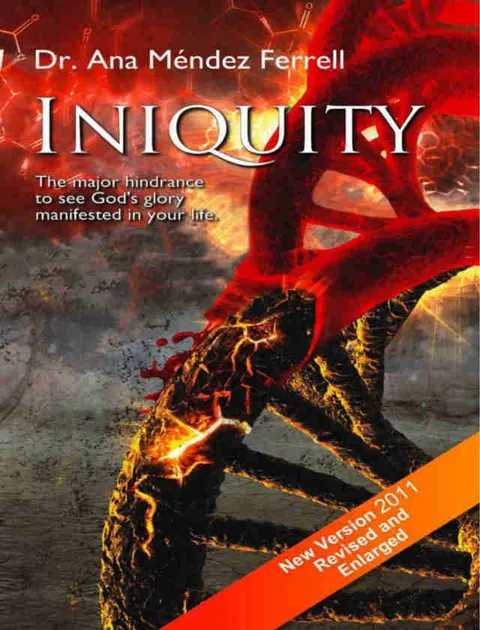

Others like iniquity: the major hindrance Features >>


-160.webp)

-160.webp)
About the Book
"Iniquity: the Major Hindrance" by Ana Mendez explores the concept of iniquity as a spiritual force that can hinder individuals from fulfilling their purpose and receiving blessings from God. Mendez provides insights on how to identify and overcome iniquity in order to experience spiritual breakthrough and restoration. Ultimately, the book offers a guide for readers to overcome barriers and live in alignment with God's will.
Charles Finney
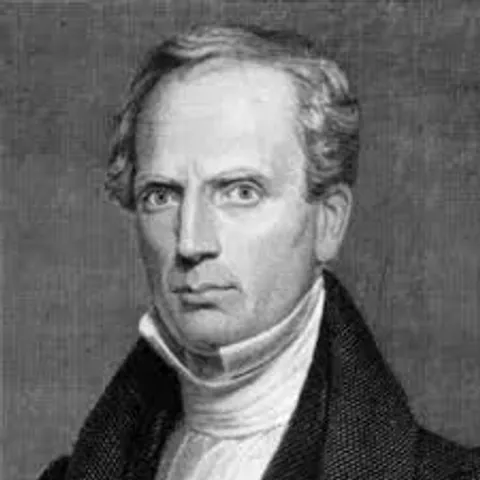 Childhood and Teen years
Charles Grandison Finney was born the year after Wesley died on 29th August, 1792 in Warren, Connecticut. In 1794 his family moved to New York state, eventually settling at Henderson, near Lake Ontario. Although he received only a brief formal education he decided to study law and joined the practice of a local lawyer, Benjamin Wright. He was also very musical, played the cello and directed the choir at the local Presbyterian Church pastured by Rev. George Gale.
His conversion
His conversion on October 10th 1821 reads like something out of the book of Acts. Smitten with conviction from Bible reading he decided to ‘settle the question of my soul’s salvation at once, that if it were possible, I would make my peace with God.’ (Autobiography)
This conviction increased to an unbearable level over the next couple of days and came to an head when he was suddenly confronted with an ‘inward voice.’ He was inwardly questioned about his spiritual condition and finally received revelation about the finished work of Christ and his own need to give up his sins and submit to Christ’s righteousness.
As he sought God in a nearby wood he was overwhelmed with an acute sense of his own wickedness and pride but finally submitted his life to Christ. Back at work that afternoon he was filled with a profound sense of tenderness, sweetness and peace. When work was over and he bade his employer goodnight, he then experienced a mighty baptism in the Holy Spirit, which was recorded as vividly as the day he experienced it, though it was penned some fifty years later.
The next morning Finney announced to a customer that he was leaving his law studies to become a preacher of the Gospel.
Charles Finney licensed to preach
He was licensed to preach in 1823 and ordained as an evangelist in 1824. His penetrating preaching was quite different from many local ministers and included an obvious attempt to break away from the traditional and, as he saw it, dead, orthodox Calvinism. He married to Lydia Andrews in October 1824 and was also joined by Daniel Nash (1774-1831), known popularly as ‘Father Nash.’ Undoubtedly Nash’s special ministry of prayer played a great part in Finney’s growing success as an evangelist.
Things really took off when he preached in his old church, where Rev. Gale still ministered. Numerous converts and critics followed! Similar results were experienced in nearby towns of Rome and Utica. Soon newspapers were reporting his campaigns and he began drawing large crowds with dramatic responses.
Soon he was preaching in the largest cities of the north with phenomenal results. Campaign after campaign secured thousands of converts.
The high point of Finney’s revival career was reached at Rochester, New York, during his 1830-1 meetings. Shopkeepers closed their businesses and the whole city seemed to centre on the revivalist. Responding to his irresistible logic and passionate arguments many of his converts were lawyers, merchants and those from a higher income and professional status.
His Preaching
Finney openly preached a modified Calvinism, influenced with his own theology of conversion and used what were perceived to be ‘revivalistic techniques.’
These ‘means’ included the use of the anxious bench (a special place for those under conviction), protracted meetings, women allowed to pray in mixed meetings, publicly naming those present resisting God in meetings and the hurried admission of new converts into church membership. Opponents viewed his preaching of the law as ‘scare tactics’ and his persuasive appeals for sinners to come to Christ for salvation were seen as over-emphasising the responsibility of men and ignoring the sovereignty of God.
His theology and practise soon became known as the ‘New Measures’ and attracted many opponents from the Old School Presbyterians led by Asahel Nettleton (himself no stranger to true revival and , the revivalistic Congregationalists headed by Lyman Beecher.
Pastor at Chatham Street Chapel
Finney accepted an appointment as pastor of Chatham Street Chapel in New York City in 1832 where he remained until 1837. It was during this time that he delivered a series of sermons published in 1835 as ‘Lectures on Revivals of Religion.’ Here he clearly stated his views regarding revivals being products of the correct use of human means. Such was the controversy that he left the Presbyterian denomination and joined the Congregationalists in 1836.
Oberlin College
The next year he became professor of theology at Oberlin College (Ohio) where he taught until his death. He was President here from 1851 until 1866, but still continued regular revival meetings in urban settings (twice in England, 1848, 1851) until 1860. During his stay at Oberlin he produced his, Lectures to Professing Christians (1836), Sermons on Important Subjects (1839) and his famous Memoirs.
The Father of Modern Revivalism
There is no doubt that Charles Grandison Finney well-deserves the title ‘The Father of Modern Revivalism.’ He was an evangelistic pioneer whose model was followed by a long line of revivalists from D. L. Moody to Billy Graham. His writing have made a massive impact on the entire evangelical world and particularly the ‘Lectures on Revivals’ which has, arguably, ignited more fires of revival than any other single piece literature in evangelical history.
This ‘Prince of Revivalists’ passed away peacefully at Oberlin on Sunday, 16th August, 1875 aged almost 83 years.
Bibliography: I Will Pour Out My Spirit, R. E. Davies, 1997; Ed: A. Scott Moreau, Baker Evangelical Dictionary of World Missions, 2000; Dictionary of Evangelical Biography 1730-1860, Vol. 1, 1995.
Tony Cauchi
Childhood and Teen years
Charles Grandison Finney was born the year after Wesley died on 29th August, 1792 in Warren, Connecticut. In 1794 his family moved to New York state, eventually settling at Henderson, near Lake Ontario. Although he received only a brief formal education he decided to study law and joined the practice of a local lawyer, Benjamin Wright. He was also very musical, played the cello and directed the choir at the local Presbyterian Church pastured by Rev. George Gale.
His conversion
His conversion on October 10th 1821 reads like something out of the book of Acts. Smitten with conviction from Bible reading he decided to ‘settle the question of my soul’s salvation at once, that if it were possible, I would make my peace with God.’ (Autobiography)
This conviction increased to an unbearable level over the next couple of days and came to an head when he was suddenly confronted with an ‘inward voice.’ He was inwardly questioned about his spiritual condition and finally received revelation about the finished work of Christ and his own need to give up his sins and submit to Christ’s righteousness.
As he sought God in a nearby wood he was overwhelmed with an acute sense of his own wickedness and pride but finally submitted his life to Christ. Back at work that afternoon he was filled with a profound sense of tenderness, sweetness and peace. When work was over and he bade his employer goodnight, he then experienced a mighty baptism in the Holy Spirit, which was recorded as vividly as the day he experienced it, though it was penned some fifty years later.
The next morning Finney announced to a customer that he was leaving his law studies to become a preacher of the Gospel.
Charles Finney licensed to preach
He was licensed to preach in 1823 and ordained as an evangelist in 1824. His penetrating preaching was quite different from many local ministers and included an obvious attempt to break away from the traditional and, as he saw it, dead, orthodox Calvinism. He married to Lydia Andrews in October 1824 and was also joined by Daniel Nash (1774-1831), known popularly as ‘Father Nash.’ Undoubtedly Nash’s special ministry of prayer played a great part in Finney’s growing success as an evangelist.
Things really took off when he preached in his old church, where Rev. Gale still ministered. Numerous converts and critics followed! Similar results were experienced in nearby towns of Rome and Utica. Soon newspapers were reporting his campaigns and he began drawing large crowds with dramatic responses.
Soon he was preaching in the largest cities of the north with phenomenal results. Campaign after campaign secured thousands of converts.
The high point of Finney’s revival career was reached at Rochester, New York, during his 1830-1 meetings. Shopkeepers closed their businesses and the whole city seemed to centre on the revivalist. Responding to his irresistible logic and passionate arguments many of his converts were lawyers, merchants and those from a higher income and professional status.
His Preaching
Finney openly preached a modified Calvinism, influenced with his own theology of conversion and used what were perceived to be ‘revivalistic techniques.’
These ‘means’ included the use of the anxious bench (a special place for those under conviction), protracted meetings, women allowed to pray in mixed meetings, publicly naming those present resisting God in meetings and the hurried admission of new converts into church membership. Opponents viewed his preaching of the law as ‘scare tactics’ and his persuasive appeals for sinners to come to Christ for salvation were seen as over-emphasising the responsibility of men and ignoring the sovereignty of God.
His theology and practise soon became known as the ‘New Measures’ and attracted many opponents from the Old School Presbyterians led by Asahel Nettleton (himself no stranger to true revival and , the revivalistic Congregationalists headed by Lyman Beecher.
Pastor at Chatham Street Chapel
Finney accepted an appointment as pastor of Chatham Street Chapel in New York City in 1832 where he remained until 1837. It was during this time that he delivered a series of sermons published in 1835 as ‘Lectures on Revivals of Religion.’ Here he clearly stated his views regarding revivals being products of the correct use of human means. Such was the controversy that he left the Presbyterian denomination and joined the Congregationalists in 1836.
Oberlin College
The next year he became professor of theology at Oberlin College (Ohio) where he taught until his death. He was President here from 1851 until 1866, but still continued regular revival meetings in urban settings (twice in England, 1848, 1851) until 1860. During his stay at Oberlin he produced his, Lectures to Professing Christians (1836), Sermons on Important Subjects (1839) and his famous Memoirs.
The Father of Modern Revivalism
There is no doubt that Charles Grandison Finney well-deserves the title ‘The Father of Modern Revivalism.’ He was an evangelistic pioneer whose model was followed by a long line of revivalists from D. L. Moody to Billy Graham. His writing have made a massive impact on the entire evangelical world and particularly the ‘Lectures on Revivals’ which has, arguably, ignited more fires of revival than any other single piece literature in evangelical history.
This ‘Prince of Revivalists’ passed away peacefully at Oberlin on Sunday, 16th August, 1875 aged almost 83 years.
Bibliography: I Will Pour Out My Spirit, R. E. Davies, 1997; Ed: A. Scott Moreau, Baker Evangelical Dictionary of World Missions, 2000; Dictionary of Evangelical Biography 1730-1860, Vol. 1, 1995.
Tony Cauchi
was my life better back then
Our family serves in the Himalayan mountains, with the desire to see the church spread and flourish far into the unengaged villages confettied on these snowy peaks. The people here, as you might imagine, have a grit that I haven’t inherited from my suburban childhood. Wrinkled shepherds lead their goats to menacing heights with learned ease. If you peek inside a brightly painted cement home, you might see a woman browning onions over a fire, her daughter wringing out clothes, and her toddler sleeping to the buzz of cartoons. I’ve always dreamed of this sort of a place. As a middle-schooler, I read Jesus Freaks aloud to the kids at my art table, and when playing Would You Rather on the topic of death, I would argue that martyrdom is the best way to go out. If I could have seen the place where I would raise my children, I would have thought all of my dreams had come true. What I didn’t expect was that life here would feel like a meat-tenderizer to the heart. I didn’t see the grief coming in like a tidal wave. I’m learning a language that puts me in situations where I’m exposed and embarrassed. We are always the ones asking questions and bending our preferences to better serve those around us. Homeschooling five kids and cooking food from scratch doesn’t make me feel like Wonder Woman, but just very, very tired. How was I to know how sharp the sting of this calling would be, the pain of dying daily? I have formed a bad habit when I’m hurting. When too many guests come for chai and my character is as robust as the brown apple core in my toddler’s sticky grip, I exit mentally. I cherry-pick a golden memory and think how those were the days . Imagined Land of Yesteryear The past is a commonplace to run for escape. Isn’t the entire world wishing for life to go back to normal, before COVID reared its ugly head? How often do we pine after the freedoms of life before kids, only to ache for that noisy house a decade later? Don’t we wish relationships could morph back to what they had been before the argument? If only time could rewind the consuming cancer, the regretted affair, and the old age from surprising us. When the call to live in the present feels like cruelty, dealt out by God’s own hand, we can drown in self-pity and enter an ugly world. A world based on our memories of the past, but altered. Everything was right back then. Such good old days are often talked about in passing, and most people agree how much better it would be if only we could return. We don’t realize the damage at stake in allowing our brains and hearts to live in this imagined land of yesteryear. “We don’t realize the damage at stake in allowing our brains and hearts to live in this imagined land of yesteryear.” The worst part in exchanging the present for the past is that we can make ourselves gods. We become interpreters of what’s good and what’s not. We don’t lean on the Lord’s providence, but think we know what we need. We remember ourselves ten pounds thinner and everyone a lot happier than they truly were. We are most deceived about ourselves, the memories usually a highlight reel of us at our prime. Running Somewhere Maybe you aren’t tempted to live in the past like me. But Luke 15 makes a good case that all of us are running somewhere when the present feels difficult to swallow. Here are two sons discontent at home. When life isn’t what they want, the younger son runs to another country to feed his appetite for pleasure (Luke 15:11–13). Meanwhile, the older brother stays physically near his dad, but his heart is far from home (Luke 15:28–32). Where are we running when life is not what we want it to be? Perhaps we seek success, to create a comfortable home, or to be thought well of in our workplace and church. If we seek escape in these places, as I have in memories of the past, we won’t like where we end up. Life away from the Father is empty. Like a popped balloon, joy whooshes out and we are left limp, deflated. The sons’ attempts of finding life elsewhere leave them homeless and toiling like slaves (Luke 15:14–16, 29). Even if we have a lifetime of sermons in our head, do we live what we claim to know? If we did, how could we ever run from someone so ready to love us, who waits with unparalleled patience and pursues us wherever we are, however painful the present moment? God wants us home with him. So much so that he left perfection for a world writhing in pain. He took on the violence of hell so that his children wouldn’t have to. Home Among the Thistles Maybe we are at a crossroads. Perhaps, like myself, your shoes are well-traveled. You’ve also formed bad habits in order to escape the places where life hurts the most. You’ve called God names and aren’t certain you can live with the one who ordained life’s present pain. Look again at Luke 15 and dare to believe this is your story, too. The house is alive with music, and the table is set. You smell meat roasting in herbs and touch the silk of the slippers placed on your feet. See your Father run to embrace you. Hear his laughter that fills your heart with a happiness you were born to enjoy. “We can make our home among the thistles because God promises to be there too.” Or hear the father’s words to his older child: “Son, you are always with me, and all that is mine is yours” (Luke 15:31). These words are for us, right now. Do we believe it? If so, we can make our home among the thistles because he promises to be there too. He will never, ever leave us. And because we have his promised nearness, all that is his is now laid before us as a feast. Every spiritual blessing is at our fingertips when we live at home in our Father (Ephesians 1:3). Especially when our circumstances are January gray, he’s waiting for us to see the rainbow of his love. Black-Edged Envelopes Charles Spurgeon once testified, The worst days I have ever had have turned out to be my best days, and when God has seemed most cruel to me, he has then been most kind. If there is anything in this world for which I would bless him more than for anything else, it is for pain and affliction. I am sure that in these things the richest, tenderest love has been manifested to me. Our Father’s wagons rumble most heavily when they are bringing us the richest freight of the bullion of his grace. Love letters from heaven are often sent in black-edged envelopes. The cloud that is black with horror is big with mercy. . . . Fear not the storm, it brings healing in its wings, and when Jesus is with you in the vessel the tempest only hastens the ship to its desired haven. I am receiving more black-edged envelopes right now than I would care for. Dying daily has been less like Perpetua facing the beasts, and more like getting out of bed every morning to face the responsibilities of a calling that requires an unsavory dose of humility. This painful present, this everyday death is unnoticed by most, and as with the objects in a room when the lights are off, I can’t seem to find the outline of my old identity. And yet, the storm of today will not end in shipwreck. I’m not at the random mercy of the winds. The current rolling of thunder and high waves only assist me in getting home safe and sound. The presence of my Father and his continual invitation has repeatedly snapped me back from the past, allowing me to see the wonders in front of my face, like my children, the food on my plate, and the way the goats follow the voice of their shepherd down the valley with the sun dripping into the horizon.
%20(Library%20of%20Christian%20Classics)%20by%20John%20Calvin-480.webp)