
GIP Library icon

LOG IN TO REVIEW
About the Book


"I LOVE YOU, BUT..." by Opeyemi Akintunde is a Christian relationship guide that explores the complexities of love and marriage. The book offers insight into common issues that couples face in their relationships, such as communication, forgiveness, and compromise. It provides practical advice and biblical principles to help couples build and strengthen their relationships.

Gordon Lindsay

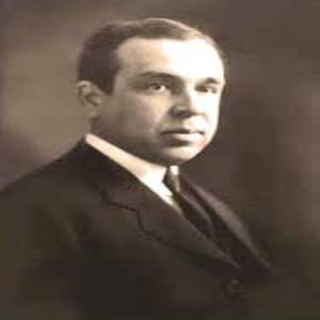
Gordon Lindsay Gordon Lindsay’s Early life Gordon Lindsay’s parents were members of J. A. Dowie’s Zion City, Illinois when he was born. The city’s financial difficulties forced the family west in 1904, where they temporarily joined another Christian-based community led by Finis Yoakum at Pisgah Grande, California. When similar problems emerged the family moved to Oregon after only a few months. From here the family moved to Portland, Oregon where Lindsay attended high school and was converted during a Charles F. Parham evangelistic campaign. During his youth he came under the influence of John G. Lake, former resident of Zion City, missionary to South Africa, and founder of the Divine Healing missions in Spokane, Washington, and Portland, Oregon in 1920. Lindsay joined the healing and evangelistic campaigns of Lake, traveling throughout California and the southern states. Lindsay began his own ministry in California as pastor of small churches in Avenal and San Fernando and for the next eighteen years, he travelled acros s the country holding revivals in full gospel churches. This period of travel prepared him as perhaps no other man in the nation to establish communication among a variety of Pentecostals. When World War II began, Lindsay felt compelled to give up his evangelistic ministry because its rigorous lifestyle was taking its toll on his young family. He accepted a call to pastor a church in Ashland, Oregon. William Branham enters Gordon Lindsay’s life By 1947 he had witnessed the extraordinary ministry of William Branham and responded to the invitation to become Branham’s manager. His managerial skills were soon obvious in the Branham campaigns, and in April 1948, he furthered the cause of the of the revival when he produced the first issue of The Voice of Healing, specifically to promote Branham’s ministry. To Lindsay’s great surprise Branham announced that he “would not continue on the field more than a few weeks more.” At great financial cost Lindsay decided to continue the publication of the new magazine in cooperation with his long-time friends, Jack Moore and his talented daughter Anna Jeanne Moore. He broadened the scope of the magazine by including more of the lesser known healing evangelists who were beginning to hold campaigns and were drawing large audiences. One such evangelist was William Freeman who had been holding meetings in small churches. Lindsay visited one of his campaigns and immediately felt it was the will of God to team up with him and organise a series of meetings through 1948. The Voice of Healing featured the miracles of the Freeman campaigns. Voice of Healing Conventions By March 1949 The Voice of Healing circulation had grown to nearly 30,000 per month and had clearly become the voice of the healing movement. It’s pages successfully spread the message of the Salvation-Deliverance-Healing revival across the world. In December 1949, Lindsay arranged the first convention of healing revivalists in Dallas, Texas. The assembly was addressed by Branham, Lindsay, Moore, old-timers such as F. F. Bosworth and Raymond T. Richey, and a number of rising revivalists including O. L. Jaggers, Gayle Jackson, Velmer Gardner, and Clifton Erickson. This historic conference symbolized the vitality and cohesion of the revival. The following year, the convention, now about 1,000 strong, met in Kansas City, with virtually every important revivalist in the nation, with the notable exceptions of William Branham and Oral Roberts. Lindsay exercised great skill and wisdom exposing several points of danger and tension in the movement proposed guidelines for the future. Lindsay understood the fears of the older Pentecostal denominations and leaders and tried his utmost to deal with the offending issues. In an article announcing “the purpose, plan and policy of the Voice of Healing Convention,” he denounced “free-lancers who violently and indiscriminately attack organization in general,” and he urged avoidance of “novel prophetic interpretations, dogmatic doctrinal assertions, sectarian predilections, theological hair-splitting.” The Voice of Healing Association The 1950 meeting made the Voice of Healing convention into a loose association of healing revivalists. The evangelists officially associated with The Voice of Healing magazine held “family meetings” at the conventions, at the same time maintaining their desire to “prove to the world that those associated with The Voice of Healing have no intention to organize another movement.” Through the decade the Voice of Healing conventions were showcases for healing revivalism. The conference programs were workshops on the problems of healing evangelists. Typical topics were “prayer and fasting,” “preparation for a campaign,” “the follow-up work after a campaign,” “the system of cards for the prayer tent and the healing line” and the delicate issue of finances. As the association grew in importance in the 1950s, the program was frequently headed by Roberts or Branham; though every new revivalist aspired to be a speaker on the program. The Voice of Healing family of evangelists flowered in the early 1950s. Lindsay continued to publicize Branham’s work, although he was not formally associated with the organization; the nucleus of the fellowship was an influential clique which included O. L. Jaggers, William Freeman, Jack Coe, T. L. Osborn, A. A. Allen, and Velmer Gardner. Gradually major ministries began their own magazines and had no further need for Voice of Healing promotion. Nevertheless, by 1954 the “associate editors and evangelists” listed in The Voice of Healing numbered nearly fifty. Though Lindsay became personally involved with healing evangelism from 1949, especially with other revivalists such as T. L. Osborn, he confined his best work to organization and management of the Voice of Healing magazine. By 1956 the expenses of the Voice of Healing were running $1,000 a day. In addition to the national and regional conventions sponsored by his organization, Lindsay also began to sponsor missions and a radio program. “Lindsay was more than an advisor during the first decade of the healing revival; he was much like the director of an unruly orchestra. He tried desperately to control the proliferation of ministries in an effort to keep the revival respectable. He repeatedly advised, “It is better for one to go slow. Get your ministry on a solid foundation. . . . By all means avoid Hollywood press agent stuff.” Many of the new leaders of the early 1950s owed their early success to the literary support of Gordon Lindsay through the Voice of Healing, but by 1958, many of the revivalists believed that Lindsay’s work was over. An evolving ministry Lindsay’s efforts to consolidate and coordinate the healing movement and its ministries became an impossible task. The increasing independence of ministries and the burgeoning charismatic movement caused Lindsay to reconsider his goals. He took the example of T. L. Osborn and concentrated on missionary endeavours. He remained the historian and theologian of the healing movement but began to produce teaching and evangelistic materials which were sent across the world. The Voice of Healing ultimately became Christ for the Nations. Native church programs, literature, teaching tapes and funds were distributed to hundreds of locations. The organization had changed from one of healing revivalists into an important missionary society. His ministry was always to those involved in the healing revival, independents and mainline Pentecostals, but the new charismatics – Lutherans, Methodists and Baptists – became his new audience. His encouragement of, and involvement with, the Full Gospel Businessmen’s Fellowship was designed to provide teaching and wisdom for charismatic leaders, many of whom held Lindsay in high regard. His death on April 1st 1971 Suddenly, on April 1, 1973, Gordon Lindsay died. His wife, Freda, stepped into the breach and was able to stabilize and advance the ministry of Christ for the Nations. Lindsay’s death brought unparalleled financial support paying off all debts and expanding most of its programs. David Harrel summarises the life of Gordon Lindsay perfectly: ‘The death of Gordon Lindsay closed a major chapter in the charismatic revival. No single man knew the revival and its leaders so well. No man understood its origins, its changes, and its diversity as did Lindsay. A shrewd manager and financier, Lindsay had been as nearly the coordinator of the healing revival as any man could be. When the revival began to wane, Lindsay was faced with a crisis more severe than those of most of the evangelists themselves. Never a dynamic preacher, he found himself virtually abandoned by his most successful protégés. But Lindsay proved able to adapt. Always a balanced person, Lindsay built a balanced and enduring ministry.’ Tony Cauchi

do not fear to leave this world

Perhaps you will feel the same discomfort I felt overhearing saints of old speak of death. “He who does not prepare for death is more than an ordinary fool. He is a madman,” began Charles Spurgeon. “Agreed,” said the good Doctor Martyn Lloyd-Jones. Men seem to ignore the plain fact that “the moment you come into this world you are beginning to go out of it.” But this fact need not spell doom and gloom for the Christian, Spurgeon responded. “The best moment of a Christian’s life is his last one, because it is the one that is nearest heaven.” “I concur fully,” Richard Sibbes chimed in. “Death is not now the death of me, but death will be the death of my misery, the death of my sins; it will be the death of my corruptions. But death will be my birthday in regard of happiness.” “When Christ calls me home,” Adoniram Judson added, “I shall go with the gladness of a boy bounding away from school.” “May I also interject?” asked Calvin. “We may positively state that nobody has made any progress in the school of Christ, unless he cheerfully looks forward towards the day of his death, and towards the day of the final resurrection.” “This strikes me as true,” said Thomas Brooks. “It is no credit to your heavenly Father for you to be loath to go home.” “And why should we hesitate?” Samuel Bolton questioned. It is the “privilege of saints, that they shall not die until the best time, not until when, if they were but rightly informed, they would desire to die.” “Exactly.” For the child of God, “death is the funeral of all our sorrows,” reasoned Thomas Watson. “Death will set a true saint out of the gunshot and free him from sin and trouble.” “Indeed,” John Bunyan added, “death is but a passage out of a prison into a palace.” As I listened, I overheard the most disquieting questions. “Has this world been so kind to you that you would leave it with regret?” C.S. Lewis posed. “If we really believe that home is elsewhere and that this life is a ‘wandering to find home,’ why should we not look forward to the arrival?” “Hear! Hear!” exclaimed William Gurnall. “Let thy hope of heaven master thy fear of death. Why shouldest thou be afraid to die, who hopest to live by dying?” “I am packed, sealed, and waiting for the post,” cried John Newton. “Who would live always in such a world as this?” Even snippets of their prayers issued a subtle rebuke. I could not help but hear one George Whitefield plead, “Lord, keep me from a sinful and too eager desire after death. I desire not to be impatient. I wish quietly to wait till my blessed change comes.” This proved the final blow. These men anticipated death, viewed an early departure as a “promotion.” I lowered my gaze. I rarely think this way, rarely feel this way.  Do I really believe in heaven? Do I really love my Lord? Snuggled in This Life My squeamishness, flipping through an anthology of Christian quotes, helped me realize that my discipleship has slanted too American, too shortsighted, too this-worldly. “Are you packed and ready to go?” Well, I was hoping to set sail several decades from now, so — “Has this world been so kind to you that you would leave it with regret?” Well, I wouldn’t give it a ten-star rating, but it certainly hasn’t been half that bad (yet). So yeah, maybe — “Nobody has made any progress in the school of Christ, unless he cheerfully looks forward towards the day of his death, and towards the day of the final resurrection.” Well, that’s intense. “It is no credit to your heavenly Father for you to be loath to go home.” I see — worthy point. No credit to Jesus either, I imagine. “These men daily lived awake to the truths I daily profess to believe.” These men daily lived awake to the truths I daily profess to believe; they inhabited them, longing to fly away and be with Christ. Although they loved families, enjoyed things of earth, and did good in this world, they nevertheless were unafraid to dive headfirst into those cold waters of death at the first moment their Master allowed. They believed, with Paul, that “to depart and be with Christ . . . is far better” (Philippians 1:23). I discovered then just how snuggled by the fireside I had become in this world. A place I too readily felt to be  home . Epitaphs of Exiles My heart can live too much  here , too little  there . “My life is hidden with Christ,” I must remind myself (Colossians 3:3). As this world seeks to entice my affections to linger in its marketplace, I desire to be more of a heavenly disciple. And if you love Jesus but think too little of the life to come, I know you will agree. Oh, that this might be a true inscription over our graves, and all the more since we live after the coming of Christ, and the down payment of the Spirit: These all died in faith, not having received the things promised, but having seen them and greeted them from afar, and having acknowledged that they were strangers and exiles on the earth. For people who speak thus make it clear that they are seeking a homeland. If they had been thinking of that land from which they had gone out, they would have had opportunity to return. But as it is, they desire a better country, that is, a heavenly one. Therefore God is not ashamed to be called their God, for he has prepared for them a city. (Hebrews 11:13–16) Abraham, by faith, left his home in Mesopotamia, not even knowing where God was leading him (Hebrews 11:8). He lived in the promised land before he could call it home, dwelling there as a foreigner. Isaac and Jacob, heirs with Abraham of God’s promise, lived in tents of temporality; their home was  not yet  (Hebrews 11:9). “Once God saved them, they refused to unpack their hopes again in this world.” Abraham’s eyes were elsewhere. “He was looking forward to the city that has foundations, whose designer and builder is God” (Hebrews 11:10). And he and his sons bore the heavenly insignia in their speech: they acknowledged, to anyone who cared to know, that they would live and die on this earth as  exiles  and  sojourners  (Genesis 23:4; 47:9). Once God saved them, they refused to unpack their hopes again in this world. The land far-off — big as God’s promise, sure as God’s word — held their allegiance. They made it clear that they sought a homeland not built by human hands. As the world tried to tempt them back, the bait remained on the hook. Better to live in a tent in this world with a heavenly city before them than to dwell in the tottering kingdoms of men. They desired a better country, a heavenly one. And God is not ashamed to be called “the God of Abraham, the God of Isaac, the God of Jacob” (Exodus 3:6). He is not ashamed in the least to be the one they so hoped in,  for he has prepared for them a city . Still at Sea So, is your mind mainly set on this world or the next? This world is not our home, precious saint. We are not yet in our element. We fling open the window and send our dove about this earth, finding that it returns to us having found no homeland within this watery grave. But this world will be drained soon enough. The swells of judgment shall intensify and then subside. The new heavens and new earth shall arrive, and our Mighty Dove shall descend with a sword in his mouth for his enemies and an olive branch for us. Until then, keep waiting, keep hoping, keep acknowledging, keep living in tents, longing for that moment when we can bound away from this world as the Father calls us home.

Feedback
Suggestionsuggestion box
x