

My Fathers Farmland Order Printed Copy
- Author: Opeyemi Ojerinde Akintunde
- Size: 3.02MB | 149 pages
- |
Others like my fathers farmland Features >>

Feathers From My Nest

The Christian Parenting Handbook

Building Quality Relationships
-160.webp)
Ready Or Knot (12 Conversations Every Couple Needs To Have Before Marriage)
-160.webp)
Supernatural Childbirth (Experiencing The Promises Of God Concerning Conception And Delivery)

I Love You, But...

Soulmates In The Bible

Communication In Marriage
-160.webp)
Family Life (A Simple Guide To The Biblical Family)

A Miracle For Your Marriage
About the Book
"My Father's Farmland" is a Christian fiction novel that follows the story of a man named Adelana who inherits his father's farmland but faces challenges in managing it. Through a series of encounters and lessons learned, Adelana is able to overcome his struggles and find purpose and fulfillment in his life. The novel explores themes of faith, family, and legacy, ultimately delivering a powerful message about the importance of trusting in God's plan.
John Alexander Dowie
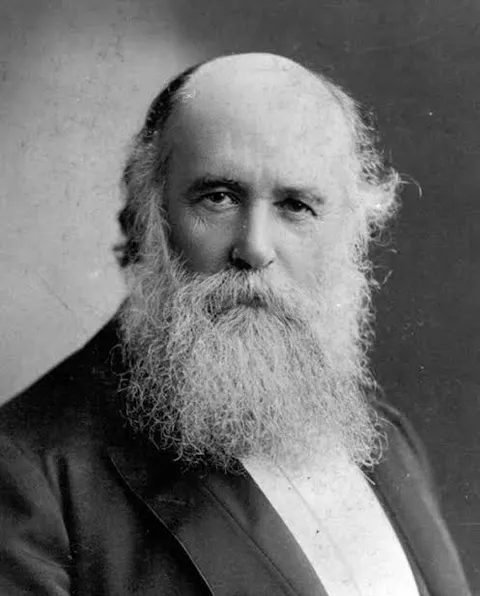 By John Alexander Dowie (1847 – 1907)
I sat in my study in the parsonage of the Congregational Church at Newtown, a suburb of the beautiful city of Sydney, Australia. My heart was very heavy, for I had visited the sick and dying beds of more than thirty of my flock, and I had cast the dust to its kindred dust into more than forty graves within a few weeks. Where, oh where, was He Who used to heal His suffering children? No prayer for healing seemed to reach His ear, and yet I knew His hand had not been shortened. Still it did not save from death even those for whom there was so much in life to live for God and others. Strong men, fathers, good citizens, and more than all, true Christians sickened with a putrid fever, suffered nameless agonies, passed into delirium, sometimes with convulsions, and then died.
Oh, what aching voids were left in many a widowed or orphaned heart. There were many homes where, one by one, the little children, the youths and the maidens lay stricken, and after a hard struggle with the foul disease, they too, lay cold and dead. It seemed sometimes as if I could almost hear the triumphant mockery of evil ringing in my ear whilst I spoke to the bereaved ones the words of Christian hope and consolation. Disease, the foul offspring of its father, Satan, and its mother Sin, was defiling and destroying the earthly temples of God’s children and there was no deliverance.
There I sat with sorrow-bowed head for my afflicted people, until the bitter tears came to relieve my burning heart. Then I prayed for some message, and oh, how I longed to hear some words from Him Who wept and sorrowed for the suffering long ago, a Man of Sorrows and Sympathies. The words of the Holy Ghost inspired In Acts 10:38, stood before me all radiant with light, revealing Satan as the Defiler, and Christ as the Healer. My tears were wiped away, my heart strong, I saw the way of healing, and the door thereto was opened wide, so I said, “God help me now to preach the Word to all the dying around, and tell them how Satan still defiles, and Jesus still delivers, for He is just the same today.”
A loud ring and several raps at the outer door, a rush of feet, and there at my door stood two panting messengers who said, “Oh, come at once, Mary is dying; come and pray. “With just a feeling as a shepherd has who hears that his sheep are being torn from the fold by a cruel wolf, I rushed from my house, ran without my hat down the street, and entered the room of the dying maiden. There she lay groaning and grinding her clenched teeth in the agony of the conflict with the destroyer. The white froth, mingled with her blood, oozing from her pale and distorted mouth. I looked at her and then my anger burned. “Oh,” I thought, “for some sharp sword of heavenly temper keen to slay this cruel foe who is strangling that lovely maiden like an invisible serpent, tightening his deadly coils for a final victory.”
In a strange way, It came to pass; I found the sword I needed was in my hands, and in my hand I hold it still and never will I lay It down. The doctor, a good Christian man, was quietly walking up and down the room, sharing the mother’s pain and grief. Presently he stood at my side and said, “Sir, are not God’s ways mysterious?” Instantly the sword was flashed in my hand, the Spirit’s sword, the Word of God. “God’s way?!” I said, pointing to the scene of conflict, “How dare you call that God’s way of bringing His children home from earth to Heaven? No sir, that is the devil’s work and it is time we called on Him Who came to destroy the work of the devil, to slay that deadly foul destroyer, and to save this child. Can you pray, Doctor, can you pray the prayer of faith that saves the sick?” At once, offended at my words, my friend was changed, and saying,” You are too much excited, sir, it is best to say ‘God’s will be done,’” and he left the room.
Excited?! The word was quite inadequate for I was almost frenzied with divinely imparted anger and hatred of that foul destroyer, disease, which was doing Satan’s will. “It is not so,” I exclaimed, “no will of God sends such cruelty, and I shall never say ‘God’s will be done’ to Satan’s works, which God’s own Son came to destroy, and this is one of them.” Oh, how the Word of God was burning in my heart: “Jesus of Nazareth went about doing good, and healing all that were oppressed of the devil; for God was with Him.” And was not God with me? And was not Jesus there and all His promises true? I felt that it was even so, and turning to the mother I inquired,” Why did you send for me?” To which she answered, “Do pray, oh pray for her that God may raise her up.” So we prayed.
What did I say? It may be that I cannot recall the words without mistake, but words are in themselves of small importance. The prayer of faith may be a voiceless prayer, a simple heartfelt look of confidence into the face of Christ. At such moment, words are few, but they mean much, for God is looking at the heart. Still, I can remember much of that prayer unto this day, and asking God to aid, I will attempt to recall it. I cried, “Our Father, help! and Holy Spirit, teach me how to pray. Plead Thou for us, oh, Jesus, Savior, Healer, Friend, our Advocate with God the Father. Hear and heal, Eternal One! From all disease and death, deliver this sweet child of yours. I rest upon the Word. We claim the promise now. The Word is true, ‘I am the Lord that heals thee.’ Then heal her now. The Word is true, ‘I am the Lord, I change not.’ Unchanging God, then prove Yourself the healer now. The Word is true. ‘These signs shall follow them that believe in My Name, they shall lay hands on the sick, and they shall recover.’ And I believe and I lay hands in Jesus’ Name on her and claim this promise now. Your Word is true. ‘The prayer of faith shall save the sick. Trusting in You alone. I cry. Oh, save her now, for Jesus’ sake. Amen!”
Then, the maid lay in sleep so deep and sweet that the mother asked in a low whisper, “Is she dead?” “No,” I answered, in a whisper lower still. “Mary will live; the fever is gone. She is perfectly well and sleeping as an infant sleeps.” I was smoothing the long dark hair from her now peaceful brow, and feeling the steady pulsation of her heart and cool moist hands. I saw that Christ had heard, and that once more, as long ago in Peter’s house, “He touched her and the fever left her.” Turning to the nurse, I said, “Get me at once, please, a cup of cocoa and several slices of bread and butter.” Beside the sleeping maid we sat quietly and almost silently until the nurse returned, and then I bent over her and snapping my fingers called, “Mary!”
Instantly she woke, smiled and said, “Oh, sir, when did you come? I have slept so long;” then stretching her arms out to meet her mother’s embrace, she said, “Mother, I feel so well.” “And hungry, too?” I asked, pouring some of the cocoa in a saucer and offering it to her when cooled by my breath. “Yes, hungry too,” she answered with a little laugh, and drank and ate again, and yet again until all was gone. In a few minutes, she fell asleep, breathing easily and softly. Quietly thanking God. We left her bed and went to the next room where her brother and sister also lay sick of the same fever. With these two, we prayed and they were healed too. The following day all three were well and in a week or so they brought me a little letter and a gift of gold, two sleeve links with my monogram, which I wore for many years. As I went away from the home where Christ as the Healer had been victorious, I could not but have somewhat in my heart of the triumphant song that rang through Heaven, and yet I was not a little amazed at my own strange doings, and still more at my discovery that He is just the same today.
Excerpt from the Sermons of John Alexander Dowie Champions of Faith by Gordon Lindsay
By John Alexander Dowie (1847 – 1907)
I sat in my study in the parsonage of the Congregational Church at Newtown, a suburb of the beautiful city of Sydney, Australia. My heart was very heavy, for I had visited the sick and dying beds of more than thirty of my flock, and I had cast the dust to its kindred dust into more than forty graves within a few weeks. Where, oh where, was He Who used to heal His suffering children? No prayer for healing seemed to reach His ear, and yet I knew His hand had not been shortened. Still it did not save from death even those for whom there was so much in life to live for God and others. Strong men, fathers, good citizens, and more than all, true Christians sickened with a putrid fever, suffered nameless agonies, passed into delirium, sometimes with convulsions, and then died.
Oh, what aching voids were left in many a widowed or orphaned heart. There were many homes where, one by one, the little children, the youths and the maidens lay stricken, and after a hard struggle with the foul disease, they too, lay cold and dead. It seemed sometimes as if I could almost hear the triumphant mockery of evil ringing in my ear whilst I spoke to the bereaved ones the words of Christian hope and consolation. Disease, the foul offspring of its father, Satan, and its mother Sin, was defiling and destroying the earthly temples of God’s children and there was no deliverance.
There I sat with sorrow-bowed head for my afflicted people, until the bitter tears came to relieve my burning heart. Then I prayed for some message, and oh, how I longed to hear some words from Him Who wept and sorrowed for the suffering long ago, a Man of Sorrows and Sympathies. The words of the Holy Ghost inspired In Acts 10:38, stood before me all radiant with light, revealing Satan as the Defiler, and Christ as the Healer. My tears were wiped away, my heart strong, I saw the way of healing, and the door thereto was opened wide, so I said, “God help me now to preach the Word to all the dying around, and tell them how Satan still defiles, and Jesus still delivers, for He is just the same today.”
A loud ring and several raps at the outer door, a rush of feet, and there at my door stood two panting messengers who said, “Oh, come at once, Mary is dying; come and pray. “With just a feeling as a shepherd has who hears that his sheep are being torn from the fold by a cruel wolf, I rushed from my house, ran without my hat down the street, and entered the room of the dying maiden. There she lay groaning and grinding her clenched teeth in the agony of the conflict with the destroyer. The white froth, mingled with her blood, oozing from her pale and distorted mouth. I looked at her and then my anger burned. “Oh,” I thought, “for some sharp sword of heavenly temper keen to slay this cruel foe who is strangling that lovely maiden like an invisible serpent, tightening his deadly coils for a final victory.”
In a strange way, It came to pass; I found the sword I needed was in my hands, and in my hand I hold it still and never will I lay It down. The doctor, a good Christian man, was quietly walking up and down the room, sharing the mother’s pain and grief. Presently he stood at my side and said, “Sir, are not God’s ways mysterious?” Instantly the sword was flashed in my hand, the Spirit’s sword, the Word of God. “God’s way?!” I said, pointing to the scene of conflict, “How dare you call that God’s way of bringing His children home from earth to Heaven? No sir, that is the devil’s work and it is time we called on Him Who came to destroy the work of the devil, to slay that deadly foul destroyer, and to save this child. Can you pray, Doctor, can you pray the prayer of faith that saves the sick?” At once, offended at my words, my friend was changed, and saying,” You are too much excited, sir, it is best to say ‘God’s will be done,’” and he left the room.
Excited?! The word was quite inadequate for I was almost frenzied with divinely imparted anger and hatred of that foul destroyer, disease, which was doing Satan’s will. “It is not so,” I exclaimed, “no will of God sends such cruelty, and I shall never say ‘God’s will be done’ to Satan’s works, which God’s own Son came to destroy, and this is one of them.” Oh, how the Word of God was burning in my heart: “Jesus of Nazareth went about doing good, and healing all that were oppressed of the devil; for God was with Him.” And was not God with me? And was not Jesus there and all His promises true? I felt that it was even so, and turning to the mother I inquired,” Why did you send for me?” To which she answered, “Do pray, oh pray for her that God may raise her up.” So we prayed.
What did I say? It may be that I cannot recall the words without mistake, but words are in themselves of small importance. The prayer of faith may be a voiceless prayer, a simple heartfelt look of confidence into the face of Christ. At such moment, words are few, but they mean much, for God is looking at the heart. Still, I can remember much of that prayer unto this day, and asking God to aid, I will attempt to recall it. I cried, “Our Father, help! and Holy Spirit, teach me how to pray. Plead Thou for us, oh, Jesus, Savior, Healer, Friend, our Advocate with God the Father. Hear and heal, Eternal One! From all disease and death, deliver this sweet child of yours. I rest upon the Word. We claim the promise now. The Word is true, ‘I am the Lord that heals thee.’ Then heal her now. The Word is true, ‘I am the Lord, I change not.’ Unchanging God, then prove Yourself the healer now. The Word is true. ‘These signs shall follow them that believe in My Name, they shall lay hands on the sick, and they shall recover.’ And I believe and I lay hands in Jesus’ Name on her and claim this promise now. Your Word is true. ‘The prayer of faith shall save the sick. Trusting in You alone. I cry. Oh, save her now, for Jesus’ sake. Amen!”
Then, the maid lay in sleep so deep and sweet that the mother asked in a low whisper, “Is she dead?” “No,” I answered, in a whisper lower still. “Mary will live; the fever is gone. She is perfectly well and sleeping as an infant sleeps.” I was smoothing the long dark hair from her now peaceful brow, and feeling the steady pulsation of her heart and cool moist hands. I saw that Christ had heard, and that once more, as long ago in Peter’s house, “He touched her and the fever left her.” Turning to the nurse, I said, “Get me at once, please, a cup of cocoa and several slices of bread and butter.” Beside the sleeping maid we sat quietly and almost silently until the nurse returned, and then I bent over her and snapping my fingers called, “Mary!”
Instantly she woke, smiled and said, “Oh, sir, when did you come? I have slept so long;” then stretching her arms out to meet her mother’s embrace, she said, “Mother, I feel so well.” “And hungry, too?” I asked, pouring some of the cocoa in a saucer and offering it to her when cooled by my breath. “Yes, hungry too,” she answered with a little laugh, and drank and ate again, and yet again until all was gone. In a few minutes, she fell asleep, breathing easily and softly. Quietly thanking God. We left her bed and went to the next room where her brother and sister also lay sick of the same fever. With these two, we prayed and they were healed too. The following day all three were well and in a week or so they brought me a little letter and a gift of gold, two sleeve links with my monogram, which I wore for many years. As I went away from the home where Christ as the Healer had been victorious, I could not but have somewhat in my heart of the triumphant song that rang through Heaven, and yet I was not a little amazed at my own strange doings, and still more at my discovery that He is just the same today.
Excerpt from the Sermons of John Alexander Dowie Champions of Faith by Gordon Lindsay
Friend, You Can Be Ready to Die
Years ago I read somewhere that, during the Victorian era, people talked often about death, and sex was the taboo subject. By now we have flipped it. We talk freely about sex, and death is the taboo subject. To me, what’s odd is this: even Christians shy away from talking about death. For crying out loud, we’re going to heaven! Why should we fear anything ? Our Lord died and rose again — for us. Yes, the blunt truth can seem intimidating. Here it is: We don’t need to go looking for it. Sooner or later, something bad will come find us and take us out. But why not accept that, and prepare for it, and rejoice our way through it? Thanks to the risen Jesus, death is no longer a crisis. It is now our release. So, Death, you sorry loser, we will outlive you by an eternity. We will even dance on your grave, when “death shall be no more” (Revelation 21:4). But for now, among the many ways to prepare for death — like buying life insurance, making a proper will, and so forth — here are two truths that can help you prevail when your moment comes. Both insights come from an obscure passage near the end of Deuteronomy. Your Final Obedience First, your death will be your final act of obedience in this world below. Near the end of his earthly life, Moses received a surprising command from God: Go up this mountain . . . and view the land of Canaan, which I am giving to the people of Israel for a possession. And die on the mountain which you go up . . . (Deuteronomy 32:49–50) Moses obeyed the command, by God’s grace. His death, therefore, was not his pathetic, crushing defeat; it was his final, climactic act of obedience. As you can see in the verse, it was even what we call a mountaintop experience. “Your death will be your final act of obedience in this world below.” Sadly, our deaths are usually painful and humiliating. But that’s obvious. Down beneath the surface appearances, the profound reality is this: your death too will be an act of obedience, for you too are God’s servant, like Moses. The Bible says about us all, “ Precious in the sight of the Lord is the death of his saints” (Psalm 116:15). He will not throw you away like a crumpled-up piece of trash. He will receive you as his treasured friend. Your death might be messy here on earth, but it will not be disgusting to God above. It will be, to him, “precious” — that is, valued and honored. It will be you obeying the One who said, “Follow me” (Matthew 4:19). You followed him with a first step, and you will follow him with a last step. And when you’re thinking about it, don’t worry about failing him at that final moment. He who commands you will also carry you. Given the grandeur of a Christian’s death, I have to admit that I have never seen a Christian funeral do justice to the magnitude of the moment. We try, but our services fall short. Only by faith, looking beyond our poor efforts at doing honor, can we truly savor the wonder of a Christian’s crowning glory. Even still, let’s make every Christian funeral as meaningful as it can be by believing and declaring the truth. A blood-bought sinner has just stepped on Satan’s neck and leapt up into eternal happiness, by God’s grace and for his glory. The day of your funeral, this uncomprehending world will stumble along in its oblivious way. But your believing family and friends will understand what’s really going on. And they will rejoice. This being so, why not look forward to dying? Paul was so eager for his day of release, he honestly couldn’t decide whether he’d rather keep serving Jesus here or die and go be with Jesus there: “What shall I choose? I do not know! I am torn between the two” (Philippians 1:22–23 NIV). When our work here is finally complete, why stay one moment longer? Of course, just as God decides our birthday (which we do know), so God also decides our deathday (which we do not know). Let’s bow to his schedule. But right now, by faith, let’s also start sitting on the edge of our seats in eager anticipation. And when he does give the command, “Die,” we then can say, “Yes, Lord! At long last!” And we will die. He will help us obey him even then — especially then. Your Happy Meeting Second, your death will be your happy meeting with the saints in that world above. Not only did God command Moses to die, but he also deepened and enriched Moses’s expectations of his death: Die on the mountain which you go up, and be gathered to your people, as Aaron your brother died in Mount Hor and was gathered to his people. (Deuteronomy 32:50) To be with our Lord in heaven above is the ultimate human experience. But he himself includes in that sacred privilege “the communion of saints,” to quote the Apostles’ Creed. When you die, like Moses, you will be gathered to your people — all the believers in Jesus who have gone before you into the presence of God. Heaven will not be solitary you with Jesus alone. It will be you with countless others, surrounding his throne of grace, all of you glorifying and enjoying him together with explosive enthusiasm (Revelation 7:9–10). Right now, in this world, we are “the church militant,” to use the traditional wording. But even now, we are one with “the church triumphant” above. And when we die, we finally enter into the full experience of the blood-bought communion of saints. Think about it. No church splits, no broken relationships, not even chilly aloofness. We all will be united before Christ in a celebration of his salvation too joyous for any petty smallness to sneak into our hearts. You will like everyone there, and everyone there will like you too. You will be included. You will be understood. You will be safe. No one will kick you out, no one will bully you, no one will slander you — not in the presence of the King. And you will never again, even once, even a little, disappoint anyone else or hurt their feelings or let them down. You will be magnificent, like everyone around you, for Jesus will put his glory upon us all. Facing Death with Calm Confidence Even now, by God’s grace, we have come to the heavenly Jerusalem, and to innumerable angels in festal gathering, and to the assembly of the firstborn who are enrolled in heaven, and to God, the judge of all, and to the spirits of the righteous made perfect, and to Jesus, the mediator of a new covenant. (Hebrews 12:22–24) “Why should we, citizens of the heavenly city, ever fear anything about earthly death?” They all are there, right at this very moment, in the invisible realm. It’s only an inch away. And the instant after your last breath in this dark world, you will awaken to that bright world above, where you will be welcomed in and rejoiced over. Saint Augustine might smile and nod with deep dignity. Martin Luther might give you a warm bear hug. Elisabeth Elliot might gently shake your hand. And maybe for the first time ever, you’ll discover how good it feels to really belong . Here’s my point. Why should we, citizens of the heavenly city, ever fear anything about earthly death? By faith in God’s promises in the gospel, let’s get ready now so that we face it then with calm confidence — and even with bold defiance.