
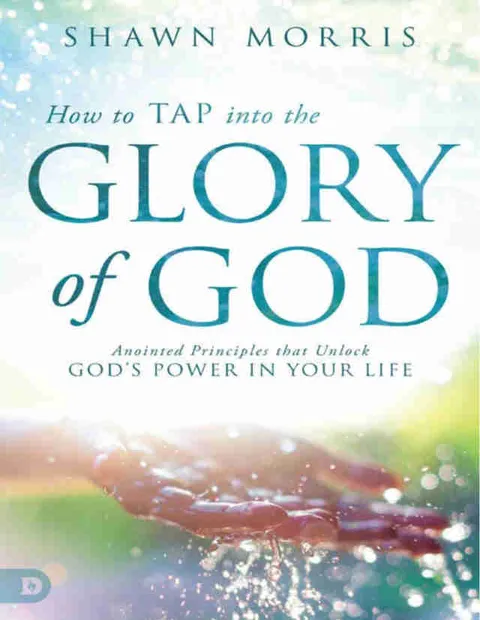

Others like how to tap into the glory of god Features >>

Holding To The Word Of The Lord
-160.webp)
How To Become A Wise Man In God's Eyes: Worship Him

What Is The Fear Of The Lord
The Character Of God’s Workman
How To Take The Limits Off God

How To Resist The Devil

How To Live A Holy Life
Following The Faith Of Abraham
-160.webp)
God Is Watching You: How The Fear Of God Makes Us Human
-160.webp)
Endued With Power: How To Activate The Gifts Of The Holy Spirit In Your Life
About the Book
"How to Tap into the Glory of God" by Shawn Morris provides practical guidance on how to experience the presence and power of God in everyday life. The book highlights the importance of faith, prayer, and obedience in unlocking the spiritual blessings and miracles that God has in store for believers. Morris offers personal testimonies and biblical insights to inspire and empower readers to deepen their relationship with God and live a life filled with His glory.
Gregory Thaumaturgus
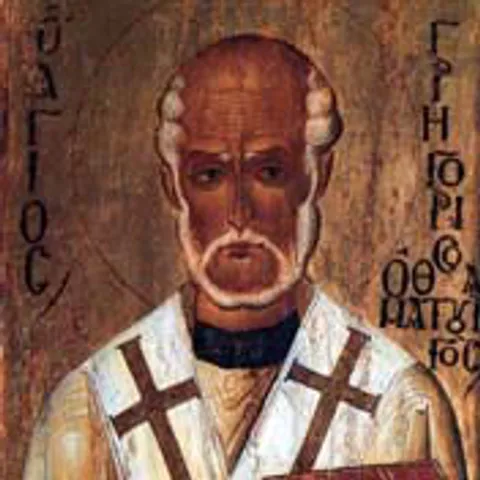 Gregory the Wonderworker’s Early life
Gregory was born in a Pontus, a region on the southern coast of the Black Sea, located in the modern-day eastern Black Sea Region of Turkey, around 212-13. His was a wealthy home and his parents named him Theodore (Gift of God) despite their pagan beliefs. When he was 14 years old his father died and soon after, he and his brother, Athenodorus, were anxious to study law at Beirut, Lebanon, then one of the four of five famous schools in the Hellenic world.
Influence of Origen
However, on the way, they first had to escort their sister to rejoin her husband, who was a government official assigned to Caesarea in Palestine (modern Haifa, Israel). When they arrived they learned that the celebrated scholar Origen, head of the catechetical school of Alexandria, lived there.
Inquisitiveness led them to hear and speak with the Origen and his irresistible charm quickly won their hearts. They soon dropped their desires for a life in Roman law, became Christian believers and pupils of Origen, learning philosophy and theology, for somewhere between five and eight years. Origen also baptised Gregory.
Pastor (then Bishop) of Neoceasarea
Gregory returned to his native Pontus with the intention of practicing oratory, but also to write a book proving the truth of Christianity, revealing his evangelistic heart. But his plans were disrupted when locals noticed his passion for Christ and his spiritual maturity. There were just seventeen Christians in Neoceasarea when Gregory arrived and this small group persuaded him to lead them as their bishop. (‘bishop’ simply meant a local overseer). At the time, Neocaesarea was a wicked, idolatrous province.
Signs of the Spirit
By his saintly life, his direct and lively preaching, helping the needy and settling quarrels and complaints, Gregory began to see many converts to Christ. But it was the signs and wonders that particularly attracted people to Christ.
En route to Neocaesarea from Amasea, Gregory expelled demons from a pagan temple, its priest converted to Christ immediately.
Once, when he was conversing with philosophers and teachers in the city square, a notorious harlot came up to him and demanded payment for the sin he had supposedly committed with her. At first Gregory gently remonstrated with her, saying that she perhaps mistook him for someone else.
But the loose woman would not be silenced. He then asked a friend to give her the money. Just as the woman took the unjust payment, she immediately fell to the ground in a demonic fit, and the fraud became evident. Gregory prayed over her, and the devil left her. This was the beginning of Gregory’s miracles. It was at this time he became known as ‘Gregory Thaumaturgus,’ ‘Gregory the Miracle Worker’ (or Wonderworker).
At one point Gregory wanted to flee from the worldly affairs into which influential townsmen persistently sought to push him. He went into the desert, where by fasting and prayer he developed an intimacy with God and received gifts of knowledge, wisdom and prophecy. He loved life in the wilderness and wanted to remain in solitude with God until the end of his days, but the Lord willed otherwise.
His theological contribution
Though he was primarily an evangelist and pastor, Gregory also had a deep theological understanding.
His principal work ‘The Exposition of Faith’, was a theological apology for Trinitarian belief. It incorporated his doctrinal instructions to new believers, expressed his arguments against heretical groups and was widely influential amongst leaders in the Patristic period: Basil the Great, Gregory the Theologian, and Gregory of Nyssa (The Cappadocian Fathers). It was the forerunner of the Nicene Creed that was to appear in the early 4th century.
In summary
He gave himself to the task of the complete conversion of the population of his diocese. The transformation in Neocaesarea was astonishing. Persuasive preaching, numerous healings and miraculous signs had a powerful effect. Such was his success that it was said that when Gregory became bishop (c 240) he found only seventeen Christians in his diocese; when he died only seventeen remained pagan (Latourette 1953:76).
Basil the Great’s Testimony
Basil the Great (330-379, Bishop of Caesarea, in his work ‘On the Spirit’ wrote the following account of Gregory the wonder-worker.
“But where shall I rank the great Gregory, and the words uttered by him? Shall we not place among Apostles and Prophets a man who walked by the same Spirit as they; who never through all his days diverged from the footprints of the saints; who maintained, as long as he lived, the exact principles of evangelical citizenship?
I am sure that we shall do the truth a wrong if we refuse to number that soul with the people of God, shining as it did like a beacon in the Church of God: for by the fellow-working of the Spirit the power which he had over demons was tremendous, and so gifted was he with the grace of the word ‘for obedience to the faith among. . .the nations.’ that, although only seventeen Christians were handed over to him, he brought the whole people alike in town and country through knowledge to God.
He too by Christ’s mighty name commanded even rivers to change their course, and caused a lake, which afforded a ground of quarrel to some covetous brethren, to dry up. Moreover, his predictions of things to come were such as in no wise to fall short of those of the great prophets. To recount all his wonderful works in detail would be too long a task. By the superabundance of gifts, wrought in him by the Spirit, in all power and in signs and in marvels, he was styled a second Moses by the very enemies of the Church.
Thus, in all that he through grace accomplished, alike by word and deed, a light seemed ever to be shining, token of the heavenly power from the unseen which followed him. To this day he is a great object of admiration to the people of his own neighborhood, and his memory, established in the churches ever fresh and green, is not dulled by length of time. (Schaff and Wace nd., Series 2. 8:46-47).
“Gregory was a great and conspicuous lamp, illuminating the church of God.” —Basil the Great.
Gregory the Wonderworker’s Early life
Gregory was born in a Pontus, a region on the southern coast of the Black Sea, located in the modern-day eastern Black Sea Region of Turkey, around 212-13. His was a wealthy home and his parents named him Theodore (Gift of God) despite their pagan beliefs. When he was 14 years old his father died and soon after, he and his brother, Athenodorus, were anxious to study law at Beirut, Lebanon, then one of the four of five famous schools in the Hellenic world.
Influence of Origen
However, on the way, they first had to escort their sister to rejoin her husband, who was a government official assigned to Caesarea in Palestine (modern Haifa, Israel). When they arrived they learned that the celebrated scholar Origen, head of the catechetical school of Alexandria, lived there.
Inquisitiveness led them to hear and speak with the Origen and his irresistible charm quickly won their hearts. They soon dropped their desires for a life in Roman law, became Christian believers and pupils of Origen, learning philosophy and theology, for somewhere between five and eight years. Origen also baptised Gregory.
Pastor (then Bishop) of Neoceasarea
Gregory returned to his native Pontus with the intention of practicing oratory, but also to write a book proving the truth of Christianity, revealing his evangelistic heart. But his plans were disrupted when locals noticed his passion for Christ and his spiritual maturity. There were just seventeen Christians in Neoceasarea when Gregory arrived and this small group persuaded him to lead them as their bishop. (‘bishop’ simply meant a local overseer). At the time, Neocaesarea was a wicked, idolatrous province.
Signs of the Spirit
By his saintly life, his direct and lively preaching, helping the needy and settling quarrels and complaints, Gregory began to see many converts to Christ. But it was the signs and wonders that particularly attracted people to Christ.
En route to Neocaesarea from Amasea, Gregory expelled demons from a pagan temple, its priest converted to Christ immediately.
Once, when he was conversing with philosophers and teachers in the city square, a notorious harlot came up to him and demanded payment for the sin he had supposedly committed with her. At first Gregory gently remonstrated with her, saying that she perhaps mistook him for someone else.
But the loose woman would not be silenced. He then asked a friend to give her the money. Just as the woman took the unjust payment, she immediately fell to the ground in a demonic fit, and the fraud became evident. Gregory prayed over her, and the devil left her. This was the beginning of Gregory’s miracles. It was at this time he became known as ‘Gregory Thaumaturgus,’ ‘Gregory the Miracle Worker’ (or Wonderworker).
At one point Gregory wanted to flee from the worldly affairs into which influential townsmen persistently sought to push him. He went into the desert, where by fasting and prayer he developed an intimacy with God and received gifts of knowledge, wisdom and prophecy. He loved life in the wilderness and wanted to remain in solitude with God until the end of his days, but the Lord willed otherwise.
His theological contribution
Though he was primarily an evangelist and pastor, Gregory also had a deep theological understanding.
His principal work ‘The Exposition of Faith’, was a theological apology for Trinitarian belief. It incorporated his doctrinal instructions to new believers, expressed his arguments against heretical groups and was widely influential amongst leaders in the Patristic period: Basil the Great, Gregory the Theologian, and Gregory of Nyssa (The Cappadocian Fathers). It was the forerunner of the Nicene Creed that was to appear in the early 4th century.
In summary
He gave himself to the task of the complete conversion of the population of his diocese. The transformation in Neocaesarea was astonishing. Persuasive preaching, numerous healings and miraculous signs had a powerful effect. Such was his success that it was said that when Gregory became bishop (c 240) he found only seventeen Christians in his diocese; when he died only seventeen remained pagan (Latourette 1953:76).
Basil the Great’s Testimony
Basil the Great (330-379, Bishop of Caesarea, in his work ‘On the Spirit’ wrote the following account of Gregory the wonder-worker.
“But where shall I rank the great Gregory, and the words uttered by him? Shall we not place among Apostles and Prophets a man who walked by the same Spirit as they; who never through all his days diverged from the footprints of the saints; who maintained, as long as he lived, the exact principles of evangelical citizenship?
I am sure that we shall do the truth a wrong if we refuse to number that soul with the people of God, shining as it did like a beacon in the Church of God: for by the fellow-working of the Spirit the power which he had over demons was tremendous, and so gifted was he with the grace of the word ‘for obedience to the faith among. . .the nations.’ that, although only seventeen Christians were handed over to him, he brought the whole people alike in town and country through knowledge to God.
He too by Christ’s mighty name commanded even rivers to change their course, and caused a lake, which afforded a ground of quarrel to some covetous brethren, to dry up. Moreover, his predictions of things to come were such as in no wise to fall short of those of the great prophets. To recount all his wonderful works in detail would be too long a task. By the superabundance of gifts, wrought in him by the Spirit, in all power and in signs and in marvels, he was styled a second Moses by the very enemies of the Church.
Thus, in all that he through grace accomplished, alike by word and deed, a light seemed ever to be shining, token of the heavenly power from the unseen which followed him. To this day he is a great object of admiration to the people of his own neighborhood, and his memory, established in the churches ever fresh and green, is not dulled by length of time. (Schaff and Wace nd., Series 2. 8:46-47).
“Gregory was a great and conspicuous lamp, illuminating the church of God.” —Basil the Great.
Will You Praise Him While You Wait
I have trusted in your steadfast love; my heart shall rejoice in your salvation. (Psalm 13:5) If faith is the beating heart of a Christian’s spiritual anatomy, then praise is the healthy pulse. When faith looks back upon God’s wondrous deeds of redemption, we cannot help but praise. We praise him for parting the Red Sea with a word. We praise him for felling giants with a shepherd’s sling. We praise him for sending his Son to suffer and die. We praise him for raising Christ from the grave. “If faith is the beating heart of a Christian’s spiritual anatomy, then praise is the healthy pulse.” Yet faith goes further still. Not content to praise God only on the far side of deliverance, faith teaches us to praise him before deliverance even comes: not only after he’s parted the Red Sea, but while the Egyptian army still presses in; not only after Goliath lies slain, but as he still taunts the hosts of Israel; not only after the stone rolls away from the tomb, but during the Sabbath silence of Holy Saturday. As David shows us in Psalm 13, such praise does not arise effortlessly. Often, it comes on the other side of agonizing prayer. How Long, O Lord? Without introduction or preamble, Psalm 13 opens in anguish: “How long, O Lord?” The question is a familiar one for most, even if our straits have not been quite so dire as David’s. Pressure builds. Prayer apparently goes unheard. All the while, God’s promises rest unfulfilled. No matter where David looks, comfort eludes him. Above, a wall of clouds hides God’s face (Psalm 13:1). Within, cares and sorrows swirl (Psalm 13:2). Around, enemies threaten the tottering king (Psalm 13:2). Four times in two verses, David repeats his question: “How long? . . . How long? . . . How long? . . . How long?” Yet even here, faith has not forsaken him. For all the misery wrapped up in David’s question, he knows that God’s intervention is a matter not of if, but of when — not of “Will you?” but of “How long?” His is no cry of despair thrown up into a godless sky, but rather the song of distressed trust. ‘Consider and Answer Me’ With each breath in the psalm, faith grows firmer. By verse 3, God is not only “O Lord,” but “O Lord my God.” At the same time, lament gives way to petition: “Consider and answer me . . . light up my eyes” (Psalm 13:3). Genuine faith may often speak the language of lament and complaint, but eventually it takes up the language of specific request. David follows his prayers to be seen, answered, and revived with three reasons: “Lest I sleep the sleep of death, lest my enemy say, ‘I have prevailed over him,’ lest my foes rejoice because I am shaken” (Psalm 13:3–4). These reasons may seem, at first, simply like the logic of desperation: “Answer me or I will die!” But more is going on here than that. “When we merely give vent to the chaos within us, our prayers often leave us right where we started.” David, desperate as he may be, is appealing to God on the basis of his own promises. Early in David’s public life, God pledged that the shepherd boy would sit on the throne of Israel. Then he sealed that pledge with covenant promises: “I will make for you a great name. . . . I will give you rest from all your enemies. . . . When your days are fulfilled and you lie down with your fathers, I will raise up your offspring after you” (2 Samuel 7:9, 11–12). In Psalm 13, those promises seem to be in jeopardy. So David sends them back to God, wrapped in prayer. When we merely give vent to the chaos within us, our prayers often leave us right where we started. But when we pray in the slipstream of God’s promises, we often find, with David, faith slowly rising. ‘I Will Sing to the Lord’ Many Christians are familiar with the famous “But God” statements of the New Testament (Ephesians 2:4, for example). Yet we can look not only at our sin and say, “But God”; we can look also at our despair and say, “But I”: But I have trusted in your steadfast love; my heart shall rejoice in your salvation. I will sing to the Lord, because he has dealt bountifully with me. (Psalm 13:5–6) No circumstance has changed; no prayer has been answered; no deliverance has arrived. Yet in a moment, enemies grow small, sorrow and care loosen their grip, and lament gives way to praise. Why? Because David’s prayerful meditation on God’s promises has reminded him of something more powerful than his enemies, more certain than his sorrow: “your steadfast love.” Another psalm of David shows us why steadfast love had such an effect on the fainting king. From the perspective of time, the steadfast love of the Lord is “from everlasting to everlasting”; from the perspective of space, it is “as high as the heavens are above the earth”; from the perspective of God’s character, it flows from him with abundance (Psalm 103:8, 11, 17). Such steadfast love is the pledge of all God’s promises. No wonder David sings. Today, we have even greater assurances of God’s steadfast love: a bloody cross, an empty tomb, and a Savior who sits on the throne. And if this steadfast love is ours, then we too can sing with abandon, far before deliverance comes. For if Christ has come, and if we are in him by faith alone, then God will not fail to deal bountifully with us. Article by Scott Hubbard
-480.webp)
-480.webp)