
Others like how to live a holy life Features >>

How To Stay In Your High Calling

How To Resist The Devil
How To Keep Your Healing
How To Take The Limits Off God
How To Know The Will Of God
-160.webp)
How To Become A Wise Man In God's Eyes: Worship Him
How To Tap Into The Glory Of God
How To Know The Will Of God

How To Live And Not Die
A Holy Life: The Beauty Of Christianity
About the Book
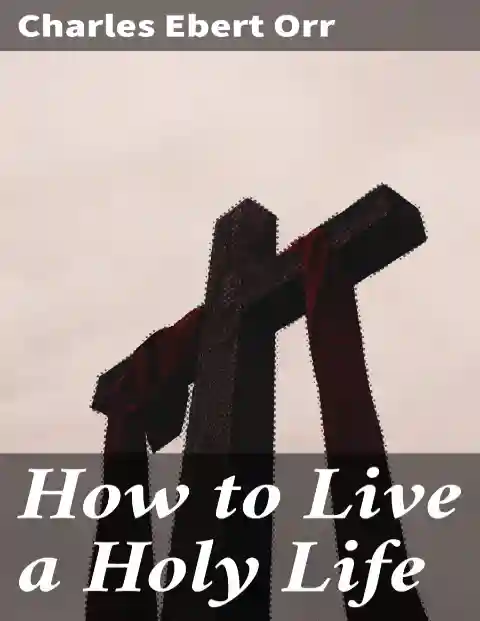
"How To Live A Holy Life" by Charles Ebert Orr is a practical guide to living a life that is pleasing to God. The book discusses the importance of holiness, how to cultivate a personal relationship with God, and practical steps for maintaining a holy lifestyle. Orr emphasizes the importance of living in obedience to God's Word and seeking purity in all aspects of life. Overall, the book serves as a valuable resource for those seeking to deepen their spiritual walk and live a life that reflects God's character.
Emerson Andrews
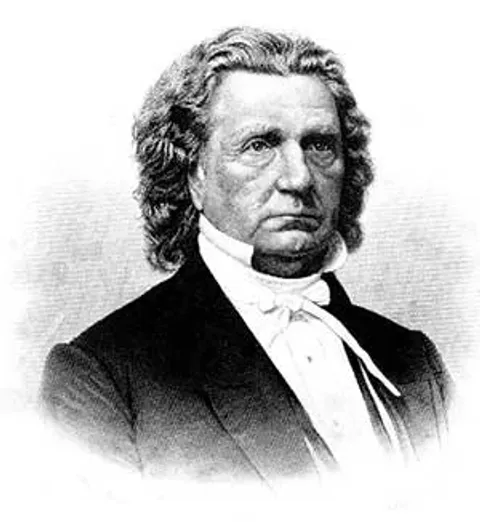 His Early life
Emerson Andrews was born in Mansfield, Bristol County, Massachusetts in 1806 to godly parents, James and Mercy Andrews. They were from English stock and were strict Puritans in faith and lifestyle. Although young Emerson was raised in the Congregational Church he was far from God in his teens and twenties.
Nevertheless, periodically, he experienced intense conviction, usually through his parents’ counsels and prayers but particularly through two unforgettable sermons delivered by the eccentric revivalist, Lorenzo Dow. Soon after this he was converted under the ministry of another revival preacher, Asahel Nettleton.
He was a very educated man formerly studying at Chesterfield Academy and, at the time of his conversion, at Plainfield Kimball Union Academy, in New Hampshire. In the spring of 1832 whilst studying further at Union College in Schenectady, New York, he was baptised by immersion in the Mohawk River. It was his convictions about the Bible’s teaching on water baptism that caused him to join the Baptist’s instead of the Congregationalists or Presbyterians.
A Lover of Revival
He wrote “Many revivals and protracted meetings of one, two, or more days, and some for weeks and months, have been held, in New England and elsewhere, within, my personal remembrance. These have sent out their hallowed influences, as the light of the world and salt of the earth. Just before and at the time of my second birth, many sweeping and glorious revivals, under the celebrated Dr. Netteton, John Leland, Jedediah Burchard, C. G. Finney, were hailed, enjoyed, and sounded all around and over the country.
As soon as I was converted I cherished the good news of revivals; and I sought a place and portion with live Christians, that I might speak for Christ and win souls to salvation. I asked God for direction and help, and was answered.
His first visit to a Revival
He describes his first visit to a Revival “The first meeting that I attended after my regeneration was held in the town of Windsor, Vt. It was called a “four days’ meeting.” But many such were held in different places about that time. This came off in the summer of l830. I was much delighted, fed, and strengthened by such a sight, experience, exercise, and spiritual supper. It was a precious banquet, adapted to develop and enlarge the young convert’s soul.
The four pastors of the town, with their respective churches and congregations, and some from neighboring towns, met with the Baptist church, of which Elder Leland Howard was the long-honored pastor. Some twenty other pastors also came in from adjacent towns, and a few Lawyers and teachers, who took leading parts in the services. Large congregations were constantly in attendance, and all the various exercises and meetings were interesting and profitable.
Some of the sermons and prayers were most powerful, melting, and effective. Sinners often arose, requesting prayers, or sent up short petitions to be read. A lawyer by the name of Shepherd, from New York, was found to be very able, pointed, and specific in prayer, and so effective and precise in noting each different request more perfectly than the ministers, that he was often invited to lead in prayer — especially when there were some ten or twenty different, or some difficult requests presented.
He seemed to be full of the Spirit, and was especially gifted and successful. Ministers learned something valuable from his wisdom and tact. I confess that his pointedness made a powerful and lasting impression on my mind and practice.
The professors and ministers were much blessed, and many sinners were converted in the meetings. The gospel was preached and the Spirit poured out, prayer and sacrifices made. Novelty and wonder attracted many. Here God crowned the effort.”
Mentored by Jacob Knapp
He writes. ” ROCHESTER, N.Y. 1839. Here I assisted in a powerful meeting, under the preaching of the celebrated Elder Jacob Knapp, for three weeks. Marvellous things were done. The wicked raged, the Spirit worked, grace prevailed, and hundreds were converted — a glorious triumph over rum, gambling, and infidelity. Jesus reigned.” This exposure to revival power whetted his appetite for an evangelistic ministry.
His first revival efforts
“WHITE DEER, PENN. 1839. In this rich farming district I had a revival meeting of five weeks, with a feeble Baptist church. We began at the close of the Association; but, with all the eloquent pastoral preaching in it, the brethren were not aroused, nor sinners much convicted.
Here my first sermon was from the text, “O Lord, revive thy work!” And he did so immediately. Some half a dozen persons were convicted and converted, and the church was revived by the power of God on that evening’s effort. The whole region, then, for seven miles around, was awakened, and some forty converts were immersed by Elder Spratt, D.D.
Here, too, we experienced severe opposition and much persecution from outside professors and sinners, but God strengthened our hands for a triumphant work. This was a blessed era with the church, and it is fragrant still.
“CLINTON, PENN. I had a revival meeting in this township. It was very great and powerful. Satan and sinners raged, at times, terribly, but the cross was triumphant. Many were immersed by the beloved pastor, Elder Spratt, D.D.
Hugh Donelly, the postmaster, rum-selling merchant, and an avowed infidel, who had slandered me and ridiculed the meeting, crept in away back, then into the middle seats; then, after a few nights, fell on his knees groaning and crying for mercy. I soon aided him in coming forward.
Then out came his wife and sister. We all prayed, and soon the three rejoiced in hope, and spoke boldly for Jesus. Brother Donelly has made a noble record in Pennsylvania and Indiana for Jesus and his cause…..
PARMA, N.Y. In this western village, in mid-winter, I preached night and day, for three weeks, to overflowing houses and attentive hearers. Christians renewed their “first love and vows,” and many sinners were converted and baptized.
An infidel, hearing a few sermons, was struck under conviction, and fled away thirty miles for comfort; but, feeling worse and worse, returned like the prodigal, feeling wretched and lost. He came forward, prayer was offered, and he soon yielded and believed, giving glory to God. Then he told his experience, and exhorted his old Universalist and infidel friends to repent and be saved from hell.
Emerson Andrews Preaching
His preaching zeal and effectiveness were quickly recognised and he was soon licensed to preach and for a four year period served brief pastorates in New York State – Waterford, West Troy, Lansingburg and Rome (1834-1838)
In 1838 began an itinerant evangelist for thirty-five years, mainly in America, but also in Europe, Africa, Asia and Canada. His estimates were that 40,000 were converted through his ministry.
His Early life
Emerson Andrews was born in Mansfield, Bristol County, Massachusetts in 1806 to godly parents, James and Mercy Andrews. They were from English stock and were strict Puritans in faith and lifestyle. Although young Emerson was raised in the Congregational Church he was far from God in his teens and twenties.
Nevertheless, periodically, he experienced intense conviction, usually through his parents’ counsels and prayers but particularly through two unforgettable sermons delivered by the eccentric revivalist, Lorenzo Dow. Soon after this he was converted under the ministry of another revival preacher, Asahel Nettleton.
He was a very educated man formerly studying at Chesterfield Academy and, at the time of his conversion, at Plainfield Kimball Union Academy, in New Hampshire. In the spring of 1832 whilst studying further at Union College in Schenectady, New York, he was baptised by immersion in the Mohawk River. It was his convictions about the Bible’s teaching on water baptism that caused him to join the Baptist’s instead of the Congregationalists or Presbyterians.
A Lover of Revival
He wrote “Many revivals and protracted meetings of one, two, or more days, and some for weeks and months, have been held, in New England and elsewhere, within, my personal remembrance. These have sent out their hallowed influences, as the light of the world and salt of the earth. Just before and at the time of my second birth, many sweeping and glorious revivals, under the celebrated Dr. Netteton, John Leland, Jedediah Burchard, C. G. Finney, were hailed, enjoyed, and sounded all around and over the country.
As soon as I was converted I cherished the good news of revivals; and I sought a place and portion with live Christians, that I might speak for Christ and win souls to salvation. I asked God for direction and help, and was answered.
His first visit to a Revival
He describes his first visit to a Revival “The first meeting that I attended after my regeneration was held in the town of Windsor, Vt. It was called a “four days’ meeting.” But many such were held in different places about that time. This came off in the summer of l830. I was much delighted, fed, and strengthened by such a sight, experience, exercise, and spiritual supper. It was a precious banquet, adapted to develop and enlarge the young convert’s soul.
The four pastors of the town, with their respective churches and congregations, and some from neighboring towns, met with the Baptist church, of which Elder Leland Howard was the long-honored pastor. Some twenty other pastors also came in from adjacent towns, and a few Lawyers and teachers, who took leading parts in the services. Large congregations were constantly in attendance, and all the various exercises and meetings were interesting and profitable.
Some of the sermons and prayers were most powerful, melting, and effective. Sinners often arose, requesting prayers, or sent up short petitions to be read. A lawyer by the name of Shepherd, from New York, was found to be very able, pointed, and specific in prayer, and so effective and precise in noting each different request more perfectly than the ministers, that he was often invited to lead in prayer — especially when there were some ten or twenty different, or some difficult requests presented.
He seemed to be full of the Spirit, and was especially gifted and successful. Ministers learned something valuable from his wisdom and tact. I confess that his pointedness made a powerful and lasting impression on my mind and practice.
The professors and ministers were much blessed, and many sinners were converted in the meetings. The gospel was preached and the Spirit poured out, prayer and sacrifices made. Novelty and wonder attracted many. Here God crowned the effort.”
Mentored by Jacob Knapp
He writes. ” ROCHESTER, N.Y. 1839. Here I assisted in a powerful meeting, under the preaching of the celebrated Elder Jacob Knapp, for three weeks. Marvellous things were done. The wicked raged, the Spirit worked, grace prevailed, and hundreds were converted — a glorious triumph over rum, gambling, and infidelity. Jesus reigned.” This exposure to revival power whetted his appetite for an evangelistic ministry.
His first revival efforts
“WHITE DEER, PENN. 1839. In this rich farming district I had a revival meeting of five weeks, with a feeble Baptist church. We began at the close of the Association; but, with all the eloquent pastoral preaching in it, the brethren were not aroused, nor sinners much convicted.
Here my first sermon was from the text, “O Lord, revive thy work!” And he did so immediately. Some half a dozen persons were convicted and converted, and the church was revived by the power of God on that evening’s effort. The whole region, then, for seven miles around, was awakened, and some forty converts were immersed by Elder Spratt, D.D.
Here, too, we experienced severe opposition and much persecution from outside professors and sinners, but God strengthened our hands for a triumphant work. This was a blessed era with the church, and it is fragrant still.
“CLINTON, PENN. I had a revival meeting in this township. It was very great and powerful. Satan and sinners raged, at times, terribly, but the cross was triumphant. Many were immersed by the beloved pastor, Elder Spratt, D.D.
Hugh Donelly, the postmaster, rum-selling merchant, and an avowed infidel, who had slandered me and ridiculed the meeting, crept in away back, then into the middle seats; then, after a few nights, fell on his knees groaning and crying for mercy. I soon aided him in coming forward.
Then out came his wife and sister. We all prayed, and soon the three rejoiced in hope, and spoke boldly for Jesus. Brother Donelly has made a noble record in Pennsylvania and Indiana for Jesus and his cause…..
PARMA, N.Y. In this western village, in mid-winter, I preached night and day, for three weeks, to overflowing houses and attentive hearers. Christians renewed their “first love and vows,” and many sinners were converted and baptized.
An infidel, hearing a few sermons, was struck under conviction, and fled away thirty miles for comfort; but, feeling worse and worse, returned like the prodigal, feeling wretched and lost. He came forward, prayer was offered, and he soon yielded and believed, giving glory to God. Then he told his experience, and exhorted his old Universalist and infidel friends to repent and be saved from hell.
Emerson Andrews Preaching
His preaching zeal and effectiveness were quickly recognised and he was soon licensed to preach and for a four year period served brief pastorates in New York State – Waterford, West Troy, Lansingburg and Rome (1834-1838)
In 1838 began an itinerant evangelist for thirty-five years, mainly in America, but also in Europe, Africa, Asia and Canada. His estimates were that 40,000 were converted through his ministry.
The Wedding at the End of Marriage
Have you ever wondered why history began with a lonely husband? Why did God make man, and then pause? Why did he parade “every beast of the field and every bird of the heavens” before the man, before finally giving him a bride, a helper, a queen? In a paradise filled with good, there was one glaring not-good: “It is not good that the man should be alone” (Genesis 2:18). Marriage was a late arrival to the garden, and God clearly meant for it to be that way. With meticulous and patient care, he labored to set this wide and wondrous stage called earth, all so that these lines would reverberate, like a pleasant earthquake, through all he had made: This at last is bone of my bones and flesh of my flesh. (Genesis 2:23) Marriage was the consummation, not a last-minute addition — the image of God in flesh and blood, male and female, intimacy and security and procreation. “So God created man in his own image, in the image of God he created him; male and female he created them. And God blessed them” (Genesis 1:27–28). God holds back marriage just long enough for us to feel how colorless a world without marriage would be. And then the wedding comes, and that mounting tension holding the whole earth hostage suddenly resolves — God makes two from one, and then one from two. The beauty of marriage, however, wasn’t the inspiration for that first love story. God let the lonely man search high and low, near and far, all in vain, to hint at another love, a higher love, a better Groom. Why Does Marriage Exist? God let Adam stand uncomfortably long at the altar of creation so that we would long to meet Eve. Then he waited centuries more before sending his own Son to the altar, so that we would long to meet the Bridegroom and love him when he comes. Through the apostle Paul, God himself tells us what he was doing as he officiated that first marriage: “A man shall leave his father and mother and hold fast to his wife, and the two shall become one flesh.” This mystery is profound, and I am saying that it refers to Christ and the church. (Ephesians 5:31–32) “Marriage doesn’t exist to remedy the loneliness of singleness; marriage exists to tell us that we need Jesus.” Marriage doesn’t exist just to remedy the loneliness of singleness; marriage exists to tell us that we need Jesus. It’s a living exposition of Christ’s relentless and passionate pursuit of his chosen people, the church — and of the church’s restless ache for him. He would not rest until he had her; she would not rest until she had been found by him. God calls husbands to love their wives in a way that shows the world something of Christ’s delight in us: Husbands, love your wives, as Christ loved the church and gave himself up for her, that he might sanctify her, having cleansed her by the washing of water with the word, so that he might present the church to himself in splendor. (Ephesians 5:25–27) Likewise, God calls wives to love their husbands in a way that shows the world something of our delight in Christ: Wives, submit to your own husbands, as to the Lord. For the husband is the head of the wife even as Christ is the head of the church, his body, and is himself its Savior. (Ephesians 5:22–23) God has made each marriage a canvas for spiritual reality. A wife’s words, attitudes, actions, and decisions either honor or betray the Bride of Christ. A husband’s words, attitudes, actions, and decisions either honor or betray the Bridegroom. My Delight Is in Her It shouldn’t be surprising, then, when God reaches again and again for the imagery of marriage to explain the zeal and intensity of his redeeming love. For instance, in Isaiah 54:5–6: For your Maker is your husband, the Lord of hosts is his name; and the Holy One of Israel is your Redeemer, the God of the whole earth he is called. For the Lord has called you like a wife deserted and grieved in spirit, like a wife of youth when she is cast off, says your God. When God conceived of husbands, he wanted us to comprehend something of what he is like. He painted weddings and marriages into his story as illustrations so that he could say to his people, “You shall be called My Delight Is in Her, and your land Married; for the Lord delights in you, and your land shall be married. For as a young man marries a young woman, so shall your sons marry you, and as the bridegroom rejoices over the bride, so shall your God rejoice over you” (Isaiah 62:4–5). God made husbands to delight in their wives so that we might know that God really does delight in us — that we might believe God when he promises, “I will betroth you to me forever. I will betroth you to me in righteousness and in justice, in steadfast love and in mercy. I will betroth you to me in faithfulness. And you shall know the Lord” (Hosea 2:19–20). God Walks the Aisle Though he never married, Jesus knew he was the long-awaited husband of history. He knew his coming was the love the world had waited for. When the Pharisees came to him and condemned his disciples for not fasting, he said, “Can the wedding guests mourn as long as the bridegroom is with them? The days will come when the bridegroom is taken away from them, and then they will fast” (Matthew 9:15). For centuries, the bride had watched and waited, wallowing in sin and shame and separation — and then he came. The seed God had planted in the garden finally sprung up in the little-known garden of Bethlehem. Instead of removing a rib, he now took on ribs and walked the long and lonely aisle to Calvary, “taking the form of a servant, being born in the likeness of men. And being found in human form, he humbled himself by becoming obedient to the point of death, even death on a cross” (Philippians 2:7–8). The Bridegroom did not emerge dressed in white, but he was clothed in humility, raised in obscurity, showered with hostility, and then crucified in agony. The first husband searched and searched to find his bride; this last husband died to have his. Marriage of the Lamb We know that marriage — in the garden and today — is meant to prepare us for something beyond marriage because one day marriage will end. “In the resurrection,” the Bridegroom says, “they neither marry nor are given in marriage” (Matthew 22:30). God placed a bride and groom at the center of creation to plant the seed of a future marriage between Christ and his church. When Jesus returns, however, the marriages we have known will give way to the Marriage for which we were made. “When Jesus returns, the marriages we have known will give way to the marriage for which we were made.” When Adam came to take Eve, he sang, “This at last is bone of my bones and flesh of my flesh.” When Jesus comes to take his church, the nations will sing, “like the roar of many waters and like the sound of mighty peals of thunder,” Hallelujah! For the Lord our God the Almighty reigns. Let us rejoice and exult and give him the glory, for the marriage of the Lamb has come, and his Bride has made herself ready; it was granted her to clothe herself with fine linen, bright and pure. (Revelation 19:6–8) An angel will declare, “Blessed are those who are invited to the marriage supper of the Lamb” (Revelation 19:9). The joy of a husband who finally finds his wife has always been a whisper of the thrill we will feel when this great and final wedding comes. God gave us marriage so that he might one day give us to Christ. God gave us wives so that we might see something of the beauty he sees in his church. God gave us husbands so that we might see something of the courage, strength, and love in his Son. Article by Marshall Segal