

A Holy Life: The Beauty Of Christianity Order Printed Copy
- Author: John Bunyan
- Size: 246KB | 110 pages
- |
Others like a holy life: the beauty of christianity Features >>
Putting On The Mind Of Christ
Your Life In Christ

The Consecrated Way To Christian Perfection

Who Am I: Identity In Christ

Following The Path Of The Eagle

Holy Spirit: The Bondage Breaker
God Cannot Lie: A Study On The Infallible Integrity Of Gods Word And The Importance Of Knowing The Word

A Lifetime Of Wisdom

Not I But Christ

Your Identity In Christ
About the Book
"A Holy Life: The Beauty of Christianity" by John Bunyan explores the importance of living a life of faith and virtue as a follower of Christ. Bunyan emphasizes the transformative power of Christianity in shaping one's character and behavior, ultimately leading to a life that reflects the beauty and goodness of God. Through practical advice and spiritual insights, Bunyan encourages readers to strive for holiness and righteousness in their daily lives.
David Livingstone
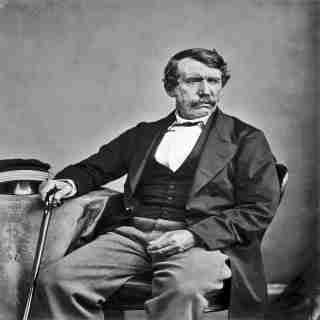 "[I am] serving Christ when shooting a buffalo for my men or taking an observation, [even if some] will consider it not sufficiently or even at all missionary."
With four theatrical words, "Dr. Livingstone, I presume?"—words journalist Henry Morton Stanley rehearsed in advance—David Livingstone became immortal. Stanley stayed with Livingstone for five months and then went off to England to write his bestseller, How I Found Livingstone. Livingstone, in the meantime, got lost again—in a swamp literally up to his neck. Within a year and a half, he died in a mud hut, kneeling beside his cot in prayer.
Berlin Congress spurs African independent churches
The whole civilized world wept. They gave him a 21-gun salute and a hero's funeral among the saints in Westminster Abbey. "Brought by faithful hands over land and sea," his tombstone reads, "David Livingstone: missionary, traveler, philanthropist. For 30 years his life was spent in an unwearied effort to evangelize the native races, to explore the undiscovered secrets, and to abolish the slave trade." He was Mother Teresa, Neil Armstrong, and Abraham Lincoln rolled into one.
Highway man
At age 25, after a childhood spent working 14 hours a day in a cotton mill, followed by learning in class and on his own, Livingstone was captivated by an appeal for medical missionaries to China. As he trained, however, the door to China was slammed shut by the Opium War. Within six months, he met Robert Moffat, a veteran missionary of southern Africa, who enchanted him with tales of his remote station, glowing in the morning sun with "the smoke of a thousand villages where no missionary had been before."
For ten years, Livingstone tried to be a conventional missionary in southern Africa. He opened a string of stations in "the regions beyond," where he settled down to station life, teaching school and superintending the garden. After four years of bachelor life, he married his "boss's" daughter, Mary Moffat.
From the beginning, Livingstone showed signs of restlessness. After his only convert decided to return to polygamy, Livingstone felt more called than ever to explore. During his first term in South Africa, Livingstone made some of the most prodigious—and most dangerous—explorations of the nineteenth century. His object was to open a "Missionary Road"—"God's Highway," he also called it—1,500 miles north into the interior to bring "Christianity and civilization" to unreached peoples.
Explorer for Christ
On these early journeys, Livingstone's interpersonal quirks were already apparent. He had the singular inability to get along with other Westerners. He fought with missionaries, fellow explorers, assistants, and (later) his brother Charles. He held grudges for years. He had the temperament of a book-reading loner, emotionally inarticulate except when he exploded with Scottish rage. He held little patience for the attitudes of missionaries with "miserably contracted minds" who had absorbed "the colonial mentality" regarding the natives. When Livingstone spoke out against racial intolerance, white Afrikaners tried to drive him out, burning his station and stealing his animals.
He also had problems with the London Missionary Society, who felt that his explorations were distracting him from his missionary work. Throughout his life, however, Livingstone always thought of himself as primarily a missionary, "not a dumpy sort of person with a Bible under his arms, [but someone] serving Christ when shooting a buffalo for my men or taking an observation, [even if some] will consider it not sufficiently or even at all missionary."
Though alienated from the whites, the natives loved his common touch, his rough paternalism, and his curiosity. They also thought he might protect them or supply them with guns. More than most Europeans, Livingstone talked to them with respect, Scottish laird to African chief. Some explorers took as many as 150 porters when they traveled; Livingstone traveled with 30 or fewer.
On an epic, three-year trip from the Atlantic Ocean to the Indian Ocean (reputedly the first by a European) Livingstone was introduced to the 1,700-mile-long Zambezi. The river was also home to Victoria Falls, Livingstone's most awe-inspiring discovery. The scene was "so lovely," he later wrote, that it "must have been gazed upon by angels in their flight."
Despite its beauty, the Zambezi was a river of human misery. It linked the Portuguese colonies of Angola and Mozambique, the main suppliers of slaves for Brazil, who in turn sold to Cuba and the United States. Though Livingstone was partially driven by a desire to create a British colony, his primary ambition was to expose the slave trade and cut it off at the source. The strongest weapon in this task, he believed, was Christian commercial civilization. He hoped to replace the "inefficient" slave economy with a capitalist economy: buying and selling goods instead of people.
The ill-fated Zambezi expedition
After a brief heroic return to England, Livingstone returned to Africa, this time to navigate 1,000 miles up the Zambezi in a brass-and-mahogany steamboat to establish a mission near Victoria Falls. The boat was state-of-the-art technology but proved too frail for the expedition. It leaked horribly after repeatedly running aground on sandbars.
Livingstone pushed his men beyond human endurance. When they reached a 30-foot waterfall, he waved his hand, as if to wish it away, and said, "That's not supposed to be there." His wife, who had just given birth to her sixth child, died in 1862 beside the river, only one of several lives claimed on the voyage. Two years later, the British government, which had no interest in "forcing steamers up cataracts," recalled Livingstone and his mission party.
A year later, he was on his way back to Africa again, this time leading an expedition sponsored by the Royal Geographical Society and wealthy friends. "I would not consent to go simply as a geographer," he emphasized, but as biographer Tim Jeal wrote, "It would be hard to judge whether the search for the Nile's source or his desire to expose the slave trade was his dominant motive." The source of the Nile was the great geographical puzzle of the day. But more important to Livingstone was the possibility of proving that the Bible was true by tracing the African roots of Judaism and Christianity.
For two years he simply disappeared, without a letter or scrap of information. He reported later that he had been so ill he could not even lift a pen, but he was able to read the Bible straight through four times. Livingstone's disappearance fascinated the public as much as Amelia Earhart's a few generations later.
When American journalist Henry Stanley found Livingstone, the news exploded in England and America. Papers carried special editions devoted to the famous meeting. In August 1872, in precarious health, Livingstone shook Stanley's hand and set out on his final journey.
When Livingstone had arrived in Africa in 1841, it was as exotic as outer space, called the "Dark Continent" and the "White Man's Graveyard." although the Portuguese, Dutch, and English were pushing into the interior, African maps had blank unexplored areas—no roads, no countries, no landmarks. Livingstone helped redraw the maps, exploring what are now a dozen countries, including South Africa, Rwanda, Angola, and the Republic of the Congo (formerly Zaire). And he made the West aware of the continuing evil of African slavery, which led to its being eventually outlawed.
"[I am] serving Christ when shooting a buffalo for my men or taking an observation, [even if some] will consider it not sufficiently or even at all missionary."
With four theatrical words, "Dr. Livingstone, I presume?"—words journalist Henry Morton Stanley rehearsed in advance—David Livingstone became immortal. Stanley stayed with Livingstone for five months and then went off to England to write his bestseller, How I Found Livingstone. Livingstone, in the meantime, got lost again—in a swamp literally up to his neck. Within a year and a half, he died in a mud hut, kneeling beside his cot in prayer.
Berlin Congress spurs African independent churches
The whole civilized world wept. They gave him a 21-gun salute and a hero's funeral among the saints in Westminster Abbey. "Brought by faithful hands over land and sea," his tombstone reads, "David Livingstone: missionary, traveler, philanthropist. For 30 years his life was spent in an unwearied effort to evangelize the native races, to explore the undiscovered secrets, and to abolish the slave trade." He was Mother Teresa, Neil Armstrong, and Abraham Lincoln rolled into one.
Highway man
At age 25, after a childhood spent working 14 hours a day in a cotton mill, followed by learning in class and on his own, Livingstone was captivated by an appeal for medical missionaries to China. As he trained, however, the door to China was slammed shut by the Opium War. Within six months, he met Robert Moffat, a veteran missionary of southern Africa, who enchanted him with tales of his remote station, glowing in the morning sun with "the smoke of a thousand villages where no missionary had been before."
For ten years, Livingstone tried to be a conventional missionary in southern Africa. He opened a string of stations in "the regions beyond," where he settled down to station life, teaching school and superintending the garden. After four years of bachelor life, he married his "boss's" daughter, Mary Moffat.
From the beginning, Livingstone showed signs of restlessness. After his only convert decided to return to polygamy, Livingstone felt more called than ever to explore. During his first term in South Africa, Livingstone made some of the most prodigious—and most dangerous—explorations of the nineteenth century. His object was to open a "Missionary Road"—"God's Highway," he also called it—1,500 miles north into the interior to bring "Christianity and civilization" to unreached peoples.
Explorer for Christ
On these early journeys, Livingstone's interpersonal quirks were already apparent. He had the singular inability to get along with other Westerners. He fought with missionaries, fellow explorers, assistants, and (later) his brother Charles. He held grudges for years. He had the temperament of a book-reading loner, emotionally inarticulate except when he exploded with Scottish rage. He held little patience for the attitudes of missionaries with "miserably contracted minds" who had absorbed "the colonial mentality" regarding the natives. When Livingstone spoke out against racial intolerance, white Afrikaners tried to drive him out, burning his station and stealing his animals.
He also had problems with the London Missionary Society, who felt that his explorations were distracting him from his missionary work. Throughout his life, however, Livingstone always thought of himself as primarily a missionary, "not a dumpy sort of person with a Bible under his arms, [but someone] serving Christ when shooting a buffalo for my men or taking an observation, [even if some] will consider it not sufficiently or even at all missionary."
Though alienated from the whites, the natives loved his common touch, his rough paternalism, and his curiosity. They also thought he might protect them or supply them with guns. More than most Europeans, Livingstone talked to them with respect, Scottish laird to African chief. Some explorers took as many as 150 porters when they traveled; Livingstone traveled with 30 or fewer.
On an epic, three-year trip from the Atlantic Ocean to the Indian Ocean (reputedly the first by a European) Livingstone was introduced to the 1,700-mile-long Zambezi. The river was also home to Victoria Falls, Livingstone's most awe-inspiring discovery. The scene was "so lovely," he later wrote, that it "must have been gazed upon by angels in their flight."
Despite its beauty, the Zambezi was a river of human misery. It linked the Portuguese colonies of Angola and Mozambique, the main suppliers of slaves for Brazil, who in turn sold to Cuba and the United States. Though Livingstone was partially driven by a desire to create a British colony, his primary ambition was to expose the slave trade and cut it off at the source. The strongest weapon in this task, he believed, was Christian commercial civilization. He hoped to replace the "inefficient" slave economy with a capitalist economy: buying and selling goods instead of people.
The ill-fated Zambezi expedition
After a brief heroic return to England, Livingstone returned to Africa, this time to navigate 1,000 miles up the Zambezi in a brass-and-mahogany steamboat to establish a mission near Victoria Falls. The boat was state-of-the-art technology but proved too frail for the expedition. It leaked horribly after repeatedly running aground on sandbars.
Livingstone pushed his men beyond human endurance. When they reached a 30-foot waterfall, he waved his hand, as if to wish it away, and said, "That's not supposed to be there." His wife, who had just given birth to her sixth child, died in 1862 beside the river, only one of several lives claimed on the voyage. Two years later, the British government, which had no interest in "forcing steamers up cataracts," recalled Livingstone and his mission party.
A year later, he was on his way back to Africa again, this time leading an expedition sponsored by the Royal Geographical Society and wealthy friends. "I would not consent to go simply as a geographer," he emphasized, but as biographer Tim Jeal wrote, "It would be hard to judge whether the search for the Nile's source or his desire to expose the slave trade was his dominant motive." The source of the Nile was the great geographical puzzle of the day. But more important to Livingstone was the possibility of proving that the Bible was true by tracing the African roots of Judaism and Christianity.
For two years he simply disappeared, without a letter or scrap of information. He reported later that he had been so ill he could not even lift a pen, but he was able to read the Bible straight through four times. Livingstone's disappearance fascinated the public as much as Amelia Earhart's a few generations later.
When American journalist Henry Stanley found Livingstone, the news exploded in England and America. Papers carried special editions devoted to the famous meeting. In August 1872, in precarious health, Livingstone shook Stanley's hand and set out on his final journey.
When Livingstone had arrived in Africa in 1841, it was as exotic as outer space, called the "Dark Continent" and the "White Man's Graveyard." although the Portuguese, Dutch, and English were pushing into the interior, African maps had blank unexplored areas—no roads, no countries, no landmarks. Livingstone helped redraw the maps, exploring what are now a dozen countries, including South Africa, Rwanda, Angola, and the Republic of the Congo (formerly Zaire). And he made the West aware of the continuing evil of African slavery, which led to its being eventually outlawed.
What Does Ongoing Sin Say About Me
One of the most common questions a Christian can ask is also one of the most troubling: What does my ongoing sin say about me? The question is common because all Christians deal with ongoing sin, and many with patterns of repetitive sin. And the question is troubling because it ushers us into one of the great tensions of Scripture. We know, on the one hand, that “if we say we have no sin, we deceive ourselves, and the truth is not in us” (1 John 1:8). And we know, on the other hand, that “no one born of God makes a practice of sinning” (1 John 3:9). Every Christian sins — even every day (Matthew 6:11–12) — yet some practices of sin throw doubt on a person’s claim to be born of God. So, what distinguishes Christians from the world when it comes to sin? Puritan pastor Richard Baxter, writing to “melancholy” (or depressed) Christians, offers one fruitful answer: Remember what a comfortable evidence you carry about with you that your sin is not damning while you feel that you love it not but hate it and are weary of it. Scarce any sort of sinners have so little pleasure in their sin as the melancholy, or so little desire to keep them, and only beloved sins undo men. ( The Genius of Puritanism , 88–89) Christians commit sins. At times, they may even commit grievous sins, as David and Peter did. But Christians do not love their sins. And only beloved sins undo us. Our Complex Hearts Of course, Baxter’s answer forces us to ask another question: How can we know whether we hate or love sin? Answering that question requires great care. We find many people in Scripture, for example, who only seemed to hate their sin. Israel’s wilderness generation “repented and sought God earnestly” at times, but in the end “their heart was not steadfast toward him” (Psalm 78:34, 37). The Pharisees likewise appeared to hate sin — yet beneath their religious exterior they were “lovers of money” (Luke 16:14). The love of sin, though smothered for a time, was never quenched. Alternatively, we can find cases where genuine Christians, often immature ones, seemed for a time to love sin. Some surprising sins appear in Paul’s letters to the Corinthians, for example, yet godly grief could also follow, and with it a restored indignation against sin (2 Corinthians 7:10–11). How then can we tell whether, under all our conflicting feelings and internal wrestlings and contradictory actions, our fundamental attitude toward sin is an increasing hatred or love ? We might begin by prayerfully asking ourselves four smaller questions. How do you commit your sin? Although we all sin, we do not all sin in the same way. The Old Testament distinguishes between types of transgressions, ranging from less severe unintentional sins to sins committed “with a high hand” (Numbers 15:22, 30). Our own sins likewise fall on a spectrum between defiant and reflexive — between those we pursue and those that pursue us . If sin is a snare (Proverbs 5:22), then sometimes we walk into it with eyes wide open, and other times we find our foot caught before we know what happened. A mother may speak a harsh word, for example, after slowly brewing the cauldron of her self-pity — or she may do so in a rush of unlooked-for impatience. Similarly, a husband may indulge an illicit sexual image because he went looking for a website — or because a billboard went looking for him. The mother and the husband sin in both cases, but how they do so — especially as a characteristic practice — reveals much about their heart’s orientation. Ongoing patterns of planned, premeditated sin expose a heart whose affections are dangerously entangled. “Christians commit sins. But Christians do not love their sins. And only beloved sins undo us.” In one sense, of course, we play the role of both pursuer and pursued whenever we sin. Even the most defiant sins have spiritual forces of evil behind them (Ephesians 2:2); even the most reflexive sins reveal a twisted inner willingness (James 1:14). More than that, genuine Christians still can fall into patterns of pursuing sin for a season. At times, we contradict the life of Christ within us and step into snares that we see. But in general, those who hate sin move — gradually but genuinely — farther from planned, pursued sins the longer they are in Christ. How far have you come? Now for a complication. Although everyone who hates sin gradually moves away from planned, pursued sins, we start moving from different spots. Some begin walking toward Mount Zion from Moab; others from as far as Babylon. And as with any journey, distance (though important) matters less than direction . Some people, by virtue of God’s common grace, enter Christ with great degrees of decency and discipline. And others enter Christ with self-control threadbare, a conscience almost seared, and a soul still bearing the claw marks of addiction. Both receive in Christ the same Spirit, one “of power and love and self-control” (2 Timothy 1:7). But if we expect their progress toward Christlikeness to look the same, we deny their radically different starting places. Imagine, for example, the sin of drunkenness, which falls nearer the defiant side of the spectrum. A night of drunkenness for the first Christian may raise a serious concern: here is a planned, pursued sin unknown even in his pre-Christian days. But for the second Christian, a night of drunkenness may be only one brief backward step on an otherwise forward journey. (Which is no reason, of course, for resting satisfied with even one backward step: repentance means opposing all known sin now , not on a gradually reduced schedule.) The Christian life goes “from one degree of glory to another” (2 Corinthians 3:18); the sky above us “shines brighter and brighter until full day” (Proverbs 4:18); we travel “from strength to strength” (Psalm 84:7). But as important as asking, “How far along are you?” is “How far have you come?” How do you confess your sin? Just as we can commit sin in more ways than one, so we can confess sin in more ways than one. While some confess with sincere resolve not to commit that sin again, others confess with silent resignation to sin’s power in their lives. The second kind of confession, as John Piper puts it, expresses guilt and sorrow for sinning, but underneath there is the quiet assumption that this sin is going to happen again, probably before the week is out. . . . It’s a cloak for fatalism about your besetting sins. You feel bad about them, but you have surrendered to their inevitability. Those who confess in this way often treat forgiveness as only a balm for a wounded conscience, and not also as a sword for the fight against sin. They hate the guilt that sin brings, but they may not hate the sin itself , or at least not enough to rage against the lie that sin is ever inevitable. To be sure, those who hate sin often need to confess the same sins repeatedly (especially sins of the more reflexive kind), even over years and decades. But apart from some regrettable seasons, their confessions hold no hints of fatalism or inevitability. Rather, their confessions match the pattern of Proverbs 28:13: Whoever conceals his transgressions will not prosper, but he who confesses and forsakes them will obtain mercy. Those who confess sin sincerely also strive to forsake sin completely. So, when they rise from their knees and return to the battle, they do not hold their weapon loosely, as one who expects defeat. They enter with head held high, shielded with new mercy, clothed with fresh power. How do you fight your sin? Some of the clearest displays of our loves and hates appear on the battlefield. While some fight their sin half expecting and (if truth be told) half hoping to lose, others learn to fight like their souls are at stake — like Jesus spoke seriously, even if not literally, when he talked about cutting off hands and tearing out eyes (Matthew 5:29–30). Sin haters walk through this world armed with spiritual weapons (Romans 8:13; Ephesians 6:17) — not to harm others, but to harm every enemy within themselves. They watch and pray against temptation, needy enough to ask for daily deliverance (Matthew 6:13). They resolve to make no provision for the flesh, even if doing so requires abstaining from otherwise neutral substances, situations, and forms of entertainment (Romans 13:14). Their battle plans are not vague (“Read the Bible and pray more”) but specific (“Wake up at 6:00 to read and pray for an hour”). And though they know that no wall of accountability can rise higher than their sin, they also live like they are dead without help (Hebrews 3:13). “Sin seems beloved to us only when Christ does not.” And what’s more, they do not fight for a day or a season or a year, but for a life. They know this warfare ends only when their breath does (2 Timothy 4:7). So, though they sometimes feel weary in the war, they refuse to lie down on the battlefield. In time, fresh strength comes from above, fresh resolves fire from within, and despite many discouragements and defeats, they make progress. Those who, at bottom, still love their sin will not fight their sin like this . They may raise a resistance of sorts, but not a whole-souled war. We cannot kill what we still love. Better Beloved So then, how do you commit your sin? How far have you come? How do you confess your sin? How do you fight your sin? Questions like these call for our attention — but only some of our attention. Self-examination can help us discern the state of our souls, but it cannot change the state of our souls. Wherever we find ourselves in these questions, if we would hate sin increasingly, then only one path lies before us: love Christ increasingly. Richard Baxter’s contemporary John Owen once wrote, Be frequent in thoughts of faith, comparing [Christ] with other beloveds, sin, world, legal righteousness; and preferring him before them, counting them all loss and dung in comparison of him. ( A Quest for Godliness , 206) Sin seems beloved to us only when Christ does not. So go ahead and compare your sins to him: their blackness with his light, their shame with his glory, their cruelty with his mercy, their hell with his heaven. For now, we see only the rays of Christ’s beauty. But even the faintest of them outshines the most attractive sin. Only beloved sins undo us. And the only Savior from beloved sins is a beloved Christ.