
Others like how to live a holy life Features >>

How To Stay In Your High Calling

How To Resist The Devil
How To Keep Your Healing
How To Take The Limits Off God
How To Know The Will Of God
-160.webp)
How To Become A Wise Man In God's Eyes: Worship Him
How To Tap Into The Glory Of God
How To Know The Will Of God

How To Live And Not Die

A Holy Life: The Beauty Of Christianity
About the Book
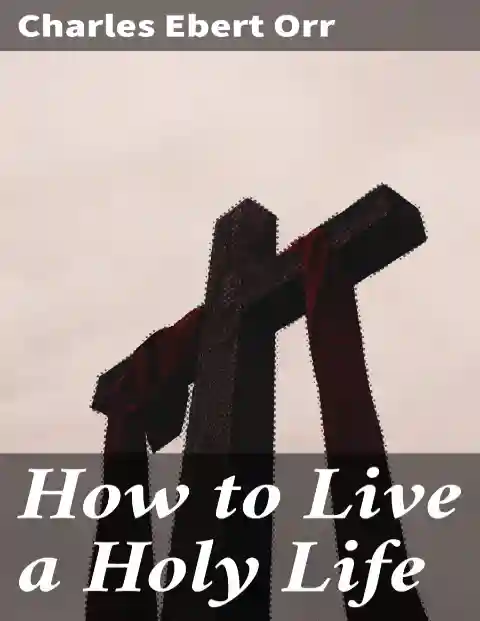
"How To Live A Holy Life" by Charles Ebert Orr is a practical guide to living a life that is pleasing to God. The book discusses the importance of holiness, how to cultivate a personal relationship with God, and practical steps for maintaining a holy lifestyle. Orr emphasizes the importance of living in obedience to God's Word and seeking purity in all aspects of life. Overall, the book serves as a valuable resource for those seeking to deepen their spiritual walk and live a life that reflects God's character.
Brother Yun
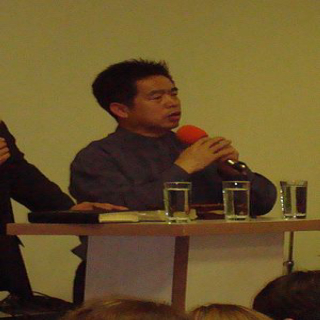 Brother Yun was born in February 1958 in the province of Henan. His original name was Liu Zhenying (刘振营).
Brother Yun became a believer at the age of 16. Soon after he became a Christian, God called him to be His witness in the west and south. As he was obedient to the calling, he eventually became a witness of Christ not just in the western and southern parts of China, but throughout China and in the nations beyond China as well.
Brother Yun was born into a poor family. His family’s financial situation took a turn for the worst when his father became ill with an asthmatic condition that led to lung cancer eventually. His life got worse when he became a Christian as he suffered severe trials and persecutions. In the midst of suffering for the Lord, however, he experienced miracle after miracle, which helped to strengthen his faith.
HOW BROTHER YUN BECAME A BELIEVER
In 1974, Brother Yun’s father became ill with lung cancer. His mother, who had been a Christian for many years but had become spiritually cold after the expulsion of Western missionaries during the Cultural Revolution, felt a deep sense of desperation because if her husband had died then, it would leave the family in dire straits. She thought of committing suicide. One evening, as she was lying in bed, she heard a voice saying to her that Jesus loved her. In tears and in repentance, she rededicated her life to God and gathered her family to pray for her husband. The next morning, her husband got better and as a result, everyone in the family, including Brother Yun, put their faith in God.
HIS HUNGER FOR THE WORD OF GOD
Brother Yun was 16 when he became a Christian. Soon after, he started hungering for the Word of God. However, his family did not have a Bible. He began asking his mother who Jesus was. In response, his mother would tell him that Jesus was the Son of God and that He had recorded all His teachings in the Bible.
Brother Yun wanted a Bible and his mother recalled that there was a man in another village who had one. So she brought him to see the man. The man was too afraid to show Brother Yun his Bible. So he suggested to the latter that he could pray and ask God for one.
Brother Yun decided to fast and pray for a Bible. For the next 100 days, he ate only one bowl of steamed rice everyday. One day at 4am, after fasting for 100 days, he saw a vision. In the vision, he was walking up a steep hill and trying to push a heavy cart at the same time. He was heading towards a village where he intended to beg for food for his family. He struggled greatly as he continued his climb uphill. The cart was about to roll back and fall on him when he saw three men walking down the hill in the opposite direction. One of them was a kind old man and he was pulling a large cart of fresh bread. When the old man saw Brother Yun, he asked him if he was hungry. He said ‘yes’ and started crying. The old man then took a red bag of bread from his cart and asked his two servants to give it to Brother Yun. As he put the bread into his mouth, it immediately turned into a Bible.
Upon waking up, Brother Yun began to search for the Bible. His search, however, was in vain. All of a sudden, he heard a faint knock on the door and someone was calling out his name. Immediately, he recognised the voice – it was the same voice he had heard in the vision. He quickly opened the door and standing before him were the two servants he had seen in the vision. One of them held a red bag in his hand. In this red bag was a Bible.
It was later that Brother Yun found out the names of the two men. One was Brother Wang while the other was Brother Sung. They were sent by an evangelist to give Brother Yun the Bible. The evangelist, who had suffered terribly during the Cultural Revolution and had nearly died while being tortured, had received a vision from God. In the vision, God showed him Brother Yun’s house and the location of his village. He was asked to give his Bible to Brother Yun. However, he did not obey God until three months later.
Brother Yun began to devour the Word of God. Even though he could hardly read, this did not deter him at all. When he had finished reading the entire Bible, he started to memorise one chapter per day. In 28 days, he had memorised the Gospel of Matthew. Then he went on to memorise the Book of Acts and so forth.
OBEDIENT TO THE CALL OF GOD
One morning at 4am, Brother Yun had a dream. In the dream, God asked him to be His witness in the west and south. In the same dream, he saw a young man from the south coming to his house. And so at daybreak, he told his mother to expect the young man’s visit and to ask him to wait for him. Then he sat off to a village he had never heard of in the west. The people in this village had been praying for him to visit as they had heard about how he had prayed for a Bible and got it.
When the meeting at the village concluded and Brother Yun got ready to leave, the villagers refused to let him go. So he stayed on and recited to them the first twelve chapters from the Book of Acts. After that, the villagers finally let him go. From the village to his house, it could take up to 2 hours to walk. Because he did not want to make the young man from the south wait too long, he decided to run home. All of a sudden, he found himself entering his village without any apparent time lapse. What should have taken him a few hours took him just a few moments. It was as if God had supernaturally transported him back to his village.
PERSECUTIONS AND MIRACLES IN HIS LIFE
Brother Yun was arrested by security police numerous times and was thrown into prison three times for sharing the gospel in communist China.
When Brother Yun was arrested the first time, he was only 17 years old. At that time, he was ministering at a meeting far away from home. After he was caught, he was thrown into a freezing cold prison cell. There was no heat in the cell and his winter coat had been thrown into the snow by the security police who had caught him. He began to sing Psalm 150 aloud. The more he sang, the more he was filled with joy. Gradually, his frozen hands and feet regained feeling and he no longer felt cold.
During his first imprisonment in Nanyang, Brother Yun felt that God wanted him to fast without food and water until he could see his family again. This fast lasted 74 days, which was humanly impossible but yet was made possible because he chose to obey God.
During those times when Brother Yun was in the hands of government officials, he was repeatedly beaten and tortured with electric batons. He was also kicked and trampled upon. Furthermore, he had needles being jabbed underneath his fingernails.
Once, Brother Yun was paraded through the streets with a red cross tied behind him for half a day. When night fell, he was locked and left alone inside a large interrogation room. The wooden cross was taken off his back but his hands were still tied up. All of a sudden, the rope that was used to tie his hands snapped by itself. He immediately walked out of the interrogation room and walked through the courtyard in the midst of onlookers. Nobody stopped him or said anything to him. It was as if God had blinded their eyes and they did not even recognise who he was.
Because the front gate was locked, the only way Brother Yun could get out was to climb over an eight-foot high cement wall. He climbed up as much as he could manage. Then he looked over the wall and saw that there was a ten-foot wide open tank directly below. Suddenly, he felt as if someone had lifted him up and thrown him over. He was thrown so far that he did not land in the tank.
Brother Yun’s 3rd imprisonment was a very dark period in his life as the prison guards in the maximum security prison were determined to prevent his escape. So they beat his legs to cripple him permanently. They had him beaten up everyday, even in his crippled state. One day, God instructed him to escape from the prison. This was confirmed by a brother-in-Christ. Thus, on May 5, 1997, he miraculously walked past dozens of prison guards and out of the maximum security prison. It was as if he had become invisible to the guards. He did not realise that his legs had been miraculously healed until later.
Throughout all the horrendous and painful experiences that Brother Yun went through, the word of the Lord kept coming to him, encouraging him and strengthening his faith.
BROTHER YUN’S MINISTRY
Brother Yun eventually escaped China and sought asylum in Germany in 2001. Since then, he has been continuing his ministry from there and has spoken to congregations internationally. He has founded “Back to Jerusalem” Movement and has been sending missionaries out from China to share the gospel in the least-reached nations.
Brother Yun’s life and ministry have impacted many lives. Thousands of people have become Christians through his ministry. It is thus inevitable that fellow Christians have allowed themselves to be used as instruments of wickedness to attack his reputation. The co-author of The Heavenly Man, Paul Hattaway has aptly put it this way, “Many of the great Christian leaders throughout history have been the subject of brutal attacks from other Christians.”
AFTERTHOUGHT
Brother Yun’s childlike faith and his prompt obedience to God’s call are exemplary. It is incredible that he has remained faithful to God despite the tremendous suffering and persecutions he has gone through.
Brother Yun was born in February 1958 in the province of Henan. His original name was Liu Zhenying (刘振营).
Brother Yun became a believer at the age of 16. Soon after he became a Christian, God called him to be His witness in the west and south. As he was obedient to the calling, he eventually became a witness of Christ not just in the western and southern parts of China, but throughout China and in the nations beyond China as well.
Brother Yun was born into a poor family. His family’s financial situation took a turn for the worst when his father became ill with an asthmatic condition that led to lung cancer eventually. His life got worse when he became a Christian as he suffered severe trials and persecutions. In the midst of suffering for the Lord, however, he experienced miracle after miracle, which helped to strengthen his faith.
HOW BROTHER YUN BECAME A BELIEVER
In 1974, Brother Yun’s father became ill with lung cancer. His mother, who had been a Christian for many years but had become spiritually cold after the expulsion of Western missionaries during the Cultural Revolution, felt a deep sense of desperation because if her husband had died then, it would leave the family in dire straits. She thought of committing suicide. One evening, as she was lying in bed, she heard a voice saying to her that Jesus loved her. In tears and in repentance, she rededicated her life to God and gathered her family to pray for her husband. The next morning, her husband got better and as a result, everyone in the family, including Brother Yun, put their faith in God.
HIS HUNGER FOR THE WORD OF GOD
Brother Yun was 16 when he became a Christian. Soon after, he started hungering for the Word of God. However, his family did not have a Bible. He began asking his mother who Jesus was. In response, his mother would tell him that Jesus was the Son of God and that He had recorded all His teachings in the Bible.
Brother Yun wanted a Bible and his mother recalled that there was a man in another village who had one. So she brought him to see the man. The man was too afraid to show Brother Yun his Bible. So he suggested to the latter that he could pray and ask God for one.
Brother Yun decided to fast and pray for a Bible. For the next 100 days, he ate only one bowl of steamed rice everyday. One day at 4am, after fasting for 100 days, he saw a vision. In the vision, he was walking up a steep hill and trying to push a heavy cart at the same time. He was heading towards a village where he intended to beg for food for his family. He struggled greatly as he continued his climb uphill. The cart was about to roll back and fall on him when he saw three men walking down the hill in the opposite direction. One of them was a kind old man and he was pulling a large cart of fresh bread. When the old man saw Brother Yun, he asked him if he was hungry. He said ‘yes’ and started crying. The old man then took a red bag of bread from his cart and asked his two servants to give it to Brother Yun. As he put the bread into his mouth, it immediately turned into a Bible.
Upon waking up, Brother Yun began to search for the Bible. His search, however, was in vain. All of a sudden, he heard a faint knock on the door and someone was calling out his name. Immediately, he recognised the voice – it was the same voice he had heard in the vision. He quickly opened the door and standing before him were the two servants he had seen in the vision. One of them held a red bag in his hand. In this red bag was a Bible.
It was later that Brother Yun found out the names of the two men. One was Brother Wang while the other was Brother Sung. They were sent by an evangelist to give Brother Yun the Bible. The evangelist, who had suffered terribly during the Cultural Revolution and had nearly died while being tortured, had received a vision from God. In the vision, God showed him Brother Yun’s house and the location of his village. He was asked to give his Bible to Brother Yun. However, he did not obey God until three months later.
Brother Yun began to devour the Word of God. Even though he could hardly read, this did not deter him at all. When he had finished reading the entire Bible, he started to memorise one chapter per day. In 28 days, he had memorised the Gospel of Matthew. Then he went on to memorise the Book of Acts and so forth.
OBEDIENT TO THE CALL OF GOD
One morning at 4am, Brother Yun had a dream. In the dream, God asked him to be His witness in the west and south. In the same dream, he saw a young man from the south coming to his house. And so at daybreak, he told his mother to expect the young man’s visit and to ask him to wait for him. Then he sat off to a village he had never heard of in the west. The people in this village had been praying for him to visit as they had heard about how he had prayed for a Bible and got it.
When the meeting at the village concluded and Brother Yun got ready to leave, the villagers refused to let him go. So he stayed on and recited to them the first twelve chapters from the Book of Acts. After that, the villagers finally let him go. From the village to his house, it could take up to 2 hours to walk. Because he did not want to make the young man from the south wait too long, he decided to run home. All of a sudden, he found himself entering his village without any apparent time lapse. What should have taken him a few hours took him just a few moments. It was as if God had supernaturally transported him back to his village.
PERSECUTIONS AND MIRACLES IN HIS LIFE
Brother Yun was arrested by security police numerous times and was thrown into prison three times for sharing the gospel in communist China.
When Brother Yun was arrested the first time, he was only 17 years old. At that time, he was ministering at a meeting far away from home. After he was caught, he was thrown into a freezing cold prison cell. There was no heat in the cell and his winter coat had been thrown into the snow by the security police who had caught him. He began to sing Psalm 150 aloud. The more he sang, the more he was filled with joy. Gradually, his frozen hands and feet regained feeling and he no longer felt cold.
During his first imprisonment in Nanyang, Brother Yun felt that God wanted him to fast without food and water until he could see his family again. This fast lasted 74 days, which was humanly impossible but yet was made possible because he chose to obey God.
During those times when Brother Yun was in the hands of government officials, he was repeatedly beaten and tortured with electric batons. He was also kicked and trampled upon. Furthermore, he had needles being jabbed underneath his fingernails.
Once, Brother Yun was paraded through the streets with a red cross tied behind him for half a day. When night fell, he was locked and left alone inside a large interrogation room. The wooden cross was taken off his back but his hands were still tied up. All of a sudden, the rope that was used to tie his hands snapped by itself. He immediately walked out of the interrogation room and walked through the courtyard in the midst of onlookers. Nobody stopped him or said anything to him. It was as if God had blinded their eyes and they did not even recognise who he was.
Because the front gate was locked, the only way Brother Yun could get out was to climb over an eight-foot high cement wall. He climbed up as much as he could manage. Then he looked over the wall and saw that there was a ten-foot wide open tank directly below. Suddenly, he felt as if someone had lifted him up and thrown him over. He was thrown so far that he did not land in the tank.
Brother Yun’s 3rd imprisonment was a very dark period in his life as the prison guards in the maximum security prison were determined to prevent his escape. So they beat his legs to cripple him permanently. They had him beaten up everyday, even in his crippled state. One day, God instructed him to escape from the prison. This was confirmed by a brother-in-Christ. Thus, on May 5, 1997, he miraculously walked past dozens of prison guards and out of the maximum security prison. It was as if he had become invisible to the guards. He did not realise that his legs had been miraculously healed until later.
Throughout all the horrendous and painful experiences that Brother Yun went through, the word of the Lord kept coming to him, encouraging him and strengthening his faith.
BROTHER YUN’S MINISTRY
Brother Yun eventually escaped China and sought asylum in Germany in 2001. Since then, he has been continuing his ministry from there and has spoken to congregations internationally. He has founded “Back to Jerusalem” Movement and has been sending missionaries out from China to share the gospel in the least-reached nations.
Brother Yun’s life and ministry have impacted many lives. Thousands of people have become Christians through his ministry. It is thus inevitable that fellow Christians have allowed themselves to be used as instruments of wickedness to attack his reputation. The co-author of The Heavenly Man, Paul Hattaway has aptly put it this way, “Many of the great Christian leaders throughout history have been the subject of brutal attacks from other Christians.”
AFTERTHOUGHT
Brother Yun’s childlike faith and his prompt obedience to God’s call are exemplary. It is incredible that he has remained faithful to God despite the tremendous suffering and persecutions he has gone through.
why join a church
One of the most counter-cultural things you can do is become an engaged member of a faithful local church. In our flighty and noncommittal age, neither non-Christians nor Christians are naturally inclined to find a place to put down roots and make longstanding, objective commitments for the good of others. We want to keep our options open and, above all, preserve our own freedom of choice, rather than make a covenant for the long haul and embrace a framework for real life in all its ups and downs. But what if you went against the grain and became part of the solution to the modern problem of being so noncommittal? What if you joined the rebellion, and pledged your loyalty and engagement to a Bible-believing, gospel-cherishing local church? Does the Bible Even Mention Membership? Most of us have raised eyebrows at some point about the concept of church membership. “Membership” — where do we see that in the New Testament? Is it really essential to join a church? Can’t I get everything I need as a Christian from being a regular attender? “One of the most counter-cultural things you can do is become an engaged member of a faithful local church.” It’s true that the New Testament makes no direct argument for our modern concept of membership. The gospel’s initial advance into a pagan and pre-Christian world was a different situation than we find today in our increasingly post-Christian society. The complexities of life two millennia later make church-belonging as difficult, and as important, as ever. Not only are we less inclined to make firm commitments, but our cities and towns are much bigger, and church options more diverse. But whether you call it “membership,” “partnership,” or something else, the New Testament assumes some form of committed, accountable belonging as a reality for every true follower of Jesus. Each Christian has a definite place of local belonging. To be baptized is to become part of a particular local body. “In the New Testament,” John Piper observes, “to be excluded from the local church was to be excluded from Christ.” Six Reasons to Put Down Roots Here, then, are six reasons, among many, to go against the noncommittal grain, put down roots, join a particular local church, and be as involved as possible in the life of that church. 1. Your Own Assurance Being accepted into membership in a Bible-believing, responsibly-led church rightly gives affirmation and reinforces confidence that your faith is real, that it’s not your own private, self-made religion, but part of “the faith that was once for all delivered to the saints” (Jude 3). Jesus gives his church “the keys of the kingdom of heaven,” and according to Matthew 16:19, “whatever you bind on earth shall be bound in heaven, and whatever you loose on earth shall be loosed in heaven.” It is no small thing for a solid local church to find your profession of faith to be credible, and your lifestyle and conduct not disqualifying, and to accept you into membership. There is more grace to be experienced in this, for our assurance, than most of us know. 2. The Good of Others This is perhaps the most often overlooked reason for joining a church. In our proclivity to self-focus, we consider the reasons relating directly to us, but overlook how our membership relates to others. Our belonging somewhere establishes a base from which we can reliably care for others. There are two sides to church membership, and we can’t keep others accountable for their good to a covenant we ourselves haven’t taken. True love is not only manifest in affection and action, but also allegiance. We do not fully love our brothers and sisters in Christ if we withhold pledging our allegiance to them by covenanting with them in local-church life. Love doesn’t say, “I love these people and don’t need to covenant with them.” Rather, it says, “I love these people enough to covenant with them.” Living the Christian life in community is more than just loose associations, but committing to each other to be there for each other when life is hard, in sickness and in sorrow. 3. Your Own Good On the flip side, it is for your own good to have others committed to genuinely caring for you in Christ. And the people who will care for you best in the long run are those who are willing to commit to it. “The people who will care for you best in the long run are those who are willing to commit to it.” Joining the church also formally identifies you as part of “the flock” which the church’s pastors and elders should “shepherd” (1 Peter 5:2) and to which they should “pay careful attention” (Acts 20:28). It is for your own good to be intentionally thought of and cared for by the leadership. 4. The Good of Your Leaders Connected, then, is the clarity it brings the leadership about who is in their “lot,” who is “in their charge” (1 Peter 5:3), who in particular are they called to serve and shepherd. In other words, your formally joining the church helps the pastors and elders do their job. How are they to shepherd the flock if they don’t know who is in that flock and who is not? It is difficult, if not impossible, to respect and esteem your leaders (1 Thessalonians 5:12–13), and honor them (1 Timothy 5:17), and obey and submit to them (Hebrews 13:17) without identifying yourself to them and submitting to the membership structure that allows them to know and care best for those in their charge. 5. The Good of Unbelievers Another good reason for joining a church is the good of those who are not there yet — even those who don’t yet know Jesus. Because we reach out and show Christ better as part of a committed, stable community. “By this all people will know that you are my disciples, if you have love for one another” (John 13:35). A lone-ranger Christian doesn’t make the best witness for Christ. Rather, someone who is grounded, has a home, and is part of a solid covenant community of support is best prepared to draw others into the kingdom. “The complexities of life in the 21st century make belonging to a local church as difficult, and important, as ever.” Community is increasingly important in our witness today. As Christians who are truly faithful to the voice of Christ find themselves more and more in the minority of society, we need other believers to point to, that we’re not alone in our seemingly strange views, both in history and today. And the whole community together serves to put Christ on display better than individual Christians alone. This happens best not in fly-by-night, uncommitted associations, but in deep, committed, long-standing, life-together relationships in this time-tested arrangement called “the local church,” established and upheld in the wisdom and power of Jesus himself. 6. Your Own Perseverance Finally, covenanting with others now not to let you wander from the gospel, without pressing hard to bring you back, may one day prove priceless for your perseverance in the faith — and your eternity with Christ. It is, after all, as Jesus said, the one who endures to the end who will be saved (Matthew 24:13). In a good church covenant, we yoke ourselves to accountability while we’re in our right minds, in case someday sin gets a foothold in our hearts and blinds us to the truth. Church discipline is hard, but so good. The purpose is always restoration, and God often has been pleased to use this difficult means to pour out his striking grace. My brothers, if anyone among you wanders from the truth and someone brings him back, let him know that whoever brings back a sinner from his wandering will save his soul from death and will cover a multitude of sins. (James 5:19–20)