


Others like god's remedy for rejection Features >>
-160.webp)









About the Book
"God's Remedy for Rejection" by Derek Prince explores the root causes of rejection and offers biblical solutions for overcoming feelings of insecurity and unworthiness. Prince provides practical advice and encouragement for those struggling with rejection, emphasizing the importance of finding acceptance in God's love and grace.
John and Betty Stam
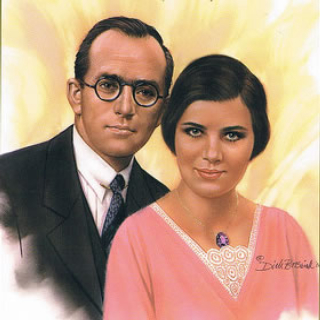 The year 1934. Americans John and Betty Stam were serving as missionaries in China. One morning Betty was bathing her three-month-old daughter Helen Priscilla Stam when Tsingteh's city magistrate appeared. Communist forces were near, he warned, and urged the Stams to flee.
So John Stam went out to investigate the situation for himself. He received conflicting reports. Taking no chances, he arranged for Betty and the baby to be escorted away to safety if need be. But before the Stams could make their break, the Communists were inside the city. By little-known paths, they had streamed over the mountains behind government troops. Now gun shots sounded in the streets as looting began. The enemy beat on the Stams' own gate.
A faithful cook and maid at the mission station had stayed behind. The Stams knelt with them in prayer. But the invaders were pounding at the door. John opened it and spoke courteously to the four leaders who entered, asking them if they were hungry. Betty brought them tea and cakes. The courtesy meant nothing. They demanded all the money the Stams had, and John handed it over. As the men bound him, he pleaded for the safety of his wife and child. The Communists left Betty and Helen behind as they led John off to their headquarters.
Before long, they reappeared, demanding mother and child. The maid and cook pleaded to be allowed to accompany Betty.
"No," barked the captors, and threatened to shoot.
"It is better for you to stay here," Betty whispered. "If anything happens to us, look after the baby."
[When we consecrate ourselves to God, we think we are making a great sacrifice, and doing lots for Him, when really we are only letting go some little, bitsie trinkets we have been grabbing, and when our hands are empty, He fills them full of His treasures. --Betty Stam]
Betty was led to her husband's side. Little Helen needed some things and John was allowed to return home under guard to fetch them. But everything had been stolen. That night John was allowed to write a letter to mission authorities. "My wife, baby and myself are today in the hands of the Communists in the city of Tsingteh. Their demand is twenty thousand dollars for our release. . . . We were too late. The Lord bless and guide you. As for us, may God be glorified, whether by life or by death."
Prisoners in the local jail were released to make room for the Stams. Frightened by rifle fire, the baby cried out. One of the Reds said, "Let's kill the baby. It is in our way." A bystander asked, "Why kill her? What harm has she done?"
"Are you a Christian?" shouted one of the guards.
The man said he was not; he was one of the prisoners just released.
"Will you die for this foreign baby?" they asked. As Betty hugged Helen to her chest, the man was hacked to pieces before her eyes.
Terror in the Streets
The next morning their captors led the Stams toward Miaosheo, twelve miles distant. John carried little Helen, but Betty, who was not physically strong, owing to a youthful bout with inflammatory rheumatitis was allowed to ride a horse part of the way. Terror reigned in the streets of Miaosheo. Under guard, the foreign family was hustled into the postmaster's shop.
"Where are you going?" asked the postmaster, who recognized them from their previous visits to his town. "We do not know where they are going, but we are going to heaven," answered John. He left a letter with the postmaster. "I tried to persuade them to let my wife and baby go back from Tsingteh with a letter to you, but they would not let her. . . ."
That night the three were held in the house of a wealthy man who had fled. They were guarded by soldiers. John was tied to a post all that cold night, but Betty was allowed enough freedom to tend the baby. As it turned out, she did more than that.
Execution
The next morning the young couple were led through town without the baby. Their hands were tightly bound, and they were stripped of their outer garments as if they were common criminals. John walked barefoot. He had given his socks to Betty. The soldiers jeered and called the town’s folk to come see the execution. The terrified people obeyed.
On the way to the execution, a medicine-seller, considered a lukewarm Christian at best, stepped from the crowd and pleaded for the lives of the two foreigners. The Reds angrily ordered him back. The man would not be stilled. His house was searched, a Bible and hymnbook found, and he, too was dragged away to die as a hated Christian.
John pleaded for the man’s life. The Red leader sharply ordered him to kneel. As John was speaking softly, the Red leader swung his sword through the missionary’s throat so that his head was severed from his body. Betty did not scream. She quivered and fell bound beside her husband’s body. As she knelt there, the same sword ended her life with a single blow.
Betty
Betty Scott was born in the United States but reared in China as the daughter of missionaries. She came to the United States and attended Wilson College in Pennsylvania. Betty prepared to follow in her parents’ footsteps and work in China or wherever else the Lord directed her.
But China it proved to be. At a prayer meeting for China, she met John Stam and a friendship developed that ripened into love. Painfully they recognized that marriage was not yet possible. “The China Inland Mission has appealed for men, single men, to work in sections where it would be impossible to take a woman until more settled work has commenced,” wrote John. He committed the matter to the Lord, whose work, he felt, must come before any human affection. At any rate, Betty would be leaving for China before him, to work in an entirely different region, and so they must be separated anyhow. As a matter of fact, John had not yet even been accepted by the China Inland Mission whereas Betty had. They parted after a long tender day, sharing their faith, picnicking, talking, and praying.
Betty sailed while John continued his studies. On July 1, 1932, John, too, was accepted for service in China. Now at least he could head toward the same continent as Betty. He sailed for Shanghai.
Meanwhile, Betty found her plans thwarted. A senior missionary had been captured by the Communists in the region where she was to have worked. The mission directors decided to keep her in a temporary station, and later ill-health brought her to Shanghai. Thus without any choice on her part, she was in Shanghai when John landed in China. Immediately they became engaged and a year later were married, long before they expected it. In October, 1934 Helen Priscilla was born to them. What would become of her now that her parents John and Betty were dead?
In the Hills
For two days, local Christians huddled in hiding in the hills around Miaosheo. Among them was a Chinese evangelist named Mr. Lo. Through informants, he learned that the Communists had captured two foreigners. At first he did not realize that these were John and Betty Stam, with whom he had worked, but as he received more details, he put two and two together. As soon as government troops entered the valley and it was safe to venture forth, Mr. Lo hurried to town. His questions met with silence. Everyone was fearful that spies might report anyone who said too much.
An old woman whispered to Pastor Lo that there was a baby left behind. She nodded in the direction of the house where John and Betty had been chained their last night on earth. Pastor Lo hurried to the site and found room after room trashed by the bandits. Then he heard a muffled cry. Tucked by her mother in a little sleeping bag, Helen was warm and alive, although hungry after her two day fast.
The kindly pastor took the child in his arms and carried her to his wife. With the help of a local Christian family, he wrapped the bodies that still lay upon the hillside and placed them into coffins. To the crowd that gathered he explained that the missionaries had only come to tell them how they might find forgiveness of sin in Christ. Leaving others to bury the dead, he hurried home. Somehow Helen had to be gotten to safety.
Pastor Lo's own son, a boy of four, was desperately ill -- semi-conscious after days of exposure. Pastor Lo had to find a way to carry the children a hundred miles through mountains infested by bandits and Communists. Brave men were found willing to help bear the children to safety, but there was no money to pay them for their efforts. Lo had been robbed of everything he had.
From Beyond the Grave
But from beyond the grave, Betty provided. Tucked in Helen's sleeping bag were a change of clothes and some diapers. Pinned between these articles of clothing were two five dollar bills. It made the difference.
Placing the children in rice baskets slung from the two ends of a bamboo pole, the group departed quietly, taking turns carrying the precious cargo over their shoulders. Mrs. Lo was able to find Chinese mothers along the way to nurse Helen. On foot, they came safely through their perils. Lo's own boy recovered consciousness suddenly and sat up, singing a hymn.
Eight days after the Stams fell into Communist hands, another missionary in a nearby city heard a rap at his door. He opened it and a Chinese woman, stained with travel, entered the house, bearing a bundle in her arms. "This is all we have left," she said brokenly.
The missionary took the bundle and turned back the blanket to uncover the sleeping face of Helen Priscilla Stam. Many kind hands had labored to preserve the infant girl, but none kinder than Betty who had spared no effort for her baby even as she herself faced degradation and death.
Kathleen White has written an excellent and very readable biography John and Betty Stam, available from Bethany House Publishers (1988). She reports that Betty's alma mater, Wilson College in Pennsylvania, took over baby Helen's support and covered the costs of her college education. She added: "Helen is living in this country (USA) with her husband and family but does not wish her identity and whereabouts to be made known."
Resources:
Huizenga, Lee S. John and Betty Stam; Martyrs. Zondervan, 1935.
Pollock, John. Victims of the Long March and Other Stories. Waco, Texas.: Word Publishing, 1970.
Taylor, Mrs. Howard. The Triumph of John and Betty Stam. China Inland Mission, 1935.
The year 1934. Americans John and Betty Stam were serving as missionaries in China. One morning Betty was bathing her three-month-old daughter Helen Priscilla Stam when Tsingteh's city magistrate appeared. Communist forces were near, he warned, and urged the Stams to flee.
So John Stam went out to investigate the situation for himself. He received conflicting reports. Taking no chances, he arranged for Betty and the baby to be escorted away to safety if need be. But before the Stams could make their break, the Communists were inside the city. By little-known paths, they had streamed over the mountains behind government troops. Now gun shots sounded in the streets as looting began. The enemy beat on the Stams' own gate.
A faithful cook and maid at the mission station had stayed behind. The Stams knelt with them in prayer. But the invaders were pounding at the door. John opened it and spoke courteously to the four leaders who entered, asking them if they were hungry. Betty brought them tea and cakes. The courtesy meant nothing. They demanded all the money the Stams had, and John handed it over. As the men bound him, he pleaded for the safety of his wife and child. The Communists left Betty and Helen behind as they led John off to their headquarters.
Before long, they reappeared, demanding mother and child. The maid and cook pleaded to be allowed to accompany Betty.
"No," barked the captors, and threatened to shoot.
"It is better for you to stay here," Betty whispered. "If anything happens to us, look after the baby."
[When we consecrate ourselves to God, we think we are making a great sacrifice, and doing lots for Him, when really we are only letting go some little, bitsie trinkets we have been grabbing, and when our hands are empty, He fills them full of His treasures. --Betty Stam]
Betty was led to her husband's side. Little Helen needed some things and John was allowed to return home under guard to fetch them. But everything had been stolen. That night John was allowed to write a letter to mission authorities. "My wife, baby and myself are today in the hands of the Communists in the city of Tsingteh. Their demand is twenty thousand dollars for our release. . . . We were too late. The Lord bless and guide you. As for us, may God be glorified, whether by life or by death."
Prisoners in the local jail were released to make room for the Stams. Frightened by rifle fire, the baby cried out. One of the Reds said, "Let's kill the baby. It is in our way." A bystander asked, "Why kill her? What harm has she done?"
"Are you a Christian?" shouted one of the guards.
The man said he was not; he was one of the prisoners just released.
"Will you die for this foreign baby?" they asked. As Betty hugged Helen to her chest, the man was hacked to pieces before her eyes.
Terror in the Streets
The next morning their captors led the Stams toward Miaosheo, twelve miles distant. John carried little Helen, but Betty, who was not physically strong, owing to a youthful bout with inflammatory rheumatitis was allowed to ride a horse part of the way. Terror reigned in the streets of Miaosheo. Under guard, the foreign family was hustled into the postmaster's shop.
"Where are you going?" asked the postmaster, who recognized them from their previous visits to his town. "We do not know where they are going, but we are going to heaven," answered John. He left a letter with the postmaster. "I tried to persuade them to let my wife and baby go back from Tsingteh with a letter to you, but they would not let her. . . ."
That night the three were held in the house of a wealthy man who had fled. They were guarded by soldiers. John was tied to a post all that cold night, but Betty was allowed enough freedom to tend the baby. As it turned out, she did more than that.
Execution
The next morning the young couple were led through town without the baby. Their hands were tightly bound, and they were stripped of their outer garments as if they were common criminals. John walked barefoot. He had given his socks to Betty. The soldiers jeered and called the town’s folk to come see the execution. The terrified people obeyed.
On the way to the execution, a medicine-seller, considered a lukewarm Christian at best, stepped from the crowd and pleaded for the lives of the two foreigners. The Reds angrily ordered him back. The man would not be stilled. His house was searched, a Bible and hymnbook found, and he, too was dragged away to die as a hated Christian.
John pleaded for the man’s life. The Red leader sharply ordered him to kneel. As John was speaking softly, the Red leader swung his sword through the missionary’s throat so that his head was severed from his body. Betty did not scream. She quivered and fell bound beside her husband’s body. As she knelt there, the same sword ended her life with a single blow.
Betty
Betty Scott was born in the United States but reared in China as the daughter of missionaries. She came to the United States and attended Wilson College in Pennsylvania. Betty prepared to follow in her parents’ footsteps and work in China or wherever else the Lord directed her.
But China it proved to be. At a prayer meeting for China, she met John Stam and a friendship developed that ripened into love. Painfully they recognized that marriage was not yet possible. “The China Inland Mission has appealed for men, single men, to work in sections where it would be impossible to take a woman until more settled work has commenced,” wrote John. He committed the matter to the Lord, whose work, he felt, must come before any human affection. At any rate, Betty would be leaving for China before him, to work in an entirely different region, and so they must be separated anyhow. As a matter of fact, John had not yet even been accepted by the China Inland Mission whereas Betty had. They parted after a long tender day, sharing their faith, picnicking, talking, and praying.
Betty sailed while John continued his studies. On July 1, 1932, John, too, was accepted for service in China. Now at least he could head toward the same continent as Betty. He sailed for Shanghai.
Meanwhile, Betty found her plans thwarted. A senior missionary had been captured by the Communists in the region where she was to have worked. The mission directors decided to keep her in a temporary station, and later ill-health brought her to Shanghai. Thus without any choice on her part, she was in Shanghai when John landed in China. Immediately they became engaged and a year later were married, long before they expected it. In October, 1934 Helen Priscilla was born to them. What would become of her now that her parents John and Betty were dead?
In the Hills
For two days, local Christians huddled in hiding in the hills around Miaosheo. Among them was a Chinese evangelist named Mr. Lo. Through informants, he learned that the Communists had captured two foreigners. At first he did not realize that these were John and Betty Stam, with whom he had worked, but as he received more details, he put two and two together. As soon as government troops entered the valley and it was safe to venture forth, Mr. Lo hurried to town. His questions met with silence. Everyone was fearful that spies might report anyone who said too much.
An old woman whispered to Pastor Lo that there was a baby left behind. She nodded in the direction of the house where John and Betty had been chained their last night on earth. Pastor Lo hurried to the site and found room after room trashed by the bandits. Then he heard a muffled cry. Tucked by her mother in a little sleeping bag, Helen was warm and alive, although hungry after her two day fast.
The kindly pastor took the child in his arms and carried her to his wife. With the help of a local Christian family, he wrapped the bodies that still lay upon the hillside and placed them into coffins. To the crowd that gathered he explained that the missionaries had only come to tell them how they might find forgiveness of sin in Christ. Leaving others to bury the dead, he hurried home. Somehow Helen had to be gotten to safety.
Pastor Lo's own son, a boy of four, was desperately ill -- semi-conscious after days of exposure. Pastor Lo had to find a way to carry the children a hundred miles through mountains infested by bandits and Communists. Brave men were found willing to help bear the children to safety, but there was no money to pay them for their efforts. Lo had been robbed of everything he had.
From Beyond the Grave
But from beyond the grave, Betty provided. Tucked in Helen's sleeping bag were a change of clothes and some diapers. Pinned between these articles of clothing were two five dollar bills. It made the difference.
Placing the children in rice baskets slung from the two ends of a bamboo pole, the group departed quietly, taking turns carrying the precious cargo over their shoulders. Mrs. Lo was able to find Chinese mothers along the way to nurse Helen. On foot, they came safely through their perils. Lo's own boy recovered consciousness suddenly and sat up, singing a hymn.
Eight days after the Stams fell into Communist hands, another missionary in a nearby city heard a rap at his door. He opened it and a Chinese woman, stained with travel, entered the house, bearing a bundle in her arms. "This is all we have left," she said brokenly.
The missionary took the bundle and turned back the blanket to uncover the sleeping face of Helen Priscilla Stam. Many kind hands had labored to preserve the infant girl, but none kinder than Betty who had spared no effort for her baby even as she herself faced degradation and death.
Kathleen White has written an excellent and very readable biography John and Betty Stam, available from Bethany House Publishers (1988). She reports that Betty's alma mater, Wilson College in Pennsylvania, took over baby Helen's support and covered the costs of her college education. She added: "Helen is living in this country (USA) with her husband and family but does not wish her identity and whereabouts to be made known."
Resources:
Huizenga, Lee S. John and Betty Stam; Martyrs. Zondervan, 1935.
Pollock, John. Victims of the Long March and Other Stories. Waco, Texas.: Word Publishing, 1970.
Taylor, Mrs. Howard. The Triumph of John and Betty Stam. China Inland Mission, 1935.
finding joy in the dark - the bold prayer of psalm 70
I recently spent three days with a group of pastors, almost all our time devoted to deep sharing of our life stories. We laughed at the silly things we’ve done. We marveled at the lineaments of God’s grace. We wept over sins, wounds, and struggles, both past and present. I drove home pondering the fact that when ten tenderhearted, Jesus-loving, spiritually alive pastors get into a room and are honest with each other, we share stories of theft, pornography, broken families, paralyzing anxiety, suicidal thoughts, marital struggles, and unfulfilled longings. If there’s such brokenness in the histories and hearts of godly shepherds, what must be the inner reality of the sheep in our churches? Surrounded by such brokenness within and without, how can the people of God possibly hope to sustain their joy in God? The odds seem long and the situation bleak. But Psalm 70 gives me strong hope. May All Be Glad I’ve been drawn to Psalm 70:4 for many years, because it brings together two awesome truths that thrill the heart of every Christian Hedonist: May all who seek you rejoice and be glad in you! May those who love your salvation say evermore, “God is great!” Only a capacious heart could breathe such an expansive prayer. Notice that David isn’t content for just a few (or even most) seekers of God to rejoice. No, he longs for all to experience God-centered gladness. And David’s requesting more than just a flickering, intermittent passion for the glory of God among the people of God; rather, he prays for their lips and lives to communicate God’s worth continually , at all times, without interruption. This is a plus-sized prayer. It’s so big that many millions of people can (and have) fit inside it. David was surely praying it for himself. He was also praying it for those of his generation and all future generations. In fact, if we’re seeking God and loving God’s salvation, David’s prayer is for us. David is asking God to sweeten our joy and strengthen our passion for his glory. He doesn’t specify how these two prayers might fit together, but John Piper has helped many of us treasure the biblical teaching that they are in fact one. As we find our deepest joy in God (“in you”), we display his worth to the world. Bold Prayer in Dark Days Though I’ve loved Psalm 70:4 for years, it wasn’t until recently that I noticed the context. And it’s the context that has filled me with hope. Here’s what I’ve noticed: Psalm 70 is not a sunny psalm. It’s not a walk in the park or a day at the beach. Life is not good in this psalm. Instead, it’s hard — very hard. In fact, the psalm is an almost-unremittingly desperate plea for God’s help. Verse 1 (the first verse) and verse 5 (the last verse) are bookends: Make haste, O God, to deliver me! O Lord, make haste to help me! Hasten to me, O God! You are my help and my deliverer; O Lord, do not delay! There’s a focused urgency here. David sounds like a soldier pinned down by enemy fire, radioing desperately to central command. His enemies want David dead, and they gloat over David’s misfortunes (“Aha, Aha!” verse 3). We’ve already seen David’s response to this dark situation. He feels two overwhelming desires, one expected and the other exceptional. First, David wants out of the situation. In four out of five verses, he pleads with God for speedy deliverance. This reaction is perfectly natural and completely understandable. Who wouldn’t want this? Of course, we’d all be asking for the same rescue. Second, however, the intense pressure of David’s circumstances also squeezes from his heart another cry, this one much more unusual. Stunningly, the request in verse 4 is not just for himself, but for others. It’s nothing short of miraculous that David, in his foxhole, under heavy fire, prays not simply for personal escape, but for gladness among all God’s people, and for the continual glorifying of God. What is going on here? Praying in a Sea of Suffering Some of us hear the Bible’s repeated calls to pursue our joy and believe that it’s simply beyond us in our present state. For the moment, our attention is occupied by other matters: sin, sickness, loneliness, financial difficulty, opposition, relational pain. We feel we’re in the 101 class of “Surviving Our Problems” and not quite ready for the 201 class of “Pursuing Our Joy.” Verse 4, we think, is for people who have it all together (or at least more together). “Christian Hedonism is as much for bleak days as it is for bright ones.” And this is why the context of verse 4 is so challenging and so encouraging, because verse 4 exists in a sea of suffering. David doesn’t say, “Once I get free from my enemies, then I’ll start to care about the gladness of God’s people and the glory of God.” His foxhole prayer, in worrying and uncomfortable circumstances, is for gladness and glory. This is a real-world prayer. Christian Hedonism is as much for bleak days as it is for bright ones. If God can work this extraordinary impulse in David’s heart, why can’t he do the same in us? Why can’t he implant a renewed passion for our joy and his glory even in the midst of intense suffering? Could it be that God might even use the desperation of our brokenness to drive us to him? In his poem “The Storm,” George Herbert ponders how, like the violent force of a terrible rainstorm, A throbbing conscience spurred by remorse Hath a strange force: It quits the earth, and mounting more and more, Dares to assault thee, and besiege thy doore. (lines 10–12) Our inner and outer conflicts may produce something good. “They purge the aire without, within the breast” (line 18). This was certainly the case for David in Psalm 70. His desperation yielded a passionate cry to God that continues to encourage followers of God to this day. Seek and Rest You can pray a David-like prayer in your own bleak situation by taking two cues from David himself. “Joy and gladness are the unassailable possession of those who fix their eyes on Jesus in the storms of life.” First, seek God. “May all who seek you rejoice and be glad in you!” Joy and gladness are the unassailable possession of those who fix their eyes on Jesus in the storms of life. Look more deeply and more often at Jesus than you look at your enemies or your troubles. Second, love God’s salvation. “May those who love your salvation say evermore, ‘God is great!’” Consider frequently how God has saved you (and how he’s saving many others). Delight in this salvation. Rest in it. Love it. The more you love your salvation, the more readily your lips will spill over with natural praise of the God who saved you. Please don’t wait to pursue your joy in God until God has healed your brokenness and resolved your problems. Verse 4 isn’t a postscript to Psalm 70; it doesn’t come after David’s crisis. It emerges from the midst of it. This is an example and invitation for us. Don’t wait to pursue your joy. Start right now.

-480.webp)