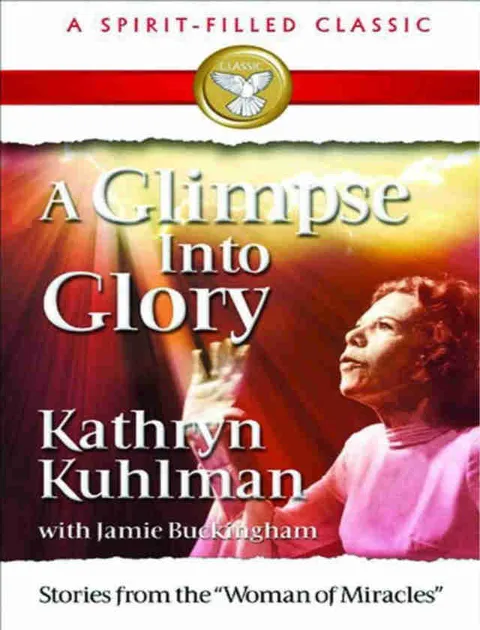

Others like glimpse into glory Features >>
Golden Glory - The New Wave Of Signs And Wonders
The Assignment Vol 2: The Anointing And The Adversity
Supernatural Deliverance
-160.webp)
Know Your Enemy: How To Combat And Overcome Demonic Forces
Take Possession Of Your Inheritance
Regions Of Captivity
Excellency Of Wisdom
Unshakable Faith

No Fear Here
Spiritual Timing
About the Book
"Glimpse into Glory" by Kathryn Kuhlman is a book that offers insights into the miraculous healing power of God through the personal experiences and testimonies of the author. Kuhlman shares stories of divine intervention and spiritual encounters that demonstrate the presence of God's glory and love in our lives. The book encourages readers to have faith and trust in God's power to bring healing and transformation to their lives.
George Eldon Ladd
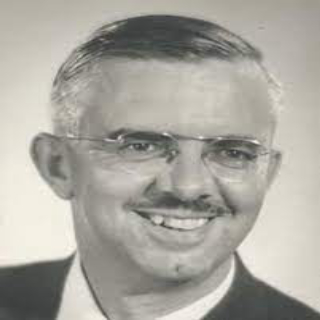
He Saw God Through His Pen: George Herbert
If you go to the mainstream poetry website Poetry Foundation and click on George Herbert’s name, what you read is this: “He is . . . enormously popular, deeply and broadly influential, and arguably the most skillful and important British devotional lyricist of this or any other time.” This is an extraordinary tribute to a man who never published a single poem in English during his lifetime and died as an obscure country pastor when he was 39. But there are reasons for his enduring influence. His Short Life George Herbert was born April 3, 1593, in Montgomeryshire, Wales. He was the seventh of ten children born to Richard and Magdalene Herbert, but his father died when he was three, leaving ten children, the oldest of which was 13. This didn’t put them in financial hardship, however, because Richard’s estate, which he left to Magdalene, was sizable. Herbert was an outstanding student at a Westminster preparatory school, writing Latin essays when he was eleven years old, which would later be published. At Cambridge, he distinguished himself in the study of classics. He graduated second in a class of 193 in 1612 with a bachelor of arts, and then in 1616, he took his master of arts and became a major fellow of the university. “Herbert’s aim was to feel the love of God and to engrave it in the steel of human language for others to see and feel.” In 1619, he was elected public orator of Cambridge University. This was a prestigious post with huge public responsibility. A few years later, however, the conflict of his soul over a call to the pastoral ministry intensified. And a vow he had made to his mother during his first year at Cambridge took hold in his heart. He submitted himself totally to God and to the ministry of a parish priest. He was ordained as a deacon in the Church of England in 1626 and then became the ordained priest of the little country church at Bemerton in 1630. There were never more than a hundred people in his church. At the age of 36 and in failing health, Herbert married Jane Danvers the year before coming to Bemerton, March 5, 1629. He and Jane never had children, though they adopted three nieces who had lost their parents. Then, on March 1, 1633, after fewer than three years in the ministry, and just a month before his fortieth birthday, Herbert died of tuberculosis, which he had suffered from most of his adult life. His body lies under the chancel of the church, and there is only a simple plaque on the wall with the initials GH. His Dying Gift That’s the bare outline of Herbert’s life. And if that were all there was, nobody today would have ever heard of George Herbert. The reason anyone knows of him today is because of something climactic that happened a few weeks before he died. His close friend Nicholas Ferrar sent a fellow pastor, Edmund Duncon, to see how Herbert was doing. On Duncon’s second visit, Herbert knew that the end was near. So he reached for his most cherished earthly possession and said to Duncon, Sir, I pray deliver this little book to my dear brother Ferrar, and tell him he shall find in it a picture of the many spiritual conflicts that have passed betwixt God and my soul, before I could subject mine to the will of Jesus my Master, in whose service I have now found perfect freedom; desire him to read it: and then, if he can think it may turn to the advantage of any dejected poor soul, let it be made public; if not, let him burn it; for I and it are less than the least of God’s mercies. (The Life of Mr. George Herbert, 310–11) That little book was a collection of 167 poems. Herbert’s friend Nicholas Ferrar published it later that year, 1633, under the title The Temple. It went through four editions in three years, was steadily reprinted for a hundred years, and is still in print today. Though not one of these poems was published during his lifetime, The Temple established Herbert as one of the greatest religious poets of all time, and one of the most gifted craftsmen the world of poetry has ever known. “The effort to say more about the glory than you have ever said is a way of seeing more than you have ever seen.” Poetry was for Herbert a way of seeing and savoring and showing the wonders of Christ. The central theme of his poems was the redeeming love of Christ, and he labored with all his literary might to see it clearly, feel it deeply, and show it strikingly. What we are going to see, however, is not only that the beauty of the subject inspired the beauty of the poetry, but more surprisingly, the effort to find beautiful poetic form helped Herbert see more of the beauty of his subject. The craft of poetry opened more of Christ for Herbert — and for us. Secretary of God’s Praise On the one hand, Herbert was moved to write with consummate skill because his only subject was consummately glorious. “The subject of every single poem in The Temple,” Helen Wilcox says, “is, in one way or another, God” (English Poems of George Herbert, xxi). He writes in his poem “The Temper (I),” How should I praise thee, Lord! how should my rymes Gladly engrave thy love in steel, If what my soul doth feel sometimes, My soul might ever feel! Herbert's aim was to feel the love of God and to engrave it in the steel of human language for others to see and feel. Poetry was entirely for God, because everything is entirely for God. More than that, Herbert believed that since God ruled all things by his sacred providence, everything revealed God. Everything spoke of God. The role of the poet is to be God’s echo. Or God’s secretary. To me, Herbert’s is one of the best descriptions of the Christian poet: “Secretarie of thy praise.” O Sacred Providence, who from end to end Strongly and sweetly movest! shall I write, And not of thee, through whom my fingers bend To hold my quill? shall they not do thee right? Of all the creatures both in sea and land Only to Man thou hast made known thy wayes, And put the penne alone into his hand, And made him Secretarie of thy praise. God bends Herbert’s fingers around his quill. “Shall they not do thee right?” Shall I not be a faithful secretary of thy praise — faithfully rendering — beautifully rendering — the riches of your truth and beauty? Saying Leads to Seeing But Herbert discovered, in his role as the secretary of God’s praise, that the poetic effort to speak the riches of God’s greatness also gave him deeper sight into that greatness. Writing poetry was not merely the expression of his experience with God that he had before the writing. The writing was part of the experience of God. Probably the poem that says this most forcefully is called “The Quidditie” — that is, the essence of things. And his point is that poetic verses are nothing in themselves, but are everything if he is with God in them. My God, a verse is not a crown, No point of honour, or gay suit, No hawk, or banquet, or renown, Nor a good sword, nor yet a lute: It cannot vault, or dance, or play; It never was in France or Spain; Nor can it entertain the day With a great stable or demain: It is no office, art, or news; Nor the Exchange, or busie Hall; But it is that which while I use I am with Thee, and Most take all. “The craft of poetry opened more of Christ for Herbert — and for us.” His poems are “that which while I use I am with Thee.” As Helen Wilcox says, “This phrase makes clear that it is not the finished ‘verse’ itself which brings the speaker close to God, but the act of ‘using’ poetry — a process which presumably includes writing, revising, and reading” (English Poems of George Herbert, 255). For Herbert, this experience of seeing and savoring God was directly connected with the care and rigor and subtlety and delicacy of his poetic effort — his craft, his art. For Poor, Dejected Souls Yet Herbert had in view more than the joys of his own soul as he wrote. He wrote (and dreamed of publishing after death) with a view of serving the church. As he said to his friend Nicholas Ferrar, “[If you] can think it may turn to the advantage of any dejected poor soul, let it be made public.” And this is, in fact, what has happened. People have met God in Herbert’s poems, and their lives have been changed. Joseph Summers said of Herbert’s poems, “We can only recognize . . . the immediate imperative of the greatest art: ‘You must change your life’” (George Herbert, 190). Simone Weil, the twentieth-century French philosopher, was totally agnostic toward God and Christianity but encountered Herbert’s poem “Love (III)” and became a kind of Christian mystic, calling this poem “the most beautiful poem in the world” (English Poems of George Herbert, xxi). Love (III) Love bade me welcome: yet my soul drew back, Guiltie of dust and sinne. But quick-ey’d Love, observing me grow slack From my first entrance in, Drew nearer to me, sweetly questioning If I lack’d any thing. A guest, I answer’d, worthy to be here: Love said, you shall be he. I the unkinde, ungratefull? Ah my deare, I cannot look on thee. Love took my hand, and smiling did reply, Who made the eyes but I? Truth Lord, but I have marr’d them: let my shame Go where it doth deserve. And know you not, sayes Love, who bore the blame? My deare, then I will serve. You must sit down, sayes Love, and taste my meat: So I did sit and eat. Herbert had struggled all his life to know that Love’s yoke is easy and its burden is light. He had come to find that this is true. And he ended his poems and his life with an echo of the most astonishing expression of it in all the Bible: The King of kings will “dress himself for service and have them recline at table, and he will come and serve them” (Luke 12:37). You must sit down, sayes Love, and taste my meat: So I did sit and eat. This is the end of the matter. No more striving. No more struggle. No more “spiritual conflicts [passing] betwixt God and my soul.” Instead, Love himself serves the poet’s soul as he sits and receives. Words as a Way of Seeing Worth George Herbert found, as most poets have, that the effort to put the glimpse of glory into striking or moving words makes the glimpse grow. The poetic effort to say beautifully was a way of seeing beauty. The effort to find worthy words for Christ opens to us more fully the worth of Christ — and the experience of the worth of Christ. As Herbert says of his own poetic effort, “It is that which, while I use, I am with thee.” “The poetic effort to speak the riches of God’s greatness gave Herbert deeper sight into that greatness.” I will close with an exhortation for everyone who is called to speak about great things. It would be fruitful for your own soul, and for the people you speak to, if you also made a poetic effort to see and savor and show the glories of Christ. I don’t mean the effort to write poetry. Very few are called to do that. I mean the effort to see and savor and show the glories of Christ by giving some prayerful effort to finding striking, penetrating, and awakening ways of saying the excellencies that we see. Preachers have this job supremely. But all of us, Peter says, are called out of darkness to “proclaim the excellencies” (1 Peter 2:9). And my point here for all of us is that the effort to put the excellencies into worthy words is a way of seeing the worth of the excellencies. The effort to say more about the glory than you have ever said is a way of seeing more than you have ever seen. Therefore, I commend poetic effort to you. And I commend one of its greatest patrons, the poet-pastor George Herbert. Article by John Piper