
Others like the go-giver Features >>
-160.webp)




About the Book
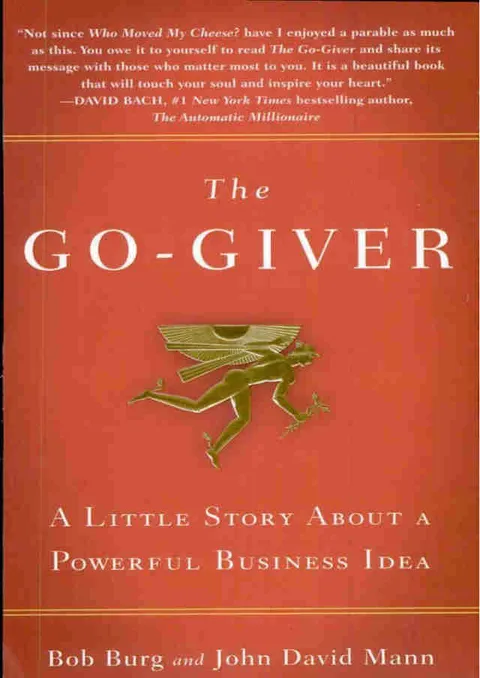
"The Go-Giver" by Bob Burg is a modern parable about the power of giving and creating value for others in order to achieve success and fulfillment in both personal and professional life. The book follows the journey of a young, ambitious salesman named Joe who learns valuable lessons about the five laws of stratospheric success from a wise mentor named Pindar. Through these lessons, Joe discovers that true success comes from giving rather than receiving, and that by focusing on serving others and adding value, one can unlock limitless opportunities for growth and happiness.
William Carey
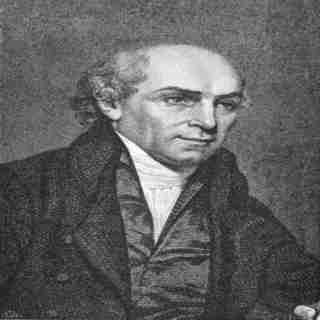 "Expect great things; attempt great things."
At a meeting of Baptist leaders in the late 1700s, a newly ordained minister stood to argue for the value of overseas missions. He was abruptly interrupted by an older minister who said, "Young man, sit down! You are an enthusiast. When God pleases to convert the heathen, he'll do it without consulting you or me."
That such an attitude is inconceivable today is largely due to the subsequent efforts of that young man, William Carey.
Plodder Carey was raised in the obscure, rural village of Paulerpury, in the middle of England. He apprenticed in a local cobbler's shop, where the nominal Anglican was converted. He enthusiastically took up the faith, and though little educated, the young convert borrowed a Greek grammar and proceeded to teach himself New Testament Greek.
When his master died, he took up shoemaking in nearby Hackleton, where he met and married Dorothy Plackett, who soon gave birth to a daughter. But the apprentice cobbler's life was hard—the child died at age 2—and his pay was insufficient. Carey's family sunk into poverty and stayed there even after he took over the business.
"I can plod," he wrote later, "I can persevere to any definite pursuit." All the while, he continued his language studies, adding Hebrew and Latin, and became a preacher with the Particular Baptists. He also continued pursuing his lifelong interest in international affairs, especially the religious life of other cultures.
Carey was impressed with early Moravian missionaries and was increasingly dismayed at his fellow Protestants' lack of missions interest. In response, he penned An Enquiry into the Obligations of Christians to Use Means for the Conversion of the Heathens. He argued that Jesus' Great Commission applied to all Christians of all times, and he castigated fellow believers of his day for ignoring it: "Multitudes sit at ease and give themselves no concern about the far greater part of their fellow sinners, who to this day, are lost in ignorance and idolatry."
Carey didn't stop there: in 1792 he organized a missionary society, and at its inaugural meeting preached a sermon with the call, "Expect great things from God; attempt great things for God!" Within a year, Carey, John Thomas (a former surgeon), and Carey's family (which now included three boys, and another child on the way) were on a ship headed for India.
Stranger in a strange land
Thomas and Carey had grossly underestimated what it would cost to live in India, and Carey's early years there were miserable. When Thomas deserted the enterprise, Carey was forced to move his family repeatedly as he sought employment that could sustain them. Illness racked the family, and loneliness and regret set it: "I am in a strange land," he wrote, "no Christian friend, a large family, and nothing to supply their wants." But he also retained hope: "Well, I have God, and his word is sure."
He learned Bengali with the help of a pundit, and in a few weeks began translating the Bible into Bengali and preaching to small gatherings.
When Carey himself contracted malaria, and then his 5-year-old Peter died of dysentery, it became too much for his wife, Dorothy, whose mental health deteriorated rapidly. She suffered delusions, accusing Carey of adultery and threatening him with a knife. She eventually had to be confined to a room and physically restrained.
"This is indeed the valley of the shadow of death to me," Carey wrote, though characteristically added, "But I rejoice that I am here notwithstanding; and God is here."
Gift of tongues
In October 1799, things finally turned. He was invited to locate in a Danish settlement in Serampore, near Calcutta. He was now under the protection of the Danes, who permitted him to preach legally (in the British-controlled areas of India, all of Carey's missionary work had been illegal).
Carey was joined by William Ward, a printer, and Joshua and Hanna Marshman, teachers. Mission finances increased considerably as Ward began securing government printing contracts, the Marshmans opened schools for children, and Carey began teaching at Fort William College in Calcutta.
In December 1800, after seven years of missionary labor, Carey baptized his first convert, Krishna Pal, and two months later, he published his first Bengali New Testament. With this and subsequent editions, Carey and his colleagues laid the foundation for the study of modern Bengali, which up to this time had been an "unsettled dialect."
Carey continued to expect great things; over the next 28 years, he and his pundits translated the entire Bible into India's major languages: Bengali, Oriya, Marathi, Hindi, Assamese, and Sanskrit and parts of 209 other languages and dialects.
He also sought social reform in India, including the abolition of infanticide, widow burning (sati), and assisted suicide. He and the Marshmans founded Serampore College in 1818, a divinity school for Indians, which today offers theological and liberal arts education for some 2,500 students.
By the time Carey died, he had spent 41 years in India without a furlough. His mission could count only some 700 converts in a nation of millions, but he had laid an impressive foundation of Bible translations, education, and social reform.
His greatest legacy was in the worldwide missionary movement of the nineteenth century that he inspired. Missionaries like Adoniram Judson, Hudson Taylor, and David Livingstone, among thousands of others, were impressed not only by Carey's example, but by his words "Expect great things; attempt great things." The history of nineteenth-century Protestant missions is in many ways an extended commentary on the phrase.
"Expect great things; attempt great things."
At a meeting of Baptist leaders in the late 1700s, a newly ordained minister stood to argue for the value of overseas missions. He was abruptly interrupted by an older minister who said, "Young man, sit down! You are an enthusiast. When God pleases to convert the heathen, he'll do it without consulting you or me."
That such an attitude is inconceivable today is largely due to the subsequent efforts of that young man, William Carey.
Plodder Carey was raised in the obscure, rural village of Paulerpury, in the middle of England. He apprenticed in a local cobbler's shop, where the nominal Anglican was converted. He enthusiastically took up the faith, and though little educated, the young convert borrowed a Greek grammar and proceeded to teach himself New Testament Greek.
When his master died, he took up shoemaking in nearby Hackleton, where he met and married Dorothy Plackett, who soon gave birth to a daughter. But the apprentice cobbler's life was hard—the child died at age 2—and his pay was insufficient. Carey's family sunk into poverty and stayed there even after he took over the business.
"I can plod," he wrote later, "I can persevere to any definite pursuit." All the while, he continued his language studies, adding Hebrew and Latin, and became a preacher with the Particular Baptists. He also continued pursuing his lifelong interest in international affairs, especially the religious life of other cultures.
Carey was impressed with early Moravian missionaries and was increasingly dismayed at his fellow Protestants' lack of missions interest. In response, he penned An Enquiry into the Obligations of Christians to Use Means for the Conversion of the Heathens. He argued that Jesus' Great Commission applied to all Christians of all times, and he castigated fellow believers of his day for ignoring it: "Multitudes sit at ease and give themselves no concern about the far greater part of their fellow sinners, who to this day, are lost in ignorance and idolatry."
Carey didn't stop there: in 1792 he organized a missionary society, and at its inaugural meeting preached a sermon with the call, "Expect great things from God; attempt great things for God!" Within a year, Carey, John Thomas (a former surgeon), and Carey's family (which now included three boys, and another child on the way) were on a ship headed for India.
Stranger in a strange land
Thomas and Carey had grossly underestimated what it would cost to live in India, and Carey's early years there were miserable. When Thomas deserted the enterprise, Carey was forced to move his family repeatedly as he sought employment that could sustain them. Illness racked the family, and loneliness and regret set it: "I am in a strange land," he wrote, "no Christian friend, a large family, and nothing to supply their wants." But he also retained hope: "Well, I have God, and his word is sure."
He learned Bengali with the help of a pundit, and in a few weeks began translating the Bible into Bengali and preaching to small gatherings.
When Carey himself contracted malaria, and then his 5-year-old Peter died of dysentery, it became too much for his wife, Dorothy, whose mental health deteriorated rapidly. She suffered delusions, accusing Carey of adultery and threatening him with a knife. She eventually had to be confined to a room and physically restrained.
"This is indeed the valley of the shadow of death to me," Carey wrote, though characteristically added, "But I rejoice that I am here notwithstanding; and God is here."
Gift of tongues
In October 1799, things finally turned. He was invited to locate in a Danish settlement in Serampore, near Calcutta. He was now under the protection of the Danes, who permitted him to preach legally (in the British-controlled areas of India, all of Carey's missionary work had been illegal).
Carey was joined by William Ward, a printer, and Joshua and Hanna Marshman, teachers. Mission finances increased considerably as Ward began securing government printing contracts, the Marshmans opened schools for children, and Carey began teaching at Fort William College in Calcutta.
In December 1800, after seven years of missionary labor, Carey baptized his first convert, Krishna Pal, and two months later, he published his first Bengali New Testament. With this and subsequent editions, Carey and his colleagues laid the foundation for the study of modern Bengali, which up to this time had been an "unsettled dialect."
Carey continued to expect great things; over the next 28 years, he and his pundits translated the entire Bible into India's major languages: Bengali, Oriya, Marathi, Hindi, Assamese, and Sanskrit and parts of 209 other languages and dialects.
He also sought social reform in India, including the abolition of infanticide, widow burning (sati), and assisted suicide. He and the Marshmans founded Serampore College in 1818, a divinity school for Indians, which today offers theological and liberal arts education for some 2,500 students.
By the time Carey died, he had spent 41 years in India without a furlough. His mission could count only some 700 converts in a nation of millions, but he had laid an impressive foundation of Bible translations, education, and social reform.
His greatest legacy was in the worldwide missionary movement of the nineteenth century that he inspired. Missionaries like Adoniram Judson, Hudson Taylor, and David Livingstone, among thousands of others, were impressed not only by Carey's example, but by his words "Expect great things; attempt great things." The history of nineteenth-century Protestant missions is in many ways an extended commentary on the phrase.
enjoy your possessions before they possess you
Take an inventory of your life. What do you own right now? Whatever possessions you have are no accident, and not a product of mere happenstance. At the micro level, Jesus promises to care for even the minutest everyday details, like pocket money and food and clothes. As we see in Scripture, in these small possessions, God calls us to live with moral standards because we are susceptible to sinning our way into big problems (like unreasonable consumer debt). God calls us to be wise with money and to work and live economically fruitful lives, and to be careful with our possessions. At the macro level, all wealth distribution and re-distribution is the work of our sovereign God (Ecclesiastes 5:18–6:2). All of our possessions are his, and he gives (and takes away) as he sees fit. God makes the poor and he makes the rich (1 Samuel 2:7). So how does God decide to distribute wealth in the lives of his creatures? This plays out in many different ways. God may give you many possessions, but not give you the power to enjoy those gifts — a great tragedy (Ecclesiastes 6:1–2). God may give you accumulated wealth, and give you the power to enjoy those gifts — a great blessing (Ecclesiastes 5:19, Proverbs 10:22). God may give you possessions, but through future persecution, he may take all those possessions away from you in the end (Hebrews 10:34). God may call you to a life of unalleviated poverty (2 Corinthians 6:10; 8:9). God may give you a life of wealth (2 Chronicles 32:29). God may give you a life in the middle — neither poverty nor wealth (Proverbs 30:8). God may bless you with great wealth, then take it all away and reduce your portfolio to ash, and then restore you with doubled wealth (Job). God may make you wealthy and then call you to voluntary poverty in order to show the world that he is your greatest treasure (Matthew 19:21; Mark 10:21; Luke 18:22). None of these situations is normative, if God sovereignly dispenses possessions to us as he sees fit (which he does). When it comes to possessions, our experiences will vary greatly. But no matter how much (or how little) we possess, there are four things that will help us rightly enjoy the gifts God has given us. 1. Money is temporary. Money existed before us, and it will exist after us, too. The streams of commerce have been flowing for millennia, and one day we will be gone and the currents of economic stimulus will flow to the next generation. We exist in time with money and possessions, but everything of value we own will be passed on to others. Which means in a very real sense, money is temporary. It carries the face of a Caesar or a president to remind us its value is as temporary as world rulers and the rise and fall of nations. So give back to Caesar what is Caesar’s. In other words, the Christian is called to possess all things as though we don’t possess anything (1 Corinthians 7:30). Hold the money, use the money, save the money, steward the money. But also recognize the cash in our wallets is the Monopoly money of this present age. The cash itself has no eternal face value. We entered this life with empty hands, we leave it with empty hands, and to live in the middle with a lust for cash is like holding a sharp dagger backwards and gutting our own souls (1 Timothy 6:6–10). This is true of cars and houses, too. C.S. Lewis said the secret to genuinely delighting in one’s own house is through sacrifice, through a certain crucifixion of the self’s relationship to it. We sacrifice our house, we release our grip on it, and then it becomes an object of joy. When it comes to possessions, true delight is found on the other side of disinterest (Letters 2.788). The takeaway: We don’t boast in our possessions; we boast that God possesses us (Jeremiah 9:23–24). Here our stewardship comes into focus. Material blessing is our temporary stewardship, but delighting in God and his gifts is our true and eternal vocation. 2. Enjoy your possessions now. As we have seen, we don’t always know what God is doing in our lives when it comes to our material possessions. He has different plans for us all. But he intends all of his children to enjoy the gifts he has given us. If you have pants, a shirt, and a sandwich you can be content in life, and if you can be content with a little, you can enjoy God’s goodness to you in every one of the millions of simple gifts he gives to you every day (1 Timothy 6:8). In fact, few things in this life are better than to enjoy your life and the good gifts from God in a spirit of fear and obedience and faith toward God (Ecclesiastes 8:15; 9:7–10; 10:19; 12:13). If you are prone to grumble more than express gratitude, pray and ask that God would give you the power to enjoy his gifts rightly — a gift in itself. As the book of Ecclesiastes makes clear: One of the rarest and most precious gifts is the gift of enjoying our daily gifts. 3. Enjoy your possessions by sharing them. The man who cannot enjoy God’s good gifts every day is often the man who wrongly thinks he must own gifts before enjoying them. We don’t have to own something to find joy in it. Beautiful art is intended to be shared in museums and galleries, not to be locked in the secluded basement of a billionaire. The delight of exclusivity is a delusion — a false delight. Christians get this. The delight of sharing is what drove the early church to share everything they owned (Acts 2:45; 4:32; 1 John 3:17). They gave money. They cared for the poor. They helped the missionaries. A group of wealthy women funded gospel work (Luke 8:2–3). There is a special delight in our possessions when we don’t think of them as “mine” but make use of them to increase the delight of others. 4. Enjoy what you do not own. Finally — and perhaps the whole reason why I wrote this article in the first place — God calls us to enjoy what we can never possess. I cannot own many of the greatest gifts God has given me. I do not own my wife; I do not own my kids; I don’t own my time, or the oceans, or the rain, or the sunshine, or the majestic mountain ranges — certainly not in any sense in which I own my minivan (my name is on the title). The man who loves the ocean so much that he sells all that he has and buys a beachfront property with his own private sand and closes it off from others so that he can exclusively use it is the man whose joy will die by exclusivity. He cannot enjoy possessions because the possessions possess him. On the other hand, the man who buys beachfront property in order to freely share that property with his friends and family will find his joy doubled. By his seaside generosity, this man will bless many others in great ways. But perhaps the most blessed of all is the man who doesn’t need to own beachfront property at all. He has learned to enjoy every beach in the world for its sheer beauty. He is freed from the desire to enjoy only what he possesses. This seems to be the way Romans 1 pushes us to contemplate. To be truly human is to express a Godward gratitude in the delights of creation. And if that is true, then we discover that what it means to delight in this world is a category that explodes all the categories of what the world promises us in possession. Old Tom Bombadil The beautiful literary example of a man who delights in what he doesn’t possess is found in the character Tom Bombadil, tucked into the early storyline of Tolkien’s The Lord of the Rings. In the epic unfolding storyline, Tom Bombadil is a mysterious figure who is quick to laughter and who seems to live in a blessed state of joy. But his life also bears no impact on the central drama that is unfolding around him. (Thus, Tom Bombadil never appears in the movies.) Tom’s role in the overall story is subtle and easy to miss. Early in the journey, Frodo and company wander into his lands, into a respite of joy in stark contrast to the darkness they would soon face. “Who is Tom Bombadil?” a curious Frodo later asks Tom’s wife, Goldberry. “He is the Master of wood, water, and hill.” “Then all this strange land belongs to him?” “No, indeed!” No, indeed! The woods, the water, and the hills that fill Tom Bombadil with delight are not his to possess — they are his to tend and to enjoy. To be sure, Tom is not an allegory against owning property, nor is he an allegory for passivism. As Tolkien also makes clear, it will take warfare against Sauron to stop the encroaching evil in order to preserve the lifestyle that Tom and Goldberry enjoy. As if we need the confirmation, Tolkien makes it clear in his letters that Tom is an intentional enigma. Tom incarnates a contrast. Tom represents a soul that has been freed from the greed of possession in order to delight in created beauty. He has renounced control and therefore finds the means of power to be valueless, too. As a result, Tom Bombadil can hold Frodo’s great ring of power with no danger to himself or anyone else. The ring wields no power over Tom because Tom has no interest in possessing the power of the ring. When the lust for possession is broken, when gratitude takes its place, and when one can simply delight in the glories of creation, then some of evil’s darkest schemes in the human heart are broken. Tom Bombadil is a model of delighting in what we do not possess, and then of sharing what we do possess — like dinner fellowship around the yellow cream, honeycomb, white bread and butter at his table. May we shine like such glad-hearted, grateful enigmas in our own world.