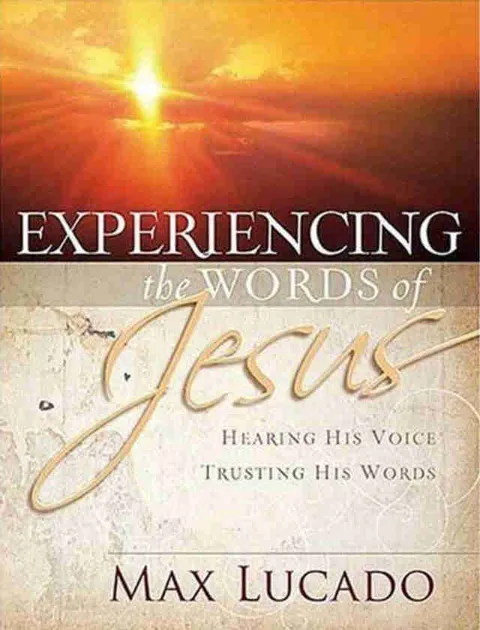

Others like experiencing the words of jesus Features >>
Experiencing The Presence Of God
Knowing The Heart Of God - A Year Of Daily Readings
Listening To The Whispers Of Jesus
The Songs Of Jesus

Finding Intimacy With Jesus Made Simple
Hungry For More Of Jesus

Water In The Wilderness
Fixing My Eyes On Jesus Daily
Practicing The Presence

Seeing And Savoring Jesus Christ
About the Book
"Experiencing the words of Jesus" by Max Lucado is a devotional book that focuses on exploring the teachings and parables of Jesus from the Bible. Through insightful reflections and practical applications, Lucado helps readers deepen their understanding of Jesus' words and apply them to their daily lives. The book serves as a guide for individuals seeking to grow in their faith and develop a closer relationship with God through the teachings of Jesus.
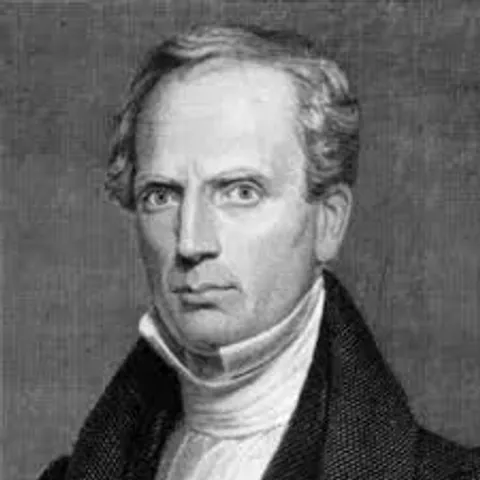
Charles Finney
 Childhood and Teen years
Charles Grandison Finney was born the year after Wesley died on 29th August, 1792 in Warren, Connecticut. In 1794 his family moved to New York state, eventually settling at Henderson, near Lake Ontario. Although he received only a brief formal education he decided to study law and joined the practice of a local lawyer, Benjamin Wright. He was also very musical, played the cello and directed the choir at the local Presbyterian Church pastured by Rev. George Gale.
His conversion
His conversion on October 10th 1821 reads like something out of the book of Acts. Smitten with conviction from Bible reading he decided to ‘settle the question of my soul’s salvation at once, that if it were possible, I would make my peace with God.’ (Autobiography)
This conviction increased to an unbearable level over the next couple of days and came to an head when he was suddenly confronted with an ‘inward voice.’ He was inwardly questioned about his spiritual condition and finally received revelation about the finished work of Christ and his own need to give up his sins and submit to Christ’s righteousness.
As he sought God in a nearby wood he was overwhelmed with an acute sense of his own wickedness and pride but finally submitted his life to Christ. Back at work that afternoon he was filled with a profound sense of tenderness, sweetness and peace. When work was over and he bade his employer goodnight, he then experienced a mighty baptism in the Holy Spirit, which was recorded as vividly as the day he experienced it, though it was penned some fifty years later.
The next morning Finney announced to a customer that he was leaving his law studies to become a preacher of the Gospel.
Charles Finney licensed to preach
He was licensed to preach in 1823 and ordained as an evangelist in 1824. His penetrating preaching was quite different from many local ministers and included an obvious attempt to break away from the traditional and, as he saw it, dead, orthodox Calvinism. He married to Lydia Andrews in October 1824 and was also joined by Daniel Nash (1774-1831), known popularly as ‘Father Nash.’ Undoubtedly Nash’s special ministry of prayer played a great part in Finney’s growing success as an evangelist.
Things really took off when he preached in his old church, where Rev. Gale still ministered. Numerous converts and critics followed! Similar results were experienced in nearby towns of Rome and Utica. Soon newspapers were reporting his campaigns and he began drawing large crowds with dramatic responses.
Soon he was preaching in the largest cities of the north with phenomenal results. Campaign after campaign secured thousands of converts.
The high point of Finney’s revival career was reached at Rochester, New York, during his 1830-1 meetings. Shopkeepers closed their businesses and the whole city seemed to centre on the revivalist. Responding to his irresistible logic and passionate arguments many of his converts were lawyers, merchants and those from a higher income and professional status.
His Preaching
Finney openly preached a modified Calvinism, influenced with his own theology of conversion and used what were perceived to be ‘revivalistic techniques.’
These ‘means’ included the use of the anxious bench (a special place for those under conviction), protracted meetings, women allowed to pray in mixed meetings, publicly naming those present resisting God in meetings and the hurried admission of new converts into church membership. Opponents viewed his preaching of the law as ‘scare tactics’ and his persuasive appeals for sinners to come to Christ for salvation were seen as over-emphasising the responsibility of men and ignoring the sovereignty of God.
His theology and practise soon became known as the ‘New Measures’ and attracted many opponents from the Old School Presbyterians led by Asahel Nettleton (himself no stranger to true revival and , the revivalistic Congregationalists headed by Lyman Beecher.
Pastor at Chatham Street Chapel
Finney accepted an appointment as pastor of Chatham Street Chapel in New York City in 1832 where he remained until 1837. It was during this time that he delivered a series of sermons published in 1835 as ‘Lectures on Revivals of Religion.’ Here he clearly stated his views regarding revivals being products of the correct use of human means. Such was the controversy that he left the Presbyterian denomination and joined the Congregationalists in 1836.
Oberlin College
The next year he became professor of theology at Oberlin College (Ohio) where he taught until his death. He was President here from 1851 until 1866, but still continued regular revival meetings in urban settings (twice in England, 1848, 1851) until 1860. During his stay at Oberlin he produced his, Lectures to Professing Christians (1836), Sermons on Important Subjects (1839) and his famous Memoirs.
The Father of Modern Revivalism
There is no doubt that Charles Grandison Finney well-deserves the title ‘The Father of Modern Revivalism.’ He was an evangelistic pioneer whose model was followed by a long line of revivalists from D. L. Moody to Billy Graham. His writing have made a massive impact on the entire evangelical world and particularly the ‘Lectures on Revivals’ which has, arguably, ignited more fires of revival than any other single piece literature in evangelical history.
This ‘Prince of Revivalists’ passed away peacefully at Oberlin on Sunday, 16th August, 1875 aged almost 83 years.
Bibliography: I Will Pour Out My Spirit, R. E. Davies, 1997; Ed: A. Scott Moreau, Baker Evangelical Dictionary of World Missions, 2000; Dictionary of Evangelical Biography 1730-1860, Vol. 1, 1995.
Tony Cauchi
Childhood and Teen years
Charles Grandison Finney was born the year after Wesley died on 29th August, 1792 in Warren, Connecticut. In 1794 his family moved to New York state, eventually settling at Henderson, near Lake Ontario. Although he received only a brief formal education he decided to study law and joined the practice of a local lawyer, Benjamin Wright. He was also very musical, played the cello and directed the choir at the local Presbyterian Church pastured by Rev. George Gale.
His conversion
His conversion on October 10th 1821 reads like something out of the book of Acts. Smitten with conviction from Bible reading he decided to ‘settle the question of my soul’s salvation at once, that if it were possible, I would make my peace with God.’ (Autobiography)
This conviction increased to an unbearable level over the next couple of days and came to an head when he was suddenly confronted with an ‘inward voice.’ He was inwardly questioned about his spiritual condition and finally received revelation about the finished work of Christ and his own need to give up his sins and submit to Christ’s righteousness.
As he sought God in a nearby wood he was overwhelmed with an acute sense of his own wickedness and pride but finally submitted his life to Christ. Back at work that afternoon he was filled with a profound sense of tenderness, sweetness and peace. When work was over and he bade his employer goodnight, he then experienced a mighty baptism in the Holy Spirit, which was recorded as vividly as the day he experienced it, though it was penned some fifty years later.
The next morning Finney announced to a customer that he was leaving his law studies to become a preacher of the Gospel.
Charles Finney licensed to preach
He was licensed to preach in 1823 and ordained as an evangelist in 1824. His penetrating preaching was quite different from many local ministers and included an obvious attempt to break away from the traditional and, as he saw it, dead, orthodox Calvinism. He married to Lydia Andrews in October 1824 and was also joined by Daniel Nash (1774-1831), known popularly as ‘Father Nash.’ Undoubtedly Nash’s special ministry of prayer played a great part in Finney’s growing success as an evangelist.
Things really took off when he preached in his old church, where Rev. Gale still ministered. Numerous converts and critics followed! Similar results were experienced in nearby towns of Rome and Utica. Soon newspapers were reporting his campaigns and he began drawing large crowds with dramatic responses.
Soon he was preaching in the largest cities of the north with phenomenal results. Campaign after campaign secured thousands of converts.
The high point of Finney’s revival career was reached at Rochester, New York, during his 1830-1 meetings. Shopkeepers closed their businesses and the whole city seemed to centre on the revivalist. Responding to his irresistible logic and passionate arguments many of his converts were lawyers, merchants and those from a higher income and professional status.
His Preaching
Finney openly preached a modified Calvinism, influenced with his own theology of conversion and used what were perceived to be ‘revivalistic techniques.’
These ‘means’ included the use of the anxious bench (a special place for those under conviction), protracted meetings, women allowed to pray in mixed meetings, publicly naming those present resisting God in meetings and the hurried admission of new converts into church membership. Opponents viewed his preaching of the law as ‘scare tactics’ and his persuasive appeals for sinners to come to Christ for salvation were seen as over-emphasising the responsibility of men and ignoring the sovereignty of God.
His theology and practise soon became known as the ‘New Measures’ and attracted many opponents from the Old School Presbyterians led by Asahel Nettleton (himself no stranger to true revival and , the revivalistic Congregationalists headed by Lyman Beecher.
Pastor at Chatham Street Chapel
Finney accepted an appointment as pastor of Chatham Street Chapel in New York City in 1832 where he remained until 1837. It was during this time that he delivered a series of sermons published in 1835 as ‘Lectures on Revivals of Religion.’ Here he clearly stated his views regarding revivals being products of the correct use of human means. Such was the controversy that he left the Presbyterian denomination and joined the Congregationalists in 1836.
Oberlin College
The next year he became professor of theology at Oberlin College (Ohio) where he taught until his death. He was President here from 1851 until 1866, but still continued regular revival meetings in urban settings (twice in England, 1848, 1851) until 1860. During his stay at Oberlin he produced his, Lectures to Professing Christians (1836), Sermons on Important Subjects (1839) and his famous Memoirs.
The Father of Modern Revivalism
There is no doubt that Charles Grandison Finney well-deserves the title ‘The Father of Modern Revivalism.’ He was an evangelistic pioneer whose model was followed by a long line of revivalists from D. L. Moody to Billy Graham. His writing have made a massive impact on the entire evangelical world and particularly the ‘Lectures on Revivals’ which has, arguably, ignited more fires of revival than any other single piece literature in evangelical history.
This ‘Prince of Revivalists’ passed away peacefully at Oberlin on Sunday, 16th August, 1875 aged almost 83 years.
Bibliography: I Will Pour Out My Spirit, R. E. Davies, 1997; Ed: A. Scott Moreau, Baker Evangelical Dictionary of World Missions, 2000; Dictionary of Evangelical Biography 1730-1860, Vol. 1, 1995.
Tony Cauchi
The Lost We Love the Most - Evangelism to Friends and Family
What is more difficult than sharing the gospel for the first time with someone you love? Sharing the gospel for the tenth time with someone you love — even after they’ve already (repeatedly) responded with rejection or indifference. At that point, we often feel stuck, as though we’ve played to a stalemate with our friend, child, neighbor, or spouse. We’ve prayed faithfully, spoken the gospel clearly, and loved patiently. But there’s been no sign of movement or progress. What more can we do? We don’t plan on giving up. Too much is at stake. But we know that unwanted repetition of the same gospel words may repel rather than attract, harden rather than soften. So, what to do next? Tiptoe around in conversation? Settle for pleasantries? We’re left feeling weary and discouraged. We might grow cynical and resign ourselves to what feels like the inevitable reality that the person we care about won’t ever follow Jesus. What do we say when we’ve already said it all? How can we persevere in pursuing the lost we love? How to Get Unstuck There are several helpful responses to those of us who struggle in this way. First, it may be that we’re too focused on our own ability (or lack thereof) to win the person we love. Jesus points us away from ourselves and to the sovereignty of God. We can trust that, in his time, God will draw his people to his Son (John 6:44). It may be that we’re too absorbed with our present lack of success. The apostle Paul points us instead to the future: “Let us not grow weary of doing good, for in due season we will reap, if we do not give up” (Galatians 6:9). Another cause of our despair and confusion may be Satan’s lie that we’re dealing with a static situation. Deep down, we’re convinced nothing’s ever going to change. Our reason for feeling this way may be an unspoken belief that runs something like this: I have an unchanging gospel to share, and I’ve already shared it (multiple times!). I have nothing more to offer. I’ve done all I can. Nothing’s going to change. “What if the situation with our lost loved one is more dynamic than Satan would have us believe?” But what if evangelism is about more (not less) than sharing the content of the gospel? What if people are more complex and unpredictable than we may think? And what if the situation with our spouse, friend, child, parent, or neighbor is more dynamic than Satan would have us believe? In the face of an apparent stalemate, it’s refreshing and encouraging to remind ourselves of three dynamic realities in any relationship with a lost loved one. This Person Will Change It’s all too easy to believe that the loved one who has repeatedly brushed you off or beaten you down will always reject the gospel. But people change. There’s a popular myth that every cell in our bodies is replaced every seven years, so that we’re literally different people every 84 months. While untrue, it’s a helpful metaphor for what really is the case. A 45-year-old you is (or will be) a different person from the 35-year-old you (who was different from the 25-year-old you). And this should make us hopeful. I have a friend who shares the gospel with hundreds of nursing-home residents every year. The pandemic has radically altered his ministry, but he’s been creative, often visiting residents over an iPad held by a nursing home attendant. Not long ago, my friend asked supporters to pray for a resident named Bob. Pre-COVID Bob wasn’t terribly interested in the gospel. But there’s been a dramatic change. Now Bob is wide open to the gospel, eager for visits, prayer, and Bible reading. God used a virus to do that. Who could have predicted that? None of us knows what life changes are next for those we love. When their circumstances change, so may they. Suddenly, they may see the gospel as no longer worthless or irrelevant, but as precious and essential. You Will Change During my graduate studies, I shared a house with several other students, one of whom was an Englishman. We saw each other fairly often in the kitchen while preparing meals, and in the course of our many conversations, it was often natural for me to say things like, “I was reading something interesting in the Bible this morning,” or, “I was really challenged by what I heard at church today.” This was just me being me, sharing my own life (as friends do). Over time, I was able to share the gospel with my friend through these kitchen conversations. At the time, I didn’t realize all that was happening in his life. He was hurting and searching, and the gospel came to be attractive to him. One particular evening, one I’ll never forget, he stopped me in the living room of the house we shared and told me that he had become a Christian. One of the reasons we feel stuck in our evangelism may be that we’ve wrongly narrowed down our task to sharing a message about how to be saved. That message is crucial and central, but if it’s all we have to share, and we’ve already shared it, and it’s already been rejected, we might feel stuck. But our task is richer, deeper, and fuller than that. We’re to share the gospel and our own selves (1 Thessalonians 2:8), because a life redeemed by the gospel retells the gospel but with unique, personal, and relatable details. So, there are many additional fruitful gospel conversations to be had even after our loved one has rejected the gospel. For instance, we can continue to express what the gospel means to us. We can share how new struggles and setbacks are helping us to trust Christ more. It’s entirely possible to do this in a way that is natural, unforced, and not preachy. As we experience more of the Christ we love, we can express this to the people we love. We’re never stuck with just one thing to say. Your Friendship Will Change I have a longtime friend who doesn’t know Jesus. I’ve frequented his business establishment for many years, not so much because I think I need what he’s selling, but because I know he needs what I’m giving away. “Don’t believe the lie that nothing will ever change, that there’s nothing more for you to say or do.” Early on in our friendship, we chitchatted about the weather and sports. Then we started sharing about our kids and families. In the years since, we’ve talked about things like church, the gospel, death, and friendship. When I’m in his shop by myself, the conversation can go very deep very quickly. I’ve invited him to church numerous times and he’s never accepted. I’ve explained the gospel, and he hasn’t believed. But I have hope, in part because our friendship isn’t static. I can say more to him now than I could five years ago. What might I be able to say five years from now? Don’t assume your relationship with your friend, child, neighbor, or spouse will always be where it is today. In fact, assume it will change. And ask God to open doors through those changes. Don’t Give Up My friend who ministers in nursing homes told me about a man named Rich, a former engineer, living in a nursing home. One July afternoon a year or two ago, after a conversation in his room, Rich decided that he wanted to know Jesus. He prayed and invited Jesus to be his Savior. Soon afterward, he began a course of discipleship with my friend, reading through the Gospel of John together. Rich was 98 years old. I wonder how many people had shared the gospel with Rich over the course of many years and not broken through? I wonder how many had given up hope? But after 98 years, God saved him. Please don’t lose heart. Don’t believe the lie that nothing will ever change, that there’s nothing more for you to say or do. Don’t settle into the conviction that your spouse, child, neighbor, or friend will never come to know Jesus. Keep praying. Keep patiently speaking as you have opportunity. Keep loving with the love of Jesus. Keep sharing the twists and turns of your own life as you cling to Jesus and grow in him. Keep persevering in pursuing the lost you love. Article by Stephen Witmer Pastor, Pepperell, Massachusetts