-480.webp)

Others like don't park here! Features >>



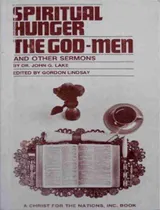






About the Book
"Don't Park Here!" by Oral Roberts is a motivational Christian book that emphasizes the importance of taking action in one's life and not allowing negativity or obstacles to hold one back. Roberts urges readers to overcome fear, doubt, and excuses in order to achieve their goals and fulfill their potential. The book encourages readers to trust in God and take control of their own destinies.
George Müller
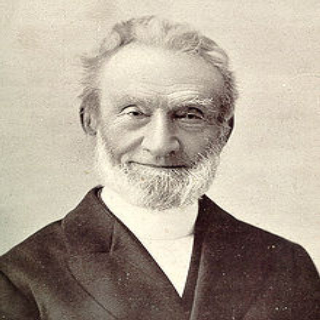 Among the greatest monuments of what can be accomplished through simple faith in God are the great orphanages covering thirteen acres of ground on Ashley Downs, Bristol, England. When God put it into the heart of George Muller to build these orphanages, he had only two shillings (50 cents) in his pocket. Without making his wants known to any man, but to God alone, over a million, four hundred thousand pounds ($7,000,000) were sent to him for the building and maintaining of these orphan homes. When the writer first visited them, near the time of Mr. Muller's death, there were five immense buildings of solid granite, capable of accommodating two thousand orphans. In all the years since the first orphans arrived the Lord had sent food in due time, so that they had never missed a meal for want of food.
Although George Muller became famous as one of the greatest men of prayer known to history, he was not always a saint. He wandered very deep into sin before he was brought to Christ. He was born in the kingdom of Prussia, in 1805. His father was a revenue collector for the government, and was a worldly-minded man. He supplied George and his brother with plenty of money when they were boys, and they spent it very foolishly. George deceived his father about how much money he spent, and also as to how he spent it. He also stole the government money during his father's absence.
At ten years of age, George was sent to the cathedral classical school at Halberstadt. His father wanted to make a Lutheran clergyman of him, not that he might serve God, but that he might have an easy and comfortable living from the State Church. "My time," says he. "was now spent in studying, reading novels, and indulging, though so young, in sinful practices. Thus it continued until I was fourteen years old, when my mother was suddenly removed. The night she was dying, I, not knowing of her illness, was playing cards until two in the morning, and on the next day, being the Lord's day, I went with some of my companions in sin to a tavern, and then, being filled with strong beer, we went about the streets half intoxicated."
"I grew worse and worse," says he. "Three or four days before I was confirmed (and thus admitted to partake of the Lord's supper), I was guilty of gross immorality; and the very day before my confirmation, when I was in the vestry with the clergyman to confess my sins (according to the usual practice), after a formal manner, I defrauded him; for I handed over to him only a twelfth part of the fee which my father had given me for him."
A few solemn thoughts and desires to lead a better life came to him, but he continued to plunge deeper and deeper into sin. Lying, stealing, gambling, novel-reading, licentiousness, extravagance, and almost every form of sin was indulged in by him. No one would have imagined that the sinful youth would ever become eminent for his faith in God and for his power in prayer. He robbed his father of certain rents which his father had entrusted him to collect, falsifying the accounts of what he had received and pocketing the balance. His money was spent on sinful pleasures, and once he was reduced to such poverty that, in order to satisfy his hunger, he stole a piece of coarse bread, the allowance of a soldier who was quartered in the house where he was. In 1821 he set off on an excursion to Magdeburg, where he spent six days in "much sin." He then went to Brunswick, and put up at an expensive hotel until his money was exhausted. He then put up at a fine hotel in a neighboring village, intending to defraud the hotel-keeper. But his best clothes were taken in lieu of what he owed. He then walked six miles to another inn, where he was arrested for trying to defraud the landlord. He was imprisoned for this crime when sixteen years of age.
After his imprisonment young Muller returned to his home and received a severe thrashing from his angry father. He remained as sinful in heart as ever, but in order to regain his father's confidence he began to lead a very exemplary life outwardly, until he had the confidence of all around him. His father decided to send him to the classical school at Halle, where the discipline was very strict, but George had no intention of going there. He went to Nordhausen instead, and by using many lies and entreaties persuaded his father to allow him to remain there for two years and six months, till Easter, 1825. Here he studied diligently, was held up as an example to the other students, and became proficient in Latin, French, History, and his own language (German). "But whilst I was outwardly gaining the esteem of my fellow-creatures," says he, "I did not care in the least about God, but lived secretly in much sin, in consequence of which I was taken ill, and for thirteen weeks confined to my room. All this time I had no real sorrow of heart, yet being under certain natural impressions of religion, I read through Klopstock's works, without weariness. I cared nothing about the Word of God."
"Now and then I felt I ought to become a different person," says he, "and I tried to amend my conduct, particularly when I went to the Lord's supper, as I used to do twice every year, with the other young men. The day previous to attending that ordinance I used to refrain from certain things, and on the day itself I was serious, and also swore once or twice to God with the emblem of the broken body in my mouth, to become better, thinking that for the oath's sake I should be induced to reform. But after one or two days were over, all was forgotten, and I was as bad as before."
He entered the University of Halle as a divinity student, with good testimonials. This qualified him to preach in the Lutheran state church. While at the university he spent all his money in profligate living. "When my money was spent," says he, "I pawned my watch and part of my linen and clothes, or borrowed in other ways. Yet in the midst of all this I had a desire to renounce this wretched life, for I had no enjoyment in it, and had sense enough left to see, that the end one day or other would be miserable; for I should never get a living. But I had no sorrow of heart on account of offending God."
At the University he formed the acquaintance of a miserable backslider, named Beta, who was trying by means of worldly pleasures to drown out his conviction of sin. They plunged into sin together, and in June, 1825, George was again taken sick. After his recovery they forged letters purporting to be from his parents. With these they obtained passports and set out to see Switzerland. Muller stole from the friends who accompanied him and the journey did not cost him so much as it did them. They returned home to finish up the vacation and then went back to the University, Muller having lied to his father about the trip to Switzerland.
At the University of Halle there were about nine hundred divinity students. All of these were allowed to preach, but Muller estimates that not nine of them feared the Lord. "One Saturday afternoon, about the middle of November, 1825," says he, "I had taken a walk with my friend Beta. On our return he said to me, that he was in the habit of going on Saturday evenings to the house of a Christian, where there was a meeting. On further inquiry he told me that they read the Bible, sang, prayed, and read a printed sermon. No sooner had I heard this, but it was to me as if I had found something after which I had been seeking all my life long. I immediately wished to go with my friend, who was not at once willing to take me; for knowing me as a merry young man, he thought I should not like this meeting. At last, however, he said he would call for me."
Describing the meeting, Muller said: "We went together in the evening. As I did not know the manners of the brethren, and the joy they have in seeing poor sinners, even in any measure caring about the things of God, I made an apology for coming. The kind answer of this dear brother I shall never forget. He said: 'Come as often as you please; house and heart are open to you."' After a hymn was sung they fell upon their knees, and a brother, named Kayser, who afterwards became a missionary to Africa, asked God's blessing on the meeting. "This kneeling down made a deep impression upon me," says Muller, "for I had never either seen any one on his knees, nor had I ever myself prayed on my knees. He then read a chapter and a printed sermon; for no regular meetings for expounding the Scriptures were allowed in Prussia, except an ordained clergyman was present. At the close we sang another hymn, and then the master of the house prayed." The meeting made a deep impression upon Muller. "I was happy," says he, "though if I had been asked why I was happy, I could not clearly have explained it."
"When we walked home, I said to Beta, all we have seen on our journey to Switzerland, and all our former pleasures, are as nothing in comparison with this evening. Whether I fell on my knees when I returned home I do not remember; but this I know, that I lay peaceful and happy in my bed. This shows that the Lord may begin his work in different ways. For I have not the least doubt that on that evening He began a work of grace in me, though I obtained joy without any deep sorrow of heart, and with scarcely any knowledge. But that evening was the turning point in my life. The next day, and Monday, and once or twice besides, I went again to the house of this brother, where I read the Scriptures with him and another brother; for it was too long for me to wait until Saturday came again."
"Now my life became very different, though not so, that my sins were all given up at once. My wicked companions were given up; the going to taverns was discontinued; the habitual practice of telling falsehoods was no longer indulged in, but still a few times more I spoke an untruth... I now no longer lived habitually in sin, though I was still often overcome and sometimes even by open sins, though far less frequently than before, and not without sorrow of heart. I read the Scriptures, prayed often, loved the brethren, went to church from right motives and stood on the side of Christ, though laughed at by my fellow students."
For a few weeks after his conversion Muller made rapid advancement in the Christian life, and he was greatly desirous of becoming a missionary. But he fell in love with a Roman Catholic girl, and for some time the Lord was well nigh forgotten. Then Muller saw a young missionary giving up all the luxuries of a beautiful home for Christ. This opened his eyes to his own selfishness and enabled him to give up the girl who had taken the place of Christ in his heart. "It was at this time," says he, "that I began to enjoy the peace of God, which passeth all understanding. In this my joy I wrote to my father and brother, entreating them to seek the Lord, and telling them how happy I was; thinking, that if the way to happiness were set before them, they would gladly embrace it. To my great surprise an angry answer was returned."
George could not enter any German missionary training institution without the consent of his father, and this he could not obtain. His father was deeply grieved that after educating him so that he could obtain a comfortable living as a clergyman he should turn missionary. George felt that he could no longer accept any money from him. The Lord graciously sent him means with which to complete his education. He taught German to some American college professors at the University, and they handsomely remunerated him for his services. He was now the means of winning a number of souls to Christ. He gave away thousands of religious tracts and papers, and spoke to many persons concerning the salvation of their souls.
Although, before his conversion, Muller had written to his father and told him about sermons he had preached, he never really preached a sermon until some time after his conversion. He thought to please his father by making him believe that he was preaching. His first sermon was a printed one which he had memorized for the occasion. He had but little liberty in preaching it. The second time he preached extemporaneously and had some degree of liberty. "I now preached frequently," says he, "both in the churches of the villages and towns, but never had any enjoyment in doing so, except when speaking in a simple way; though the repetition of sermons which had been committed to memory brought more praise from my fellow creatures. But from neither way of preaching did I see any fruit. It may be that the last day will show the benefit even of those feeble endeavors. One reason why the Lord did not permit me to see fruit, seems to me, that I should have been most probably lifted up by success. It may be also because I prayed exceedingly little respecting the ministry of the Word, and because I walked so little with God, and was so rarely a vessel unto honor, sanctified and meet for the Master's use."
The true believers at the University increased from six to about twenty in number before Muller left. They often met in Muller's room to pray, sing and read the Bible. He sometimes walked ten or fifteen miles to hear a really pious minister preach.
In 1827 Muller volunteered to go as a missionary pastor to the Germans at Bucharest, but the war between the Turks and Russians prevented this. In 1828, at the suggestion of their agent, he offered himself to the London Missionary Society as a missionary to the Jews. He was well versed in the Hebrew language and had a great love for it. The Society desired him to come to London that they might see him personally. Through the providence of God he finally secured exemption for life from serving in the Prussian army, and he went to England in 1829, at twenty-four years of age. He was not able to speak the English language for some time after he landed in England and then only in a very broken manner at first.
Soon after coming to England Muller received a deeper Christian experience which entirely revolutionized his life. "I came weak in body to England." says he, "and in consequence of much study, as I suppose, I was taken ill on May 15, and was soon, at least in my own estimation, apparently beyond recovery. The weaker I got in body, the happier I was in spirit. Never in my whole life had I seen myself so vile, so guilty, so altogether what I ought not to have been, as at that time. It was as if every sin of which I had been guilty was brought to my remembrance; but at the same time I could realize that all my sins were completely forgiven -- that I was washed and made clean, completely clean, in the blood of Jesus. The result of this was great peace. I longed exceedingly to depart and to be with Christ..."
"After I had been ill about a fortnight my medical attendant unexpectedly pronounced me better. This, instead of giving me joy, bowed me down, so great was my desire to be with the Lord; though almost immediately afterwards grace was given me to submit myself to the will of God."
That Muller always regarded the above experience as one which deepened his whole spiritual life is clearly shown by a letter of his which appeared in the British Christian, of August 14, 1902. In this letter Muller says: "I became a believer in the Lord Jesus in the beginning of November, 1825, now sixty-nine years and eight months. For the first four years afterwards, it was for a good part in great weakness; but in July, 1829, now sixty-six years since, it came with me to an entire and full surrender of heart. I gave myself fully to the Lord. Honors, pleasures, money, my physical powers, my mental powers, all were laid down at the feet of Jesus, and I became a great lover of the Word of God. I found my all in God, and thus in all my trials of a temporal and spiritual character, it has remained for sixty-six years. My faith is not merely exercised regarding temporal things, but regarding everything, because I cleave to the Word. My knowledge of God and His Word is that which helps me."
Being advised to go into the country for his health, he prayed about it and finally decided to go. He went to Devonshire, where the great blessing he had already received was greatly augmented by his conversations and prayers with a Spirit-filled minister whom he first heard preach at Teignmouth. Through the conversations and sermons of this minister he was led to see as never before "that the Word of God alone is our standard of judgment in spiritual things; that it can be explained only by His Holy Spirit; and that in our day, as well as in former times, He is the teacher of His people. The office of the Holy Spirit I had not experimentally understood before that time," says he. "The result of this was, that the first evening that I shut myself into my room to give myself to prayer and meditation over the Scriptures, I learned more in a few hours than I had done during a period of several months previously." Again, he says: "In addition to these truths, it pleased the Lord to lead me to see a higher standard of devotedness than I had seen before."
On his return to London, Muller sought to lead his brethren in the training seminary into the deeper truths he had been brought to realize. "One brother in particular," says he, "was brought into the same state in which I was; and others, I trust, were more or less benefited. Several times, when I went to my room after family prayer, I found communion with God so sweet that I continued in prayer until after twelve, and then being full of joy, went into the room of the brother just referred to, and finding him also in a similar frame of heart, we continued praying until one or two, and even then I was a few times so full of joy that I could scarcely sleep, and at six in the morning again called the brethren together for prayer."
Muller's health declined in London and his soul was also now on fire for God in such a way that he could not settle down to the routine of daily studies. His newly acquired belief in the near coming of Christ also urged him forward to work for the salvation of souls. He felt that the Lord was leading him to begin at once the Christian work he was longing to do, and as the London Missionary Society did not see proper to send him out without the prescribed course of training, he decided to go at once and trust the Lord for the means of support. Soon after this he became pastor of Ebenezer Chapel, Teignmouth, Devonshire. His marriage to Miss Mary Groves, a Devonshire lady, followed. She was always of the same mind as her husband and their married life was a very happy one. Not long after his marriage he began to have conscientious scruples about receiving a regular salary, and also about the renting of pews in his church. He felt that the latter was giving the "man with the ring on his finger" the best seat, and the poorer brother the footstool, and the former was taking money from those who did not give "cheerfully" or "as the Lord had prospered them." These two customs were discontinued by him. He and his wife told their needs to no one but the Lord. Occasionally reports were spread that they were starving; but though at times their faith was tried, their income was greater than before. He and his wife gave away freely all that they had above their present needs, and trusted the Lord for their "daily bread."
Muller preached in many surrounding towns, and many souls were brought to Christ in his meetings. In 1832 he felt profoundly impressed that, his work was ended in Teignmouth, and when he went to Bristol the same year he was as profoundly impressed that the Lord would have him work there. When the Spirit, the Word, and the providence of God agree, we may be quite certain that the Lord is leading us, for these three are always in harmony and cannot disagree. Not only did Muller feel led of the Lord to work in Bristol, but the providence of God opened the way, and it seemed in harmony with the Word of God.
Muller began his labors in Bristol in 1832, as co-pastor with his friend Mr. Craik, who had been called to that city. Without salaries or rented pews their labors were greatly blessed at Gideon and Bethesda Chapels. The membership more than quadrupled in numbers in a short time. Ten days after the opening of Bethesda there was such a crowd of persons inquiring the way of salvation that it took four hours to minister to them. Subsequently Gideon Chapel was relinquished, and in the course of time two neighboring chapels were secured. These churches, though calling themselves non-sectarian, were usually classed with the people commonly known as "Plymouth Brethren." Muller continued to preach to them as long as he lived, even after he began his great work for the orphans. At the time of his death he had a congregation of about two thousand persons at Bethesda Chapel.
In 1834 Mr. Muller started the Scripture Knowledge Institution for Home and Abroad. Its object was to aid Christian day-schools, to assist missionaries, and to circulate the Scriptures. This institution, without worldly patronage, without asking anyone for help, without contracting debts; without committees, subscribers, or memberships; but through faith in the Lord alone, had obtained and disbursed no less a sum than £1,500,000 ($7,500,000) at the time of Mr. Muller's death. The bulk of this was expended for the orphanage. At the time of Mr. Muller's death 122,000 persons had been taught in the schools supported by these funds; and about 282,000 Bibles and 1,500,000 Testaments had been distributed by means of the same fund. Also 112,000,000 religious books, pamphlets and tracts had been circulated; missionaries had been aided in all parts of the world; and no less than ten thousand orphans had been cared for by means of this same fund.
At the age of seventy, Mr. Muller began to make great evangelistic tours. He traveled 200,000 miles, going around the world and preaching in many lands and in several different languages. He frequently spoke to as many as 4,500 or 5,000 persons. Three times he preached throughout the length and breadth of the United States. He continued his missionary or evangelistic tours until he was ninety years of age. He estimated that during these seventeen years of evangelistic work he addressed three million people. All his expenses were sent in answer to the prayer of faith.
Greatest of all Muller's undertakings was the erection and maintenance of the great orphanages at Bristol. He began the undertaking with only two shillings (50 cents) in his pocket; but in answer to prayer and without making his needs known to human beings, he received the means necessary to erect the great buildings and to feed the orphans day by day for sixty years. In all that time the children did not have to go without a meal, and Mr. Muller said that if they ever had to go without a meal he would take it as evidence that the Lord did not will the work to continue. Sometimes the meal time was almost at hand and they did not know where the food would come from, but the Lord always sent it in due time, during the twenty thousand or more days that Mr. Muller had charge of the homes.
From Deeper Experiences of Famous Christians... by J. Gilchrist Lawson. Anderson, Ind.: Warner Press, 1911.
Among the greatest monuments of what can be accomplished through simple faith in God are the great orphanages covering thirteen acres of ground on Ashley Downs, Bristol, England. When God put it into the heart of George Muller to build these orphanages, he had only two shillings (50 cents) in his pocket. Without making his wants known to any man, but to God alone, over a million, four hundred thousand pounds ($7,000,000) were sent to him for the building and maintaining of these orphan homes. When the writer first visited them, near the time of Mr. Muller's death, there were five immense buildings of solid granite, capable of accommodating two thousand orphans. In all the years since the first orphans arrived the Lord had sent food in due time, so that they had never missed a meal for want of food.
Although George Muller became famous as one of the greatest men of prayer known to history, he was not always a saint. He wandered very deep into sin before he was brought to Christ. He was born in the kingdom of Prussia, in 1805. His father was a revenue collector for the government, and was a worldly-minded man. He supplied George and his brother with plenty of money when they were boys, and they spent it very foolishly. George deceived his father about how much money he spent, and also as to how he spent it. He also stole the government money during his father's absence.
At ten years of age, George was sent to the cathedral classical school at Halberstadt. His father wanted to make a Lutheran clergyman of him, not that he might serve God, but that he might have an easy and comfortable living from the State Church. "My time," says he. "was now spent in studying, reading novels, and indulging, though so young, in sinful practices. Thus it continued until I was fourteen years old, when my mother was suddenly removed. The night she was dying, I, not knowing of her illness, was playing cards until two in the morning, and on the next day, being the Lord's day, I went with some of my companions in sin to a tavern, and then, being filled with strong beer, we went about the streets half intoxicated."
"I grew worse and worse," says he. "Three or four days before I was confirmed (and thus admitted to partake of the Lord's supper), I was guilty of gross immorality; and the very day before my confirmation, when I was in the vestry with the clergyman to confess my sins (according to the usual practice), after a formal manner, I defrauded him; for I handed over to him only a twelfth part of the fee which my father had given me for him."
A few solemn thoughts and desires to lead a better life came to him, but he continued to plunge deeper and deeper into sin. Lying, stealing, gambling, novel-reading, licentiousness, extravagance, and almost every form of sin was indulged in by him. No one would have imagined that the sinful youth would ever become eminent for his faith in God and for his power in prayer. He robbed his father of certain rents which his father had entrusted him to collect, falsifying the accounts of what he had received and pocketing the balance. His money was spent on sinful pleasures, and once he was reduced to such poverty that, in order to satisfy his hunger, he stole a piece of coarse bread, the allowance of a soldier who was quartered in the house where he was. In 1821 he set off on an excursion to Magdeburg, where he spent six days in "much sin." He then went to Brunswick, and put up at an expensive hotel until his money was exhausted. He then put up at a fine hotel in a neighboring village, intending to defraud the hotel-keeper. But his best clothes were taken in lieu of what he owed. He then walked six miles to another inn, where he was arrested for trying to defraud the landlord. He was imprisoned for this crime when sixteen years of age.
After his imprisonment young Muller returned to his home and received a severe thrashing from his angry father. He remained as sinful in heart as ever, but in order to regain his father's confidence he began to lead a very exemplary life outwardly, until he had the confidence of all around him. His father decided to send him to the classical school at Halle, where the discipline was very strict, but George had no intention of going there. He went to Nordhausen instead, and by using many lies and entreaties persuaded his father to allow him to remain there for two years and six months, till Easter, 1825. Here he studied diligently, was held up as an example to the other students, and became proficient in Latin, French, History, and his own language (German). "But whilst I was outwardly gaining the esteem of my fellow-creatures," says he, "I did not care in the least about God, but lived secretly in much sin, in consequence of which I was taken ill, and for thirteen weeks confined to my room. All this time I had no real sorrow of heart, yet being under certain natural impressions of religion, I read through Klopstock's works, without weariness. I cared nothing about the Word of God."
"Now and then I felt I ought to become a different person," says he, "and I tried to amend my conduct, particularly when I went to the Lord's supper, as I used to do twice every year, with the other young men. The day previous to attending that ordinance I used to refrain from certain things, and on the day itself I was serious, and also swore once or twice to God with the emblem of the broken body in my mouth, to become better, thinking that for the oath's sake I should be induced to reform. But after one or two days were over, all was forgotten, and I was as bad as before."
He entered the University of Halle as a divinity student, with good testimonials. This qualified him to preach in the Lutheran state church. While at the university he spent all his money in profligate living. "When my money was spent," says he, "I pawned my watch and part of my linen and clothes, or borrowed in other ways. Yet in the midst of all this I had a desire to renounce this wretched life, for I had no enjoyment in it, and had sense enough left to see, that the end one day or other would be miserable; for I should never get a living. But I had no sorrow of heart on account of offending God."
At the University he formed the acquaintance of a miserable backslider, named Beta, who was trying by means of worldly pleasures to drown out his conviction of sin. They plunged into sin together, and in June, 1825, George was again taken sick. After his recovery they forged letters purporting to be from his parents. With these they obtained passports and set out to see Switzerland. Muller stole from the friends who accompanied him and the journey did not cost him so much as it did them. They returned home to finish up the vacation and then went back to the University, Muller having lied to his father about the trip to Switzerland.
At the University of Halle there were about nine hundred divinity students. All of these were allowed to preach, but Muller estimates that not nine of them feared the Lord. "One Saturday afternoon, about the middle of November, 1825," says he, "I had taken a walk with my friend Beta. On our return he said to me, that he was in the habit of going on Saturday evenings to the house of a Christian, where there was a meeting. On further inquiry he told me that they read the Bible, sang, prayed, and read a printed sermon. No sooner had I heard this, but it was to me as if I had found something after which I had been seeking all my life long. I immediately wished to go with my friend, who was not at once willing to take me; for knowing me as a merry young man, he thought I should not like this meeting. At last, however, he said he would call for me."
Describing the meeting, Muller said: "We went together in the evening. As I did not know the manners of the brethren, and the joy they have in seeing poor sinners, even in any measure caring about the things of God, I made an apology for coming. The kind answer of this dear brother I shall never forget. He said: 'Come as often as you please; house and heart are open to you."' After a hymn was sung they fell upon their knees, and a brother, named Kayser, who afterwards became a missionary to Africa, asked God's blessing on the meeting. "This kneeling down made a deep impression upon me," says Muller, "for I had never either seen any one on his knees, nor had I ever myself prayed on my knees. He then read a chapter and a printed sermon; for no regular meetings for expounding the Scriptures were allowed in Prussia, except an ordained clergyman was present. At the close we sang another hymn, and then the master of the house prayed." The meeting made a deep impression upon Muller. "I was happy," says he, "though if I had been asked why I was happy, I could not clearly have explained it."
"When we walked home, I said to Beta, all we have seen on our journey to Switzerland, and all our former pleasures, are as nothing in comparison with this evening. Whether I fell on my knees when I returned home I do not remember; but this I know, that I lay peaceful and happy in my bed. This shows that the Lord may begin his work in different ways. For I have not the least doubt that on that evening He began a work of grace in me, though I obtained joy without any deep sorrow of heart, and with scarcely any knowledge. But that evening was the turning point in my life. The next day, and Monday, and once or twice besides, I went again to the house of this brother, where I read the Scriptures with him and another brother; for it was too long for me to wait until Saturday came again."
"Now my life became very different, though not so, that my sins were all given up at once. My wicked companions were given up; the going to taverns was discontinued; the habitual practice of telling falsehoods was no longer indulged in, but still a few times more I spoke an untruth... I now no longer lived habitually in sin, though I was still often overcome and sometimes even by open sins, though far less frequently than before, and not without sorrow of heart. I read the Scriptures, prayed often, loved the brethren, went to church from right motives and stood on the side of Christ, though laughed at by my fellow students."
For a few weeks after his conversion Muller made rapid advancement in the Christian life, and he was greatly desirous of becoming a missionary. But he fell in love with a Roman Catholic girl, and for some time the Lord was well nigh forgotten. Then Muller saw a young missionary giving up all the luxuries of a beautiful home for Christ. This opened his eyes to his own selfishness and enabled him to give up the girl who had taken the place of Christ in his heart. "It was at this time," says he, "that I began to enjoy the peace of God, which passeth all understanding. In this my joy I wrote to my father and brother, entreating them to seek the Lord, and telling them how happy I was; thinking, that if the way to happiness were set before them, they would gladly embrace it. To my great surprise an angry answer was returned."
George could not enter any German missionary training institution without the consent of his father, and this he could not obtain. His father was deeply grieved that after educating him so that he could obtain a comfortable living as a clergyman he should turn missionary. George felt that he could no longer accept any money from him. The Lord graciously sent him means with which to complete his education. He taught German to some American college professors at the University, and they handsomely remunerated him for his services. He was now the means of winning a number of souls to Christ. He gave away thousands of religious tracts and papers, and spoke to many persons concerning the salvation of their souls.
Although, before his conversion, Muller had written to his father and told him about sermons he had preached, he never really preached a sermon until some time after his conversion. He thought to please his father by making him believe that he was preaching. His first sermon was a printed one which he had memorized for the occasion. He had but little liberty in preaching it. The second time he preached extemporaneously and had some degree of liberty. "I now preached frequently," says he, "both in the churches of the villages and towns, but never had any enjoyment in doing so, except when speaking in a simple way; though the repetition of sermons which had been committed to memory brought more praise from my fellow creatures. But from neither way of preaching did I see any fruit. It may be that the last day will show the benefit even of those feeble endeavors. One reason why the Lord did not permit me to see fruit, seems to me, that I should have been most probably lifted up by success. It may be also because I prayed exceedingly little respecting the ministry of the Word, and because I walked so little with God, and was so rarely a vessel unto honor, sanctified and meet for the Master's use."
The true believers at the University increased from six to about twenty in number before Muller left. They often met in Muller's room to pray, sing and read the Bible. He sometimes walked ten or fifteen miles to hear a really pious minister preach.
In 1827 Muller volunteered to go as a missionary pastor to the Germans at Bucharest, but the war between the Turks and Russians prevented this. In 1828, at the suggestion of their agent, he offered himself to the London Missionary Society as a missionary to the Jews. He was well versed in the Hebrew language and had a great love for it. The Society desired him to come to London that they might see him personally. Through the providence of God he finally secured exemption for life from serving in the Prussian army, and he went to England in 1829, at twenty-four years of age. He was not able to speak the English language for some time after he landed in England and then only in a very broken manner at first.
Soon after coming to England Muller received a deeper Christian experience which entirely revolutionized his life. "I came weak in body to England." says he, "and in consequence of much study, as I suppose, I was taken ill on May 15, and was soon, at least in my own estimation, apparently beyond recovery. The weaker I got in body, the happier I was in spirit. Never in my whole life had I seen myself so vile, so guilty, so altogether what I ought not to have been, as at that time. It was as if every sin of which I had been guilty was brought to my remembrance; but at the same time I could realize that all my sins were completely forgiven -- that I was washed and made clean, completely clean, in the blood of Jesus. The result of this was great peace. I longed exceedingly to depart and to be with Christ..."
"After I had been ill about a fortnight my medical attendant unexpectedly pronounced me better. This, instead of giving me joy, bowed me down, so great was my desire to be with the Lord; though almost immediately afterwards grace was given me to submit myself to the will of God."
That Muller always regarded the above experience as one which deepened his whole spiritual life is clearly shown by a letter of his which appeared in the British Christian, of August 14, 1902. In this letter Muller says: "I became a believer in the Lord Jesus in the beginning of November, 1825, now sixty-nine years and eight months. For the first four years afterwards, it was for a good part in great weakness; but in July, 1829, now sixty-six years since, it came with me to an entire and full surrender of heart. I gave myself fully to the Lord. Honors, pleasures, money, my physical powers, my mental powers, all were laid down at the feet of Jesus, and I became a great lover of the Word of God. I found my all in God, and thus in all my trials of a temporal and spiritual character, it has remained for sixty-six years. My faith is not merely exercised regarding temporal things, but regarding everything, because I cleave to the Word. My knowledge of God and His Word is that which helps me."
Being advised to go into the country for his health, he prayed about it and finally decided to go. He went to Devonshire, where the great blessing he had already received was greatly augmented by his conversations and prayers with a Spirit-filled minister whom he first heard preach at Teignmouth. Through the conversations and sermons of this minister he was led to see as never before "that the Word of God alone is our standard of judgment in spiritual things; that it can be explained only by His Holy Spirit; and that in our day, as well as in former times, He is the teacher of His people. The office of the Holy Spirit I had not experimentally understood before that time," says he. "The result of this was, that the first evening that I shut myself into my room to give myself to prayer and meditation over the Scriptures, I learned more in a few hours than I had done during a period of several months previously." Again, he says: "In addition to these truths, it pleased the Lord to lead me to see a higher standard of devotedness than I had seen before."
On his return to London, Muller sought to lead his brethren in the training seminary into the deeper truths he had been brought to realize. "One brother in particular," says he, "was brought into the same state in which I was; and others, I trust, were more or less benefited. Several times, when I went to my room after family prayer, I found communion with God so sweet that I continued in prayer until after twelve, and then being full of joy, went into the room of the brother just referred to, and finding him also in a similar frame of heart, we continued praying until one or two, and even then I was a few times so full of joy that I could scarcely sleep, and at six in the morning again called the brethren together for prayer."
Muller's health declined in London and his soul was also now on fire for God in such a way that he could not settle down to the routine of daily studies. His newly acquired belief in the near coming of Christ also urged him forward to work for the salvation of souls. He felt that the Lord was leading him to begin at once the Christian work he was longing to do, and as the London Missionary Society did not see proper to send him out without the prescribed course of training, he decided to go at once and trust the Lord for the means of support. Soon after this he became pastor of Ebenezer Chapel, Teignmouth, Devonshire. His marriage to Miss Mary Groves, a Devonshire lady, followed. She was always of the same mind as her husband and their married life was a very happy one. Not long after his marriage he began to have conscientious scruples about receiving a regular salary, and also about the renting of pews in his church. He felt that the latter was giving the "man with the ring on his finger" the best seat, and the poorer brother the footstool, and the former was taking money from those who did not give "cheerfully" or "as the Lord had prospered them." These two customs were discontinued by him. He and his wife told their needs to no one but the Lord. Occasionally reports were spread that they were starving; but though at times their faith was tried, their income was greater than before. He and his wife gave away freely all that they had above their present needs, and trusted the Lord for their "daily bread."
Muller preached in many surrounding towns, and many souls were brought to Christ in his meetings. In 1832 he felt profoundly impressed that, his work was ended in Teignmouth, and when he went to Bristol the same year he was as profoundly impressed that the Lord would have him work there. When the Spirit, the Word, and the providence of God agree, we may be quite certain that the Lord is leading us, for these three are always in harmony and cannot disagree. Not only did Muller feel led of the Lord to work in Bristol, but the providence of God opened the way, and it seemed in harmony with the Word of God.
Muller began his labors in Bristol in 1832, as co-pastor with his friend Mr. Craik, who had been called to that city. Without salaries or rented pews their labors were greatly blessed at Gideon and Bethesda Chapels. The membership more than quadrupled in numbers in a short time. Ten days after the opening of Bethesda there was such a crowd of persons inquiring the way of salvation that it took four hours to minister to them. Subsequently Gideon Chapel was relinquished, and in the course of time two neighboring chapels were secured. These churches, though calling themselves non-sectarian, were usually classed with the people commonly known as "Plymouth Brethren." Muller continued to preach to them as long as he lived, even after he began his great work for the orphans. At the time of his death he had a congregation of about two thousand persons at Bethesda Chapel.
In 1834 Mr. Muller started the Scripture Knowledge Institution for Home and Abroad. Its object was to aid Christian day-schools, to assist missionaries, and to circulate the Scriptures. This institution, without worldly patronage, without asking anyone for help, without contracting debts; without committees, subscribers, or memberships; but through faith in the Lord alone, had obtained and disbursed no less a sum than £1,500,000 ($7,500,000) at the time of Mr. Muller's death. The bulk of this was expended for the orphanage. At the time of Mr. Muller's death 122,000 persons had been taught in the schools supported by these funds; and about 282,000 Bibles and 1,500,000 Testaments had been distributed by means of the same fund. Also 112,000,000 religious books, pamphlets and tracts had been circulated; missionaries had been aided in all parts of the world; and no less than ten thousand orphans had been cared for by means of this same fund.
At the age of seventy, Mr. Muller began to make great evangelistic tours. He traveled 200,000 miles, going around the world and preaching in many lands and in several different languages. He frequently spoke to as many as 4,500 or 5,000 persons. Three times he preached throughout the length and breadth of the United States. He continued his missionary or evangelistic tours until he was ninety years of age. He estimated that during these seventeen years of evangelistic work he addressed three million people. All his expenses were sent in answer to the prayer of faith.
Greatest of all Muller's undertakings was the erection and maintenance of the great orphanages at Bristol. He began the undertaking with only two shillings (50 cents) in his pocket; but in answer to prayer and without making his needs known to human beings, he received the means necessary to erect the great buildings and to feed the orphans day by day for sixty years. In all that time the children did not have to go without a meal, and Mr. Muller said that if they ever had to go without a meal he would take it as evidence that the Lord did not will the work to continue. Sometimes the meal time was almost at hand and they did not know where the food would come from, but the Lord always sent it in due time, during the twenty thousand or more days that Mr. Muller had charge of the homes.
From Deeper Experiences of Famous Christians... by J. Gilchrist Lawson. Anderson, Ind.: Warner Press, 1911.
‘obedience will make you miserable’ - the tired lie satan loves to tell
There are at least two ways to please the devil when it comes to the pursuit of holiness. The first way, of course, is to run from holiness altogether — to flee, with the prodigal, to the far country of this world, away from the Father’s home (Luke 15:11–13). The second way, perhaps even more dangerous than the first, is to pursue holiness (or what we imagine holiness to be), and yet not be happy about it. We may call this second way older-brother Christianity. Like the elder son in Jesus’s parable, such people follow the Father’s rules with a sigh (Luke 15:29). Their holiness is all pursed lips and sober glances. “Such is the cost of righteousness,” they remind themselves. “We must relinquish pleasure on the path to heaven, you know. Holiness, not happiness, is the true good.” “What virtue!” some may exclaim. “What uprightness! What self-denial!” What a sham. Older brothers, for all their outward purity, are still in the grip of the serpent’s ancient lie. They have been deceived, along with our first parents, to live in a world of the devil’s own making: a world where our Father wears a frown, where heaven has no laughter, and where holiness is ultimately a sacrifice. As long as we live in such a world, we will miss the feast that our Father has prepared (Luke 15:22–28). If we want to rid ourselves of older-brother instincts, and pursue holiness in a way that shames the devil, we would do well to return to the garden and listen again to that first lie. Song of the Morning Stars When the serpent approached Adam and Eve in the garden, he knew that only a lie could put the forbidden fruit into their hands. Only a lie could somehow convince them that they were the slaves of a stingy God. Only a lie could do the trick because reality, as always, was not on Satan’s side. For when God first breathed the oceans into being, and lit the stars like candles, and filled mountain fields with wildflowers, no sigh could be heard in all heaven and earth. Rather, all creation joined to praise their glorious Maker. From heaven’s lofty balconies, the morning stars raised their song, the sons of God shouted for joy, and Wisdom delighted in God’s handiwork (Job 38:7; Proverbs 8:30–31). From “Let there be light” onward, the heavens have declared his glory (Psalm 19:1). And how shall we hear their declaration? As an apathetic exhale? As a monotonous lecture? As a distracted recitation? No, as the very pitch of delight: “You make the going out of the morning and the evening to shout for joy” (Psalm 65:8). Adam and Eve, upon hearing the melody of creation, could not help but join the song. As they gazed across God’s handiwork, they trusted the goodness of their Father. They admired the beauty of their Creator. They enjoyed the fellowship of their Friend. They obeyed the counsel of their King. They had no higher happiness. Life in the Serpent’s World No, the devil knew Adam and Eve would never eat the fruit as long as they worshiped the glorious God in his marvelous world. So what did he do? He invited the couple to imagine a different world and a different god. He shuttered their eyes to sunsets and tulips, blocked their ears to the chirping of the robins, and calloused their skin to spring breezes. In short, he shrunk creation to the size of an apple, and gave them eyes for Eden’s only “No.” In the world of the serpent, the morning stars sing a dirge, the hosts of heaven murmur, and creation only groans beneath the dictatorship of the Almighty Ruler. In such a world, Adam and Eve had only two options. They could, like the prodigal, disobey their God and run from their Father’s garden. Or they could, like the older brother, sacrifice their pleasure on the noble altar of obedience. “Either rebel and be happy — or obey and be miserable.” This was the serpent’s offer (Genesis 3:4–5). Adam and Eve took the fruit and fled into the far country. Many today do the same. Many others, however, refuse the fruit — but only on the serpent’s terms. Like older brothers, we aim to keep our Father’s rules. We do so, however, not because his rules are satisfying, but only because they’re right; not because holiness is glorious, but only because it’s obedient; not because fellowship with God is happifying (as Jonathan Edwards used to say), but just because he says so. Which brother we become matters little to the devil. As long as we live within his world — a world where the gifts are scarce and the God is stingy — he is happy whether we rebel or “obey.” As long as we cease to hear and sing creation’s song of praise, the serpent is pleased. Deeper Than Self-Denial If humanity’s first sin arose when we believed the serpent’s lie, then our repentance must go deeper than rule-keeping or self-denial. After all, some of this world’s most marvelous rule-keepers are still tenants in the serpent’s world. No, our repentance requires more: we must break free from his spell altogether, and return to the real God in the real world. We must bend our ears upward once again to hear the heavens sing, “Glory!” We must feel again that heaven and earth, though fallen now, still pulse with God’s pleasure (Psalm 104:31). We must wade again in this delicious stream called creation, remembering that God himself is the fountain (James 1:17). In other words, we must step past the ancient lie and believe once again that God created us to be happy in him. As soon as we “taste and see that the Lord is good” (Psalm 34:8), and that he himself is our “exceeding joy” (Psalm 43:4), everything about our pursuit of holiness will change. We will still deny ourselves, practice obedience, and kill our sin, to be sure. But we will not dare for a moment to think that we are exchanging happiness for holiness. We will trade away our sin because we have seen the treasure to be found (Matthew 13:44). We will forsake the lusts of our flesh because, as Jesus promised, “whoever loses his life for my sake will find it” (Matthew 16:25). And even when we must sacrifice something precious to follow Christ, we trust that we will “receive a hundredfold now in this time . . . and in the age to come, eternal life” (Mark 10:30). The Holy Spirit teaches us not only to obey God, but to enjoy him — indeed, to obey him by enjoying him. He teaches us not only to withstand the devil’s temptations, but as Martin Luther put it, to laugh our adversary to scorn. He teaches us not only to wonder at the mercy of Christ, but to breathe a grand sigh of relief, amazed that joy has been so near at hand all this time. Discipline does not defeat the devil — happiness does. Join the Father’s Feast From where we stand now, of course, we can look to more than creation to see the happiness of God, and to nurture our happiness in him. We now have seen wonders that the morning stars could never have imagined. We have seen a God so happy that he could bear up under a world of sorrows without breaking (Isaiah 53:3). A God who recognized the joy set before him so luminously that he could endure the darkest shame (Hebrews 12:2). A God who runs to meet his prodigal children, too delighted to be dignified (Luke 15:20). A God who even now holds out his own joy to every older brother who will come in from the cold and join the celebration (Luke 15:31–32). Come now, older brother, put up your ear to the door. Can you hear the saints’ laughter? Can you hear the angels’ praise? Can you hear the Father singing over his children who’ve returned? Whatever we must forsake to walk inside this door, there is always more ahead of us than what we leave behind. So go ahead: Turn again to that serpent in the darkness, and laugh his bruised head to scorn. And then open up the door, and join your Father’s feast.