

Confessions Of A Battle Weary Prayer Warrior Order Printed Copy
- Author: Michelle Clairday
- Size: 440KB | 70 pages
- |
Others like confessions of a battle weary prayer warrior Features >>
Confession Brings Possession
-160.webp)
Carriers Of The Glory (Becoming A Friend Of The Holy Spirit)
The Power Of Faith-Filled Words
Let Not Your Heart Be Troubled
Lord, I Want To Be Whole
Smite The Enemy And He Will Flee
The Power Of A Praying Nation
Fervent - A Woman's Battle Plan
The Interceding Christian
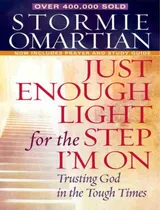
Just Enough Light For The Step I'm On
About the Book
"Confessions Of A Battle Weary Prayer Warrior" is a memoir by Michelle Clairday detailing her struggles with faith and the power of prayer. She shares her personal experiences of spiritual warfare and how she overcame doubt and discouragement through the strength of her prayers. The book offers insight and encouragement for readers facing their own battles in life.
Calvin Miller
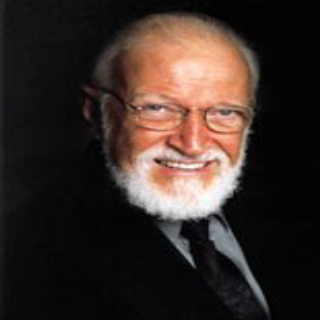 Calvin Miller was a pastor, professor and storyteller, best known for The Singer Trilogy, a mythic retelling of the New Testament story in the spirit of C. S. Lewis and J. R. R. Tolkien. Miller passed away on the afternoon of August 19, 2012, due to complications after heart surgery. He was 75.
A prolific artist and a writer's writer, Miller garnered respect and praise throughout his career from peers like Luci Shaw, Max Lucado and Philip Yancey. He was the author of more than forty books of popular theology and Christian inspiration including such recent books as Letters to Heaven, The Path of Celtic Prayer, Letters to a Young Pastor and his memoir Life Is Mostly Edges.
In addition to his twenty years of pastoral service at Westside Church in Omaha, Nebraska, Miller was also a great mentor to many students and leaders through his preaching and pastoral ministry classes at Beeson Divinity School. Calvin Miller, never one to multiply words, used just four to describe his rule of life: "Time is a gift."
RESCUE FROM THE SLUSH PILE
In October 1973 one important book was rescued from the slush pile (the stack of unsolicited manuscripts every publisher receives) by assistant editor Don Smith. He read a manuscript by a little-known Baptist pastor in Nebraska that was a poetic retelling of the life of Jesus—portraying him as a Troubadour. Both he and Linda Doll excitedly encouraged Jim Sire to take this imaginative manuscript seriously. In February 1974 Sire wrote the author, Calvin Miller, that IVP wanted to publish his book The Singer.
Months before, Miller had been waking up nights, stirred to write this tale, perhaps unconsciously inspired by the recent Broadway hits Jesus Christ Superstar and Godspell. Later Miller wrote:
When the manuscript was done, I sent it to Jim Sire at InterVarsity Press. “It’s good,” he said, “but we want to think about it a couple of weeks before we give you an answer.” So I waited until finally the letter came. They were going to do it. Jim Sire had done his Ph.D. on John Milton, and the fact that he liked it was joy immeasurable to me. “But,” he cautioned, “we’re going to print five thousand of these. They may not do well—in fact we may end up with four thousand of them on skids in our basement for the next ten years. Still, it’s a good book and deserves to be in print.”
Far more than a thousand copies sold. Actually, over three hundred times that amount sold in its first decade. It became “the most successful evangelical publication in this genre.” The Singer was followed in two years by The Song (paralleling the story of the early church in Acts) and two years after that by The Finale (inspired by the book of Revelation). Publication of The Singer changed Miller’s life. Even though he stayed in the pastorate for many years, it set him on a course of writing and speaking that he could not have imagined.
Calvin Miller was a pastor, professor and storyteller, best known for The Singer Trilogy, a mythic retelling of the New Testament story in the spirit of C. S. Lewis and J. R. R. Tolkien. Miller passed away on the afternoon of August 19, 2012, due to complications after heart surgery. He was 75.
A prolific artist and a writer's writer, Miller garnered respect and praise throughout his career from peers like Luci Shaw, Max Lucado and Philip Yancey. He was the author of more than forty books of popular theology and Christian inspiration including such recent books as Letters to Heaven, The Path of Celtic Prayer, Letters to a Young Pastor and his memoir Life Is Mostly Edges.
In addition to his twenty years of pastoral service at Westside Church in Omaha, Nebraska, Miller was also a great mentor to many students and leaders through his preaching and pastoral ministry classes at Beeson Divinity School. Calvin Miller, never one to multiply words, used just four to describe his rule of life: "Time is a gift."
RESCUE FROM THE SLUSH PILE
In October 1973 one important book was rescued from the slush pile (the stack of unsolicited manuscripts every publisher receives) by assistant editor Don Smith. He read a manuscript by a little-known Baptist pastor in Nebraska that was a poetic retelling of the life of Jesus—portraying him as a Troubadour. Both he and Linda Doll excitedly encouraged Jim Sire to take this imaginative manuscript seriously. In February 1974 Sire wrote the author, Calvin Miller, that IVP wanted to publish his book The Singer.
Months before, Miller had been waking up nights, stirred to write this tale, perhaps unconsciously inspired by the recent Broadway hits Jesus Christ Superstar and Godspell. Later Miller wrote:
When the manuscript was done, I sent it to Jim Sire at InterVarsity Press. “It’s good,” he said, “but we want to think about it a couple of weeks before we give you an answer.” So I waited until finally the letter came. They were going to do it. Jim Sire had done his Ph.D. on John Milton, and the fact that he liked it was joy immeasurable to me. “But,” he cautioned, “we’re going to print five thousand of these. They may not do well—in fact we may end up with four thousand of them on skids in our basement for the next ten years. Still, it’s a good book and deserves to be in print.”
Far more than a thousand copies sold. Actually, over three hundred times that amount sold in its first decade. It became “the most successful evangelical publication in this genre.” The Singer was followed in two years by The Song (paralleling the story of the early church in Acts) and two years after that by The Finale (inspired by the book of Revelation). Publication of The Singer changed Miller’s life. Even though he stayed in the pastorate for many years, it set him on a course of writing and speaking that he could not have imagined.
Are You a Friend to the Poor
God’s heart is for the least of these: the suffering, lost, and lonely. "Do you know the name of a poor person?" a young man in his twenties who was sharing about his experiences as a missionary in Moldova posed the question to me in church. His phrase was tricky because if he'd said, "Do you care about the poor?" I might have tossed it in that drawer where you keep all the stuff you've heard a million times and are supposed to ponder but probably won't do much with. When he asked if I knew the name of a poor person he exposed a glaring gap in my Christianity: Whose name did I know? Not whose face had I passed on 21st Street on my way to grab coffee; not what homeless man had I handed a dollar for the paper he peddles at the stoplight; not what anonymous tsunami victim had received an online donation I'd made. Whose name did I know? I was left to consider this very important question because if I didn't know the name of a poor person, I didn't really know a poor person. (This is one of the biggest problems with going to church — the possibility of getting all convicted and stuff.) I always knew that if God's heart was for anything it was for the least of these: the suffering, sick, needy, uneducated, foreigner, lost, lonely — this much was clear. And it's true that these were people I cared about, prayed for, and on whose behalf I tithed, but how many of them called me friend? Who had my phone number, been to dinner at my house, or sat beside me at church? Without condemnation, I had to recognize that I was someone who cared for the poor mostly from a distance but who had yet to intimately involve herself. My first step: Learn a name. In the Law of Moses God commanded the Israelites to leave their extra sheaves, olives, and grapes for the alien, fatherless, and widow — for all the people who didn't have what the Israelites had and who didn't have the means to get what they had. At the end of this recurring command the Lord gave His people an intriguing reason for why He required this, "Remember that you were slaves in Egypt. That is why I command you to do this" (Deut. 24:22, NIV). Didn't God want them to leave their excess food for the poor and outsider because these people were hungry, because they needed community, because they couldn't provide for themselves, because He loved them? Wasn't that why? Oh I'm sure those were all reasons, but I believe God first had to deal with that sneaky mind-set, the one that tries to trick us into thinking that when we step over a stalk of wheat to leave it for the poor we're doing something really noble, plain over-the-top gracious. That we're going above and beyond by giving away what is rightfully "ours." The Lord was staving off this kind of thinking by saying, "Hold your fancy horses. Remember you used to be slaves too! Don't forget to tap into what that felt like." The Israelites were no strangers to poverty, oppression, or powerlessness as ones who had once been enslaved in Egypt. It was only because of God's deliverance they were now free, only because of His goodness they were blessed with flourishing fields and bursting branches. By remembering their once low estate, they were poised to welcome the foreigner, fatherless, and widow, not out of self-righteousness, guilt, or duty, but out of the love God had shown them. Last night I served dinner to an Iraqi couple and their 2-year-old daughter, a family some of my friends and I have gotten to know. I'd hoped that chicken, broccoli, and couscous were safe selections to serve these well-dressed Middle Easterners, though I sensed I may have been pushing it with the hot apple cider. I was going for the American autumn experience, and judging by their first and only sip, this went over moderately. As we settled around the table I asked them why they'd left Baghdad to come to America. The husband replied, "Because there are less car bombings here," and then he broke out into hysterical laughter. (Safwat's a sanguine.) His wife was less buoyant, confiding that the war had been devastating and that they'd fled here as refugees hoping to find jobs but so far without any success. My eyes welled up as she spoke because her suffering was not that of a nameless Iraqi, but it belonged to her, a real-life woman with a name, Rida. As the adults carried on, Rubaa fingered the icing on her cupcake and tapped her shoes on the hardwood floors, just like any other baby girl in a bright red dress who wanted the room to be enchanted with her — some things are the same everywhere. When it was time for them to leave, Safwat shook my hand, Rubaa blew me a kiss at her mother's urging, and Rida kissed my right cheek, left cheek, and then back to my right cheek again (it's that third one I always forget). As we said our good-byes I realized what a privilege it was to know their names, because knowing their names meant I was getting to know their stories. And knowing their stories reminded me in deeply spiritual and emotional places that I, too, was once a foreigner outside of God's kingdom, but because of Christ, I am now a daughter. Kelly Minter