





-160.webp)

About the Book
"Confession Brings Possession" by Norvel Hayes is a guide on the power of positive confession and speaking words of faith to manifest desired outcomes in life. The book highlights the importance of declaring God's promises and aligning one's words with God's truth to bring about supernatural results. Hayes emphasizes the significance of controlling one's thoughts and words to shape a positive reality and overcome challenges. Through real-life examples and biblical principles, readers are encouraged to harness the power of confession to claim God's blessings and walk in victory.
Brother Andrew
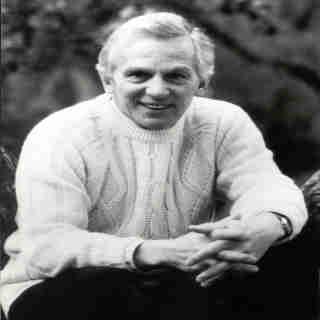 Son of a blacksmith, Brother Andrew didn’t even finish high school. But God used this ordinary dutch man, with his bad back, limited education, without sponsorship and no funds to do things that many said were impossible. From Yugoslavia to North Korea, Brother Andrew penetrated countries hostile to the gospel to bring bibles and encouragement to believers.
Andy van der Bijl, who became known as Brother Andrew, was born in 1928 the son of a deaf father and a semi-invalid mother. Andrew was the third of six children and they lived in the smallest house in the village of Witte in the Netherlands.
In the book God’s smuggler, Andrew describes the impact that the death of his oldest brother ‘Bas’ had upon him. Bas, who was severely handicapped died when Andrew was just 11 years old. Andrew had wanted to die with Bas, but God hadn’t let him.
THIRST FOR ADVENTURE
As a child, brother Andrew was mischievous and dreamt of adventure. When Germany invaded, Andrew amused himself (and the rest of the village) by playing pranks on the occupying troops.
NOTORIOUS COMMANDO WHO NEEDED GOD
His thirst for adventure led him into the Dutch army at the age of 18 where he became a notorious commando. Andrew and his comrades became famous for wearing yellow straw hats in battle, their motto was: ‘get smart – lose your mind’.
The atrocities that Andrew committed as a commando haunted him and he became wrapped in a sense of guilt. Nothing he did – drinking, fighting, writing or reading letters helped him escape the strangle that guilt had upon him.
Shot in the ankle in combat, at the age of 20, his time in the army came to an abrupt end.
In hospital, bed ridden, the witness of Franciscan sisters who served the sick joyfully and the conviction of his own sin, drove him to read the Bible. Andy studied the bible while asking many questions to a friend (Thile), who had written to him throughout his time in the army. Andrew sent questions to Thile who searched for answers from her pastor and the library. His searching within the bible did not however lead him to give his life to God whilst he was still in hospital.
ANDREW RETURNS HOME A CRIPPLE AND SEEKS GOD
Returning home a cripple to his old town, Andrew’s life was empty. He had not found the adventure he had been looking for.
Somehow however, when he return home, he developed a thirst for God. Every evening Andrew attended a meeting and during the day he would read the bible and lookup up bible verses mentioned in the sermons he had heard. At last, one evening he gave up his ego and prayed: ‘Lord if You will show me the way, I will follow You. Amen’.
GOD CALLS BROTHER ANDREW TO MISSION
Soon after becoming a Christian, Brother Andrew attended a an evangelistic meeting taken by a Dutch evangelist Arne Donker. At this meeting Andrew responded to the call to become a missionary. This call to share the good news of salvation started at home, with Andrew and his friend Kees holding an evangelistic event with Pastor Donker in their home town of Witte.
Before going away on mission, Andrew started work at the Ringers chocolate factory. Working in a female dominated environment which was smitten with filthy jokes, God used Andrew and another Christian, and future wife Corrie, to reach their lost co-workers. Through personal witness and inviting them to evangelistic events, many became Christians, including the ring leader of the women. The atmosphere at work changed dramatically and prayer groups were held.
Andrew excelled in his work despite being lame and Mr Ringers, the owner of the factory applauded his work and evangelistic efforts. Because of his high IQ, Andrew was trained up as a job analyst within the factory. But Andrew knew that God was calling him to mission. The big obstacle however was his lack of education.
Giving up smoking, Andrew was able to start saving to buy books. Andrew bought dictionaries and commentaries and so began studying in his spare time. One day Andrew learnt about the bible college in Glasgow run by the WEC mission. At Glasgow bible college Christians could be trained up for mission in 2 years.
Unsure of Gods will for his life, Andrew spent a Sunday afternoon alone with God, speaking aloud with God. Through this time, Andrew realised that he needed to say ‘yes’ to God who was calling him to mission. Before this, Andrew had been saying ‘Yes BUT I am lame.’ ‘Yes BUT I have no education’. Andrew said yes. In an amazing instant, Andrew made this step of yes, and in God’s grace he healed Andrews lame leg.
ANDREW GOES TO ENGLAND
Andrew applied for the Bible college in Glasgow and was accepted. Sponsored by no church, no organisation and lacking education, Andrew obeyed God and went despite being told by the love of his life at the time (Thile) that in going he would lose her.
Andrew’s place at the bible college was delayed by a year. Despite receiving a telegram from WEC telling him not to come, Andrew believed God was instructing him to go. In faith he obeyed God and left for England in 1952.
Andrew spent the first few months in England painting the WEC headquarters building (Bulstrode). While living at Bulstrode, Andrew began spending time with God at the beginning of everyday – a Quiet Time. This was something that Andrew found helpful and endeavoured to do every day of his life. Once Andrew had finished painting Bulstrode, he then moved in with Mr and Mrs Hopkins. Living with Mr and Mrs Hopkins, they developed a wonderful relationship. Andy learnt so much from the couple because they were utterly without self-consciousness and opened up their home to drunks and beggars.
In September 1953, Brother Andrew started his studies at the WEC Glasgow bible college. Over the entrance of the wooden archway of the college were the words‘have faith in God’. During the following two years whilst studying, Andrew learnt about having faith in God and put his faith into practice in numerous ways.
THE KINGS WAY
Throughout his time at Glasgow bible college, Andy learnt of ‘The Kings Way’ in providing. Andrew saw God provide every essential need he had and always provide on time. In the book God’s Smuggler, Andrew describes how it was exciting waiting to see how God would provide at his time of need. God always provided, but did so, not according to mans logic but in a kingly matter, not in a grovelling way.
One example of God providing miraculously was when Andrew needed to pay his visa. When Andrew received a visitor the day before he needed to send off his application for a visa, he was confident that the visitor would have come to give him money to pay for the visa. But the visitor was Richard, a man who Andrew had met in the slums in Glasgow. Richard had not come to give, but to ask. Andy explained that he had no money himself to give to Richard, but as he spoke, Andy saw a Shilling on the floor. This shilling was how much Andy needed to pay for his visa which would mean he could stay at the bible school. Rather than keeping the Shilling for himself, Andrew gave the Shilling to Richard. Andy had done what he knew was right, but how would God provide? Minutes later, Andy received a letter and in it was 30 Shillings! God had provided in His way, a Kingly Manner of provision.
GOD CALLS ANDREW BEHIND THE IRON CURTAIN
Leaving bible college in 1955, God guided Andy to attend a Communist trip to Warsaw. This would be the first of many trips into Communist countries.
During his first trip to Warsaw, brother Andrew visited local churches, a bible shop and spoke with Christians in the country. Coming back to Holland, Andrew had lots of opportunities to share about his trip and how Christians lived behind the iron curtain.
Weeks later, the communist party arranged for him to attend a trip to Czechoslovakia. Andrew managed to break away from the organised trip to learn that the church was suffering and that bibles were very scarce. Officials were angry he had broken away from the official tour and had contact with Christians so he was prohibited from entering the country again. But his trip had opened his eyes to the needs of the church behind the iron curtain and this became his mission field.
In the following years, Andy dedicated his life to the needs of the church in the Communist countries. God provided Andrew with a new Volkswagen Beetle and with it Brother Andrew smuggled bibles and literature into the countries in need. Working alone for the first few years, Andrew worked tirelessly in serving the churches behind the iron curtain. When Andrew had finished one trip he would go back to Holland where he would share his experience and then go back to one of the countries. Each trip was full of stories of how God had miraculously provided and led Andrew to meet Godly believers.
ANDREW MARRIES AND HAS A FAMILY
Although serving God in this way was exciting, Andrew felt alone and wanted a wife. In the book God’s Smuggler, Andrew describes how he prayed about a wife three times. The first two times that Brother Andrew asked for a wife God spoke to him clearly through Isaiah 54:1 “The children of the desolate are more than the children of the married”. But Andrew prayed a third time about it, and this time God answered his prayer, reminding him of a lady he worked with at the Ringers chocolate factor, Corrie van Dam. Andrew hadn’t had contact with Corrie for a long time so went to visit her. By God’s grace, Corrie was still single and over a period of several years Andrew and Corrie became great friends. Corrie and Andrew married on June 27th 1958 in Alkmaar, Netherlands.
Corrie was married to a missionary and Andrew very much continued to live like a missionary, smuggling bibles into countries closed countries. Over the years, God blessed Corrie and Andrew with five children, three boys and two girls.
ANDREW STARTS WORKING WITH OTHERS
Andrew kept serving God behind the iron curtain but the work had become difficult to do alone. Andrew thought about how helpful it would be to have a co-worker. This began with a man called Hans and slowly grew until a number of them were smuggling bibles into the communist countries.
SERVING THE WORLD WIDE CHURCH
When the doors to communist Europe were opened in the 1960’s, Brother Andrew began to serve and strengthen the churches in the Middle East and Islamic world.
BROTHER ANDREW RECEIVES RELIGIOUS LIBERTY AWARD IN 2007
On Andy van der Bijl’s 69th birthday, he was honoured by being awarded ‘The Religious Liberty Award’ which was presented by the World Evangelical Fellowship (WEF). The chairman of WEF’s Religious Liberty Commission stated:
“Brother Andrew has been the preeminent example of those from the outside who have excelled in the ministry of encouragement – the many years he has devoted himself to serving the oppressed. His exploits have become legendary as he has crossed borders carrying Bibles, which were liable to confiscation. Time after time God has blinded the eyes of the border guards, and the Bibles got through.
BROTHER ANDREW RESOURCES
God’s Smuggler – Book about Brother Andrew smuggling Bibles.
Son of a blacksmith, Brother Andrew didn’t even finish high school. But God used this ordinary dutch man, with his bad back, limited education, without sponsorship and no funds to do things that many said were impossible. From Yugoslavia to North Korea, Brother Andrew penetrated countries hostile to the gospel to bring bibles and encouragement to believers.
Andy van der Bijl, who became known as Brother Andrew, was born in 1928 the son of a deaf father and a semi-invalid mother. Andrew was the third of six children and they lived in the smallest house in the village of Witte in the Netherlands.
In the book God’s smuggler, Andrew describes the impact that the death of his oldest brother ‘Bas’ had upon him. Bas, who was severely handicapped died when Andrew was just 11 years old. Andrew had wanted to die with Bas, but God hadn’t let him.
THIRST FOR ADVENTURE
As a child, brother Andrew was mischievous and dreamt of adventure. When Germany invaded, Andrew amused himself (and the rest of the village) by playing pranks on the occupying troops.
NOTORIOUS COMMANDO WHO NEEDED GOD
His thirst for adventure led him into the Dutch army at the age of 18 where he became a notorious commando. Andrew and his comrades became famous for wearing yellow straw hats in battle, their motto was: ‘get smart – lose your mind’.
The atrocities that Andrew committed as a commando haunted him and he became wrapped in a sense of guilt. Nothing he did – drinking, fighting, writing or reading letters helped him escape the strangle that guilt had upon him.
Shot in the ankle in combat, at the age of 20, his time in the army came to an abrupt end.
In hospital, bed ridden, the witness of Franciscan sisters who served the sick joyfully and the conviction of his own sin, drove him to read the Bible. Andy studied the bible while asking many questions to a friend (Thile), who had written to him throughout his time in the army. Andrew sent questions to Thile who searched for answers from her pastor and the library. His searching within the bible did not however lead him to give his life to God whilst he was still in hospital.
ANDREW RETURNS HOME A CRIPPLE AND SEEKS GOD
Returning home a cripple to his old town, Andrew’s life was empty. He had not found the adventure he had been looking for.
Somehow however, when he return home, he developed a thirst for God. Every evening Andrew attended a meeting and during the day he would read the bible and lookup up bible verses mentioned in the sermons he had heard. At last, one evening he gave up his ego and prayed: ‘Lord if You will show me the way, I will follow You. Amen’.
GOD CALLS BROTHER ANDREW TO MISSION
Soon after becoming a Christian, Brother Andrew attended a an evangelistic meeting taken by a Dutch evangelist Arne Donker. At this meeting Andrew responded to the call to become a missionary. This call to share the good news of salvation started at home, with Andrew and his friend Kees holding an evangelistic event with Pastor Donker in their home town of Witte.
Before going away on mission, Andrew started work at the Ringers chocolate factory. Working in a female dominated environment which was smitten with filthy jokes, God used Andrew and another Christian, and future wife Corrie, to reach their lost co-workers. Through personal witness and inviting them to evangelistic events, many became Christians, including the ring leader of the women. The atmosphere at work changed dramatically and prayer groups were held.
Andrew excelled in his work despite being lame and Mr Ringers, the owner of the factory applauded his work and evangelistic efforts. Because of his high IQ, Andrew was trained up as a job analyst within the factory. But Andrew knew that God was calling him to mission. The big obstacle however was his lack of education.
Giving up smoking, Andrew was able to start saving to buy books. Andrew bought dictionaries and commentaries and so began studying in his spare time. One day Andrew learnt about the bible college in Glasgow run by the WEC mission. At Glasgow bible college Christians could be trained up for mission in 2 years.
Unsure of Gods will for his life, Andrew spent a Sunday afternoon alone with God, speaking aloud with God. Through this time, Andrew realised that he needed to say ‘yes’ to God who was calling him to mission. Before this, Andrew had been saying ‘Yes BUT I am lame.’ ‘Yes BUT I have no education’. Andrew said yes. In an amazing instant, Andrew made this step of yes, and in God’s grace he healed Andrews lame leg.
ANDREW GOES TO ENGLAND
Andrew applied for the Bible college in Glasgow and was accepted. Sponsored by no church, no organisation and lacking education, Andrew obeyed God and went despite being told by the love of his life at the time (Thile) that in going he would lose her.
Andrew’s place at the bible college was delayed by a year. Despite receiving a telegram from WEC telling him not to come, Andrew believed God was instructing him to go. In faith he obeyed God and left for England in 1952.
Andrew spent the first few months in England painting the WEC headquarters building (Bulstrode). While living at Bulstrode, Andrew began spending time with God at the beginning of everyday – a Quiet Time. This was something that Andrew found helpful and endeavoured to do every day of his life. Once Andrew had finished painting Bulstrode, he then moved in with Mr and Mrs Hopkins. Living with Mr and Mrs Hopkins, they developed a wonderful relationship. Andy learnt so much from the couple because they were utterly without self-consciousness and opened up their home to drunks and beggars.
In September 1953, Brother Andrew started his studies at the WEC Glasgow bible college. Over the entrance of the wooden archway of the college were the words‘have faith in God’. During the following two years whilst studying, Andrew learnt about having faith in God and put his faith into practice in numerous ways.
THE KINGS WAY
Throughout his time at Glasgow bible college, Andy learnt of ‘The Kings Way’ in providing. Andrew saw God provide every essential need he had and always provide on time. In the book God’s Smuggler, Andrew describes how it was exciting waiting to see how God would provide at his time of need. God always provided, but did so, not according to mans logic but in a kingly matter, not in a grovelling way.
One example of God providing miraculously was when Andrew needed to pay his visa. When Andrew received a visitor the day before he needed to send off his application for a visa, he was confident that the visitor would have come to give him money to pay for the visa. But the visitor was Richard, a man who Andrew had met in the slums in Glasgow. Richard had not come to give, but to ask. Andy explained that he had no money himself to give to Richard, but as he spoke, Andy saw a Shilling on the floor. This shilling was how much Andy needed to pay for his visa which would mean he could stay at the bible school. Rather than keeping the Shilling for himself, Andrew gave the Shilling to Richard. Andy had done what he knew was right, but how would God provide? Minutes later, Andy received a letter and in it was 30 Shillings! God had provided in His way, a Kingly Manner of provision.
GOD CALLS ANDREW BEHIND THE IRON CURTAIN
Leaving bible college in 1955, God guided Andy to attend a Communist trip to Warsaw. This would be the first of many trips into Communist countries.
During his first trip to Warsaw, brother Andrew visited local churches, a bible shop and spoke with Christians in the country. Coming back to Holland, Andrew had lots of opportunities to share about his trip and how Christians lived behind the iron curtain.
Weeks later, the communist party arranged for him to attend a trip to Czechoslovakia. Andrew managed to break away from the organised trip to learn that the church was suffering and that bibles were very scarce. Officials were angry he had broken away from the official tour and had contact with Christians so he was prohibited from entering the country again. But his trip had opened his eyes to the needs of the church behind the iron curtain and this became his mission field.
In the following years, Andy dedicated his life to the needs of the church in the Communist countries. God provided Andrew with a new Volkswagen Beetle and with it Brother Andrew smuggled bibles and literature into the countries in need. Working alone for the first few years, Andrew worked tirelessly in serving the churches behind the iron curtain. When Andrew had finished one trip he would go back to Holland where he would share his experience and then go back to one of the countries. Each trip was full of stories of how God had miraculously provided and led Andrew to meet Godly believers.
ANDREW MARRIES AND HAS A FAMILY
Although serving God in this way was exciting, Andrew felt alone and wanted a wife. In the book God’s Smuggler, Andrew describes how he prayed about a wife three times. The first two times that Brother Andrew asked for a wife God spoke to him clearly through Isaiah 54:1 “The children of the desolate are more than the children of the married”. But Andrew prayed a third time about it, and this time God answered his prayer, reminding him of a lady he worked with at the Ringers chocolate factor, Corrie van Dam. Andrew hadn’t had contact with Corrie for a long time so went to visit her. By God’s grace, Corrie was still single and over a period of several years Andrew and Corrie became great friends. Corrie and Andrew married on June 27th 1958 in Alkmaar, Netherlands.
Corrie was married to a missionary and Andrew very much continued to live like a missionary, smuggling bibles into countries closed countries. Over the years, God blessed Corrie and Andrew with five children, three boys and two girls.
ANDREW STARTS WORKING WITH OTHERS
Andrew kept serving God behind the iron curtain but the work had become difficult to do alone. Andrew thought about how helpful it would be to have a co-worker. This began with a man called Hans and slowly grew until a number of them were smuggling bibles into the communist countries.
SERVING THE WORLD WIDE CHURCH
When the doors to communist Europe were opened in the 1960’s, Brother Andrew began to serve and strengthen the churches in the Middle East and Islamic world.
BROTHER ANDREW RECEIVES RELIGIOUS LIBERTY AWARD IN 2007
On Andy van der Bijl’s 69th birthday, he was honoured by being awarded ‘The Religious Liberty Award’ which was presented by the World Evangelical Fellowship (WEF). The chairman of WEF’s Religious Liberty Commission stated:
“Brother Andrew has been the preeminent example of those from the outside who have excelled in the ministry of encouragement – the many years he has devoted himself to serving the oppressed. His exploits have become legendary as he has crossed borders carrying Bibles, which were liable to confiscation. Time after time God has blinded the eyes of the border guards, and the Bibles got through.
BROTHER ANDREW RESOURCES
God’s Smuggler – Book about Brother Andrew smuggling Bibles.
Secret Allies in the Human Heart - The Advantage We Have in Evangelism
One warm, dusty midday, Jesus sat alone near Jacob’s well outside the Samaritan town of Sychar. His disciples had gone into town to buy food, but he had planned a different meal for himself (John 4:34). Soon a solitary woman arrived at the well with a large clay jar and began to draw water. Jesus asked her for a drink. So began one of the most famous evangelistic conversations in history. And this conversation is remarkably relevant to us twenty-first-century Christians. Because in it, Jesus demonstrates that hidden in the human heart are secret evangelistic allies, as Scottish preacher James Stewart once observed (Heralds of God, 53). These secret allies are deep-seated intuitions and longings that can help a person recognize the truth of the gospel. And like Jesus, if we listen carefully and prayerfully, both to the person and the Holy Spirit, we can engage these allies in the pursuit of that person’s ultimate joy. Obstacles to Evangelism In numerous ways, this woman would have appeared to most of us as an unlikely candidate for conversion. “Hidden in the human heart are secret evangelistic allies.” First, she was a Samaritan, which meant she was viewed and hated by most Jews as a member of a heretical, idolatrous religion. We would have assumed she reciprocated the hatred. She was a woman, which meant (according to ancient Near Eastern social norms) that she would have been reticent to enter into such a conversation alone with a strange man. And given the odd, hot time of day she chose to fetch water, we might have intuited some social estrangement from her own townspeople. In other words, there were layers of complex awkwardness about the whole situation — the kind of awkwardness most of us want to avoid, the kind we tend to assume will make fruitfulness unlikely. But Jesus, alert to the Holy Spirit and lovingly eager for this woman to experience grace and forgiveness and liberation and joy, stepped into the awkwardness. And notice how he navigated this conversation, engaging several secret allies along the way. Secret Allies in an Unlikely Convert It began with a mundane-sounding yet provocative request: “Give me a drink” (John 4:7). This simple question caught the woman off guard. Not only was a man addressing an unaccompanied woman, but a Jew was addressing a Samaritan. In doing so, however, Jesus acknowledged her as an image-bearer of God, according her the dignity due such a creation. Her deep, intuitive knowledge of the rightness of this became one secret ally in helping prepare her to receive the grace and mercy he offers. Then, given the immediate context of their conversation, Jesus used the metaphor of thirst to raise the issue of the woman’s deep, inconsolable longing for lasting hope, joy, meaning, and love — a longing she shared with all fallen humanity (John 4:10–15). He wasn’t put off by her skepticism and derogatory comments. He was after her joy, not defending himself. What he did was engage her soul-thirst as a secret gospel ally for her highest good. Then he gently stepped into another very awkward place: the woman’s sinful, painful past littered with the ruins of broken relational cisterns that had only left her more parched (Jeremiah 2:13; John 4:16–18). And he offered her the only water that could quench her thirst: the gracious, merciful love of God. Her pain proved to be the pivotal gospel ally in her heart (John 4:39), because she had an undeniable desire and need for God’s forgiveness, reconciliation, and redemption. But there was one more massive issue to deal with: What about the deep, bitter, complex, hostile, centuries-old ethno-religious disagreements between the Jews and the Samaritans (John 4:19–22)? Notice where in the conversation Jesus chose to address this (he ignored the controversy in verse 9). Jesus discerned that this woman needed to taste God’s care and kindness toward her before she would be open to hearing that she and her ancestors had worshiped in ignorance (John 4:22). So, he did deploy the ally of the truth she already knew from Jewish Scriptures, but not until he had developed some initial trust first. Having glimpsed the Great Well and tasted the living water (John 4:23–24), this woman forgot her jar by Jacob’s well and ran back to town to share the good news she had received (John 4:28–30). And her testimony resonated with the secret allies in the hearts of many of her neighbors in Sychar. Common Secret Allies This evangelistic conversation is admittedly exceptional because Jesus is exceptional. We rarely receive such supernatural insight into someone else’s life — though such gifts sometimes are given to believers by the Holy Spirit (1 Corinthians 14:24–25). But we can still learn from how Jesus engaged secret evangelistic allies in the hearts of his hearers. And while we may not be able to discern all he discerned as the God-man, we can still ask good questions, listen carefully, and pray for the Spirit to help us identify allies in each conversation. Certain allies are specific to particular people, like the Samaritan woman’s painful past. But there are allies that God has implanted in the hearts of every person. Here are some of them: We all instinctively recognize design in creation (Romans 1:19–20). We all are irresistibly drawn to transcendent glory (Psalm 8:1–4). We all have an intuitive knowledge of providence — that there is a purposeful intent to the created world, the events in it, and our own lives (Acts 17:22–31). We all know deep down that nihilism (ultimate meaninglessness implicit in metaphysical naturalism) is not true (Ecclesiastes 3:1–14). We all know we must have hope to keep going (Psalm 43:5; Lamentations 3:20–24; Romans 15:13). We all have an irrepressible longing for joy (Psalm 16:11; 43:4; Ecclesiastes 3:12; John 15:11; 1 Peter 1:8). We all intuitively recognize the moral law (Romans 2:14–15). We all know that we have transgressed the moral law and to some degree long to be free from guilt (Romans 3:23–26). We all at various times experience an undeniable desire for justice to prevail (Deuteronomy 16:19–20; Job 19:7–11; Proverbs 17:23; Micah 6:8; Matthew 12:18–21). We all have a sense of eternity in our hearts — we instinctively know death is not our ultimate end (Ecclesiastes 3:11). We all recognize the supreme beauty of love (Matthew 22:36–40; John 15:13; 1 Corinthians 13:13; 1 John 4:7–8). In claiming that we all know these things, I don’t mean that we all admit them, recognize them to the same degree, or explain them in the same way, but they are all part of the universal human experience. And the fact that we continually discuss and debate them is evidence of their presence. They are internal witnesses and pointers to the existence and nature of God, and in that way they become allies in our evangelism. Take Them to the Well On that warm, dusty day, on the slope of Mount Gerizim, the Lord himself became one massive, momentous fulfillment of the words of the old prophet: How beautiful upon the mountains are the feet of him who brings good news, who publishes peace, who brings good news of happiness, who publishes salvation, who says to Zion, “Your God reigns.” (Isaiah 52:7) “We all have eternity in our hearts — we instinctively know death is not our ultimate end.” He employed gospel allies already residing secretly in the heart of an unlikely convert to lead her to the living water she so desperately needed and longed for. Isn’t that essentially our story too? When it comes to evangelism, we can be too easily intimidated, especially when someone looks unlikely to respond well. It can appear to us like the ground isn’t level, like we occupy the less defendable ground because our hearer is likely to judge our gospel as foolish or weak (1 Corinthians 1:22–25). In truth, the ground is often not level, but not in the way we might fear. Often, we have the advantage because, as with Jesus that day outside Sychar, we have unseen gospel allies residing in the hearts of our hearers. And if we listen carefully and prayerfully to our hearers, the Holy Spirit can show us how to employ them. Because when it comes to the power of God in evangelism (1 Corinthians 1:18), “the foolishness of God is wiser than men, and the weakness of God is stronger than men” (1 Corinthians 1:25). We don’t need to be experts in apologetics or trained theologians to share the good news with others, even with the most resistant and entrenched. Often, we simply need to care more about helping them find the living water they so desperately need than about protecting our reputation or demonstrating how right we are. And if we do, we will find that we have secret allies in the pursuit of that person’s highest joy. Article by Jon Bloom Staff writer, desiringGod.org