
Others like understanding prayer Features >>

Wrestling Prayer
Understanding The Power Of Praise
Understanding The Purpose And Power Of Prayer

The Possibilities Of Prayer

Let Not Your Heart Be Troubled

Ten Ways God Speaks

Just Enough Light For The Step I'm On
ive.com%20)-160.webp)
Shaping History Through Prayer And Fasting

The Life Of John Praying Hyde
-160.webp)
Hi God, It's Me Again (What To Pray When You Don't Know What To Say)
About the Book
"Understanding Prayer" by E.M. Bounds explores the power and importance of prayer in the life of a believer. The book delves into the various aspects of prayer, including its necessity, effectiveness, and transformative impact on individuals and society. It emphasizes the need for earnest and consistent prayer as a vital spiritual discipline for every Christian. Through insightful teachings and examples, it inspires readers to deepen their prayer life and experience the fullness of God's presence and blessings.
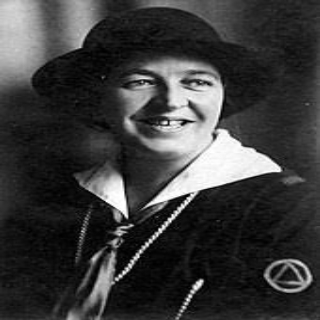
Corrie Ten Boom
do not despise the day of small groups
Some three hundred years ago, an unusual kind of church gathering spread throughout the English-speaking world like fire in the brush. When describing these groups, church historians reach for the language of newness : one refers to the gatherings as “innovations,” another as “a fresh ecclesiological proposal,” and still another as “decidedly novel.” To some, the groups seemed dangerous, a threat to existing church order. But to countless normal Christians, the groups held immense attraction. They were a new wineskin of sorts, and new wineskins have a way of offending and appealing in equal measure. Revealing the name of these gatherings risks anticlimax, however, because today they seem to many Christians as somewhat ho-hum, a churchly inheritance as traditional as pulpits and pews. For these innovative groups, these fresh and novel gatherings, were none other than the first modern small groups. Daring Idea of Small Groups Small groups, of course, were not all new three hundred years ago. In fact, when the German Lutheran Philip Jacob Spener (1635–1705) proposed the idea in 1675, he likened the groups to “the ancient and apostolic kind of church meetings” ( Pia Desideria , 89). Bruce Hindmarsh, in his article “The Daring Idea of Small Groups,” suggests Spener had in mind passages like Colossians 4:15 and 1 Corinthians 14:26–40, where the early Christians met in houses and exercised the gifts of the Spirit. To these we might also add Acts 2:42–47, where the newly Spirit-filled church met not only at the temple but also “in their homes.” For Spener, then, small groups were a retrieval project, an attempt to restore an ancient gathering somehow lost through the centuries. He wanted passive laypeople to act like the “royal priesthood” they really were in Christ (1 Peter 2:9). He wanted to see the Spirit working mightily through not only pastors and teachers but all members of the body, as in the days after Pentecost. Spener couldn’t help but trace a connection between the new-covenant ministry of the Spirit and the New Testament pattern of small groups. He was right to trace a connection. A few decades after Spener proposed his daring idea, a massive spiritual awakening spread throughout Western Europe and America. And just as in the days of Acts 2, the newly Spirit-filled church began to gather in small groups. Sunday morning couldn’t contain the Spirit’s flame. Fostering and Facilitating Revival Richard Lovelace, in his Dynamics of Spiritual Life , notes “the persistent reappearance of small intentional communities in the history of church renewal” (78). And so it was in the First Great Awakening of the 1730s and beyond. In the decades surrounding the awakening, small groups were instrumental in both fostering and facilitating revival. In the first place, small groups had a way of fostering revival. Fascinatingly, we can draw a providential line between Spener’s small-group advocacy and the awakening of the 1730s. Spener’s godson, Nicolaus von Zinzendorf (1700–1760), led a group called the Renewed Moravian Brethren, who themselves had experienced the Spirit’s power in small-group community life. Then, in 1738, Moravians in London helped start the Fetter Lane Society, one of whose members was named John Wesley (1703–1791). And that society, writes Colin Podmore, would become “the main seed-bed from which the English Evangelical Revival would spring” ( The Moravian Church in England, 1728–1760 , 39). Spener’s idea — taken, tried, and tweaked from the 1670s to the 1730s — became one of the greatest means God used in the awakening. From then on, small groups also had a way of facilitating revival. As awakening spread through England, Wesley and his colaborers gathered earnest believers into small groups or “bands.” As awakening spread through America, writes Mark Noll, Jonathan Edwards created small groups “as part of his effort to fan this spiritual blaze” ( Rise of Evangelicalism , 77). Really wherever you look, Hindmarsh writes, “As the fires of evangelical revival spread, the fervor of small-group religion branched out too.” Small groups may have looked, at first, a little like the disciples in Acts 2:1, huddled “all together in one place,” waiting for the fire to fall. And then the fire did fall, creating communities that resembled Acts 2:42–47 in various degrees. Those awakened wanted to gather — indeed, felt compelled to gather — just like those early Christians in Jerusalem. And one gathering a week simply was not enough. Small groups fostered revival, and small groups facilitated revival, in both the first century and the eighteenth. And so they may again today. Four Marks of the First Small Groups Three hundred years after the First Great Awakening, small groups no longer raise eyebrows. The new wineskin has grown familiar, becoming one of the most common features of evangelical church life. Nevertheless, a closer look at these groups reveals a gap between the first modern small groups and many of our own. Often, we have settled for something less daring. Recovering the features of the first groups would not guarantee revival, of course. Awakening is the Spirit’s sovereign work. But in God’s hands, small groups like those of old may become a means of revival — or, short of that, a means of greater growth in Christ. Consider, then, four features of the first small groups, and how we might work to recover them. Experiential Bible Study When many of us think of small groups today, we imagine a Bible study: several people in a circle, Bibles open, discussing some passage and praying afterward. The Bible held a similarly central place in many early small groups; Spener couched his whole proposal, in fact, within the larger aim to introduce “a more extensive use of the word of God among us” ( Pia Desideria , 87). Even still, the phrase Bible study may not capture the practical, experiential spirit of these groups. Listen to Spener’s hope for “a more extensive” use of Scripture: “If we succeed in getting the people to seek eagerly and diligently in the book of life for their joy, their spiritual life will be wonderfully strengthened and they will become altogether different people” (91). Altogether different people — that was the goal of Bible study in these first groups. And so, they took an immensely practical bent to the Scriptures, studying them not only with their minds but with their lives. I can remember, as a young college student freshly awakened to Christ, how eager a group of us were to open Scripture together, often spontaneously. The Bible seemed always near, its wisdom ever relevant for “all things that pertain to life and godliness” (2 Peter 1:3). Importantly, we were as eager for application as we were for knowledge . Yet I can also recall Bible studies that must have seemed, to any impartial observer, like a mere matter of words. We were studying a map without any clear intention of visiting the country. The first groups, needless to say, resembled the former far more than the latter. “These were not book clubs, lifestyle enclaves, or discussion groups,” Hindmarsh writes. “These were places for those who were serious about the life application of the teaching of Scripture.” We cannot manufacture a spirit of biblical earnestness, of course; we can, however, refuse to treat Scripture as a mere collection of thoughts to be studied. Frank Confession Zeal for life application, for becoming “altogether different people,” naturally gave rise to another feature: utterly honest confession. In fact, Podmore writes that, for many of the groups associated with Wesley and the Moravians, “mutual confession, followed by forgiveness and the healing of the soul, was not just a feature of the society, but its raison d’être ” — its very reason for being ( Moravian Church , 41). The word band , sometimes used for these groups, referred to “conversations or conferences where straight talking had taken place” (129). Hence, “these small groups were marked by total frankness.” For biblical warrant, the group leaders often looked to James 5:16: “Confess your sins to one another and pray for one another, that you may be healed.” The rules of the Fetter Lane Society even stated that “the design of our meeting is to obey that command of God” ( Pursuing Social Holiness , 78). The groups exercised wisdom, to be sure: they often shared only with those of the same sex, and they agreed to keep others’ confessions confidential. But there was no way to escape exposure in these groups. Honesty was the cost of admission. Some of our small groups already have a ready-made structure for mutual confession in what we may call accountability groups . Yet even here, I suspect much of our accountability has room to grow toward the kind of utter honesty Wesley and others had in mind, as reflected in one of the rules for Fetter Lane: “That each person in order speak freely, plainly, and concisely as he can, the state of his heart, with his several temptations and deliverances, since the last time of meeting.” How can our groups grow toward such free, plain honesty? Partly by believing, as they did, that greater healing lies on the other side. Common Priesthood The Reformation, as has often been said, did not get rid of the priesthood; it gave the priesthood back to all believers. Or at least in theory. In Spener’s Germany, a century and a half after Luther heralded the priesthood of all believers, the laity once again had become largely passive. And not only passive, but fractured by class, creating an unbiblical hierarchy not only between clergy and laity but between rich and poor laity: “Elevated and upholstered places were reserved for the upper classes and only the common people sat on hard seats in the nave,” Theodore Tappert writes (introduction to Pia Desideria , 4–5). The small groups of Spener and those who followed him dealt a devastating blow to that state of affairs. All of a sudden, normal Christians — mothers and fathers, bakers and cobblers, lawyers and doctors, farmers and clerks — sat in the same room, none of them elevated above the others. And more than that, they believed that they, though untrained in theology, could edify their brothers and sisters by virtue of the Spirit within them. Small groups made the people priests again. “Small groups made the people priests again.” The groups, rightly, did not aim to erase all distinction: pastors often led or oversaw the gatherings, aware that small groups could sometimes splinter from the larger body and seek to overturn godly authority. That danger will always be present to some extent when the people are empowered to be priests. But far better to deal with that danger than to render laypeople passive. Are we as persuaded as they were that the body of Christ grows only when it is “joined and held together by every joint with which is it equipped, when each part is working properly” (Ephesians 4:16)? If so, we’ll seek to unleash the gifts of every believer, including those “that seem to be weaker” (1 Corinthians 12:22). Though weak in the world’s eyes, they have been given crucial gifts “for the common good” (1 Corinthians 12:7). Outward Mission We have small groups today, in part, because some of the first small-group members refused to keep the groups to themselves. Hindmarsh notes that, among the Moravians, revival drove them “in two directions: inward, in an intensity of community life together; and outward, in missionary enterprise to places like Georgia and the American frontier.” How easily the Moravians might have prized their rich community life at the expense of outward mission, as we so often do. Instead, they lifted their glorious banner — “May the Lamb that was slain receive the reward of his suffering” — and sought to spread that same community life elsewhere. And because they did, they encountered John Wesley, helped begin the Fetter Lane Society, and thus gave shape to the small groups that would explode throughout the North Atlantic. “From the beginning, small groups, like cells in a body, were meant to multiply.” From the beginning, small groups, like cells in a body, were meant to multiply. Sometimes multiplication happened as Christians like the Moravians traveled to far-flung places as missionaries; other times, it happened as small groups remained porous enough for outsiders to look in and, like the unconverted John Bunyan, hear serious believers speak “as if they had found a new world” ( Grace Abounding , 20). One of our great challenges, then and now, is how to move our groups outward in mission while maintaining the kind of trusting relationships that allow for mutual confession and life together. That challenge likely will feel perennial. But believers with an inward bent — perhaps most of us — can probably risk erring in the outward direction, whether by finding some common mission, inviting outsiders into the group, or praying together earnestly for the nonbelievers in our lives. We may even find that mission binds us together like never before. Small Day of Small Groups Perhaps, as we consider the vitality that marked the first evangelical small groups, our own group grows a bit grayer. If so, we may do well to remember the biblical passage cited, it seems, more often than Acts 2 or 1 Corinthians 14 — that is, James 5. James 5:13–20 lays out a compelling program for small-group life. Yet we know from James’s letter that the community was not enjoying the kind of awakening we see in Acts 2. Class division, bitter tongues, fleshly wisdom, and worldly friendships were compromising the church’s holiness (James 2:1–13; 3:1–18; 4:1–10). Yet even still, James tells them to gather, to sing, to confess, to pray. Spener, himself unimpressed with the state of his church community, reminds us, The work of the Lord is accomplished in wondrous ways, even as he is himself wonderful. For this very reason his work is done in complete secrecy, yet all the more surely, provided we do not relax our efforts. . . . Seeds are there, and you may think they are unproductive, but do your part in watering them, and ears will surely sprout and in time become ripe. ( Pia Desideria , 38) Indeed, those seeds did bear fruit in time — far more fruit than Spener could have imagined. So don’t despise the small day of small groups. More may be happening than we can see.