
-480.webp)

By Their Blood (Christian Martyrs From The Twentieth Century And Beyond) Order Printed Copy
- Author: James & Marti Hefley
- Size: 2.18MB | 585 pages
- |
Others like by their blood (christian martyrs from the twentieth century and beyond) Features >>
Church History 101 - The Highlights Of Twenty Centuries

The Global War On Christians (Dispatches From The Front Lines Of Anti-Christian Persecution)
The Early Christians

Foxe’s Book Of Martyrs

Early History Of The Christian Church - The Fourth Century

The Christians As The Romans Saw Them

A Summary Of Christian History

Hearts Of Fire - Eight Women In The Underground Church And Their Stories Of Costly Faith

Fire On The Earth - Eyewitness Reports From The Azusa Street Revival
Foxes Books Of Martyrs
About the Book
"By Their Blood" by James and Marti Hefley provides a compelling and powerful account of Christian martyrs from the twentieth century and beyond. The book highlights the stories of individuals who sacrificed their lives for their faith and serves as a poignant reminder of the persecution faced by Christians around the world. Through vivid storytelling and thorough research, the authors honor the memory of these brave individuals and inspire readers to stand firm in their own beliefs.
William and Catherine Booth
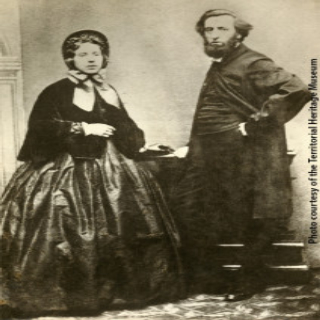 William Booth
The Salvation Army founder, William Booth was born in Nottingham, England, on 10 April 1829.
Salvation Army founder General William BoothFrom his earliest years, William was no stranger to poverty. He was just 14 when his father died and was already working as a pawnbroker’s apprentice to supplement the family’s income.
As a pawnbroker, William saw poverty and suffering on a daily basis. By the time he finished his six-year apprenticeship, he had developed a deep hatred of it.
William, a fiery and impulsive teenager, became a Christian at 15 and began attending the local Wesleyan Chapel. There, he developed the passion that would be the driving force in his life; to reach the down and out of Britain's cities through the Gospel of Christ.
William, a talented preacher from a young age, went on to work as a travelling evangelist with the Methodist church. But it was through preaching in the streets of London's slums that he discovered his life's purpose and The Salvation Army was born.
Catherine Booth
The Salvation Army "mother", Catherine Mumford was born in Ashbourne, Derbyshire, on 17 January 1829.
The Salvation Army founder and Army mother Catherine BoothFrom an early age, she was a serious and sensitive girl with a strong Christian upbringing. By the age of 12, it's said that she had read the Bible through eight times.
At 14, Catherine became ill and spent a great deal of time in bed. She kept herself busy, especially concerned about the problems of alcohol. She wrote articles for a magazine, encouraging people not to drink.
But at 16, she came wholly into her faith. Reading the words, 'My God I am Thine, what a comfort Divine' in her hymn book, she realised the truth of them for herself.
A gentle woman with powerful appeal, Catherine would go on to co-found The Salvation Army and prove an inspiration to women in a harsh time.
Life together
Catherine and William met when he came to preach at her church. They soon fell in love and became engaged. During their three-year engagement, William continued his work as a travelling evangelist. Catherine was a constant support to William, writing him letters of encouragement on his travels.
They married on 16 June 1855.
Together, William and Catherine embarked on a lifelong journey to answer the call of God to bring the Gospel to the people. While William was a natural speaker, Catherine was a quiet woman and not at all accustomed to speaking at gatherings. It took time for her to find her voice, but she was driven by a conviction that woman had the same rights as men to speak. She grew into a courageous speaker, known for her gentle manner but powerful appeal, counselling alcoholics in their homes and holding cottage meetings for new faithfuls.
They were also parents to a growing family of eight children, who were brought up with a firm Christian education and a great love for their God’s mission. Two of their children, Bramwell and Evangeline would go on to be Generals of The Salvation Army.
In 1865, William, by now an independent evangelist, along with Catherine founded The Christian Mission. William preached to the poor while Catherine spoke to the wealthy to gain support for their financially demanding work. In time, she began to hold her own fundraising campaigns.
It was not until 1878 that The Christian Mission became known as The Salvation Army. Modelled after the military with William and his fellow ministers a part of God’s Army, seeking salvation for the masses. William was appointed the first General and his ministers became “officers”.
Catherine became known as “The Army Mother” and remained a strong voice on The Salvation Army’s ideas on social issues and matters of belief.
With its strong focus on the downtrodden and dispossessed, The Salvation Army began to grow beyond Britain’s borders. In William’s lifetime, the Army would be established in 58 countries and colonies. Its mission was and is still guided by William’s book “In Darkest England and the Way Out”, which maps out a revoluntionary approach to social engagement never before undertaken by a church.
Both Catherine and William worked tirelessly to bring the Gospel to all, establishing a movement in the form of The Salvation Army. But, on 4th October 1890, Catherine lost her ongoing battle with ill health. Her son, Bramwell, described her passing as “a warrior laid down her sword to receive her crown”.
William continued on for many years, traveling all over the world to oversee his growing Army. On 20th August 1912, William Booth was, in Salvation Army terms, promoted to glory.
Though passed, both William and Catherine continue to be guiding influences in The Salvation Army and stand as the mightiest examples of how God uses the ordinary to create the extraordinary.
William Booth
The Salvation Army founder, William Booth was born in Nottingham, England, on 10 April 1829.
Salvation Army founder General William BoothFrom his earliest years, William was no stranger to poverty. He was just 14 when his father died and was already working as a pawnbroker’s apprentice to supplement the family’s income.
As a pawnbroker, William saw poverty and suffering on a daily basis. By the time he finished his six-year apprenticeship, he had developed a deep hatred of it.
William, a fiery and impulsive teenager, became a Christian at 15 and began attending the local Wesleyan Chapel. There, he developed the passion that would be the driving force in his life; to reach the down and out of Britain's cities through the Gospel of Christ.
William, a talented preacher from a young age, went on to work as a travelling evangelist with the Methodist church. But it was through preaching in the streets of London's slums that he discovered his life's purpose and The Salvation Army was born.
Catherine Booth
The Salvation Army "mother", Catherine Mumford was born in Ashbourne, Derbyshire, on 17 January 1829.
The Salvation Army founder and Army mother Catherine BoothFrom an early age, she was a serious and sensitive girl with a strong Christian upbringing. By the age of 12, it's said that she had read the Bible through eight times.
At 14, Catherine became ill and spent a great deal of time in bed. She kept herself busy, especially concerned about the problems of alcohol. She wrote articles for a magazine, encouraging people not to drink.
But at 16, she came wholly into her faith. Reading the words, 'My God I am Thine, what a comfort Divine' in her hymn book, she realised the truth of them for herself.
A gentle woman with powerful appeal, Catherine would go on to co-found The Salvation Army and prove an inspiration to women in a harsh time.
Life together
Catherine and William met when he came to preach at her church. They soon fell in love and became engaged. During their three-year engagement, William continued his work as a travelling evangelist. Catherine was a constant support to William, writing him letters of encouragement on his travels.
They married on 16 June 1855.
Together, William and Catherine embarked on a lifelong journey to answer the call of God to bring the Gospel to the people. While William was a natural speaker, Catherine was a quiet woman and not at all accustomed to speaking at gatherings. It took time for her to find her voice, but she was driven by a conviction that woman had the same rights as men to speak. She grew into a courageous speaker, known for her gentle manner but powerful appeal, counselling alcoholics in their homes and holding cottage meetings for new faithfuls.
They were also parents to a growing family of eight children, who were brought up with a firm Christian education and a great love for their God’s mission. Two of their children, Bramwell and Evangeline would go on to be Generals of The Salvation Army.
In 1865, William, by now an independent evangelist, along with Catherine founded The Christian Mission. William preached to the poor while Catherine spoke to the wealthy to gain support for their financially demanding work. In time, she began to hold her own fundraising campaigns.
It was not until 1878 that The Christian Mission became known as The Salvation Army. Modelled after the military with William and his fellow ministers a part of God’s Army, seeking salvation for the masses. William was appointed the first General and his ministers became “officers”.
Catherine became known as “The Army Mother” and remained a strong voice on The Salvation Army’s ideas on social issues and matters of belief.
With its strong focus on the downtrodden and dispossessed, The Salvation Army began to grow beyond Britain’s borders. In William’s lifetime, the Army would be established in 58 countries and colonies. Its mission was and is still guided by William’s book “In Darkest England and the Way Out”, which maps out a revoluntionary approach to social engagement never before undertaken by a church.
Both Catherine and William worked tirelessly to bring the Gospel to all, establishing a movement in the form of The Salvation Army. But, on 4th October 1890, Catherine lost her ongoing battle with ill health. Her son, Bramwell, described her passing as “a warrior laid down her sword to receive her crown”.
William continued on for many years, traveling all over the world to oversee his growing Army. On 20th August 1912, William Booth was, in Salvation Army terms, promoted to glory.
Though passed, both William and Catherine continue to be guiding influences in The Salvation Army and stand as the mightiest examples of how God uses the ordinary to create the extraordinary.
‘I Worked Harder’
ABSTRACT: “I worked harder than any of them.” Few figures in Scripture labor with the manifest industry of the apostle Paul. Where did such a prodigious work ethic come from? As one steeped in the Old Testament, Paul would have known and loved the many passages in Proverbs commending diligent, skillful labor and warning of idleness. The teaching of Proverbs, together with the mighty working of God’s grace, produced an energy and effort that challenges the trend toward leisure in society today. For our ongoing series of feature articles for pastors, leaders, and teachers, we asked Robert Yarbrough, professor of New Testament at Covenant Theological Seminary, to profile the work ethic of the apostle Paul. We all know about COVID and its worldwide spread. Much attention focuses on the number of deaths, and not without justification. But the numbers do grow wearisome — numbers deceased, numbers testing positive, numbers in ICUs, numbers on ventilators, and now numbers vaccinated (or not). Such numbers are a sign of fundamental matters (like human health) amiss. There is, though, another set of numbers that had become commonplace long before COVID in most locations in the United States, and to an extent worldwide. They too point to something amiss. I’m talking about lottery numbers, featured on various media outlets in most locales. The money squandered on these games of chance is staggering. While this is not the place to debate the wisdom, morality, or possible pros and cons of this form of gambling, I do believe that the popularity of lotteries alerts us to an emerging idol that Christians need to nip in the bud, if they have not already fallen to its worship. That idol is the love of being idle when it comes to gainful employment, like a job. (You play the lottery so you’ll never have to work again, right?) Or when it comes to labor for the good of others, like being a parent who tends a household and rears children. Or like pastoral ministry, which is typically heavy on self-sacrificial labor for the sake of others. The idol I am envisioning is the love of leisure when the kingdom of God calls for engaged subjects: douloi (servants, slaves) joyfully (at least much of the time) doing the King’s bidding. It is the love of money for the sake of making habitual downtime and idle enjoyment possible. It is the love of self-indulgence and the exploitation of creation’s goods for personal pleasure rather than for the fulfillment of God’s creation mandate and Christ’s call to discipleship. It is the love of being served rather than of serving. Think cruise-ship getaway. In remarks below, I want to remind us of key insights from contemporary discussion, from Scripture, and especially from the apostle Paul that will help us maintain a healthy relationship to our work in life rather than skepticism or antagonism toward that work that leads to a harmful gravitation toward idle pursuits that God is unlikely to deem productive or redemptive. The Worth of Work, with a Warning Work in the sense of human toil to earn a living has received abundant attention from Christian writers in recent years. A book by my colleague Daniel M. Doriani serves as an example: Work: Its Purpose, Dignity, and Transformation.1 On the back cover, D.A. Carson comments, “The last few years have witnessed a flurry of books that treat a Christian view of work. This is the best of them.” A few years back, Christianity Today carried a story on “reclaiming the honor of manual labor.”2 The article argued for the virtue and indeed necessity of more people learning trades rather than eschewing manual labor and avoiding jobs that demand arduous physical exertion. Of course, there is barren overwork, a bane to be avoided. Kevin DeYoung has written about it in Crazy Busy: A (Mercifully) Short Book about a (Really) Big Problem.3 If you’re too busy to get hold of the book(!), some main points were recently summarized online.4 DeYoung notes that busyness can empty life of joy, impoverish our hearts, and conceal and contribute to a bankrupt soul. When hard work (along with all of life’s other demands) shades over into obsessive hyperactivity, when we pour all our energy and devotion into gainful labor with no time or energy for anything else, we have idolized work, the benefits we plan to receive from it, or both. We need the psalmist’s reminder: It is in vain that you rise up early and go late to rest, eating the bread of anxious toil; for he gives to his beloved sleep. (Psalm 127:2)5 Yet while Scripture warns against work overload, it also models an appeal for God to bless our daily labors, not to rescue us from the need to perform them. The wonderful conclusion to Moses’s sole contribution to the Psalter runs, Let the favor of the Lord our God be upon us, and establish the work of our hands upon us; yes, establish the work of our hands! (Psalm 90:17) Duly warned of vesting work with devotion that belongs to God alone, we can still call on him to bless our licit labors. And we are wise to ask, What is work’s value, in God’s eyes? “Warned of vesting work with devotion that belongs to God alone, we can still call on him to bless our licit labors.” A considerable literature addresses this from various points of the world-Christian perspective. Esther O. Ayandokun draws on the Bible (along with other resources, both academic and religious) to argue for a work ethic without which the acute problem of poverty will only worsen in her location (Nigeria), where it is already severe.6 She argues that “when working hard is embraced by members of the society, the society will be free of corruption, thuggery, armed robbery, cultism, and other social vices.”7 More broadly, she concludes her survey of what Scripture says on the subject with this observation: [The] human race can fight poverty as they engage meaningfully in one job, or the other, depending on age, gender, skills, knowledge, and exposure. What is important is that no one should be idle, to the extent that such will only depend on the sweat of others perpetually. Everyone, who is old enough to work, must be employed gainfully. Efficient labour as established in the Scriptures, is a panacea for poverty alleviation; where each person (at work) does his/her best, to enhance production of quality goods, and services rendered.8 While panacea might not be quite the right word, that quotation lines up well with the wisdom on work that Proverbs offers, a wisdom that echoes in Paul’s life and letters. Work in Paul from Proverbs’ Perspective The apostle Paul, like other New Testament authors and Jesus himself, affirmed what we call the Old Testament as inspired by God and authoritative. While it is worthwhile to keep in mind views of work prevalent in Greco-Roman spheres or Judaism in the New Testament era,9 the New Testament often draws on the Old Testament to lay a foundation and to push back against the deficient understandings and practices of its day. The grass and flowers of the times wither and fade away, but God’s word endures (1 Peter 1:24–25; Isaiah 40:6, 8). A survey of references to work or labor in Proverbs (using the ESV) reveals principles that play out in Paul’s view of his own apostolic, missionary, and pastoral activities. They are surely worth pondering for our own outlook and practice. 1. God is a worker, and his people labor with and for him. The Lord possessed me at the beginning of his work, the first of his acts of old. (Proverbs 8:22) Here divine wisdom is personified, depicting the Lord as the Creator who works. That God is a worker, and that people made in his image are designed to work too, is widely accepted in the literature. This statement is typical: “Paul would have had a full understanding of God as worker, humankind as created for work, work properly done as glorifying God, but work also corruptible by the fall.”10 Accordingly, Paul viewed himself and others as coworkers (ESV “fellow workers,” synergos) with God (1 Corinthians 3:9). Nearly a dozen times, Paul mentions fellow workers; he views this fraternity of work as not merely human-with-human but also people laboring with God alongside, as when he calls Timothy “our brother and God’s coworker in the gospel of Christ” (1 Thessalonians 3:2). Paul viewed himself and his wide circle of accomplices as “fellow workers for the kingdom of God” (Colossians 4:11). 2. Hard work is virtuous, and slothfulness is a vice. From the fruit of his mouth a man is satisfied with good, and the work of a man’s hand comes back to him. (Proverbs 12:14) The hand of the diligent will rule, while the slothful will be put to forced labor. (Proverbs 12:24) Both of the passages above commend work by using hand to signify hard, competent, and gainful effort. “The work of a man’s hand” is how Paul described his ministry: “We labor, working with our own hands” (1 Corinthians 4:12). He counseled new converts at Thessalonica “to aspire to live quietly, and to mind your own affairs, and to work with your hands, as we instructed you” (1 Thessalonians 4:11). For someone in the church wrestling with the temptation to steal, Paul commanded, “Let the thief no longer steal, but rather let him labor, doing honest work with his own hands, so that he may have something to share with anyone in need” (Ephesians 4:28). “The epitaph of many a failed ministry and minister could be summed up with Proverbs’ words: ‘His hands refused to labor.’” The point is not that only manual or trade work is of value. It is rather that every believer’s life should be centered on God’s service for the promotion of God’s glory. Since in Paul’s day (as when Proverbs was written centuries earlier) most livelihoods required what we would consider hard physical work, Paul’s word to all believers in all situations was, “Whatever you do, work heartily, as for the Lord and not for men” (Colossians 3:23; see also 3:17; 1 Corinthians 10:31). Even allowing for changes over the ages, that is still perfectly understandable and highly applicable whatever our station in life today. “The slothful will be put to forced labor” expresses the conviction that the lazy run the risk of being commandeered by forces they could have escaped if they had gone to work for God and the good on their own. In Pauline terms, one thinks of his warning that we become slaves to sin if we reject faith in and service for Christ (Romans 6:16). 3. God guides the life direction and outcome of the person who works to honor God. Commit your work to the Lord, and your plans will be established. (Proverbs 16:3) This statement taps into the common canonical conviction of God’s benevolent and personally attuned sovereignty. Those who trust in him will find that he has gone before them; their efforts and labors will prove to have purpose, meaning, and value, because God has overseen and directed their way. A related conviction is stated a few verses later: “The heart of man plans his way, but the Lord establishes his steps” (Proverbs 16:9). Those who labor in fellowship with the Lord and in accordance with his purposes can be assured of God’s support, assistance, and ultimate vindication, even if one’s assignment ends in seeming disaster (like John the Baptist’s beheading, or Christ’s cross). Paul’s work was certainly committed “to the Lord.” This is epitomized in the statement “I have been crucified with Christ. It is no longer I who live, but Christ who lives in me” (Galatians 2:20). Paul can exhort the Philippians to practice what Paul taught and modeled, assuring them that “the God of peace will be with you” (Philippians 4:9).11 Their lives, the plans by which they live them, and the ends to which they strive “will be established,” as Proverbs 16:3 puts it. When Paul labored in Ephesus, he frankly acknowledged, “There are many adversaries” (1 Corinthians 16:9). But he purposes in the very same verse not to flee but to exploit “a wide door for effective work,” as “the Lord permits” (1 Corinthians 16:7). Ministry often proceeds under ominous auspices. But that may be precisely when God’s upholding hand is most vigorously at work. Sometimes fears are realized and calamity occurs — as Paul and Silas experienced in founding the Philippian congregation: “The crowd joined in attacking them, and the magistrates tore the garments off them and gave orders to beat them with rods. And when they had inflicted many blows upon them, they threw them into prison” (Acts 16:22–23). This doesn’t sound like a successful church-planting event. But Paul and Silas stood firm in trusting the God they served in Christ’s name. God used their poise and praise (Acts 16:25) to convert the jailer and his household and to establish a congregation. Paul’s unswerving resolve illustrates what it means to minister under the conviction that “your plans will be established.” 4. Idleness is destructive of those who languish in it. Whoever is slack in his work is a brother to him who destroys. (Proverbs 18:9) The desire of the sluggard kills him, for his hands refuse to labor. (Proverbs 21:25) From different angles, both of these verses warn of the destructive effect of idleness. The person “slack in his work” can probably rationalize it a dozen ways: “It’s Monday; I’m worn out from the weekend” (often a true statement for pastors!). “It’s Friday; I’m gearing up for the weekend” (maybe a prelude to skipping out of work for the golf course, or laying weekend plans to skip church . . . again). “Half-hearted effort, or doing much less than is possible, is the norm for many, whatever their occupation.” Half-hearted effort, or doing much less than is possible, is the norm for many, whatever their occupation. I think I see this attitude often in big-box home improvement stores when I need help in hardware or plumbing. It can be impossible to catch the eye of the attendant who is paid to help you. You might have to sprint to catch those who sense you want their help, as they suddenly feel the urge to flee to a distant aisle. Paul urged churches to “admonish the idle, encourage the fainthearted, help the weak, be patient with them all” (1 Thessalonians 5:14). The examples of Paul, Silvanus, and Timothy served as a public demonstration of how Christians should comport themselves: “You yourselves know how you ought to imitate us, because we were not idle when we were with you” (2 Thessalonians 3:7). “Slack in his work” and “the sluggard” describe an “idleness” Paul decried: Now we command you, brothers, in the name of our Lord Jesus Christ, that you keep away from any brother who is walking in idleness and not in accord with the tradition that you received from us. (2 Thessalonians 3:6) For we hear that some among you walk in idleness, not busy at work, but busybodies. (2 Thessalonians 3:11) The epitaph of many a failed ministry and minister could be summed up with Proverbs’ words above: “His hands refused to labor.” Failure to expend full effort can be justified in all kinds of ways, from self-care to self-love to a demonstration of the conviction that we’re not saved by works — so we’ll perform works sparingly and sporadically, since they aren’t really required for salvation. Paul’s example runs the opposite direction. Comparing himself with the other apostles, he speaks of God’s grace toward him, the former persecutor, and avers that this grace “was not in vain” (1 Corinthians 15:10). What proof does he point to? “I worked harder than any of” the other apostles, though Paul knows “it was not I, but the grace of God that is with me.” Because of that very grace, Paul toiled prodigiously, and not for a season or a year but over decades. 5. God is pleased by those who develop and apply the ability to work hard and skillfully. Do you see a man skillful in his work? He will stand before kings; he will not stand before obscure men. (Proverbs 22:29) This is one of my favorite verses in Proverbs. I grew up under a grandfather and father who did tree work — for Davey Tree Expert Company — and as a young man I devoted over six years to full-time tree climbing and timber felling, first for Davey, and then for lumber mills in western Montana and Idaho. For the first quarter-century of my life, I watched workmen come and go — attrition in this trade is high for understandable reasons. Men (at that time I knew of no women who climbed trees or felled timber) who had high standards for their work were rare. Theft of company equipment was common. Avoiding the hard or dangerous roles was the norm. Bosses knew they had to keep a sharp eye out for workers cutting corners or turning in work they did not perform. In those same years, I observed certain older men who stood out. They were kept on the payroll when others were laid off. The quality of their work set them apart. They were “skillful” (see the Proverbs verse above) in their attitude and execution. Years later, some owned their own companies or had moved to positions of oversight. Jesus taught, “One who is faithful in a very little is also faithful in much, and one who is dishonest in a very little is also dishonest in much” (Luke 16:10). In line with this, Paul taught Timothy and Titus to pay close attention to those whom their social settings regarded as less important people, like women and children and slaves. Paul spends more verses instructing Timothy on widows (1 Timothy 5:3–16) than on any other people group — including overseers! It was vital that Timothy’s care for the flock extend to what Jesus called “the least of these,” rather than majoring on the mighty and the wealthy, who easily attract church leaders’ fullest attention. Paul knew that church leaders who failed in the pastoral care of the seemingly less significant were unlikely to withstand the pressures and blandishments that come with duties that attract higher public visibility. In college, a young man training for the ministry was the envy of his classmates. He seemed to have a photographic memory. While others were beating Greek into their heads, not always with success, he would glance at the textbook right before quizzes and ace them all. But after graduation, despite his ability and intelligence, his level of ministry effectiveness fell below potential. Did this go back to being clever and gifted but not “skillful in his work”? Had he perhaps not really learned to work? In contrast, in that same college there was a fellow student who proved “skillful in his work.” He applied himself with the humor and energetic daily output that he had brought with him from his rural upbringing. He went on to be a highly published Old Testament scholar, professor, and speaker who has built up thousands of students, readers, and pastors in the faith over many decades. “He will stand before kings; he will not stand before obscure men” was actually fulfilled in the apostle Paul’s life, as God transformed a man zealous to oppress into a man eager “to carry [Christ’s] name before the Gentiles and kings and the children of Israel” (Acts 9:15). Paul’s consistent, all-out attention to more modest tasks the Lord set before him from the start — like in Damascus immediately proclaiming “Jesus in the synagogues, saying, ‘He is the Son of God’” (Acts 9:20) at great peril to himself — led to a witness that spoke all the way up to kings (Acts 26:2–29). Paul’s message has continued to challenge people and peoples everywhere, from common folk to global elites, down to this hour. But what about his ethos of unstinting hard work to get that message out?12 Recovering the Pauline Work Ethic An old saying from previous generations was “An idle mind is the devil’s workshop.” Today there are desires for leisure like never before and often the technological means to indulge those desires. COVID lockdowns and confinements have likely exacerbated temptations to idleness. It is not easy to find either the will or the means to busy ourselves in ways that sanctify and harness our inner restiveness so that the main thrust of our lives furthers divine ends rather than worldly trivialities. How many hours weekly do many in the church, including ministers, squander in online activities that are excessive or even illicit? Then there are, for some, still more hours of TV or movies or sports — all justifiable in theory, but in many lives amounting to a replacement of what should consume us: God, the furtherance of his kingdom, and labors that promote his holy and redemptive aims for us. Yes, God grants rest and leisure and recreation in their appropriate place. But many believers at some point wake up to how worthy Christ is of their devotion, not merely sentimentally or “spiritually” but in the expenditure of time and physical energy in ways that social media, ESPN, CNN, FOX, Internet browsing, and other black holes for time wastage cannot monetize. In many cases, we are not only idolizing indolence but paying for the privilege. “In many cases, we are not only idolizing indolence but paying for the privilege.” And the higher household income becomes, the more temptation there is for extravagant pursuits to dominate our horizon and make us forget that we are supposed to be “making the best use of the time, because the days are evil” (Ephesians 5:16). As church members, we are under the oversight of those charged with equipping us “for the work of ministry, for building up the body of Christ” (Ephesians 4:12). The percentage of church members, in most cases, whose notion of equipping goes beyond reasonably regular church attendance is probably impressive — mainly in the sense of appalling. So what are most Christians doing with most of their discretionary time? And what motivates them as they perform their daily labors? Are we mainly working for the weekend? Do we disappear for hours daily into cyberspace or other fantasy worlds in which we are serving, God knows, neither him nor people? To put it in a flurry of Pauline declarations and commendations that point to the all-out effort that the gospel spawned in the early church: Bear one another’s burdens, and so fulfill the law of Christ. (Galatians 6:2) Love one another with brotherly affection. Outdo one another in showing honor. Do not be slothful in zeal, be fervent in spirit, serve the Lord. (Romans 12:10–11) Contribute to the needs of the saints and seek to show hospitality. (Romans 12:13) Greet Mary, who has worked hard for you. (Romans 16:6) Greet those workers in the Lord, Tryphaena and Tryphosa. Greet the beloved Persis, who has worked hard in the Lord. (Romans 16:12) We labor, working with our own hands. (1 Corinthians 4:12) Always [abound] in the work of the Lord, knowing that in the Lord your labor is not in vain. (1 Corinthians 15:58) Be subject to such as these, and to every fellow worker and laborer. (1 Corinthians 16:16) If I am to live in the flesh, that means fruitful labor for me. (Philippians 1:22) It is God who works in you, both to will and to work for his good pleasure. (Philippians 2:13) For this I toil, struggling with all his energy that he powerfully works within me. (Colossians 1:29) Pray without ceasing. (1 Thessalonians 5:17)13 Let our people learn to devote themselves to good works, so as to help cases of urgent need, and not be unfruitful. (Titus 3:14) Such references are the tip of an iceberg of the industriousness that characterized those first mobilized by Christ and his gospel. Is this not a dynamic worth upholding now against all countervailing forces? Precisely in our time of unprecedented challenge and peril for Christians worldwide, there is need to reaffirm the conclusion reached in a recent study of Paul’s (high) regard for work: Failure to work — sloth — represents faithlessness toward God and our neighbor. There is no rank among Christians in the work place, as there is dignity and equality between all who labor and no task for the kingdom that is of lesser importance than any other. As Christians, our work is to sustain and support others and to relieve their burdens, as Paul’s work did, as we work for Christ’s kingdom. Hard work is the norm for the Christian, as it was for Paul, whether manual labor or otherwise, as it is a witness to others of our faith. To be that witness our work should follow the self-giving example of Christ, focused on Him and on others and not ourselves, marked by agape love.14 May God’s gospel grace move many more of us in this direction, smashing all idols of opposition to God’s work through our hands. Phillipsburg, NJ: P&R, 2019. ↩ Jeff Haanen and Chris Horst, “The Handcrafted Gospel,” Christianity Today, July/August 2014, 66–71. ↩ Wheaton, IL: Crossway, 2013. ↩ Kevin DeYoung, “3 Dangers of Busyness,” Crossway (blog), December 9, 2020, https://www.crossway.org/articles/3-dangers-of-busyness/. ↩ Unless otherwise noted, Scripture references are from the ESV. ↩ “The imperative of dignity of labour as a panacea for poverty alleviation in Nigeria,” Practical Theology (Baptist College of Theology, Lagos) 7 (2014): 84–110. See also Jude Lulenga Chisanga, “Christian Spirituality of Work: A Survey of Workers in Ndola City, Zambia,” African Ecclesial Review 60, nos. 1/2 (2018): 10–24. ↩ Ayandokun, “The imperative of dignity of labour,” 100. ↩ Ayandokun, “The imperative of dignity of labour,” 88–89. ↩ For this background, see, e.g., Christoph vom Brocke, “Work in the New Testament and in Greco-Roman Antiquity,” in Dignity of Work — Theological and Interdisciplinary Perspectives, ed. Kenneth Mtata, Documentation 56 (Minneapolis, MN: Lutheran University Press, 2011), 25–28. Accessible at https://www.lutheranworld.org. Alexander Whitaker, “Paul’s Theology of Work,” Puritan Reformed Journal 12, no. 2 (July 2020): 32. ↩ Annang Asumang, “Perfection of God’s Good Work: The Literary and Pastoral Function of the Theme of ‘Work’ in Philippians,” Conspectus 23, no. 1 (January 2017): 1–55, helpfully unpacks the theme of God’s work in that epistle, along with “not just the inward spiritual transformation of the Philippians, but also its social consequence and the Philippians’ synergistic active participation in” God’s work (42). But stress is laid on God’s provision and enabling, not the work ethic from the human side needed to embody God’s outpoured energies. ↩ See Akinyemi O. Alawode, “Paul’s biblical patterns of church planting: An effective method to achieve the Great Commission,” HTS Teologiese Studies/Theological Studies 76, no. 1 (2020): a5579, https://doi.org/10.4102/hts.v76i1.5579. This study describes concepts, patterns, models, and strategies. But there is no direct mention of the hard effort required for any of this to have worked for Paul or to work today. ↩ Those who obey this command assiduously know that while it has its joyful aspects, it is nevertheless work. ↩ Whitaker, “Paul’s Theology of Work,” 41. ↩ Article by Robert Yarbrough
-480.webp)
-480.webp)