
-480.webp)

By Their Blood (Christian Martyrs From The Twentieth Century And Beyond) Order Printed Copy
- Author: James & Marti Hefley
- Size: 2.18MB | 585 pages
- |
Others like by their blood (christian martyrs from the twentieth century and beyond) Features >>
Church History 101 - The Highlights Of Twenty Centuries

The Global War On Christians (Dispatches From The Front Lines Of Anti-Christian Persecution)
The Early Christians

Foxe’s Book Of Martyrs
Early History Of The Christian Church - The Fourth Century
The Christians As The Romans Saw Them

A Summary Of Christian History

Hearts Of Fire - Eight Women In The Underground Church And Their Stories Of Costly Faith
Fire On The Earth - Eyewitness Reports From The Azusa Street Revival
Foxes Books Of Martyrs
About the Book
"By Their Blood" by James and Marti Hefley provides a compelling and powerful account of Christian martyrs from the twentieth century and beyond. The book highlights the stories of individuals who sacrificed their lives for their faith and serves as a poignant reminder of the persecution faced by Christians around the world. Through vivid storytelling and thorough research, the authors honor the memory of these brave individuals and inspire readers to stand firm in their own beliefs.
Warren Wiersbe
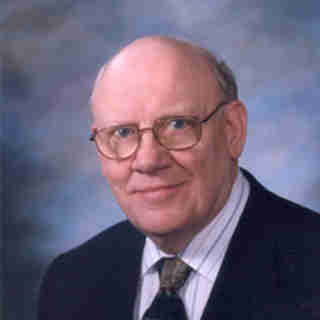 Dr. Warren Wiersbe once described Heaven as “not only a destination, but also a motivation. When you and I are truly motivated by the promise of eternity with God in heaven, it makes a difference in our lives.”
For Wiersbe, the promise of eternity became the motivation for his long ministry as a pastor, author, and radio speaker. Beloved for his biblical insight and practical teaching, he was called “one of the greatest Bible expositors of our generation” by the late Billy Graham.
Warren W. Wiersbe died on May 2, 2019, in Lincoln, Nebraska, just a few weeks shy of his 90th birthday.
“He was a longtime, cherished friend of Moody Bible Institute, a faithful servant of the Word, and a pastor to younger pastors like me,” said Dr. Mark Jobe, president of Moody Bible Institute. “We are lifting up pastor Wiersbe’s family in prayer at this time and rejoicing in the blessed hope that believers share together.”
Wiersbe grew up in East Chicago, Indiana, a town known for its steel mills and hard-working blue-collar families. In his autobiography, he connected some of his earliest childhood memories to Moody Bible Institute; his home church pastor was a 1937 graduate, Dr. William H. Taylor. After volunteering to usher at a 1945 Youth for Christ rally, Wiersbe found himself listening with rapt attention to Billy Graham’s sermon, and responded with a personal prayer of dedication.
In a precocious turn of events, the young Wiersbe was already a published author, having written a book of card tricks for the L. L. Ireland Magic Co. of Chicago. He quickly learned to liven up Sunday school lessons with magic tricks as object lessons (“not the cards!” he would say). After his high school graduation in 1947 (he was valedictorian), he spent a year at Indiana University before transferring to Northern Baptist Seminary in Chicago, where he earned a bachelor of theology degree. His future wife, Betty, worked in the school library, and Wiersbe was a frequent visitor.
While in seminary he became pastor of Central Baptist Church in East Chicago, serving until 1957. During those years he became a popular YFC speaker, which led to a full-time position with Youth for Christ International in Wheaton. He published his first article for Moody Monthly magazine in 1956, about Bible study methods, and seemed to outline his ongoing writing philosophy. “This is more of a personal testimony,” he said, “because I want to share these blessings with you, rather than write some scholarly essay, which I am sure I could not do anyway.”
At a 1957 YFC convention in Winona Lake, Indiana, Wiersbe preached a sermon that was broadcast live over WMBI, his first connection to Moody Radio. “I wish every preacher could have at least six months’ experience as a radio preacher,” he said later (because they would preach shorter).
While working with Youth for Christ, Wiersbe got a call from Pete Gunther at Moody Publishers, asking about possible book projects. First came Byways of Blessing (1961), an adult devotional; then two more books in 1962, A Guidebook for Teens and Teens Triumphant. He would eventually publish 14 titles with Moody, including William Culbertson: A Man of God (1974), Live Like a King (1976), The Annotated Pilgrim’s Progress (1980), and Ministering to the Mourning (2006), written with his son, David Wiersbe.
In 1961, D. B. Eastep invited Wiersbe to join the staff of Calvary Baptist Church in Covington, Kentucky. forming a succession plan that was hastened by Eastep’s sudden death in 1962. Warren and Betty Wiersbe remained at the church for 10 years, until they were surprised by a phone call from The Moody Church. The pastor, Dr. George Sweeting, had just resigned to become president of Moody Bible Institute. Would Wiersbe fill the pulpit, and pray about becoming a candidate?
He was already well known to the Chicago church—and to the MBI community. He continued to write for Moody Monthly and had just started a new column, “Insights for the Pastor.” The monthly feature continued to run during the years Wiersbe served at The Moody Church. Wiersbe would become one of the magazine’s most prolific writers—200 articles during a 40-year span. Meanwhile he also started work on the BE series of exegetical commentaries, books that soon found a place on the shelf of every evangelical pastor.
His ministry to pastors continued as he spoke at Moody Founder’s Week, Pastors’ Conference, and numerous campus events. He also inherited George Sweeting’s role as host of the popular Songs in the Night radio broadcast, produced by Moody Radio’s Bob Neff and distributed on Moody’s growing network of radio stations.
Later in life he would move to Lincoln, Nebraska, where he served as host of the Back to the Bible radio broadcast. He also taught courses on preaching at Trinity Evangelical Divinity School and Grand Rapids Baptist Seminary. He kept writing, eventually publishing more than 150 books and losing track of how many (“I can’t remember them all, and I didn’t save copies of everything,” he said.)
Throughout his ministry, Warren Wiersbe described himself as a bridge builder, a reference to his homiletical method of moving “from the world of the Bible to the world of today so that we could get to the other side of glory in Jesus.” As explained by his grandson, Dan Jacobson, “His preferred tools were words, his blueprints were the Scriptures, and his workspace was a self-assembled library.”
Several of Wiersbe’s extended family are Moody alums, including a son, David Wiersbe ’76; grandson Dan Jacobsen ’09 and his wife, Kristin (Shirk) Jacobsen ’09; and great-nephew Ryan Smith, a current student.
During his long ministry and writing career, Warren Wiersbe covered pretty much every topic, including the inevitability of death. These words from Ministering to the Mourning offer a fitting tribute to his own ministry:
We who are in Christ know that if He returns before our time comes to die, we shall be privileged to follow Him home. God’s people are always encouraged by that blessed hope. Yet we must still live each day soberly, realizing that we are mortal and that death may come to us at any time. We pray, “Teach us to number our days aright, that we may gain a heart of wisdom” (Psalm 90:12).
Dr. Warren Wiersbe once described Heaven as “not only a destination, but also a motivation. When you and I are truly motivated by the promise of eternity with God in heaven, it makes a difference in our lives.”
For Wiersbe, the promise of eternity became the motivation for his long ministry as a pastor, author, and radio speaker. Beloved for his biblical insight and practical teaching, he was called “one of the greatest Bible expositors of our generation” by the late Billy Graham.
Warren W. Wiersbe died on May 2, 2019, in Lincoln, Nebraska, just a few weeks shy of his 90th birthday.
“He was a longtime, cherished friend of Moody Bible Institute, a faithful servant of the Word, and a pastor to younger pastors like me,” said Dr. Mark Jobe, president of Moody Bible Institute. “We are lifting up pastor Wiersbe’s family in prayer at this time and rejoicing in the blessed hope that believers share together.”
Wiersbe grew up in East Chicago, Indiana, a town known for its steel mills and hard-working blue-collar families. In his autobiography, he connected some of his earliest childhood memories to Moody Bible Institute; his home church pastor was a 1937 graduate, Dr. William H. Taylor. After volunteering to usher at a 1945 Youth for Christ rally, Wiersbe found himself listening with rapt attention to Billy Graham’s sermon, and responded with a personal prayer of dedication.
In a precocious turn of events, the young Wiersbe was already a published author, having written a book of card tricks for the L. L. Ireland Magic Co. of Chicago. He quickly learned to liven up Sunday school lessons with magic tricks as object lessons (“not the cards!” he would say). After his high school graduation in 1947 (he was valedictorian), he spent a year at Indiana University before transferring to Northern Baptist Seminary in Chicago, where he earned a bachelor of theology degree. His future wife, Betty, worked in the school library, and Wiersbe was a frequent visitor.
While in seminary he became pastor of Central Baptist Church in East Chicago, serving until 1957. During those years he became a popular YFC speaker, which led to a full-time position with Youth for Christ International in Wheaton. He published his first article for Moody Monthly magazine in 1956, about Bible study methods, and seemed to outline his ongoing writing philosophy. “This is more of a personal testimony,” he said, “because I want to share these blessings with you, rather than write some scholarly essay, which I am sure I could not do anyway.”
At a 1957 YFC convention in Winona Lake, Indiana, Wiersbe preached a sermon that was broadcast live over WMBI, his first connection to Moody Radio. “I wish every preacher could have at least six months’ experience as a radio preacher,” he said later (because they would preach shorter).
While working with Youth for Christ, Wiersbe got a call from Pete Gunther at Moody Publishers, asking about possible book projects. First came Byways of Blessing (1961), an adult devotional; then two more books in 1962, A Guidebook for Teens and Teens Triumphant. He would eventually publish 14 titles with Moody, including William Culbertson: A Man of God (1974), Live Like a King (1976), The Annotated Pilgrim’s Progress (1980), and Ministering to the Mourning (2006), written with his son, David Wiersbe.
In 1961, D. B. Eastep invited Wiersbe to join the staff of Calvary Baptist Church in Covington, Kentucky. forming a succession plan that was hastened by Eastep’s sudden death in 1962. Warren and Betty Wiersbe remained at the church for 10 years, until they were surprised by a phone call from The Moody Church. The pastor, Dr. George Sweeting, had just resigned to become president of Moody Bible Institute. Would Wiersbe fill the pulpit, and pray about becoming a candidate?
He was already well known to the Chicago church—and to the MBI community. He continued to write for Moody Monthly and had just started a new column, “Insights for the Pastor.” The monthly feature continued to run during the years Wiersbe served at The Moody Church. Wiersbe would become one of the magazine’s most prolific writers—200 articles during a 40-year span. Meanwhile he also started work on the BE series of exegetical commentaries, books that soon found a place on the shelf of every evangelical pastor.
His ministry to pastors continued as he spoke at Moody Founder’s Week, Pastors’ Conference, and numerous campus events. He also inherited George Sweeting’s role as host of the popular Songs in the Night radio broadcast, produced by Moody Radio’s Bob Neff and distributed on Moody’s growing network of radio stations.
Later in life he would move to Lincoln, Nebraska, where he served as host of the Back to the Bible radio broadcast. He also taught courses on preaching at Trinity Evangelical Divinity School and Grand Rapids Baptist Seminary. He kept writing, eventually publishing more than 150 books and losing track of how many (“I can’t remember them all, and I didn’t save copies of everything,” he said.)
Throughout his ministry, Warren Wiersbe described himself as a bridge builder, a reference to his homiletical method of moving “from the world of the Bible to the world of today so that we could get to the other side of glory in Jesus.” As explained by his grandson, Dan Jacobson, “His preferred tools were words, his blueprints were the Scriptures, and his workspace was a self-assembled library.”
Several of Wiersbe’s extended family are Moody alums, including a son, David Wiersbe ’76; grandson Dan Jacobsen ’09 and his wife, Kristin (Shirk) Jacobsen ’09; and great-nephew Ryan Smith, a current student.
During his long ministry and writing career, Warren Wiersbe covered pretty much every topic, including the inevitability of death. These words from Ministering to the Mourning offer a fitting tribute to his own ministry:
We who are in Christ know that if He returns before our time comes to die, we shall be privileged to follow Him home. God’s people are always encouraged by that blessed hope. Yet we must still live each day soberly, realizing that we are mortal and that death may come to us at any time. We pray, “Teach us to number our days aright, that we may gain a heart of wisdom” (Psalm 90:12).
the progressive pilgrim: allegory for an easy age
Jesus said, “The gate is narrow and the way is hard that leads to life, and those who find it are few” (Matthew 7:13–14). In the twenty-first century, does his statement seem true to you? Have you found an easier way? Abraham may have wandered in tents, Paul may have been hunted like a deer, the disciples may have met brutal ends to their earthly careers, and many in the early church may have been slandered, reviled, plundered, fed to lions, burned to light the streets of Rome — “killed all the day long . . . regarded as sheep to be slaughtered” (Romans 8:36) — but that was then . We have smartphones now. Modernity seems to have done wonders to smooth the way. The narrow path lying between the City of Destruction and the Celestial City seems paved. Nathaniel Hawthorne (1804–1864) made a similar observation in his day. Though no friend of the Puritans, his short story “The Celestial Railroad” imitates and engages with John Bunyan’s The Pilgrim’s Progress . In it, he critiques the pillow-soft spirituality of his day (including Unitarianism and Transcendentalism), firing a critique that could have been written yesterday to describe the rampant easy-believism of today. Celestial Railroad Wandering through the gate of dreams, Mr. Hawthorne arrives at the famous City of Destruction. Having read Mr. Bunyan on the place, he is rather taken aback, and pleasantly surprised, to find that hostilities between this city and the Celestial City have all but vanished. Former foes shake hands. A pact built on “mutual compromise” has made allies from enemies. Enmity between the two lands is water under the bridge — or rather, a shining railroad over it. The Wicket Gate, that narrow and impossibly awkward entryway, as Bunyan’s readers will recall, has been replaced by the railroad station itself. Mr. Smooth-it-away — a distinguished gentleman in the enterprise who guides Mr. Hawthorne on his journey — ensures us all that this large building is much better suited to include the broadminded travelers of modernity. And the effect cannot be overstated, as Mr. Hawthorne relays: It would have done Bunyan’s heart good to see it. Instead of a lonely and ragged man, with a huge burden on his back, plodding along sorrowfully on foot, while the whole city hooted after him, here were parties of the first gentry and most respectable people in the neighborhood, setting forth towards the Celestial City, as cheerfully as if the pilgrimage were merely a summer tour. (199) The Celestial Railroad now transports would-be travelers — comfortably and safely — to the renowned City of Light. Individuals from Christian’s birthplace saw to it that no good-hearted pilgrim would ever again leave the city in derision or vulnerable to unsavory conditions and smiling foes. Nor would any carry that dreadful burden upon his back for miles on end — no, as Hawthorne gladly reports, One great convenience of the new method of going on pilgrimage, I must not forget to mention. Our enormous burdens, instead of being carried on our shoulders, as had been the custom of old, were all snugly deposited in the baggage-car, and, as I was assured, would be delivered to their respective owners at the journey’s end. (200) The travelers are sent off with their backpacks snugly tucked away, “to be delivered to their respective owners at the journey’s end.” Genius. But this, dear reader, is but the start to the innovations of the Celestial Railroad. Let me relay but a few more to you. Old Sites, New Conveniences Lengthy scrolls and books are not needed as tiresome maps along this journey; only a ticket is required. Such is very reasonable and expedient. To begin the journey, the dreadful Slough of Despond — that bog full of past sins and lusts and fears and temptations and doubts, in which Christian sank and at which Pliable flustered, only to return home — has a new sparkling bridge erected overhead. While wholesome teaching could not fill Bunyan’s slough, Hawthorne tells us, books of morality, German rationalism, modern sermons, and extracts of Plato, combined with a few innovative commentaries on Scripture, sufficed to lay the sturdy foundations to erect the bridge upon (198). Traveling farther, one discovers that the Interpreter’s House, while still receiving the occasional pilgrim of the old method, was no stop of the Celestial Railroad. Regretfully, Mr. Smooth-it-away remarks, that grand Interpreter grew rather sour, prudish, and prejudiced in his old age (a similar theme for the likes of Evangelist and Great-heart, the latter even “perpetually at blows” with his new collaborators). He could not keep with the times and got left behind. Hurried Cross Yes, dear reader, I can hear your question: What has become of the cross where the burden fell from Christian’s back? Let me cite the firsthand account: We were rushing by the place where Christian’s burden fell from his shoulders, [the] sight of the Cross. This served as a theme for Mr. Smooth-it-away, Mr. Live-for-the-world, Mr. Hide-sin-in-the-heart, Mr. Scaly-conscience, and a knot of gentlemen from the town of Shun-repentance, to descant upon the inestimable advantages resulting from the safety of our baggage. (203) “Crosses must be carried in every age, and the costs must be considered.” Rushing past the cross, the passengers revel in their good fortune at finding a way to travel to the Celestial City without leaving behind their precious habits and secret delights. It would be a shame, after all, to lose such desirable pastimes if they could help it. Yet there are still more improvements upon the old way to display. A tunnel now conveniently travels through Hill Difficult — the excavated ground then used to fill in the Valley of Humiliation. That dreary and gloomy Valley of the Shadow of Death now glows with gas lamps. And should you, with Mr. Hawthorne, regret missing the chance to visit Palace Beautiful — where live the young and fair Piety, Prudence, and Charity — ease your disappointed mind by overhearing, “Young ladies!” cried Mr. Smooth-it-away, as soon as he could speak for laughing. “And charming young ladies! Why, my dear fellow, they are old maids, every soul of them — prim, starched, dry, and angular — and not one of them, I will venture to say, has altered so much as the fashion of her gown, since the days of Christian’s pilgrimage.” (203–204) These fair maidens of yesterday, again, resisted the hard-won improvements, cherishing ancient, rough, and inefficient paths. Vanity Fair What can be said of Vanity Fair? Hear it from Mr. Hawthorne: this wonder of a place has the power to make anyone feel at home. The “great capital of human business and pleasure” stands as the epitome of everything “fascinating beneath the sun.” The people, Hawthorne finds, are most interesting and agreeable. Concerning the hostility that once led to the unfortunate execution of Faithful, Christian’s beloved companion, they’ve come to see the misstep. These noble and charming and wise people now enter into great camaraderie and trade with the passengers of the Celestial Railroad; indeed, many of them have taken to the railway themselves. But of all the wonders of the metropolis, Hawthorne relates one that might outshine them all: The Christian reader, if he had no accounts of the city later than Bunyan’s time, will be surprised to hear that almost every street has its church, and that the reverend clergy are nowhere held in higher respect than at Vanity Fair. (209) Indeed, few places could boast so much religiosity. Hawthorne continues, In justification of this high praise, I need only mention the names of the Rev. Mr. Shallow-deep; the Rev. Mr. Stumble-at-Truth; that fine old clerical character, the Rev. Mr. This-to-day, who expects shortly to resign his pulpit to the Rev. Mr. That-to-morrow; together with the Rev. Mr. Bewilderment; the Rev. Mr. Clog-the-spirit; and, last and greatest, the Rev. Dr. Wind-of-doctrine. (209) Filled with fine-dressing, stimulating people, and endless pleasures to buy, sell, and enjoy — mind you, in such a fine Christian place — the only curiosity was that people would just disappear. So common was the occurrence, Hawthorne relates, that the citizens learned to continue on as if nothing had happened. Today’s Celestial Railroad Now, Nathaniel Hawthorne was no Christian, and he wrote antagonistically about the Puritans in other stories (in part due to an infamous family history). But here, he casts stones — almost in sympathy with Bunyan — against the modern religiosity he viewed as shallow, smooth, and deceptive. Any reader of the story sees parallels today. They had Mr. Smooth-it-away; so have we. They had trains leaving every day to what is thought the Celestial City; so have we. They had people tucking their sins under the caboose, deploring the hard way, wanting merely a ticket to heaven; so have we. They hurried past the cross of Christ; so do many who claim to be his followers today. How many sermons, small groups, Christian ministries escape this description? There was much pleasant conversation about the news of the day, topics of business, politics, or the lighter matters of amusement while religion, though indubitably the main thing at heart, was thrown tastefully into the background. Even an infidel would have heard little or nothing to shock his sensibility. (200) “False paths, sliding downward, are smoothest.” Teachers and preachers, once found in the Interpreter’s house, wooing pilgrims with golden crowns and warning them against smooth paths, now create them. Done with the cautions and commands, they converse among friends. His name is not Pastor; it is Jake — just Jake. He does not tell you what God has said; he is there to listen, just another broken sheep like everyone else. He gives comforting homilies and entertaining stories, but the utterance “Thus says the Lord” is far from his lips. And I fear that, just as in the end of Hawthorne’s dream before he awakes, so in our world, Mr. Smooth-it-away leaves many on steam ferryboats traveling to Tophet (hell). False paths, sliding downward, are smoothest. The true path is not easy or broad — even for societies without much physical intimidation. Our Christ, who carried his own cross, leaves his church crosses to be carried in every age, and costs to be considered. This earth will pass away, but Jesus’s word shall not: “The gate is narrow and the way is hard that leads to life, and those who find it are few” (Matthew 7:13–14).
-480.webp)
-480.webp)