
Others like boundaries for leaders Features >>
Good Leaders Ask Great Question

31 Secrets For Career Success

Everyone Communicates, Few Connect
The Art Of Work
Fundamentals Of Piano Practice
Success Strategies
-160.webp)
The Gifts Of Imperfection: Embrace Who You Are

Obsessed - Building A Brand People Love From Day One
-160.webp)
The Rhythm Of Life: Living Every Day With Passion And Purpose

How Successful People Think
About the Book
"Boundaries for Leaders" by Dr. Henry Cloud explores the importance of setting boundaries as a leader to create a productive and healthy work environment. Cloud provides practical strategies and tips for leaders to establish clear boundaries, foster accountability, and cultivate a positive organizational culture. The book emphasizes the impact of effective leadership boundaries on improving team performance, communication, and overall success in the workplace.
John and Betty Stam
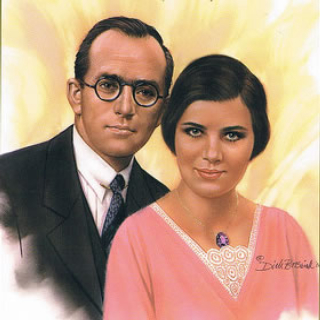 The year 1934. Americans John and Betty Stam were serving as missionaries in China. One morning Betty was bathing her three-month-old daughter Helen Priscilla Stam when Tsingteh's city magistrate appeared. Communist forces were near, he warned, and urged the Stams to flee.
So John Stam went out to investigate the situation for himself. He received conflicting reports. Taking no chances, he arranged for Betty and the baby to be escorted away to safety if need be. But before the Stams could make their break, the Communists were inside the city. By little-known paths, they had streamed over the mountains behind government troops. Now gun shots sounded in the streets as looting began. The enemy beat on the Stams' own gate.
A faithful cook and maid at the mission station had stayed behind. The Stams knelt with them in prayer. But the invaders were pounding at the door. John opened it and spoke courteously to the four leaders who entered, asking them if they were hungry. Betty brought them tea and cakes. The courtesy meant nothing. They demanded all the money the Stams had, and John handed it over. As the men bound him, he pleaded for the safety of his wife and child. The Communists left Betty and Helen behind as they led John off to their headquarters.
Before long, they reappeared, demanding mother and child. The maid and cook pleaded to be allowed to accompany Betty.
"No," barked the captors, and threatened to shoot.
"It is better for you to stay here," Betty whispered. "If anything happens to us, look after the baby."
[When we consecrate ourselves to God, we think we are making a great sacrifice, and doing lots for Him, when really we are only letting go some little, bitsie trinkets we have been grabbing, and when our hands are empty, He fills them full of His treasures. --Betty Stam]
Betty was led to her husband's side. Little Helen needed some things and John was allowed to return home under guard to fetch them. But everything had been stolen. That night John was allowed to write a letter to mission authorities. "My wife, baby and myself are today in the hands of the Communists in the city of Tsingteh. Their demand is twenty thousand dollars for our release. . . . We were too late. The Lord bless and guide you. As for us, may God be glorified, whether by life or by death."
Prisoners in the local jail were released to make room for the Stams. Frightened by rifle fire, the baby cried out. One of the Reds said, "Let's kill the baby. It is in our way." A bystander asked, "Why kill her? What harm has she done?"
"Are you a Christian?" shouted one of the guards.
The man said he was not; he was one of the prisoners just released.
"Will you die for this foreign baby?" they asked. As Betty hugged Helen to her chest, the man was hacked to pieces before her eyes.
Terror in the Streets
The next morning their captors led the Stams toward Miaosheo, twelve miles distant. John carried little Helen, but Betty, who was not physically strong, owing to a youthful bout with inflammatory rheumatitis was allowed to ride a horse part of the way. Terror reigned in the streets of Miaosheo. Under guard, the foreign family was hustled into the postmaster's shop.
"Where are you going?" asked the postmaster, who recognized them from their previous visits to his town. "We do not know where they are going, but we are going to heaven," answered John. He left a letter with the postmaster. "I tried to persuade them to let my wife and baby go back from Tsingteh with a letter to you, but they would not let her. . . ."
That night the three were held in the house of a wealthy man who had fled. They were guarded by soldiers. John was tied to a post all that cold night, but Betty was allowed enough freedom to tend the baby. As it turned out, she did more than that.
Execution
The next morning the young couple were led through town without the baby. Their hands were tightly bound, and they were stripped of their outer garments as if they were common criminals. John walked barefoot. He had given his socks to Betty. The soldiers jeered and called the town’s folk to come see the execution. The terrified people obeyed.
On the way to the execution, a medicine-seller, considered a lukewarm Christian at best, stepped from the crowd and pleaded for the lives of the two foreigners. The Reds angrily ordered him back. The man would not be stilled. His house was searched, a Bible and hymnbook found, and he, too was dragged away to die as a hated Christian.
John pleaded for the man’s life. The Red leader sharply ordered him to kneel. As John was speaking softly, the Red leader swung his sword through the missionary’s throat so that his head was severed from his body. Betty did not scream. She quivered and fell bound beside her husband’s body. As she knelt there, the same sword ended her life with a single blow.
Betty
Betty Scott was born in the United States but reared in China as the daughter of missionaries. She came to the United States and attended Wilson College in Pennsylvania. Betty prepared to follow in her parents’ footsteps and work in China or wherever else the Lord directed her.
But China it proved to be. At a prayer meeting for China, she met John Stam and a friendship developed that ripened into love. Painfully they recognized that marriage was not yet possible. “The China Inland Mission has appealed for men, single men, to work in sections where it would be impossible to take a woman until more settled work has commenced,” wrote John. He committed the matter to the Lord, whose work, he felt, must come before any human affection. At any rate, Betty would be leaving for China before him, to work in an entirely different region, and so they must be separated anyhow. As a matter of fact, John had not yet even been accepted by the China Inland Mission whereas Betty had. They parted after a long tender day, sharing their faith, picnicking, talking, and praying.
Betty sailed while John continued his studies. On July 1, 1932, John, too, was accepted for service in China. Now at least he could head toward the same continent as Betty. He sailed for Shanghai.
Meanwhile, Betty found her plans thwarted. A senior missionary had been captured by the Communists in the region where she was to have worked. The mission directors decided to keep her in a temporary station, and later ill-health brought her to Shanghai. Thus without any choice on her part, she was in Shanghai when John landed in China. Immediately they became engaged and a year later were married, long before they expected it. In October, 1934 Helen Priscilla was born to them. What would become of her now that her parents John and Betty were dead?
In the Hills
For two days, local Christians huddled in hiding in the hills around Miaosheo. Among them was a Chinese evangelist named Mr. Lo. Through informants, he learned that the Communists had captured two foreigners. At first he did not realize that these were John and Betty Stam, with whom he had worked, but as he received more details, he put two and two together. As soon as government troops entered the valley and it was safe to venture forth, Mr. Lo hurried to town. His questions met with silence. Everyone was fearful that spies might report anyone who said too much.
An old woman whispered to Pastor Lo that there was a baby left behind. She nodded in the direction of the house where John and Betty had been chained their last night on earth. Pastor Lo hurried to the site and found room after room trashed by the bandits. Then he heard a muffled cry. Tucked by her mother in a little sleeping bag, Helen was warm and alive, although hungry after her two day fast.
The kindly pastor took the child in his arms and carried her to his wife. With the help of a local Christian family, he wrapped the bodies that still lay upon the hillside and placed them into coffins. To the crowd that gathered he explained that the missionaries had only come to tell them how they might find forgiveness of sin in Christ. Leaving others to bury the dead, he hurried home. Somehow Helen had to be gotten to safety.
Pastor Lo's own son, a boy of four, was desperately ill -- semi-conscious after days of exposure. Pastor Lo had to find a way to carry the children a hundred miles through mountains infested by bandits and Communists. Brave men were found willing to help bear the children to safety, but there was no money to pay them for their efforts. Lo had been robbed of everything he had.
From Beyond the Grave
But from beyond the grave, Betty provided. Tucked in Helen's sleeping bag were a change of clothes and some diapers. Pinned between these articles of clothing were two five dollar bills. It made the difference.
Placing the children in rice baskets slung from the two ends of a bamboo pole, the group departed quietly, taking turns carrying the precious cargo over their shoulders. Mrs. Lo was able to find Chinese mothers along the way to nurse Helen. On foot, they came safely through their perils. Lo's own boy recovered consciousness suddenly and sat up, singing a hymn.
Eight days after the Stams fell into Communist hands, another missionary in a nearby city heard a rap at his door. He opened it and a Chinese woman, stained with travel, entered the house, bearing a bundle in her arms. "This is all we have left," she said brokenly.
The missionary took the bundle and turned back the blanket to uncover the sleeping face of Helen Priscilla Stam. Many kind hands had labored to preserve the infant girl, but none kinder than Betty who had spared no effort for her baby even as she herself faced degradation and death.
Kathleen White has written an excellent and very readable biography John and Betty Stam, available from Bethany House Publishers (1988). She reports that Betty's alma mater, Wilson College in Pennsylvania, took over baby Helen's support and covered the costs of her college education. She added: "Helen is living in this country (USA) with her husband and family but does not wish her identity and whereabouts to be made known."
Resources:
Huizenga, Lee S. John and Betty Stam; Martyrs. Zondervan, 1935.
Pollock, John. Victims of the Long March and Other Stories. Waco, Texas.: Word Publishing, 1970.
Taylor, Mrs. Howard. The Triumph of John and Betty Stam. China Inland Mission, 1935.
The year 1934. Americans John and Betty Stam were serving as missionaries in China. One morning Betty was bathing her three-month-old daughter Helen Priscilla Stam when Tsingteh's city magistrate appeared. Communist forces were near, he warned, and urged the Stams to flee.
So John Stam went out to investigate the situation for himself. He received conflicting reports. Taking no chances, he arranged for Betty and the baby to be escorted away to safety if need be. But before the Stams could make their break, the Communists were inside the city. By little-known paths, they had streamed over the mountains behind government troops. Now gun shots sounded in the streets as looting began. The enemy beat on the Stams' own gate.
A faithful cook and maid at the mission station had stayed behind. The Stams knelt with them in prayer. But the invaders were pounding at the door. John opened it and spoke courteously to the four leaders who entered, asking them if they were hungry. Betty brought them tea and cakes. The courtesy meant nothing. They demanded all the money the Stams had, and John handed it over. As the men bound him, he pleaded for the safety of his wife and child. The Communists left Betty and Helen behind as they led John off to their headquarters.
Before long, they reappeared, demanding mother and child. The maid and cook pleaded to be allowed to accompany Betty.
"No," barked the captors, and threatened to shoot.
"It is better for you to stay here," Betty whispered. "If anything happens to us, look after the baby."
[When we consecrate ourselves to God, we think we are making a great sacrifice, and doing lots for Him, when really we are only letting go some little, bitsie trinkets we have been grabbing, and when our hands are empty, He fills them full of His treasures. --Betty Stam]
Betty was led to her husband's side. Little Helen needed some things and John was allowed to return home under guard to fetch them. But everything had been stolen. That night John was allowed to write a letter to mission authorities. "My wife, baby and myself are today in the hands of the Communists in the city of Tsingteh. Their demand is twenty thousand dollars for our release. . . . We were too late. The Lord bless and guide you. As for us, may God be glorified, whether by life or by death."
Prisoners in the local jail were released to make room for the Stams. Frightened by rifle fire, the baby cried out. One of the Reds said, "Let's kill the baby. It is in our way." A bystander asked, "Why kill her? What harm has she done?"
"Are you a Christian?" shouted one of the guards.
The man said he was not; he was one of the prisoners just released.
"Will you die for this foreign baby?" they asked. As Betty hugged Helen to her chest, the man was hacked to pieces before her eyes.
Terror in the Streets
The next morning their captors led the Stams toward Miaosheo, twelve miles distant. John carried little Helen, but Betty, who was not physically strong, owing to a youthful bout with inflammatory rheumatitis was allowed to ride a horse part of the way. Terror reigned in the streets of Miaosheo. Under guard, the foreign family was hustled into the postmaster's shop.
"Where are you going?" asked the postmaster, who recognized them from their previous visits to his town. "We do not know where they are going, but we are going to heaven," answered John. He left a letter with the postmaster. "I tried to persuade them to let my wife and baby go back from Tsingteh with a letter to you, but they would not let her. . . ."
That night the three were held in the house of a wealthy man who had fled. They were guarded by soldiers. John was tied to a post all that cold night, but Betty was allowed enough freedom to tend the baby. As it turned out, she did more than that.
Execution
The next morning the young couple were led through town without the baby. Their hands were tightly bound, and they were stripped of their outer garments as if they were common criminals. John walked barefoot. He had given his socks to Betty. The soldiers jeered and called the town’s folk to come see the execution. The terrified people obeyed.
On the way to the execution, a medicine-seller, considered a lukewarm Christian at best, stepped from the crowd and pleaded for the lives of the two foreigners. The Reds angrily ordered him back. The man would not be stilled. His house was searched, a Bible and hymnbook found, and he, too was dragged away to die as a hated Christian.
John pleaded for the man’s life. The Red leader sharply ordered him to kneel. As John was speaking softly, the Red leader swung his sword through the missionary’s throat so that his head was severed from his body. Betty did not scream. She quivered and fell bound beside her husband’s body. As she knelt there, the same sword ended her life with a single blow.
Betty
Betty Scott was born in the United States but reared in China as the daughter of missionaries. She came to the United States and attended Wilson College in Pennsylvania. Betty prepared to follow in her parents’ footsteps and work in China or wherever else the Lord directed her.
But China it proved to be. At a prayer meeting for China, she met John Stam and a friendship developed that ripened into love. Painfully they recognized that marriage was not yet possible. “The China Inland Mission has appealed for men, single men, to work in sections where it would be impossible to take a woman until more settled work has commenced,” wrote John. He committed the matter to the Lord, whose work, he felt, must come before any human affection. At any rate, Betty would be leaving for China before him, to work in an entirely different region, and so they must be separated anyhow. As a matter of fact, John had not yet even been accepted by the China Inland Mission whereas Betty had. They parted after a long tender day, sharing their faith, picnicking, talking, and praying.
Betty sailed while John continued his studies. On July 1, 1932, John, too, was accepted for service in China. Now at least he could head toward the same continent as Betty. He sailed for Shanghai.
Meanwhile, Betty found her plans thwarted. A senior missionary had been captured by the Communists in the region where she was to have worked. The mission directors decided to keep her in a temporary station, and later ill-health brought her to Shanghai. Thus without any choice on her part, she was in Shanghai when John landed in China. Immediately they became engaged and a year later were married, long before they expected it. In October, 1934 Helen Priscilla was born to them. What would become of her now that her parents John and Betty were dead?
In the Hills
For two days, local Christians huddled in hiding in the hills around Miaosheo. Among them was a Chinese evangelist named Mr. Lo. Through informants, he learned that the Communists had captured two foreigners. At first he did not realize that these were John and Betty Stam, with whom he had worked, but as he received more details, he put two and two together. As soon as government troops entered the valley and it was safe to venture forth, Mr. Lo hurried to town. His questions met with silence. Everyone was fearful that spies might report anyone who said too much.
An old woman whispered to Pastor Lo that there was a baby left behind. She nodded in the direction of the house where John and Betty had been chained their last night on earth. Pastor Lo hurried to the site and found room after room trashed by the bandits. Then he heard a muffled cry. Tucked by her mother in a little sleeping bag, Helen was warm and alive, although hungry after her two day fast.
The kindly pastor took the child in his arms and carried her to his wife. With the help of a local Christian family, he wrapped the bodies that still lay upon the hillside and placed them into coffins. To the crowd that gathered he explained that the missionaries had only come to tell them how they might find forgiveness of sin in Christ. Leaving others to bury the dead, he hurried home. Somehow Helen had to be gotten to safety.
Pastor Lo's own son, a boy of four, was desperately ill -- semi-conscious after days of exposure. Pastor Lo had to find a way to carry the children a hundred miles through mountains infested by bandits and Communists. Brave men were found willing to help bear the children to safety, but there was no money to pay them for their efforts. Lo had been robbed of everything he had.
From Beyond the Grave
But from beyond the grave, Betty provided. Tucked in Helen's sleeping bag were a change of clothes and some diapers. Pinned between these articles of clothing were two five dollar bills. It made the difference.
Placing the children in rice baskets slung from the two ends of a bamboo pole, the group departed quietly, taking turns carrying the precious cargo over their shoulders. Mrs. Lo was able to find Chinese mothers along the way to nurse Helen. On foot, they came safely through their perils. Lo's own boy recovered consciousness suddenly and sat up, singing a hymn.
Eight days after the Stams fell into Communist hands, another missionary in a nearby city heard a rap at his door. He opened it and a Chinese woman, stained with travel, entered the house, bearing a bundle in her arms. "This is all we have left," she said brokenly.
The missionary took the bundle and turned back the blanket to uncover the sleeping face of Helen Priscilla Stam. Many kind hands had labored to preserve the infant girl, but none kinder than Betty who had spared no effort for her baby even as she herself faced degradation and death.
Kathleen White has written an excellent and very readable biography John and Betty Stam, available from Bethany House Publishers (1988). She reports that Betty's alma mater, Wilson College in Pennsylvania, took over baby Helen's support and covered the costs of her college education. She added: "Helen is living in this country (USA) with her husband and family but does not wish her identity and whereabouts to be made known."
Resources:
Huizenga, Lee S. John and Betty Stam; Martyrs. Zondervan, 1935.
Pollock, John. Victims of the Long March and Other Stories. Waco, Texas.: Word Publishing, 1970.
Taylor, Mrs. Howard. The Triumph of John and Betty Stam. China Inland Mission, 1935.
witnessing with gospel tracts
Gospel tracts and pamphlets are very important tools in evangelism. The printing press was a wonderful gift from God and has been used greatly for the glory of Jesus Christ. The printed page can greatly multiply our efforts in the service of the Lord and tracts can oftentimes go places where we cannot go. Be Careful About the Message The first consideration in the use of Gospel tracts is to be certain that the content is scriptural. There are three problems with many gospel tracts: 1. Many tracts do not contain a clear and biblical presentation of the gospel. Many refer to salvation in an unscriptural and confusing manner, such as "asking Jesus into my heart" or "giving my life to Christ." Salvation is not to give one's life to Christ, but is to trust the finished atonement of Christ. Nowhere in the New Testament do we see the Lord Jesus or the Apostles telling people to give their lives to Christ or to ask Jesus into their hearts. We need to follow the Bible very carefully in the terminology we use so that people are not confused and so they do not make false professions of faith. 2. The second serious drawback is that most tracts do not deal with repentance. Most don't even mention the word or even hint at the concept, yet the Lord Jesus Christ and His apostles preached repentance plainly and demanded it from those who would be saved. Salvation only comes by "repentance toward God, and faith toward our Lord Jesus Christ" (Acts 20:21). Any presentation of the gospel should include the fact that God "now commandeth all men every where to repent" (Acts 17:30). Whether or not the word "repentance" is used in a gospel tract, the idea should be. What is repentance? It is a turning, a change of direction (1 Thess. 1:9). When I receive Jesus Christ as my Lord and Savior, I am turning my back to the old life. 3. Another problem is that many simply do not give enough information. Large numbers of people in North America today are as ignorant of the true God of the Bible and of the basics of the Gospel of the Lord Jesus Christ as any Hindu in darkest Asia. It is crucial that we begin with the basics with these people, and that we explain biblical terms thoroughly, otherwise, when they hear terms such as "saved," "believe," "Christ," "God," "sin," they won't have the proper idea of what we are talking about, and any "profession" they make will be empty. The following are a few examples of gospel tracts that include repentance: "The Bridge to Eternal Life." This full-color pamphlet is also illustrated. [Detroit Baptist Theological Seminary, Majestic Media, 810-725-5800] "Have You Considered This?" [Dennis Costella, Fundamental Evangelistic Association, 1476 W. Herndon, Suite 104 Fresno, CA 93711, 559-438-0080. [Also available online at https://www.feasite.org/Tracts/fbconsdr.htm] "I'm a Pretty Good Person" is one of the many tracts published by the Fellowship Tract League. It is a good tract to show people that their good works and religion won't take them to heaven. [available from Sermon and Song Ministries, P.O. Box 109, Ravenna, OH 44266, www.sermonandsong.org; also available from Fellowship Tract League, P.O. Box 164, Lebanon, OH 45036, 513-494-1075, http://www.fellowshiptractleague.org/] "The Little Red Book." This 12-page pamphlet is illustrated and has been effective. [Little Red Book, P.O. Box 341, N. Greece, NY 14515 or P.O. Box 7195, Greensboro, NC 27417, LRB@frontiernet.net, 585-225-0715] "The Most Important Thing You Must Consider." This tract is strong on God's holiness and just punishment of sin and the necessity of repentance. [Faith Baptist Church, 105-01 37th Avenue, Corona, NY 11368 718-457-5651, http://www.studygodsword.com/fbcpress/tracts.html] "What Is Your Life?" This pamphlet is illustrated. [Operation Somebody Cares, 1131 Brentwood Drive, Collinsville, VA 24078, 276-647-5328, http://www.operationsomebodycares.com] "What Must I Do to Be Saved" by the late Evangelist John R. Rice. [Sword of the Lord, Box 1099, Murfreesboro, TN 37130. 800-247-9673, booksales@swordofthelord.com] "Why Should I Let You into My Heaven?" [Dean Myers, deanmyers2@juno.com] Liberty Baptist Church in Greenville, Michigan, has a wide range of helpful Gospel tracts. [Pastor Mike Austin, Liberty Baptist Church, 11845 W. Carson City Road, Greenville, MI 48838. 616-754-7151, pastor@libertygospeltracts.com, http://www.libertygospeltracts.com/] Mercy and Truth Ministries has some interesting small tracts. One is titled "You Can Get to Heaven from ---------" and an edition can be obtained for each state in the U.S. [Mercy and Truth Ministries, Lawrence, KS 66049, 875-887-2203] Pilgrim Fundamental Baptist Press publishes a tract that is designed to leave with a tip after a meal. On the outside it says, "Thank you and here are 2 tips for you!" On the inside it states that Tip #1 is a monetary token of appreciation for your service, and Tip #2 is a Gospel tract that explains how to be saved. It is large enough to hold a standard tract. [Pilgrim Fundamental Baptist Press, P.O. Box 1832, Elkton, MD 21922] Things to Remember When Passing Out Tracts Giving out tracts is something every born again believer can do, young or old. 1. Remember that it is each believer's responsibility to give out the gospel (see Matt. 28:19-20; Mk. 16:15; Luke 24:45-48; Acts 1:8; 2 Cor. 5:17-21; Phil. 2:16; 2 Tim. 4:5). 2. Remember that by giving out the gospel you are offering the greatest gift in the world. When we give out the gospel we are offering dead people life; we are offering poor people riches; we are offering sick people healing; we are offering lost people salvation. 3. It is wise to read the tracts first yourself before giving them out to others. This way you will know exactly what it says and you can refer to it when you talk to people. Also, by first reading tracts before giving them away you can see if the tract contains something that is not true or leaves out something important such as repentance. 4. Make a commitment to give out so many tracts each week. 5. Always be pleasant and polite. Remember that you are a complete stranger to the people you are approaching. Ask kindly, "May I give you something special to read?" or "I have some Good News for You" or "May I give you something that has been a blessing in my own life?" If they are busy ask them to put it in their pocket and read at home. 6. Keep in mind that the goal is not merely to give out tracts but to find opportunities to witness to people about the Lord Jesus Christ with the goal of leading them to salvation. Use the tracts to open the conversation, and when you find someone who is interested take the time to talk further with him and see if he or she is willing to meet again. We must remember that it is not enough to give out tracts; the objective is to see people come to Christ and baptized and discipled (Matt. 28:19-20). 7. Don't get upset or discouraged if someone says something against Jesus and the Bible or they mock you and what you are doing. "For unto you it is given in the behalf of Christ, not only to believe on him, but also to suffer for his sake" (Phil. 1:29; see also Matt. 5:11-12; Jn. 15:20; Luke 9:26). 8. Give out tracts to those who look like they might be interested and to those who don't. We cannot look upon the hearts of men and we cannot know who God might be dealing with. Jesus said preach the gospel to every creature (Mk. 16:15). "In the morning sow thy seed, and in the evening withhold not thine hand: for thou knowest not whether shall prosper, either this or that, or whether they both shall be alike good" (Ecc. 11:6). Ecclesiastes 11:1 says, "Cast thy bread upon the waters: for thou shalt find it after many days." This refers to the custom of casting seed on the marshy ground after a river such as the Nile had overflowed its banks, trusting that the seed will take root and bring forth a crop. "When the waters receded, the grain in the alluvial soil sprang up. 'Waters' express the seemingly hopeless character of the recipients of the charity; but it shall prove at last to have been not thrown away" (Jamieson, Fausset, Brown). 9. Be sure there is a name and address stamped on each tract so that if someone is interested they have a contact for further help. A gospel correspondence course is a good way to follow up on tract distribution. See the section on correspondence courses in our book "Ideas for Evangelism" for suggestions. This seems to be more effective in some places than others, but we have personally seen much fruit by this means. 10. One of the most important things about tract distribution is faithfulness and persistence. Some may be thrown away but others may find them. We have a man in our church who first got interested in Christ by reading a tract that was given to his friend. This has happened many times. God wants faithful workers. Don't get discouraged if nothing seems to be happening. We must do this work by faith, not by sight. Keep your eyes on the Lord and trust Him to accomplish His will and to give fruit and just continue to give out the gospel. "But this I say, He which soweth sparingly shall reap also sparingly; and he which soweth bountifully shall reap also bountifully" (2 Cor. 9:6). "Moreover it is required in stewards, that a man be found faithful" (1 Cor. 4:2). 11. Remember that our real enemy in tract distribution is not people, but the devil. He is the god of this world who is blinding the minds of the unbelievers (2 Cor. 4:4). Thus we must have on the whole armor of God as we go about this important work (Eph. 6:11-12). 12. Pray much for your tract distribution, both before and after. Pray that God will open the eyes of the people so that they desire to know Him and that they will read and understand the tracts. Updated July 21, 2008. First published January 15, 1998 by David Cloud, Fundamental Baptist Information Service, P.O. Box 610368, Port Huron, MI 48061. Used with permission.