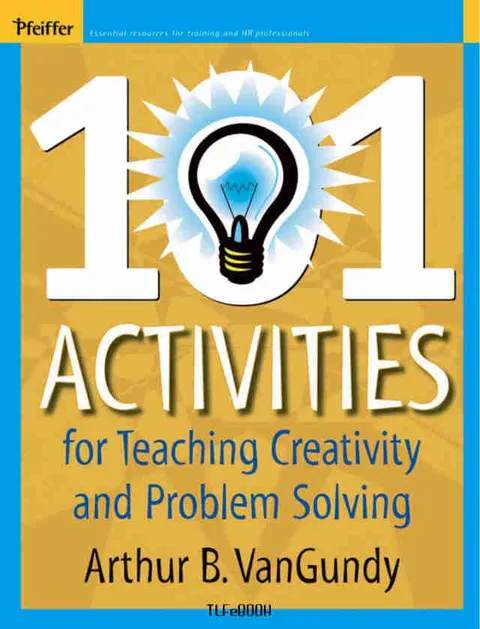

101 Activities For Teaching Creativity And Problem Solving Order Printed Copy
- Author: Arthur B Vangundy
- Size: 3.87MB | 410 pages
- |
Others like 101 activities for teaching creativity and problem solving Features >>
Words That Change Minds - The 14 Patterns For Mastering The Language Of Influence
7 Strategies For Wealth & Happiness
Change Your Habits, Change Your Life
Tough Times Never Last, But Tough People Do
Who Moved My Cheese
How To Influence People
-160.webp)
Better Decisions, Fewer Regrets (5 Questions To Help You Determine Your Next Move)
The Top Ten Mistakes Pastors Make
Empty Out The Negative
The Little Red Book Of Wisdom
About the Book
"101 Activities for Teaching Creativity and Problem Solving" by Arthur B. VanGundy offers a comprehensive guide for educators to enhance their students' creative thinking and problem-solving skills in the classroom. The book provides a collection of engaging activities and techniques that can be easily implemented to stimulate creativity and foster innovative solutions.
C.S. Lewis
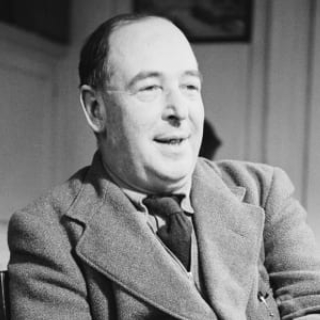 C.S. Lewis was a prolific Irish writer and scholar best known for his 'Chronicles of Narnia' fantasy series and his pro-Christian texts.
Who Was C.S. Lewis?
Writer and scholar C.S. Lewis taught at Oxford University and became a renowned Christian apologist writer, using logic and philosophy to support the tenets of his faith. He is also known throughout the world as the author of The Chronicles of Narnia fantasy series, which have been adapted into various films for the big and small screens.
Early Life
Clive Staples Lewis was born in Belfast, Ireland, on November 29, 1898, to Flora August Hamilton Lewis and Albert J. Lewis. As a toddler, Clive declared that his name was Jack, which is what he was called by family and friends. He was close to his older brother Warren and the two spent much time together as children.
Lewis was enraptured by fantastic animals and tales of gallantry, and hence the brothers created the imaginary land of Boxen, complete with an intricate history that served them for years. Lewis' mother died when he was 10, and he went on to receive his pre-college education at boarding schools and from a tutor. During WWI, he served with the British army and was sent home after being wounded by shrapnel. He then chose to live as a surrogate son with Janie Moore, the mother of a friend of Lewis' who was killed in the war.
Teaching Career at Oxford and Wartime Broadcasts
Lewis graduated from Oxford University with a focus on literature and classic philosophy, and in 1925 he was awarded a fellowship teaching position at Magdalen College, which was part of the university. There, he also joined the group known as The Inklings, an informal collective of writers and intellectuals who counted among their members Lewis' brother Warren and J.R.R. Tolkien. It was through conversations with group members that Lewis found himself re-embracing Christianity after having become disillusioned with the faith as a youth. He would go on to become renowned for his rich apologist texts, in which he explained his spiritual beliefs via platforms of logic and philosophy.
Lewis began publishing work including Spirits in Bondage in 1919 and the satirical Dymer in 1926. After penning other titles — including The Allegory of Love (1936), for which he won the Hawthornden Prize — he released in 1938 his first sci-fi work, Out of the Silent Planet, the first of a space trilogy which dealt sub-textually with concepts of sin and desire. Later, during WWII, Lewis gave highly popular radio broadcasts on Christianity which won many converts; his speeches were collected in the work Mere Christianity.
Books and Film Legacy
Lewis was a prolific author of fiction and nonfiction who wrote dozens of books over the course of his career. His faith-based arguments as seen in texts like The Great Divorce (1946) and Miracles (1947) are held in high regard by many theologians, scholars and general readers. His satirical fiction novel The Screwtape Letters (1942) is also a beloved classic. Lewis also continued his love affair with classic mythology and narratives during his later years: His book Till We Have Faces: A Myth Retold (1956) featured the story of Psyche and Cupid. He also penned an autobiography, Surprised by Joy: The Shape of My Early Life (1955).
Lewis' landmark series, The Chronicles of Narnia, has seen a number of on-screen iterations, including a cartoon version of The Lion, The Witch and the Wardrobe that was released in 1979 and a 1989 film series. Additionally, in 2005, a big-screen adaptation of The Lion, The Witch and the Wardrobe hit movie theaters, starring Tilda Swinton as the witch Jadis and Liam Neeson as the voice of Aslan. Two more Narnia films were brought to theaters as well: Prince Caspian (2008) and The Voyage of the Dawn Treader (2010). A movie version of The Silver Chair was slated to hit theaters in the near future, with filming starting in the winter of 2018.
Lewis' relationship with his wife, Joy, has also been depicted in Shadowlands, presented as a play and two films; one of the film versions was directed by Richard Attenborough and starred Anthony Hopkins as Lewis.
'The Chronicles of Narnia'
During the 1940s, Lewis began writing the seven books that would comprise The Chronicles of Narnia children's series, with The Lion, The Witch and the Wardrobe (1950) being the first release. The story focused on four siblings who, during wartime, walk through an armoire to enter the magical world of Narnia, a land resplendent with mythical creatures and talking animals. Throughout the series, a variety of Biblical themes are presented; one prominent character is Aslan, a lion and the ruler of Narnia, who has been interpreted as a Jesus Christ figure. (Lewis would assert that his Narnia stories weren't a direct allegory to the real world.)
Though the book received some negative reviews, it was generally well-received by readers, and the series retained its international popularity over the following decades.
Marriage
In 1954, Lewis joined the faculty of Cambridge University as a literature professor, and in 1956 he married an American English teacher, Joy Gresham, with whom he had been in correspondence. Lewis was full of happiness during the years of their marriage, though Gresham died of cancer in 1960. Lewis grieved deeply for his wife and shared his thoughts in the book A Grief Observed, using a pen name.
Death
In 1963, Lewis resigned from his Cambridge position after experiencing heart trouble. He died on November 22, 1963, in Headington, Oxford.
C.S. Lewis was a prolific Irish writer and scholar best known for his 'Chronicles of Narnia' fantasy series and his pro-Christian texts.
Who Was C.S. Lewis?
Writer and scholar C.S. Lewis taught at Oxford University and became a renowned Christian apologist writer, using logic and philosophy to support the tenets of his faith. He is also known throughout the world as the author of The Chronicles of Narnia fantasy series, which have been adapted into various films for the big and small screens.
Early Life
Clive Staples Lewis was born in Belfast, Ireland, on November 29, 1898, to Flora August Hamilton Lewis and Albert J. Lewis. As a toddler, Clive declared that his name was Jack, which is what he was called by family and friends. He was close to his older brother Warren and the two spent much time together as children.
Lewis was enraptured by fantastic animals and tales of gallantry, and hence the brothers created the imaginary land of Boxen, complete with an intricate history that served them for years. Lewis' mother died when he was 10, and he went on to receive his pre-college education at boarding schools and from a tutor. During WWI, he served with the British army and was sent home after being wounded by shrapnel. He then chose to live as a surrogate son with Janie Moore, the mother of a friend of Lewis' who was killed in the war.
Teaching Career at Oxford and Wartime Broadcasts
Lewis graduated from Oxford University with a focus on literature and classic philosophy, and in 1925 he was awarded a fellowship teaching position at Magdalen College, which was part of the university. There, he also joined the group known as The Inklings, an informal collective of writers and intellectuals who counted among their members Lewis' brother Warren and J.R.R. Tolkien. It was through conversations with group members that Lewis found himself re-embracing Christianity after having become disillusioned with the faith as a youth. He would go on to become renowned for his rich apologist texts, in which he explained his spiritual beliefs via platforms of logic and philosophy.
Lewis began publishing work including Spirits in Bondage in 1919 and the satirical Dymer in 1926. After penning other titles — including The Allegory of Love (1936), for which he won the Hawthornden Prize — he released in 1938 his first sci-fi work, Out of the Silent Planet, the first of a space trilogy which dealt sub-textually with concepts of sin and desire. Later, during WWII, Lewis gave highly popular radio broadcasts on Christianity which won many converts; his speeches were collected in the work Mere Christianity.
Books and Film Legacy
Lewis was a prolific author of fiction and nonfiction who wrote dozens of books over the course of his career. His faith-based arguments as seen in texts like The Great Divorce (1946) and Miracles (1947) are held in high regard by many theologians, scholars and general readers. His satirical fiction novel The Screwtape Letters (1942) is also a beloved classic. Lewis also continued his love affair with classic mythology and narratives during his later years: His book Till We Have Faces: A Myth Retold (1956) featured the story of Psyche and Cupid. He also penned an autobiography, Surprised by Joy: The Shape of My Early Life (1955).
Lewis' landmark series, The Chronicles of Narnia, has seen a number of on-screen iterations, including a cartoon version of The Lion, The Witch and the Wardrobe that was released in 1979 and a 1989 film series. Additionally, in 2005, a big-screen adaptation of The Lion, The Witch and the Wardrobe hit movie theaters, starring Tilda Swinton as the witch Jadis and Liam Neeson as the voice of Aslan. Two more Narnia films were brought to theaters as well: Prince Caspian (2008) and The Voyage of the Dawn Treader (2010). A movie version of The Silver Chair was slated to hit theaters in the near future, with filming starting in the winter of 2018.
Lewis' relationship with his wife, Joy, has also been depicted in Shadowlands, presented as a play and two films; one of the film versions was directed by Richard Attenborough and starred Anthony Hopkins as Lewis.
'The Chronicles of Narnia'
During the 1940s, Lewis began writing the seven books that would comprise The Chronicles of Narnia children's series, with The Lion, The Witch and the Wardrobe (1950) being the first release. The story focused on four siblings who, during wartime, walk through an armoire to enter the magical world of Narnia, a land resplendent with mythical creatures and talking animals. Throughout the series, a variety of Biblical themes are presented; one prominent character is Aslan, a lion and the ruler of Narnia, who has been interpreted as a Jesus Christ figure. (Lewis would assert that his Narnia stories weren't a direct allegory to the real world.)
Though the book received some negative reviews, it was generally well-received by readers, and the series retained its international popularity over the following decades.
Marriage
In 1954, Lewis joined the faculty of Cambridge University as a literature professor, and in 1956 he married an American English teacher, Joy Gresham, with whom he had been in correspondence. Lewis was full of happiness during the years of their marriage, though Gresham died of cancer in 1960. Lewis grieved deeply for his wife and shared his thoughts in the book A Grief Observed, using a pen name.
Death
In 1963, Lewis resigned from his Cambridge position after experiencing heart trouble. He died on November 22, 1963, in Headington, Oxford.
triune decision-making - how god guides tough choices
When we face a big decision, sometimes the decision-making process can feel more like a game show than a guided path. We can easily slip into the thinking that God is hosting “Let’s Make a Deal,” where we have to choose one of a slew of suitcases, hoping we pick the right one. When we face multiple doors and potential pathways, the freedom to choose can feel like crippling anxiety and pressure. Thankfully, our God does not play games with us, nor does he leave us to our own devices when making decisions. Contrary to popular belief, decisions are not puzzles to solve, but privileges to steward with the guidance of our triune God. Triune Guidance God offers triune guidance to his children as we face the decisions of life, from the minute to the monumental. Rather than stand far off from us, watching as we make decisions in consternation, he comes near to us, offering to guide us gently through a process that ultimately leads to more of himself. “Contrary to popular belief, decisions are not puzzles to solve, but privileges to steward.” As the Father who stands outside of time, God knows all that will happen and assures us that none of his plans will be thwarted (Isaiah 14:27; Job 42:2). He providentially steers all of creation, even the decisions of humans made in his image, working all things according to his everlasting and good purposes (Ephesians 1:11; Romans 8:28). He knows the number of hairs on our heads, the length of our days, and the tears we shed as we wrestle to make decisions (Luke 12:7; Psalm 139:16; Psalm 56:8). As the Son who stepped into time, Jesus is the pioneer and perfecter of our faith (Hebrews 12:1–3). He knows what it feels like to live within the limits of time and space, as he made decisions daily during his time on earth. While the first Adam led the way into disastrous, self-centered decision-making, as the second Adam, Christ always made decisions in light of the goodness of his Father (Romans 6:17–21). His perfect decisions cleared the path so that we can make our present decisions in the presence of the triune God. As the Spirit who makes his home within us, the Holy Spirit guides us into all truth, convicting us of our selfish propensities and pointing us to God’s promises as we make decisions (John 16:12–15). He offers us comfort and peace when we feel dizzied by the sheer amount of decisions we make daily. Triune Perspective In addition to these timeless truths that anchor our souls in the sea of decisions, a Trinitarian perspective can also serve as a practical help in the process. When we face decisions large or small, we are limited by our own perspective as embodied creatures. We simply cannot see or imagine all the possible angles, try as we may. God does not live within these limitations. As John Frame wisely notes, God “sees all things from every possible perspective” ( Theology in Three Dimensions , 4–5). While the Trinity is a unity (meaning all of God does all that God does), Frame’s triperspectivalism creates a framework that helps us approach complex truths from three different angles or perspectives within the Trinity. The normative, the situational, and the existential perspectives (which correlate to Father, Son, and Holy Spirit) can serve as different entry points for considering decisions. The normative perspective relates to God’s authority. God acts as our loving authority, providing principles and revealing truths by which we can understand the normative human experience. As Creator and Father, God sets the standards by which his creatures operate best in his world. When we approach a decision from the normative perspective, we ask, “What does God’s word say about the decision set before me?” The situational perspective relates to God’s control. Through his eternal Word, God perfectly controls and orders the movement of every proton and every person. If God is in complete control over all things (which he is), then we can trust that he has perfectly ordered our present circumstances with their opportunities, challenges, and limitations. When we approach a decision from the situational perspective, we assess the realities and circumstances in which we find ourselves. The existential perspective relates to God’s presence. The triune God has always sought to be close to his people, and by the Holy Spirit, he now lives within every believer. He is closer than even the air we breathe. The Spirit searches and permeates the deep waters of human hearts and personalities (1 Corinthians 2:10–13; Proverbs 20:5). When we approach a decision from the existential perspective, then, we are asking more internal questions about personal desires and feelings. Three Perspectives in Action If we can get past the length of the word triperspectivalism , we will begin to see the depth of practical wisdom we can glean from this approach to decisions. For example, when a couple is praying through a potential marriage, walking through the decision from the normative, the situational, and the existential can provide helpful insight. In Scripture, God is clear that marriage is between a man and a woman and that believers are to be equally yoked spiritually ( normative ). If the couple’s friends and family are not opposed to the union, and present circumstances seem to allow it ( situational ), the couple is then free to consider whether they desire to commit to each other in the covenant of marriage ( existential ). Let’s consider a different example. A young couple is eager to grow their family and has prayed and processed through adoption. They know that physical adoption is one of the most powerful pictures of the spiritual adoption we have received through Christ into the household of God (normative). They have been going through the prerequisite steps of training, they have conducted a home study, and they have even begun to check out agencies. There are countless options in their county, all of which they are able to pursue (situational); however, they both feel especially pulled toward the foster-care system, even though they know it will likely present unique challenges (existential). While God is pleased with all forms of adoption, they plan to forgo international and private adoption after much praying and processing within their local church. “God promises to use the decision-making process as a means to make us more like him and to give us more of him.” Finally, let’s look at a more ordinary, everyday decision through these three perspectives. A child has been invited to play in a sports tournament on a Sunday. The family has already prioritized worship in the local church (normative). The child knows that he will miss the first game because attendance at worship is a high point of the family’s weekly rhythms; however, he really wants to play in the afternoon game (existential). The parent of another player offers a ride to the second game that does not interfere with the rest of the plans for the day (situational). The parents are left to discuss what the child thinks is the best way to serve as a team member (existential). Guided Process to More of God When we are facing a significant decision, it is natural to be overwhelmed at the various paths set before us. But no matter which of the potential pathways you choose, remember that Jesus has opened up the most significant pathway for us already: he has opened up the path to fellowship with God through his own body (John 14:6). He has not left us alone to see how we fare in our decisions, as if he were a game show host. Rather, he takes us by the hand and leads us toward glory (Psalm 73:23–24). And along the way, he promises to use the decision-making process as a means to make us more like him and to give us more of him, who is our great reward (Genesis 15:1).