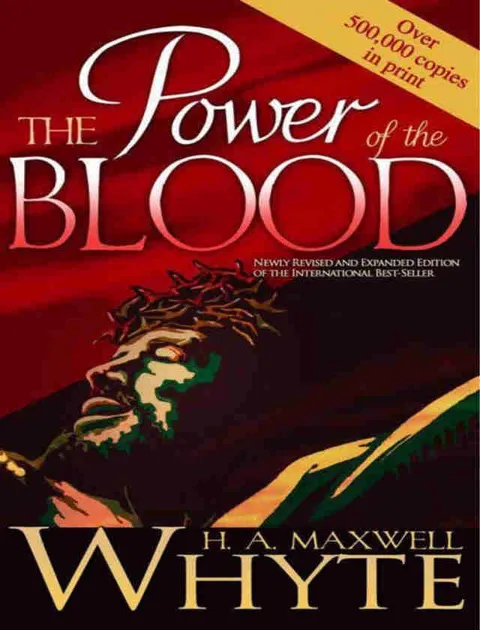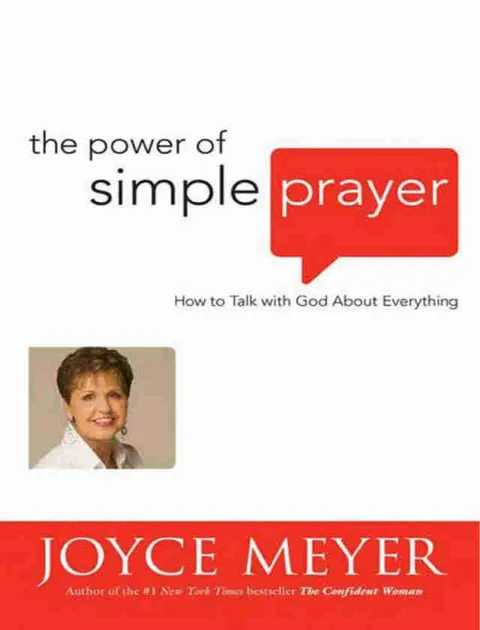

Others like the power of simple prayer Features >>
The Power Of A Praying Nation
The Power Of A Praying Life
The Essentials Of Prayer
The Power Of Faith-Filled Words
The Power Of Persistent Prayer
The Hidden Power Of Prayer And Fasting
The Purpose And Power Of Praise And Worship
The Fire Of Delayed Answers
The Power Of Praise And Worship
The Life Of Prayer
About the Book
"The Power of Simple Prayer" by Joyce Meyer is a guide to the transformative impact of prayer in one's life. Meyer emphasizes the importance of building a strong prayer life and offers practical tips on how to cultivate a deeper connection with God through simple, heartfelt prayers. She discusses the benefits of prayer, how to overcome common obstacles to prayer, and how to make prayer a natural part of your daily routine. Meyer's insights and personal anecdotes demonstrate the power of prayer to bring peace, strength, and guidance in challenging times.
Charles Finney
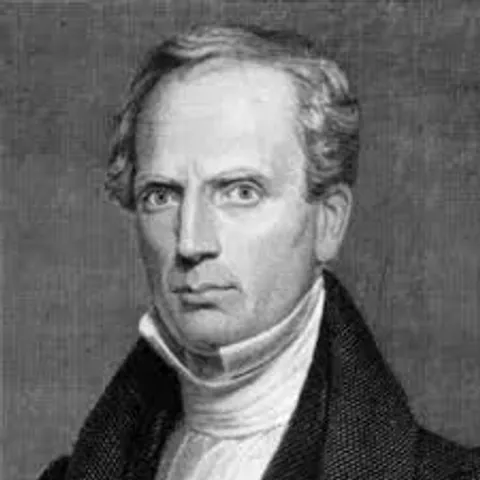 Childhood and Teen years
Charles Grandison Finney was born the year after Wesley died on 29th August, 1792 in Warren, Connecticut. In 1794 his family moved to New York state, eventually settling at Henderson, near Lake Ontario. Although he received only a brief formal education he decided to study law and joined the practice of a local lawyer, Benjamin Wright. He was also very musical, played the cello and directed the choir at the local Presbyterian Church pastured by Rev. George Gale.
His conversion
His conversion on October 10th 1821 reads like something out of the book of Acts. Smitten with conviction from Bible reading he decided to ‘settle the question of my soul’s salvation at once, that if it were possible, I would make my peace with God.’ (Autobiography)
This conviction increased to an unbearable level over the next couple of days and came to an head when he was suddenly confronted with an ‘inward voice.’ He was inwardly questioned about his spiritual condition and finally received revelation about the finished work of Christ and his own need to give up his sins and submit to Christ’s righteousness.
As he sought God in a nearby wood he was overwhelmed with an acute sense of his own wickedness and pride but finally submitted his life to Christ. Back at work that afternoon he was filled with a profound sense of tenderness, sweetness and peace. When work was over and he bade his employer goodnight, he then experienced a mighty baptism in the Holy Spirit, which was recorded as vividly as the day he experienced it, though it was penned some fifty years later.
The next morning Finney announced to a customer that he was leaving his law studies to become a preacher of the Gospel.
Charles Finney licensed to preach
He was licensed to preach in 1823 and ordained as an evangelist in 1824. His penetrating preaching was quite different from many local ministers and included an obvious attempt to break away from the traditional and, as he saw it, dead, orthodox Calvinism. He married to Lydia Andrews in October 1824 and was also joined by Daniel Nash (1774-1831), known popularly as ‘Father Nash.’ Undoubtedly Nash’s special ministry of prayer played a great part in Finney’s growing success as an evangelist.
Things really took off when he preached in his old church, where Rev. Gale still ministered. Numerous converts and critics followed! Similar results were experienced in nearby towns of Rome and Utica. Soon newspapers were reporting his campaigns and he began drawing large crowds with dramatic responses.
Soon he was preaching in the largest cities of the north with phenomenal results. Campaign after campaign secured thousands of converts.
The high point of Finney’s revival career was reached at Rochester, New York, during his 1830-1 meetings. Shopkeepers closed their businesses and the whole city seemed to centre on the revivalist. Responding to his irresistible logic and passionate arguments many of his converts were lawyers, merchants and those from a higher income and professional status.
His Preaching
Finney openly preached a modified Calvinism, influenced with his own theology of conversion and used what were perceived to be ‘revivalistic techniques.’
These ‘means’ included the use of the anxious bench (a special place for those under conviction), protracted meetings, women allowed to pray in mixed meetings, publicly naming those present resisting God in meetings and the hurried admission of new converts into church membership. Opponents viewed his preaching of the law as ‘scare tactics’ and his persuasive appeals for sinners to come to Christ for salvation were seen as over-emphasising the responsibility of men and ignoring the sovereignty of God.
His theology and practise soon became known as the ‘New Measures’ and attracted many opponents from the Old School Presbyterians led by Asahel Nettleton (himself no stranger to true revival and , the revivalistic Congregationalists headed by Lyman Beecher.
Pastor at Chatham Street Chapel
Finney accepted an appointment as pastor of Chatham Street Chapel in New York City in 1832 where he remained until 1837. It was during this time that he delivered a series of sermons published in 1835 as ‘Lectures on Revivals of Religion.’ Here he clearly stated his views regarding revivals being products of the correct use of human means. Such was the controversy that he left the Presbyterian denomination and joined the Congregationalists in 1836.
Oberlin College
The next year he became professor of theology at Oberlin College (Ohio) where he taught until his death. He was President here from 1851 until 1866, but still continued regular revival meetings in urban settings (twice in England, 1848, 1851) until 1860. During his stay at Oberlin he produced his, Lectures to Professing Christians (1836), Sermons on Important Subjects (1839) and his famous Memoirs.
The Father of Modern Revivalism
There is no doubt that Charles Grandison Finney well-deserves the title ‘The Father of Modern Revivalism.’ He was an evangelistic pioneer whose model was followed by a long line of revivalists from D. L. Moody to Billy Graham. His writing have made a massive impact on the entire evangelical world and particularly the ‘Lectures on Revivals’ which has, arguably, ignited more fires of revival than any other single piece literature in evangelical history.
This ‘Prince of Revivalists’ passed away peacefully at Oberlin on Sunday, 16th August, 1875 aged almost 83 years.
Bibliography: I Will Pour Out My Spirit, R. E. Davies, 1997; Ed: A. Scott Moreau, Baker Evangelical Dictionary of World Missions, 2000; Dictionary of Evangelical Biography 1730-1860, Vol. 1, 1995.
Tony Cauchi
Childhood and Teen years
Charles Grandison Finney was born the year after Wesley died on 29th August, 1792 in Warren, Connecticut. In 1794 his family moved to New York state, eventually settling at Henderson, near Lake Ontario. Although he received only a brief formal education he decided to study law and joined the practice of a local lawyer, Benjamin Wright. He was also very musical, played the cello and directed the choir at the local Presbyterian Church pastured by Rev. George Gale.
His conversion
His conversion on October 10th 1821 reads like something out of the book of Acts. Smitten with conviction from Bible reading he decided to ‘settle the question of my soul’s salvation at once, that if it were possible, I would make my peace with God.’ (Autobiography)
This conviction increased to an unbearable level over the next couple of days and came to an head when he was suddenly confronted with an ‘inward voice.’ He was inwardly questioned about his spiritual condition and finally received revelation about the finished work of Christ and his own need to give up his sins and submit to Christ’s righteousness.
As he sought God in a nearby wood he was overwhelmed with an acute sense of his own wickedness and pride but finally submitted his life to Christ. Back at work that afternoon he was filled with a profound sense of tenderness, sweetness and peace. When work was over and he bade his employer goodnight, he then experienced a mighty baptism in the Holy Spirit, which was recorded as vividly as the day he experienced it, though it was penned some fifty years later.
The next morning Finney announced to a customer that he was leaving his law studies to become a preacher of the Gospel.
Charles Finney licensed to preach
He was licensed to preach in 1823 and ordained as an evangelist in 1824. His penetrating preaching was quite different from many local ministers and included an obvious attempt to break away from the traditional and, as he saw it, dead, orthodox Calvinism. He married to Lydia Andrews in October 1824 and was also joined by Daniel Nash (1774-1831), known popularly as ‘Father Nash.’ Undoubtedly Nash’s special ministry of prayer played a great part in Finney’s growing success as an evangelist.
Things really took off when he preached in his old church, where Rev. Gale still ministered. Numerous converts and critics followed! Similar results were experienced in nearby towns of Rome and Utica. Soon newspapers were reporting his campaigns and he began drawing large crowds with dramatic responses.
Soon he was preaching in the largest cities of the north with phenomenal results. Campaign after campaign secured thousands of converts.
The high point of Finney’s revival career was reached at Rochester, New York, during his 1830-1 meetings. Shopkeepers closed their businesses and the whole city seemed to centre on the revivalist. Responding to his irresistible logic and passionate arguments many of his converts were lawyers, merchants and those from a higher income and professional status.
His Preaching
Finney openly preached a modified Calvinism, influenced with his own theology of conversion and used what were perceived to be ‘revivalistic techniques.’
These ‘means’ included the use of the anxious bench (a special place for those under conviction), protracted meetings, women allowed to pray in mixed meetings, publicly naming those present resisting God in meetings and the hurried admission of new converts into church membership. Opponents viewed his preaching of the law as ‘scare tactics’ and his persuasive appeals for sinners to come to Christ for salvation were seen as over-emphasising the responsibility of men and ignoring the sovereignty of God.
His theology and practise soon became known as the ‘New Measures’ and attracted many opponents from the Old School Presbyterians led by Asahel Nettleton (himself no stranger to true revival and , the revivalistic Congregationalists headed by Lyman Beecher.
Pastor at Chatham Street Chapel
Finney accepted an appointment as pastor of Chatham Street Chapel in New York City in 1832 where he remained until 1837. It was during this time that he delivered a series of sermons published in 1835 as ‘Lectures on Revivals of Religion.’ Here he clearly stated his views regarding revivals being products of the correct use of human means. Such was the controversy that he left the Presbyterian denomination and joined the Congregationalists in 1836.
Oberlin College
The next year he became professor of theology at Oberlin College (Ohio) where he taught until his death. He was President here from 1851 until 1866, but still continued regular revival meetings in urban settings (twice in England, 1848, 1851) until 1860. During his stay at Oberlin he produced his, Lectures to Professing Christians (1836), Sermons on Important Subjects (1839) and his famous Memoirs.
The Father of Modern Revivalism
There is no doubt that Charles Grandison Finney well-deserves the title ‘The Father of Modern Revivalism.’ He was an evangelistic pioneer whose model was followed by a long line of revivalists from D. L. Moody to Billy Graham. His writing have made a massive impact on the entire evangelical world and particularly the ‘Lectures on Revivals’ which has, arguably, ignited more fires of revival than any other single piece literature in evangelical history.
This ‘Prince of Revivalists’ passed away peacefully at Oberlin on Sunday, 16th August, 1875 aged almost 83 years.
Bibliography: I Will Pour Out My Spirit, R. E. Davies, 1997; Ed: A. Scott Moreau, Baker Evangelical Dictionary of World Missions, 2000; Dictionary of Evangelical Biography 1730-1860, Vol. 1, 1995.
Tony Cauchi
my dream singleness: an anthem for unmarried women
As an unmarried woman in my mid-twenties, I know that a season of singleness can often be fraught with disappointment and heartache. I hold hopes for a husband and a family close to my heart, but I also hope to hold Jesus even closer. At the end of my life, whether I am married for forty years or single for seventy, I long for it to be said of me, “She was devoted to Jesus.” Single or married, we belong to another. My marital status may read “single” on my tax return, but I am not unclaimed. I do belong to someone. And this is not some elusive future spouse. I’m speaking of Christ. I am his. Because Christ has bought us with his blood, we are not our own (1 Corinthians 6:19–20). We were not made or saved for this realm, but for another realm, a spiritual one. And in this spiritual realm, Jesus was clear that people are neither marrying, nor married. So despite the fact that marriage is beautiful and sacred, we were not made for earthly wedded bliss. That should free us to live out big dreams for singleness now, while we wait to be married. We were created for Christ, to be one with him. He and I — we were meant for each other (Ephesians 1:5–6). This is a match made in heaven, and for heaven. He is ours, and we are his. And this union can satisfy all other longings. Even if a spouse dies, deserts, disappoints, or never emerges in the first place, we already have a perfect union of glory and joy awaiting us that far surpasses the dim copy we might enjoy for a little while here. Singleness Is Good Paul, apparently, was single, at least for much of his life, and spoke of his marital status in glowing terms. Singleness is good, and is a gift from God (1 Corinthians 7:7–8). I can wake up tomorrow confident that not being married is good for me, and that it is my calling for the day. God does not give second-rate gifts. It’s not that I have asked for bread only for God to give me a stone instead (Matthew 7:9). No, singleness and marriage are different gifts, each with challenges and blessings, but they are equally good. Elisabeth Elliot writes: But having now spent more than 41 years single, I have learned that it is indeed a gift. Not one I would choose. Not one many women would choose. But we do not choose our gifts, remember? We are given them by a divine Giver who knows the end from the beginning and wants above all else to give us the gift of himself. Whatever the years ahead may hold, I know he has called me to the gift of singleness today, however heavy that gift may feel some days. When God gives us gifts we would not choose, he also gives us himself in ways we would not otherwise have known. This World Is Not Our Home Those who are not yet married long for love and a place to call home. We desire good things, and our pain is legitimate. But we are easily disillusioned with temporary treasures, forgetting this bruised and scarred place is not our forever home. No marriage will last forever. Even the best must end with death. This means that the married and the unmarried alike must form their minds around this truth: From now on, let those who have wives live as though they had none, and those who mourn as though they were not mourning, and those who rejoice as though they were not rejoicing, and those who buy as though they had no goods, and those who deal with the world as though they had no dealings with it. For the present form of this world is passing away. (1 Corinthians 7:29–31) Paul is not telling his readers to neglect their families, but he is shifting our paradigms, preparing us to live as pilgrims in a world destined for destruction. This means the married should live as if their spouse is not theirs to keep, and the unmarried should live as if a spouse is not ours to have. At the end of time here on earth, only our union with Christ will survive. Singleness Is for Devotion From the apostle Paul to Elisabeth Elliot, they are all really saying one thing. Singleness is for devotion — for gospel-living and Christ-loving. The unmarried man is anxious about the things of the Lord, how to please the Lord. . . . And the unmarried or betrothed woman is anxious about the things of the Lord, how to be holy in body and spirit.” (1 Corinthians 7:32, 34) God offers us singleness as an opportunity to run headlong after Christ. Devotion is not merely a hobby to pass the time while we wait for a perfect someone. No, this is what we’ve been waiting for. For Christ. The Perfect Someone has come, and he’s come to give us himself. We’ve been waiting for happiness; here is a love higher than our understanding and a joy beyond our wildest dreams. As unmarried women, let it be said of us that our one concern is to please the Lord, that our only aim is wholehearted devotion to Christ. May this be the banner that flies over the balance of our days, our only mantra, married or not. You were meant to enjoy the one thing that transcends the beauties of marriage and lasts for eternity. Seek him and you will make the most of singleness and marriage, whichever gift God gives you.