GIP Library icon

Heaven Is For Real: A Little Boy's Astounding Story Of His Trip To Heaven And Back Heaven Is For Real: A Little Boy's Astounding Story Of His Trip To Heaven And Back

Heaven Is For Real: A Little Boy's Astounding Story Of His Trip To Heaven And Back Order Printed Copy

  • Author: Todd Burpo
  • Size: 2.09MB | 150 pages
  • |
Continue with
Google Twitter
LOG IN TO REVIEW
About the Book


"Heaven is for Real" is a book written by Todd Burpo about his son Colton's near-death experience and visit to heaven. Colton shares details about his time in heaven, including meeting Jesus, seeing relatives, and describing what he saw and experienced. The book explores themes of faith, hope, and the afterlife, offering a captivating and inspiring account of Colton's extraordinary journey.

John Knox
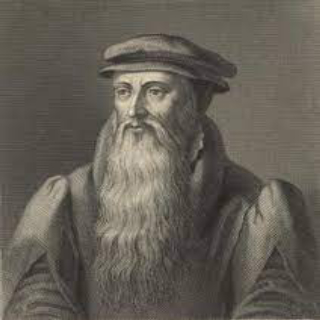
John Knox "The sword of justice is God's, and if princes and rulers fail to use it, others may." He was a minister of the Christian gospel who advocated violent revolution. He was considered one of the most powerful preachers of his day, but only two of the hundreds of sermons he preached were ever published. He is a key figure in the formation of modern Scotland, yet there is only one monument erected to him in Scotland, and his grave lies beneath a parking lot. John Knox was indeed a man of many paradoxes, a Hebrew Jeremiah set down on Scottish soil. In a relentless campaign of fiery oratory, he sought to destroy what he felt was idolatry and to purify Scotland's religion. Taking up the cause John Knox was born around 1514, at Haddington, a small town south of Edinburgh. Around 1529 he entered the University of St. Andrews and went on to study theology. He was ordained in 1536, but became a notary, then a tutor to the sons of local lairds (lower ranking Scottish nobility). Dramatic events were unfolding in Scotland during Knox's youth. Many were angry with the Catholic church, which owned more than half the real estate and gathered an annual income of nearly 18 times that of the crown. Bishops and priests were often mere political appointments, and many never hid their immoral lives: the archbishop of St. Andrews, Cardinal Beaton, openly consorted with concubines and sired 10 children. The constant sea traffic between Scotland and Europe allowed Lutheran literature to be smuggled into the country. Church authorities were alarmed by this "heresy" and tried to suppress it. Patrick Hamilton, an outspoken Protestant convert, was burned at the stake in 1528. In the early 1540s, Knox came under the influence of converted reformers, and under the preaching of Thomas Guilliame, he joined them. Knox then became a bodyguard for the fiery Protestant preacher George Wishart, who was speaking throughout Scotland. In 1546, however, Beaton had Wishart arrested, tried, strangled, and burned. In response, a party of 16 Protestant nobles stormed the castle, assassinated Beaton, and mutilated his body. The castle was immediately put to siege by a fleet of French ships (Catholic France was an ally to Scotland). Though Knox was not privy to the murder, he did approve of it, and during a break in the siege, he joined the besieged party in the castle. During a Protestant service one Sunday, preacher John Rough spoke on the election of ministers, and publicly asked Knox to undertake the office of preacher. When the congregation confirmed the call, Knox was shaken and reduced to tears. He declined at first, but eventually submitted to what he felt was a divine call. It was a short-lived ministry. In 1547, after St. Andrews Castle had again been put under siege, it finally capitulated. Some of the occupants were imprisoned. Others, like Knox, were sent to the galleys as slaves. Traveling preacher Nineteen months passed before he and others were released. Knox spent the next five years in England, and his reputation for preaching quickly blossomed. But when Catholic Mary Tudor took the throne, Knox was forced to flee to France. He made his way to Geneva, where he met John Calvin. The French reformer described Knox as a "brother … laboring energetically for the faith." Knox for his part, was so impressed with Calvin's Geneva, he called it, "the most perfect school of Christ that was ever on earth since the days of the apostles." Knox traveled on to Frankfurt am Main, where he joined other Protestant refugees—and quickly became embroiled in controversy. The Protestants could not agree on an order of worship. Arguments became so heated that one group stormed out of a church one Sunday, refusing to worship in the same building as Knox. Back in Scotland, Protestants were redoubling their efforts, and congregations were forming all over the country. A group that came to be called "The Lords of the Congregation" vowed to make Protestantism the religion of the land. In 1555, they invited Knox to return to Scotland to inspire the reforming task. Knox spent nine months preaching extensively and persuasively in Scotland before he was forced to return to Geneva. Fiery blasts of the pen Away from his homeland again, he published some of his most controversial tracts: In his Admonition to England he virulently attacked the leaders who allowed Catholicism back in England. In The First Blast of the Trumpet Against the Monstrous Regiment of Women he argued that a female ruler (like English Queen Mary Tudor) was "most odious in the presence of God" and that she was "a traitoress and rebel against God." In his Appellations to the Nobility and Commonality of Scotland, he extended to ordinary people the right—indeed the duty—to rebel against unjust rulers. As he told Queen Mary of Scotland later, "The sword of justice is God's, and if princes and rulers fail to use it, others may." Knox returned to Scotland in 1559, and he again deployed his formidable preaching skills to increase Protestant militancy. Within days of his arrival, he preached a violent sermon at Perth against Catholic "idolatry," causing a riot. Altars were demolished, images smashed, and religious houses destroyed. In June, Knox was elected the minister of the Edinburgh church, where he continued to exhort and inspire. In his sermons, Knox typically spent half an hour calmly exegeting a biblical passage. Then as he applied the text to the Scottish situation, he became "active and vigorous" and would violently pound the pulpit. Said one note taker, "he made me so to grew [quake] and tremble, that I could not hold pen to write." The Lords of the Congregation militarily occupied more and more cities, so that finally, in the 1560 Treaty of Berwick, the English and French agreed to leave Scotland. (The English, now under Protestant Elizabeth I, had come to the aid of the Protestant Scots; the French were aiding the Catholic party). The future of Protestantism in Scotland was assured. The Parliament ordered Knox and five colleagues to write a Confession of Faith, the First Book of Discipline, and The Book of Common Order—all of which cast the Protestant faith of Scotland in a distinctly Calvinist and Presbyterian mode. Knox finished out his years as preacher of the Edinburgh church, helping shape the developing Protestantism in Scotland. During this time, he wrote his History of the Reformation of Religion in Scotland. Though he remains a paradox to many, Knox was clearly a man of great courage: one man standing before Knox's open grave said, "Here lies a man who neither flattered nor feared any flesh." Knox's legacy is large: his spiritual progeny includes some 750,000 Presbyterians in Scotland, 3 million in the United States, and many millions more worldwide.

blessed even in the worst - how to give thanks in every circumstance

A couple of years ago, social media revolted against the hashtag #blessed. It often seemed to be employed to brag about expensive vacations or impressive accomplishments under the guise of humility. But home décor stores do not seem to have gotten the message. They have shelves stocked with all kinds of signs and accessories so we can declare to the world — or at least anyone who comes into our houses — that we are indeed “blessed.” But what do we mean when we say that we are blessed? Is it an expression of gratitude for the things we have, the health we enjoy, or the people we love? Are these things really at the center of what it means to be blessed? The Source of Blessing From the first chapter to the last, the Bible’s story is one of blessing — blessing pronounced, blessing promised, blessing anticipated, and blessing experienced. We begin to get a sense of what it really means to be blessed in Numbers 6:22–27: The Lord spoke to Moses, saying, “Speak to Aaron and his sons, saying, Thus you shall bless the people of Israel: you shall say to them, The Lord bless you and keep you; the Lord make his face to shine upon you and be gracious to you; the Lord lift up his countenance upon you and give you peace. So shall they put my name upon the people of Israel, and I will bless them.” These words were not given for Israel’s priests to use to ask God for his blessing, leaving them to wonder whether or not God would give it. Rather, God took the initiative to assure his people of his settled intention to bless them. He seemed to want to make it clear that he intended to be personally involved in their lives as the source of all the goodness they would enjoy. So the first thing we learn from this blessing is that God is the source of every blessing in our lives. He blesses us by keeping us secure, extending his grace, and flooding our lives with his healing and wholeness. He is fully engaged, fully determined, and fully able to fill our lives with the security, grace, and peace we all long for. The Substance of Blessing But he is more than the  source  of blessing; God is also the  substance  of blessing. Experiencing God’s blessing is not merely getting good things  from  God. The essence of blessing is getting more  of  God. It is looking up to see affection and approval radiating from his face. To be blessed is to be confident that God has not and will never ignore or abandon us. “Anything and everything good that emerges from our lives will be a result of God’s sovereign presence in it.” Since more of God himself is the substance of blessing, whenever we ask him to bless us, we’re essentially inviting him to pervade all of the ordinary aspects of our lives. When we ask him to bless our plans, we’re inviting him into them, inviting him to even disrupt or change them, believing that his plans are always better than ours. In asking for his blessing we’re confessing that the outcome of our lives will not be the sum of our grand efforts or accomplishments. Instead, anything and everything good that emerges from our lives will be a result of his sovereign presence in it. Blessed Even at the Worst Times If we really believe that God is the substance of blessing, we won’t confess that we’re blessed only in the circumstances that seem good. Instead, when times are hard, and even when the worst things we can imagine are happening to us, we’ll be able to say that we are blessed. We’ll call ourselves blessed and mean it because we’re experiencing the presence of God with us and in us — in ways we were barely aware of when life seemed easy. Because we know the Lord is keeping us and being gracious to us, our sense of security and peace won’t be so tied to our circumstances. In our desperation for him during difficult times, we’ll find ourselves incredibly blessed by an increased sense of his companionship and comfort. The Reason God Can Bless Us So how is it that God can be so good to us? On what basis can God bless us so generously? You and I can anticipate being showered with God’s blessing only because Jesus experienced the full measure of God’s curse in our place. Christ was given what we deserve so that we might be given what Christ deserves. This is the too-good-to-be-trueness of the gospel. “We enjoy God’s blessing only because Jesus experienced the full measure of God’s curse in our place.” We can be sure that the Lord will keep and protect us because Christ was not protected. We can revel in having the Lord’s face turned toward us only because he turned his face away from his own Son as he hung on the cross. We can be sure that the Lord will lift up his countenance upon us only because when he looks at us, he sees us robed in the righteousness of Christ. He is able to grant us his peace only because his anger was exhausted on another. To be blessed is to be joined to Christ so securely that we have an ever-increasing sense that we are being kept by and for God. Because we are recipients of lavish grace, we can be honest with God and other people about our sin. Because the Lord is giving us peace, we can face the future confident that there is therefore now no condemnation for us because we are in Christ Jesus (Romans 8:1). We can shout it for the world to hear, post it for the social media world to read, and nail it to every wall in our home: we are truly, deeply, eternally blessed in Christ.

Feedback
Suggestionsuggestion box
x