
Others like the final quest Features >>
Epic Battles Of The Last Days
Engaging The Revelatory Realm Of Heaven: Entrance To Hidden Mysteries
Dancing With Angels

23 Minutes In Hell
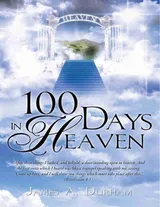
100 Days In Heaven

Rapture, Revelation, And The End Times: Exploring The Left Behind Series
The Greatness Of The Soul

A Citizen Of Two Worlds
The Rapture: What The Bible Says
-160.webp)
Heaven Awaits The Bride: A Breathtaking Glimpse Of Eternity
About the Book
"The Final Quest" is a Christian allegory that follows the author's spiritual journey through a series of visions and encounters with various characters representing different aspects of the Christian faith. The book explores themes of spiritual warfare, personal transformation, and the ultimate triumph of good over evil. It serves as a call to believers to rise up and fulfill their destiny in Christ.
Rich Mullins
 Born Richard Wayne Mullins on October 21, 1955, in Richmond, IN; died on September 19, 1997, in La Salle County, IL; son of John and Neva Mullins. Education: Attended Friends University, Wichita, KS, late 1980s.
The talents of Contemporary Christian singer/songwriter Rich Mullins and his work with the group Zion were first noticed by Christian music superstar Amy Grant. The inclusion of his song "Sing Your Praise to the Lord" on Grant's Age to Age album in 1982 soon lead to deals with Reunion Records and the start of a successful career as a songwriter and singer. With nearly ten albums and numerous Contemporary Christian hit songs to his credit, Mullins's career was cut short by an automobile accident that took his life on September 19, 1997, in Illinois.
Raised near Richmond, Indiana, Mullins began writing songs in his head as he drove a tractor over the fields of his family's farm. He taught himself to play the piano at age four and soon mastered a number of other instruments as well, including the guitar and hammered dulcimer. Long before his birth, however, factors over which he had no control were beginning to shape the world in which he would grow up. In Rich Mullins: An Arrow Pointing to Heaven by James Bryan Smith, the singer tells of some family history and how it came to affect his life: "My dad grew up back and forth between Kentucky and Virginia because his father was a coal miner. And when my dad was 14 my grandpa came home and told my grandma to load up the truck 'cause they were gonna move.... And my grandpa said, 'Well, Rose, we're going to Detroit.' And she said, 'Why in the world are we going to Detroit?' And he said, 'Because I don't want my boys to grow up to be coal miners.' And so they got as far as Indiana and ran out of gas--and that's how I got here."
As a boy, Mullins was known as Wayne, his middle name. Although he went by Richard when he went off to college and shortened that to Rich when he launched his music career, he preferred to be known as Wayne by his family. Mullins was particularly close to his mother, Neva, who was raised a Quaker. He admits, however, to having been somewhat embarrassed by his father, who was raised in the heart of Appalachia, "which is a very polite way to say that he was a hillbilly," Mullins told Smith. Mullins said that it was not until he was nearing the end of high school that he began to understand the true meaning of the biblical injunction to "honor thy father and mother." In Smith's book Mullins is quoted: "[I]f you cannot honor your father and mother, then you can't honor anybody. Until you come to terms with your heritage, you'll never be at peace with yourself. That was a real breakthrough moment for me. So, what I needed to do was come to understand the Appalachian life, so that I could know more about my father, who had been a stranger to me all my life."
In 1974, after finishing high school, Mullins attended Cincinnati Bible College in Ohio, working as a youth minister in a local church. A couple of years into college, he formed a band of his own. The band only stayed together for about a year, and during that time it performed Christian music at schools and colleges throughout the Cincinnati area. In the late 1970s Mullins left college to work with Zion Ministries and perform with their band, aptly named Zion. In the summer of 1981 a copy of an album recorded by Zion--made up mostly of songs written by Mullins--found its way to Christian singer Amy Grant. The up-and-coming Grant and her managers were impressed by Mullins's "Sing Your Praise to the Lord" and decided to include it on Grant's next album, Age to Age, released in 1982. Mike Blanton, an adviser to Grant and founder of Reunion Records, signed Mullins to his first publishing deal as well as his first artist deal.
Mullins's first album for Reunion, self-titled, was released in 1986 and includes such songs as "Place to Stand," "Elijah," and "Few Good Men." He followed that in 1987 with Pictures in the Sky, which includes "When You Love," "Be with You," and "Verge of a Miracle." Winds of Heaven, Stuff of Earth, Mullins's third album for Reunion, was released in 1989 and features "Awesome God," "Other Side of the World," and "If I Stand." Also hitting music stores in 1989 was Never Picture Perfect, which includes the singles "I Will Sing," "While the Nations Rage," and "First Family."
In 1988 Mullins moved to Wichita, Kansas, to study music education at Friends University, a nondenominational Christian institution. While studying at Friends, he continued to record and perform whenever he could. In 1991 and 1992, he released two volumes of a compilation entitled World As Best As I Remember It. After completing his studies at Friends, Mullins joined a Compassion International mission to the vast Navajo Reservation in Arizona to teach music to the local children and spread the Christian gospel to whomever he could reach. As part of his work in the Navajo Nation, he formed a music club for some of the younger residents. In May of 1995, he moved to the Navajo Nation, settling into a trailer adjacent to the reservation. He lived there with fellow musician Mitch McVicker, and the two were involved in a project to collect musical instruments for the children of the reservation.
Throughout his career, Mullins has been nominated a total of 12 times for Dove Awards, presented each year to the best in Contemporary Christian music. He never received the award, but close friend Doris Howard told Release magazine that he probably didn't mind. "Nashville didn't own Rich, but then, he cared nothing for the things of this world."
On September 19, 1997, the Jeep in which Mullins and McVicker were traveling from Chicago to Wichita overturned on Interstate 39 in La Salle County, Illinois. Both men were thrown onto the road from their vehicle. A tractor trailer following close behind swerved to miss the Jeep but instead hit Rich, killing him instantly. McVicker, though injured critically, recovered.
Rich Mullins's Career
Joined Christian group Zion, late 1970s; released self-titled album for Reunion Records, 1986; recorded total of nine albums of Christian music for Reunion, 1986-96; wrote several Contemporary Christian hits, including "Awesome God" and "Sing Your Praise to the Lord"; studied music education, devoted time to relief efforts among Navajo Indians of the Southwest, mid-1990s.
Born Richard Wayne Mullins on October 21, 1955, in Richmond, IN; died on September 19, 1997, in La Salle County, IL; son of John and Neva Mullins. Education: Attended Friends University, Wichita, KS, late 1980s.
The talents of Contemporary Christian singer/songwriter Rich Mullins and his work with the group Zion were first noticed by Christian music superstar Amy Grant. The inclusion of his song "Sing Your Praise to the Lord" on Grant's Age to Age album in 1982 soon lead to deals with Reunion Records and the start of a successful career as a songwriter and singer. With nearly ten albums and numerous Contemporary Christian hit songs to his credit, Mullins's career was cut short by an automobile accident that took his life on September 19, 1997, in Illinois.
Raised near Richmond, Indiana, Mullins began writing songs in his head as he drove a tractor over the fields of his family's farm. He taught himself to play the piano at age four and soon mastered a number of other instruments as well, including the guitar and hammered dulcimer. Long before his birth, however, factors over which he had no control were beginning to shape the world in which he would grow up. In Rich Mullins: An Arrow Pointing to Heaven by James Bryan Smith, the singer tells of some family history and how it came to affect his life: "My dad grew up back and forth between Kentucky and Virginia because his father was a coal miner. And when my dad was 14 my grandpa came home and told my grandma to load up the truck 'cause they were gonna move.... And my grandpa said, 'Well, Rose, we're going to Detroit.' And she said, 'Why in the world are we going to Detroit?' And he said, 'Because I don't want my boys to grow up to be coal miners.' And so they got as far as Indiana and ran out of gas--and that's how I got here."
As a boy, Mullins was known as Wayne, his middle name. Although he went by Richard when he went off to college and shortened that to Rich when he launched his music career, he preferred to be known as Wayne by his family. Mullins was particularly close to his mother, Neva, who was raised a Quaker. He admits, however, to having been somewhat embarrassed by his father, who was raised in the heart of Appalachia, "which is a very polite way to say that he was a hillbilly," Mullins told Smith. Mullins said that it was not until he was nearing the end of high school that he began to understand the true meaning of the biblical injunction to "honor thy father and mother." In Smith's book Mullins is quoted: "[I]f you cannot honor your father and mother, then you can't honor anybody. Until you come to terms with your heritage, you'll never be at peace with yourself. That was a real breakthrough moment for me. So, what I needed to do was come to understand the Appalachian life, so that I could know more about my father, who had been a stranger to me all my life."
In 1974, after finishing high school, Mullins attended Cincinnati Bible College in Ohio, working as a youth minister in a local church. A couple of years into college, he formed a band of his own. The band only stayed together for about a year, and during that time it performed Christian music at schools and colleges throughout the Cincinnati area. In the late 1970s Mullins left college to work with Zion Ministries and perform with their band, aptly named Zion. In the summer of 1981 a copy of an album recorded by Zion--made up mostly of songs written by Mullins--found its way to Christian singer Amy Grant. The up-and-coming Grant and her managers were impressed by Mullins's "Sing Your Praise to the Lord" and decided to include it on Grant's next album, Age to Age, released in 1982. Mike Blanton, an adviser to Grant and founder of Reunion Records, signed Mullins to his first publishing deal as well as his first artist deal.
Mullins's first album for Reunion, self-titled, was released in 1986 and includes such songs as "Place to Stand," "Elijah," and "Few Good Men." He followed that in 1987 with Pictures in the Sky, which includes "When You Love," "Be with You," and "Verge of a Miracle." Winds of Heaven, Stuff of Earth, Mullins's third album for Reunion, was released in 1989 and features "Awesome God," "Other Side of the World," and "If I Stand." Also hitting music stores in 1989 was Never Picture Perfect, which includes the singles "I Will Sing," "While the Nations Rage," and "First Family."
In 1988 Mullins moved to Wichita, Kansas, to study music education at Friends University, a nondenominational Christian institution. While studying at Friends, he continued to record and perform whenever he could. In 1991 and 1992, he released two volumes of a compilation entitled World As Best As I Remember It. After completing his studies at Friends, Mullins joined a Compassion International mission to the vast Navajo Reservation in Arizona to teach music to the local children and spread the Christian gospel to whomever he could reach. As part of his work in the Navajo Nation, he formed a music club for some of the younger residents. In May of 1995, he moved to the Navajo Nation, settling into a trailer adjacent to the reservation. He lived there with fellow musician Mitch McVicker, and the two were involved in a project to collect musical instruments for the children of the reservation.
Throughout his career, Mullins has been nominated a total of 12 times for Dove Awards, presented each year to the best in Contemporary Christian music. He never received the award, but close friend Doris Howard told Release magazine that he probably didn't mind. "Nashville didn't own Rich, but then, he cared nothing for the things of this world."
On September 19, 1997, the Jeep in which Mullins and McVicker were traveling from Chicago to Wichita overturned on Interstate 39 in La Salle County, Illinois. Both men were thrown onto the road from their vehicle. A tractor trailer following close behind swerved to miss the Jeep but instead hit Rich, killing him instantly. McVicker, though injured critically, recovered.
Rich Mullins's Career
Joined Christian group Zion, late 1970s; released self-titled album for Reunion Records, 1986; recorded total of nine albums of Christian music for Reunion, 1986-96; wrote several Contemporary Christian hits, including "Awesome God" and "Sing Your Praise to the Lord"; studied music education, devoted time to relief efforts among Navajo Indians of the Southwest, mid-1990s.
the single person’s search for intimacy
The other night, my best friend and I watched a show together from a thousand miles away. If I can’t fly to D.C. and she can’t come to Mississippi, at least we can fire up our laptops and enjoy Anne with an E at the same time, texting our commentary to each other throughout. As a child, I was always enthralled with Anne’s relationship with her best friend, Diana. The two were kindred spirits, confidants through thick and thin, always advocating for one another. I always wanted a friend like Diana, and, by God’s grace, I’ve been given several friends who fit the bill. I needed these friends as a single person, and I need them now as a wife. When I was engaged, a friend of mine pulled me aside. “You are in a love haze right now, but don’t forget your friends. You still need them.” She was right. Marriage is not a self-sufficient island of Christian community. It’s one in a network of meaningful relationships that are in the business of conforming us to the image of Christ. Made for Others God made us for community. It was not good for Adam to be alone, so God made Eve. And while the story of woman’s creation is the first love story, it’s also a story about community. Adam was not made to fulfill his mission on earth alone; he needed Eve to help him. When she did, they began populating the world and filling it with more people who were called to worship God in community with one another. “Marriage is not a self-sufficient island of Christian community.” Adam’s need for Eve is a bigger story than a man’s need for a wife. It’s the story of man’s need not to live in isolation. It’s the story of man’s need for community. We need the entire body to grow in the image of Christ — not just our spouses. Ephesians 5 paints a beautiful picture of the intimate relationship between a husband and his wife, but that relationship is couched in the context of the previous chapter: we are a body of believers called to unity (Ephesians 4:1–3; 13). We are a family. This view of community not only puts our marriages in perspective and takes undue pressure off our spouses to be everything we need all the time; it also knocks against our tendency to isolate singles from our understanding of community. Intimacy Is More Than Sex This is good news. It means that marriage is not the only biblical means for gaining intimacy. Our society often equates intimacy with sex. We tease snidely that when people are tense, it must be because they need to “get laid.” We joke — with eyes bulging — about the woman who’s gone several months (or, God forbid, several years) without sex. We are uncomfortable with the idea of friendships between men and women because friendship leads to intimacy and intimacy leads to sex. We are uncomfortable with close friendships between people of the same sex for the same reason. In fact, we side-eye David and Jonathan for loving each other a little more than we’re comfortable with men loving one another (1 Samuel 18:1). “Marriage is not the only biblical means for gaining intimacy.” In a culture that so often equates intimacy with sex, it makes sense that singles in our churches feel isolated from intimate relationships. If sex is the primary means for intimacy in a relationship, and if unmarried people in the church should not be having sex, then single folks are out of luck. This is a hopeless position for people whom God made to long for fellowship with other human beings. We All Need Each Other In his message “Five Misconceptions About Singleness,” Sam Alberry said, “We just can’t imagine that there is a kind of real intimacy that is not ultimately sexual. . . . It’s a profoundly unhealthy way to think. We’ve downgraded other forms of intimacy because we’ve put all of our intimacy eggs in the sexual and romantic relationship basket.” Marriage is not the only road towards intimacy because sexual intimacy is not the only kind of intimacy. Nor is it the most important form of intimacy. Biblical intimacy among siblings in Christ is rooted in God’s love towards us. It is rooted in the fact that we have been invited into an intimate relationship with the Son (John 10:29). When we make marriage the primary means of intimacy in the church, we do a huge disservice to the singles in our fellowship and the idea of Christian community as a whole. Marriage is not an island that we move to in order to bring glory to God; it’s just one picture (and a very prominent one) in a gigantic network of human relationships meant to deepen our understanding of Christ. We All Need Christ When we understand this, we unflatten our definition of intimacy and realize that its purpose isn’t ultimately about our own sense of self-fulfillment, but about God’s glory. Our relationships are not in the business of completing us — from marriage to friendship to fellowship — but rather, they are a tool God uses to conform us to his image (Romans 12:1). “Marriage isn’t the only road towards intimacy because sexual intimacy isn’t the only kind of intimacy.” Ultimately, the person that we need is Christ. And every other relationship in our life is designed to point us back to our need for him. Anne of Green Gables often called Diana her kindred spirit . I love that term. A kindred spirit is someone who understands you more deeply than any other person. And what better place to find those spirits than in the body of Christ, as siblings in him? What better people to remind us, single or married, that we were not made to live alone, but to partner together to spur one another on for God’s glory?