
Rapture, Revelation, And The End Times: Exploring The Left Behind Series Order Printed Copy
- Author:
- Size: 816KB | 224 pages
- |
Others like rapture, revelation, and the end times: exploring the left behind series Features >>

Divine Revelation Of The Spirit Realm

Living In The End Times - Study

Satan's Rebellion And Fall

The Rapture: What The Bible Says

Divine Revelation Of Deliverance

Resurrection And Judgement

Rapture, Revelation, And The End Times

Unveiling The End Times In Our Time
Divine Revelation Of Gods Holiness And Judgement
Between Heaven And Hell
Brother Andrew
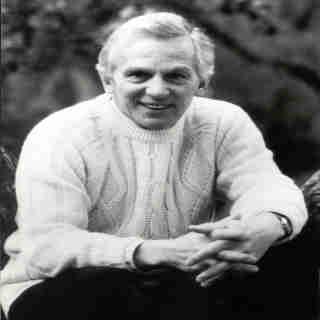 Son of a blacksmith, Brother Andrew didn’t even finish high school. But God used this ordinary dutch man, with his bad back, limited education, without sponsorship and no funds to do things that many said were impossible. From Yugoslavia to North Korea, Brother Andrew penetrated countries hostile to the gospel to bring bibles and encouragement to believers.
Andy van der Bijl, who became known as Brother Andrew, was born in 1928 the son of a deaf father and a semi-invalid mother. Andrew was the third of six children and they lived in the smallest house in the village of Witte in the Netherlands.
In the book God’s smuggler, Andrew describes the impact that the death of his oldest brother ‘Bas’ had upon him. Bas, who was severely handicapped died when Andrew was just 11 years old. Andrew had wanted to die with Bas, but God hadn’t let him.
THIRST FOR ADVENTURE
As a child, brother Andrew was mischievous and dreamt of adventure. When Germany invaded, Andrew amused himself (and the rest of the village) by playing pranks on the occupying troops.
NOTORIOUS COMMANDO WHO NEEDED GOD
His thirst for adventure led him into the Dutch army at the age of 18 where he became a notorious commando. Andrew and his comrades became famous for wearing yellow straw hats in battle, their motto was: ‘get smart – lose your mind’.
The atrocities that Andrew committed as a commando haunted him and he became wrapped in a sense of guilt. Nothing he did – drinking, fighting, writing or reading letters helped him escape the strangle that guilt had upon him.
Shot in the ankle in combat, at the age of 20, his time in the army came to an abrupt end.
In hospital, bed ridden, the witness of Franciscan sisters who served the sick joyfully and the conviction of his own sin, drove him to read the Bible. Andy studied the bible while asking many questions to a friend (Thile), who had written to him throughout his time in the army. Andrew sent questions to Thile who searched for answers from her pastor and the library. His searching within the bible did not however lead him to give his life to God whilst he was still in hospital.
ANDREW RETURNS HOME A CRIPPLE AND SEEKS GOD
Returning home a cripple to his old town, Andrew’s life was empty. He had not found the adventure he had been looking for.
Somehow however, when he return home, he developed a thirst for God. Every evening Andrew attended a meeting and during the day he would read the bible and lookup up bible verses mentioned in the sermons he had heard. At last, one evening he gave up his ego and prayed: ‘Lord if You will show me the way, I will follow You. Amen’.
GOD CALLS BROTHER ANDREW TO MISSION
Soon after becoming a Christian, Brother Andrew attended a an evangelistic meeting taken by a Dutch evangelist Arne Donker. At this meeting Andrew responded to the call to become a missionary. This call to share the good news of salvation started at home, with Andrew and his friend Kees holding an evangelistic event with Pastor Donker in their home town of Witte.
Before going away on mission, Andrew started work at the Ringers chocolate factory. Working in a female dominated environment which was smitten with filthy jokes, God used Andrew and another Christian, and future wife Corrie, to reach their lost co-workers. Through personal witness and inviting them to evangelistic events, many became Christians, including the ring leader of the women. The atmosphere at work changed dramatically and prayer groups were held.
Andrew excelled in his work despite being lame and Mr Ringers, the owner of the factory applauded his work and evangelistic efforts. Because of his high IQ, Andrew was trained up as a job analyst within the factory. But Andrew knew that God was calling him to mission. The big obstacle however was his lack of education.
Giving up smoking, Andrew was able to start saving to buy books. Andrew bought dictionaries and commentaries and so began studying in his spare time. One day Andrew learnt about the bible college in Glasgow run by the WEC mission. At Glasgow bible college Christians could be trained up for mission in 2 years.
Unsure of Gods will for his life, Andrew spent a Sunday afternoon alone with God, speaking aloud with God. Through this time, Andrew realised that he needed to say ‘yes’ to God who was calling him to mission. Before this, Andrew had been saying ‘Yes BUT I am lame.’ ‘Yes BUT I have no education’. Andrew said yes. In an amazing instant, Andrew made this step of yes, and in God’s grace he healed Andrews lame leg.
ANDREW GOES TO ENGLAND
Andrew applied for the Bible college in Glasgow and was accepted. Sponsored by no church, no organisation and lacking education, Andrew obeyed God and went despite being told by the love of his life at the time (Thile) that in going he would lose her.
Andrew’s place at the bible college was delayed by a year. Despite receiving a telegram from WEC telling him not to come, Andrew believed God was instructing him to go. In faith he obeyed God and left for England in 1952.
Andrew spent the first few months in England painting the WEC headquarters building (Bulstrode). While living at Bulstrode, Andrew began spending time with God at the beginning of everyday – a Quiet Time. This was something that Andrew found helpful and endeavoured to do every day of his life. Once Andrew had finished painting Bulstrode, he then moved in with Mr and Mrs Hopkins. Living with Mr and Mrs Hopkins, they developed a wonderful relationship. Andy learnt so much from the couple because they were utterly without self-consciousness and opened up their home to drunks and beggars.
In September 1953, Brother Andrew started his studies at the WEC Glasgow bible college. Over the entrance of the wooden archway of the college were the words‘have faith in God’. During the following two years whilst studying, Andrew learnt about having faith in God and put his faith into practice in numerous ways.
THE KINGS WAY
Throughout his time at Glasgow bible college, Andy learnt of ‘The Kings Way’ in providing. Andrew saw God provide every essential need he had and always provide on time. In the book God’s Smuggler, Andrew describes how it was exciting waiting to see how God would provide at his time of need. God always provided, but did so, not according to mans logic but in a kingly matter, not in a grovelling way.
One example of God providing miraculously was when Andrew needed to pay his visa. When Andrew received a visitor the day before he needed to send off his application for a visa, he was confident that the visitor would have come to give him money to pay for the visa. But the visitor was Richard, a man who Andrew had met in the slums in Glasgow. Richard had not come to give, but to ask. Andy explained that he had no money himself to give to Richard, but as he spoke, Andy saw a Shilling on the floor. This shilling was how much Andy needed to pay for his visa which would mean he could stay at the bible school. Rather than keeping the Shilling for himself, Andrew gave the Shilling to Richard. Andy had done what he knew was right, but how would God provide? Minutes later, Andy received a letter and in it was 30 Shillings! God had provided in His way, a Kingly Manner of provision.
GOD CALLS ANDREW BEHIND THE IRON CURTAIN
Leaving bible college in 1955, God guided Andy to attend a Communist trip to Warsaw. This would be the first of many trips into Communist countries.
During his first trip to Warsaw, brother Andrew visited local churches, a bible shop and spoke with Christians in the country. Coming back to Holland, Andrew had lots of opportunities to share about his trip and how Christians lived behind the iron curtain.
Weeks later, the communist party arranged for him to attend a trip to Czechoslovakia. Andrew managed to break away from the organised trip to learn that the church was suffering and that bibles were very scarce. Officials were angry he had broken away from the official tour and had contact with Christians so he was prohibited from entering the country again. But his trip had opened his eyes to the needs of the church behind the iron curtain and this became his mission field.
In the following years, Andy dedicated his life to the needs of the church in the Communist countries. God provided Andrew with a new Volkswagen Beetle and with it Brother Andrew smuggled bibles and literature into the countries in need. Working alone for the first few years, Andrew worked tirelessly in serving the churches behind the iron curtain. When Andrew had finished one trip he would go back to Holland where he would share his experience and then go back to one of the countries. Each trip was full of stories of how God had miraculously provided and led Andrew to meet Godly believers.
ANDREW MARRIES AND HAS A FAMILY
Although serving God in this way was exciting, Andrew felt alone and wanted a wife. In the book God’s Smuggler, Andrew describes how he prayed about a wife three times. The first two times that Brother Andrew asked for a wife God spoke to him clearly through Isaiah 54:1 “The children of the desolate are more than the children of the married”. But Andrew prayed a third time about it, and this time God answered his prayer, reminding him of a lady he worked with at the Ringers chocolate factor, Corrie van Dam. Andrew hadn’t had contact with Corrie for a long time so went to visit her. By God’s grace, Corrie was still single and over a period of several years Andrew and Corrie became great friends. Corrie and Andrew married on June 27th 1958 in Alkmaar, Netherlands.
Corrie was married to a missionary and Andrew very much continued to live like a missionary, smuggling bibles into countries closed countries. Over the years, God blessed Corrie and Andrew with five children, three boys and two girls.
ANDREW STARTS WORKING WITH OTHERS
Andrew kept serving God behind the iron curtain but the work had become difficult to do alone. Andrew thought about how helpful it would be to have a co-worker. This began with a man called Hans and slowly grew until a number of them were smuggling bibles into the communist countries.
SERVING THE WORLD WIDE CHURCH
When the doors to communist Europe were opened in the 1960’s, Brother Andrew began to serve and strengthen the churches in the Middle East and Islamic world.
BROTHER ANDREW RECEIVES RELIGIOUS LIBERTY AWARD IN 2007
On Andy van der Bijl’s 69th birthday, he was honoured by being awarded ‘The Religious Liberty Award’ which was presented by the World Evangelical Fellowship (WEF). The chairman of WEF’s Religious Liberty Commission stated:
“Brother Andrew has been the preeminent example of those from the outside who have excelled in the ministry of encouragement – the many years he has devoted himself to serving the oppressed. His exploits have become legendary as he has crossed borders carrying Bibles, which were liable to confiscation. Time after time God has blinded the eyes of the border guards, and the Bibles got through.
BROTHER ANDREW RESOURCES
God’s Smuggler – Book about Brother Andrew smuggling Bibles.
Son of a blacksmith, Brother Andrew didn’t even finish high school. But God used this ordinary dutch man, with his bad back, limited education, without sponsorship and no funds to do things that many said were impossible. From Yugoslavia to North Korea, Brother Andrew penetrated countries hostile to the gospel to bring bibles and encouragement to believers.
Andy van der Bijl, who became known as Brother Andrew, was born in 1928 the son of a deaf father and a semi-invalid mother. Andrew was the third of six children and they lived in the smallest house in the village of Witte in the Netherlands.
In the book God’s smuggler, Andrew describes the impact that the death of his oldest brother ‘Bas’ had upon him. Bas, who was severely handicapped died when Andrew was just 11 years old. Andrew had wanted to die with Bas, but God hadn’t let him.
THIRST FOR ADVENTURE
As a child, brother Andrew was mischievous and dreamt of adventure. When Germany invaded, Andrew amused himself (and the rest of the village) by playing pranks on the occupying troops.
NOTORIOUS COMMANDO WHO NEEDED GOD
His thirst for adventure led him into the Dutch army at the age of 18 where he became a notorious commando. Andrew and his comrades became famous for wearing yellow straw hats in battle, their motto was: ‘get smart – lose your mind’.
The atrocities that Andrew committed as a commando haunted him and he became wrapped in a sense of guilt. Nothing he did – drinking, fighting, writing or reading letters helped him escape the strangle that guilt had upon him.
Shot in the ankle in combat, at the age of 20, his time in the army came to an abrupt end.
In hospital, bed ridden, the witness of Franciscan sisters who served the sick joyfully and the conviction of his own sin, drove him to read the Bible. Andy studied the bible while asking many questions to a friend (Thile), who had written to him throughout his time in the army. Andrew sent questions to Thile who searched for answers from her pastor and the library. His searching within the bible did not however lead him to give his life to God whilst he was still in hospital.
ANDREW RETURNS HOME A CRIPPLE AND SEEKS GOD
Returning home a cripple to his old town, Andrew’s life was empty. He had not found the adventure he had been looking for.
Somehow however, when he return home, he developed a thirst for God. Every evening Andrew attended a meeting and during the day he would read the bible and lookup up bible verses mentioned in the sermons he had heard. At last, one evening he gave up his ego and prayed: ‘Lord if You will show me the way, I will follow You. Amen’.
GOD CALLS BROTHER ANDREW TO MISSION
Soon after becoming a Christian, Brother Andrew attended a an evangelistic meeting taken by a Dutch evangelist Arne Donker. At this meeting Andrew responded to the call to become a missionary. This call to share the good news of salvation started at home, with Andrew and his friend Kees holding an evangelistic event with Pastor Donker in their home town of Witte.
Before going away on mission, Andrew started work at the Ringers chocolate factory. Working in a female dominated environment which was smitten with filthy jokes, God used Andrew and another Christian, and future wife Corrie, to reach their lost co-workers. Through personal witness and inviting them to evangelistic events, many became Christians, including the ring leader of the women. The atmosphere at work changed dramatically and prayer groups were held.
Andrew excelled in his work despite being lame and Mr Ringers, the owner of the factory applauded his work and evangelistic efforts. Because of his high IQ, Andrew was trained up as a job analyst within the factory. But Andrew knew that God was calling him to mission. The big obstacle however was his lack of education.
Giving up smoking, Andrew was able to start saving to buy books. Andrew bought dictionaries and commentaries and so began studying in his spare time. One day Andrew learnt about the bible college in Glasgow run by the WEC mission. At Glasgow bible college Christians could be trained up for mission in 2 years.
Unsure of Gods will for his life, Andrew spent a Sunday afternoon alone with God, speaking aloud with God. Through this time, Andrew realised that he needed to say ‘yes’ to God who was calling him to mission. Before this, Andrew had been saying ‘Yes BUT I am lame.’ ‘Yes BUT I have no education’. Andrew said yes. In an amazing instant, Andrew made this step of yes, and in God’s grace he healed Andrews lame leg.
ANDREW GOES TO ENGLAND
Andrew applied for the Bible college in Glasgow and was accepted. Sponsored by no church, no organisation and lacking education, Andrew obeyed God and went despite being told by the love of his life at the time (Thile) that in going he would lose her.
Andrew’s place at the bible college was delayed by a year. Despite receiving a telegram from WEC telling him not to come, Andrew believed God was instructing him to go. In faith he obeyed God and left for England in 1952.
Andrew spent the first few months in England painting the WEC headquarters building (Bulstrode). While living at Bulstrode, Andrew began spending time with God at the beginning of everyday – a Quiet Time. This was something that Andrew found helpful and endeavoured to do every day of his life. Once Andrew had finished painting Bulstrode, he then moved in with Mr and Mrs Hopkins. Living with Mr and Mrs Hopkins, they developed a wonderful relationship. Andy learnt so much from the couple because they were utterly without self-consciousness and opened up their home to drunks and beggars.
In September 1953, Brother Andrew started his studies at the WEC Glasgow bible college. Over the entrance of the wooden archway of the college were the words‘have faith in God’. During the following two years whilst studying, Andrew learnt about having faith in God and put his faith into practice in numerous ways.
THE KINGS WAY
Throughout his time at Glasgow bible college, Andy learnt of ‘The Kings Way’ in providing. Andrew saw God provide every essential need he had and always provide on time. In the book God’s Smuggler, Andrew describes how it was exciting waiting to see how God would provide at his time of need. God always provided, but did so, not according to mans logic but in a kingly matter, not in a grovelling way.
One example of God providing miraculously was when Andrew needed to pay his visa. When Andrew received a visitor the day before he needed to send off his application for a visa, he was confident that the visitor would have come to give him money to pay for the visa. But the visitor was Richard, a man who Andrew had met in the slums in Glasgow. Richard had not come to give, but to ask. Andy explained that he had no money himself to give to Richard, but as he spoke, Andy saw a Shilling on the floor. This shilling was how much Andy needed to pay for his visa which would mean he could stay at the bible school. Rather than keeping the Shilling for himself, Andrew gave the Shilling to Richard. Andy had done what he knew was right, but how would God provide? Minutes later, Andy received a letter and in it was 30 Shillings! God had provided in His way, a Kingly Manner of provision.
GOD CALLS ANDREW BEHIND THE IRON CURTAIN
Leaving bible college in 1955, God guided Andy to attend a Communist trip to Warsaw. This would be the first of many trips into Communist countries.
During his first trip to Warsaw, brother Andrew visited local churches, a bible shop and spoke with Christians in the country. Coming back to Holland, Andrew had lots of opportunities to share about his trip and how Christians lived behind the iron curtain.
Weeks later, the communist party arranged for him to attend a trip to Czechoslovakia. Andrew managed to break away from the organised trip to learn that the church was suffering and that bibles were very scarce. Officials were angry he had broken away from the official tour and had contact with Christians so he was prohibited from entering the country again. But his trip had opened his eyes to the needs of the church behind the iron curtain and this became his mission field.
In the following years, Andy dedicated his life to the needs of the church in the Communist countries. God provided Andrew with a new Volkswagen Beetle and with it Brother Andrew smuggled bibles and literature into the countries in need. Working alone for the first few years, Andrew worked tirelessly in serving the churches behind the iron curtain. When Andrew had finished one trip he would go back to Holland where he would share his experience and then go back to one of the countries. Each trip was full of stories of how God had miraculously provided and led Andrew to meet Godly believers.
ANDREW MARRIES AND HAS A FAMILY
Although serving God in this way was exciting, Andrew felt alone and wanted a wife. In the book God’s Smuggler, Andrew describes how he prayed about a wife three times. The first two times that Brother Andrew asked for a wife God spoke to him clearly through Isaiah 54:1 “The children of the desolate are more than the children of the married”. But Andrew prayed a third time about it, and this time God answered his prayer, reminding him of a lady he worked with at the Ringers chocolate factor, Corrie van Dam. Andrew hadn’t had contact with Corrie for a long time so went to visit her. By God’s grace, Corrie was still single and over a period of several years Andrew and Corrie became great friends. Corrie and Andrew married on June 27th 1958 in Alkmaar, Netherlands.
Corrie was married to a missionary and Andrew very much continued to live like a missionary, smuggling bibles into countries closed countries. Over the years, God blessed Corrie and Andrew with five children, three boys and two girls.
ANDREW STARTS WORKING WITH OTHERS
Andrew kept serving God behind the iron curtain but the work had become difficult to do alone. Andrew thought about how helpful it would be to have a co-worker. This began with a man called Hans and slowly grew until a number of them were smuggling bibles into the communist countries.
SERVING THE WORLD WIDE CHURCH
When the doors to communist Europe were opened in the 1960’s, Brother Andrew began to serve and strengthen the churches in the Middle East and Islamic world.
BROTHER ANDREW RECEIVES RELIGIOUS LIBERTY AWARD IN 2007
On Andy van der Bijl’s 69th birthday, he was honoured by being awarded ‘The Religious Liberty Award’ which was presented by the World Evangelical Fellowship (WEF). The chairman of WEF’s Religious Liberty Commission stated:
“Brother Andrew has been the preeminent example of those from the outside who have excelled in the ministry of encouragement – the many years he has devoted himself to serving the oppressed. His exploits have become legendary as he has crossed borders carrying Bibles, which were liable to confiscation. Time after time God has blinded the eyes of the border guards, and the Bibles got through.
BROTHER ANDREW RESOURCES
God’s Smuggler – Book about Brother Andrew smuggling Bibles.
How to Recognize the Holy Spirit
Of all the blessings that are ours in Christ, is any greater than the indwelling presence of the Holy Spirit? The Spirit is “the sum of the blessings Christ sought, by what he did and suffered in the work of redemption,” Jonathan Edwards writes (Works of Jonathan Edwards, 5:341). The Spirit illumines our Savior’s face (John 16:14). The Spirit puts “Abba! Father!” in our mouths (Romans 8:15). The Spirit plants heaven in our hearts (Ephesians 1:13–14). For all the blessings the Spirit brings, however, many of us labor under confusion when it comes to recognizing the Spirit’s presence. As a new believer, I was told that speaking in tongues and prophesying were two indispensable signs of the Spirit’s power. Perhaps others of us, without focusing the lens so narrowly, likewise identify the Spirit’s presence most readily with his miraculous gifts: visions, healings, impressions, and more. “Of all the blessings that are ours in Christ, is any greater than the indwelling presence of the Holy Spirit?” To be sure, the Spirit does reveal himself through such wonders (1 Corinthians 12:8–11), and Christians today should “earnestly desire” them (1 Corinthians 14:1). Nevertheless, when Paul tells the Galatians to “walk by the Spirit” and “keep in step with the Spirit” (Galatians 5:16, 25), he focuses their attention not on the Spirit’s gifts, but on the Spirit’s fruit. So if we want to know whether we are keeping in step with the Spirit, or whether we need to find his footsteps again, we would do well to consider love, joy, peace, patience, kindness, goodness, faithfulness, gentleness, and self-control. Fruit of the Spirit In order to understand the Spirit’s fruit, we need to remember the context in which it appears. Paul’s list came at first to a community at odds with each other. The apostle found it necessary to warn the Galatians not to “bite and devour one another,” nor to “become conceited, provoking one another, envying one another” (Galatians 5:15, 26). The Galatians, in turning from God’s grace in the gospel (Galatians 1:6), had evidently begun to turn on one another. In this context, the works of the flesh and the fruit of the Spirit describe two communities: the anti-community of those in the flesh, seeking a righteousness based on their works (Galatians 5:19–21); and the true community of those in the Spirit, justified through faith alone in Christ alone (Galatians 5:22–23). As we use Paul’s list to examine ourselves, then, we need to ask if these graces mark us, not when we sit in peaceful isolation, but when we move among God’s people. I may appear patient, gentle, and kind when alone in my apartment, but what about when I am with the church? Who we are around others — baffling others, irritating others, oblivious others — reveals how far we have come in bearing the Spirit’s fruit. Now, what are these nine clusters of fruit that manifest the Spirit’s presence? To keep the survey manageable, we will include only one or two angles on each virtue, and restrict ourselves mostly to Paul’s letters. Love: Do you labor for the good of your brothers and sisters? When God pours his love into our hearts through the Spirit (Romans 5:5), our posture changes: once curved inward in self-preoccupation, we now straighten our backs, lift our heads, and begin to forget ourselves in the interests of others (Philippians 2:1–4). We find our hearts being knit together with people we once would have disregarded, judged, or even despised (Colossians 2:2; Romans 12:16). Our love no longer depends on finding something lovely; having felt the love of Christ (Galatians 2:20), we carry love with us wherever we go. “Who we are around others reveals how far we have come in bearing the Spirit’s fruit.” Such love compels us to labor for the good of our brothers and sisters (1 Thessalonians 1:3), to patiently bear with people we find vexing (Ephesians 4:2), and to care more about our brother’s spiritual welfare than our own spiritual freedom (1 Corinthians 8:1). No matter our position in the community, we gladly consider ourselves as servants (Galatians 5:13), and are learning to ask not, “Who will meet my needs today?” but rather, “Whose needs can I meet today?” Better by far to carry even an ounce of this love in our hearts than to enjoy all the world’s wealth, comforts, or acclaim. For on the day when everything else passes away, love will remain (1 Corinthians 13:7–8). Joy: Do you delight in the Christlikeness of God’s people? For Paul, the fellowship of God’s people was not peripheral to Christian joy. He could write to Timothy, “I long to see you, that I may be filled with joy” (2 Timothy 1:4), or to the Philippians, “In every prayer of mine for you all [I make] my prayer with joy” (Philippians 1:4). To be sure, the joy of the Spirit is, first and foremost, joy in our Lord Jesus (Philippians 4:4). But genuine joy in Christ overflows to all who are being remade in his image. By faith, we have seen the resplendent glory of our King — and now we delight to catch his reflection in the faces of the saints. The pinnacle of our horizontal joy, however, is not simply in being with God’s people, but in seeing them look like Jesus. “Complete my joy,” Paul writes to the Philippians, “by being of the same mind, having the same love, being in full accord and of one mind” (Philippians 2:2). What would complete your joy? When we walk by the Spirit, the maturity of God’s people completes our joy. We rejoice when we see humility triumph over pride, lust fall before a better pleasure, the timid speak the gospel with boldness, and fathers lead their families in the fear of the Lord. Peace: Do you strive to maintain the unity of the Spirit, even at significant personal cost? The Holy Spirit is the great unifier of the church. Because of Jesus’s peacemaking work on the cross, the Spirit makes Jew and Gentile “one new man” (Ephesians 2:15); he gathers former enemies as “members of the household of God” (Ephesians 2:19); he builds us all “into a holy temple in the Lord” (Ephesians 2:21–22). No matter how different we seem from the person in the next pew, we share a body, we share a home, we share a sanctuary — all because we share the same Lord, and will one day share the same heaven (Ephesians 4:4–6). “Kindness receives an offense, refashions it in the factory of our souls, and then sends it back as a blessing.” Those who walk by the Spirit, then, do not grieve him by tearing down what he has built up (Ephesians 4:29–30), but rather “pursue what makes for peace” (Romans 14:19): We ask for forgiveness first, even when the majority of the fault lies with the other person. We renounce unwarranted suspicions, choosing rather to assume the best. We abhor all gossip, and instead honor our brothers behind their backs. And when we must engage in conflict, we “aim for restoration” so that we might “live in peace” (2 Corinthians 13:11). Patience: Are you growing in your ability to overlook offenses? As a fruit of the Spirit, patience is more than the ability to sit calmly in traffic or to wait at the doctor’s office well past your appointment time. Patience is the inner spiritual strength (Colossians 1:11) that enables us to receive an offense full in the face, and then look right over it. Patient people are like God: “slow to anger” (Exodus 34:6), even when confronted with severe and repeated provocation (Romans 2:4; 1 Timothy 1:16). Patience is integral to one of the church’s primary responsibilities: discipleship. When Paul exhorted Timothy to “preach the word . . . in season and out of season,” he told him to do so “with complete patience” (2 Timothy 4:2; cf. 3:10–11). Ministry in the church, no matter our role, places us around people whose progress is much slower than we would like. We will find ourselves around “the idle, . . . the fainthearted, . . . the weak,” and instead of throwing up our hands, we must “be patient with them all” (1 Thessalonians 5:14). We must come alongside the plodding, stumbling saint, and remember that he will one day shine like the sun (Matthew 13:43). Kindness: Do you not only overlook offenses, but also repay them with love? It is one thing to receive an offense and quietly walk away. It is quite another to receive an offense, refashion it in the factory of your soul, and then send it back as a blessing. The former is patience; the latter is kindness (Romans 2:4–5; Titus 3:4–5; Ephesians 4:32). Spirit-wrought kindness creates parents who discipline their children with a steady, tender voice; sufferers who respond to ignorant, insensitive “comfort” with grace; wives and husbands who repay their spouses’ sharp word with a kiss. This fruit of the Spirit has not yet matured in us unless we are ready to show kindness, not only to those who will one day thank us for it, but also to “the ungrateful and the evil” (Luke 6:35). The kind are able to give a blessing, to receive a curse in return, and then to go on giving blessings (Romans 12:14). Goodness: Do you dream up opportunities to be helpful? Outside the moment of offense, those who walk by the Spirit carry with them a general disposition to be useful, generous, and helpful. They do not need to be told to pitch in a hand when the dishes need drying or the trash needs emptying, but get to work readily and with a good will. “Just as no one can sit beneath a waterfall and stay dry, so no one can gaze on this Jesus and stay fruitless.” Such people, however, do not simply do good when they stumble upon opportunities for doing so; they “resolve for good” (2 Thessalonians 1:11), putting their imagination to work in the service of as-yet-unimagined good deeds as they seek to “discern what is pleasing to the Lord” (Ephesians 5:8–10). They follow the counsel of Charles Spurgeon: “Let us be on the watch for opportunities of usefulness; let us go about the world with our ears and eyes open, ready to avail ourselves of every occasion for doing good; let us not be content till we are useful, but make this the main design and ambition of our lives” (The Soul-Winner, 312). Faithfulness: Do you do what you say you’ll do, even in the smallest matters? The faithfulness of God consists, in part, of his always doing what he says he will do: “He who calls you is faithful; he will surely do it” (1 Thessalonians 5:24). The faithfulness of God’s people consists, likewise, in our making every effort to do what we say we’ll do, even when it hurts. The Spirit makes us strive to say with Paul, “As surely as God is faithful, our word to you has not been Yes and No” (2 Corinthians 1:18). The faithful build such a trustworthy reputation that, when they fail to follow through on their word, others do not say, “Well, you know him,” but are rather surprised. If we say we’ll come to small group, we come. If we commit to cleaning the bathroom, we clean it. If we agree to call someone on Thursday at 4:00, we call on Thursday at 4:00. We labor to be faithful, even if our areas of responsibility right now are only “a little” (Matthew 25:21), knowing that how we handle little responsibilities reveals how we will handle big ones (Luke 16:10; 2 Timothy 2:2). Gentleness: Do you use your strength to serve the weak? Gentleness is far from the manicured niceness it is sometimes portrayed to be. “Gentleness in the Bible is emphatically not a lack of strength,” but rather “the godly exercise of power,” David Mathis writes. When Jesus came to save us sinners, he robed himself with gentleness (Matthew 11:29; 2 Corinthians 10:1). When we do our own work of restoring our brothers and sisters from sin, we are to wear the same clothing (Galatians 6:1). Gentleness does not prevent the godly from ever expressing anger, but they are reluctant to do so; they would far rather correct others “with love in a spirit of gentleness” (1 Corinthians 4:21). “In making our home with him, Christ makes our hearts a heaven.” No wonder Paul pairs gentleness with humility in Ephesians 4:2. As one Greek lexicon puts it, gentleness requires “not being overly impressed by a sense of one’s self-importance.” In the face of personal offense, the proud unleash their anger in order to assert their own significance. The humble are more concerned with the offender’s soul than their own self-importance, and so they channel their strength in the service of gentle restoration. Self-control: Do you refuse your flesh’s cravings? Scripture gives us no rosy pictures of self-control. Paul writes, “Every athlete exercises self-control in all things. . . . I discipline my body and keep it under control” (1 Corinthians 9:25, 27). The Greek word for discipline here means “to give a black eye, strike in the face.” Paul’s use is metaphorical, but the point still holds: self-control hurts. It requires us to say a merciless “No!” to any craving that draws us away from the Spirit and into the flesh (Titus 2:11–12). The need for self-control applies to every bodily appetite — for sleep, food, and caffeine, for example — but in particular to our sexual appetites (1 Corinthians 7:9). Those governed by the Spirit are learning, truly even if fitfully, to hear God’s promises as louder than lust’s demands, and to refuse to give sexual immorality a seat among the saints (Ephesians 5:3). Walk by the Spirit The Spirit of God never indwells someone without also making him a garden of spiritual fruit. If we are abounding in these nine graces, then we are walking by the Spirit; if these virtues are absent, then no spiritual gift can compensate for their lack. How, then, should we respond when we find that the works of the flesh have overrun the garden? Or how can we continue to cultivate the Spirit’s fruit over a lifetime? We can begin by remembering three daily postures, the repetition of which is basic to any Christian pursuit of holiness: repent, request, renew. Repent. When the works of the flesh have gained control over us, we must go backward in repentance in order to go forward in holiness. Confess your sins honestly and specifically (perhaps using Paul’s list in Galatians 5:19–21), and then trust afresh in “the Son of God, who loved me and gave himself for me” (Galatians 2:20). Remember again that we are not justified by fruit, but by faith. Request. Apart from the renewing, fructifying presence of God’s Spirit, we are all a cursed earth (Romans 7:18). If we are going to bear the fruit of holiness, then, we need to ask him “who supplies the Spirit” to do so more and more (Galatians 3:5). “Those governed by the Spirit are learning to hear God’s promises as louder than lust’s demands.” Renew. Finally, we renew our gaze on Jesus Christ, whom the Spirit loves to glorify (John 16:14; Galatians 3:1–2). Here we find our fruitful vine: our Lord of love, our joyful King, our Prince of peace, our patient Master, our kind Friend, our good God, our faithful Savior, our gentle Shepherd, our Brother who has been tempted in every way as we are, yet with perfect self-control. Just as no one can sit beneath a waterfall and stay dry, so no one can gaze on this Jesus and stay fruitless. Heaven in Our Hearts Of course, renewing our gaze on Jesus Christ is more than the work of a moment. When Paul said, “I live by faith in the Son of God” (Galatians 2:20), he was speaking of a lifestyle rather than a fleeting thought or a brief prayer. We must do more than cast an eye in Jesus’s direction; we must commune with him. We cannot commune with Christ too closely, nor can we exert too much energy in pursuing such communion. If we make nearness to him our aim, we will find ourselves rewarded a hundredfold beyond our efforts. The Puritan Richard Sibbes once preached, Do we entertain Christ to our loss? Doth he come empty? No; he comes with all grace. His goodness is a communicative, diffusive goodness. He comes to spread his treasures, to enrich the heart with all grace and strength, to bear all afflictions, to encounter all dangers, to bring peace of conscience, and joy in the Holy Ghost. He comes, indeed, to make our hearts, as it were, a heaven. (Works of Richard Sibbes, 2:67) This is what we find when we walk by the Spirit of Christ: in making our home with him, he makes our hearts a heaven. Article by Scott Hubbard