
GIP Library icon

LOG IN TO REVIEW
About the Book


"The Four Agreements" by Miguel Angel Ruiz, M.D. is a self-help book that presents four principles for personal growth and spiritual enlightenment: be impeccable with your word, don't take anything personally, don't make assumptions, and always do your best. These agreements aim to help readers achieve inner peace, happiness, and freedom from self-limiting beliefs.

John Stott
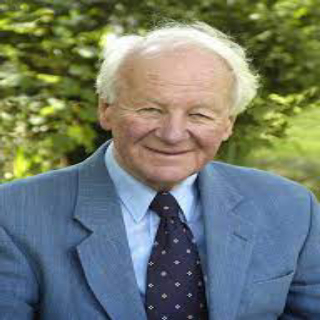
John Stott Introduction John Stott was born in London in 1921 to Sir Arnold and Lady Stott. He was educated at Rugby School, where he became head boy, and Trinity College Cambridge. At Trinity he earned a double first in French and theology, and was elected a senior scholar. John Stott trained for the pastorate at Ridley Hall, Cambridge. He was awarded a Lambeth doctorate in divinity (DD) in 1983 and has honorary doctorates from universities in America, Britain, and Canada. He was listed in Time Magazine’s “100 Most Influential People” (April, 2005) and was named in the Queen’s New Years Honours list as Commander of the Order of the British Empire (CBE) on December 31, 2005. Conversion Although John Stott was confirmed into the Anglican Church in 1936 and took part in formal religious duties at school, he remained spiritually restless. As a typical adolescent, I was aware of two things about myself, though doubtless I could not have articulated them in these terms then. First, if there was a God, I was estranged from him. I tried to find him, but he seemed to be enveloped in a fog I could not penetrate. Secondly, I was defeated. I knew the kind of person I was, and also the kind of person I longed to be. Between the ideal and the reality there was a great gulf fixed. I had high ideals but a weak will… [W]hat brought me to Christ was this sense of defeat and of estrangement, and the astonishing news that the historic Christ offered to meet the very needs of which I was conscious. (1) On 13 February 1938, Eric Nash (widely known as ‘Bash’) came to give a talk to the Christian Union at Rugby School. His text was Pilate’s question: “What then shall I do with Jesus, who is called the Christ?” That I needed to do anything with Jesus was an entirely novel idea to me, for I had imagined that somehow he had done whatever needed to be done, and that my part was only to acquiesce. This Mr Nash, however, was quietly but powerfully insisting that everybody had to do something about Jesus, and that nobody could remain neutral. Either we copy Pilate and weakly reject him, or we accept him personally and follow him. After talking privately with Nash and taking the rest of the day to think further, that night at my bedside I made the experiment of faith, and “opened the door” to Christ. I saw no flash of lightning …in fact I had no emotional experience at all. I just crept into bed and went to sleep. For weeks afterwards, even months, I was unsure what had happened to me. But gradually I grew, as the diary I was writing at the time makes clear, into a clearer understanding and a firmer assurance of the salvation and lordship of Jesus Christ. (2) Local Influence John Stott attended his local church, All Souls, Langham Place (www.allsouls.org) in London’s West End, since he was a small boy. Indeed one of his earliest memories was of sitting in the gallery and dropping paper pellets onto the fashionable hats of the ladies below! Following his ordination in 1945 John Stott became assistant curate at All Souls and then, unusually, was appointed rector in 1950. He became rector emeritus in 1975, a position he held to the end of his life. In the words of his biographer, Timothy Dudley-Smith, “John Stott has provided a model for international city-centre contemporary ministry now so widely accepted that few now realize its original innovative nature.” Central in this model were five criteria: the priority of prayer, expository preaching, regular evangelism, careful follow-up of enquirers and converts, and the systematic training of helpers and leaders. Soon after his appointment as rector, Dr Stott began to encourage church members to attend a weekly training course in evangelism. A monthly “guest service” was established, combining regular parochial evangelism with Anglican evening prayer. Follow-up discipleship courses for new Christians were started in people’s homes. All Souls also offered midweek lunchtime services, a central weekly prayer meeting, and monthly services of prayer for the sick. “Children’s church” and family services were established, a chaplain to a group of Oxford Street stores was appointed, and the All Souls Clubhouse was founded as a Christian community centre. John Stott was convinced that a pastor needed to know and understand his congregation; he once even disguised himself as homeless and slept on the streets in order to find out what it was like. All Souls Church grew numerically during the 1950s and 1960s, yet John Stott continually pleaded with people not to abandon their local evangelical churches in order to be a part of All Souls. Like one of his mentors, Charles Simeon of Cambridge (1759-1836), Dr Stott turned down opportunities for advancement in the church hierarchy and remained at the same church throughout his ministry. National Influence When John Stott began his ordained ministry, evangelicals had little influence in the Anglican Church hierarchy. Through personal initiatives such as the revived Eclectic Society (originally founded in 1793), Dr Stott sought to raise the profile and morale of young evangelical clergy. From an initial membership of 22 of his friends, the society grew to over 1,000 members by the mid 1960s. Out of this movement grew many initiatives, most notably the two National Evangelical Anglican Congresses of 1967 and 1977, which Dr Stott chaired. John Stott has played important roles in three areas of Christian life in England, serving the church, the university, and the crown. He served as chair of the Church of England Evangelical Council (www.ceec.info) from 1967 to 1984 and as president of two influential Christian organizations: the British Scripture Union (www.scriptureunion.org.uk) from 1965 to 1974 and the British Evangelical Alliance (www.eauk.org) from 1973 to 1974. Dr Stott has also served four terms as president of the Universities and Colleges Christian Fellowship (www.uccf.org.uk) between the years 1961 and 1982. He was also an honorary chaplain to the Queen from 1959 to 1991 and received the rare distinction of being appointed an Extra Chaplain in 1991. John Stott was displeased by the anti-intellectualism of some Christians. In contrast, he stressed the need “to relate the ancient Word to the modern world.” This conviction led to his founding of The London Institute for Contemporary Christianity (www.licc.org.uk) in 1982. This Institute offers courses in the inter-relations between faith, life and mission to thinking Christian lay people. Stott served as its first director and then as its president from 1986 onward. He claims, The key words in my thinking are “integration” and “penetration.” I think evangelical Christians, if one can generalize, have not been integrated; there is a tendency among us to exclude certain areas of our life from the lordship of Jesus, whether it be our business life and our work, or our political persuasion. That sort of integration is crucial to the Institute’s vision; the second is the penetration of the secular world by integrated Christians, whose gospel will be a more integrated gospel. (3) In light of this work, liberal cleric and theologian David Edwards has claimed that, apart from William Temple, John Stott was “the most influential clergyman in the Church of England” during the twentieth century. Likewise, Oxford University theologian Alister McGrath has suggested that the growth of post-war English evangelicalism is attributable more to John Stott than any other person. International Influence Michael Baughen’s appointment as vicar of All Souls in 1970 and his subsequent appointment as rector in 1975, allowed John Stott to devote more time to his growing international ministry. After that, Dr Stott spent nearly three months each year preaching and leading missions abroad (with three further months spent at The Hookses, his writing retreat in Wales). John Stott’s international influence is clear on a number of fronts. First, he was heavily involved in university missions. In the years between 1952 and 1977 John Stott led some 50 university missions in Britain, North America, Australia, New Zealand, Africa, and Asia. He was even vice president of the International Fellowship of Evangelical Students (www.ifesworld.org) from 1995 to 2003. The level of his influence on North American evangelicalism is evident from the fact that he served as the Bible expositor on six occasions at the triennial Urbana Student Mission Convention arranged by InterVarsity Christian Fellowship (www.intervarsity.org). Second, Dr Stott played prominent roles in drafting important evangelical documents. In 1974 John Stott acted as chair of the drafting committee for the Lausanne Covenant at the International Congress on World Evangelization held in Lausanne, Switzerland. The creation of this covenant, outlining evangelical theology and reinforcing the need for social action, is a significant milestone in twentieth-century evangelicalism. Stott continued to serve as the chair of the Lausanne Theology and Education Group from 1974 to 1981. He was again chair of the drafting committee for the Manila Manifesto, a document produced by the second International Congress in 1989. Third, he helped to strengthen the evangelical voice in established churches. As an Anglican, John Stott was committed to the renewal of evangelicalism in the worldwide Anglican Church. He founded the Evangelical Fellowship in the Anglican Communion (EFAC), and served as honorary general secretary from 1960 to 1981, and as President from 1986 to 1990. His desire to strengthen ties among evangelical theologians in Europe led to the founding of the Fellowship of European Evangelical Theologians (FEET) in 1977. Fourth, John Stott stressed that the importance of caring for and valuing God’s creation. From an early age, he was an avid bird watcher and photographer, taking his binoculars and camera with him on all his travels. He saw nearly 2,700 of the world’s 9,000 species of birds. He even published a book, The Birds our Teachers, illustrated with his own photographs. John Stott encouraged all Christians to take an interest in some form of natural history and was a strong supporter of A Rocha: Christians in Conservation (www.arocha.org) since its inception in 1983. Fifth, Dr Stott focused on the development of the Majority World, its people, and its leadership. His concern for the world’s poor led to involvement in two organizations: Tearfund (www.tearfund.org), which he served as president from 1983 to 1997, and Armonia (www.armonia-uk.org.uk) which he served as patron. Through his contact with pastors in the Majority World, John Stott became increasingly convinced of their need for books and improved seminary education. To meet the first of these needs he set up the Evangelical Literature Trust in 1971, funded largely by his own book royalties, in order to send theological books to pastors, teachers, and theological students. To meet the second a bursary fund was established in 1974 (as part of the then recently formed Langham Trust) to provide scholarships for gifted evangelical scholars from the Majority World to earn their doctorates, and then to return to their own countries to teach in theological seminaries. The Evangelical Literature Trust and the Langham Trust have now been amalgamated into the Langham Partnership International (langham.org); Dr Stott served as its founder-president until his death. John Stott, in talking about the Langham Partnership International commented: The church is growing everywhere of course, or nearly everywhere, but it’s often growth without depth and we are concerned to overcome this lack of depth, this superficiality, by remembering that God wants his people to grow. Now if God wants his people to grow into maturity, which he does, and if they grow by the word of God, which they do, and if the word of God comes to them mainly through preaching, which it does, then the logical question to ask is how can we help to raise the standards of biblical preaching? The three ministries of the Langham Partnership are all devoted to the same thing – either immediately or ultimately – to raise the standards of preaching through books, through scholarships and through Langham Preaching seminars. Influential Books Finally, Dr Stott wrote a number of influential books, which are noted for their clarity, balance, intellectual rigor, and biblical faithfulness. Stott’s writing career started in 1954 when he was asked to write the Bishop of London’s annual Lent book. Fifty years later, he had written over forty books and hundreds of articles. John Stott’s best-known work, Basic Christianity, has sold two million copies and has been translated into more than 60 languages. Other titles include The Cross of Christ, Understanding the Bible, The Contemporary Christian, Evangelical Truth, Issues Facing Christians Today, The Incomparable Christ, Why I Am a Christian, and most recently Through the Bible Through the Year, a daily devotional. He has also written eight volumes in The Bible Speaks Today series of New Testament expositions. (A comprehensive bibliography was compiled by Timothy Dudley-Smith in 1995; a full booklist can be found here.) Two factors enabled Dr Stott to be so productive: strong self-discipline and the unstinting support of Frances Whitehead, his secretary for over 50 years. John Stott never married, though according to his biography he came close to it on two occasions; and he acknowledged that with the responsibility of a family he would not have been able to write, travel, and minister in the way that he did. Billy Graham called John Stott “the most respected clergyman in the world today,” and John Pollock described him as “in effect the theological leader of world evangelicalism.” John Stott’s biographer, Timothy Dudley-Smith, wrote: To those who know and meet him, respect and affection go hand in hand. The world-figure is lost in personal friendship, disarming interest, unfeigned humility-and a dash of mischievous humour and charm. By contrast, he thinks of himself, as all Christians should but few of us achieve, as simply a beloved child of a heavenly Father; an unworthy servant of his friend and master, Jesus Christ; a sinner saved by grace to the glory and praise of God. (4) 1. Timothy Dudley-Smith, John Stott: The Making of a Leader, vol. 1 (Leicester, U.K./Downers Grove, Ill.: Inter-Varsity Press, 1999), p. 89. 2. Ibid., pp. 93-94 3. Timothy Dudley-Smith, John Stott: A Global Ministry, vol. 2 (Leicester, U.K./Downers Grove, Ill.: Inter-Varsity Press, 2001), p. 291. 4. Timothy Dudley-Smith, “Who Is John Stott?” All Souls Broadsheet (London), April/May 2001.

Friend, You Can Be Ready to Die

Years ago I read somewhere that, during the Victorian era, people talked often about death, and sex was the taboo subject. By now we have flipped it. We talk freely about sex, and death is the taboo subject. To me, what’s odd is this: even  Christians  shy away from talking about death. For crying out loud, we’re going to heaven! Why should we fear  anything ? Our Lord died and rose again — for us. Yes, the blunt truth can seem intimidating. Here it is: We don’t need to go looking for it. Sooner or later, something bad will come find us and take us out. But why not accept that, and prepare for it, and rejoice our way through it? Thanks to the risen Jesus, death is no longer a crisis. It is now our release. So, Death, you sorry loser, we will outlive you by an eternity. We will even dance on your grave, when “death shall be no more” (Revelation 21:4). But for now, among the many ways to prepare for death — like buying life insurance, making a proper will, and so forth — here are two truths that can help you prevail when your moment comes. Both insights come from an obscure passage near the end of Deuteronomy. Your Final Obedience First, your death will be your final act of obedience in this world below. Near the end of his earthly life, Moses received a surprising command from God: Go up this mountain . . . and view the land of Canaan, which I am giving to the people of Israel for a possession. And  die  on the mountain which you go up . . . (Deuteronomy 32:49–50) Moses obeyed the command, by God’s grace. His death, therefore, was not his pathetic, crushing defeat; it was his final, climactic act of obedience. As you can see in the verse, it was even what we call a mountaintop experience. “Your death will be your final act of obedience in this world below.” Sadly, our deaths are usually painful and humiliating. But that’s obvious. Down beneath the surface appearances, the profound reality is this: your death too will be an act of obedience, for you too are God’s servant, like Moses. The Bible says about us all, “ Precious  in the sight of the Lord is the death of his saints” (Psalm 116:15). He will not throw you away like a crumpled-up piece of trash. He will receive you as his treasured friend. Your death might be messy here on earth, but it will not be disgusting to God above. It will be, to him, “precious” — that is, valued and honored. It will be you obeying the One who said, “Follow me” (Matthew 4:19). You followed him with a first step, and you will follow him with a last step. And when you’re thinking about it, don’t worry about failing him at that final moment. He who commands you will also carry you. Given the grandeur of a Christian’s death, I have to admit that I have never seen a Christian funeral do justice to the magnitude of the moment. We try, but our services fall short. Only by faith, looking beyond our poor efforts at doing honor, can we truly savor the wonder of a Christian’s crowning glory. Even still, let’s make every Christian funeral as meaningful as it can be by believing and declaring the truth. A blood-bought sinner has just stepped on Satan’s neck and leapt up into eternal happiness, by God’s grace and for his glory. The day of your funeral, this uncomprehending world will stumble along in its oblivious way. But your believing family and friends will understand what’s really going on. And they will rejoice. This being so, why not look forward to dying? Paul was so eager for his day of release, he honestly couldn’t decide whether he’d rather keep serving Jesus here or die and go be with Jesus there: “What shall I choose? I do not know! I am torn between the two” (Philippians 1:22–23 NIV). When our work here is finally complete, why stay one moment longer? Of course, just as God decides our birthday (which we do know), so God also decides our deathday (which we do not know). Let’s bow to his schedule. But right now, by faith, let’s also start sitting on the edge of our seats in eager anticipation. And when he does give the command, “Die,” we then can say, “Yes, Lord! At long last!” And we  will  die. He will help us obey him even then — especially then. Your Happy Meeting Second, your death will be your happy meeting with the saints in that world above. Not only did God command Moses to die, but he also deepened and enriched Moses’s expectations of his death: Die on the mountain which you go up, and be gathered to your people, as Aaron your brother died in Mount Hor and was gathered to his people. (Deuteronomy 32:50) To be with our Lord in heaven above is the ultimate human experience. But he himself includes in that sacred privilege “the communion of saints,” to quote the Apostles’ Creed. When you die, like Moses, you will be gathered to your people — all the believers in Jesus who have gone before you into the presence of God. Heaven will not be solitary you with Jesus alone. It will be you with countless others, surrounding his throne of grace, all of you glorifying and enjoying him together with explosive enthusiasm (Revelation 7:9–10). Right now, in this world, we are “the church militant,” to use the traditional wording. But even now, we are one with “the church triumphant” above. And when we die, we finally enter into the full experience of the blood-bought communion of saints. Think about it. No church splits, no broken relationships, not even chilly aloofness. We all will be united before Christ in a celebration of his salvation too joyous for any petty smallness to sneak into our hearts. You will  like  everyone there, and everyone there will like you too. You will be included. You will be understood. You will be safe. No one will kick you out, no one will bully you, no one will slander you — not in the presence of the King. And you will never again, even once, even a little, disappoint anyone else or hurt their feelings or let them down. You will be magnificent, like everyone around you, for Jesus will put his glory upon us all. Facing Death with Calm Confidence Even now, by God’s grace, we have come to the heavenly Jerusalem, and to innumerable angels in festal gathering, and to the assembly of the firstborn who are enrolled in heaven, and to God, the judge of all, and to the spirits of the righteous made perfect, and to Jesus, the mediator of a new covenant. (Hebrews 12:22–24) “Why should we, citizens of the heavenly city, ever fear anything about earthly death?” They all are there, right at this very moment, in the invisible realm. It’s only an inch away. And the instant after your last breath in this dark world, you will awaken to that bright world above, where you will be welcomed in and rejoiced over. Saint Augustine might smile and nod with deep dignity. Martin Luther might give you a warm bear hug. Elisabeth Elliot might gently shake your hand. And maybe for the first time ever, you’ll discover how good it feels to really  belong . Here’s my point. Why should we, citizens of the heavenly city, ever fear anything about earthly death? By faith in God’s promises in the gospel, let’s get ready  now  so that we face it  then  with calm confidence — and even with bold defiance.
Feedback
Suggestionsuggestion box
x