
Others like the purpose driven life Features >>

The Purpose Driven Church
The Purpose Of Failure

The Power Of Awareness
-160.webp)
Finding Your Purpose In Life (Why Am I Here)

The Power Of Imagination
The Seven Pillars Of Wisdom

The Seven Spirits Of God
-160.webp)
The Power Of Your Words: How God Can Bless Your Life Through The Words You Speak
Right Thinking In A World Gone Wrong
In The School Of Christ - Lessons On Holiness In John 13–17
About the Book
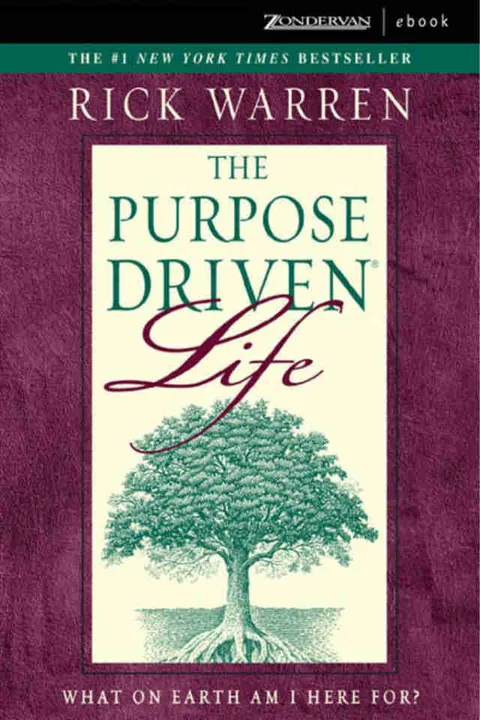
"The Purpose Driven Life" by Rick Warren is a spiritual guidebook that helps readers discover their purpose in life through understanding and living out God's intentions for them. Warren outlines a 40-day journey to explore five key purposes: worship, fellowship, discipleship, ministry, and mission. The book emphasizes the importance of living a life aligned with one's true purpose and relationship with God.
Richard Sibbes

Faithfulness in Forgotten Places
When the Holy Spirit cultivates his fruit in our lives, he often works in ways we would never pray for (Galatians 5:22–23). To grow the fruit of love in us, he may give us an enemy; to grow the fruit of peace, he may allow conflict to come near. And to grow the fruit of faithfulness, he may send us to forgotten places. Forgotten places are those corners of the world where no one seems to be watching, where our efforts go unseen, unthanked. Perhaps we labor among diapers and dishes, cubicles and emails. Or maybe, more painfully, among unfruitful mission fields, rebellious children, or spouses whose love has cooled. All of us live in forgotten places sometimes; some live there all the time. Drudgery as a Disciple We should beware of underestimating the spiritual strain of such monotonous and seemingly unrewarded toil. The daily duties in forgotten places may be small, but pile them up over months, years, or decades, and you may start to sympathize with Oswald Chambers when he writes, We do not need the grace of God to stand crises, human nature and pride are sufficient, we can face the strain magnificently; but it does require the supernatural grace of God to live twenty-four hours in every day as a saint, to go through drudgery as a disciple, to live an ordinary, unobserved, ignored existence as a disciple of Jesus. “To grow the fruit of faithfulness, God may send us to forgotten places.” Chambers may overstate his case — but not by much. In truth, the forgotten places can feel like a wilderness, and many days come when we find ourselves searching for something to keep us going, some water from the rock to sustain us in this desert (Psalm 105:41). We will find it, not in the forgotten places themselves, but in the God who sent us here, who is with us here, and who promises to reward us here. God’s Providence At times, we may stare at the responsibilities in front of us and wonder how we landed here. How did we wander into this wilderness of drab days and hidden obedience? We have become familiar with the backward glance, wondering if we missed a turn somewhere. How clarifying, then, to remember that our life situation is not ultimately a matter of chance, nor of any mistakes we have made, nor even of the string of events leading up to the present, but of God’s providence. The tasks in front of us are, at least for today, God’s assignment to us. To be sure, God’s providence does not nullify the decisions — and perhaps the mistakes or sins — that led us to this station in life, nor does it discourage us from striving after better circumstances: we are more than twigs in the stream of God’s purposes. But God’s providence does teach us to see, as the Heidelberg Catechism puts it, that “leaf and blade, rain and drought, fruitful and barren years, food and drink, health and sickness, riches and poverty, indeed, all things, come to us not by chance but by his fatherly hand.” No matter how we got here, the forgotten places are ultimately from our Father’s hand. Over and again, God describes our own plans and efforts as significant, but his as decisive — even over the most personal matters of life. He determines when and where we live (Acts 17:26). He assigns to us a measure of faith (Romans 12:3). He apportions spiritual gifts as he wills (1 Corinthians 12:11). He entrusts to us a number of talents — whether five, two, or just one (Matthew 25:15). He gives us a specific ministry (Colossians 4:17). He even calls us to a particular life (1 Corinthians 7:17). In time, this forgotten place may give way to somewhere different — and depending on the circumstances, we may be wise to seek that change. But for now, we can look at the responsibilities in front of us and say with relief, “My Father’s hand has led me here.” God’s Pleasure God not only sends us to the forgotten places, however; he also meets us there. When we labor in obscurity, he is near (Psalm 139:5). When our work escapes the notice of every human eye, it does not escape his (Luke 12:7). He catches every whispered prayer, every Godward groan. He stands ready at every moment to mark the smallest tasks we perform in faith. The wise man tells us why: “Lying lips are an abomination to the Lord, but those who act faithfully are his delight” (Proverbs 12:22). God delights not mainly in the greatness of the work, but in the faithfulness of the worker. What else could explain the New Testament’s insistence that even the lowest, most invisible members of society are “serving the Lord Christ” when they walk faithfully in their callings (Colossians 3:24)? The smallest duties done in faith become duties done for Christ. “God delights not mainly in the greatness of the work, but in the faithfulness of the worker.” The missionary Hudson Taylor was fond of saying, “A little thing is a little thing, but faithfulness in little things is a great thing.” Cooking a meal, filling a spreadsheet, buying groceries, wiping a child’s nose — these are little things. But if done faithfully for Christ’s sake, they become greater than all the triumphs and trophies of an unbelieving world. They become the delight of our watching Lord. God’s Promise Once we have traced God’s providence in the past and felt his pleasure in the present, he would have us consider the future, when all our obedience will be rewarded. When many Christians imagine judgment day, we assume the spotlight will fall on the grand acts of sin and righteousness. And surely it will — but not only. Remarkably, when Jesus and the apostles speak of that day, they often focus on life’s ordinary moments. “On the day of judgment people will give account for every careless word they speak,” Jesus tells us (Matthew 12:36). On the other hand, God will reward his people for the smallest good works they do by his grace: for giving to the needy (Matthew 6:4), for praying in the closet (Matthew 6:6), for fasting in secret (Matthew 6:18), even for giving a cup of cold water to one of Christ’s disciples (Matthew 10:42). The apostle Paul similarly writes that “we must all appear before the judgment seat of Christ, so that each one may receive what is due for what he has done in the body, whether good or evil” (2 Corinthians 5:10). But then in Ephesians he clarifies the kind of good he has in mind: not just extravagant good, impressive good, or above-average good, but “whatever good” (Ephesians 6:8). Come judgment day, every scrap of unseen obedience will find its fitting reward. Living and dying in forgotten places, then, is no infallible index of our labor in God’s eyes. Many saints, in fact, will not know the true worth of what they’ve done for Christ until Christ himself tells them (Matthew 25:37–40). Exceptional in the Ordinary Chambers, after remarking on the grace required to endure drudgery as a disciple, goes on to write, “It is inbred in us that we have to do exceptional things for God; but we have not. We have to be exceptional in the ordinary things, to be holy in mean streets, among mean people, and this is not learned in five minutes.” Again, Chambers may slightly overstate his case. God sometimes does call us to do exceptional things for him: to adopt children, to launch ministries, to plant churches, to move overseas. But the point still holds, because none of us will do anything exceptional unless we have first learned, through ten thousand steps of faithfulness, to be exceptional in the ordinary. We are not on our own here. Faithfulness, remember, is a fruit of the Spirit. And to bear that fruit in us, he would have us treasure up the providence, the pleasure, and the promises of God that hem us in behind and before, and follow us into every forgotten place. Article by Scott Hubbard