
GIP Library icon

LOG IN TO REVIEW

Great book. The family is using it currently every morning for our devotion.

- abimbola raphael (5 months ago)

1
About the Book


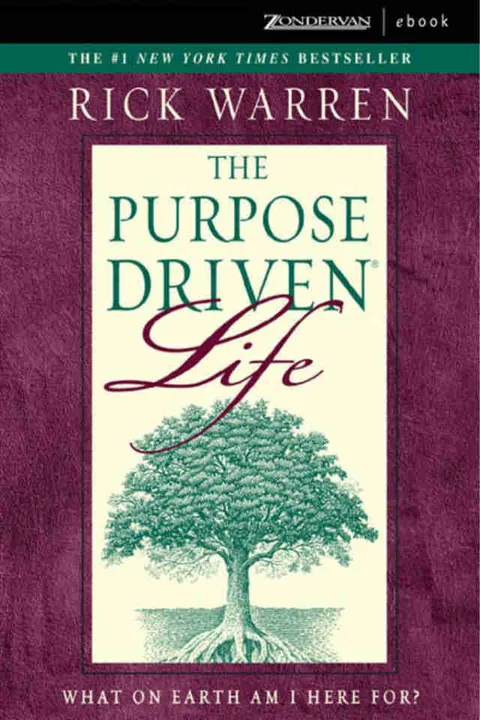
"The Purpose Driven Life" by Rick Warren is a spiritual guidebook that helps readers discover their purpose in life through understanding and living out God's intentions for them. Warren outlines a 40-day journey to explore five key purposes: worship, fellowship, discipleship, ministry, and mission. The book emphasizes the importance of living a life aligned with one's true purpose and relationship with God.

Louis Zamperini

Louis Zamperini Louis Zamperini was a World War II prisoner of war and an Olympic athlete who became an inspirational figure and writer. Who Was Louis Zamperini? Louis Zamperini was a World War II veteran and Olympic distance runner. Zamperini competed in the 1936 Berlin Olympics and was set to compete again in the 1940 games in Tokyo, which were canceled when World War II broke out. A bombardier in the Army Air Corps, Zamperini was in a plane that went down, and when he arrived on shore in Japan 47 days later, he was taken as a prisoner of war and tortured for two years. After his release, Zamperini became an inspirational figure, and his life served as the basis for the 2014 biography Unbroken: A World War II Story of Survival, Resilience, and Redemption. Early Years Louis Silvie Zamperini was born to Italian immigrant parents on January 26, 1917, in the town of Olean, New York. Growing up in Torrance, California, Zamperini ran track at Torrance High School and discovered that he had a talent for long-distance running. In 1934, Zamperini set the national high school mile record, and his time of 4 minutes and 21.2 seconds would stand for an incredible 20 years. His track prowess also caught the attention of the University of Southern California, which he earned a scholarship to attend. 1936 Berlin Olympics It wasn’t long before Zamperini was taking his love of track to the next level, and in 1936 he headed to New York City for the 5,000-meter Olympic trials. Held on Randall’s Island, the race pitted Zamperini against Don Lash, the world record holder in the event. The race ended in a dead heat between the two runners, and the finish was enough to qualify Zamperini for the 1936 Olympics in Berlin, while he was still a teenager. Zamperini trained for only a few weeks in the 5,000 meters, and although he ran well (he finished his last lap in only 56 seconds), he didn’t medal, coming in eighth (to Lash’s 13th). During the overwhelming pageant that is the Olympics, the 19-year-old stood near Adolf Hitler’s box with his fellow athletes, seeking a photo of the Nazi leader. Looking back on the event, Zamperini said, “I was pretty naïve about world politics, and I thought he looked funny, like something out of a Laurel and Hardy film.” In 1938, Zamperini was back setting records at the collegiate level, this time breaking the mile record of 4:08.3, a new mark that held for 15 years. Zamperini graduated from USC in 1940, a year that would have been the speedster’s next shot at Olympic gold, but World War II intervened. World War II and Japanese POW Camp With the outbreak of World War II, the 1940 Olympics were canceled, and Zamperini enlisted in the Army Air Corps. He ended up a bombardier on the B-24 Liberator, and in May 1943, Zamperini and a crew went out on a flight mission to search for a pilot whose plane had gone down. Out over the Pacific Ocean, Zamperini’s plane suffered mechanical failure and crashed into the ocean. Of the 11 men on board, only Zamperini and two other airmen survived the crash, but help was nowhere to be found, and the men were stranded on a raft together for 47 days. The month and a half at sea proved harrowing for the survivors, as they were subjected to the unrelenting sun, strafing runs by Japanese bombers, circling sharks and little drinking water. To survive, they collected rainwater and killed birds that happened to land on the raft. One of the men died at sea before Zamperini and the plane’s pilot, Russell Allen "Phil" Phillips, finally washed ashore. They found themselves on a Pacific island 2,000 miles from the crash site and in enemy Japanese territory. While saved from the ocean, the men were soon taken as prisoners of war by the Japanese, beginning the next leg of their horrific experience. In captivity across a series of prison camps, Zamperini and Phillips were separated and subjected to torture, both physical and psychological. They were beaten and starved, and Zamperini was singled out and abused repeatedly by a camp sergeant called the Bird, who would tear into fits of psychotic violence. Yet Zamperini, as a former Olympic athlete, was seen as a propaganda tool by the Japanese, a scenario that likely saved him from execution. The captivity lasted for more than two years, during which time Zamperini was officially pronounced dead by the U.S. military. Zamperini was released only after the war ended in 1945, and he returned to the United States. Postwar Life and Legacy Scarred by his ordeal, upon his return home, Zamperini suffered from alcoholism, and he and his wife, Cynthia, came close to divorce. (They stayed married, though, for 54 years, until her death in 2001.) What brought Zamperini back from the brink was hearing a Billy Graham sermon in Los Angeles in 1949, a sermon that inspired Zamperini and began the healing process. He went on to found a camp for troubled youth called Victory Boys Camp and forgave his Japanese tormenters. Some received Zamperini’s forgiveness in person in 1950, when he visited a Tokyo prison where they were serving war-crime sentences. In 1998, Zamperini returned to Japan once again to carry the torch at the Nagano Winter Games. He stated his intention to forgive the Bird, Mutsuhiro Watanabe, but Watanabe refused to meet with him. Zamperini also went on to become a prominent inspirational speaker, and he wrote two memoirs, both titled Devil at My Heels (1956 and 2003). His life has inspired a recent biography as well, Laura Hillenbrand’s Unbroken: A World War II Story of Survival, Resilience, and Redemption. The book has also become the subject of a 2014 film, Unbroken, directed and produced by actress Angelina Jolie, as well as its 2018 sequel Unbroken: Path to Redemption. Zamperini died at age 97 of pneumonia on July 2, 2014.

How Did Evil Begin

Why is there a Satan? Why does a being exist whose name means accuser — a “devil,” which means slanderer, a “deceiver of the whole world” (Revelation 12:9), a “ruler of this world” (John 12:31; 14:30; 16:11), a “god of this age” (2 Corinthians 4:4 NKJV), a “prince of the power of the air” (Ephesians 2:2), a “Beelzebul, the prince of demons” (Matthew 12:24)? Where does he come from? How did it come about that he ever sinned? The letters of Jude and 2 Peter give us clues. Jude 6 says, “The angels who did not stay within their own position of authority, but left their proper dwelling, he has kept in eternal chains under gloomy darkness until the judgment of the great day.” And 2 Peter 2:4 says, “God did not spare angels when they sinned, but cast them into hell and committed them to chains of gloomy darkness to be kept until the judgment.” It appears, then, that some of God’s holy angels (we may assume, in principle, that Satan is included, whether these verses refer to his original rebellion or a later one) “sinned,” or as Jude says, “did not stay within their own position of authority.” In other words, the sin was a kind of insurrection, a desire for more power and more authority than they were appointed by God to have. So Satan and the other fallen angels originate as created holy angels who rebel against God, reject him as their all-satisfying King, and set out on a course of self-exaltation and presumed self-determination. They do not want to be subordinate. They do not want to be sent by God to serve others (Hebrews 1:14). They want to have final authority over themselves. And they want to exalt themselves above God. Most Popular Answer But these thoughts about the origin of Satan do not answer the question we began with: Why is there a Satan? They simply push the question back to the very beginning. Why did any holy angel sin? Here is the most popular answer of our modern era: All of God’s creatures were created “free moral agents.” If God had made them otherwise they would have been mere machines with no will of their own. . . . To be a “free moral agent” implies that one has the power of “choice.” . . . As long as Satan chose the “Will of God” there was no “Evil” in the Universe, but the moment he chose to follow his own Will, then he fell, and by persuading others to follow him he introduced “Evil” into the Universe. (Clarence Larkin, The Spirit World, 12–14) There are at least two problems with this presumed answer: (1) it does not answer the question and (2) it assumes that God cannot exert sufficient influence on a morally responsible being so as to keep that being safe in the worship of God — to keep him from sinning. ‘Free Will’ Philosophy First, it does not answer the question, Why did any holy angel sin? To say that a perfect angel sinned because he had the power to do so is no answer. Why would a perfectly holy angel in God’s infinitely beautiful presence suddenly be inclined to hate God? “Free will” — that is, ultimate self-determination — is not an answer. It explains nothing. “Free will” is a name put on a mystery. But it is not the biblical name. Because the Bible never teaches that there is such a thing as ultimate human, or ultimate demonic, self-determination. That is a philosophical notion forced onto the Bible, not taught by the Bible. In fact, that philosophical notion was one of Satan’s first designs for humanity — to persuade Adam and Eve that they could be ultimately self-determining, and that this would be good for them (Genesis 3:4–5). Both of those ideas were false. They could not become ultimately self-determining, and it was deadly for them to try. The human race has been ruined by these notions ever since. Slandering God’s Saving Power Second, Larkin’s appeal to angelic self-determination assumes that God cannot exert sufficient influence on a morally responsible being so as to keep that being safe in the worship of God forever. Larkin’s deadly mistake is to assume that if God exerted such influence, the angels “would have been mere machines with no will of their own.” This too is a philosophical assumption forced on the Bible, not taught by the Bible. In fact, the Bible pervasively teaches the opposite — that God can and does exert sufficient influence on morally responsible beings (his children!) to keep them safe in the worship of God forever. When the Bible says, for example, that God will “cause [us] to walk in [his] statutes” (Ezekiel 36:27), and that he is “working in us that which is pleasing in his sight” (Hebrews 13:21), and that he “works in [us], both to will and to work for his good pleasure” (Philippians 2:13), and that the work he began in us he “will bring . . . to completion at the day of Jesus Christ” (Philippians 1:6), and that he “will sustain [us] to the end, guiltless in the day of our Lord Jesus Christ” (1 Corinthians 1:8), and that “those whom he justified he also glorified” (Romans 8:30) — when God says all this, he means for us to stop talking nonsense about such glorious influence turning us into machines. It doesn’t. It is life-giving grace. It is effective. It keeps us safe forever. And to call it machine-making is slanderous. If God did not exert sovereign influence over our wayward hearts, we would all fall away. Prone to wander, Lord, I feel it, Prone to leave the God I love. Here’s my heart, oh, take and seal it, Seal it for Thy courts above. “If God did not exert sovereign influence over our wayward hearts, we would all fall away.” God’s “sealing” (Ephesians 1:13) — his decisive, keeping influence — does not turn us into machines. It keeps us safe in the worship of God forever. No one who is justified will fail to be glorified (Romans 8:30). Heaven will never see an insurrection among the saints. Not because we are better than the angels, but because the blood of Jesus secured the new covenant for God’s elect, where God says, “I will put the fear of me in their hearts, that they may not turn from me” (Jeremiah 32:40). He bought this pledge for his children by his blood. They will not commit treason. Let us praise such sovereign, merciful, keeping influence. God save us from slandering his saving power. It is false when Larkin assumes that God could not have kept his holy angels from sinning — safe in the worship of God. It is false to assume that such sovereign influence would make angels, or humans, into robots. It doesn’t. Redemption’s Stage What then is the answer to the question, Why did any holy angel sin? The answer is that God had a wise and gracious purpose. That is why it happened. Some of God’s holy angels sinned because their fall would set in motion a history of redemption that would fulfill the infinitely wise purposes of God in creation. All the “unsearchable . . . judgments” and all the “inscrutable . . . ways” of God flow from the depths of his wisdom (Romans 11:33). “O Lord, how manifold are your works! In wisdom have you made them all” (Psalm 104:24). He is “the only wise God” (Romans 16:27). All that happens from eternity to eternity happens according to the wisdom of the one “who works all things according to the counsel of his will” (Ephesians 1:11). And we know it was a gracious purpose because God’s plan before the creation of the world was to show grace to unworthy sinners. Sin came into being as part of a plan to show grace to sinners. “[God] saved us and called us to a holy calling, not because of our works but because of his own purpose and grace, which he gave us in Christ Jesus before the ages began” (2 Timothy 1:9). The plan before creation was that Christ would be the Lamb slain for sinners — sinners whose names were “written before the foundation of the world in the book of life of the Lamb who was slain” (Revelation 13:8). Christ slain for sinners was the plan before any human sinned. Two Unassailable Truths But notice what question I am not answering here. I am not answering the question, How did the first sin happen in the heart of a holy angel? The why question I have answered by saying the first sin happened as part of God’s wisdom and purposes and planning. But that assumes God was able to see to it that the first sin happened without himself being a sinner, and without making the first sinning angel into a machine. I do not know the answer to the question of how God did this. This, to me, is one of the great mysteries of biblical teaching that I cannot explain — how God governs the will of sinful beings, yet, in doing so, does not sin, and does not take away their responsibility. I see that it is true, because the Bible teaches it, but how God does this remains a mystery. Recall that above I said that “free will” — ultimate self-determination — is the name some people put on this mystery. Then I added that this is not the biblical name. Because the Bible never teaches that there is such a thing as ultimate self-determination, except in God. The Bible doesn’t give the mystery a name. Rather it teaches two truths again and again: God governs the hearts and minds of all sinful beings without himself sinning, and they are truly and justly accountable for all their sins. Sovereign over Satan Since we are not told explicitly how things transpired in the fall of Satan, it is illuminating to study how God relates to Satan’s will now. Is God helpless when a satanic will chooses to do evil? Can God restrain that will? Or would that only turn the will into a machine? The biblical answer is that God has the right and power to restrain Satan anytime he pleases. Consider these examples. 1. Though Satan is called “the ruler of this world” (John 12:31), Daniel 4:17 says, “The Most High rules the kingdom of men and gives it to whom he will.” Satan’s world rule is subordinate to God’s. 2. Though unclean spirits are everywhere doing deceptive and murderous things, Jesus Christ has all authority over them. “He commands even the unclean spirits, and they obey him” (Mark 1:27). 3. Satan is a roaring lion, prowling and seeking someone to devour (1 Peter 5:8). Peter explains that the jaws of this lion are, in fact, the sufferings of persecution: “Resist him, firm in your faith, knowing that the same kinds of suffering are being experienced by your brotherhood throughout the world” (1 Peter 5:9). But this suffering, Peter says, does not happen apart from God’s sovereign will: “It is better to suffer for doing good, if that should be God’s will” (1 Peter 3:17). 4. Satan is a murderer from the beginning (John 8:44). But God decides, finally, who lives and who dies and when: “If the Lord wills, we will live and do this or that” (James 4:15). 5. When Satan aims to destroy Job and prove that God is not his treasure, he must get permission from God before he attacks his possessions (Job 1:12) or his body (Job 2:6). 6. Satan is the great tempter. He wants us to sin. Luke tells us that Satan was behind Peter’s three denials. “Satan demanded to have you, that he might sift you like wheat” (Luke 22:31). But Jesus is sovereign over this tempter’s work, and its outcome. He says to Peter, “I have prayed for you that your faith may not fail. And when you have turned again, strengthen your brothers” (Luke 22:32). Not “if you turn,” but “when you turn.” Christ rules over all of Satan’s designs. Satan aims to fail Peter. Jesus aims to fit him for leadership. 7. Paul says in 2 Corinthians 4:4 that Satan “has blinded the minds of the unbelievers.” But two verses later, God removes that blindness. “God, who said, ‘Let light shine out of darkness,’ has shone in our hearts to give the light of the knowledge of the glory of God in the face of Jesus Christ” (2 Corinthians 4:6). So now back to the question about the origin of Satan’s sinfulness. Is God helpless before the will of his own angels? Is there a power outside himself that limits his rule over their choices and plans? My conclusion is that, from cover to cover, the Bible presents God as governing Satan and his demons. He has the right and power to restrain them any time he pleases. Guarding the Mystery The sum of the matter, then, about where a sinful Satan came from is this: He was a holy angel who mysteriously came to prefer self-exaltation over God-exaltation. He fell into the delusion that ultimate self-determination was possible for a finite creature, and that it was preferable to submitting to God. This fall was part of God’s all-wise plan. It did not take him off guard. How God saw to it that this part of his plan came to pass, without himself sinning and without turning Satan into a machine, I do not know. “From cover to cover, the Bible presents God as governing Satan and his demons.” Trying to explain this mystery with so-called “free will” — that is, ultimate self-determination — is unbiblical and vacuous. It is unbiblical because the idea that any of God’s creatures has ultimate self-determination is not taught anywhere in the Bible. And it is vacuous because it does not explain anything. Simply asserting that a holy angel had the “power of choice” offers no explanation of why a perfectly holy being in God’s infinitely beautiful presence would suddenly be inclined to hate God. We should probably take our cue from the reticence of the Bible to speak about Satan’s origin. He is there in the first pages of the Bible with no explanation. The mystery of his first sin remains just that. We surround it and guard it with biblical truth, lest unbiblical and vacuous explanations spread like a smog over the Scriptures and obscure the glory of God’s saving purposes. Article by John Piper Founder & Teacher, desiringGod.org

Feedback
Suggestionsuggestion box
x