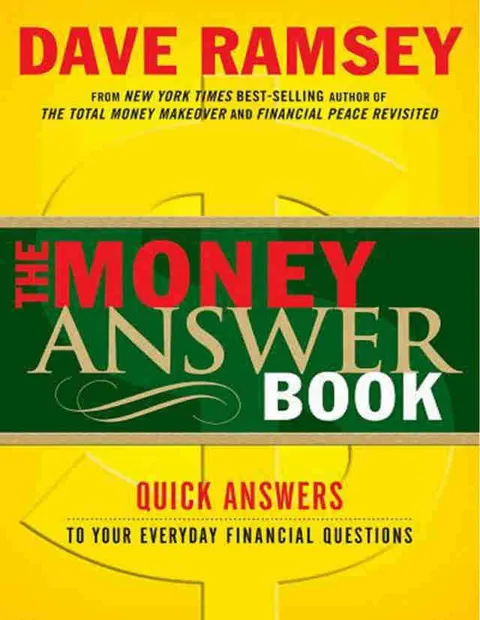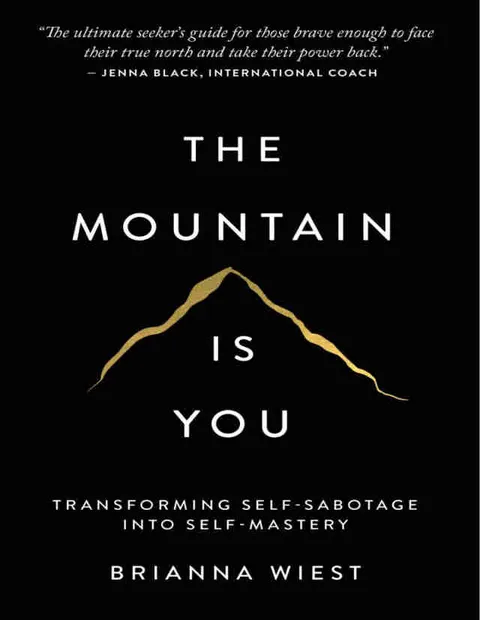

The Millionaire Masterclass Plan Order Printed Copy
- Author: Roger James Hamilton
- Size: 2.62MB | 243 pages
- |
Others like the millionaire masterclass plan Features >>
About the Book
"The Millionaire Masterclass Plan" by Roger James Hamilton is a comprehensive guide that outlines practical steps and strategies for achieving financial success and becoming a millionaire. The book covers key principles such as identifying your unique talents and leveraging them for wealth creation, as well as building passive income streams and investing wisely. Hamilton also emphasizes the importance of mindset and positive thinking in achieving financial abundance. Overall, the book provides a roadmap for individuals looking to attain financial freedom and build wealth.
Brother Yun
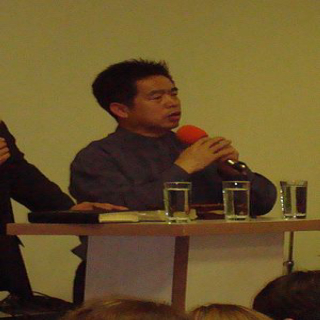 Brother Yun was born in February 1958 in the province of Henan. His original name was Liu Zhenying (刘振营).
Brother Yun became a believer at the age of 16. Soon after he became a Christian, God called him to be His witness in the west and south. As he was obedient to the calling, he eventually became a witness of Christ not just in the western and southern parts of China, but throughout China and in the nations beyond China as well.
Brother Yun was born into a poor family. His family’s financial situation took a turn for the worst when his father became ill with an asthmatic condition that led to lung cancer eventually. His life got worse when he became a Christian as he suffered severe trials and persecutions. In the midst of suffering for the Lord, however, he experienced miracle after miracle, which helped to strengthen his faith.
HOW BROTHER YUN BECAME A BELIEVER
In 1974, Brother Yun’s father became ill with lung cancer. His mother, who had been a Christian for many years but had become spiritually cold after the expulsion of Western missionaries during the Cultural Revolution, felt a deep sense of desperation because if her husband had died then, it would leave the family in dire straits. She thought of committing suicide. One evening, as she was lying in bed, she heard a voice saying to her that Jesus loved her. In tears and in repentance, she rededicated her life to God and gathered her family to pray for her husband. The next morning, her husband got better and as a result, everyone in the family, including Brother Yun, put their faith in God.
HIS HUNGER FOR THE WORD OF GOD
Brother Yun was 16 when he became a Christian. Soon after, he started hungering for the Word of God. However, his family did not have a Bible. He began asking his mother who Jesus was. In response, his mother would tell him that Jesus was the Son of God and that He had recorded all His teachings in the Bible.
Brother Yun wanted a Bible and his mother recalled that there was a man in another village who had one. So she brought him to see the man. The man was too afraid to show Brother Yun his Bible. So he suggested to the latter that he could pray and ask God for one.
Brother Yun decided to fast and pray for a Bible. For the next 100 days, he ate only one bowl of steamed rice everyday. One day at 4am, after fasting for 100 days, he saw a vision. In the vision, he was walking up a steep hill and trying to push a heavy cart at the same time. He was heading towards a village where he intended to beg for food for his family. He struggled greatly as he continued his climb uphill. The cart was about to roll back and fall on him when he saw three men walking down the hill in the opposite direction. One of them was a kind old man and he was pulling a large cart of fresh bread. When the old man saw Brother Yun, he asked him if he was hungry. He said ‘yes’ and started crying. The old man then took a red bag of bread from his cart and asked his two servants to give it to Brother Yun. As he put the bread into his mouth, it immediately turned into a Bible.
Upon waking up, Brother Yun began to search for the Bible. His search, however, was in vain. All of a sudden, he heard a faint knock on the door and someone was calling out his name. Immediately, he recognised the voice – it was the same voice he had heard in the vision. He quickly opened the door and standing before him were the two servants he had seen in the vision. One of them held a red bag in his hand. In this red bag was a Bible.
It was later that Brother Yun found out the names of the two men. One was Brother Wang while the other was Brother Sung. They were sent by an evangelist to give Brother Yun the Bible. The evangelist, who had suffered terribly during the Cultural Revolution and had nearly died while being tortured, had received a vision from God. In the vision, God showed him Brother Yun’s house and the location of his village. He was asked to give his Bible to Brother Yun. However, he did not obey God until three months later.
Brother Yun began to devour the Word of God. Even though he could hardly read, this did not deter him at all. When he had finished reading the entire Bible, he started to memorise one chapter per day. In 28 days, he had memorised the Gospel of Matthew. Then he went on to memorise the Book of Acts and so forth.
OBEDIENT TO THE CALL OF GOD
One morning at 4am, Brother Yun had a dream. In the dream, God asked him to be His witness in the west and south. In the same dream, he saw a young man from the south coming to his house. And so at daybreak, he told his mother to expect the young man’s visit and to ask him to wait for him. Then he sat off to a village he had never heard of in the west. The people in this village had been praying for him to visit as they had heard about how he had prayed for a Bible and got it.
When the meeting at the village concluded and Brother Yun got ready to leave, the villagers refused to let him go. So he stayed on and recited to them the first twelve chapters from the Book of Acts. After that, the villagers finally let him go. From the village to his house, it could take up to 2 hours to walk. Because he did not want to make the young man from the south wait too long, he decided to run home. All of a sudden, he found himself entering his village without any apparent time lapse. What should have taken him a few hours took him just a few moments. It was as if God had supernaturally transported him back to his village.
PERSECUTIONS AND MIRACLES IN HIS LIFE
Brother Yun was arrested by security police numerous times and was thrown into prison three times for sharing the gospel in communist China.
When Brother Yun was arrested the first time, he was only 17 years old. At that time, he was ministering at a meeting far away from home. After he was caught, he was thrown into a freezing cold prison cell. There was no heat in the cell and his winter coat had been thrown into the snow by the security police who had caught him. He began to sing Psalm 150 aloud. The more he sang, the more he was filled with joy. Gradually, his frozen hands and feet regained feeling and he no longer felt cold.
During his first imprisonment in Nanyang, Brother Yun felt that God wanted him to fast without food and water until he could see his family again. This fast lasted 74 days, which was humanly impossible but yet was made possible because he chose to obey God.
During those times when Brother Yun was in the hands of government officials, he was repeatedly beaten and tortured with electric batons. He was also kicked and trampled upon. Furthermore, he had needles being jabbed underneath his fingernails.
Once, Brother Yun was paraded through the streets with a red cross tied behind him for half a day. When night fell, he was locked and left alone inside a large interrogation room. The wooden cross was taken off his back but his hands were still tied up. All of a sudden, the rope that was used to tie his hands snapped by itself. He immediately walked out of the interrogation room and walked through the courtyard in the midst of onlookers. Nobody stopped him or said anything to him. It was as if God had blinded their eyes and they did not even recognise who he was.
Because the front gate was locked, the only way Brother Yun could get out was to climb over an eight-foot high cement wall. He climbed up as much as he could manage. Then he looked over the wall and saw that there was a ten-foot wide open tank directly below. Suddenly, he felt as if someone had lifted him up and thrown him over. He was thrown so far that he did not land in the tank.
Brother Yun’s 3rd imprisonment was a very dark period in his life as the prison guards in the maximum security prison were determined to prevent his escape. So they beat his legs to cripple him permanently. They had him beaten up everyday, even in his crippled state. One day, God instructed him to escape from the prison. This was confirmed by a brother-in-Christ. Thus, on May 5, 1997, he miraculously walked past dozens of prison guards and out of the maximum security prison. It was as if he had become invisible to the guards. He did not realise that his legs had been miraculously healed until later.
Throughout all the horrendous and painful experiences that Brother Yun went through, the word of the Lord kept coming to him, encouraging him and strengthening his faith.
BROTHER YUN’S MINISTRY
Brother Yun eventually escaped China and sought asylum in Germany in 2001. Since then, he has been continuing his ministry from there and has spoken to congregations internationally. He has founded “Back to Jerusalem” Movement and has been sending missionaries out from China to share the gospel in the least-reached nations.
Brother Yun’s life and ministry have impacted many lives. Thousands of people have become Christians through his ministry. It is thus inevitable that fellow Christians have allowed themselves to be used as instruments of wickedness to attack his reputation. The co-author of The Heavenly Man, Paul Hattaway has aptly put it this way, “Many of the great Christian leaders throughout history have been the subject of brutal attacks from other Christians.”
AFTERTHOUGHT
Brother Yun’s childlike faith and his prompt obedience to God’s call are exemplary. It is incredible that he has remained faithful to God despite the tremendous suffering and persecutions he has gone through.
Brother Yun was born in February 1958 in the province of Henan. His original name was Liu Zhenying (刘振营).
Brother Yun became a believer at the age of 16. Soon after he became a Christian, God called him to be His witness in the west and south. As he was obedient to the calling, he eventually became a witness of Christ not just in the western and southern parts of China, but throughout China and in the nations beyond China as well.
Brother Yun was born into a poor family. His family’s financial situation took a turn for the worst when his father became ill with an asthmatic condition that led to lung cancer eventually. His life got worse when he became a Christian as he suffered severe trials and persecutions. In the midst of suffering for the Lord, however, he experienced miracle after miracle, which helped to strengthen his faith.
HOW BROTHER YUN BECAME A BELIEVER
In 1974, Brother Yun’s father became ill with lung cancer. His mother, who had been a Christian for many years but had become spiritually cold after the expulsion of Western missionaries during the Cultural Revolution, felt a deep sense of desperation because if her husband had died then, it would leave the family in dire straits. She thought of committing suicide. One evening, as she was lying in bed, she heard a voice saying to her that Jesus loved her. In tears and in repentance, she rededicated her life to God and gathered her family to pray for her husband. The next morning, her husband got better and as a result, everyone in the family, including Brother Yun, put their faith in God.
HIS HUNGER FOR THE WORD OF GOD
Brother Yun was 16 when he became a Christian. Soon after, he started hungering for the Word of God. However, his family did not have a Bible. He began asking his mother who Jesus was. In response, his mother would tell him that Jesus was the Son of God and that He had recorded all His teachings in the Bible.
Brother Yun wanted a Bible and his mother recalled that there was a man in another village who had one. So she brought him to see the man. The man was too afraid to show Brother Yun his Bible. So he suggested to the latter that he could pray and ask God for one.
Brother Yun decided to fast and pray for a Bible. For the next 100 days, he ate only one bowl of steamed rice everyday. One day at 4am, after fasting for 100 days, he saw a vision. In the vision, he was walking up a steep hill and trying to push a heavy cart at the same time. He was heading towards a village where he intended to beg for food for his family. He struggled greatly as he continued his climb uphill. The cart was about to roll back and fall on him when he saw three men walking down the hill in the opposite direction. One of them was a kind old man and he was pulling a large cart of fresh bread. When the old man saw Brother Yun, he asked him if he was hungry. He said ‘yes’ and started crying. The old man then took a red bag of bread from his cart and asked his two servants to give it to Brother Yun. As he put the bread into his mouth, it immediately turned into a Bible.
Upon waking up, Brother Yun began to search for the Bible. His search, however, was in vain. All of a sudden, he heard a faint knock on the door and someone was calling out his name. Immediately, he recognised the voice – it was the same voice he had heard in the vision. He quickly opened the door and standing before him were the two servants he had seen in the vision. One of them held a red bag in his hand. In this red bag was a Bible.
It was later that Brother Yun found out the names of the two men. One was Brother Wang while the other was Brother Sung. They were sent by an evangelist to give Brother Yun the Bible. The evangelist, who had suffered terribly during the Cultural Revolution and had nearly died while being tortured, had received a vision from God. In the vision, God showed him Brother Yun’s house and the location of his village. He was asked to give his Bible to Brother Yun. However, he did not obey God until three months later.
Brother Yun began to devour the Word of God. Even though he could hardly read, this did not deter him at all. When he had finished reading the entire Bible, he started to memorise one chapter per day. In 28 days, he had memorised the Gospel of Matthew. Then he went on to memorise the Book of Acts and so forth.
OBEDIENT TO THE CALL OF GOD
One morning at 4am, Brother Yun had a dream. In the dream, God asked him to be His witness in the west and south. In the same dream, he saw a young man from the south coming to his house. And so at daybreak, he told his mother to expect the young man’s visit and to ask him to wait for him. Then he sat off to a village he had never heard of in the west. The people in this village had been praying for him to visit as they had heard about how he had prayed for a Bible and got it.
When the meeting at the village concluded and Brother Yun got ready to leave, the villagers refused to let him go. So he stayed on and recited to them the first twelve chapters from the Book of Acts. After that, the villagers finally let him go. From the village to his house, it could take up to 2 hours to walk. Because he did not want to make the young man from the south wait too long, he decided to run home. All of a sudden, he found himself entering his village without any apparent time lapse. What should have taken him a few hours took him just a few moments. It was as if God had supernaturally transported him back to his village.
PERSECUTIONS AND MIRACLES IN HIS LIFE
Brother Yun was arrested by security police numerous times and was thrown into prison three times for sharing the gospel in communist China.
When Brother Yun was arrested the first time, he was only 17 years old. At that time, he was ministering at a meeting far away from home. After he was caught, he was thrown into a freezing cold prison cell. There was no heat in the cell and his winter coat had been thrown into the snow by the security police who had caught him. He began to sing Psalm 150 aloud. The more he sang, the more he was filled with joy. Gradually, his frozen hands and feet regained feeling and he no longer felt cold.
During his first imprisonment in Nanyang, Brother Yun felt that God wanted him to fast without food and water until he could see his family again. This fast lasted 74 days, which was humanly impossible but yet was made possible because he chose to obey God.
During those times when Brother Yun was in the hands of government officials, he was repeatedly beaten and tortured with electric batons. He was also kicked and trampled upon. Furthermore, he had needles being jabbed underneath his fingernails.
Once, Brother Yun was paraded through the streets with a red cross tied behind him for half a day. When night fell, he was locked and left alone inside a large interrogation room. The wooden cross was taken off his back but his hands were still tied up. All of a sudden, the rope that was used to tie his hands snapped by itself. He immediately walked out of the interrogation room and walked through the courtyard in the midst of onlookers. Nobody stopped him or said anything to him. It was as if God had blinded their eyes and they did not even recognise who he was.
Because the front gate was locked, the only way Brother Yun could get out was to climb over an eight-foot high cement wall. He climbed up as much as he could manage. Then he looked over the wall and saw that there was a ten-foot wide open tank directly below. Suddenly, he felt as if someone had lifted him up and thrown him over. He was thrown so far that he did not land in the tank.
Brother Yun’s 3rd imprisonment was a very dark period in his life as the prison guards in the maximum security prison were determined to prevent his escape. So they beat his legs to cripple him permanently. They had him beaten up everyday, even in his crippled state. One day, God instructed him to escape from the prison. This was confirmed by a brother-in-Christ. Thus, on May 5, 1997, he miraculously walked past dozens of prison guards and out of the maximum security prison. It was as if he had become invisible to the guards. He did not realise that his legs had been miraculously healed until later.
Throughout all the horrendous and painful experiences that Brother Yun went through, the word of the Lord kept coming to him, encouraging him and strengthening his faith.
BROTHER YUN’S MINISTRY
Brother Yun eventually escaped China and sought asylum in Germany in 2001. Since then, he has been continuing his ministry from there and has spoken to congregations internationally. He has founded “Back to Jerusalem” Movement and has been sending missionaries out from China to share the gospel in the least-reached nations.
Brother Yun’s life and ministry have impacted many lives. Thousands of people have become Christians through his ministry. It is thus inevitable that fellow Christians have allowed themselves to be used as instruments of wickedness to attack his reputation. The co-author of The Heavenly Man, Paul Hattaway has aptly put it this way, “Many of the great Christian leaders throughout history have been the subject of brutal attacks from other Christians.”
AFTERTHOUGHT
Brother Yun’s childlike faith and his prompt obedience to God’s call are exemplary. It is incredible that he has remained faithful to God despite the tremendous suffering and persecutions he has gone through.
God Wrote a Book
We actually have the words of God. This is almost too good to be true. And yet how often are we so accustomed to this reality — one of the greatest wonders in all the universe — that it barely moves us to handle the Bible with care (and awe), or at least to access his words with the frequency they deserve? Familiarity can breed contempt, or at least neglect. While scarcity drives demand, abundance can lead to apathy. For many of us, we have multiple Bibles on our shelves, in multiple translations. We have copies on our computers and phones. We have access to the very words of God like never before — yet how often do we appreciate, and marvel at, the wonder of what we have? Wonder of Having One of the greatest facts in all of history is that God gave us a Book. He gave us a Book! He has spoken. He has revealed himself to us through prophets and apostles, and appointed that they write down his words and that they be preserved. We have his words! We can hear in our souls the very voice of God himself by his Spirit through his Book. “No word of God is a dead word.” Think of all God went to, and what patience, to make his self-revelation accessible to us here in the twenty-first century. Long ago, at many times, and in many ways, God spoke through the prophets (Hebrews 1:1). Then, in the fullness of time, he sent his own Son, his own self, in full humanity, as his revealed Word par excellence, in the person of Christ, represented to us by his authoritative, apostolic spokesmen in the new covenant. For centuries, God’s word was copied by hand, and preserved with the utmost diligence and care. Then, for the last 500 years of the printing press, God’s word has gone far and wide like never before. Men and women gave their lives, upsetting the apple carts of man-made religion, to translate the words of God into the heart language of their people. And now, in the digital revolution, access to God’s own words has exploded exponentially again, and yet — and yet — in such abundance, do we marvel at what we have? And do we, as individuals and as churches, make the most of what infinite riches we have in such access to the Scriptures? His Words, Our Great Reward The psalmists were in awe of what they had. In particular, Psalms 19 and 119 pay tribute to the wonder of having God’s words. For instance: The law of the Lord is perfect, reviving the soul; the testimony of the Lord is sure, making wise the simple; the precepts of the Lord are right, rejoicing the heart; the commandment of the Lord is pure, enlightening the eyes; the fear of the Lord is clean, enduring forever; the rules of the Lord are true, and righteous altogether. More to be desired are they than gold, even much fine gold; sweeter also than honey and drippings of the honeycomb. Moreover, by them is your servant warned; in keeping them there is great reward. (Psalm 19:7–11) “We come to his word, like holy hedonists, stalking joy.” God is honored when we approach his words as those that revive the soul and rejoice the heart, as those that are more to be desired than gold and sweeter than honey. The summary and culmination of Psalm 19’s unashamed tribute to God’s words is this: great reward. He means for us to experience his words as “my delight” (Psalm 1:2; 119:16, 24), as “the joy of my heart” (Psalm 119:111), as “the delight of my heart” (Jeremiah 15:16), as kindling for the fires of our joy. Not only has God spoken in this Book we call the Bible, but he is speaking. Writing about Psalm 95 in particular (and applicable to all the Scriptures), Hebrews says “the word of God is living and active, sharper than any two-edged sword, piercing to the division of soul and of spirit, of joints and of marrow, and discerning the thoughts and intentions of the heart” (Hebrews 4:12). No word of God is a dead word. Even Hebrews — the New Testament letter plainest on the old covenant being “obsolete” in its demands upon new-covenant Christians (Hebrews 8:13) — professes that old-covenant revelation, while no longer binding, is indeed “living and active.” “Is not my word like fire,” God declares through Jeremiah, “and like a hammer that breaks the rock in pieces?” (Jeremiah 23:29). From cover to cover, Genesis to Revelation, God has captured for his church his objective, “external word” (as Luther called it) which he speaks (present tense) to his people through the subjective, internal power of his Spirit dwelling in us. We hear God’s voice in his word by his Spirit. And so, Hebrews exhorts us, “See that you do not refuse him who is speaking” (Hebrews 12:25). Wonder of Handling So then, how will we who marvel at having God’s living and active words not also fall to the floor in amazement that he invites us — even more, he insists — that we handle his word. It is no private message to Timothy, but to the whole church reading over his shoulder, when Paul writes, Do your best to present yourself to God as one approved, a worker who has no need to be ashamed, rightly handling the word of truth. (2 Timothy 2:15) The charge lands first on Timothy, as Paul’s delegate in Ephesus, and then on pastors (both then and today) who formally and publicly “handle the word” for the feeding and forming of the church. But the summons to rightly handle the word of truth (both in the gospel word and in the written Scriptures) is a mantle for the whole church to gladly bear. In the midst of a world of destructive words, God calls his church to first receive (have) and then respond to (handle) his words. As human words of death fly around us from all sides — in the air, on the page, on our screens — he gives us his own life-giving words to steady our souls and the souls of others. As the world quarrels about words, “which does no good, but only ruins the hearers” (2 Timothy 2:14) and coughs up “irreverent babble” that leads “people into more and more ungodliness” and spreads like gangrene (2 Timothy 2:16–17), God gives us an oasis in the gift of his words (2 Timothy 2:15). We receive them for free, but that doesn’t mean we take them lightly or expend little energy to handle them well. Make Every Effort God, through Paul, says “do your best” — literally, be zealous, be eager, make every effort — “to present yourself to God as one approved.” We orient Godward first and foremost in our handling of his word, then only secondarily to others. Which will make us “a worker who has no need to be ashamed.” Being a worker requires work, labor, the exertion of effort, the expending of energy, the investment of time, the patience of lifelong learning. To do so without cutting corners (“unashamed”) or mishandling the task. And in particular, for building others up, not tearing others down. For showing others the feast, not showing ourselves to have been right. “God gives us his own life-giving words to steady our souls and the souls of others.” “Rightly handling” — guiding along a straight path — harkens to the vision Paul casts in 2 Corinthians of his own straightforwardness with God’s word. Paul was not coy about hard truths. He was not evasive. He was not a verbal gymnast, gyrating around humanly offensive divine oracles. Rather, he was frank, honest, candid, sincere. “We are not, like so many, peddlers of God’s word,” he declares, “but as men of sincerity, as commissioned by God, in the sight of God we speak in Christ” (2 Corinthians 2:17). He has more to say about such sincerity: We have renounced disgraceful, underhanded ways. We refuse to practice cunning or to tamper with God’s word, but by the open statement of the truth we would commend ourselves to everyone’s conscience in the sight of God. (2 Corinthians 4:2) Listening Like Hedonists But rightly handling God’s word doesn’t just mean we’re convinced of its truthfulness and handle it as such. Rightly handling doesn’t only include rigorous careful analysis and forthright unapologetic candor. Rightly handling includes the psalmists’ intense spiritual sensibilities. To see in and through God’s words his “great reward,” and knowing him to be a rewarder of those who seek him (Hebrews 11:6). In other words, we come to his word like holy hedonists, stalking joy. Worldly hedonists pursue the pleasures of sin; they don’t wait on them to arrive. And so do Christian Hedonists. We don’t wait around for holy pleasures. We don’t passively engage God himself through his own words. We stalk. We pursue. We read actively, and study, and meditate. When we are persuaded that God himself is indeed the greatest reward, is there any better avenue to pursue than his own words? At Desiring God, we don’t aim or pretend to be unique. However flippantly or earnestly others handle God’s words, we mean to receive them with the utter seriousness and joyful awe they deserve — he deserves. God wrote a Book. And gave it to us. Let’s give ourselves to this wonder, and marvel that we get to handle his words. Article by David Mathis