

Making Good Habits, Breaking Bad Habits Order Printed Copy
- Author: Joyce Meyer
- Size: 844KB | 214 pages
- |
Others like making good habits, breaking bad habits Features >>
Change Your Habits, Change Your Life

Atomic Habits: An Easy & Proven Way To Build Good Habits & Break Bad Ones
-160.webp)
Die Empty: Unleash Your Best Work Every Day

Emotional Intelligence

Skill With People

The Greatest Salesman In The World - Part 1

The Ultimate Gift

Talent Is Never Enough
Success Habits

Let Go Of Whatever Holds You Back
About the Book
"Making Good Habits, Breaking Bad Habits" by Joyce Meyer explores the power of habits in shaping our lives and offers practical advice on how to develop positive habits and break negative ones. Meyer encourages readers to take responsibility for their choices and provides guidance on how to cultivate lasting change in their behavior. The book serves as a motivational guide for individuals seeking to improve their habits and create a more fulfilling life.
Amy Carmichael
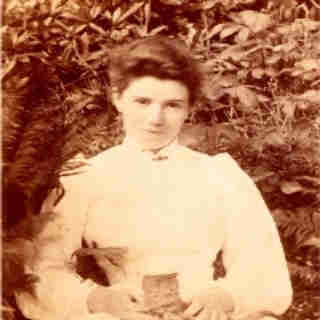 Born in Belfast Ireland, to a devout family of Scottish ancestry, Carmichael was educated at home and in England, where she lived with the familt of Robert Wilson after her father’s death. While never officially adopted, she used the hyphenated name Wilson-Carmichael as late as 1912. Her missionary call came through contacts with the Keswick movement. In 1892 she volunteered to the China Inland Mission but was refused on health grounds. However, in 1893 she sailed for Japan as the first Keswick missionary to join the Church Missionary Society (CMS) work led by Barclay Buxton. After less than two years in Japan and Ceylon, she was back in England before the end of 1894. The next year she volunteered to the Church of England Zenana Missionary Society, and in November 1895 she arrived in South India, never to leave. While still learning the difficult Tamil language, she commenced itinerant evangelism with a band of Indian Christian women, guided by the CMS missionary Thomas Walker. She soon found herself responsible for Indian women converts, and in 1901, she, the Walkers, and their Indian colleagues settled in Dohnavur. During her village itinerations, she had become increasingly aware of the fact that many Indian children were dedicated to the gods by their parents or guardians, became temple children, and lived in moral and spiritual danger. It became her mission to rescue and raise these children, and so the Dohnavur Fellowship came into being (registered 1927). Known at Dohnavur as Amma (Mother), Carmichael was the leader, and the work became well known through her writing. Workers volunteered and financial support was received, though money was never solicited. In 1931 she had a serious fall, and this, with arthritis, kept her an invalid for the rest of her life. She continued to write, and identified leaders, missionary and Indian, to take her place. The Dohnavur Fellowship still continues today.
Jocelyn Murray, “Carmichael, Amy Beatrice,” in Biographical Dictionary of Christian Missions, ed. Gerald H. Anderson (New York: Macmillan Reference USA, 1998), 116.
This article is reprinted from Biographical Dictionary of Christian Missions, Macmillan Reference USA, copyright © 1998 Gerald H. Anderson, by permission of Macmillan Reference USA, New York, NY. All rights reserved.
“Ammai” of orphans and holiness author
Amy Carmichael was born in Ireland in 1867, the oldest of seven children. As a teen, she attended a Wesleyan Methodist girls boarding school, until her father died when she was 18. Carmichael twice attended Keswick Conventions and experienced a holiness conversion which led her to work among the poor in Belfast. Through the Keswick Conventions, Carmichael met Robert Wilson. He developed a close relationship with the young woman, and invited her to live with his family. Carmichael soon felt a call to mission work and applied to the China Inland Mission as Amy Carmichael-Wilson. Although she did not go to China due to health reasons, Carmichael did go to Japan for a brief period of time. There she dressed in kimonos and began to learn Japanese. Her letters home from Japan became the basis for her first book, From Sunrise Land. Carmichael left Japan due to health reasons, eventually returning to England. She soon accepted a position with the Church of England’s Zenana Missionary Society, serving in India. From 1895 to 1925, her work with orphans in Tinnevelly (now Tirunelveli) was supported by the Church of England. After that time, Carmichael continued her work in the faith mission style, establishing an orphanage in Dohnavur. The orphanage first cared for girls who had been temple girls, who would eventually become temple prostitutes. Later the orphanage accepted boys as well.
Carmichael never returned to England after arriving in India. She wrote prolifically, publishing nearly 40 books. In her personal devotions, she relied on scripture and poetry. She wrote many of her own poems and songs. Carmichael had a bad fall in 1931, which restricted her movement. She stayed in her room, writing and studying. She often quoted Julian of Norwich when she wrote of suffering and patience. Many of Carmichael’s books have stories of Dohnavur children, interspersed with scripture, verses, and photographs of the children or nature. Carmichael never directly asked for funding, but the mission continued to be supported through donations. In 1951 Carmichael died at Dohnavur. Her headstone is inscribed “Ammai”, revered mother, which the children of Dohnavur called Carmichael.
Carmichael’s lengthy ministry at Dohnavur was sustained through her strong reliance upon scripture and prayer. Her early dedication to holiness practices and her roots in the Keswick tradition helped to guide her strong will and determination in her mission to the children of southern India.
by Rev. Lisa Beth White
Born in Belfast Ireland, to a devout family of Scottish ancestry, Carmichael was educated at home and in England, where she lived with the familt of Robert Wilson after her father’s death. While never officially adopted, she used the hyphenated name Wilson-Carmichael as late as 1912. Her missionary call came through contacts with the Keswick movement. In 1892 she volunteered to the China Inland Mission but was refused on health grounds. However, in 1893 she sailed for Japan as the first Keswick missionary to join the Church Missionary Society (CMS) work led by Barclay Buxton. After less than two years in Japan and Ceylon, she was back in England before the end of 1894. The next year she volunteered to the Church of England Zenana Missionary Society, and in November 1895 she arrived in South India, never to leave. While still learning the difficult Tamil language, she commenced itinerant evangelism with a band of Indian Christian women, guided by the CMS missionary Thomas Walker. She soon found herself responsible for Indian women converts, and in 1901, she, the Walkers, and their Indian colleagues settled in Dohnavur. During her village itinerations, she had become increasingly aware of the fact that many Indian children were dedicated to the gods by their parents or guardians, became temple children, and lived in moral and spiritual danger. It became her mission to rescue and raise these children, and so the Dohnavur Fellowship came into being (registered 1927). Known at Dohnavur as Amma (Mother), Carmichael was the leader, and the work became well known through her writing. Workers volunteered and financial support was received, though money was never solicited. In 1931 she had a serious fall, and this, with arthritis, kept her an invalid for the rest of her life. She continued to write, and identified leaders, missionary and Indian, to take her place. The Dohnavur Fellowship still continues today.
Jocelyn Murray, “Carmichael, Amy Beatrice,” in Biographical Dictionary of Christian Missions, ed. Gerald H. Anderson (New York: Macmillan Reference USA, 1998), 116.
This article is reprinted from Biographical Dictionary of Christian Missions, Macmillan Reference USA, copyright © 1998 Gerald H. Anderson, by permission of Macmillan Reference USA, New York, NY. All rights reserved.
“Ammai” of orphans and holiness author
Amy Carmichael was born in Ireland in 1867, the oldest of seven children. As a teen, she attended a Wesleyan Methodist girls boarding school, until her father died when she was 18. Carmichael twice attended Keswick Conventions and experienced a holiness conversion which led her to work among the poor in Belfast. Through the Keswick Conventions, Carmichael met Robert Wilson. He developed a close relationship with the young woman, and invited her to live with his family. Carmichael soon felt a call to mission work and applied to the China Inland Mission as Amy Carmichael-Wilson. Although she did not go to China due to health reasons, Carmichael did go to Japan for a brief period of time. There she dressed in kimonos and began to learn Japanese. Her letters home from Japan became the basis for her first book, From Sunrise Land. Carmichael left Japan due to health reasons, eventually returning to England. She soon accepted a position with the Church of England’s Zenana Missionary Society, serving in India. From 1895 to 1925, her work with orphans in Tinnevelly (now Tirunelveli) was supported by the Church of England. After that time, Carmichael continued her work in the faith mission style, establishing an orphanage in Dohnavur. The orphanage first cared for girls who had been temple girls, who would eventually become temple prostitutes. Later the orphanage accepted boys as well.
Carmichael never returned to England after arriving in India. She wrote prolifically, publishing nearly 40 books. In her personal devotions, she relied on scripture and poetry. She wrote many of her own poems and songs. Carmichael had a bad fall in 1931, which restricted her movement. She stayed in her room, writing and studying. She often quoted Julian of Norwich when she wrote of suffering and patience. Many of Carmichael’s books have stories of Dohnavur children, interspersed with scripture, verses, and photographs of the children or nature. Carmichael never directly asked for funding, but the mission continued to be supported through donations. In 1951 Carmichael died at Dohnavur. Her headstone is inscribed “Ammai”, revered mother, which the children of Dohnavur called Carmichael.
Carmichael’s lengthy ministry at Dohnavur was sustained through her strong reliance upon scripture and prayer. Her early dedication to holiness practices and her roots in the Keswick tradition helped to guide her strong will and determination in her mission to the children of southern India.
by Rev. Lisa Beth White
date differently this year - four resolutions for better relationships
It takes extraordinary courage to change how you date. It’s not easy to reset boundaries, communicate better, flee sexual immorality, confess failures, and end the relationship that needs to end. But you will never regret making the right changes. There were moments through high school and college when I knew with crystal clarity that things needed to change, but the costs kept me from changing sooner. What will others think about me when I confess how I’ve failed? What if I fail again, and things never get better? What if the change I need means I’m single and alone again? Like a merciless lawyer, Satan piled up every conceivable reason not to do what I knew I had to do — to make excuses, to put off decisions, to be almost honest with friends and family, to stay in unhealthy relationships, to avoid Christ and indulge in sin. I have prayed that the four resolutions that follow might give some the courage to do what you’ve been afraid to do for weeks, for months, maybe even for years. To lay down your excuses. To take up your cross. To welcome what it will cost you today to pursue love in light of eternity. To date differently this year, in a way that says something stunning about your God. 1. Above all else, I will look for Jesus. “Welcome what it will cost you today to pursue love in light of eternity.” If you resolve to change nothing else about your patterns in relationships, resolve to make Jesus the most important thing in your dating. Raise Philippians 1:21 over your next relationship: “To me to live is Christ, and to die is gain.” If to live is Christ, then to date is Christ. To marry is Christ. To remain single is Christ. He is our reason for living and working, growing and learning, dating and marrying. Above every other priority in dating, look for Jesus. It may sound simple and easy, but Satan wages an all-out war on our hearts and minds to keep us from single-minded devotion. Nothing could be harder. It is emotionally impossible to put Christ before our desires for intimacy and marriage — unless we have the Spirit of Christ. Unless it is no longer we who live and date, but Christ who lives in and through us (Galatians 2:20). Before you entrust your heart to someone else, resolve to love Jesus with all your heart. Before you let yourself daydream about potential futures with him or her, resolve to love Jesus with all your mind. Before you think about knitting your soul with another, resolve to love Jesus with all of your soul first. Before you risk, sacrifice, and work for love, resolve to love Jesus with all your strength. Resolve to love him more than love. And as you give your heart first and foremost to Christ, make sure your boyfriend (or girlfriend) has too — in the deepest places of who he is and what he wants. His faith is not a box to check along with lots of others; it should be the ink that shapes every other box. Whether you are currently in a relationship or might begin one this year, decide right now to date from a deeper, wider, higher love for the Lord. 2. I will grow where I have failed before. One reason we fail in the same ways year after year is that we fail to admit and address our failures. If you have a sexual past or a trail of mistakes behind you, you need to know there is nowhere safer to deal with your failures than in Christ. Someone may have led you to suspect that how you’ve dated has disqualified you from his love, but Christ came and died precisely for the things you’re most ashamed of. The apostle Paul says, The saying is trustworthy and deserving of full acceptance, that Christ Jesus came into the world to save sinners, of whom I am the foremost. But I received mercy for this reason, that in me, as the foremost, Jesus Christ might display his perfect patience as an example to those who were to believe in him for eternal life. (1 Timothy 1:15–16) “If you resolve to change nothing else, resolve to make Jesus the most important thing in your dating.” Guilt and shame qualify us for his love. He wants to put his patience and mercy on display for the world by showering you with mercy and being patient with you . He wants you to step forward, like Paul, to experience what he died to give you. The process begins by boldly bringing our failures before his feet (1 John 1:9), knowing he loves to forgive our wrongs, heal our wounds, and restore our brokenness. If we draw our darkness into his light, he will not only cover our darkness, but dispel it. He will make us someone new, someone different from the stains of our dating history (2 Corinthians 5:17). The process begins at the feet of Jesus, but it does not end there. Those who truly want to change where we have fallen before resolve to seek flesh-and-blood accountability in the specific areas where we have failed (Hebrews 3:12–13). A resolve to grow is a resolve to share with others — to consistently confess our failures, seek out counsel, embrace hard questions, and fold others into our dating relationships. Everyone expects this to happen naturally, and in a few rare instances, it might. In the vast majority of cases, though, this will require extraordinary effort and sacrifice. You will have to care about what other believers think about your relationships more than even they care about what they think. Resolve to grow where you have failed in relationships — to bring your specific failures to your perfectly patient Savior, to confess your specific failures to another believer, and to pursue specific steps, with God’s help, to overcome temptation and cultivate godliness. 3. I will pursue clarity, and postpone intimacy. Likely you have asked yourself (over and over again) what you’re looking for in a significant other. Most people, no matter who they are or what they believe, ask that question. The more important question that fewer of us ask is this: What am I looking for from dating? “Christ came and died precisely for the things you’re most ashamed of. Guilt and shame qualify you for his love.” For many, the answer is simply intimacy. In the fantasies of our imagination, intimacy may look like a thousand different experiences and sensations, but intimacy is often the grail of great price. Unfortunately, when intimacy becomes the great prize, it also becomes the great price we pay. When intimacy fails to materialize, or fails to satisfy us, or fails to last for long, we have only bartered precious pieces of our hearts for painful regret and deeper longings. Beware of letting your dating be driven by the pursuit of intimacy this year. Date to find precious clarity from God about whether to marry. The great prize in marriage is Christ-centered intimacy. The great prize in dating is Christ-centered clarity. This does not mean marry the next person you date, or only date someone you’re certain you would marry; it means make Christ-centered clarity toward marriage the measure of your romance. Am I increasingly confident over time that this is someone I can marry in the Lord? A new resolve to pursue clarity in dating cuts against our impulses toward flirtation, ambiguity, and enticement, and flows into clear and loving communication. Any relationship that cuts against flirtation, ambiguity, and enticement, that intentionally postpones physical intimacy for the covenant of marriage, swims against the current, at least in America today. It will seem strange and awkward to others your age — and beautiful to God. Date for something far more satisfying than physical and emotional intimacy. Date for a deeper purpose. Not because everyone else is doing it. Not because it’s fun. Not because he’s cute. Date because of God. Date for God. Let your love life stem from seeing and enjoying and sharing more of him. 4. I will ask God for help. The most important change in your love life may not be between you and your significant other, but between you and God. Before we try to establish healthy boundaries in our relationship, we need direction from God. Before we go looking for love, we need to seek the Lord. Before we address our communication in dating, we need to address our communication with our Father. Better relationships will begin with God in prayer. “Date for a deeper purpose. Not because everyone else is doing it. Not because it’s fun. Date because of God.” Unless the Lord builds (or rebuilds) our relationships, we date in vain (Psalm 127:1). Unless the Lord watches over you and your girlfriend (or boyfriend), you risk, worry, and date in vain. He knows exactly what you need (Matthew 6:32), where you are weak, and how you will glorify him. Refuse to date anyone unless, like Moses, God goes up with you (Exodus 33:15). And then talk to him about your relationships as much as you talk with anyone else. When passion rises within you, or anxiety creeps in, or confusion clouds your mind and heart, run first to God. No one will help you, keep you, or hear you like him. The best way to discern what God is doing, and how he is directing you, in a relationship this year is to stay close to him. The greater the intimacy you have with him, the greater clarity you will have about who to pursue, what to change, and when to marry.