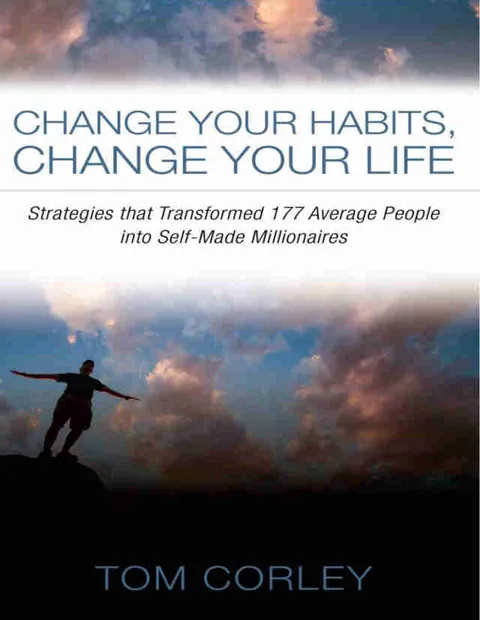

Change Your Habits, Change Your Life Order Printed Copy
- Author: Tom Corley
- Size: 2.19MB | 115 pages
- |
Others like change your habits, change your life Features >>

The Book That Changed My Life

Change Your Paradigm, Change Your Life
-160.webp)
Die Empty: Unleash Your Best Work Every Day

30 Days - Change Your Habits, Change Your Life
Thinking For A Change
The 7 Habits Of Highly Effective People

12 Ways Your Phone Is Changing You
-160.webp)
Reclaim Your Soul (Your Journey To Personal Empowerment)

Ordering Your Private World

Why You Act The Way You Do
About the Book
"Change Your Habits, Change Your Life" by Tom Corley explores the impact of habits on success and offers practical advice on how to change habits to achieve personal and financial goals. The book provides insights into the habits of successful people and offers actionable steps for readers to start implementing positive habits in their own lives. Through real-life examples and research, Corley shows how changing habits can lead to significant improvements in various areas of life.
Emerson Andrews
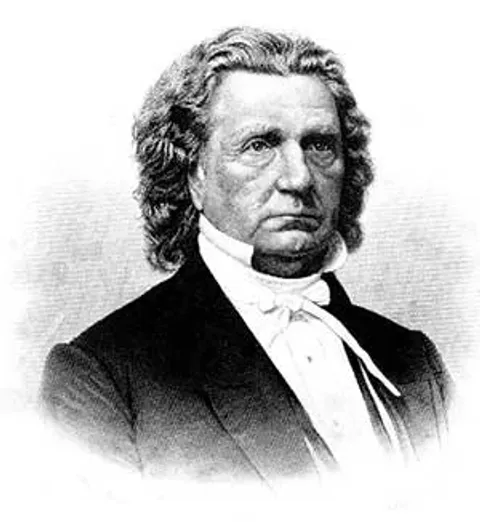 His Early life
Emerson Andrews was born in Mansfield, Bristol County, Massachusetts in 1806 to godly parents, James and Mercy Andrews. They were from English stock and were strict Puritans in faith and lifestyle. Although young Emerson was raised in the Congregational Church he was far from God in his teens and twenties.
Nevertheless, periodically, he experienced intense conviction, usually through his parents’ counsels and prayers but particularly through two unforgettable sermons delivered by the eccentric revivalist, Lorenzo Dow. Soon after this he was converted under the ministry of another revival preacher, Asahel Nettleton.
He was a very educated man formerly studying at Chesterfield Academy and, at the time of his conversion, at Plainfield Kimball Union Academy, in New Hampshire. In the spring of 1832 whilst studying further at Union College in Schenectady, New York, he was baptised by immersion in the Mohawk River. It was his convictions about the Bible’s teaching on water baptism that caused him to join the Baptist’s instead of the Congregationalists or Presbyterians.
A Lover of Revival
He wrote “Many revivals and protracted meetings of one, two, or more days, and some for weeks and months, have been held, in New England and elsewhere, within, my personal remembrance. These have sent out their hallowed influences, as the light of the world and salt of the earth. Just before and at the time of my second birth, many sweeping and glorious revivals, under the celebrated Dr. Netteton, John Leland, Jedediah Burchard, C. G. Finney, were hailed, enjoyed, and sounded all around and over the country.
As soon as I was converted I cherished the good news of revivals; and I sought a place and portion with live Christians, that I might speak for Christ and win souls to salvation. I asked God for direction and help, and was answered.
His first visit to a Revival
He describes his first visit to a Revival “The first meeting that I attended after my regeneration was held in the town of Windsor, Vt. It was called a “four days’ meeting.” But many such were held in different places about that time. This came off in the summer of l830. I was much delighted, fed, and strengthened by such a sight, experience, exercise, and spiritual supper. It was a precious banquet, adapted to develop and enlarge the young convert’s soul.
The four pastors of the town, with their respective churches and congregations, and some from neighboring towns, met with the Baptist church, of which Elder Leland Howard was the long-honored pastor. Some twenty other pastors also came in from adjacent towns, and a few Lawyers and teachers, who took leading parts in the services. Large congregations were constantly in attendance, and all the various exercises and meetings were interesting and profitable.
Some of the sermons and prayers were most powerful, melting, and effective. Sinners often arose, requesting prayers, or sent up short petitions to be read. A lawyer by the name of Shepherd, from New York, was found to be very able, pointed, and specific in prayer, and so effective and precise in noting each different request more perfectly than the ministers, that he was often invited to lead in prayer — especially when there were some ten or twenty different, or some difficult requests presented.
He seemed to be full of the Spirit, and was especially gifted and successful. Ministers learned something valuable from his wisdom and tact. I confess that his pointedness made a powerful and lasting impression on my mind and practice.
The professors and ministers were much blessed, and many sinners were converted in the meetings. The gospel was preached and the Spirit poured out, prayer and sacrifices made. Novelty and wonder attracted many. Here God crowned the effort.”
Mentored by Jacob Knapp
He writes. ” ROCHESTER, N.Y. 1839. Here I assisted in a powerful meeting, under the preaching of the celebrated Elder Jacob Knapp, for three weeks. Marvellous things were done. The wicked raged, the Spirit worked, grace prevailed, and hundreds were converted — a glorious triumph over rum, gambling, and infidelity. Jesus reigned.” This exposure to revival power whetted his appetite for an evangelistic ministry.
His first revival efforts
“WHITE DEER, PENN. 1839. In this rich farming district I had a revival meeting of five weeks, with a feeble Baptist church. We began at the close of the Association; but, with all the eloquent pastoral preaching in it, the brethren were not aroused, nor sinners much convicted.
Here my first sermon was from the text, “O Lord, revive thy work!” And he did so immediately. Some half a dozen persons were convicted and converted, and the church was revived by the power of God on that evening’s effort. The whole region, then, for seven miles around, was awakened, and some forty converts were immersed by Elder Spratt, D.D.
Here, too, we experienced severe opposition and much persecution from outside professors and sinners, but God strengthened our hands for a triumphant work. This was a blessed era with the church, and it is fragrant still.
“CLINTON, PENN. I had a revival meeting in this township. It was very great and powerful. Satan and sinners raged, at times, terribly, but the cross was triumphant. Many were immersed by the beloved pastor, Elder Spratt, D.D.
Hugh Donelly, the postmaster, rum-selling merchant, and an avowed infidel, who had slandered me and ridiculed the meeting, crept in away back, then into the middle seats; then, after a few nights, fell on his knees groaning and crying for mercy. I soon aided him in coming forward.
Then out came his wife and sister. We all prayed, and soon the three rejoiced in hope, and spoke boldly for Jesus. Brother Donelly has made a noble record in Pennsylvania and Indiana for Jesus and his cause…..
PARMA, N.Y. In this western village, in mid-winter, I preached night and day, for three weeks, to overflowing houses and attentive hearers. Christians renewed their “first love and vows,” and many sinners were converted and baptized.
An infidel, hearing a few sermons, was struck under conviction, and fled away thirty miles for comfort; but, feeling worse and worse, returned like the prodigal, feeling wretched and lost. He came forward, prayer was offered, and he soon yielded and believed, giving glory to God. Then he told his experience, and exhorted his old Universalist and infidel friends to repent and be saved from hell.
Emerson Andrews Preaching
His preaching zeal and effectiveness were quickly recognised and he was soon licensed to preach and for a four year period served brief pastorates in New York State – Waterford, West Troy, Lansingburg and Rome (1834-1838)
In 1838 began an itinerant evangelist for thirty-five years, mainly in America, but also in Europe, Africa, Asia and Canada. His estimates were that 40,000 were converted through his ministry.
His Early life
Emerson Andrews was born in Mansfield, Bristol County, Massachusetts in 1806 to godly parents, James and Mercy Andrews. They were from English stock and were strict Puritans in faith and lifestyle. Although young Emerson was raised in the Congregational Church he was far from God in his teens and twenties.
Nevertheless, periodically, he experienced intense conviction, usually through his parents’ counsels and prayers but particularly through two unforgettable sermons delivered by the eccentric revivalist, Lorenzo Dow. Soon after this he was converted under the ministry of another revival preacher, Asahel Nettleton.
He was a very educated man formerly studying at Chesterfield Academy and, at the time of his conversion, at Plainfield Kimball Union Academy, in New Hampshire. In the spring of 1832 whilst studying further at Union College in Schenectady, New York, he was baptised by immersion in the Mohawk River. It was his convictions about the Bible’s teaching on water baptism that caused him to join the Baptist’s instead of the Congregationalists or Presbyterians.
A Lover of Revival
He wrote “Many revivals and protracted meetings of one, two, or more days, and some for weeks and months, have been held, in New England and elsewhere, within, my personal remembrance. These have sent out their hallowed influences, as the light of the world and salt of the earth. Just before and at the time of my second birth, many sweeping and glorious revivals, under the celebrated Dr. Netteton, John Leland, Jedediah Burchard, C. G. Finney, were hailed, enjoyed, and sounded all around and over the country.
As soon as I was converted I cherished the good news of revivals; and I sought a place and portion with live Christians, that I might speak for Christ and win souls to salvation. I asked God for direction and help, and was answered.
His first visit to a Revival
He describes his first visit to a Revival “The first meeting that I attended after my regeneration was held in the town of Windsor, Vt. It was called a “four days’ meeting.” But many such were held in different places about that time. This came off in the summer of l830. I was much delighted, fed, and strengthened by such a sight, experience, exercise, and spiritual supper. It was a precious banquet, adapted to develop and enlarge the young convert’s soul.
The four pastors of the town, with their respective churches and congregations, and some from neighboring towns, met with the Baptist church, of which Elder Leland Howard was the long-honored pastor. Some twenty other pastors also came in from adjacent towns, and a few Lawyers and teachers, who took leading parts in the services. Large congregations were constantly in attendance, and all the various exercises and meetings were interesting and profitable.
Some of the sermons and prayers were most powerful, melting, and effective. Sinners often arose, requesting prayers, or sent up short petitions to be read. A lawyer by the name of Shepherd, from New York, was found to be very able, pointed, and specific in prayer, and so effective and precise in noting each different request more perfectly than the ministers, that he was often invited to lead in prayer — especially when there were some ten or twenty different, or some difficult requests presented.
He seemed to be full of the Spirit, and was especially gifted and successful. Ministers learned something valuable from his wisdom and tact. I confess that his pointedness made a powerful and lasting impression on my mind and practice.
The professors and ministers were much blessed, and many sinners were converted in the meetings. The gospel was preached and the Spirit poured out, prayer and sacrifices made. Novelty and wonder attracted many. Here God crowned the effort.”
Mentored by Jacob Knapp
He writes. ” ROCHESTER, N.Y. 1839. Here I assisted in a powerful meeting, under the preaching of the celebrated Elder Jacob Knapp, for three weeks. Marvellous things were done. The wicked raged, the Spirit worked, grace prevailed, and hundreds were converted — a glorious triumph over rum, gambling, and infidelity. Jesus reigned.” This exposure to revival power whetted his appetite for an evangelistic ministry.
His first revival efforts
“WHITE DEER, PENN. 1839. In this rich farming district I had a revival meeting of five weeks, with a feeble Baptist church. We began at the close of the Association; but, with all the eloquent pastoral preaching in it, the brethren were not aroused, nor sinners much convicted.
Here my first sermon was from the text, “O Lord, revive thy work!” And he did so immediately. Some half a dozen persons were convicted and converted, and the church was revived by the power of God on that evening’s effort. The whole region, then, for seven miles around, was awakened, and some forty converts were immersed by Elder Spratt, D.D.
Here, too, we experienced severe opposition and much persecution from outside professors and sinners, but God strengthened our hands for a triumphant work. This was a blessed era with the church, and it is fragrant still.
“CLINTON, PENN. I had a revival meeting in this township. It was very great and powerful. Satan and sinners raged, at times, terribly, but the cross was triumphant. Many were immersed by the beloved pastor, Elder Spratt, D.D.
Hugh Donelly, the postmaster, rum-selling merchant, and an avowed infidel, who had slandered me and ridiculed the meeting, crept in away back, then into the middle seats; then, after a few nights, fell on his knees groaning and crying for mercy. I soon aided him in coming forward.
Then out came his wife and sister. We all prayed, and soon the three rejoiced in hope, and spoke boldly for Jesus. Brother Donelly has made a noble record in Pennsylvania and Indiana for Jesus and his cause…..
PARMA, N.Y. In this western village, in mid-winter, I preached night and day, for three weeks, to overflowing houses and attentive hearers. Christians renewed their “first love and vows,” and many sinners were converted and baptized.
An infidel, hearing a few sermons, was struck under conviction, and fled away thirty miles for comfort; but, feeling worse and worse, returned like the prodigal, feeling wretched and lost. He came forward, prayer was offered, and he soon yielded and believed, giving glory to God. Then he told his experience, and exhorted his old Universalist and infidel friends to repent and be saved from hell.
Emerson Andrews Preaching
His preaching zeal and effectiveness were quickly recognised and he was soon licensed to preach and for a four year period served brief pastorates in New York State – Waterford, West Troy, Lansingburg and Rome (1834-1838)
In 1838 began an itinerant evangelist for thirty-five years, mainly in America, but also in Europe, Africa, Asia and Canada. His estimates were that 40,000 were converted through his ministry.
the most wonderful books on earth
As many begin a new year of Bible reading, we would do well to remember one of the chief dangers: searching the Scriptures, and missing the Savior. Recall Jesus’s words to the Jewish leaders of John 5, those most devoted of Bible readers: You search the Scriptures because you think that in them you have eternal life; and it is they that bear witness about me, yet you refuse to come to me that you may have life. (John 5:39–40) Amazingly, it is possible to know your Bible and not know your God. It is possible to study the word and neglect the Word. It is possible to search the Scriptures and miss the Savior. How can we guard ourselves from such a deadly yet subtle danger? Ultimately, we need the Holy Spirit to breathe Christ into the dry bones of our devotions. We need him to come, morning by morning, and turn our living room or desk into a Mount of Transfiguration. And so, we pray. But alongside prayer, we can also resolve to keep one goal of Bible reading high above the rest: Catch as much of Jesus as you can. Know and enjoy him. See and savor him. Study and love him. And to that end, let me offer a modest proposal for your consideration: as you read the Bible this year, plant your soul especially in the Gospels. Keep a Foot in the Four I am not proposing that you read only the Gospels this year, but that you consider finding some special way to plant (and keep) your soul in them. You could, for example, use the one-year Discipleship Journal Bible Reading Plan, which includes a Gospel reading for every day. Or you could memorize an extended portion of the Gospels, like the Sermon on the Mount (Matthew 5–7) or the Upper Room Discourse (John 13–17). Or you could read and reread one of the Gospels, perhaps with journal and commentary in hand. This proposal will not fit every reader. Some, perhaps, have spent most of their Christian life in the Gospels, and this may be the year to wander with Moses in the wilderness, or hear what Ezekiel has to say, or trace the logic of Romans. But I suspect many, like myself, would benefit from the counsel of J.I. Packer and J.C. Ryle. First, hear Packer: We could . . . correct woolliness of view as to what Christian commitment involves, by stressing the need for constant meditation on the four Gospels, over and above the rest of our Bible reading; for Gospel study enables us both to keep our Lord in clear view and to hold before our minds the relational frame of discipleship to him. “We should never let ourselves forget,” Packer continues, “that the four Gospels are, as has often and rightly been said, the most wonderful books on earth” ( Keep in Step with the Spirit , 61). Now listen to Ryle: It would be well if professing Christians in modern days studied the four Gospels more than they do. No doubt all Scripture is profitable. It is not wise to exalt one part of the Bible at the expense of another. But I think it should be good for some who are very familiar with the Epistles, if they knew a little more about Matthew, Mark, Luke, and John. ( Holiness , 247) Neither Packer nor Ryle sought to create red-letter Christians, who treat the words of Jesus as more inspired than the rest of Scripture. All the Bible is God-breathed, and the Son of God speaks as fully in the black syllables as he does in the red. Why then would whole-Bible lovers like these two men counsel Christians to give themselves to the Gospels? Consider four reasons. The Gospels give glory a texture. Matthew, Mark, Luke, and John could have given us a summary of Jesus’s life, death, and resurrection in their own words. Instead, the Gospels take us among the twelve, where we see and hear Jesus for ourselves. Why? John tells us: “The Word became flesh and dwelt among us, and we have seen his glory, glory as of the only Son from the Father, full of grace and truth” (John 1:14). For John and the other disciples, the glory of Christ was not a vague or summarized or paraphrased glory; it was a particular glory, a textured glory, a glory they had “seen and heard” (1 John 1:3) in the specific words, deeds, joys, heartaches, and sufferings of the Word made flesh. And by Gospel’s end, they want us to join them in saying, “We have seen his glory” (John 20:30–31). “Sinners and strugglers like us need more than general notions of Jesus in our most desperate moments.” Sinners and strugglers like us need more than general notions of Jesus in our most desperate moments; we need his particular glories. The fearful soul needs more than to remember that Jesus gives peace — it needs to hear him say in the upper room, “Let not your hearts be troubled” (John 14:1). The oppressed mind needs more than a vague idea of Jesus’s power over darkness — it needs to watch him send demons fleeing (Mark 1:25–26). The guilty heart needs more than to say, “Jesus forgives” — it needs to feel Calvary shake under the force of “It is finished” (John 19:30). Sin is not vague. Sorrow is not vague. Satan is not vague. Therefore, we cannot allow Christ to be. The Gospels shatter false Christs. Ever since the real Jesus ascended, we have been in danger of embracing “another Jesus” (2 Corinthians 11:4) — or at least a distorted Jesus. Some do so deliberately, in search of a more convenient Messiah. Many, however, just struggle to faithfully uphold what Jonathan Edwards calls the “diverse excellencies” of Jesus Christ, the lamblike Lion and lionlike Lamb ( Seeing and Savoring Jesus Christ , 29). We understand lions, and we understand lambs, but what do we make of a Lion-Lamb? Imagine yourself in Peter’s shoes. Just when you think you’ve discovered Jesus’s tenderness, he goes and calls someone a dog (Matthew 15:25–26). Just when you imagine you’ve grasped his toughness, he takes the children in his arms (Mark 10:16). Just when you pride yourself for seeing him clearly, he turns and says, “Get behind me, Satan!” (Mark 8:33). And just when you’re sure you’ve failed beyond forgiveness, he meets you with threefold mercy (John 21:15–19). “We need our vision of Jesus regularly shattered — or at least refined — by the real, unexpected Jesus of the Gospels.” “My idea of God is not a divine idea,” C.S. Lewis writes. “It has to be shattered time after time” ( A Grief Observed , 66). So too with every one of us. We tend to remake the full, surprising, perfect humanity of Jesus in the image of our partial, predictable, distorted humanity. So, like Peter, we need our vision of Jesus regularly shattered — or at least refined — by the real, unexpected Jesus of the Gospels. The Gospels make Bible reading Personal. When we talk of “personal Bible study,” we may say more than we mean. The best Bible study is indeed Personal — centered on the Person of Jesus Christ. His presence rustles through every page of Scripture, Old Testament or New. All the prophets foretell him; all the apostles preach him. And the Gospel writers in particular display him. Yet how easily Bible reading becomes an abstract, impersonal affair — even, at times, when we are reading about Christ . To know Christ doctrinally and theologically is not necessarily to know him personally. To follow old-covenant shadows to their substance is not necessarily to follow him . To grasp the logic of redemption is not necessarily to grasp his love. To be sure, we cannot commune with Christ without knowing something about him. But we can certainly know much about Christ without communing with him. “It is well to be acquainted with the doctrines and principles of Christianity. It is better to be acquainted with Christ himself,” Ryle writes ( Holiness , 247). And nowhere does the Bible acquaint us with Christ the Person better than in the Gospels. Matthew, Mark, Luke, and John especially are written for those who, like the visitors in John 12, come to Scripture saying, “Sir, we wish to see Jesus” (John 12:21). The Gospels are bigger than they look. The four Gospels are relatively small compared to most of the books on our shelves. If we wanted, we could read through each in a single sitting. But like the Narnian stable in The Last Battle , the inside of the Gospels is bigger than the outside. Between their covers lies an infinite glory — a Jesus whose riches are not metaphorically but literally “unsearchable” (Ephesians 3:8). We will never catch all there is to know and love about Jesus, but we can catch something more next year. So come again and walk with him on the waters. Come and watch a few loaves feed five thousand. Come and sing with Zechariah, rise with Lazarus, and walk with the women to the empty tomb. Come and remember why the Gospels are indeed “the most wonderful books on earth” — because they give us the most wonderful Person.