
Others like our greatest gift Features >>



About the Book
"Our Greatest Gift" by Henri Nouwen explores the concept of giving and receiving. He argues that true happiness and fulfillment come from living a life of generosity and compassion towards others. By giving of ourselves and receiving the gifts others offer us, we can create deeper connections and find meaning in our lives. Ultimately, Nouwen suggests that true joy comes from embracing a life of selflessness and love.
A.W. Tozer (Aiden Wilson Tozer)
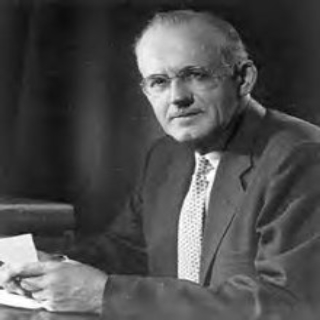 Early life
Tozer hailed from a tiny farming community in western La Jose, Pennsylvania. He was converted to Christianity as a teenager in Akron, Ohio: While on his way home from work at a tire company, he overheard a street preacher say, "If you don't know how to be saved ... just call on God, saying, 'Lord, be merciful to me a sinner.'" Upon returning home, he climbed into the attic and heeded the preacher's advice.
Pastor
In 1919, five years after his conversion and without formal education in Christian theology, Tozer accepted an offer to serve as pastor of his first church. That began 44 years of ministry associated with the Christian and Missionary Alliance (C&MA), a Protestant Evangelical denomination, 33 of them serving as a pastor in several different congregations (his first, a small storefront church in Nutter Fort, West Virginia). Later, he served thirty years (1928 to 1959) as the pastor of Southside Alliance Church in Chicago; the final years of his life he spent as pastor of Avenue Road Church in Toronto, Ontario, Canada. Observing contemporary Christian living, Tozer felt that the church was on a dangerous course toward compromising with "worldly" concerns.
Born into poverty, Tozer was self-educated and taught himself what he missed in high school and university.
Author
Tozer began writing in 1931 for the denominational magazine of the Christian and Missionary Alliance, Alliance Weekly (now Alliance Life), which became the platform from which his writing career emerged. He later wrote the monthly column “There’s Truth in It” (1936–37) and “A Word in Season” (1944–46). In May 1950, he became the editor of the Alliance Weekly, a position he filled until his death in 1963.
At the urging of David W. Fant, publications secretary of the C&MA, Tozer wrote biographies of A. B. Simpson (1943) and Robert A. Jaffray (1947). It was the publication of his third book, The Pursuit of God (1948), that made Tozer a household name among evangelicals. In addition to the 12 books he published in his lifetime, more than 40 other books have been compiled from his magazine features, editorials, and transcribed sermons.
During his lifetime, Tozer’s works were published by Christian Publications, Inc., the denominational press operated by the C&MA. The publishing house declared bankruptcy in 2006 and was purchased by WingSpread Publishers of Camp Hill, Pennsylvania.[8] In November 2013, Moody Publishers acquired Wingspread from parent company Zur Ltd., a transaction that included more than 60 Tozer books and pamphlets. Some of Tozer’s works are now in the public domain and have been issued by multiple publishers.
Personal life
Tozer had seven children, six sons and a daughter. Living a simple and non-materialistic lifestyle, he and his wife, Ada Cecelia Pfautz, never owned a car, preferring bus and train travel. Even after becoming a well-known Christian author, Tozer signed away much of his royalties to those who were in need.
Prayer was of vital personal importance for Tozer. "His preaching as well as his writings were but extensions of his prayer life," comments his biographer, James L. Snyder, in the book In Pursuit of God: The Life Of A.W. Tozer. "He had the ability to make his listeners face themselves in the light of what God was saying to them," writes Snyder.
Death and legacy
Tozer died on May 13, 1963, after suffering a heart attack. He was buried in Chicago, and later the family had his remains reinterred at Ellet Cemetery, Akron, Ohio. A simple marker reads: A. W. Tozer—A Man of God. The Alliance Weekly ran a memorial issue with numerous tributes and excerpts. The same issue also featured “God’s Greatest Gift to Man," a transcription of his final sermon. A few months prior to his death, Tozer had submitted the manuscript to The Christian Book of Mystical Verse, which was released in 1964 as his final book. His official publisher, Christian Publications, released many titles after his death, based on his magazine articles and sermon transcriptions. These continue in print with Moody Publishers. Several other publishers have released his public domain works.
In 2000, The Pursuit of God was named to Christianity Today’s list of 100 “Books of the Century.” In 2006, Knowledge of the Holy was named in “The Top 50 Books That Have Shaped Evangelicals.” Contemporary Christian music artist Lauren Barlow of BarlowGirl later published a compilation of stories told by 59 artists, writers, and leaders about A.W. Tozer’s personal inspiration.
Early life
Tozer hailed from a tiny farming community in western La Jose, Pennsylvania. He was converted to Christianity as a teenager in Akron, Ohio: While on his way home from work at a tire company, he overheard a street preacher say, "If you don't know how to be saved ... just call on God, saying, 'Lord, be merciful to me a sinner.'" Upon returning home, he climbed into the attic and heeded the preacher's advice.
Pastor
In 1919, five years after his conversion and without formal education in Christian theology, Tozer accepted an offer to serve as pastor of his first church. That began 44 years of ministry associated with the Christian and Missionary Alliance (C&MA), a Protestant Evangelical denomination, 33 of them serving as a pastor in several different congregations (his first, a small storefront church in Nutter Fort, West Virginia). Later, he served thirty years (1928 to 1959) as the pastor of Southside Alliance Church in Chicago; the final years of his life he spent as pastor of Avenue Road Church in Toronto, Ontario, Canada. Observing contemporary Christian living, Tozer felt that the church was on a dangerous course toward compromising with "worldly" concerns.
Born into poverty, Tozer was self-educated and taught himself what he missed in high school and university.
Author
Tozer began writing in 1931 for the denominational magazine of the Christian and Missionary Alliance, Alliance Weekly (now Alliance Life), which became the platform from which his writing career emerged. He later wrote the monthly column “There’s Truth in It” (1936–37) and “A Word in Season” (1944–46). In May 1950, he became the editor of the Alliance Weekly, a position he filled until his death in 1963.
At the urging of David W. Fant, publications secretary of the C&MA, Tozer wrote biographies of A. B. Simpson (1943) and Robert A. Jaffray (1947). It was the publication of his third book, The Pursuit of God (1948), that made Tozer a household name among evangelicals. In addition to the 12 books he published in his lifetime, more than 40 other books have been compiled from his magazine features, editorials, and transcribed sermons.
During his lifetime, Tozer’s works were published by Christian Publications, Inc., the denominational press operated by the C&MA. The publishing house declared bankruptcy in 2006 and was purchased by WingSpread Publishers of Camp Hill, Pennsylvania.[8] In November 2013, Moody Publishers acquired Wingspread from parent company Zur Ltd., a transaction that included more than 60 Tozer books and pamphlets. Some of Tozer’s works are now in the public domain and have been issued by multiple publishers.
Personal life
Tozer had seven children, six sons and a daughter. Living a simple and non-materialistic lifestyle, he and his wife, Ada Cecelia Pfautz, never owned a car, preferring bus and train travel. Even after becoming a well-known Christian author, Tozer signed away much of his royalties to those who were in need.
Prayer was of vital personal importance for Tozer. "His preaching as well as his writings were but extensions of his prayer life," comments his biographer, James L. Snyder, in the book In Pursuit of God: The Life Of A.W. Tozer. "He had the ability to make his listeners face themselves in the light of what God was saying to them," writes Snyder.
Death and legacy
Tozer died on May 13, 1963, after suffering a heart attack. He was buried in Chicago, and later the family had his remains reinterred at Ellet Cemetery, Akron, Ohio. A simple marker reads: A. W. Tozer—A Man of God. The Alliance Weekly ran a memorial issue with numerous tributes and excerpts. The same issue also featured “God’s Greatest Gift to Man," a transcription of his final sermon. A few months prior to his death, Tozer had submitted the manuscript to The Christian Book of Mystical Verse, which was released in 1964 as his final book. His official publisher, Christian Publications, released many titles after his death, based on his magazine articles and sermon transcriptions. These continue in print with Moody Publishers. Several other publishers have released his public domain works.
In 2000, The Pursuit of God was named to Christianity Today’s list of 100 “Books of the Century.” In 2006, Knowledge of the Holy was named in “The Top 50 Books That Have Shaped Evangelicals.” Contemporary Christian music artist Lauren Barlow of BarlowGirl later published a compilation of stories told by 59 artists, writers, and leaders about A.W. Tozer’s personal inspiration.
Banished from Humanity
The safest road to hell is the gradual one — the gentle slope, soft underfoot, without sudden turnings, without milestones, without signposts. –C.S. Lewis, The Screwtape Letters C.S. Lewis said many profound and fascinating things about hell. Some are biblically precise, while others are more abstract and subject to misunderstanding. In some cases, his views are not solidly biblical. But many of his insights on hell are true to Scripture, and some of his speculations are compelling food for thought. Hell: Grave Injustice or Ultimate Justice? Lewis wrote in The Great Divorce, “There are only two kinds of people in the end: those who say to God, ‘Thy will be done,’ and those to whom God says, in the end, ‘Thy will be done.’” Of course, God does not fully let people have their way, since it is clear, for instance, that the rich man in Luke 16 wants out of hell but cannot escape it. Lewis’s point is, when someone says, “I do not want to have a relationship with God,” in that limited sense they ultimately get their way. The unbeliever’s “wish” to be away from God turns out to be his worst nightmare. Nonetheless, those who do not want God do want goodness and happiness. But what makes anything good is God. Second Thessalonians 1:9 describes hell like this: “They will suffer the punishment of eternal destruction, away from the presence of the Lord.” Where God withdraws, there can be no good. So, in Lewis’s terms, the unbeliever gets what he wants — God’s absence — yet with it gets what he doesn’t want — the loss of all good. C.S. Lewis said of hell, “There is no doctrine which I would more willingly remove from Christianity than this, if it lay in my power. But it has the full support of Scripture and, specially, of our Lord’s own words; it has always been held by Christendom; and it has the support of reason” (The Problem of Pain). Most of what Lewis says here is solidly biblical. Where there may be a chink in his logic is exactly where it is for many of us. We wish there were no hell — and imagine this comes from our sense of goodness and kindness. But God could remove hell yet chooses not to. Do we have more confidence in our goodness than his? What are we to do with Revelation 18:20, where God brings down his wrath on Babylon’s people, then says, “Rejoice over her, O heaven, and you saints and apostles and prophets, for God has given judgment for you against her!”? Doesn’t this suggest that in heaven we will see sin’s horrors clearly and have far stronger convictions about hell’s justice? Hell is not pleasant, appealing, or encouraging. But neither is it evil; rather, it is a place where evil is judged. Indeed, if being sentenced to hell is just punishment, then the absence of hell would itself be evil. Hell Itself Is Morally Good, Because a Good God Must Punish Evil Most of us imagine that we hate the idea of hell because we love people too much to want them to suffer. But that implies God loves them less. Our revulsion is understandable, but what about hell makes us cringe? Is it the wickedness that’s being punished? Is it the suffering of those who might have turned to Christ? Or do we cringe because we imagine hell’s punishments are wicked or disproportionate? These very different responses expose different views of God. Perhaps we hate hell too much because we don’t hate evil enough. This is something that could have been developed more in Lewis’s thinking. The same could be said of many of us. If we regard hell as a divine overreaction to sin, we deny that God has the moral right to inflict ongoing punishment on any humans. By denying hell, we deny the extent of God’s holiness. When we minimize sin’s seriousness, we minimize God’s grace in Christ’s blood, shed for us. For if the evils he died for aren’t significant enough to warrant eternal punishment, perhaps the grace displayed on the cross isn’t significant enough to warrant eternal praise. How Jesus Viewed Hell In the Bible, Jesus spoke more about hell than anyone else did. He referred to hell as a real place (Matthew 10:28; 13:40–42; Mark 9:43–48). He described it in graphic terms: a fire that burns but doesn’t consume, an undying worm that eats away at the damned, and a lonely, foreboding darkness. “Perhaps we hate hell too much because we don’t hate evil enough.” Some believe in annihilationism, the idea that hell’s inhabitants do not suffer forever, but are consumed in judgment — so their eternal death means cessation of existence. Edward Fudge, in his book and DVD The Fire That Consumes, defends this position. It’s an argument I have considered seriously, one that holds up to much of the Old Testament revelation, but which I find very difficult to reconcile with Jesus’s words: “And these will go away into eternal punishment, but the righteous into eternal life” (Matthew 25:46). Or with the words of Revelation 20:10, which speak of not only Satan but two human beings, the Antichrist and the false prophet, being cast into the lake of fire and “tormented day and night forever and ever.” Revelation 14:11 appears to apply to a large number of people: “And the smoke of their torment goes up forever and ever.” Christ says the unsaved “will be thrown into the outer darkness. In that place there will be weeping and gnashing of teeth” (Matthew 8:12). He taught that an unbridgeable chasm separates the wicked in hell from the righteous in Paradise. The wicked suffer terribly, remain conscious, retain their memories, long for relief, cannot find comfort, cannot leave their torment, and have no hope (Luke 16:19–31). In short, our Savior could not have painted a bleaker picture of hell. It is one that C.S. Lewis, with reluctance, believed and affirmed, bowing his knee in submission to a higher authority. If the evils Jesus died for aren’t significant enough to warrant eternal punishment, then the grace displayed on the cross isn’t significant enough to warrant eternal praise. Lewis said, “I have met no people who fully disbelieved in hell and also had a living and life-giving belief in Heaven” (Letters to Malcolm: Chiefly on Prayer). The biblical teaching on both destinations stands or falls together. When heaven and hell are spoken of in Scripture, each place is portrayed as being just as real and, in some passages anyway, as permanent as the other. Lewis’s friend, Dorothy Sayers, said it well: There seems to be a kind of conspiracy to forget, or to conceal, where the doctrine of hell comes from. The doctrine of hell is not “mediaeval priestcraft” for frightening people into giving money to the church: it is Christ’s deliberate judgment on sin. . . . We cannot repudiate hell without altogether repudiating Christ. (Dorothy Sayers, Introductory Papers on Dante [Methuen, 1954], 44) The Problem of Emeth in ‘The Last Battle’ Occasionally, Lewis seems to depart from the biblical doctrine of hell by supposing things that aren’t stated in Scripture and appearing to contradict things that are. In The Last Battle, the soldier Emeth, who served the demon Tash, is welcomed into heaven though he did not serve Aslan, the Christ figure, by name. Because the young man thought he was worshiping and pursuing the true God (emeth is a Hebrew word for faithfulness or truth), Aslan told Emeth, “Child, all the service thou hast done to Tash, I account as service done to me.” Some have used this passage to charge Lewis with being a universalist, though Lewis’s other writings clearly show he was not. But this passage does imply Lewis believed in a kind of inclusivism, where in some cases, mentally responsible people who have not embraced Christ in this life may ultimately be saved. The criterion for salvation, then, is not believing in Jesus while still here (John 1:12; 14:6; Acts 4:12; Romans 10:9–10). Rather, in some cases, God may consider it sufficient that someone has followed a false god with true motives. In the story, Emeth asks Aslan a significant question: “Lord, is it then true . . . that thou and Tash are one?” Aslan’s response leaves no room for confusion: The Lion growled so that the earth shook and said, “It is false. Not because he and I are one, but because we are opposites. For I and he are of such different kinds that no service which is vile can be done to me, and none which is not vile can be done to him. Therefore, if any man swear by Tash and keep his oath for the oath’s sake, it is by me that he has truly sworn, and it is I who reward him. And if any man do a cruelty in my name, then it is Tash whom he serves and by Tash his deed is accepted. . . . Beloved . . . unless thy desire had been for me thou wouldst not have sought so long and so truly. For all find what they truly seek.” (The Last Battle) Aslan categorically affirms he and Tash are in no sense alike. Indeed, Aslan despises the demon! There is nothing in Lewis indicating a belief that “all roads lead to heaven.” On the contrary, all who are in Aslan’s Country are there by only one way — the way of Aslan. Emeth is saved by Aslan — no one and nothing else. Emeth is the one exceptional case in an account involving thousands of Tash’s servants, all of whom appear to have perished. Emeth seems to be Lewis’s one hopeful exception, certainly not the rule. Emeth’s Better Parallel: Cornelius The Bible clearly states that “it is appointed for man to die once, and after that comes judgment” (Hebrews 9:27). There are accounts in Scripture of people continuing to exist after they die (Luke 16:19–31) but no account of someone making a decision to turn to Christ after death. “I have met no people who fully disbelieved in hell and also had a live-giving belief in Heaven.” C.S. Lewis Bible believers are naturally perplexed by Emeth’s story and how to reconcile it with Lewis’s orthodox statements about salvation, heaven, and hell. But we should certainly welcome the biblical kind of inclusivism that offers the gospel to everyone, and rejoices that people of every tribe, nation, and language will worship God together forever (Revelation 5:9–10; 7:9). We should celebrate stories like that of Cornelius, whose service God accepted even before drawing him to a full understanding of the gospel (Acts 10:2, 22, 31). Emeth’s story would have paralleled Cornelius’s if Aslan had come to the young man before his death. That would have been my preference, certainly. But even with occasional imperfections, of which Emeth may be most prominent, the great truths of The Chronicles of Narnia remain clear, strong, and biblically resonant. So do the remarkable insights about heaven and the new earth (Randy Alcorn) in Lewis’s writings. People sometimes ask me why I tolerate Lewis’s more troubling doctrine. My answer is that his trajectory is toward the gospel, not away from it, and that God has used him to speak into my life Christ-centered and paradigm-shifting biblical truths. I do not have to embrace 100 percent of what Lewis said to benefit from that 85 percent that is so incredibly rich. Because Our Choices in This Life Shape Us Forever, God-Rejecters Might Be as Miserable in Heaven as in Hell In The Problem of Pain, C.S. Lewis spoke to those who argue against the doctrine of hell: In the long run the answer to all those who object to the doctrine of hell is itself a question: “What are you asking God to do?” To wipe out their past sins and, at all costs, to give them a fresh start, smoothing every difficulty and offering every miraculous help? But he has done so, on Calvary. To forgive them? They will not be forgiven. To leave them alone? Alas, I am afraid that is what he does. He adds this oft-quoted statement: “The damned are, in one sense, successful, rebels to the end; the doors of hell are locked on the inside. . . . They enjoy forever the horrible freedom they have demanded, and are therefore self-enslaved.” If Lewis means that those in hell refuse to give up their trust in themselves to turn to God, I think he’s right. While they long to escape from hell, that is not the same as longing to be with God and repenting. Lewis speaks in The Great Divorce of “the demand of the loveless and the self-imprisoned that they should be allowed to blackmail the universe: that till they consent to be happy (on their own terms) no one else shall taste joy: that theirs should be the final power; that hell should be able to veto heaven.” Heaven and hell are places defined, respectively, by God’s presence or absence, by God’s grace or wrath. Whose we are, not where we are, determines our misery or our joy. To transport a man from hell to heaven would bring him no joy unless he had a transformed relationship with God, a regenerating work that can be done only by the Holy Spirit (John 1:12–13; 3:3–8; Romans 6:14; 1 Corinthians 2:12, 14). To the person sealed forever in righteousness, God will remain wondrous; to the one sealed forever in sin, God will remain dreadful. If we reject the best gift that a holy and gracious God can offer us, purchased with his blood, what remains, in the end, will be nothing but hell. Lewis also said in The Great Divorce, “All that are in hell, choose it. Without that self-choice there could be no hell. No soul that seriously and constantly desires joy will ever miss it. Those who seek find. To those who knock it is opened.” This too is insightful but can be taken too far. One can desire joy outside of God and not find it, of course, but I take it that Lewis speaks of one who earnestly seeks the true God, the source of all joy. This is suggested in Jeremiah 29:13: “You will seek me and find me, when you seek me with all your heart.” And Matthew 7:7: “Ask, and it will be given to you; seek, and you will find; knock, and it will be opened to you.” “To the person sealed forever in righteousness, God will remain wondrous; to the one sealed forever in sin, God will remain dreadful.” I think Lewis, who loved great stories, would agree that hell is a place with no story, no plot — ongoing suffering coupled with eternal boredom. Ironically, Satan labors to portray heaven, from which he was cast out, as boring and undesirable. The Bible, on the other hand, portrays the new heavens and the new earth as the setting for joy without end. If we think correctly about heaven, we will realize that because God is infinitely great and gracious, heaven is the ultimate adventure while hell is the ultimate sinkhole. Perhaps the best last word to give Lewis is this: “To enter heaven is to become more human than you ever succeeded in being on earth; to enter hell is to be banished from humanity” (The Problem of Pain). Article by Randy Alcorn