


A Woman After God's Own Heart Order Printed Copy
- Author: Elizabeth George
- Size: 1.53MB | 238 pages
- |
Others like a woman after god's own heart Features >>

Women - Gods Secret Weapon

It's Not How You Look, It's What You See

Out Of Control And Loving It
-160.webp)
Beautiful In God's Eyes For Young Women: Looking Good From The Inside Out

The Amazing Discernment Of Women

Fashioned To Reign: Empowering Women To Fulfill Their Divine Destiny

God's High Calling For Women

The Resolution For Women

The Confident Woman: Start Today Living Boldly And Without Fear

Fight Like A Girl
About the Book
"A Woman After God's Own Heart" by Elizabeth George is a guide for women seeking to strengthen their relationship with God and live a life of purpose and fulfillment. The book offers practical advice on how to cultivate virtues such as faith, love, obedience, and joy in daily life, and highlights the importance of prayer, studying the Bible, and serving others. George encourages women to prioritize their spiritual growth and align their lives with God's will.
Jim Elliot
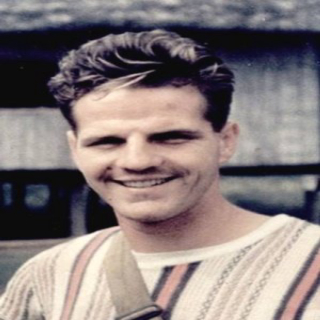 EARLY LIFE
Jim Elliot began his life in Portland, Oregon in the USA. His mother, Clara, was a chiropractor and his father, Fred, was a minister. They married and settled in Seattle, WA where they welcomed their first son, Robert in 1921.
Later they relocated the family to Portland where Herbert arrived in 1924, Jim in 1927, and Jane in 1932.
Jim knew Christ from an early age and was never afraid to speak about Him to his friends. At age six Jim told his mother, “Now, mama, the Lord Jesus can come whenever He wants. He could take our whole family because I’m saved now, and Jane is too young to know Him yet.”
THE YEARS THAT CEMENTED HIS DESIRE TO SERVE THE LORD IN MISSIONS
Jim entered Benson Polytechnic High School in 1941. He carried a small Bible with him and, an excellent speaker; he was often found speaking out for Christ. He and his friends were not afraid to step out and find adventure. One thing Jim didn’t have time for in those early years were girls. He was once quoted as telling a friend, “Domesticated males aren’t much use for adventure.”
In 1945 Jim traveled to Wheaton, IL to attend Wheaton College. His main goal while there was to devote himself to God. He recognized the importance of discipline in pursuing this goal. He would start each morning with prayer and Bible study. In his journal he wrote, “None of it gets to be ‘old stuff’ for it is Christ in print, the Living Word. We wouldn’t think of rising in the morning without a face-wash, but we often neglect the purgative cleansing of the Word of the Lord. It wakes us up to our responsibility.”
Jim’s desire to serve God by taking His gospel to unreached people of the world began to grow while at Wheaton. The summer of 1947 found him in Mexico and that time influenced his decision to minister in Central America after he finished college.
Jim met Elisabeth Howard during his third year at Wheaton. He did ask her for a date which she accepted and then later cancelled. They spent the next years as friends and after she finished at Wheaton they continued to correspond. As they came to know each other there was an attraction, but Jim felt he needed to unencumbered by worldly concerns in order to devote himself completely to God.
In addition to his hope to one day travel to a foreign country to share Christ with the unchurched of the world, he also felt the need to share with people in the United States. On Sundays while at Wheaton he would often ride the train into Chicago and talk to people in the train station about Christ. He often felt ineffective in his work as the times of knowingly leading people to Christ were few. He once wrote, “No fruit yet. Why is that I’m so unproductive? I cannot recall leading more than one or two into the kingdom. Surely this is not the manifestation of the power of the Resurrection. I feel as Rachel, ‘Give me children, or else I die.’”
After college with no clear answer as to working for the Lord in a foreign country, Jim returned home to Portland. He continued his disciplined Bible study as well as correspondence with Elisabeth Howard whom he called Betty.
They both felt a strong attraction to each other during this time, but also felt that the Lord may have been calling them to be unmarried as they served Him.
In June of 1950 he travelled to Oklahoma to attend the Summer Institute of Linguistics. There he learned how to study unwritten languages. He was able to work with a missionary to the Quichuas of the Ecuadorian jungle. Because of these lessons he began to pray for guidance about going to Ecuador and later felt compelled to answer the call there.
Elisabeth Elliot wrote in Shadow of the Almighty:
“The breadth of Jim’s vision is suggested in this entry from the journal:
August 9. “God just now gave me faith to ask for another young man to go, perhaps not this fall, but soon, to join the ranks in the lowlands of eastern Ecuador. There we must learn: 1) Spanish and Quichua, 2) each other, 3) the jungle and independence, and 4) God and God’s way of approach to the highland Quichua. From thence, by His great hand, we must move to the Ecuadorian highlands with several young Indians each, and begin work among the 800,000 highlanders. If God tarries, the natives must be taught to spread southward with the message of the reigning Christ, establishing New Testament groups as they go. Thence the Word must go south into Peru and Bolivia. The Quichuas must be reached for God! Enough for policy. Now for prayer and practice.
THE ECUADOR YEARS
In February 1952 Jim finally left America to travel to Ecuador with Pete Fleming. In May Elisabeth moved to Quito and though they didn’t feel the need to get engaged she and Jim did begin a courtship.
In August Jim left Elisabeth in Quito and travelled with Pete to Shell Mera. At the Mission Aviation Fellowship headquarters in Shell Mera, Jim and Pete learned more about the Acua Indians, a people group that was largely unreached and very savage.
Leaving Shell Mera, Pete and Jim moved on to Shandia where Jim was captivated by the Quichua. He felt very strongly that this was exactly where God intended for him to work to spread the Gospel.
While Jim was in Shandia, Elisabeth was working to learn more about the Colorado Indians near Santa Domingo. In January of 1953 he went to Quito and she met him there and they were finally engaged. They married in October of that year and their only child Valerie was born in 1955.
They settled in Shandia and continued their work with the Quichua Indians. It was Jim’s desire to be able to reach the Waodoni tribe that lived deep in the jungles and had little contact with the outside world. A Waodoni woman who had left the tribe was taken in by the missionaries and helped them to learn the language.
Jim, along with Pete, Ed McCully, Roger Youderian, and their pilot Nate Saint began to search by plane in hopes of finding a way to contact the Waodoni. The found a sandbar in the middle of the Curaray River that worked as a landing strip for the plane and it was there that they first made contact with the Waodoni. They were elated to be able to finally be able to attempt to share the love of Christ with this people group.
After their first meeting, one of the tribe, a man they called George lied to the tribe about the men’s intentions. This lie led the Waodoni warriors to plan an attack for when the missionaries returned. The men did return on January 8, 1956 and were surprised by ten members of the tribe who massacred the missionaries.
Jim’s short life that was filled with the desire to share God’s love can be summed up by a quote that is attributed to him. “He is no fool who gives that which he cannot keep, to gain what he cannot lose.”
EARLY LIFE
Jim Elliot began his life in Portland, Oregon in the USA. His mother, Clara, was a chiropractor and his father, Fred, was a minister. They married and settled in Seattle, WA where they welcomed their first son, Robert in 1921.
Later they relocated the family to Portland where Herbert arrived in 1924, Jim in 1927, and Jane in 1932.
Jim knew Christ from an early age and was never afraid to speak about Him to his friends. At age six Jim told his mother, “Now, mama, the Lord Jesus can come whenever He wants. He could take our whole family because I’m saved now, and Jane is too young to know Him yet.”
THE YEARS THAT CEMENTED HIS DESIRE TO SERVE THE LORD IN MISSIONS
Jim entered Benson Polytechnic High School in 1941. He carried a small Bible with him and, an excellent speaker; he was often found speaking out for Christ. He and his friends were not afraid to step out and find adventure. One thing Jim didn’t have time for in those early years were girls. He was once quoted as telling a friend, “Domesticated males aren’t much use for adventure.”
In 1945 Jim traveled to Wheaton, IL to attend Wheaton College. His main goal while there was to devote himself to God. He recognized the importance of discipline in pursuing this goal. He would start each morning with prayer and Bible study. In his journal he wrote, “None of it gets to be ‘old stuff’ for it is Christ in print, the Living Word. We wouldn’t think of rising in the morning without a face-wash, but we often neglect the purgative cleansing of the Word of the Lord. It wakes us up to our responsibility.”
Jim’s desire to serve God by taking His gospel to unreached people of the world began to grow while at Wheaton. The summer of 1947 found him in Mexico and that time influenced his decision to minister in Central America after he finished college.
Jim met Elisabeth Howard during his third year at Wheaton. He did ask her for a date which she accepted and then later cancelled. They spent the next years as friends and after she finished at Wheaton they continued to correspond. As they came to know each other there was an attraction, but Jim felt he needed to unencumbered by worldly concerns in order to devote himself completely to God.
In addition to his hope to one day travel to a foreign country to share Christ with the unchurched of the world, he also felt the need to share with people in the United States. On Sundays while at Wheaton he would often ride the train into Chicago and talk to people in the train station about Christ. He often felt ineffective in his work as the times of knowingly leading people to Christ were few. He once wrote, “No fruit yet. Why is that I’m so unproductive? I cannot recall leading more than one or two into the kingdom. Surely this is not the manifestation of the power of the Resurrection. I feel as Rachel, ‘Give me children, or else I die.’”
After college with no clear answer as to working for the Lord in a foreign country, Jim returned home to Portland. He continued his disciplined Bible study as well as correspondence with Elisabeth Howard whom he called Betty.
They both felt a strong attraction to each other during this time, but also felt that the Lord may have been calling them to be unmarried as they served Him.
In June of 1950 he travelled to Oklahoma to attend the Summer Institute of Linguistics. There he learned how to study unwritten languages. He was able to work with a missionary to the Quichuas of the Ecuadorian jungle. Because of these lessons he began to pray for guidance about going to Ecuador and later felt compelled to answer the call there.
Elisabeth Elliot wrote in Shadow of the Almighty:
“The breadth of Jim’s vision is suggested in this entry from the journal:
August 9. “God just now gave me faith to ask for another young man to go, perhaps not this fall, but soon, to join the ranks in the lowlands of eastern Ecuador. There we must learn: 1) Spanish and Quichua, 2) each other, 3) the jungle and independence, and 4) God and God’s way of approach to the highland Quichua. From thence, by His great hand, we must move to the Ecuadorian highlands with several young Indians each, and begin work among the 800,000 highlanders. If God tarries, the natives must be taught to spread southward with the message of the reigning Christ, establishing New Testament groups as they go. Thence the Word must go south into Peru and Bolivia. The Quichuas must be reached for God! Enough for policy. Now for prayer and practice.
THE ECUADOR YEARS
In February 1952 Jim finally left America to travel to Ecuador with Pete Fleming. In May Elisabeth moved to Quito and though they didn’t feel the need to get engaged she and Jim did begin a courtship.
In August Jim left Elisabeth in Quito and travelled with Pete to Shell Mera. At the Mission Aviation Fellowship headquarters in Shell Mera, Jim and Pete learned more about the Acua Indians, a people group that was largely unreached and very savage.
Leaving Shell Mera, Pete and Jim moved on to Shandia where Jim was captivated by the Quichua. He felt very strongly that this was exactly where God intended for him to work to spread the Gospel.
While Jim was in Shandia, Elisabeth was working to learn more about the Colorado Indians near Santa Domingo. In January of 1953 he went to Quito and she met him there and they were finally engaged. They married in October of that year and their only child Valerie was born in 1955.
They settled in Shandia and continued their work with the Quichua Indians. It was Jim’s desire to be able to reach the Waodoni tribe that lived deep in the jungles and had little contact with the outside world. A Waodoni woman who had left the tribe was taken in by the missionaries and helped them to learn the language.
Jim, along with Pete, Ed McCully, Roger Youderian, and their pilot Nate Saint began to search by plane in hopes of finding a way to contact the Waodoni. The found a sandbar in the middle of the Curaray River that worked as a landing strip for the plane and it was there that they first made contact with the Waodoni. They were elated to be able to finally be able to attempt to share the love of Christ with this people group.
After their first meeting, one of the tribe, a man they called George lied to the tribe about the men’s intentions. This lie led the Waodoni warriors to plan an attack for when the missionaries returned. The men did return on January 8, 1956 and were surprised by ten members of the tribe who massacred the missionaries.
Jim’s short life that was filled with the desire to share God’s love can be summed up by a quote that is attributed to him. “He is no fool who gives that which he cannot keep, to gain what he cannot lose.”
Where Does God Want Me to Work
How do I find God’s will for my life? It’s always a pressing question on the college campus, and especially in our day of unprecedented options. Like never before, in an anomaly in world history, students loosened from their community of origin, “going off” to college, now make decisions about their future with minimal influence or limitation from their adolescent context. “God wants to take you by the heart, not twist you by the arm.” Before asking, “Where is God calling me?” we would do well to first ponder, “Where has God already called me?” — not that your current callings won’t change or take a fresh direction in this formative season of life, but for a Christian, our objective calling from God always precedes our consciousness of it. If it is from him, he initiates. He makes the first move. This is true of our calling to salvation, and also true of any “vocational” assignment he gives us in the world. Consider Three Factors For the college student or young adult who may feel like a free agent — considering options and determining for yourself (and often by yourself) which direction to take — it’s important to acknowledge you are already moving in a direction, not standing still. You already have divine callings — as a Christian, as a church member, as a son or daughter, as a brother or sister, as a friend. And from within the matrix of those ongoing, already-active callings, you now seek God’s guidance for where to go from here. Given, then, that you are already embedded in a context, with concrete callings, how should you go about discerning God’s direction after graduation? Or how do you find God’s will for your work-life? Christians will want to keep three important factors in view. 1. What Kind of Work Do I Desire? First, we recognize, contrary to the suspicions that may linger in our unbelief, God is the happy God (1 Timothy 1:11), not a cosmic killjoy. In his Son, by his Spirit, he wants to shape and form our hearts to desire the work to which he’s calling us and, in some good sense, in this fallen world, actually enjoy the work. Sanctified, Spirit-given desire is not a liability, but an asset, to finding God’s will. The New Testament is clear that God means for pastors to aspire to the work of the pastoral ministry. And we can assume, as a starting point, that God wants the same for his children working outside the church. “Desire is a vital factor to consider, but in and of itself this doesn’t amount to a calling.” In 1 Peter 5:2, we find this remarkably good news about how God’s heart for our good and enduring joy stands behind his leading us vocationally. The text is about the pastoral calling, but we can see in it the God who calls us into any carefully appointed station. God wants pastors who labor “not under compulsion, but willingly, as God would have you.” How remarkable is it that working from aspiration and delight, not obligation and duty, would be “as God would have you.” This is the kind of God we have — the desiring (not dutiful) God, who wants workers who are desiring (not dutiful) workers. He wants his people, like their pastors, to do their work “with joy and not with groaning, for that would be of no advantage” to those whom they serve (Hebrews 13:17). So also, when the apostle Paul addresses the qualifications of pastors, he first mentions aspiration. “The saying is trustworthy: If anyone aspires to the office of overseer, he desires a noble task” (1 Timothy 3:1). God wants workers who want to do the work, not workers who do it simply out of a sense of duty. Behold your God, whose pattern is to take you by the heart, not twist you by the arm. Desire, though, does not make a calling on its own. It’s a common mistake to presume that seeming God-given desire is, on its own, a “calling.” Aspiration is a vital factor to consider, but in and of itself this doesn’t amount to a calling. Two additional factors remain in the affirmation of others and the God-given opportunity. 2. Do Others Affirm This Direction? The second question to ask, then, after the subjective one of desire, is the more objective one of ability. Have I seen evidence, small as it may be at first, that I can meet the needs of others by working in this field? And, even more important than my own self-assessment, do others who love me, and seem to be honest with me, confirm this direction? Do they think I’d be a good fit for the kind of work I’m desiring? Here the subjective desires of our hearts meet the concrete, real-world, objective needs of others. Our vocational labors in this world, whether in Christian ministry or not, are not for existential release or our own private satisfaction, but for meeting the actual needs of others. “You may feel called, and others may affirm you, but you are not yet fully called until God opens a door.” Our desires have their part to play, but our true “calling” is not mainly shaped by our internal heart. It is shaped by the world outside of us. We so often hear “follow your heart” and “don’t settle for anything less than your dreams” in society, and even in the church. What’s most important, contrary to what the prevailing cultural word may be, is not bringing the desires of your heart to bear on the world, but letting the real-life needs of others shape your heart. In seeking God’s will for us vocationally, we look for where our developing aspirations match up with our developing abilities to meet the actual needs of others. Over time, we seek to cultivate a kind of dialogue (with ourselves and with others) between what we desire to do and what we find ourselves good at doing for the benefit of others. Delight in certain kinds of labor typically grows as others affirm our efforts, and we see them receiving genuine help. 3. What Doors Has God Opened? Finally, and perhaps the most overlooked and forgotten factor in the discussions on calling, is the actual God-given, real-world open door. You may feel called, and others may affirm your abilities, but you are not yet fully called until God opens a door. Here we glory in the truth of God’s providence, not just hypothetically but tangibly. The real world in which we live, and various options as they are presented to us, are not random or coincidental. God rules over all things — from him, through him, to him (Romans 11:36). And so as real-life options (job offers) are presented that fulfill an aspiration in us, and are confirmed by the company of others, we can take these as confirmation of God’s “calling.” Not that such a calling will never change. But for now, when your own personal sense of God’s leading, and good perspective and guidance from others, align with a real-world opportunity in the form of an actual job offer in front of you, you have a calling from God. “It is finally God, not man who provides the job offer.” And we can say this calling is from him because God himself, in his hand of providence, has done the decisive work. He started the process by planting in us righteous desires to help others; and he affirmed the direction through our lived-out abilities and the affirmation of friends. Now, he confirms that sense of calling by swinging open the right door at the right time. It is finally God, not man who provides the job offer. God not only makes overseers (Acts 20:28) and gives pastors (Ephesians 4:11–12) and sends out laborers into his global harvest (Matthew 9:37–38) and sends preachers (Romans 10:15) and sets wise managers over his household (Luke 12:42), but he makes dentists and plumbers. In his common kindness, he gives school teachers and entrepreneurs and social workers for the just and unjust. He sends executives and service workers. He gives you to the world in the service of others. Article by David Mathis
.epub-480.webp)