

52 Things Husbands Need From Their Wives Order Printed Copy
- Author: Jay Paleitner
- Size: 1.14MB | 169 pages
- |
Others like 52 things husbands need from their wives Features >>
-160.webp)
52 Things Wives Need From Their Husbands

52 Things Daughters Need From Their Dad

What Husbands Wish Their Wives Knew About Men
-160.webp)
Husbands And Fathers (Rediscover The Creators's Purpose For Men)

Raising Giant-Killers

Winning Your Wife
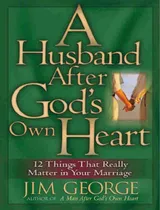
A Husband After God's Own Heart
-%20Karen%20Kingsbury-160.webp)
Forever

A Solemn Appeal

I, Isaac, Take Thee, Rebekah
About the Book
"52 Things Husbands Need From Their Wives" by Jay Payleitner is a practical guide for wives to understand and meet their husband's needs. The book provides insights and tips on how wives can strengthen their relationship with their husbands by addressing 52 key areas such as love, respect, support, and intimacy. It offers practical advice on communication, appreciation, and creating a strong bond to improve marriage satisfaction.
Steven Curtis Chapman
 Steven Curtis Chapman is an American Christian musician, singer, song writer, record producer, actor, author and social activist. He is the only artist in the history of music to have won 56 Gospel Music Association Dove Awards and is also a proud receiver of 5 Grammy Awards. His music is known for being a unique cross between country music, soft rock and orchestrated pop, which made him a prominent artist in the contemporary Christian music circuit of the 1980s. Chapman grew up in a humble environment where he found his calling for music, owing to his father’s inclination towards country music. He learnt to play instruments like guitar and piano just by hanging around in his father’s music store, listening to him play along with his friends. He took up music seriously when he moved to Nashville and got recognized by Sparrow Records, a company he stayed with for a long period in his career. He has released 19 studio albums and has sold over 10 million albums until now. Chapman is a family oriented person just like his father and has a big family comprising of his wife Mary Beth and 3 biological and 2 adopted children. He is a vocal advocate for adoption and has worked socially to eradicate the problem of youth violence.
Childhood & Early Life
Steven Curtis Chapman was born on November 21, 1962 in Paducah, Kentucky, to Herb and Judy Chapman. His father was a country singer and songwriter, who turned down opportunities to become a successful singer to concentrate on his family. His mother was a stay-at-home mom.
His father owned a music store, a business he managed from his basement and used to play music with his friends. Such creative environment at home influenced Chapman’s life from very early on and he bought his first guitar at 6.
Chapman joined as a pre-med student at Georgetown College in Kentucky but after few semesters he moved to Anderson College, Indiana. But he ultimately dropped the idea of studying and went to Nashville to pursue his first love, music.
During 1980s, he wrote a song ‘Built to Last’, which gained huge popularity after getting recorded by a gospel group ‘The Imperials’. The success of the song fetched Chapman a songwriting deal with Sparrow Records.
Career
Chapman’s first official album ‘First Hand’ was released in 1987. The album was an instant hit with singles like ‘Weak Days’ and topped at number 2 on the Contemporary Christian Music chart. The album had a mix of country music with soft rock and pop.
In 1988, following the success of his first album, Chapman released ‘Real Life Conversations’. Its hit single ‘His Eyes’ received the ‘Contemporary Recorded Song of the Year’ award from the ‘Gospel Music Association’. He co-wrote it with James Isaac Elliot.
After a few years, he made a swift turn to mainstream music with his album ‘The Great Adventure’ in 1992. It earned him two Grammy awards for the album and for the title song of the album.
After gaining consistent success with albums like ‘Heaven in the Real World (1994), ‘Signs of Life (1996) and ‘Speechless (1999), Chapman’s next great album ‘Declaration’ came out in 2001, for which he toured 70 cities.
In 2003, ‘All About Love’ was released and it ranked at Top 15 on the Christian Music charts. It was released under Sparrow Records and Chapman very humbly credited his wife Mary Beth for being the inspiration for his album.
‘All Things New’ was released in 2004 and the album added another Grammy to Chapman’s proud award collection. This time he received it in the category of Best Pop/Contemporary Gospel Album. It was also nominated for the Dove Award.
In 2005, ‘All I Really Want for Christmas’ was released, which was Chapman’s another successful Christmas album after ‘The Music of Christmas’. It had traditional holiday tunes and favorites like ‘Go Tell It on the Mountain’ and Silver Bells’.
Chapman took his music to greater levels by taking his concert to South Korea for the U.S. troops who were serving there in 2006. It was the first Christian concert that ever performed for the American army in that country.
In 2007, he released ‘This Moment’ which included hit singles like ‘Cinderella’, for which he was chosen for WOW Hits 2009. He also went on his ‘Winter Jam’ tour and took his sons’, Caleb and Will’s band along.
‘Beauty Will Rise’, Chapman’s seventeenth album, was released in 2009. It is said that he wrote the songs of the album after getting inspired by his daughter Maria Sue’s sad and untimely demise. It included songs like ‘Meant to Be’ and ‘Re:creation’.
In 2012, Chapman finally parted ways with Sparrow Records, the record company that he remained loyal to for so many years. He was signed on by Sony’s Provident Label Group and came out with a Christmas album called ‘JOY’.
‘The Glorious Unfolding’ was released in 2013 under Reunion Records and it peaked on number 27 on the Billboard 200 and was number 1 Top Christian Album. The album was produced by Chapman himself and Brent Milligan.
Major Works
Chapman’s ‘The Great Adventure’ in 1992 was a turning point in his musical career because until now he was making soft and contemporary country music but with ‘The Great Adventure’ he targeted the mainstream audience and tasted huge commercial success for the first time.
Awards & Achievements
Chapman is the winner of five Grammy awards for albums like ‘For the Sake of the Call’ ‘The Great Adventure’ ‘The Live Adventure’, ‘Speechless’ and ‘All Things New’. He has also received 56 Gospel Music Association Dove Awards, more than any other artist.
Personal Life & Legacy
Chapman got married to Mary Beth in 1984 after they first met at Anderson University in Indiana. They have three biological children: Emily, Caleb and Will and three adopted children: Shaohannah, Stevey and Maria, together.
In 2008, Chapman’s youngest son Will ran over his car by accident on his adopted daughter Maria Sue Chunxi Chapman. She was running towards him to meet him but he did not see her and she was pronounced dead on arrival at the hospital.
Trivia
Chapman’s wife Mary Beth Chapman has written and released a book about losing her youngest daughter called ‘Choosing to SEE: A Journey of Struggle and Hope’.
Chapman and his wife have written three children's books with adoption themes: ‘Shaoey And Dot: Bug Meets Bundle’ (2004), ‘Shaoey and Dot: The Christmas Miracle’ (2005), and ‘Shaoey and Dot: A Thunder and Lightning Bug Story’ (2006).
He has received an Honorary Doctorate of Music from Anderson University.
Steven Curtis Chapman is an American Christian musician, singer, song writer, record producer, actor, author and social activist. He is the only artist in the history of music to have won 56 Gospel Music Association Dove Awards and is also a proud receiver of 5 Grammy Awards. His music is known for being a unique cross between country music, soft rock and orchestrated pop, which made him a prominent artist in the contemporary Christian music circuit of the 1980s. Chapman grew up in a humble environment where he found his calling for music, owing to his father’s inclination towards country music. He learnt to play instruments like guitar and piano just by hanging around in his father’s music store, listening to him play along with his friends. He took up music seriously when he moved to Nashville and got recognized by Sparrow Records, a company he stayed with for a long period in his career. He has released 19 studio albums and has sold over 10 million albums until now. Chapman is a family oriented person just like his father and has a big family comprising of his wife Mary Beth and 3 biological and 2 adopted children. He is a vocal advocate for adoption and has worked socially to eradicate the problem of youth violence.
Childhood & Early Life
Steven Curtis Chapman was born on November 21, 1962 in Paducah, Kentucky, to Herb and Judy Chapman. His father was a country singer and songwriter, who turned down opportunities to become a successful singer to concentrate on his family. His mother was a stay-at-home mom.
His father owned a music store, a business he managed from his basement and used to play music with his friends. Such creative environment at home influenced Chapman’s life from very early on and he bought his first guitar at 6.
Chapman joined as a pre-med student at Georgetown College in Kentucky but after few semesters he moved to Anderson College, Indiana. But he ultimately dropped the idea of studying and went to Nashville to pursue his first love, music.
During 1980s, he wrote a song ‘Built to Last’, which gained huge popularity after getting recorded by a gospel group ‘The Imperials’. The success of the song fetched Chapman a songwriting deal with Sparrow Records.
Career
Chapman’s first official album ‘First Hand’ was released in 1987. The album was an instant hit with singles like ‘Weak Days’ and topped at number 2 on the Contemporary Christian Music chart. The album had a mix of country music with soft rock and pop.
In 1988, following the success of his first album, Chapman released ‘Real Life Conversations’. Its hit single ‘His Eyes’ received the ‘Contemporary Recorded Song of the Year’ award from the ‘Gospel Music Association’. He co-wrote it with James Isaac Elliot.
After a few years, he made a swift turn to mainstream music with his album ‘The Great Adventure’ in 1992. It earned him two Grammy awards for the album and for the title song of the album.
After gaining consistent success with albums like ‘Heaven in the Real World (1994), ‘Signs of Life (1996) and ‘Speechless (1999), Chapman’s next great album ‘Declaration’ came out in 2001, for which he toured 70 cities.
In 2003, ‘All About Love’ was released and it ranked at Top 15 on the Christian Music charts. It was released under Sparrow Records and Chapman very humbly credited his wife Mary Beth for being the inspiration for his album.
‘All Things New’ was released in 2004 and the album added another Grammy to Chapman’s proud award collection. This time he received it in the category of Best Pop/Contemporary Gospel Album. It was also nominated for the Dove Award.
In 2005, ‘All I Really Want for Christmas’ was released, which was Chapman’s another successful Christmas album after ‘The Music of Christmas’. It had traditional holiday tunes and favorites like ‘Go Tell It on the Mountain’ and Silver Bells’.
Chapman took his music to greater levels by taking his concert to South Korea for the U.S. troops who were serving there in 2006. It was the first Christian concert that ever performed for the American army in that country.
In 2007, he released ‘This Moment’ which included hit singles like ‘Cinderella’, for which he was chosen for WOW Hits 2009. He also went on his ‘Winter Jam’ tour and took his sons’, Caleb and Will’s band along.
‘Beauty Will Rise’, Chapman’s seventeenth album, was released in 2009. It is said that he wrote the songs of the album after getting inspired by his daughter Maria Sue’s sad and untimely demise. It included songs like ‘Meant to Be’ and ‘Re:creation’.
In 2012, Chapman finally parted ways with Sparrow Records, the record company that he remained loyal to for so many years. He was signed on by Sony’s Provident Label Group and came out with a Christmas album called ‘JOY’.
‘The Glorious Unfolding’ was released in 2013 under Reunion Records and it peaked on number 27 on the Billboard 200 and was number 1 Top Christian Album. The album was produced by Chapman himself and Brent Milligan.
Major Works
Chapman’s ‘The Great Adventure’ in 1992 was a turning point in his musical career because until now he was making soft and contemporary country music but with ‘The Great Adventure’ he targeted the mainstream audience and tasted huge commercial success for the first time.
Awards & Achievements
Chapman is the winner of five Grammy awards for albums like ‘For the Sake of the Call’ ‘The Great Adventure’ ‘The Live Adventure’, ‘Speechless’ and ‘All Things New’. He has also received 56 Gospel Music Association Dove Awards, more than any other artist.
Personal Life & Legacy
Chapman got married to Mary Beth in 1984 after they first met at Anderson University in Indiana. They have three biological children: Emily, Caleb and Will and three adopted children: Shaohannah, Stevey and Maria, together.
In 2008, Chapman’s youngest son Will ran over his car by accident on his adopted daughter Maria Sue Chunxi Chapman. She was running towards him to meet him but he did not see her and she was pronounced dead on arrival at the hospital.
Trivia
Chapman’s wife Mary Beth Chapman has written and released a book about losing her youngest daughter called ‘Choosing to SEE: A Journey of Struggle and Hope’.
Chapman and his wife have written three children's books with adoption themes: ‘Shaoey And Dot: Bug Meets Bundle’ (2004), ‘Shaoey and Dot: The Christmas Miracle’ (2005), and ‘Shaoey and Dot: A Thunder and Lightning Bug Story’ (2006).
He has received an Honorary Doctorate of Music from Anderson University.
The Hill We All Must Die On
The doctrine of penal substitution is under attack today — and that’s an understatement. From voices outside of evangelical theology to those within, the historic Reformation view of the cross is claimed to be a “modern” invention from the cultural West. Others criticize the doctrine as sanctioning violence, privileging divine retributive justice over God’s love, condoning a form of divine child abuse, reducing Scripture’s polychrome presentation of the cross to a lifeless monochrome, being too “legal” in orientation, and so on. All of these charges are not new. All of them have been argued since the end of the 16th century, and all of them are false. Yet such charges reflect the corrosive effects of false ideas on theology and a failure to account for how the Bible, on its own terms, interprets the cross. Given the limitations of this article, I cannot fully respond to these charges. Instead, I will briefly state four truths that unpack the biblical-theological rationale of penal substitution. In so doing, my goal is to explain why penal substitution should be embraced as God’s good news for sinners. Four Questions to Get Right It is only in viewing Christ as our penal substitute that we truly understand the depth of God’s holy love for us, the horrendous nature of our sin before God, and the glory of our substitute — Jesus Christ our Lord — whose obedient life and penal death achieved our right standing before God and the full forgiveness of our sins. Let us now turn to these truths that are crucial to affirm and that lead us to glory in our Lord Jesus Christ as our penal substitute. 1. Who Is God? First, we must get right who God is as our triune Creator-Covenant Lord. Mark it well: debates over the nature of the atonement are first and foremost doctrine of God debates. If our view of God is sub-biblical, we will never get the cross right. From the opening verses of Scripture, God is presented as eternal, a se (life from himself), holy love, righteous, and good — the triune God who is complete in himself and who needs nothing from us (Genesis 1–2; Psalm 50:12–14; Isaiah 6:1–3; Acts 17:24–25; Revelation 4:8–11). One crucial implication of this description is that God, in his very nature, is the moral standard of the universe. This is why we must not think of God’s law as something external to him that he may relax at will. Instead, the triune God of Scripture is the law; his will and nature determine what is right and wrong. This view of God is often forgotten in today’s discussion of the atonement. Following the “New Perspective on Paul,” some argue that God’s justice/righteousness is only “God’s covenant faithfulness,” that is, God remaining true to his promises. No doubt this is true. However, what this view fails to see is that “righteousness-justice-holiness” is first tied to God’s nature as God. That is why, in light of sin, God, who is the law, cannot overlook our sin. God’s holy justice demands that he not only punish all sin, but also, if he graciously chooses to justify the ungodly (Romans 4:5), he must do so by fully satisfying his own righteous, holy moral demand. Thus, given our sin and God’s gracious choice to redeem us, the question that emerges across redemptive history is this: How will God demonstrate his holy justice and covenant love and remain true to himself? The answer is only found in the Father’s gift of his Son, Jesus’s obedient life and substitutionary death, that results in our justification before God in Christ (Romans 3:21–26). 2. Who Is Man? Second, we must get right who humans are as God’s image-sons created to be in covenant relationship with God. Specifically, we must grasp who Adam is, not only as a historic person, but also as the covenant representative/head of the human race (Romans 5:12–21; 1 Corinthians 15:21–22). Why is this significant? Because in creation, our triune Creator-Covenant God sets the conditions of the covenant and rightly demands from Adam (and all of us) total trust, love, and obedience — a truth reflected in God’s first command. But the flip side is also true: If there is covenant disobedience, given who God is, there is also his holy judgment against our sin that results in the penalty of physical and spiritual death (Genesis 2:15–17; cf. Romans 6:23). 3. How Can God Justify Sinners? Third, we must get right the serious problem of our sin before God. Sadly, Adam did not love God with full covenant devotion. Instead, he disobeyed God, thus bringing sin, death, and God’s curse into the world. In the Bible’s storyline, Adam’s sin changes everything! From Genesis 3 forward, “in Adam,” the entire human race becomes guilty, corrupted, condemned, and under the judicial sentence of death (Genesis 3; Romans 5:12–21; Ephesians 2:1–3). If God is going to redeem, which he has graciously promised to do (Genesis 3:15), how is he going to do it? Remember, given who God is in all of his moral perfection, and given that he is the standard of holy justice who will not deny himself, how will God declare sinners justified before him apart from the full satisfaction of his moral demand? God must punish sin and execute perfect justice because he is holy, just, and good. He cannot overlook our sin nor relax the demands of his justice, and in truth, thankfully so! But to justify us, our sin must be fully atoned. How, then, can God punish our sin, satisfy his own righteous demand, and justify sinners? Add to this point: To undo, reverse, and pay for Adam’s sin, we need someone who will come from the human race and identify with us (Genesis 3:15), render our required covenantal obedience, and pay the penalty for our sin. We need someone who will become our covenant representative and substitute, and by his obedient life and penal death secure our justification before God. And wonder of wonders, Scripture gloriously announces that there is one man — and only one — who can do this for us, namely our Lord Jesus Christ (Hebrews 2:5–18). 4. Who Is Jesus? Fourth, we must get right who Jesus is, what he does for us, and that he alone can redeem, reconcile, and justify us before God. Who is the Jesus of the Bible? In short, he is God the Son incarnate, the second person of the triune Godhead. He is no abused child or some third-party individual who stands independent of God. We cannot think of his atoning work apart from thinking of the entire triune God accomplishing our salvation. Furthermore, as the eternal Son, eternally loved of his Father and the Spirit, in God’s plan, he voluntarily took on the role of becoming our Redeemer. And in his incarnation, he identified with us in order to represent us before God (Hebrews 5:1). In his obedient human life, Jesus, as the Mediator of the new covenant, obeyed for us as our legal covenant representative. In his obedient death, Jesus, as the divine Son, satisfied his own righteous demand against us by bearing the penalty of our sin as our substitute (Romans 5:18–19; Philippians 2:6–11; Hebrews 5:1–10). And in doing all of this, the Father’s love was revealed in Jesus’s penal substitution because of who Jesus is as the Son incarnate, the Last Adam, and the only Mediator of God’s people (Romans 5:8–11). Don’t Get Bored with the Gospel The truth of the matter is this: penal substitution is not a view to be replaced by something “better” or dismissed as a relic of the past. There is no greater news than this: Christ Jesus, as the divine Son incarnate, perfectly meets our need before God by his obedient life and substitutionary death. In Christ the triune love of God is gloriously revealed because in Christ we receive the gift of righteousness which is now ours by faith in him. In union with his people, Christ, as our new covenant head, obeys in our place, dies our death, and satisfies divine justice, which is evidenced in his glorious resurrection. As a result, by faith alone, in Christ alone, his righteousness is ours — now and forever (Romans 8:1; 2 Corinthians 5:21; Galatians 3:13). By faith-union in Christ, we stand complete: justified before God by the forgiveness of our sins and clothed in his righteousness (Romans 4:1–8; 5:1–2). Following the Bible’s teaching on this matter, may we learn anew to say with Paul, “For I decided to know nothing . . . except Jesus Christ and him crucified” (1 Corinthians 2:2). “Thanks be to God for his inexpressible gift!” (2 Corinthians 9:15). Article by Stephen Wellum
-480.webp)