


Others like 100 ways to simplify your life Features >>




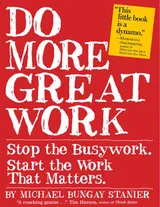
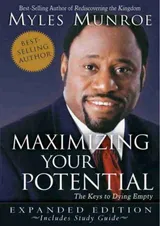
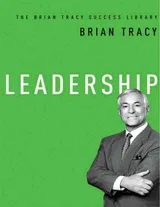

About the Book
"100 Ways to Simplify Your Life" by Joyce Meyer offers practical advice on how to simplify and improve various aspects of your life, covering topics such as relationships, decision-making, time management, and stress reduction. The book provides easy-to-follow tips and strategies to help readers navigate the complexities of modern life and find more peace and fulfillment.
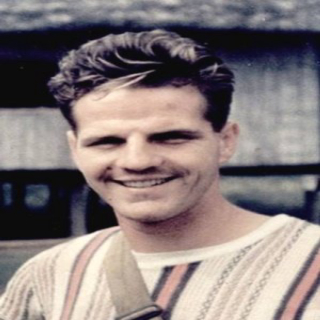
Jim Elliot
 EARLY LIFE
Jim Elliot began his life in Portland, Oregon in the USA. His mother, Clara, was a chiropractor and his father, Fred, was a minister. They married and settled in Seattle, WA where they welcomed their first son, Robert in 1921.
Later they relocated the family to Portland where Herbert arrived in 1924, Jim in 1927, and Jane in 1932.
Jim knew Christ from an early age and was never afraid to speak about Him to his friends. At age six Jim told his mother, “Now, mama, the Lord Jesus can come whenever He wants. He could take our whole family because I’m saved now, and Jane is too young to know Him yet.”
THE YEARS THAT CEMENTED HIS DESIRE TO SERVE THE LORD IN MISSIONS
Jim entered Benson Polytechnic High School in 1941. He carried a small Bible with him and, an excellent speaker; he was often found speaking out for Christ. He and his friends were not afraid to step out and find adventure. One thing Jim didn’t have time for in those early years were girls. He was once quoted as telling a friend, “Domesticated males aren’t much use for adventure.”
In 1945 Jim traveled to Wheaton, IL to attend Wheaton College. His main goal while there was to devote himself to God. He recognized the importance of discipline in pursuing this goal. He would start each morning with prayer and Bible study. In his journal he wrote, “None of it gets to be ‘old stuff’ for it is Christ in print, the Living Word. We wouldn’t think of rising in the morning without a face-wash, but we often neglect the purgative cleansing of the Word of the Lord. It wakes us up to our responsibility.”
Jim’s desire to serve God by taking His gospel to unreached people of the world began to grow while at Wheaton. The summer of 1947 found him in Mexico and that time influenced his decision to minister in Central America after he finished college.
Jim met Elisabeth Howard during his third year at Wheaton. He did ask her for a date which she accepted and then later cancelled. They spent the next years as friends and after she finished at Wheaton they continued to correspond. As they came to know each other there was an attraction, but Jim felt he needed to unencumbered by worldly concerns in order to devote himself completely to God.
In addition to his hope to one day travel to a foreign country to share Christ with the unchurched of the world, he also felt the need to share with people in the United States. On Sundays while at Wheaton he would often ride the train into Chicago and talk to people in the train station about Christ. He often felt ineffective in his work as the times of knowingly leading people to Christ were few. He once wrote, “No fruit yet. Why is that I’m so unproductive? I cannot recall leading more than one or two into the kingdom. Surely this is not the manifestation of the power of the Resurrection. I feel as Rachel, ‘Give me children, or else I die.’”
After college with no clear answer as to working for the Lord in a foreign country, Jim returned home to Portland. He continued his disciplined Bible study as well as correspondence with Elisabeth Howard whom he called Betty.
They both felt a strong attraction to each other during this time, but also felt that the Lord may have been calling them to be unmarried as they served Him.
In June of 1950 he travelled to Oklahoma to attend the Summer Institute of Linguistics. There he learned how to study unwritten languages. He was able to work with a missionary to the Quichuas of the Ecuadorian jungle. Because of these lessons he began to pray for guidance about going to Ecuador and later felt compelled to answer the call there.
Elisabeth Elliot wrote in Shadow of the Almighty:
“The breadth of Jim’s vision is suggested in this entry from the journal:
August 9. “God just now gave me faith to ask for another young man to go, perhaps not this fall, but soon, to join the ranks in the lowlands of eastern Ecuador. There we must learn: 1) Spanish and Quichua, 2) each other, 3) the jungle and independence, and 4) God and God’s way of approach to the highland Quichua. From thence, by His great hand, we must move to the Ecuadorian highlands with several young Indians each, and begin work among the 800,000 highlanders. If God tarries, the natives must be taught to spread southward with the message of the reigning Christ, establishing New Testament groups as they go. Thence the Word must go south into Peru and Bolivia. The Quichuas must be reached for God! Enough for policy. Now for prayer and practice.
THE ECUADOR YEARS
In February 1952 Jim finally left America to travel to Ecuador with Pete Fleming. In May Elisabeth moved to Quito and though they didn’t feel the need to get engaged she and Jim did begin a courtship.
In August Jim left Elisabeth in Quito and travelled with Pete to Shell Mera. At the Mission Aviation Fellowship headquarters in Shell Mera, Jim and Pete learned more about the Acua Indians, a people group that was largely unreached and very savage.
Leaving Shell Mera, Pete and Jim moved on to Shandia where Jim was captivated by the Quichua. He felt very strongly that this was exactly where God intended for him to work to spread the Gospel.
While Jim was in Shandia, Elisabeth was working to learn more about the Colorado Indians near Santa Domingo. In January of 1953 he went to Quito and she met him there and they were finally engaged. They married in October of that year and their only child Valerie was born in 1955.
They settled in Shandia and continued their work with the Quichua Indians. It was Jim’s desire to be able to reach the Waodoni tribe that lived deep in the jungles and had little contact with the outside world. A Waodoni woman who had left the tribe was taken in by the missionaries and helped them to learn the language.
Jim, along with Pete, Ed McCully, Roger Youderian, and their pilot Nate Saint began to search by plane in hopes of finding a way to contact the Waodoni. The found a sandbar in the middle of the Curaray River that worked as a landing strip for the plane and it was there that they first made contact with the Waodoni. They were elated to be able to finally be able to attempt to share the love of Christ with this people group.
After their first meeting, one of the tribe, a man they called George lied to the tribe about the men’s intentions. This lie led the Waodoni warriors to plan an attack for when the missionaries returned. The men did return on January 8, 1956 and were surprised by ten members of the tribe who massacred the missionaries.
Jim’s short life that was filled with the desire to share God’s love can be summed up by a quote that is attributed to him. “He is no fool who gives that which he cannot keep, to gain what he cannot lose.”
EARLY LIFE
Jim Elliot began his life in Portland, Oregon in the USA. His mother, Clara, was a chiropractor and his father, Fred, was a minister. They married and settled in Seattle, WA where they welcomed their first son, Robert in 1921.
Later they relocated the family to Portland where Herbert arrived in 1924, Jim in 1927, and Jane in 1932.
Jim knew Christ from an early age and was never afraid to speak about Him to his friends. At age six Jim told his mother, “Now, mama, the Lord Jesus can come whenever He wants. He could take our whole family because I’m saved now, and Jane is too young to know Him yet.”
THE YEARS THAT CEMENTED HIS DESIRE TO SERVE THE LORD IN MISSIONS
Jim entered Benson Polytechnic High School in 1941. He carried a small Bible with him and, an excellent speaker; he was often found speaking out for Christ. He and his friends were not afraid to step out and find adventure. One thing Jim didn’t have time for in those early years were girls. He was once quoted as telling a friend, “Domesticated males aren’t much use for adventure.”
In 1945 Jim traveled to Wheaton, IL to attend Wheaton College. His main goal while there was to devote himself to God. He recognized the importance of discipline in pursuing this goal. He would start each morning with prayer and Bible study. In his journal he wrote, “None of it gets to be ‘old stuff’ for it is Christ in print, the Living Word. We wouldn’t think of rising in the morning without a face-wash, but we often neglect the purgative cleansing of the Word of the Lord. It wakes us up to our responsibility.”
Jim’s desire to serve God by taking His gospel to unreached people of the world began to grow while at Wheaton. The summer of 1947 found him in Mexico and that time influenced his decision to minister in Central America after he finished college.
Jim met Elisabeth Howard during his third year at Wheaton. He did ask her for a date which she accepted and then later cancelled. They spent the next years as friends and after she finished at Wheaton they continued to correspond. As they came to know each other there was an attraction, but Jim felt he needed to unencumbered by worldly concerns in order to devote himself completely to God.
In addition to his hope to one day travel to a foreign country to share Christ with the unchurched of the world, he also felt the need to share with people in the United States. On Sundays while at Wheaton he would often ride the train into Chicago and talk to people in the train station about Christ. He often felt ineffective in his work as the times of knowingly leading people to Christ were few. He once wrote, “No fruit yet. Why is that I’m so unproductive? I cannot recall leading more than one or two into the kingdom. Surely this is not the manifestation of the power of the Resurrection. I feel as Rachel, ‘Give me children, or else I die.’”
After college with no clear answer as to working for the Lord in a foreign country, Jim returned home to Portland. He continued his disciplined Bible study as well as correspondence with Elisabeth Howard whom he called Betty.
They both felt a strong attraction to each other during this time, but also felt that the Lord may have been calling them to be unmarried as they served Him.
In June of 1950 he travelled to Oklahoma to attend the Summer Institute of Linguistics. There he learned how to study unwritten languages. He was able to work with a missionary to the Quichuas of the Ecuadorian jungle. Because of these lessons he began to pray for guidance about going to Ecuador and later felt compelled to answer the call there.
Elisabeth Elliot wrote in Shadow of the Almighty:
“The breadth of Jim’s vision is suggested in this entry from the journal:
August 9. “God just now gave me faith to ask for another young man to go, perhaps not this fall, but soon, to join the ranks in the lowlands of eastern Ecuador. There we must learn: 1) Spanish and Quichua, 2) each other, 3) the jungle and independence, and 4) God and God’s way of approach to the highland Quichua. From thence, by His great hand, we must move to the Ecuadorian highlands with several young Indians each, and begin work among the 800,000 highlanders. If God tarries, the natives must be taught to spread southward with the message of the reigning Christ, establishing New Testament groups as they go. Thence the Word must go south into Peru and Bolivia. The Quichuas must be reached for God! Enough for policy. Now for prayer and practice.
THE ECUADOR YEARS
In February 1952 Jim finally left America to travel to Ecuador with Pete Fleming. In May Elisabeth moved to Quito and though they didn’t feel the need to get engaged she and Jim did begin a courtship.
In August Jim left Elisabeth in Quito and travelled with Pete to Shell Mera. At the Mission Aviation Fellowship headquarters in Shell Mera, Jim and Pete learned more about the Acua Indians, a people group that was largely unreached and very savage.
Leaving Shell Mera, Pete and Jim moved on to Shandia where Jim was captivated by the Quichua. He felt very strongly that this was exactly where God intended for him to work to spread the Gospel.
While Jim was in Shandia, Elisabeth was working to learn more about the Colorado Indians near Santa Domingo. In January of 1953 he went to Quito and she met him there and they were finally engaged. They married in October of that year and their only child Valerie was born in 1955.
They settled in Shandia and continued their work with the Quichua Indians. It was Jim’s desire to be able to reach the Waodoni tribe that lived deep in the jungles and had little contact with the outside world. A Waodoni woman who had left the tribe was taken in by the missionaries and helped them to learn the language.
Jim, along with Pete, Ed McCully, Roger Youderian, and their pilot Nate Saint began to search by plane in hopes of finding a way to contact the Waodoni. The found a sandbar in the middle of the Curaray River that worked as a landing strip for the plane and it was there that they first made contact with the Waodoni. They were elated to be able to finally be able to attempt to share the love of Christ with this people group.
After their first meeting, one of the tribe, a man they called George lied to the tribe about the men’s intentions. This lie led the Waodoni warriors to plan an attack for when the missionaries returned. The men did return on January 8, 1956 and were surprised by ten members of the tribe who massacred the missionaries.
Jim’s short life that was filled with the desire to share God’s love can be summed up by a quote that is attributed to him. “He is no fool who gives that which he cannot keep, to gain what he cannot lose.”
Are You a Friend to the Poor
God’s heart is for the least of these: the suffering, lost, and lonely. "Do you know the name of a poor person?" a young man in his twenties who was sharing about his experiences as a missionary in Moldova posed the question to me in church. His phrase was tricky because if he'd said, "Do you care about the poor?" I might have tossed it in that drawer where you keep all the stuff you've heard a million times and are supposed to ponder but probably won't do much with. When he asked if I knew the name of a poor person he exposed a glaring gap in my Christianity: Whose name did I know? Not whose face had I passed on 21st Street on my way to grab coffee; not what homeless man had I handed a dollar for the paper he peddles at the stoplight; not what anonymous tsunami victim had received an online donation I'd made. Whose name did I know? I was left to consider this very important question because if I didn't know the name of a poor person, I didn't really know a poor person. (This is one of the biggest problems with going to church — the possibility of getting all convicted and stuff.) I always knew that if God's heart was for anything it was for the least of these: the suffering, sick, needy, uneducated, foreigner, lost, lonely — this much was clear. And it's true that these were people I cared about, prayed for, and on whose behalf I tithed, but how many of them called me friend? Who had my phone number, been to dinner at my house, or sat beside me at church? Without condemnation, I had to recognize that I was someone who cared for the poor mostly from a distance but who had yet to intimately involve herself. My first step: Learn a name. In the Law of Moses God commanded the Israelites to leave their extra sheaves, olives, and grapes for the alien, fatherless, and widow — for all the people who didn't have what the Israelites had and who didn't have the means to get what they had. At the end of this recurring command the Lord gave His people an intriguing reason for why He required this, "Remember that you were slaves in Egypt. That is why I command you to do this" (Deut. 24:22, NIV). Didn't God want them to leave their excess food for the poor and outsider because these people were hungry, because they needed community, because they couldn't provide for themselves, because He loved them? Wasn't that why? Oh I'm sure those were all reasons, but I believe God first had to deal with that sneaky mind-set, the one that tries to trick us into thinking that when we step over a stalk of wheat to leave it for the poor we're doing something really noble, plain over-the-top gracious. That we're going above and beyond by giving away what is rightfully "ours." The Lord was staving off this kind of thinking by saying, "Hold your fancy horses. Remember you used to be slaves too! Don't forget to tap into what that felt like." The Israelites were no strangers to poverty, oppression, or powerlessness as ones who had once been enslaved in Egypt. It was only because of God's deliverance they were now free, only because of His goodness they were blessed with flourishing fields and bursting branches. By remembering their once low estate, they were poised to welcome the foreigner, fatherless, and widow, not out of self-righteousness, guilt, or duty, but out of the love God had shown them. Last night I served dinner to an Iraqi couple and their 2-year-old daughter, a family some of my friends and I have gotten to know. I'd hoped that chicken, broccoli, and couscous were safe selections to serve these well-dressed Middle Easterners, though I sensed I may have been pushing it with the hot apple cider. I was going for the American autumn experience, and judging by their first and only sip, this went over moderately. As we settled around the table I asked them why they'd left Baghdad to come to America. The husband replied, "Because there are less car bombings here," and then he broke out into hysterical laughter. (Safwat's a sanguine.) His wife was less buoyant, confiding that the war had been devastating and that they'd fled here as refugees hoping to find jobs but so far without any success. My eyes welled up as she spoke because her suffering was not that of a nameless Iraqi, but it belonged to her, a real-life woman with a name, Rida. As the adults carried on, Rubaa fingered the icing on her cupcake and tapped her shoes on the hardwood floors, just like any other baby girl in a bright red dress who wanted the room to be enchanted with her — some things are the same everywhere. When it was time for them to leave, Safwat shook my hand, Rubaa blew me a kiss at her mother's urging, and Rida kissed my right cheek, left cheek, and then back to my right cheek again (it's that third one I always forget). As we said our good-byes I realized what a privilege it was to know their names, because knowing their names meant I was getting to know their stories. And knowing their stories reminded me in deeply spiritual and emotional places that I, too, was once a foreigner outside of God's kingdom, but because of Christ, I am now a daughter. Kelly Minter
-480.webp)