

Others like women - gods secret weapon Features >>
-160.webp)









About the Book
"Women - God's Secret Weapon" by Ed Silvoso explores the important role that women play in shaping society and advancing the Kingdom of God. Silvoso argues that women have unique abilities to influence culture and bring about transformation through their relationships, leadership, and spiritual gifts. The book encourages women to embrace their calling as God's secret weapons and offers practical guidance for fulfilling their God-given purposes in the world.
William Carey
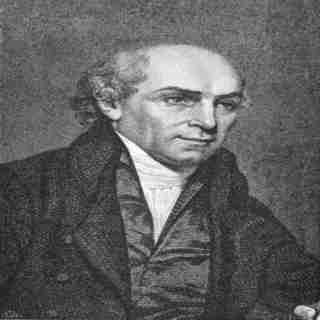 "Expect great things; attempt great things."
At a meeting of Baptist leaders in the late 1700s, a newly ordained minister stood to argue for the value of overseas missions. He was abruptly interrupted by an older minister who said, "Young man, sit down! You are an enthusiast. When God pleases to convert the heathen, he'll do it without consulting you or me."
That such an attitude is inconceivable today is largely due to the subsequent efforts of that young man, William Carey.
Plodder Carey was raised in the obscure, rural village of Paulerpury, in the middle of England. He apprenticed in a local cobbler's shop, where the nominal Anglican was converted. He enthusiastically took up the faith, and though little educated, the young convert borrowed a Greek grammar and proceeded to teach himself New Testament Greek.
When his master died, he took up shoemaking in nearby Hackleton, where he met and married Dorothy Plackett, who soon gave birth to a daughter. But the apprentice cobbler's life was hard—the child died at age 2—and his pay was insufficient. Carey's family sunk into poverty and stayed there even after he took over the business.
"I can plod," he wrote later, "I can persevere to any definite pursuit." All the while, he continued his language studies, adding Hebrew and Latin, and became a preacher with the Particular Baptists. He also continued pursuing his lifelong interest in international affairs, especially the religious life of other cultures.
Carey was impressed with early Moravian missionaries and was increasingly dismayed at his fellow Protestants' lack of missions interest. In response, he penned An Enquiry into the Obligations of Christians to Use Means for the Conversion of the Heathens. He argued that Jesus' Great Commission applied to all Christians of all times, and he castigated fellow believers of his day for ignoring it: "Multitudes sit at ease and give themselves no concern about the far greater part of their fellow sinners, who to this day, are lost in ignorance and idolatry."
Carey didn't stop there: in 1792 he organized a missionary society, and at its inaugural meeting preached a sermon with the call, "Expect great things from God; attempt great things for God!" Within a year, Carey, John Thomas (a former surgeon), and Carey's family (which now included three boys, and another child on the way) were on a ship headed for India.
Stranger in a strange land
Thomas and Carey had grossly underestimated what it would cost to live in India, and Carey's early years there were miserable. When Thomas deserted the enterprise, Carey was forced to move his family repeatedly as he sought employment that could sustain them. Illness racked the family, and loneliness and regret set it: "I am in a strange land," he wrote, "no Christian friend, a large family, and nothing to supply their wants." But he also retained hope: "Well, I have God, and his word is sure."
He learned Bengali with the help of a pundit, and in a few weeks began translating the Bible into Bengali and preaching to small gatherings.
When Carey himself contracted malaria, and then his 5-year-old Peter died of dysentery, it became too much for his wife, Dorothy, whose mental health deteriorated rapidly. She suffered delusions, accusing Carey of adultery and threatening him with a knife. She eventually had to be confined to a room and physically restrained.
"This is indeed the valley of the shadow of death to me," Carey wrote, though characteristically added, "But I rejoice that I am here notwithstanding; and God is here."
Gift of tongues
In October 1799, things finally turned. He was invited to locate in a Danish settlement in Serampore, near Calcutta. He was now under the protection of the Danes, who permitted him to preach legally (in the British-controlled areas of India, all of Carey's missionary work had been illegal).
Carey was joined by William Ward, a printer, and Joshua and Hanna Marshman, teachers. Mission finances increased considerably as Ward began securing government printing contracts, the Marshmans opened schools for children, and Carey began teaching at Fort William College in Calcutta.
In December 1800, after seven years of missionary labor, Carey baptized his first convert, Krishna Pal, and two months later, he published his first Bengali New Testament. With this and subsequent editions, Carey and his colleagues laid the foundation for the study of modern Bengali, which up to this time had been an "unsettled dialect."
Carey continued to expect great things; over the next 28 years, he and his pundits translated the entire Bible into India's major languages: Bengali, Oriya, Marathi, Hindi, Assamese, and Sanskrit and parts of 209 other languages and dialects.
He also sought social reform in India, including the abolition of infanticide, widow burning (sati), and assisted suicide. He and the Marshmans founded Serampore College in 1818, a divinity school for Indians, which today offers theological and liberal arts education for some 2,500 students.
By the time Carey died, he had spent 41 years in India without a furlough. His mission could count only some 700 converts in a nation of millions, but he had laid an impressive foundation of Bible translations, education, and social reform.
His greatest legacy was in the worldwide missionary movement of the nineteenth century that he inspired. Missionaries like Adoniram Judson, Hudson Taylor, and David Livingstone, among thousands of others, were impressed not only by Carey's example, but by his words "Expect great things; attempt great things." The history of nineteenth-century Protestant missions is in many ways an extended commentary on the phrase.
"Expect great things; attempt great things."
At a meeting of Baptist leaders in the late 1700s, a newly ordained minister stood to argue for the value of overseas missions. He was abruptly interrupted by an older minister who said, "Young man, sit down! You are an enthusiast. When God pleases to convert the heathen, he'll do it without consulting you or me."
That such an attitude is inconceivable today is largely due to the subsequent efforts of that young man, William Carey.
Plodder Carey was raised in the obscure, rural village of Paulerpury, in the middle of England. He apprenticed in a local cobbler's shop, where the nominal Anglican was converted. He enthusiastically took up the faith, and though little educated, the young convert borrowed a Greek grammar and proceeded to teach himself New Testament Greek.
When his master died, he took up shoemaking in nearby Hackleton, where he met and married Dorothy Plackett, who soon gave birth to a daughter. But the apprentice cobbler's life was hard—the child died at age 2—and his pay was insufficient. Carey's family sunk into poverty and stayed there even after he took over the business.
"I can plod," he wrote later, "I can persevere to any definite pursuit." All the while, he continued his language studies, adding Hebrew and Latin, and became a preacher with the Particular Baptists. He also continued pursuing his lifelong interest in international affairs, especially the religious life of other cultures.
Carey was impressed with early Moravian missionaries and was increasingly dismayed at his fellow Protestants' lack of missions interest. In response, he penned An Enquiry into the Obligations of Christians to Use Means for the Conversion of the Heathens. He argued that Jesus' Great Commission applied to all Christians of all times, and he castigated fellow believers of his day for ignoring it: "Multitudes sit at ease and give themselves no concern about the far greater part of their fellow sinners, who to this day, are lost in ignorance and idolatry."
Carey didn't stop there: in 1792 he organized a missionary society, and at its inaugural meeting preached a sermon with the call, "Expect great things from God; attempt great things for God!" Within a year, Carey, John Thomas (a former surgeon), and Carey's family (which now included three boys, and another child on the way) were on a ship headed for India.
Stranger in a strange land
Thomas and Carey had grossly underestimated what it would cost to live in India, and Carey's early years there were miserable. When Thomas deserted the enterprise, Carey was forced to move his family repeatedly as he sought employment that could sustain them. Illness racked the family, and loneliness and regret set it: "I am in a strange land," he wrote, "no Christian friend, a large family, and nothing to supply their wants." But he also retained hope: "Well, I have God, and his word is sure."
He learned Bengali with the help of a pundit, and in a few weeks began translating the Bible into Bengali and preaching to small gatherings.
When Carey himself contracted malaria, and then his 5-year-old Peter died of dysentery, it became too much for his wife, Dorothy, whose mental health deteriorated rapidly. She suffered delusions, accusing Carey of adultery and threatening him with a knife. She eventually had to be confined to a room and physically restrained.
"This is indeed the valley of the shadow of death to me," Carey wrote, though characteristically added, "But I rejoice that I am here notwithstanding; and God is here."
Gift of tongues
In October 1799, things finally turned. He was invited to locate in a Danish settlement in Serampore, near Calcutta. He was now under the protection of the Danes, who permitted him to preach legally (in the British-controlled areas of India, all of Carey's missionary work had been illegal).
Carey was joined by William Ward, a printer, and Joshua and Hanna Marshman, teachers. Mission finances increased considerably as Ward began securing government printing contracts, the Marshmans opened schools for children, and Carey began teaching at Fort William College in Calcutta.
In December 1800, after seven years of missionary labor, Carey baptized his first convert, Krishna Pal, and two months later, he published his first Bengali New Testament. With this and subsequent editions, Carey and his colleagues laid the foundation for the study of modern Bengali, which up to this time had been an "unsettled dialect."
Carey continued to expect great things; over the next 28 years, he and his pundits translated the entire Bible into India's major languages: Bengali, Oriya, Marathi, Hindi, Assamese, and Sanskrit and parts of 209 other languages and dialects.
He also sought social reform in India, including the abolition of infanticide, widow burning (sati), and assisted suicide. He and the Marshmans founded Serampore College in 1818, a divinity school for Indians, which today offers theological and liberal arts education for some 2,500 students.
By the time Carey died, he had spent 41 years in India without a furlough. His mission could count only some 700 converts in a nation of millions, but he had laid an impressive foundation of Bible translations, education, and social reform.
His greatest legacy was in the worldwide missionary movement of the nineteenth century that he inspired. Missionaries like Adoniram Judson, Hudson Taylor, and David Livingstone, among thousands of others, were impressed not only by Carey's example, but by his words "Expect great things; attempt great things." The history of nineteenth-century Protestant missions is in many ways an extended commentary on the phrase.
God Knows
At the end of Exodus 2, Moses is a fugitive in Midian, hiding from Pharaoh and the people of Israel are groaning in Egypt, crying out for deliverance from the oppressive, abusive death grip of slavery. And the chapter ends with these words: “God saw the people of Israel — and God knew” (Exodus 2:25). Those words, “God knew,” are pregnant with hope. God Knew God knew. God was aware of each person’s suffering. He understood what was happening to them and how it was affecting them. God knew the dehumanizing degradation and routine rapine that is part and parcel of a slave’s experience. He knew the premature breakdown of bodies ruthlessly subjected daily to exhausting manual labor (Exodus 1:11). He knew the bitter erosion of hope that occurs when all labor only benefits ungrateful abusers (Exodus 1:14). God knew the horror and trauma of legalized, enforced infanticide (Exodus 1:16). And he knew the resentment and anger that is on constant simmer in a culture of hopelessness, sometimes boiling over into vengeful violence against oppressors (Exodus 2:11–12), and other times into tragic violence within the oppressed community (Exodus 2:13). God knew and he was preparing to take action in a way that would leave a permanent, indelible imprint upon the collective memory of the human race. God Foreknew But God didn’t only know this when it all happened. He knew it was going to happen long before it even looked remotely possible that it could happen. Centuries earlier God had told Abram (later Abraham), the founder of the Israelite nation, Know for certain that your offspring will be sojourners in a land that is not theirs and will be servants there, and they will be afflicted for four hundred years. But I will bring judgment on the nation that they serve, and afterward they shall come out with great possessions. (Genesis 15:13–14, italics mine) The nature and implications of God’s foreknowledge — what he foreknows and how certain this foreknowledge is — have been debated for millennia. Admittedly, this is deep water for human intellects to swim in. But in this text we have a direct quote from God himself on the subject. And he says it so plainly a child could not mistake it: “Know for certain that your offspring will be [enslaved] and will be afflicted for four hundred years.” This was not a qualified expert making an educated guess about the future decisions of free moral agents on the basis of probabilities. This was clear, specific, certain foresight. God certainly foreknew that the Israelites would experience desperate suffering. And his revealed foresight also clearly revealed a divine purpose in this horrible experience, a purpose whose scope extended way beyond just Israel. God Knew What He Was Doing Two verses later in Genesis 15, God tells Abram, “And [your descendants] shall come back here [to Canaan] in the fourth generation, for the iniquity of the Amorites is not yet complete” (Genesis 15:16, italics mine). This statement about the Amorites is a multi-layered gift for the saints of God. To unpack its implications would require a book. In it is a world of God’s precise patience, justice, judgment, and more. But with regard to Israel’s suffering, we see in the Amorite allusion a rare jewel of God’s rationale for his timeline. The enslaved Israelite’s prayers must have sounded much like their future royal kinsman’s: “How long, O LORD? Will you forget me forever? . . . How long shall my enemy be exalted over me?” (Psalm 13:1–2). God rarely provides an answer to such a question. But here he provides an answer before the question was ever raised. How long, O LORD? Four hundred years. Why so long? Because my purposes involve far more than just Israel and Egypt. They also involve the sin of and my righteous judgment on the peoples of Canaan. When the time is ripe for me to fulfill my covenant to Abraham, it will also be ripe for me to judge the wickedness of the Amorites. In the bloody, sweaty, tearful, agonizing experience of slavery, it would have looked like God had forgotten. He had not. He knew. He had foreknown. And he knew just what he was doing. God Knows The reality expressed in the words “God knows” is a well of profound comfort and peace for us in our afflictions. Yes, there remain unanswered questions. No, they do not themselves remove our pain. But in Exodus 2:25 and Genesis 15:13–14 we see why these words are pregnant with hope. Your affliction has a purpose. You likely don’t know what it is yet, but someday you will. And your affliction has a timeline. You likely don’t know what it is yet, and likely it already seems too long. But someday you will understand. And you will understand that the purposes for both your affliction and how long you were required to endure it extended far beyond the range of your perception. And then it will make sense. Jesus Christ has guaranteed your exodus. And it is a far greater exodus than the mere escape from your affliction. There is coming an end to your sojourning in this foreign land (Hebrews 11:13). There is a Promised Land far greater than Canaan. And when you reach it, no matter what you suffered in this veil of tears, you will have no regrets. God will have worked it all for such good that you will wonder that you ever questioned his judgment or goodness (Romans 8:28). In your affliction, cry out to God for help (Exodus 2:23). He hears. And when the time is right, God will answer you. For God sees you — and he knows. Article by Jon Bloom