
When God Writes Your Love Story Order Printed Copy
- Author: Eric, Lesley Ludy
- Size: 1.81MB | 354 pages
- |
Others like when god writes your love story Features >>






-160.webp)

-160.webp)
About the Book
"When God Writes Your Love Story" is a Christian guide to navigating relationships and romance with a faith-centered approach. The book emphasizes trusting God's plan for finding true love and offers practical advice on how to honor God in dating and relationships. The authors, Eric and Lesley Ludy, share personal stories and insights that encourage readers to seek a deeper connection with God while seeking a fulfilling and lasting romantic relationship.
Steven Curtis Chapman
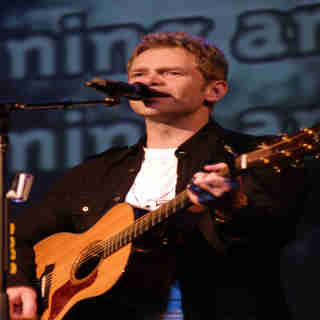 Steven Curtis Chapman is an American Christian musician, singer, song writer, record producer, actor, author and social activist. He is the only artist in the history of music to have won 56 Gospel Music Association Dove Awards and is also a proud receiver of 5 Grammy Awards. His music is known for being a unique cross between country music, soft rock and orchestrated pop, which made him a prominent artist in the contemporary Christian music circuit of the 1980s. Chapman grew up in a humble environment where he found his calling for music, owing to his father’s inclination towards country music. He learnt to play instruments like guitar and piano just by hanging around in his father’s music store, listening to him play along with his friends. He took up music seriously when he moved to Nashville and got recognized by Sparrow Records, a company he stayed with for a long period in his career. He has released 19 studio albums and has sold over 10 million albums until now. Chapman is a family oriented person just like his father and has a big family comprising of his wife Mary Beth and 3 biological and 2 adopted children. He is a vocal advocate for adoption and has worked socially to eradicate the problem of youth violence.
Childhood & Early Life
Steven Curtis Chapman was born on November 21, 1962 in Paducah, Kentucky, to Herb and Judy Chapman. His father was a country singer and songwriter, who turned down opportunities to become a successful singer to concentrate on his family. His mother was a stay-at-home mom.
His father owned a music store, a business he managed from his basement and used to play music with his friends. Such creative environment at home influenced Chapman’s life from very early on and he bought his first guitar at 6.
Chapman joined as a pre-med student at Georgetown College in Kentucky but after few semesters he moved to Anderson College, Indiana. But he ultimately dropped the idea of studying and went to Nashville to pursue his first love, music.
During 1980s, he wrote a song ‘Built to Last’, which gained huge popularity after getting recorded by a gospel group ‘The Imperials’. The success of the song fetched Chapman a songwriting deal with Sparrow Records.
Career
Chapman’s first official album ‘First Hand’ was released in 1987. The album was an instant hit with singles like ‘Weak Days’ and topped at number 2 on the Contemporary Christian Music chart. The album had a mix of country music with soft rock and pop.
In 1988, following the success of his first album, Chapman released ‘Real Life Conversations’. Its hit single ‘His Eyes’ received the ‘Contemporary Recorded Song of the Year’ award from the ‘Gospel Music Association’. He co-wrote it with James Isaac Elliot.
After a few years, he made a swift turn to mainstream music with his album ‘The Great Adventure’ in 1992. It earned him two Grammy awards for the album and for the title song of the album.
After gaining consistent success with albums like ‘Heaven in the Real World (1994), ‘Signs of Life (1996) and ‘Speechless (1999), Chapman’s next great album ‘Declaration’ came out in 2001, for which he toured 70 cities.
In 2003, ‘All About Love’ was released and it ranked at Top 15 on the Christian Music charts. It was released under Sparrow Records and Chapman very humbly credited his wife Mary Beth for being the inspiration for his album.
‘All Things New’ was released in 2004 and the album added another Grammy to Chapman’s proud award collection. This time he received it in the category of Best Pop/Contemporary Gospel Album. It was also nominated for the Dove Award.
In 2005, ‘All I Really Want for Christmas’ was released, which was Chapman’s another successful Christmas album after ‘The Music of Christmas’. It had traditional holiday tunes and favorites like ‘Go Tell It on the Mountain’ and Silver Bells’.
Chapman took his music to greater levels by taking his concert to South Korea for the U.S. troops who were serving there in 2006. It was the first Christian concert that ever performed for the American army in that country.
In 2007, he released ‘This Moment’ which included hit singles like ‘Cinderella’, for which he was chosen for WOW Hits 2009. He also went on his ‘Winter Jam’ tour and took his sons’, Caleb and Will’s band along.
‘Beauty Will Rise’, Chapman’s seventeenth album, was released in 2009. It is said that he wrote the songs of the album after getting inspired by his daughter Maria Sue’s sad and untimely demise. It included songs like ‘Meant to Be’ and ‘Re:creation’.
In 2012, Chapman finally parted ways with Sparrow Records, the record company that he remained loyal to for so many years. He was signed on by Sony’s Provident Label Group and came out with a Christmas album called ‘JOY’.
‘The Glorious Unfolding’ was released in 2013 under Reunion Records and it peaked on number 27 on the Billboard 200 and was number 1 Top Christian Album. The album was produced by Chapman himself and Brent Milligan.
Major Works
Chapman’s ‘The Great Adventure’ in 1992 was a turning point in his musical career because until now he was making soft and contemporary country music but with ‘The Great Adventure’ he targeted the mainstream audience and tasted huge commercial success for the first time.
Awards & Achievements
Chapman is the winner of five Grammy awards for albums like ‘For the Sake of the Call’ ‘The Great Adventure’ ‘The Live Adventure’, ‘Speechless’ and ‘All Things New’. He has also received 56 Gospel Music Association Dove Awards, more than any other artist.
Personal Life & Legacy
Chapman got married to Mary Beth in 1984 after they first met at Anderson University in Indiana. They have three biological children: Emily, Caleb and Will and three adopted children: Shaohannah, Stevey and Maria, together.
In 2008, Chapman’s youngest son Will ran over his car by accident on his adopted daughter Maria Sue Chunxi Chapman. She was running towards him to meet him but he did not see her and she was pronounced dead on arrival at the hospital.
Trivia
Chapman’s wife Mary Beth Chapman has written and released a book about losing her youngest daughter called ‘Choosing to SEE: A Journey of Struggle and Hope’.
Chapman and his wife have written three children's books with adoption themes: ‘Shaoey And Dot: Bug Meets Bundle’ (2004), ‘Shaoey and Dot: The Christmas Miracle’ (2005), and ‘Shaoey and Dot: A Thunder and Lightning Bug Story’ (2006).
He has received an Honorary Doctorate of Music from Anderson University.
Steven Curtis Chapman is an American Christian musician, singer, song writer, record producer, actor, author and social activist. He is the only artist in the history of music to have won 56 Gospel Music Association Dove Awards and is also a proud receiver of 5 Grammy Awards. His music is known for being a unique cross between country music, soft rock and orchestrated pop, which made him a prominent artist in the contemporary Christian music circuit of the 1980s. Chapman grew up in a humble environment where he found his calling for music, owing to his father’s inclination towards country music. He learnt to play instruments like guitar and piano just by hanging around in his father’s music store, listening to him play along with his friends. He took up music seriously when he moved to Nashville and got recognized by Sparrow Records, a company he stayed with for a long period in his career. He has released 19 studio albums and has sold over 10 million albums until now. Chapman is a family oriented person just like his father and has a big family comprising of his wife Mary Beth and 3 biological and 2 adopted children. He is a vocal advocate for adoption and has worked socially to eradicate the problem of youth violence.
Childhood & Early Life
Steven Curtis Chapman was born on November 21, 1962 in Paducah, Kentucky, to Herb and Judy Chapman. His father was a country singer and songwriter, who turned down opportunities to become a successful singer to concentrate on his family. His mother was a stay-at-home mom.
His father owned a music store, a business he managed from his basement and used to play music with his friends. Such creative environment at home influenced Chapman’s life from very early on and he bought his first guitar at 6.
Chapman joined as a pre-med student at Georgetown College in Kentucky but after few semesters he moved to Anderson College, Indiana. But he ultimately dropped the idea of studying and went to Nashville to pursue his first love, music.
During 1980s, he wrote a song ‘Built to Last’, which gained huge popularity after getting recorded by a gospel group ‘The Imperials’. The success of the song fetched Chapman a songwriting deal with Sparrow Records.
Career
Chapman’s first official album ‘First Hand’ was released in 1987. The album was an instant hit with singles like ‘Weak Days’ and topped at number 2 on the Contemporary Christian Music chart. The album had a mix of country music with soft rock and pop.
In 1988, following the success of his first album, Chapman released ‘Real Life Conversations’. Its hit single ‘His Eyes’ received the ‘Contemporary Recorded Song of the Year’ award from the ‘Gospel Music Association’. He co-wrote it with James Isaac Elliot.
After a few years, he made a swift turn to mainstream music with his album ‘The Great Adventure’ in 1992. It earned him two Grammy awards for the album and for the title song of the album.
After gaining consistent success with albums like ‘Heaven in the Real World (1994), ‘Signs of Life (1996) and ‘Speechless (1999), Chapman’s next great album ‘Declaration’ came out in 2001, for which he toured 70 cities.
In 2003, ‘All About Love’ was released and it ranked at Top 15 on the Christian Music charts. It was released under Sparrow Records and Chapman very humbly credited his wife Mary Beth for being the inspiration for his album.
‘All Things New’ was released in 2004 and the album added another Grammy to Chapman’s proud award collection. This time he received it in the category of Best Pop/Contemporary Gospel Album. It was also nominated for the Dove Award.
In 2005, ‘All I Really Want for Christmas’ was released, which was Chapman’s another successful Christmas album after ‘The Music of Christmas’. It had traditional holiday tunes and favorites like ‘Go Tell It on the Mountain’ and Silver Bells’.
Chapman took his music to greater levels by taking his concert to South Korea for the U.S. troops who were serving there in 2006. It was the first Christian concert that ever performed for the American army in that country.
In 2007, he released ‘This Moment’ which included hit singles like ‘Cinderella’, for which he was chosen for WOW Hits 2009. He also went on his ‘Winter Jam’ tour and took his sons’, Caleb and Will’s band along.
‘Beauty Will Rise’, Chapman’s seventeenth album, was released in 2009. It is said that he wrote the songs of the album after getting inspired by his daughter Maria Sue’s sad and untimely demise. It included songs like ‘Meant to Be’ and ‘Re:creation’.
In 2012, Chapman finally parted ways with Sparrow Records, the record company that he remained loyal to for so many years. He was signed on by Sony’s Provident Label Group and came out with a Christmas album called ‘JOY’.
‘The Glorious Unfolding’ was released in 2013 under Reunion Records and it peaked on number 27 on the Billboard 200 and was number 1 Top Christian Album. The album was produced by Chapman himself and Brent Milligan.
Major Works
Chapman’s ‘The Great Adventure’ in 1992 was a turning point in his musical career because until now he was making soft and contemporary country music but with ‘The Great Adventure’ he targeted the mainstream audience and tasted huge commercial success for the first time.
Awards & Achievements
Chapman is the winner of five Grammy awards for albums like ‘For the Sake of the Call’ ‘The Great Adventure’ ‘The Live Adventure’, ‘Speechless’ and ‘All Things New’. He has also received 56 Gospel Music Association Dove Awards, more than any other artist.
Personal Life & Legacy
Chapman got married to Mary Beth in 1984 after they first met at Anderson University in Indiana. They have three biological children: Emily, Caleb and Will and three adopted children: Shaohannah, Stevey and Maria, together.
In 2008, Chapman’s youngest son Will ran over his car by accident on his adopted daughter Maria Sue Chunxi Chapman. She was running towards him to meet him but he did not see her and she was pronounced dead on arrival at the hospital.
Trivia
Chapman’s wife Mary Beth Chapman has written and released a book about losing her youngest daughter called ‘Choosing to SEE: A Journey of Struggle and Hope’.
Chapman and his wife have written three children's books with adoption themes: ‘Shaoey And Dot: Bug Meets Bundle’ (2004), ‘Shaoey and Dot: The Christmas Miracle’ (2005), and ‘Shaoey and Dot: A Thunder and Lightning Bug Story’ (2006).
He has received an Honorary Doctorate of Music from Anderson University.
The Power of a Praying Mother
If you follow the greatest men of God back to their beginnings, you will often find yourself in a hidden closet or lonely pew, where a mother kneels to pray. Look behind Augustine, and you will find Monica. Look behind Spurgeon, and you will find Eliza. Look behind Hudson Taylor, and you will find Amelia. And look at each of these mothers, and you will find earnest prayer. Those who know their Bibles should hardly be surprised. Like the star the wise men saw, the stories of God’s redemptive movements often lead us to a home where a woman, hidden from the great ones of the earth, caresses a heel that will one day crush a serpent. In the prayers of a mother, awakenings are born and peoples won, idols are toppled and devils undone, dry bones are raised and prodigals rescued. Again and again, before God laid his hand on a man, he laid it on his mother. Mother of the Kingdom “The dawn of the great new movements of God repeatedly occurs in women’s spaces,” Alastair Roberts writes. The word repeatedly is right. Over and again, redemptive history turns on a flawed but faithful mother bearing a son: Sarah and Isaac, Rebekah and Jacob, Rachel and Joseph, Ruth and Obed, Elizabeth and John, Eunice and Timothy — and, of course, Mary and Jesus. Among all these stories, however, one in particular illustrates the power of a praying mother. The books of 1 and 2 Samuel tell the story of how God turned Israel into a kingdom — how he sought “a man after his own heart” (1 Samuel 13:14) to sit on the throne and begin a royal line that one day would run to Jesus (2 Samuel 7:13–14). But where does this story of a king and a kingdom begin? With one infertile woman, pleading for a son. [Elkanah] had two wives. The name of the one was Hannah, and the name of the other, Peninnah. And Peninnah had children, but Hannah had no children. (1 Samuel 1:2) “If you follow the greatest men of God back to their beginnings, you will often find a mother kneeling to pray.” A barren woman and a fruitful rival: we’ve been here before (Genesis 16:1–6; 30:1–8). The stage is set for God to make a name for himself through a miraculous birth. And prayer will be his appointed means. Hannah’s Prayer Like Hagar before her, Peninnah can’t help pointing the finger at Hannah’s empty womb: “[Hannah’s] rival used to provoke her grievously to irritate her, because the Lord had closed her womb. So it went on year by year” (1 Samuel 1:6–7). But unlike Sarah before her, Hannah turns to God instead of turning against Peninnah. Listen to the simple prayer of a suffering woman, longing for an open womb: O Lord of hosts, if you will indeed look on the affliction of your servant and remember me and not forget your servant, but will give to your servant a son, then I will give him to the Lord all the days of his life, and no razor shall touch his head. (1 Samuel 1:11) We know the rest of the story. The Lord would hear Hannah and give her a son. And her son, Samuel, would establish Israel’s kingdom (1 Samuel 16:10–13), inaugurate the nation’s prophetic line (Acts 3:24; 13:20), and gain a standing beside Moses as a mediator of God’s people (Jeremiah 15:1). Through prayer, Hannah’s once-barren womb bore a son to rescue Israel. What might mothers learn from Hannah’s prayer today? 1. Anguish can be a good teacher. Years of infertility, joined with Peninnah’s mockery, had finally broken the dam of Hannah’s sorrow. The pain of hope deferred flooded her heart, and the flood could not be hidden. “Hannah wept and would not eat. . . . She was deeply distressed” (1 Samuel 1:7, 10). Yet, as so often happens, Hannah’s tears became a trail that led her to her knees. “After they had eaten and drunk in Shiloh, Hannah rose . . . and prayed to the Lord and wept bitterly” (1 Samuel 1:9–10). We don’t know what Hannah’s prayer life was like before this moment. But here, at least, anguish became her best teacher. In a world as broken as ours, anguish hems a mother in, behind and before. Some, like Hannah, feel the peculiar agony of wished-for motherhood. Others, the pain of pregnancy and childbirth itself. And still others, the sorrow of a child who has not yet been born again. What Augustine once said of his mother holds true for many: She wept and wailed, and these cries of pain revealed what there was left of Eve in her, as in anguish she sought the son whom in anguish she had brought to birth. (Confessions, 5.8.15) “Anguish often leads a mother to a prayer God longs to answer.” Anguish, we know, may tempt a mother toward bitterness, as it did both Sarah and Rachel for a time (Genesis 16:5–6; 30:1). But here, Hannah reveals a surprising truth: anguish often leads a mother to a prayer God longs to answer. 2. God delights in open hands. Two words in Hannah’s prayer rise to the surface through repetition: Lord (twice) and its counterpart, servant (three times). In her anguish, she does not forget that God is her Lord, high and wise above her, nor that she is his servant, bound to do his will. The famous words of Mary over a millennium later — “Behold, I am the servant of the Lord” (Luke 1:38) — are an echo of Hannah’s. Hannah’s open hands also appear in her remarkable vow: “If you will . . . give to your servant a son, then I will give him to the Lord all the days of his life, and no razor shall touch his head” (1 Samuel 1:11). Her promise not to cut her son’s hair refers to the Nazirite vow, by which a person’s life was devoted entirely to God (Numbers 6:1–5). Hannah says, in others words, “Give me a son, and I will give him back to you — heart and soul, body and mind, all the days of his life.” In response, God gives her a son to return to God. We should hesitate, of course, before drawing a straight line between a mother’s heart and how God answers her prayers. Some mothers pray with Hannah-like surrender, and still their wombs stay empty, or their children keep walking to the far country. Hannah’s story does teach us, however, that God loves to put gifts in open hands. He delights when a mother, welling up with maternal affection, wells up still more with desire for Christ and his kingdom. In Hannah’s case, her openhanded motherhood allowed Samuel to spend his days at the temple, where, the narrator tells us, “he worshiped the Lord” (1 Samuel 1:28). May God be pleased to do the same for many mothers’ sons. 3. A mother’s prayers can shake the world. The anguished prayer of 1 Samuel 1:11 is not the only prayer we hear from Hannah. When she brings her freshly weaned son to the temple, she prays again, this time soaring with praise (1 Samuel 2:1–10). And as we listen, we quickly realize that the story of Hannah and Samuel reaches far beyond the four walls of a happy home. Consider just her final words, which offer a fitting ending to a massive prayer: The adversaries of the Lord shall be broken to pieces; against them he will thunder in heaven. The Lord will judge the ends of the earth; he will give strength to his king and exalt the power of his anointed. (1 Samuel 2:10) Hannah, carried along by the Spirit, finds herself caught up in something far greater than her own domestic hopes: under God, her son would deliver Israel from its oppressors and establish a kingdom that one day would cover the earth. Hannah had simply prayed for a son — but in return, God answered far bigger than she asked. And so he still does. Eliza Spurgeon and Amelia Taylor prayed for saved sons, scarcely imagining that God would give a preacher to the masses and a missionary to the nations. And though not every son is a Samuel, or a Spurgeon, or a Taylor, who knows what lovers of orphans, or pastors of churches, or seekers of justice, or fathers of lost ones God is right now raising up through a faithful mother on her knees? With a God like ours, we can dare to dream — and pray. Mother for Every Mother The weeping, anxious Hannah of 1 Samuel 1 is not a woman out of a mother’s reach. She was not a well-known woman. She was not a put-together woman. So far as we know, she was not a particularly strong woman. But she was a praying woman. And through her prayers, God showed his great power. The God who crushed the serpent’s head by the woman’s offspring has more victories to win. Jesus dealt the deathblow, the blow no other son could give. But more of the devil’s kingdom needs crushing. And if we look behind the men who lift their heels, we will often find a mother like Hannah: anguished yet openhanded, praying for her boy. Article by Scott Hubbard