
Others like singles with a difference Features >>




-160.webp)
About the Book
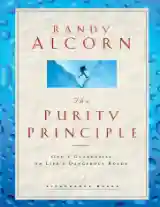
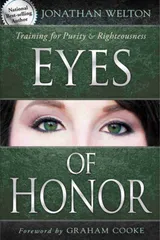
"Singles with a Difference" by Faith Oyedepo is a practical guide for singles looking to live purposefully and fulfill their divine destinies. The book covers topics such as self-discovery, maintaining purity, building successful relationships, and preparing for marriage. Through personal anecdotes and biblical principles, Oyedepo encourages singles to embrace their uniqueness and commit to living a life that honors God.
Gregory Thaumaturgus
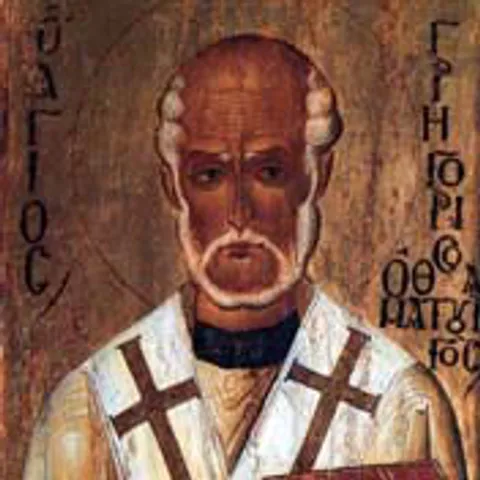 Gregory the Wonderworker’s Early life
Gregory was born in a Pontus, a region on the southern coast of the Black Sea, located in the modern-day eastern Black Sea Region of Turkey, around 212-13. His was a wealthy home and his parents named him Theodore (Gift of God) despite their pagan beliefs. When he was 14 years old his father died and soon after, he and his brother, Athenodorus, were anxious to study law at Beirut, Lebanon, then one of the four of five famous schools in the Hellenic world.
Influence of Origen
However, on the way, they first had to escort their sister to rejoin her husband, who was a government official assigned to Caesarea in Palestine (modern Haifa, Israel). When they arrived they learned that the celebrated scholar Origen, head of the catechetical school of Alexandria, lived there.
Inquisitiveness led them to hear and speak with the Origen and his irresistible charm quickly won their hearts. They soon dropped their desires for a life in Roman law, became Christian believers and pupils of Origen, learning philosophy and theology, for somewhere between five and eight years. Origen also baptised Gregory.
Pastor (then Bishop) of Neoceasarea
Gregory returned to his native Pontus with the intention of practicing oratory, but also to write a book proving the truth of Christianity, revealing his evangelistic heart. But his plans were disrupted when locals noticed his passion for Christ and his spiritual maturity. There were just seventeen Christians in Neoceasarea when Gregory arrived and this small group persuaded him to lead them as their bishop. (‘bishop’ simply meant a local overseer). At the time, Neocaesarea was a wicked, idolatrous province.
Signs of the Spirit
By his saintly life, his direct and lively preaching, helping the needy and settling quarrels and complaints, Gregory began to see many converts to Christ. But it was the signs and wonders that particularly attracted people to Christ.
En route to Neocaesarea from Amasea, Gregory expelled demons from a pagan temple, its priest converted to Christ immediately.
Once, when he was conversing with philosophers and teachers in the city square, a notorious harlot came up to him and demanded payment for the sin he had supposedly committed with her. At first Gregory gently remonstrated with her, saying that she perhaps mistook him for someone else.
But the loose woman would not be silenced. He then asked a friend to give her the money. Just as the woman took the unjust payment, she immediately fell to the ground in a demonic fit, and the fraud became evident. Gregory prayed over her, and the devil left her. This was the beginning of Gregory’s miracles. It was at this time he became known as ‘Gregory Thaumaturgus,’ ‘Gregory the Miracle Worker’ (or Wonderworker).
At one point Gregory wanted to flee from the worldly affairs into which influential townsmen persistently sought to push him. He went into the desert, where by fasting and prayer he developed an intimacy with God and received gifts of knowledge, wisdom and prophecy. He loved life in the wilderness and wanted to remain in solitude with God until the end of his days, but the Lord willed otherwise.
His theological contribution
Though he was primarily an evangelist and pastor, Gregory also had a deep theological understanding.
His principal work ‘The Exposition of Faith’, was a theological apology for Trinitarian belief. It incorporated his doctrinal instructions to new believers, expressed his arguments against heretical groups and was widely influential amongst leaders in the Patristic period: Basil the Great, Gregory the Theologian, and Gregory of Nyssa (The Cappadocian Fathers). It was the forerunner of the Nicene Creed that was to appear in the early 4th century.
In summary
He gave himself to the task of the complete conversion of the population of his diocese. The transformation in Neocaesarea was astonishing. Persuasive preaching, numerous healings and miraculous signs had a powerful effect. Such was his success that it was said that when Gregory became bishop (c 240) he found only seventeen Christians in his diocese; when he died only seventeen remained pagan (Latourette 1953:76).
Basil the Great’s Testimony
Basil the Great (330-379, Bishop of Caesarea, in his work ‘On the Spirit’ wrote the following account of Gregory the wonder-worker.
“But where shall I rank the great Gregory, and the words uttered by him? Shall we not place among Apostles and Prophets a man who walked by the same Spirit as they; who never through all his days diverged from the footprints of the saints; who maintained, as long as he lived, the exact principles of evangelical citizenship?
I am sure that we shall do the truth a wrong if we refuse to number that soul with the people of God, shining as it did like a beacon in the Church of God: for by the fellow-working of the Spirit the power which he had over demons was tremendous, and so gifted was he with the grace of the word ‘for obedience to the faith among. . .the nations.’ that, although only seventeen Christians were handed over to him, he brought the whole people alike in town and country through knowledge to God.
He too by Christ’s mighty name commanded even rivers to change their course, and caused a lake, which afforded a ground of quarrel to some covetous brethren, to dry up. Moreover, his predictions of things to come were such as in no wise to fall short of those of the great prophets. To recount all his wonderful works in detail would be too long a task. By the superabundance of gifts, wrought in him by the Spirit, in all power and in signs and in marvels, he was styled a second Moses by the very enemies of the Church.
Thus, in all that he through grace accomplished, alike by word and deed, a light seemed ever to be shining, token of the heavenly power from the unseen which followed him. To this day he is a great object of admiration to the people of his own neighborhood, and his memory, established in the churches ever fresh and green, is not dulled by length of time. (Schaff and Wace nd., Series 2. 8:46-47).
“Gregory was a great and conspicuous lamp, illuminating the church of God.” —Basil the Great.
Gregory the Wonderworker’s Early life
Gregory was born in a Pontus, a region on the southern coast of the Black Sea, located in the modern-day eastern Black Sea Region of Turkey, around 212-13. His was a wealthy home and his parents named him Theodore (Gift of God) despite their pagan beliefs. When he was 14 years old his father died and soon after, he and his brother, Athenodorus, were anxious to study law at Beirut, Lebanon, then one of the four of five famous schools in the Hellenic world.
Influence of Origen
However, on the way, they first had to escort their sister to rejoin her husband, who was a government official assigned to Caesarea in Palestine (modern Haifa, Israel). When they arrived they learned that the celebrated scholar Origen, head of the catechetical school of Alexandria, lived there.
Inquisitiveness led them to hear and speak with the Origen and his irresistible charm quickly won their hearts. They soon dropped their desires for a life in Roman law, became Christian believers and pupils of Origen, learning philosophy and theology, for somewhere between five and eight years. Origen also baptised Gregory.
Pastor (then Bishop) of Neoceasarea
Gregory returned to his native Pontus with the intention of practicing oratory, but also to write a book proving the truth of Christianity, revealing his evangelistic heart. But his plans were disrupted when locals noticed his passion for Christ and his spiritual maturity. There were just seventeen Christians in Neoceasarea when Gregory arrived and this small group persuaded him to lead them as their bishop. (‘bishop’ simply meant a local overseer). At the time, Neocaesarea was a wicked, idolatrous province.
Signs of the Spirit
By his saintly life, his direct and lively preaching, helping the needy and settling quarrels and complaints, Gregory began to see many converts to Christ. But it was the signs and wonders that particularly attracted people to Christ.
En route to Neocaesarea from Amasea, Gregory expelled demons from a pagan temple, its priest converted to Christ immediately.
Once, when he was conversing with philosophers and teachers in the city square, a notorious harlot came up to him and demanded payment for the sin he had supposedly committed with her. At first Gregory gently remonstrated with her, saying that she perhaps mistook him for someone else.
But the loose woman would not be silenced. He then asked a friend to give her the money. Just as the woman took the unjust payment, she immediately fell to the ground in a demonic fit, and the fraud became evident. Gregory prayed over her, and the devil left her. This was the beginning of Gregory’s miracles. It was at this time he became known as ‘Gregory Thaumaturgus,’ ‘Gregory the Miracle Worker’ (or Wonderworker).
At one point Gregory wanted to flee from the worldly affairs into which influential townsmen persistently sought to push him. He went into the desert, where by fasting and prayer he developed an intimacy with God and received gifts of knowledge, wisdom and prophecy. He loved life in the wilderness and wanted to remain in solitude with God until the end of his days, but the Lord willed otherwise.
His theological contribution
Though he was primarily an evangelist and pastor, Gregory also had a deep theological understanding.
His principal work ‘The Exposition of Faith’, was a theological apology for Trinitarian belief. It incorporated his doctrinal instructions to new believers, expressed his arguments against heretical groups and was widely influential amongst leaders in the Patristic period: Basil the Great, Gregory the Theologian, and Gregory of Nyssa (The Cappadocian Fathers). It was the forerunner of the Nicene Creed that was to appear in the early 4th century.
In summary
He gave himself to the task of the complete conversion of the population of his diocese. The transformation in Neocaesarea was astonishing. Persuasive preaching, numerous healings and miraculous signs had a powerful effect. Such was his success that it was said that when Gregory became bishop (c 240) he found only seventeen Christians in his diocese; when he died only seventeen remained pagan (Latourette 1953:76).
Basil the Great’s Testimony
Basil the Great (330-379, Bishop of Caesarea, in his work ‘On the Spirit’ wrote the following account of Gregory the wonder-worker.
“But where shall I rank the great Gregory, and the words uttered by him? Shall we not place among Apostles and Prophets a man who walked by the same Spirit as they; who never through all his days diverged from the footprints of the saints; who maintained, as long as he lived, the exact principles of evangelical citizenship?
I am sure that we shall do the truth a wrong if we refuse to number that soul with the people of God, shining as it did like a beacon in the Church of God: for by the fellow-working of the Spirit the power which he had over demons was tremendous, and so gifted was he with the grace of the word ‘for obedience to the faith among. . .the nations.’ that, although only seventeen Christians were handed over to him, he brought the whole people alike in town and country through knowledge to God.
He too by Christ’s mighty name commanded even rivers to change their course, and caused a lake, which afforded a ground of quarrel to some covetous brethren, to dry up. Moreover, his predictions of things to come were such as in no wise to fall short of those of the great prophets. To recount all his wonderful works in detail would be too long a task. By the superabundance of gifts, wrought in him by the Spirit, in all power and in signs and in marvels, he was styled a second Moses by the very enemies of the Church.
Thus, in all that he through grace accomplished, alike by word and deed, a light seemed ever to be shining, token of the heavenly power from the unseen which followed him. To this day he is a great object of admiration to the people of his own neighborhood, and his memory, established in the churches ever fresh and green, is not dulled by length of time. (Schaff and Wace nd., Series 2. 8:46-47).
“Gregory was a great and conspicuous lamp, illuminating the church of God.” —Basil the Great.
A Letter to Younger Me About Money
If you listen to anyone in their senior years long enough, you’ll eventually hear something like, “If I knew then what I know now . . . ” But seniors aren’t the only ones who feel that way. At age thirty, I find myself already saying the same thing about money. Recently, I left a financial planning firm after working as a creative director and wealth coach. I learned more in one year about financial stewardship than I had learned in my first 29 years of life. While working at the firm, I discovered the sorry state of my family’s finances. I knew we weren’t great with money, but I didn’t realize the extent of our financial ignorance and problems. I also discovered that I wasn’t alone. After six months at the firm, I was able to counsel clients who needed basic financial coaching, and it wasn’t pretty. Regardless of income, most were living paycheck to paycheck, and they were up to their eyeballs in debt. Today, twenty-somethings are bombarded with opportunities to make poor financial decisions. At the relatively young age of thirty, I often find myself saying, “I wish I knew at twenty what I know today about money.” If I could have a conversation with my twenty-year-old self about money, here are three things I would tell him. 1. Money cannot buy you happiness. Throughout my twenties, I viewed money as the solution to most of my problems. This belief dictated how I spent my time and, ultimately, my earnings. At one point, I had seven jobs while pursuing a master’s degree. But I was still broke and in debt, and I never finished my studies. Rather than a source of joy, money became a cruel master (Matthew 6:24). What I’ve discovered is that my experience is all too common. The sad thing is that so few of us seem to learn from our mistakes. We keep trying to pursue happiness through more money. Some will point to studies that suggest there’s a correlation between money and happiness. One article reported that each additional dollar earned per year reduces people’s negative emotions — but that effect disappears at about $200,000 annually. In other words, money is a limited help at best, and certainly doesn’t buy lasting happiness, as any honest observer of wealthy people can quickly perceive. Ultimately, money is a means to an end. A dollar or a piece of gold is only as valuable as what we can trade for it. And money is dangerous. It gives the illusion of granting access to anything. So we can easily elevate it to the throne that should be reserved only for our ultimate provider: God, the giver of all good things. So I would tell my twenty-year-old self: Don’t try to buy happiness with money. This would have dramatically changed my finances, especially with regard to debt. 2. Don’t borrow money carelessly. In my twenties, I borrowed foolishly, and I’m still paying for it. From student loans to credit cards, I went into debt without giving it a second thought. Debt allowed me to get what I wanted when I wanted it. And the best part? I didn’t have to wait or ask for permission. This is the great temptation every twenty-something faces in an age when money is so easily borrowed. The Bible doesn’t condemn debt as inherently sinful, but it clearly warns us that money shouldn’t be borrowed haphazardly. And Scripture also tells us that when we incur a debt, it is evil not to pay what we owe. Romans 13:8 says, “Let no debt remain outstanding, except the continuing debt to love one another” (NIV). And Psalm 37:21 says, “The wicked borrows and does not repay, but the righteous shows mercy and gives” (NKJV). If I could counsel my twenty-year-old self on debt, here’s what I would say: Don’t borrow money unless you absolutely have to. There is too much at stake to borrow money without giving it careful thought. If you’re considering a credit card or a loan, count the costs, and beware of the risks. And once in debt, I would say, Make a plan to eliminate it as soon as possible. 3. Save, give, and spend money proactively. “A wise man thinks ahead; a fool doesn’t and even brags about it!” (Proverbs 13:16 TLB). One of the worst mistakes I made with money was failing to plan wisely. When I received a paycheck or extra cash, I lacked direction. Like the fool in that Proverb, I was proud that I didn’t budget. I absolutely hated the idea. Budgeting felt intimidating and seemed like a lot of work. Besides, as long as I didn’t plan, I could remain in denial that I was a poor steward of the resources God had given me. I could pretend I was giving and spending wisely and no one could confirm or deny it. And I could make spending decisions based mostly on my feelings. This felt like freedom, but it wasn’t. Now I would say this to my foolish twenty-year-old self: Making a plan for your money may help give you dominion over it. Being planless is not being free; being planless makes you a slave to money. But a good financial plan turns money into your slave to serve what you really value. You will be empowered to save, give, and spend money proactively rather than reactively. It’s Not Too Late to Change Hindsight is indeed twenty-twenty. And it’s not like I now manage money perfectly. Even though I understand more now how to handle money, I don’t always act on my knowledge. But over the last year, I’ve come a long way. And if I can’t help my twenty-year-old self, I hope I can help others avoid the mistakes I made, or help them make changes like I’ve had to make. No matter how old we are, it’s not too late to correct our course. We’re never too old to stop trying to buy happiness with money, or to get out of debt as soon as possible, or to begin governing money instead of being governed by money. We want to serve God and not money (Matthew 6:24). But the less intentional we are with our money, the more likely we will end up serving it, for good stewardship is impossible without intentionality. Article by Phillip Holmes